
Winter changes how a steam sauna feels, and it changes how the room behaves. Cold walls, cold air in the house and dry winter air all work against the warm, humid space a steam sauna is meant to be. Sessions can feel slower to warm up, steam can vanish faster, and condensation can show up in places you never noticed in summer.
The good news is that none of this needs new equipment. A few small changes to your warm-up, your session and your drying routine are usually enough. This guide walks through what winter does to a steam sauna, how to heat the room properly in cold weather, how to manage humidity and condensation, and the simple routine that keeps both you and the room in good shape all season.
Please note: This article is general wellness information, not medical advice. Steam saunas are wellness tools, not treatments. If you are pregnant, live with a heart or circulation condition or low blood pressure, or take medication that affects heat tolerance, check with your doctor before using a steam sauna.


#Paid Links
Why Winter Changes a Steam Sauna
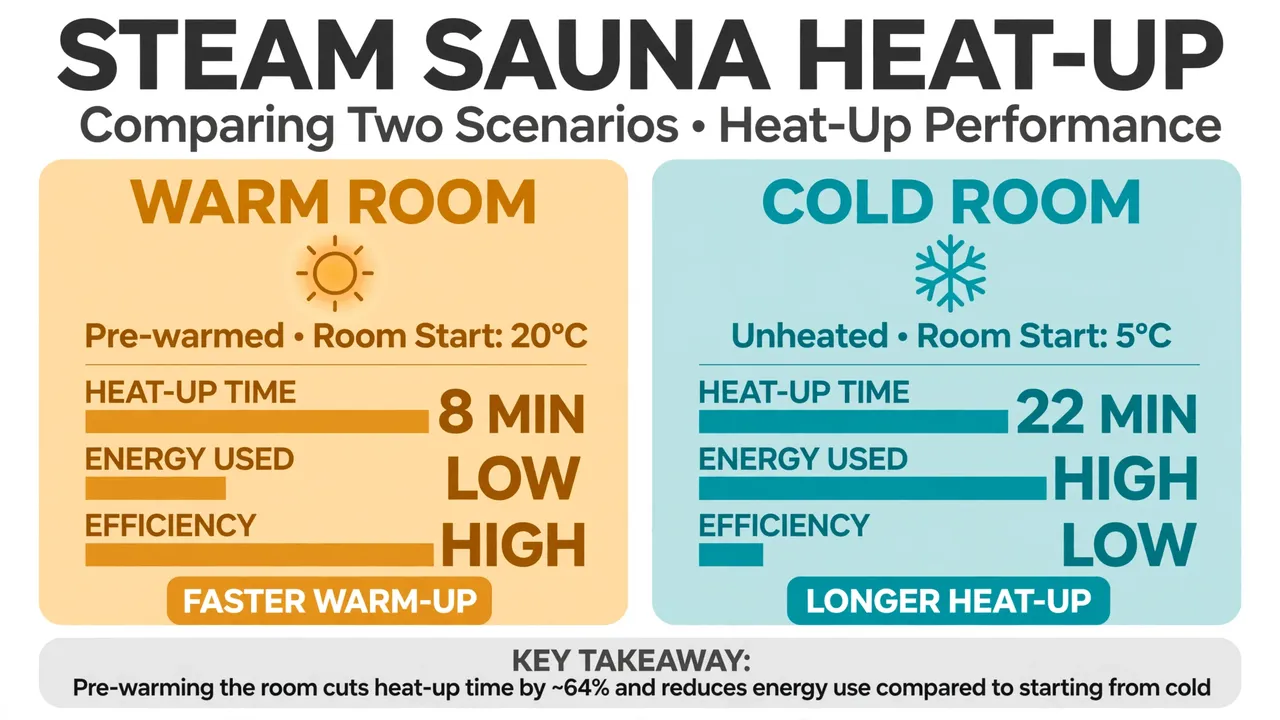
A steam sauna works by filling a sealed, tiled room with warm, humid air. In summer, the room, the tiles and the air around it are already fairly warm, so the generator only has to close a small gap. In winter, everything starts colder. The tiles feel icy, the walls pull heat away, and the air feeding the room is cold and dry.


#Paid Links
That cold start affects three things at once. First, heat-up takes longer, because the generator has to warm the room surfaces as well as the air. Second, the steam itself behaves differently: cold, dry air outside the room can make the steam feel thinner when the door opens, and warm moist air meeting a cold surface turns into condensation. Third, drying takes longer, because cold air holds less moisture and the room stays damp for longer after you finish.
Understanding those three effects is the whole secret to a good winter steam routine. You are not fighting the sauna. You are giving it more time to warm up, managing the moisture it produces, and letting the room dry properly afterwards.
Summer vs. Winter: What Actually Changes
The table below sums up the practical differences. None of these are faults in your sauna. They are normal seasonal patterns, and each one has a simple answer in the sections that follow.
| What changes | Warmer months | Winter | What to do |
|---|---|---|---|
| Heat-up time | Shorter, room starts warm | Longer, cold tiles and walls absorb heat | Start the generator earlier |
| Steam feel | Thick and steady | Can feel thinner when the door opens | Keep the door closed and limit opening |
| Condensation | Light, dries quickly | Heavier on cold glass, mirrors and ceilings | Ventilate and wipe surfaces after sessions |
| Drying time | Room dries fast | Room stays damp longer | Leave the door open and run ventilation |
| Generator workload | Steady, moderate | Works harder at the start of each session | Keep up with descaling and maintenance |
| Air in the house | Humid enough | Very dry from heating systems | Hydrate well before and after sessions |
Heating the Room in Cold Weather
The single biggest winter mistake is starting a session the moment the generator switches on. In cold weather, the room needs a head start. Switch the generator on well before you plan to step in, and let the room warm through before you do. How long that takes depends on the size of the room, how cold it is, and the power of your generator, so watch your own room for a few sessions and learn its winter rhythm.
Give the generator a longer warm-up
Think of the warm-up as warming the tiles, not just the air. Steam heats the air fast, but stone and tile hold the cold and release it slowly. If you step in too early, the room can feel warm at head height and cold at your feet, and the steam may seem to disappear into the cold surfaces. A longer warm-up lets the whole room reach a comfortable, even temperature.
If your generator seems to struggle in winter, the problem is often sizing rather than a fault. A generator that was fine in a mild climate can feel underpowered when the room starts cold. Our guide to how to size a steam generator explains how room size and generator power relate, and it is worth reading before you consider an upgrade.


#Paid Links
Keep the door closed while the room warms
Every time the door opens during warm-up, warm humid air escapes and cold dry air comes in. In winter that trade is much worse than in summer, because the incoming air is far colder. Keep the door shut while the room warms, and step in once, ready to stay. If you need to pop out mid-session, be quick about it.
Warm the room, not just the air
If your steam room sits against an outside wall or in an unheated part of the house, the wall itself will be cold all winter. That is normal, and it is one more reason to allow extra warm-up time. It is also worth checking that the door seals properly: a worn seal lets steam out and cold air in, and winter is when you will notice it most. For more on keeping the space at the right temperature, see our steam sauna temperature guide.
Humidity in Cold, Dry Winter Air
Winter air is dry air. Heating systems pull moisture out of indoor air, and cold outdoor air holds very little moisture to begin with. That dryness is one reason a steam session can feel so good in winter: the contrast between the dry house and the warm, humid steam room is a real relief for dry skin and dry airways.
But the same dryness creates a second problem. When warm, moist air from the steam room meets a cold surface, the moisture in the air turns into water droplets. That is condensation, and in winter you will see more of it: on the glass door, on mirrors, on the ceiling, and sometimes on a cold outside wall. A little condensation during a session is normal. Water pooling or staying damp for hours afterwards is not, and that is where mould can start.
Let the steam build, then manage the moisture
During the session itself, the goal is to keep the steam in the room. Resist the urge to crack the door open to let in fresh air. That brings in cold, dry air and drops the humidity you are trying to enjoy. If the room feels too hot or too stuffy, shorten the session instead of opening the door. Short, comfortable sessions beat long, uncomfortable ones, and our guide to how often to use a steam sauna can help you find a rhythm that suits you.
Ventilation matters more in winter, not less
It feels wrong to ventilate a warm room in cold weather, but after a steam session the room needs fresh, dry air to dry out. Run the extractor fan if you have one, and leave the door open after you finish so air can circulate. If your steam room has a window, cracking it open for a short while after the session helps a great deal, even in cold weather. Our guide to steam shower drain and ventilation explains how the drainage and airflow should work together.
The honest truth is that a home steam room is not maintenance-free, and winter is when that shows. Ventilation and drying are not optional extras. They are the routine that keeps the room healthy, protects the grout and seals, and stops damp from becoming a bigger problem. For the bigger picture on keeping water where it belongs, see our guide to steam room waterproofing, tiling and ceiling materials.
Your Winter Steam Routine, Step by Step
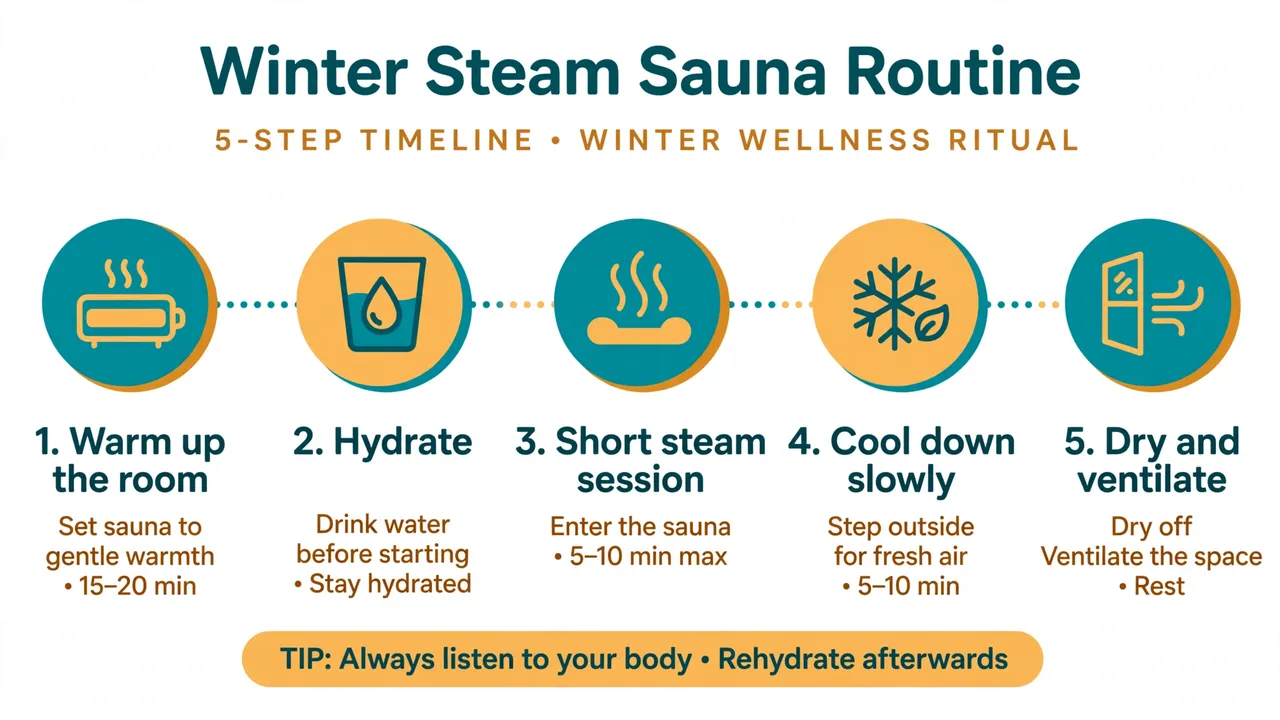
A good winter routine is a short, repeatable sequence. Once you have done it a few times, it becomes automatic. Here is the sequence that works for most home steam rooms.
- Drink a glass of water before you start. Winter air is dry, and you will lose fluid in the steam.
- Switch the generator on early and let the room warm through, door closed. Use the waiting time to lay out a towel and a dry robe.
- Step in once the room feels evenly warm. Sit or lie comfortably and keep the session short, especially if you are new to winter sessions.
- Leave the room slowly when you finish. Sit for a minute or two, then stand up gently before stepping out into the cold house.
- Cool down gradually. A lukewarm shower or a few quiet minutes wrapped in a towel works well. Avoid stepping straight into freezing air or a cold shower unless you already have a contrast routine you are used to.
- Dry the room. Wipe down the glass, bench and any pooling water, leave the door open, and run the ventilation until the room feels dry to the touch.
- Drink water again and rest. A winter steam session is relaxing, and your body needs a little time to settle back to normal.
If you like to pair steam with a cold plunge, winter needs extra care. The contrast is stronger when the air outside the sauna is already freezing, so keep the cold part short and listen to your body. Our guide to steam sauna and cold plunge order and timing covers the sequence in detail.
Timing Your Sessions in Winter
There is no single right session length, and winter does not change that. What changes is how your body responds. Cold weather can make the warm-up feel slower and the cool-down feel sharper, so many people find shorter, more frequent sessions more comfortable in winter than one long session.
Evenings are a popular winter slot. A warm steam session before bed can feel deeply relaxing on a cold night, and many people report sleeping better afterwards. If that appeals to you, our guide to steam sauna for better sleep covers the timing and the wind-down routine. Mornings work well too, especially if the house is cold when you wake up: a steam session can be a gentle way to warm up before the day starts.
Whichever time you choose, keep sessions consistent rather than extreme. A steady routine of shorter sessions through the winter will serve you better than occasional marathon sessions. If you want help choosing a time of day, see our guide to the best time to use a steam sauna.
After the Session: Drying, Ventilation and Mould Prevention
The after-session routine is where winter steam rooms succeed or fail. In summer, a room dries itself quickly. In winter, it does not, and a damp room left closed up is exactly the environment mould likes. The routine below takes only a few minutes and makes the biggest difference of anything in this guide.
- Wipe down the glass door, the bench and any flat surfaces where water pools.
- Leave the door open so air can move through the room.
- Run the extractor fan or open a window briefly until the room feels dry.
- Check the corners, the ceiling and behind the door for lingering damp.
- Hang towels and robes outside the steam room to dry, not inside it.
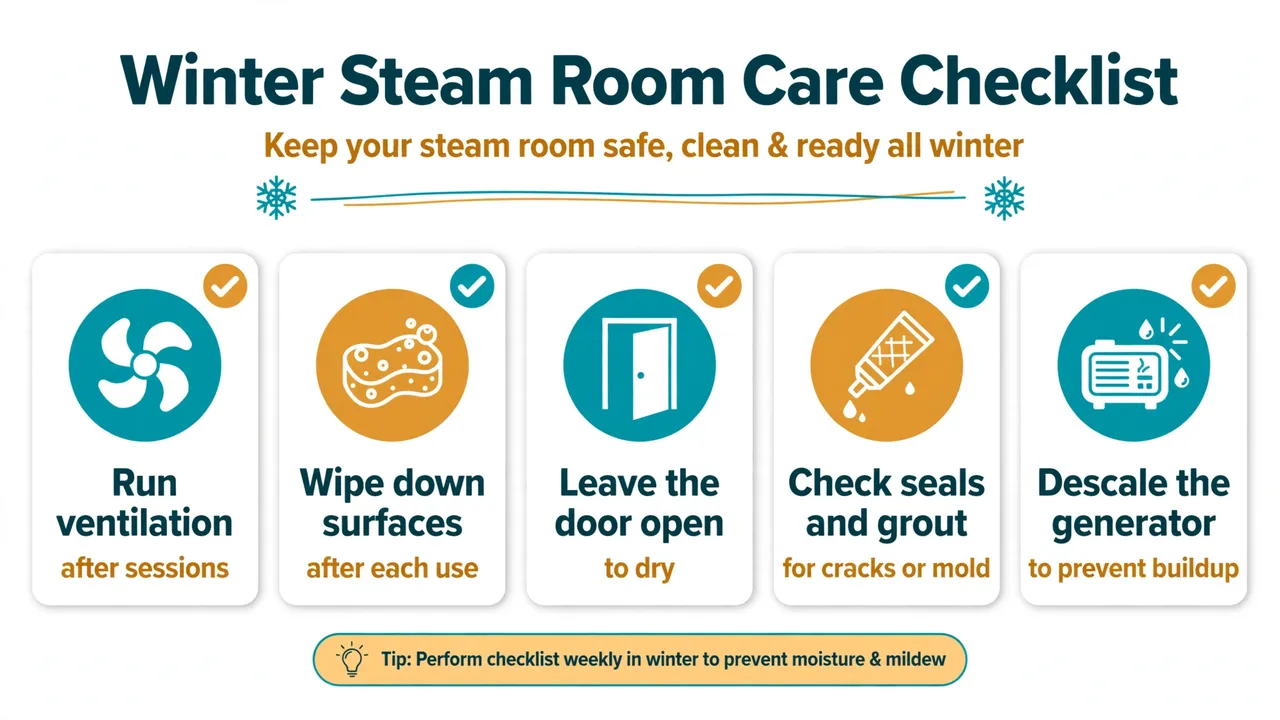
Once a week in winter, take a closer look. Check the grout lines and the sealant around the door and the generator for cracks or soft spots, and check the ceiling for any dark patches. Catching a small damp patch early is a five-minute wipe-down. Catching it late can mean re-grouting or resealing, so the weekly check is worth the habit.
Common Winter Mistakes to Avoid
- Stepping in too early. A room that is warm at head height but cold at the floor is not ready yet. Wait until the whole room feels evenly warm.
- Leaving the door open during warm-up. Every opening lets cold, dry air in and resets the warm-up.
- Skipping the drying routine. Closing a damp steam room up for the night is the fastest route to mould in winter.
- Staying in too long to “make up” for the cold. Longer is not better. If you feel dizzy, unwell or overheated, leave immediately.
- Forgetting to hydrate. Winter air is dry and you may not feel thirsty, but you still lose fluid in the steam. Drink water before and after every session.
- Ignoring the generator. Hard water and heavy winter use mean scale builds up faster. Keep up with descaling or the generator will struggle when you need it most.
Winter Care for Your Steam Generator
Your generator works harder in winter than at any other time of year. It starts from cold, runs longer warm-ups and pushes out more steam into dry air. That extra work makes regular maintenance more important, not less.
Descaling is the main job. If you live in a hard-water area, scale builds up inside the generator and reduces its power over time. In winter, when the generator is already working harder, scale can be the difference between a room that warms up properly and one that never quite gets there. Our guide to steam generator maintenance, descaling and hard water care walks through the process step by step.
It is also worth checking the water supply and drain before the coldest weeks arrive. A slow drain or a sluggish water feed is a minor annoyance in summer and a real problem in winter, when standing water stays cold and damp for longer. Fix small issues before they become mid-winter repairs, and use a licensed plumber for any work on the water supply or electrics.
When to Skip or Shorten a Winter Session
Steam can feel especially tempting when you are coming down with a winter cold, but a steam sauna is not a treatment for illness. If you feel unwell, feverish or run down, rest is usually the better choice, and a hot, humid room can leave you feeling worse rather than better. Our guide to using a steam sauna when sick explains when to sit a session out.
The same caution applies to anyone who is pregnant, lives with a heart or circulation condition or low blood pressure, or takes medication that affects heat tolerance. Talk to your doctor first, and keep sessions short. And never drink alcohol before or during a steam session: alcohol and heat together raise the risk of dizziness and dehydration, and that risk is higher in winter when your body is already working to stay warm.
Finally, listen to your body every single session. If you feel dizzy, nauseous, short of breath or simply unwell, leave the room immediately, sit down somewhere cool, and drink water. There is no benefit in pushing through discomfort, in winter or any other season. If you use steam for recovery after winter exercise, our guide to using a steam sauna for muscle recovery covers safe timing after training.
Steam vs. Infrared in Winter: A Quick Contrast
Readers sometimes ask whether a steam sauna or an infrared sauna is better in winter. They work differently, so the answer depends on what you want. A steam sauna warms the whole room with humid heat, which feels gentle on dry winter airways and skin. An infrared sauna heats your body directly with radiant heat, which some people prefer for a quick warm-up on a cold morning. Neither is better in general. If you want to compare the routines, our guide to the infrared sauna in winter routine covers the infrared side of the same season.
Frequently Asked Questions
Does a steam sauna take longer to heat up in winter?
Yes, usually. Cold tiles, cold walls and cold air mean the generator has to warm the room surfaces as well as the air, so allow extra warm-up time and keep the door closed while the room heats.
Will a steam sauna make my house damp in winter?
It can, if the moisture is not managed. Keep the door closed during sessions, then ventilate and dry the room afterwards: wipe surfaces, leave the door open and run the extractor fan until the room feels dry.
How long should a winter steam session last?
There is no single right length. Shorter, comfortable sessions work well in winter, and many people prefer them to one long session. Leave immediately if you feel dizzy or unwell.
Should I use a steam sauna when I have a winter cold?
A steam sauna is not a treatment for illness. If you feel feverish or run down, rest is usually the better choice. Talk to your doctor if you are unsure, and never use a steam sauna as a substitute for medical care.
How do I stop mould in my steam room in winter?
Dry the room after every session, ventilate well, and check grout, sealant and corners weekly. A steam room is not maintenance-free, and the drying routine is what keeps mould from starting.
Does my steam generator need extra care in winter?
Yes. It works harder in cold weather, so keep up with descaling, especially in hard-water areas, and check the water supply and drain before the coldest weeks arrive.
A Simple Winter Routine to Keep
Winter does not make a steam sauna harder to enjoy. It just asks for a little more patience at the start and a little more care at the end. Start the generator early, keep the door closed, enjoy a short and comfortable session, then dry and ventilate the room properly. Do that every time, and your steam room will stay warm, healthy and ready all winter long.
Keep the routine simple and repeat it. The best winter habit is not a complicated one: warm up, steam, cool down slowly, dry out. Once it becomes automatic, winter becomes one of the best seasons to own a steam sauna.