
There isn’t one single best time to use a steam sauna — it depends on what you want out of the session. Morning sauna use tends to boost energy, mental focus, and circulation for the day ahead.
Afternoon sessions work well as a midday tension reset. Evening sauna use, especially finished 60–120 minutes before bed, is the strongest option for winding down and improving sleep quality. If you only have one consistent slot in your day, that’s the “best” time for you — consistency matters more than the specific hour.
Key takeaways
- Morning sauna sessions are linked to better focus and energy through the day.
- Evening sessions finished 1–2 hours before bed support faster sleep onset and deeper sleep.
- Post-workout sauna use helps with muscle recovery regardless of time of day.
- Consistency in your routine matters more than picking the “perfect” hour.
Best Time to Use a Steam Sauna: Morning, Afternoon, or Evening?
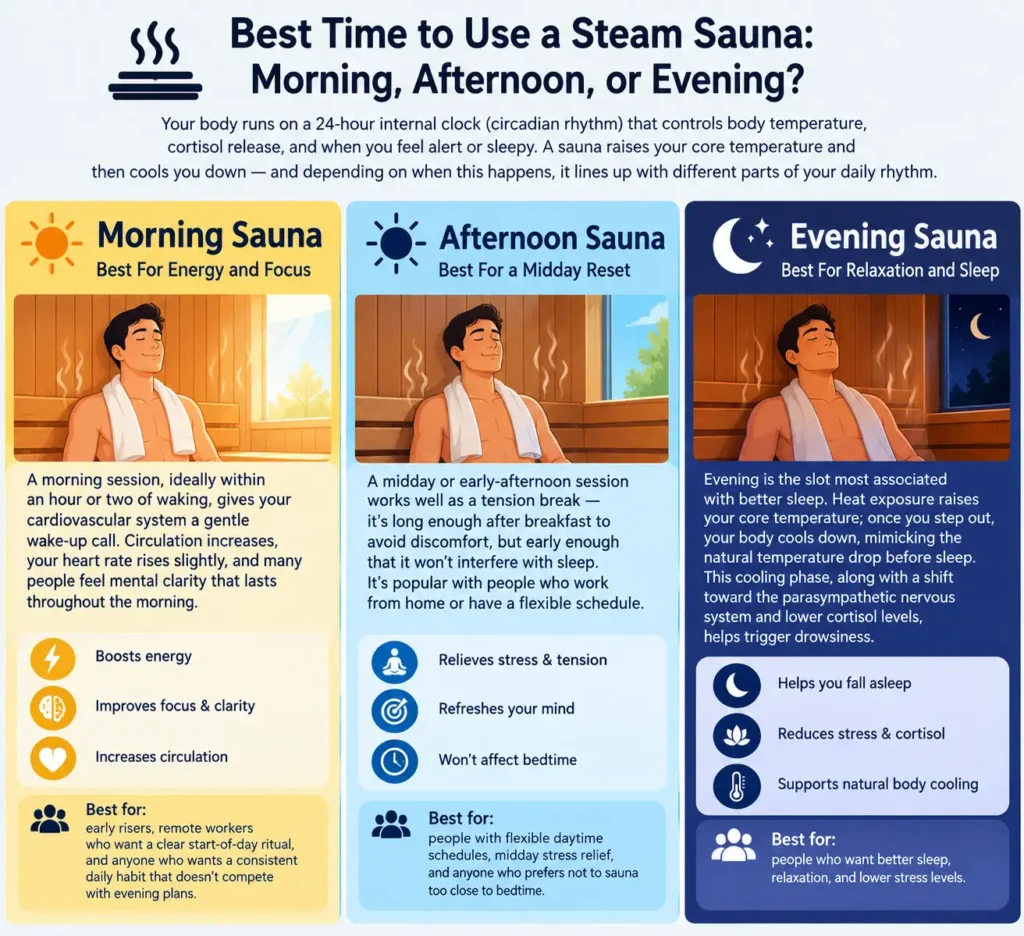
Your body runs on a roughly 24-hour internal clock, or circadian rhythm, that controls things like core body temperature, cortisol release, and when you naturally feel alert or sleepy. A sauna session raises your core temperature and triggers a cooldown once you step out, and depending on when that heat-and-cool cycle happens, it lines up with different parts of your body’s daily rhythm.


Paid Links - As an Amazon Associate, I earn from qualifying purchases.
Use it in the morning, and the temporary jump in heart rate and circulation tends to feel like a natural energy boost. Use it in the evening, and the cooldown phase that follows lines up with the drop in body temperature your body naturally goes through before sleep. Neither is “wrong” — they’re just doing different jobs.


Paid Links - As an Amazon Associate, I earn from qualifying purchases.
Morning Sauna: Best For Energy and Focus
A morning session, ideally within an hour or two of waking, gives your cardiovascular system a gentle wake-up call. Circulation increases, your heart rate rises slightly, and many regular users describe a sense of mental clarity that carries through the morning. Some people use it as a caffeine-free way to feel alert before starting work.
Best for: early risers, remote workers who want a clear start-of-day ritual, and anyone who wants a consistent daily habit that doesn’t compete with evening plans.
Afternoon Sauna: Best For a Midday Reset
A midday or early-afternoon session works well as a tension break — it’s long enough after breakfast to avoid discomfort from sauna use on a full stomach, but early enough that it won’t interfere with an evening bedtime. This slot is popular with people who work from home or have a flexible schedule, and it doubles well as a pre-dinner wind-down without the sleep-timing considerations of a late-evening session.
Best for: people with flexible daytime schedules, midday stress relief, and anyone who prefers not to sauna too close to bedtime.
Evening Sauna: Best For Relaxation and Sleep
Evening is the slot most associated with better sleep, and there’s a real mechanism behind it. Heat exposure raises your core temperature; once you step out, your body cools down, and that drop mimics the natural temperature decline that happens before sleep. That cooling phase is what helps trigger drowsiness, alongside a shift toward the parasympathetic (“rest and digest”) nervous system and lower cortisol levels.
How Many Hours Before Bed Should You Finish?
Most research and expert guidance points to finishing your sauna session 60 to 120 minutes before you plan to sleep, with many recommendations landing right around 90 minutes. This window gives your core temperature enough time to drop before you get into bed. Going straight from the sauna into bed while you’re still warm can actually work against you, since your body will still be in the heating phase rather than the cooling phase your brain needs to wind down.


Paid Links - As an Amazon Associate, I earn from qualifying purchases.
A practical version of this: if you want lights-out at 10:30 p.m., aim to be out of the sauna by around 9:00 p.m., then use the in-between time for a light activity like reading, stretching, or a lukewarm shower.
Sauna Timing Comparison: Morning vs. Afternoon vs. Evening
| Time of Day | Main Benefit | Best For | Watch Out For |
|---|---|---|---|
| Morning | Energy, focus, circulation | Starting the day, building a consistent habit | Sessions too soon after waking on an empty stomach can feel harsh — hydrate first |
| Afternoon | Midday stress and tension relief | Flexible schedules, remote workers | Avoid right after a heavy lunch |
| Evening | Relaxation, sleep quality | Winding down, post-workout recovery | Finish 60–120 minutes before bed, not right before |
Should You Sauna Before or After a Workout?
For recovery purposes, after your workout is the more common recommendation. A post-workout sauna session can help relax muscles, support circulation, and ease tension while your body is already warmed up. Saunaing before a workout isn’t harmful, but it’s more often used as a light warm-up for flexibility rather than a recovery tool, and it shouldn’t replace an actual warm-up routine before intense training.
If your workouts happen in the evening, a short post-workout sauna session can double as your wind-down slot, as long as you still leave enough time to cool down before bed.
Does Sauna Timing Affect Weight Loss or Detox Claims?
Time of day doesn’t meaningfully change what a sauna does for weight loss or “detox.” Any weight lost during a sauna session is water weight from sweating, and it returns once you rehydrate. Claims about sauna use “detoxing” the body aren’t well supported by strong evidence — your liver and kidneys handle that job regardless of when you sweat. If those are your primary goals, timing is a minor factor compared to consistency and overall lifestyle habits.
How Long Should Each Session Be?
Session length matters more than the exact time slot. A common range across most guidance is 15 to 20 minutes per session, regardless of morning, afternoon, or evening use.
Evening sessions aimed at sleep are often kept on the shorter end (15–20 minutes) at a moderate temperature, since an extremely intense session close to bedtime can leave some people feeling too energized rather than relaxed.
Who Should Be Extra Careful About Timing?
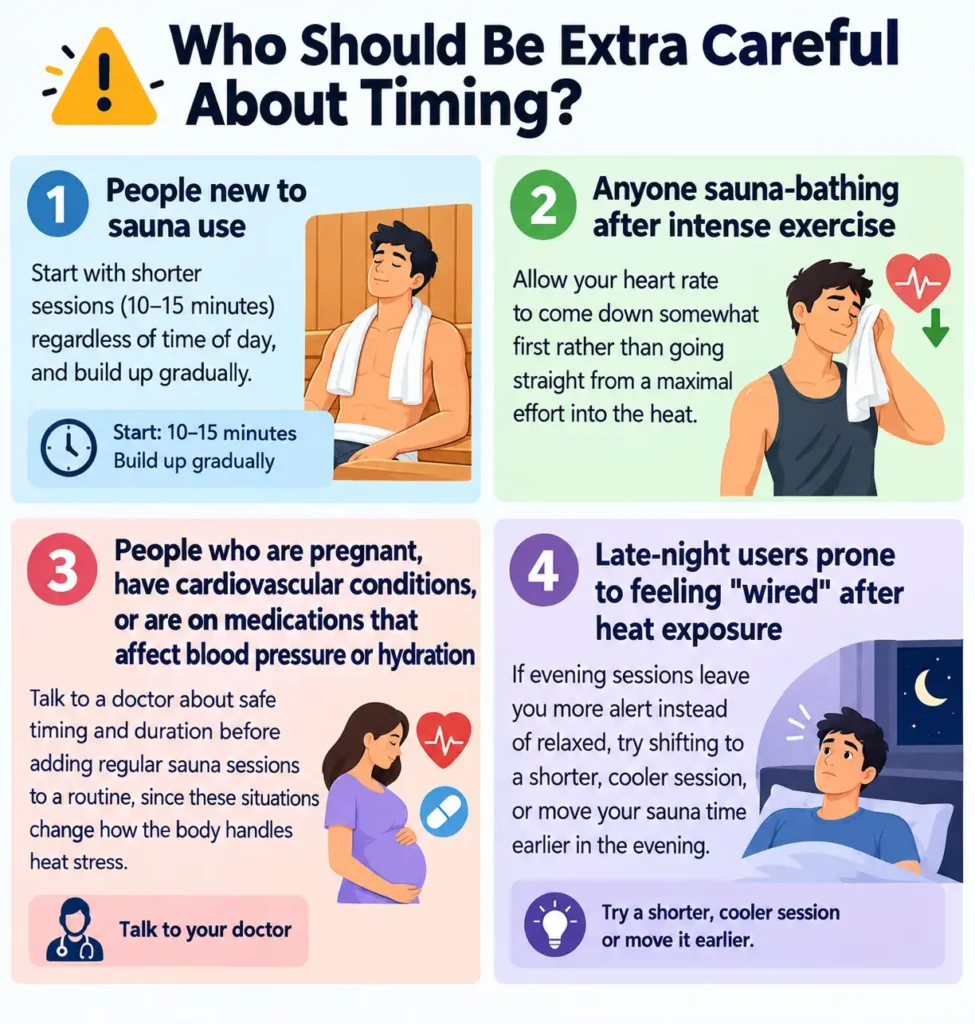
- People new to sauna use: start with shorter sessions (10–15 minutes) regardless of time of day, and build up gradually.
- Anyone sauna-bathing after intense exercise: allow your heart rate to come down somewhat first rather than going straight from a maximal effort into the heat.
- People who are pregnant, have cardiovascular conditions, or are on medications that affect blood pressure or hydration: talk to a doctor about safe timing and duration before adding regular sauna sessions to a routine, since these situations change how the body handles heat stress.
- Late-night users prone to feeling “wired” after heat exposure: if evening sessions leave you more alert instead of relaxed, try shifting to a shorter, cooler session, or move your sauna time earlier in the evening.
How to Build a Sauna Schedule That Actually Sticks
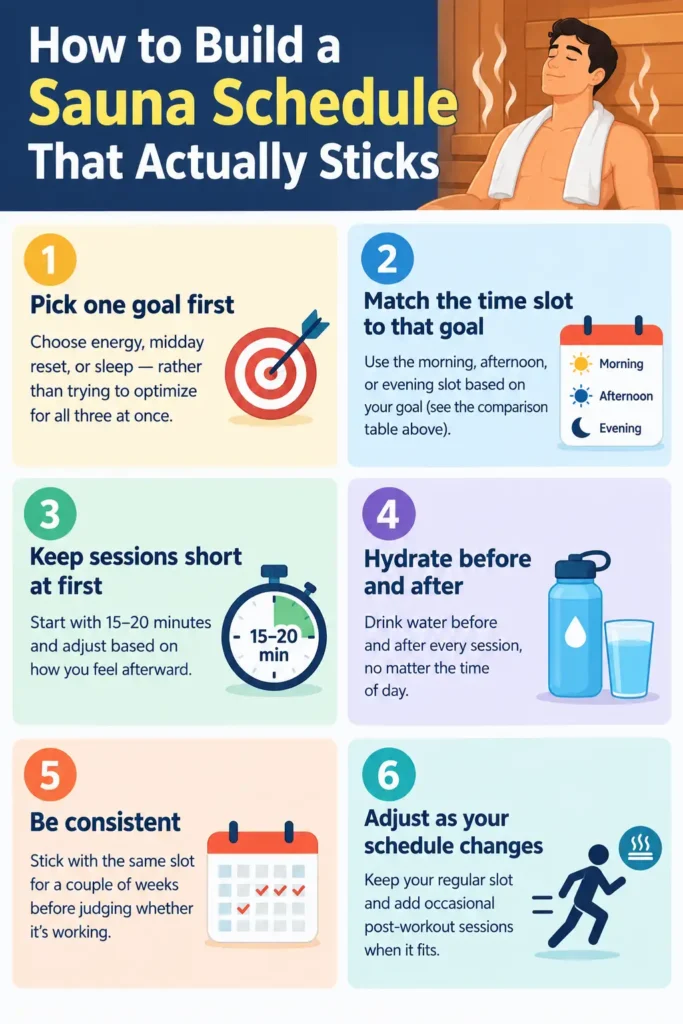
- Pick one goal first — energy, midday reset, or sleep — rather than trying to optimize for all three at once.
- Match the time slot to that goal using the comparison table above.
- Keep sessions to 15–20 minutes to start, and adjust based on how you feel afterward.
- Hydrate before and after every session, no matter the time of day.
- Stick with the same slot for a couple of weeks before judging whether it’s working — consistency is what makes the benefits noticeable.
- Adjust as your schedule changes; combining a regular slot with occasional post-workout sessions is common and works well for many people.
Common Mistakes With Sauna Timing
- Going straight from the sauna into bed while still warm, which can delay rather than help sleep
- Skipping hydration because a session is “just quick”
- Using an intense, high-heat session right before bed instead of a shorter, moderate one
- Sauna use immediately after a heavy meal, at any time of day
- Chasing a “perfect” time instead of picking one that fits your actual schedule and sticking with it
Myth vs. Fact
| Myth | Fact |
|---|---|
| “There’s one universally best time to sauna.” | The best time depends on your goal — energy, relaxation, or recovery each favor a different slot. |
| “Saunaing right before bed is the best way to fall asleep faster.” | Finishing 60–120 minutes before bed works better, since your body needs time to cool down first. |
| “Sauna timing changes how much weight or toxins you lose.” | Any weight lost is water weight, and detox claims aren’t well supported regardless of timing. |
| “Morning sauna use is only for early risers.” | It works for anyone wanting an energy boost, even if “morning” for you is a later start time. |
FAQs About Best Time to Use a Steam Sauna
Can I use a sauna right before bed?
It’s better to finish 60 to 120 minutes before you plan to sleep. Going straight to bed while still warm can work against the temperature drop your body needs to fall asleep.
Is it bad to sauna at night?
No, evening sauna use is one of the most commonly recommended times, as long as you leave enough of a gap before bed to let your body cool down.
Should I sauna before or after a workout?
After a workout is more commonly recommended for muscle recovery. Saunaing before exercise isn’t harmful but shouldn’t replace a proper warm-up.
What time of day is best for sauna and weight loss?
Time of day doesn’t significantly affect weight loss from sauna use, since any weight lost during a session is water weight that returns once you rehydrate.
Does sauna timing matter for athletes?
For recovery-focused use, timing sessions after training is the most common approach. For general wellness, any consistent time slot works.
What happens if I sauna on an empty stomach in the morning?
It’s generally fine for short sessions, but hydrating beforehand is especially important, and some people prefer a light snack first to avoid feeling lightheaded.
Can afternoon sauna sessions replace a morning or evening routine?
Yes. Afternoon sessions work well for midday stress relief and don’t carry the same bedtime-timing considerations as evening sessions.
Final Thoughts
There’s no single clock time that works best for everyone in a sauna — the right time is the one that matches what you’re trying to get out of the session.
Mornings favor energy and focus, afternoons work as a midday reset, and evenings, timed with a proper cool-down window before bed, are the strongest option for relaxation and sleep.
What matters more than the exact hour is picking a slot you can stick with consistently, hydrating properly, and paying attention to how your body responds so you can adjust from there.