
A steam sauna for small bathroom spaces sounds like a contradiction. Steam needs room, water, power, and a way for all that moisture to escape, and a small bathroom or apartment often seems short on every one of those. Yet steam is also the sauna type that fits small spaces best, because it works in a sealed shower-sized enclosure instead of needing a separate wooden room.
So can it work in your bathroom? For many owners, yes, if the room can be sealed, the plumbing and power can support a generator, and the moisture has somewhere to go. For many renters, the honest answer is different: a portable unit or a shower conversion you can remove may be the only realistic path. This guide walks through the space, venting, plumbing, electrical, and rental limits so you can decide before you spend anything.
Please note: This article is general information, not medical advice. Steam saunas are wellness tools, not treatments. If you are pregnant, live with a heart or circulation condition or low blood pressure, or take medication that affects heat tolerance, check with a doctor before using a steam sauna. Cost figures in this guide are planning estimates, not quotes. If you rent, check your lease and your landlord’s rules before installing anything.


Paid Links - As an Amazon Associate, I earn from qualifying purchases.
The Short Answer: Yes, With Clear Limits
A steam sauna can fit in a small bathroom or apartment when three things are true. First, you have a shower-sized space that can be fully sealed with a door and a ceiling. Second, your water supply, drain, and electrical panel can support a steam generator. Third, you have a realistic plan for drying the room out after every session.


Paid Links - As an Amazon Associate, I earn from qualifying purchases.
If any of those three fails, the project stalls. A beautiful steam shower that never dries out becomes a mold problem. A generator your panel cannot feed becomes an expensive decoration. And a rental that forbids permanent changes rules out most built-in options entirely, no matter how much space you have.
The rest of this guide tests each limit in turn. Measure first, check the building rules second, and only then choose between a shower conversion, a prefab steam unit, a custom tiled room, or a portable tent.
How Much Space Does a Steam Sauna Actually Need?
Steam does not need a big room. It needs a small, sealed one. A steam room works by filling an enclosed space with warm vapor, so a compact volume heats faster and uses a smaller generator than a large one. That is why steam suits apartments better than a traditional dry sauna, which needs space for benches, a heater, and safe clearances around hot surfaces.
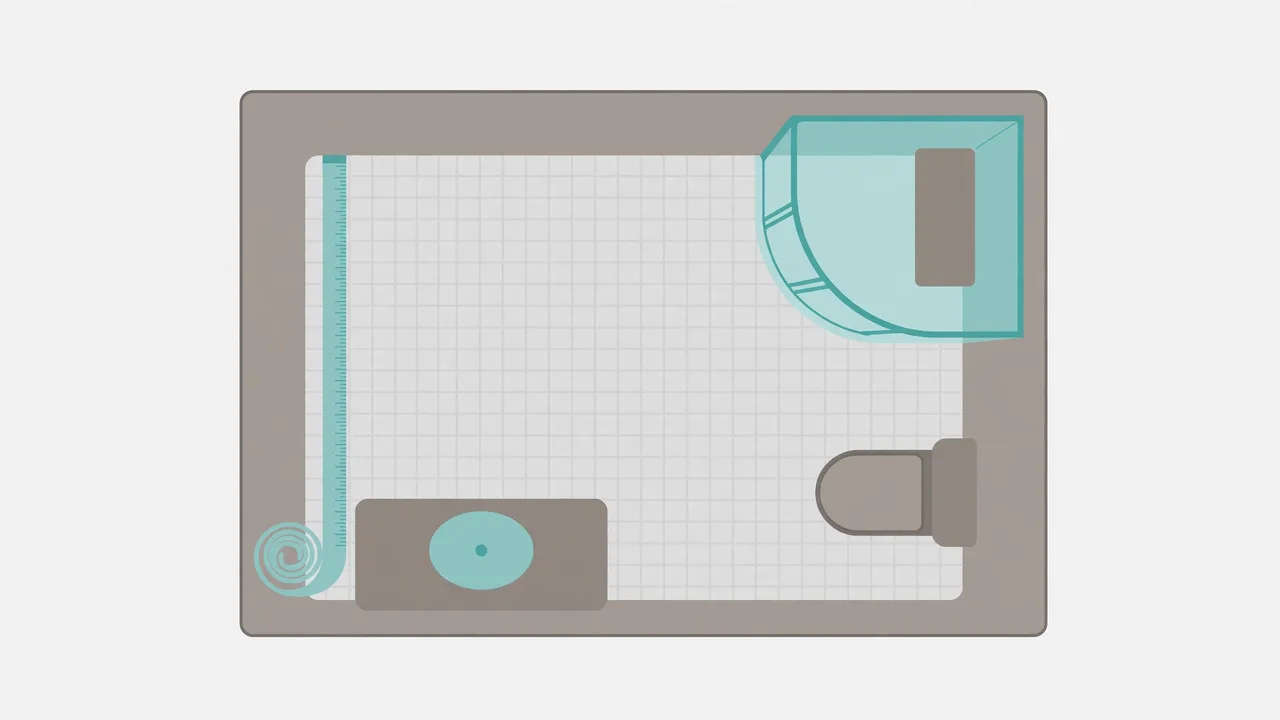
The minimum practical size for a seated steam shower is roughly the size of a standard shower stall. One person needs enough room to sit on a small bench or a fold-down seat with their knees clear of the door. Two people need a noticeably larger enclosure, and most small bathrooms cannot give it without a remodel.
| Steam option | Typical footprint | Best for | Small-space verdict |
|---|---|---|---|
| Shower converted to steam | Existing shower, often about 32 by 32 inches to 36 by 36 inches | Owners with a shower that can be sealed | Best use of space, no new footprint |
| Prefab steam shower unit | About 36 by 36 inches to 48 by 36 inches | Owners replacing a shower or tub | Good, if the bathroom can fit the unit and its door swing |
| Custom tiled steam room | About 4 by 4 feet and up | Owners planning a full remodel | Possible, but it takes the most space and budget |
| Portable steam tent or box | About 3 by 3 feet when set up, folds away after | Renters and tiny apartments | Best no-build option, smallest footprint |
Those footprints are typical sizes, not rules. Measure your own bathroom and check the dimensions of the exact model you are considering before you buy anything. A unit that fits on paper can still fail if its door cannot open fully or if the generator has nowhere to sit within its rated distance from the room.
Ceiling Height Matters as Much as Floor Space
Steam rises, so a tall ceiling wastes heat and makes the room slower to fill. Most home steam rooms work well with a ceiling around 7 to 8 feet high. A ceiling above 8 feet usually needs a larger generator, and a sloped ceiling needs careful sealing at the high end so steam does not escape into the room above.


Paid Links - As an Amazon Associate, I earn from qualifying purchases.
Check the ceiling before you fall in love with a unit. A low basement-style ceiling can work fine for steam, as long as you can sit upright on the bench without your head touching the ceiling. A ceiling with a skylight, a vent, or an open gap to the rest of the bathroom will leak steam and should be sealed or avoided.
Door Swing, Bench Space, and the Parts People Forget
Floor area is only the start. The door needs room to open, and in a small bathroom that swing often hits a toilet, a vanity, or a towel rail. Sliding doors and outward-opening doors solve some of this, but the door must still seal well when closed, since steam escapes through even a small gap.
- You need clear space in front of the enclosure to step in and out safely on a wet floor.
- You need a bench or seat deep enough to sit on comfortably, usually at least 15 to 18 inches deep.
- You need room for the steam head, the controls, and the generator, which often sits in a nearby closet, vanity cabinet, or under a bench.
- You need access to the generator and the drain for cleaning and service, not a unit buried behind fixed panels.
The 4 Small-Space Steam Options Compared
There is no single best steam sauna for a small bathroom. The right choice depends on whether you own or rent, how much you can change, and how much you want to spend. The four options below cover nearly every small-space situation.
| Option | Permanent changes | Moisture risk | Who it suits |
|---|---|---|---|
| Shower conversion | Moderate: sealing, generator, controls | Moderate, if the shower is waterproofed and dried | Owners with a suitable shower |
| Prefab steam shower unit | Moderate: replaces an existing shower or tub | Lower, factory-sealed panels | Owners doing a bathroom update |
| Custom tiled steam room | High: full build with waterproofing and tiling | Lower when built well, high when built badly | Owners planning a remodel |
| Portable steam tent or box | None: sets up and packs away | Low for the building, needs drying after use | Renters and small apartments |
A shower conversion is the most common small-space answer, because it adds no new footprint. Our guide to turning a shower into a steam sauna walks through what that change involves. A prefab unit is the neater option when the old shower or tub is being replaced anyway, since its panels, door, and seals arrive designed to work together.
A custom tiled room gives the best result and the highest cost, and it only makes sense during a full remodel. A portable unit gives the weakest steam experience and the most freedom, since it needs no permission and no plumber. If you rent, that freedom usually matters more than the perfect steam session.
Measuring Your Bathroom: A 5-Step Check
Do this check before you shop for a generator or a unit. It takes an afternoon, costs nothing, and it prevents the most common small-space mistake: buying equipment for a room that cannot hold it.
- Measure the shower or planned enclosure. Record length, width, and ceiling height in feet and inches. Multiply them to get the room volume in cubic feet, since generator sizing is based on volume, not floor area.
- Check the door and the path to it. Open the door fully and mark where it swings. Make sure you can enter and leave safely, and that the door can close and seal without hitting a fixture.
- Find the water, drain, and power. Note where the shower supply and drain run, and where the electrical panel sits. A generator needs a water feed, a drain connection, and a dedicated electrical circuit, and long runs add cost and complexity.
- Look for a generator home. Find a dry, ventilated spot within the distance the generator maker allows, such as a closet, a vanity cabinet, or a nearby utility space. The generator cannot sit inside the steam room itself.
- Test the ventilation. Run the bathroom fan and hold a tissue near it to see if it pulls air. Check whether the fan vents outside or only into a ceiling void, and note whether the bathroom has a window you can open after a session.
Write the numbers down and keep them with you when you compare models. If the volume, the door swing, or the generator location does not work, you have found your limit early, while it is still free to change your mind.
Steam Generator Sizing for Small Rooms
Generator size is matched to room volume, so small rooms need small generators. That is good news for apartments: a compact generator costs less, draws less power, and is easier to place than a large one. It is also the step where guessing causes the most trouble, since a generator that is too small leaves the room lukewarm, while one that is far too large cycles on and off and wastes energy.
Manufacturer sizing charts differ by brand and by room material, so always confirm the final size against the chart for the exact generator you plan to buy. The table below shows typical sizing guidance that manufacturers commonly publish for sealed, tiled steam rooms, so you can see the scale before you shop. If your room has stone, glass, or uninsulated exterior walls, expect to size up, and ask the maker to confirm.
| Room size (length by width by height) | Room volume | Typical generator size |
|---|---|---|
| 3 by 3 feet, 7-foot ceiling | 63 cubic feet | About 3 to 4 kW |
| 4 by 4 feet, 7-foot ceiling | 112 cubic feet | About 4.5 to 6 kW |
| 4 by 5 feet, 7-foot ceiling | 140 cubic feet | About 6 to 7.5 kW |
| 5 by 5 feet, 8-foot ceiling | 200 cubic feet | About 7.5 to 10 kW |
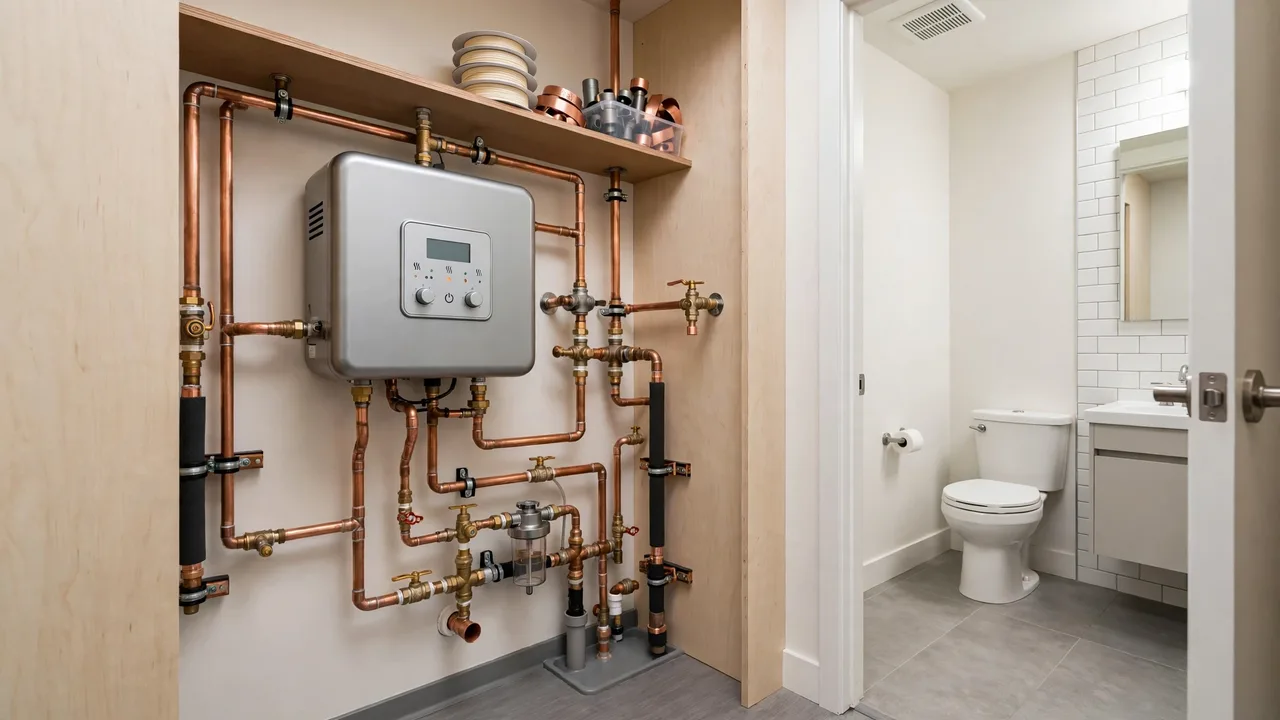
For a deeper walk-through of the sizing math and the factors that push a room up a size, see our guide on how to size a steam generator. The key point for small bathrooms is simple: measure the volume first, then let the volume choose the generator, not the other way around.
Venting in a Small Bathroom: What You Must Get Right
Venting is the limit that surprises most small-space buyers. A steam room fills a small bathroom with warm, wet air, and that air has to go somewhere after the session. If it stays, it condenses on cold walls, mirrors, and ceilings, and over time that dampness feeds mold and damages paint, plaster, and fittings.
The practical routine is short and non-negotiable. Run the exhaust fan during the session if the maker allows it, leave it running for at least 20 to 30 minutes after, open the window if you have one, and wipe down the walls and bench so the room dries instead of staying wet. A steam room is never maintenance-free, and a small bathroom hides dampness faster than a large one because there is less air to absorb it.
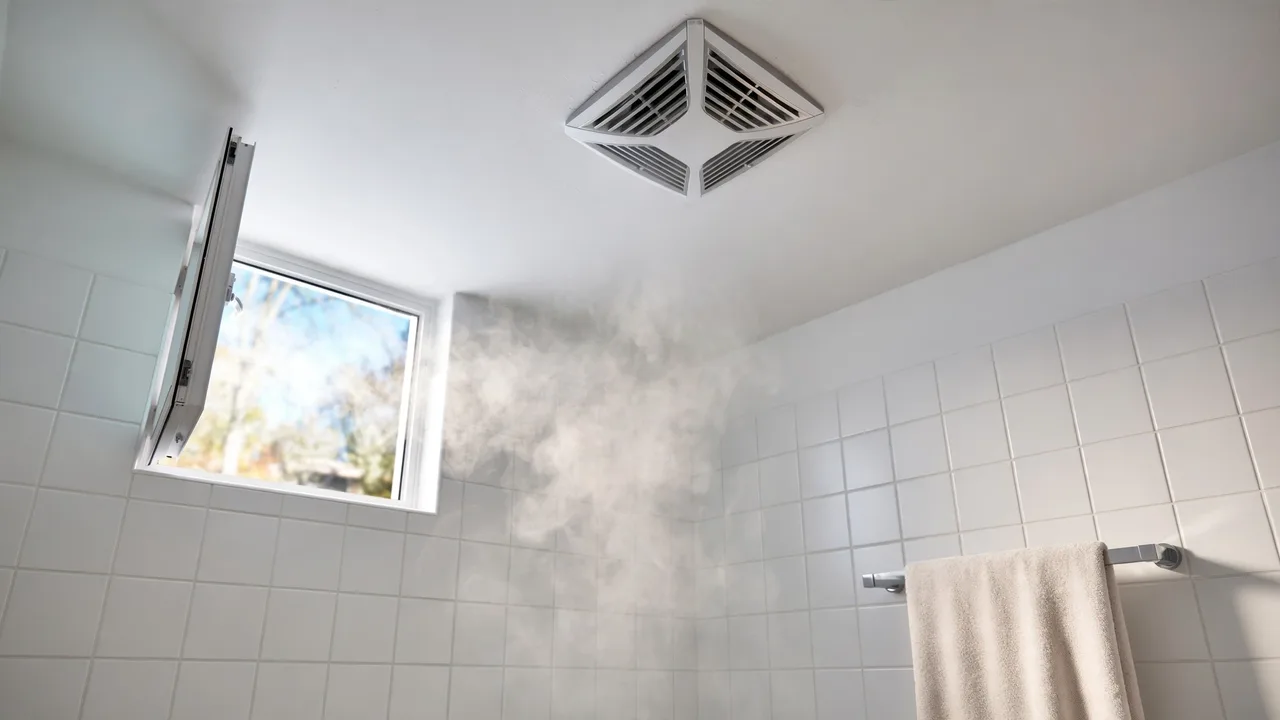
Drainage and moisture venting deserve their own detailed treatment, and we cover them in depth in our guide to steam shower drain and ventilation. The short version for small spaces is this: confirm the fan actually vents outside, confirm the drain can handle the generator’s discharge, and never assume a small bathroom will dry itself.
Signs Your Venting Is Not Keeping Up
- Condensation that stays on the mirror, walls, or ceiling long after a session ends.
- A musty smell that returns even when the bathroom looks clean.
- Peeling paint, soft plaster, or dark spots near the ceiling or around the shower.
- Towels and bath mats that stay damp for hours in a room that used to dry quickly.
If you see these signs, stop and fix the ventilation before you use the steam room again. Adding more steam to a room that cannot dry out only makes the problem worse, and it can damage a rental deposit or a remodel far faster than most owners expect.
Plumbing and Electrical: The Hidden Deal-Breakers
Space is visible, so it gets all the attention. Plumbing and power are hidden, so they cause most failed projects. A steam generator needs a cold water feed, a drain, and a dedicated electrical circuit, and all three must be installed by licensed professionals. Our guide to steam sauna electrical and plumbing requirements covers the detail; the small-space points below are the ones to check first.
Plumbing Checks
- The generator needs a reliable cold water supply and a drain that can take hot discharge water safely.
- Hard water shortens generator life, so many makers recommend a water filter or softener. Check your local water hardness before you buy.
- The steam head must sit where bathers cannot touch it accidentally, and the pipes feeding it need insulation and a safe route through the wall.
- Any leak in a small bathroom reaches the floor below fast. A waterproofed enclosure and a properly sealed drain are not optional extras.
Electrical Checks
- Steam generators usually need a dedicated circuit sized for their kilowatt rating, with proper grounding and protection. Your panel must have the capacity and a spare slot.
- Older apartments often have panels that are already full or wired for lower loads. An electrician can tell you in one visit whether an upgrade is needed, and that upgrade can cost more than the generator.
- Controls and wiring inside a wet room must be rated for the location. Never run extension cords into a steam room, and never wire a generator yourself.
- If the building has shared electrical systems or a strata or condo board, their rules may restrict new circuits even when your panel has room.
General guidance only: electrical and plumbing rules differ by place, so check your local code and permit office and use licensed electricians and plumbers for the work. A quote from a local professional is the only reliable answer to what your bathroom can support.
Moisture, Mold, and Drying: The Ongoing Job
A steam room adds far more moisture to a bathroom than a normal shower. That is the point of steam, and it is also the risk. The enclosure must be waterproofed as a steam room, not just as a shower, because steam reaches places that shower spray never touches, including the ceiling and the top of the walls.
Waterproofing and materials matter more in a small room, since every surface is close to the steam source. Our guide to steam room waterproofing, tiling, and ceiling materials explains which surfaces hold up and which ones fail early. The essentials are a continuous waterproof membrane, sealed joints, a sloped or properly sealed ceiling, and materials rated for constant humidity.
The daily habit is just as important as the build. After each session, run the fan, open the door or window to let damp air out, squeegee or wipe the walls and bench, and leave the door ajar until the room is dry. In a small bathroom, ten minutes of drying care protects the room far better than any single product choice.
Renting? Landlord and Lease Limits
If you rent, your lease is the first document to read, not the last. Most leases forbid permanent changes such as new plumbing, new electrical circuits, drilling through tiles, or removing fixtures without written permission. A built-in steam sauna needs nearly all of those, which is why most renters cannot install one even when the bathroom is big enough.
- Ask in writing before you buy anything. Describe exactly what you want to install, who will do the work, and how you will restore the bathroom when you leave. A verbal yes is hard to prove later.
- Expect a no for built-in work. Many landlords refuse permanent plumbing and electrical changes, and some buildings ban them outright through strata, condo, or management rules.
- Never hide an installation. A steam unit fitted without permission can breach the lease, void insurance, and leave you paying for water damage in your flat and the one below it.
- Check who pays for damage. Even a permitted install can leave you responsible for moisture damage if the room is not ventilated and dried properly.
- Plan your exit. If you do get permission, agree in writing on what stays, what is removed, and who restores the bathroom when the tenancy ends.
The rental-friendly path is a portable steam tent or box, which needs no changes to the flat at all. It plugs into a standard outlet, sets up in minutes, and packs away when the session ends. The steam is gentler and the space is smaller, but it is the only option that respects a lease that says no to building work. Our guide to portable steam sauna tent safety covers how to use one without soaking the room around it.
Portable Steam Saunas: The No-Build Option
Portable steam tents and boxes deserve a fair hearing, because they solve the three limits that stop most apartment projects: space, permission, and cost. They fold away into a closet, need no plumber, and need no landlord approval beyond normal appliance use. For a renter, that combination is hard to beat.
The trade-off is real. A tent cannot match the heat, the steam density, or the comfort of a built-in steam room, and the fabric needs drying after every use so it does not grow musty. Sit it on a waterproof mat, keep it away from walls and soft furnishings, and ventilate the room after the session, just as you would with a built-in unit.
If you are weighing portable models, our roundup of the best portable steam sauna boxes compares the main types. Choose a model with a stable frame, a generator you can clean easily, and a size that fits your floor with room to step out safely.
What a Steam Sauna Costs in a Small Space
Small does not always mean cheap. A shower conversion reuses the most expensive parts of the room, the waterproof shell and the drain, so it is usually the lowest-cost built-in route. A prefab unit adds the cost of the unit itself but saves on custom building work. A custom tiled room is the most expensive, because it pays for design, waterproofing, tiling, and trades all at once.
Running costs follow the generator size, so a small room is cheaper to run than a large one. Short sessions, a well-sealed room, and a generator matched to the volume all keep energy use down. Our guides to steam shower costs and the cost of running a steam sauna break down the purchase and running figures in detail, and they are the right place to check current numbers before you budget.
Treat every figure you see online as a planning estimate, not a quote. Prices vary by region, brand, installer, and the condition of your bathroom, and the plumbing and electrical work can cost more than the steam equipment itself. Get at least two local quotes for the full job, including the generator, the install, and any panel or ventilation work, before you commit.
Steam Sauna Safety Basics
Steam feels gentle, which makes it easy to stay in too long. The safety rules are short, and they matter more in a small, hot, humid room where the air can feel heavier than it looks.
- Hydrate before and after your session, and keep water nearby.
- Start with short sessions of 10 to 15 minutes and build up slowly, especially if you are new to steam.
- Leave immediately if you feel dizzy, nauseous, faint, or unwell in any way.
- Do not drink alcohol before or during a session.
- Let the room cool and dry before you clean it, and never stand on a wet, slippery floor in bare feet without checking your footing.
Check with a doctor first if you are pregnant, live with a heart or circulation condition or low blood pressure, or take medication that affects heat tolerance. Children, older adults, and anyone with a health condition should use shorter sessions and a lower temperature, and should never steam alone if they are at risk of feeling unwell. For temperature guidance, see our steam sauna temperature guide.
Small-Space Checklist Before You Decide
Run through this list honestly. If you can tick every box, a steam sauna is a realistic project. If several boxes fail, you have found your limit, and a portable unit or a different sauna type may serve you better.
- The shower or planned enclosure can be fully sealed, including the door and ceiling.
- The room volume is measured, and a generator size is confirmed against the maker’s chart.
- The electrical panel has capacity for a dedicated circuit, confirmed by a licensed electrician.
- The water supply and drain can support the generator, confirmed by a licensed plumber.
- The exhaust fan vents outside and the room can be dried after every session.
- The surfaces are waterproofed for steam, not just for shower spray.
- Your lease or building rules allow the work, with permission in writing if you rent.
- You have local quotes for the full job, not just the price of the generator.
If you are comparing sauna types for a remodel, our comparison of a steam sauna versus an infrared sauna for a bathroom remodel may help, since infrared needs no plumbing and no waterproofing, which changes the small-space math completely. And if you want the full build picture, our guide on how to build a steam sauna at home covers the project from planning to finishing.
When a Steam Sauna Is Not the Right Choice
A good decision sometimes means saying no. A steam sauna is the wrong choice when the bathroom cannot be sealed, when the panel cannot feed a generator, when the fan vents into the ceiling instead of outside, or when the lease forbids the work and no portable option appeals to you. It is also the wrong choice when the only spot for the generator is damp, inaccessible, or too far from the room.
In those cases, the alternatives are still good ones. An infrared sauna needs no plumbing and far less moisture control, which is why many apartment owners choose it instead; our guide to an infrared sauna in an apartment covers that path. A portable steam tent gives you steam with no building work at all. And sometimes the best answer is to wait until a remodel or a move gives the project the space and the services it needs.
Frequently Asked Questions
Can you put a steam sauna in a small bathroom?
Yes, in many cases. A steam sauna works well in a small, sealed space such as a shower enclosure, as long as the room can be sealed, the plumbing and power can support a generator, and the room can be dried out after every session.
Can you put a steam sauna in an apartment?
Owners often can, with building approval and licensed trades doing the plumbing and electrical work. Renters usually cannot install a built-in unit, because leases commonly forbid permanent plumbing and electrical changes. A portable steam tent or box is the usual rental-friendly alternative.
How much space do you need for a steam sauna?
A one-person steam shower can work in a space about the size of a standard shower stall, often around 32 by 32 inches to 36 by 36 inches, with a ceiling around 7 to 8 feet high. You also need room for the door to open, a bench to sit on, and access to the generator.
What size steam generator do I need for a small bathroom?
Generator size is matched to room volume. As typical manufacturer guidance, a room of about 63 cubic feet needs about 3 to 4 kW, a room of about 112 cubic feet needs about 4.5 to 6 kW, and a room of about 140 cubic feet needs about 6 to 7.5 kW. Always confirm the size against the chart for the exact generator you plan to buy.
Do you need special venting for a steam sauna in a small bathroom?
Yes. The bathroom needs an exhaust fan that vents outside, and you should run it during and for at least 20 to 30 minutes after each session, then wipe the room down and let it dry. Without that routine, damp air condenses on walls and ceilings and can lead to mold.
Can a renter install a steam shower?
Usually not without written landlord permission, and many leases forbid the permanent plumbing and electrical work a built-in steam shower needs. Ask in writing before buying anything, and consider a portable steam tent or box, which needs no changes to the flat.
How do you stop mold in a small steam bathroom?
Use a fully waterproofed enclosure with sealed joints and a sealed ceiling, run the exhaust fan after every session, wipe down the walls and bench, and leave the door ajar until the room is dry. If condensation or a musty smell persists, stop using the steam room and fix the ventilation first.
Is a steam sauna or an infrared sauna better for a small bathroom?
Steam fits a shower-sized space and gives a humid heat, but it needs plumbing, waterproofing, and careful drying. Infrared needs no plumbing and no waterproofing, but it needs a separate cabin and dry heat. For a small bathroom remodel, the choice depends on whether you can add plumbing and manage moisture.
A steam sauna for small bathroom spaces is a realistic project when the room, the services, and the rules all line up. Measure the space, check the panel and the plumbing, confirm the ventilation, and read the lease before you buy. When those checks pass, a small sealed shower can become a proper steam room. When they fail, a portable unit still gives you steam without risking the bathroom, the deposit, or the flat below.