
Quick answer: You can turn your shower into a steam sauna two ways. The free method uses only hot water and a sealed bathroom to create a steamy, sauna-like room in about 10 minutes. The permanent method installs a real steam generator and steam-tight enclosure, which produces true 100%-humidity steam and costs anywhere from $1,500 to $8,000+ installed. Both are explained below, along with the safety rules you actually need to follow.
You don’t need a spa membership to get that heavy, muscle-loosening steam feeling. Your bathroom already has the two ingredients a steam sauna needs: hot water and an enclosed space. The rest is just technique, or, if you want the real thing, the right hardware.
This guide covers both paths honestly. We’ll start with the free method you can try tonight, then walk through what it actually takes to install a permanent steam shower, including costs, materials, safety concerns, and how to keep mold from taking over your bathroom afterward.


Paid Links - As an Amazon Associate, I earn from qualifying purchases.
Key takeaways:
- A sealed bathroom and a hot shower can create a basic steam-sauna effect for free in about 10 minutes.
- A true steam shower needs a dedicated steam generator, a steam-tight enclosure, and professional electrical and plumbing work.
- Steam rooms typically run 110–120°F at 95–100% humidity, compared to a dry sauna’s 180–195°F with low humidity.
- People with heart conditions, low blood pressure, or who are pregnant should talk to a doctor before regular steam use.
- Ventilation after every session is non-negotiable. It’s the difference between a relaxing habit and a mold problem.
What Is a Steam Sauna, and How Is It Different From a Dry Sauna?
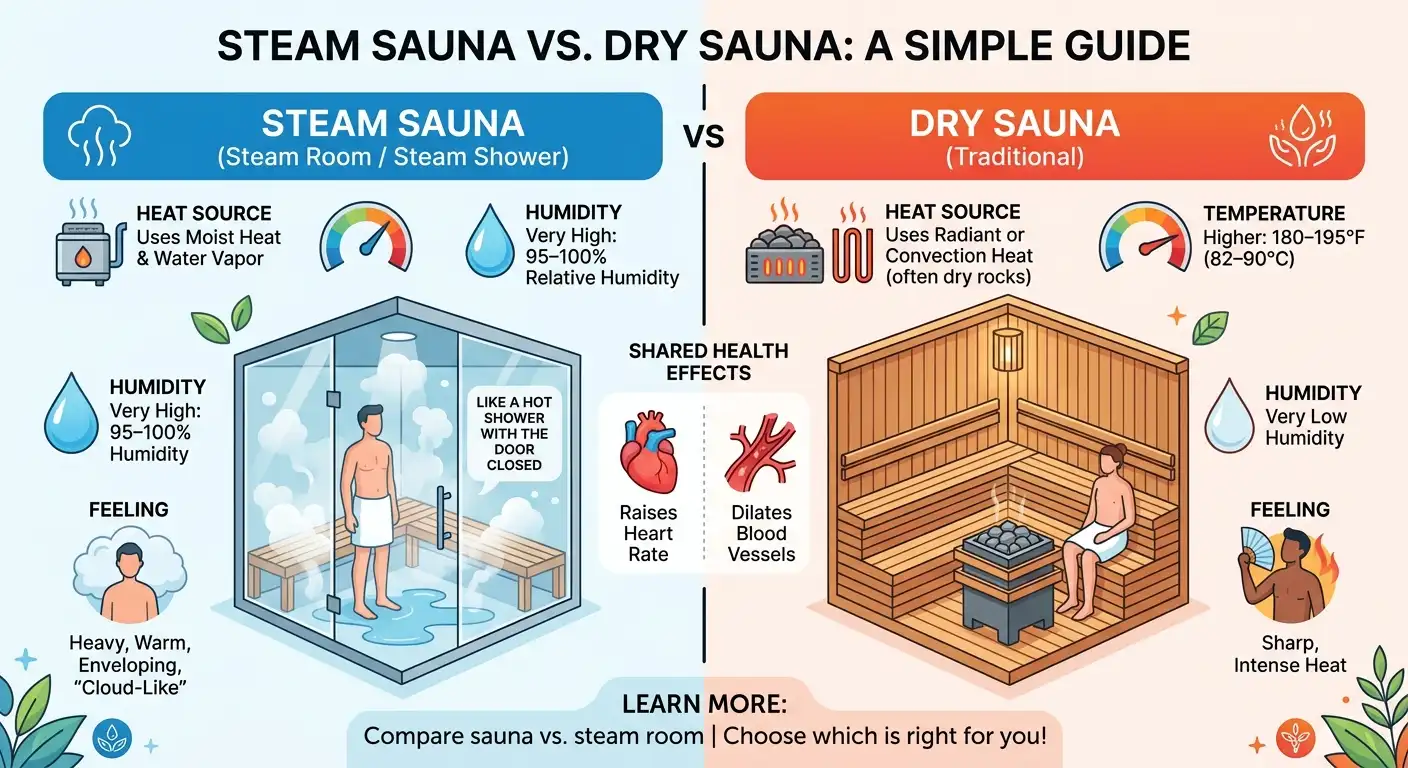
A steam sauna (also called a steam room or steam shower) is an enclosed space that uses moist heat, actual water vapor, to warm the body, typically to 110–120°F (43–49°C) at 95–100% relative humidity. A traditional dry sauna, by contrast, uses radiant or convection heat to reach much higher temperatures, usually 180–195°F, but with very low humidity.


Paid Links - As an Amazon Associate, I earn from qualifying purchases.
The health effects overlap (both raise your heart rate and dilate blood vessels), but they feel completely different. Steam feels heavy, warm, and enveloping. Dry heat feels sharp and intense. For a full breakdown, see our comparison of sauna vs. steam room and which is better, dry sauna or steam sauna. If you’ve ever left a hot shower with the bathroom door closed and felt like you were standing in a cloud, you’ve already experienced a rough version of a steam sauna. You just haven’t sealed the room or dialed in the technique yet.
Method 1: The Free, No-Tools Way to Steam Up Your Shower Tonight
This is the version anyone can do right now, with nothing to buy. It won’t match a commercial steam room’s 100% humidity, but it recreates the feeling closely enough that it’s genuinely worth doing before you spend a dollar on equipment.
What you’ll need
- A small bathroom (smaller rooms trap steam faster)
- Your water heater set as hot as safely possible
- A towel or two
- Optional: a bath mat plug for the tub drain, a washcloth with ice, a scent-free or lightly scented candle
Step-by-step
- Pick the smallest, most enclosed bathroom in your home. A large primary bathroom with a separate toilet room won’t trap steam well. A compact hall bathroom will.
- Close and seal the door. Roll a towel into a tube and press it into the gap under the door. This single step makes the biggest difference in how much steam builds up.
- Cover any vents or drafty windows. If your bathroom has an exhaust fan, leave it off for this method. You want to trap heat and moisture, not remove it. A towel over a window frame stops outside air from cooling the room down.
- Run the shower on hot only, aimed away from where you’ll sit. If you have a tub, plug the drain and let hot water fill it a few inches while you shower. The added surface area speeds up steam production. If you don’t have a tub, just aim the showerhead at the wall or floor.
- Let the room fill with steam for 5–10 minutes before you settle in. You’ll feel the humidity climb noticeably.
- Sit or stand somewhere away from the direct spray once the room is steamy, and breathe normally. Ten to fifteen minutes is a reasonable session length for most healthy adults.
- Ventilate immediately afterward. Open the door, turn on the exhaust fan, and squeegee the walls and glass. This step matters more than people think. See the mold section below.
Expert tip: Skip the ice-bucket trick you’ll see recommended elsewhere. A bucket of ice does almost nothing to increase steam density in a home bathroom; the humidity comes from the hot water evaporating, not from the ice. Your effort is better spent sealing the door gap and running the water longer.
What this method can’t do
It won’t hit true steam-room humidity (95–100%), it won’t get warmer than the hottest setting on your water heater, and it uses a lot of hot water, which isn’t cheap or especially water-wise if you do it often. Think of it as an occasional at-home ritual, not a daily wellness routine.
Method 2: Converting Your Shower Into a Real Steam Shower (Permanent Installation)
If you want an actual steam shower, one that hits near-100% humidity on demand, with a wall control and a real thermostat, that requires converting the physical shower enclosure. This is a legitimate home improvement project, not a weekend hack, and most homeowners hire a licensed contractor for at least the electrical and plumbing portions. If you want the full build process in more depth, see our guide on how to build a steam sauna.
The core components you need
| Component | What it does | Notes |
|---|---|---|
| Steam generator | Heats water in a sealed tank and pipes steam into the shower | Sized in kW based on the enclosure’s cubic footage |
| Steam head (steam outlet) | Releases steam into the shower at low height | Installed about 12 inches off the floor, away from seating, to prevent burns |
| Steam-tight enclosure | Fully sealed shower with a door and ceiling that trap vapor | Standard shower doors leak too much air for real steam retention |
| Waterproof wall and ceiling material | Ceramic tile, sealed natural stone, or a solid-surface panel over cement board | Standard drywall will fail under sustained humidity |
| Dedicated electrical circuit | Powers the generator safely | Steam generators typically require 220–240V and their own breaker |
| Control panel and thermostat | Lets you set time and temperature | Digital controls are now standard on most residential units |
| Bench or seating | Comfortable, heat-tolerant seating inside the enclosure | Teak or tiled benches are common |
How the generator is sized
Steam generators are sized by the cubic footage of the shower enclosure (length × width × height), not square footage. As a rough guide, a shower around 128 cubic feet typically calls for a 7kW generator, and larger or oddly-shaped enclosures need more wattage. Manufacturers such as Mr. Steam and ThermaSol publish sizing calculators. Use theirs for your exact numbers rather than a generic rule of thumb, since ceiling height, glass area, and insulation all shift the calculation.


Paid Links - As an Amazon Associate, I earn from qualifying purchases.
Step-by-step overview of a professional conversion
- Have a contractor assess the enclosure. They’ll check whether your existing shower pan, walls, and door can be sealed tightly enough, or whether they need to be rebuilt.
- Select and size the steam generator based on the enclosure’s true cubic footage, adding a buffer for glass doors and any gaps.
- Install the generator in a nearby closet, basement, or crawl space, typically within about 20 feet of the shower, never outdoors, where cold could damage it.
- Run a dedicated electrical circuit to the generator, and have an electrician tie in a pressure relief valve to prevent buildup or leaks.
- Install the steam head low on the shower wall, angled so steam disperses evenly and doesn’t blast anyone seated nearby.
- Waterproof everything. This means a proper membrane behind tile, sealed grout, and high-temperature silicone caulk at every seam: corners, the door frame, and any fixture penetration.
- Install a steam-tight door with a full perimeter gasket. Even a small gap will leak enough steam to keep the room from ever reaching full humidity.
- Test before finishing trim work. Run a full cycle and check every seal for leaks while the walls are still accessible.
Reality check from the trade: Contractors who specialize in these conversions consistently report that DIY attempts fail for one of three reasons: undersized generators, standard (non-steam-rated) shower doors that leak air, or drywall used behind tile instead of cement board, which breaks down under sustained humidity. If you’re not confident sealing an enclosure to an airtight standard, this is the phase worth hiring out even if you DIY the rest.
Steam Shower Kits vs. Full Custom Build vs. the Free Method
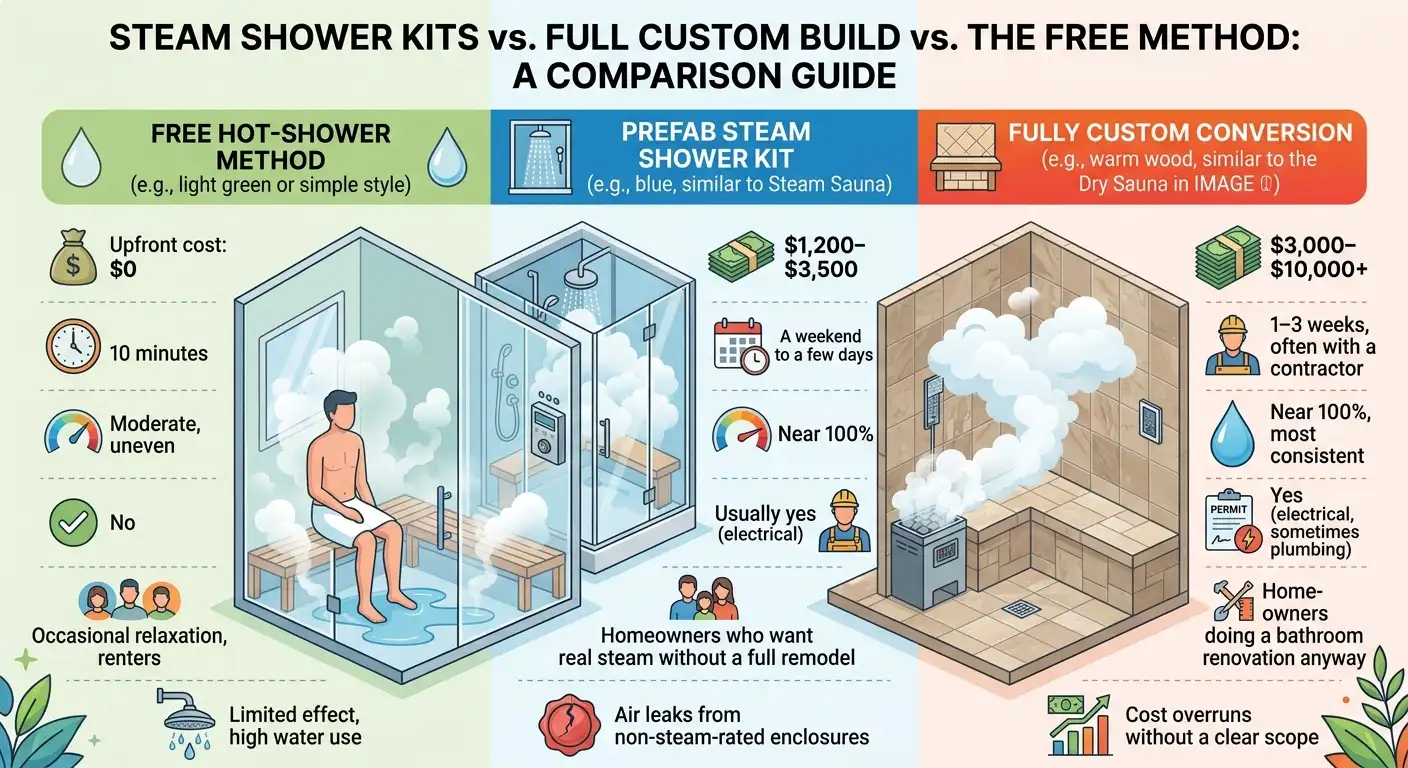
| Free hot-shower method | Prefab steam shower kit | Fully custom conversion | |
|---|---|---|---|
| Upfront cost | $0 | ~$1,200–$3,500 | $3,000–$10,000+ |
| Installation time | 10 minutes | A weekend to a few days | 1–3 weeks, often with a contractor |
| Humidity achieved | Moderate, uneven | Near 100% | Near 100%, most consistent |
| Permit/electrician needed | No | Usually yes (electrical) | Yes (electrical, sometimes plumbing) |
| Best for | Occasional relaxation, renters | Homeowners who want real steam without a full remodel | Homeowners doing a bathroom renovation anyway |
| Main risk | Limited effect, high water use | Air leaks from non-steam-rated enclosures | Cost overruns without a clear scope |
Is a Steam Sauna Actually Good for You? Benefits and Risks
Steam therapy has real, research-backed effects, though it’s not a medical treatment and shouldn’t replace one. For a deeper look, see is steam sauna good for you and our roundup of 11 proven health benefits of a steam sauna.
Documented benefits:
- Circulation: Heat causes peripheral vasodilation (blood vessels widen), which can temporarily lower vascular resistance and improve blood flow. This effect is well documented in cardiovascular research on heat therapy.
- Muscle and joint relief: Moist heat has been shown in small studies to ease delayed-onset muscle soreness and loosen stiff joints, similar to a warm-up before exercise.
- Sinus relief: Steam can loosen mucus and offer short-term relief from congestion, though the Cochrane Database review on steam inhalation for respiratory infections found it eases symptoms without speeding up recovery.
- Relaxation: Many people report lower stress after a steam session, though researchers aren’t fully certain whether this comes from reduced cortisol, an endorphin response, or simply the sensory experience of warmth and quiet.
Real risks and who should be cautious:
- Dehydration. A single session can cause meaningful fluid loss through sweat. Drink water before and after, and skip alcohol beforehand.
- Overheating. Longer isn’t better. Five to fifteen minutes is a reasonable range for most healthy adults; leave immediately if you feel dizzy, nauseated, or notice chest tightness. See how long should you stay in a steam sauna for a more detailed breakdown by experience level.
- Heart conditions. Anyone with low blood pressure, coronary artery disease, a history of stroke or TIA, or arrhythmia should talk to a doctor before using a steam room regularly.
- Pregnancy: Pregnant people should check with their doctor before using steam rooms or saunas, since sustained core-temperature increases are generally advised against during pregnancy.
- Children: Most guidance recommends against steam rooms and steam showers for young children, whose bodies regulate heat less efficiently than adults’.
- Skin conditions: Rosacea and active acne can both worsen with heat and humidity; a dermatologist’s input is worth getting if this applies to you.
- Illness: Skip a steam session if you’re feeling sick, both because warmth and moisture can encourage bacterial growth on skin, and because a shared steam room can spread illness to others. For more detail, see is it safe to use a sauna or steam room when sick.
None of this means steam sessions are risky for the average healthy adult. For most people, moderate, occasional use is a low-risk, genuinely pleasant habit. It just means “more heat, more often” isn’t automatically better.
How to Prevent Mold After Turning Your Shower Into a Steam Room
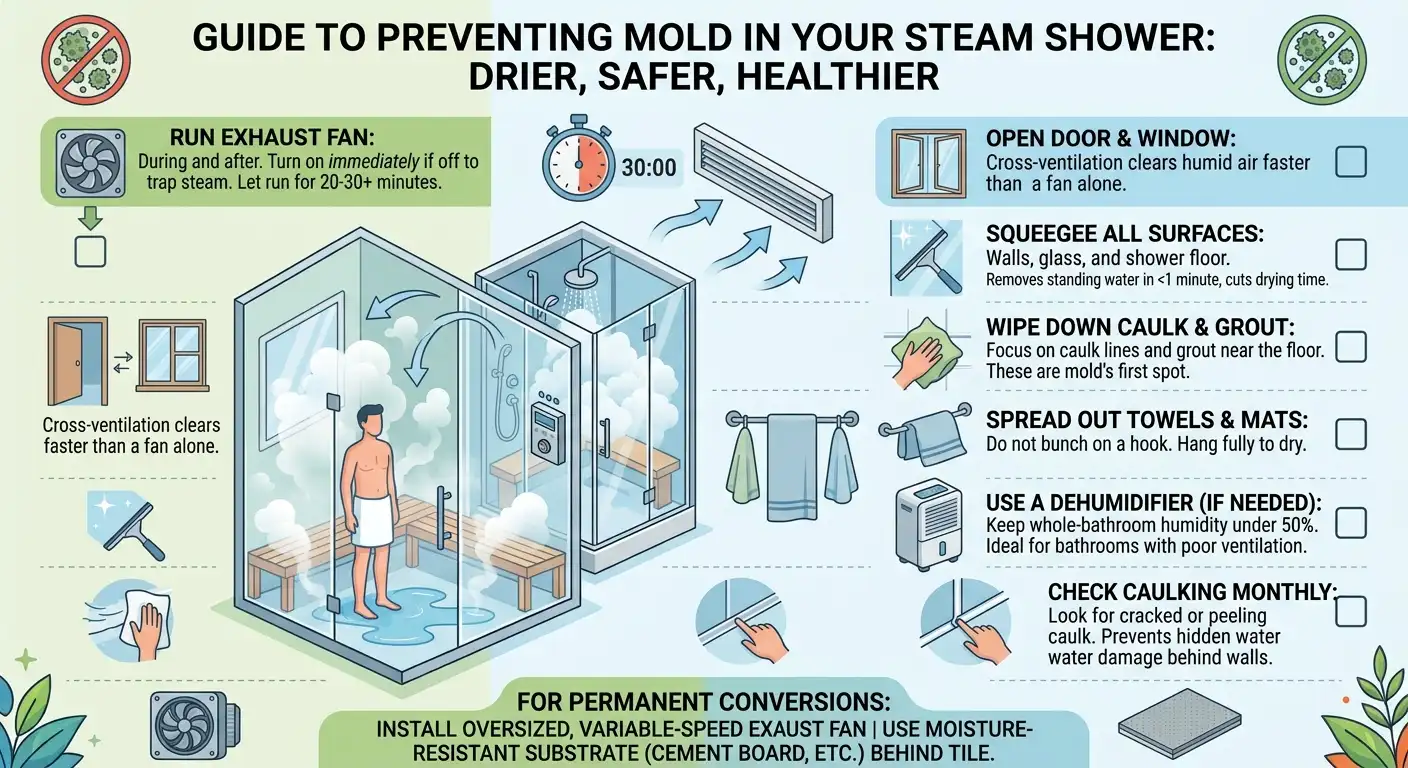
This is the step almost every quick tutorial skips, and it’s the reason people end up regretting a steaming habit. Mold needs moisture and time. Most species can start colonizing a wet surface within 24 to 48 hours, so the entire goal after a steam session is to dry the room out fast.
Do this every time, no exceptions:
- Run the exhaust fan during and after. If you used the free method with the fan off to trap steam, turn it on the moment you’re done and let it run for at least 20–30 minutes.
- Open the door and, if possible, a window. Cross-ventilation clears humid air far faster than a fan alone.
- Squeegee the walls, glass, and shower floor. This removes most of the standing water in under a minute and dramatically cuts drying time.
- Wipe down caulk lines and grout near the floor. These stay wet longest and are where mold typically starts.
- Hang towels and bath mats to fully spread out, not bunched on a hook, so they dry instead of staying damp against the wall.
- Keep whole-bathroom humidity under 50%, which is the threshold generally recommended to inhibit mold growth. A small dehumidifier helps in bathrooms without strong ventilation.
- Check caulking monthly. Cracked or peeling caulk lets moisture behind tile and walls, where you can’t see it until there’s a real problem.
If you’re planning a permanent steam shower conversion, build in an oversized, ideally variable-speed exhaust fan and confirm your contractor is using cement board or a comparable moisture-resistant substrate behind the tile, not standard drywall, which breaks down under sustained high humidity. Once it’s built, our guide on how to clean a steam sauna properly covers the ongoing maintenance routine.
Common Mistakes to Avoid
- Leaving a big gap under the door. Even a half-inch gap lets most of your steam escape before it builds up.
- Using a standard shower door on a “steam” conversion. Non-gasketed doors leak air constantly and will keep a real steam generator from ever reaching set humidity.
- Skipping ventilation afterward “just this once.” Mold doesn’t wait for a convenient day. Condensation left overnight is often enough to start a problem.
- Undersizing the generator to save money. An undersized unit runs constantly, wears out faster, and still won’t hit the humidity you wanted.
- Using regular drywall behind tile in a steam enclosure. It absorbs moisture and deteriorates, sometimes within weeks under real steam conditions.
- Staying in too long. Fifteen minutes of real steam is plenty for most people; there’s no bonus benefit to pushing to thirty or forty minutes, and it raises dehydration and overheating risk.
FAQs
Can you turn a regular shower into a steam shower?
Yes. You can create a basic steam-sauna effect for free by sealing your bathroom and running a hot shower, or you can install a real steam generator and steam-tight enclosure for true, on-demand steam. The free method takes minutes; a permanent conversion is a multi-day project.
How hot does a steam shower actually get?
Most residential steam showers run 110–120°F (43–49°C) at 95–100% humidity. That’s cooler than a dry sauna, which typically runs 180–195°F, but the near-total humidity makes it feel intensely warm.
Is it safe to turn your shower into a steam room?
For most healthy adults, yes, in moderation. People with heart conditions, low blood pressure, a history of stroke, or who are pregnant should check with a doctor first, and children generally shouldn’t use steam rooms.
How long should you stay in a home steam shower?
Five to fifteen minutes is a reasonable range for most healthy adults. Leave immediately if you feel dizzy, short of breath, or notice chest discomfort.
Does a steam shower cause mold?
It can, if the room isn’t ventilated afterward. Mold needs moisture and time, so running an exhaust fan, squeegeeing surfaces, and keeping humidity under 50% after every session is the real safeguard, not the steam itself.
Do I need a permit to install a steam shower?
In many areas, yes, because it typically involves new electrical circuits and sometimes plumbing changes. Requirements vary by municipality, so check with your local building department before starting a permanent conversion.
How much does it cost to convert a shower into a steam shower?
Prefab kits generally run $1,200–$3,500 before installation. A fully custom build with a licensed contractor typically runs $3,000–$10,000 or more, depending on generator size, enclosure materials, and labor rates in your area.
Can I install a steam generator myself?
The generator itself is often DIY-installable for someone comfortable with plumbing, but the electrical connection almost always requires a licensed electrician, both for safety and to meet local code. Many people DIY the tile and enclosure work but hire out the electrical and steam-head plumbing.
What’s the difference between a steam room and a sauna?
A steam room uses moist heat at a lower temperature (around 110–120°F) and near-100% humidity. A sauna uses dry heat at a much higher temperature (180–195°F) with low humidity. Both offer similar circulatory and relaxation benefits through different mechanisms.
Can I use my regular shower door for a steam conversion?
No. Standard shower doors aren’t airtight enough to hold steam in. A true steam shower needs a gasketed, steam-rated door or a fully sealed enclosure to reach and hold target humidity.
Where does the steam generator go?
It’s installed outside the shower enclosure, commonly in a nearby closet, basement, or crawl space, usually within about 20 feet of the shower, and never outdoors, since cold temperatures can damage the unit.
Will a steam shower increase my home’s resale value?
It can be a selling point in some markets, particularly for higher-end homes, though the return on investment varies widely by region and isn’t guaranteed the way a kitchen or bathroom remodel might be.
Can children use a steam shower?
Most health guidance advises against it. Children regulate body heat less efficiently than adults and are generally considered more vulnerable to overheating in steam rooms and saunas.
Is the free method worth doing regularly?
It’s fine as an occasional ritual, but it uses a lot of hot water and won’t reach the humidity of real steam. If you want this as a regular habit, a prefab steam kit is usually a better long-term value than repeatedly heating a full tank of hot water.
Final Thoughts
You don’t need a renovation budget to feel the relaxing pull of a steam sauna tonight. Sealing your bathroom and running a hot shower gets you most of the way there for free. But if steam becomes something you want a few times a week, the free method starts costing more in hot water than a modest steam kit would cost over time, and it will never hit true spa-level humidity.
Whichever path you choose, the two things that actually matter are sealing the space well enough to hold the steam, and ventilating it well enough afterward to keep mold out. Everything else (candles, scents, ice buckets) is optional atmosphere. Start with the free method tonight, and if you love it, that’s your answer on whether a permanent steam shower is worth the investment.