
Choosing the wood for an outdoor sauna is one of the few decisions you cannot easily undo later. The cladding faces rain, snow, sun and frost, while the benches inside must stay comfortable against bare skin, cycle after cycle of heat and cooling. Thermowood, cedar and spruce are the three names that come up again and again, and each one earns its place for different reasons.
This guide compares the three woods head to head, but always through an outdoor lens. That matters, because a wood that performs beautifully inside a sheltered indoor sauna can struggle once it becomes an exterior wall. We look at weather resistance, how each wood behaves when it heats and cools, what maintenance it honestly needs outdoors, and which one fits your climate, your budget and the look you want.
Please note: This article is general guidance only, not medical advice and not a substitute for local building rules or a licensed professional. Saunas are wellness tools, not treatments. If you are pregnant, live with a heart or circulation condition or low blood pressure, or take medication that affects heat tolerance, check with a doctor before using a sauna. Always check your local permit and code office before building, and use licensed electricians and other licensed professionals for electrical and installation work.


Paid Links - As an Amazon Associate, I earn from qualifying purchases.
Why Outdoor Sauna Wood Is a Different Question
An indoor sauna lives in a stable environment. An outdoor sauna does not. Its outer walls soak up driving rain, bake in summer sun, freeze overnight in winter and then thaw again, sometimes several times in a single week. That cycle of wetting, drying, freezing and heating is what ages wood fastest.
It also means you are really choosing two woods, not one. The exterior cladding is a weather shield. The interior panelling and benches are a comfort surface. Some builders use the same species throughout for a matching look, while others mix: a tough, weather-hardy cladding outside and a softer, cooler-feeling wood inside. Both approaches work, as long as each layer is chosen for the job it actually does.
Three more outdoor realities shape the choice. First, ventilation and drainage matter as much as the species itself: even the best wood will suffer if water pools against it or damp air has nowhere to go. Second, the roof and its overhang do quiet, constant work protecting the walls below them. Third, anything that touches the ground needs special attention, because ground contact is where rot usually starts.
The Three Woods at a Glance
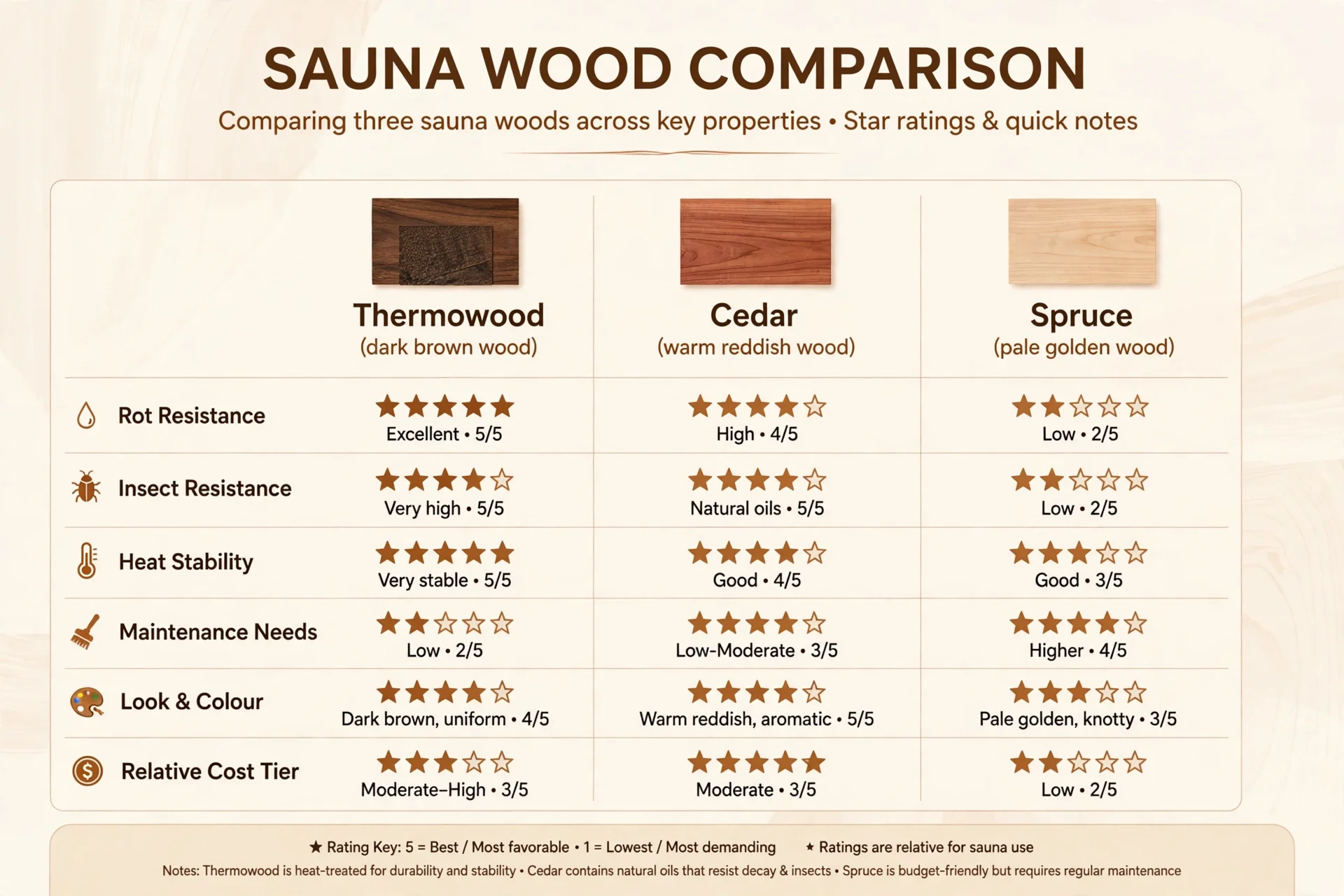
Before the detail, here is the short version. Thermowood is spruce or pine that has been heat-treated in a kiln until its structure changes, making it far more stable and resistant to rot and insects than the untreated wood it started as. Cedar, usually western red cedar, is naturally rich in oils that resist decay and insects, and it is famous for its warm colour and scent. Spruce, usually Nordic spruce, is the pale, affordable classic of Finnish sauna building, but it needs more protection outdoors than the other two.
Thermowood: The Engineered Workhorse
Thermowood is not a tree species. It is a treatment. Softwood, most often spruce or pine, is heated to high temperatures in a kiln with steam, which changes the wood’s cell structure. The result is a darker, chocolate-brown timber that absorbs far less moisture than untreated wood and is much less appealing to fungi and insects. That combination is exactly what an exterior wall needs.
Its biggest practical advantage outdoors is stability. Because thermal modification drives out much of the wood’s tendency to swell and shrink with moisture, Thermowood boards move less through wet and dry seasons. Fewer gaps opening and closing means fewer places for water to sit, and doors and panels stay truer over time. For a cabin that will face harsh winters and wet autumns, that stability is a genuine, everyday benefit rather than a lab statistic.


Paid Links - As an Amazon Associate, I earn from qualifying purchases.
Inside the sauna, Thermowood has a different appeal. It stays comfortable to sit on because it does not conduct heat aggressively, and its dark tone gives the interior a modern, calm look that many builders prefer to pale wood. It also produces very little resin, which matters when a bench is heated daily: sticky resin spots are one of the small annoyances that can spoil an otherwise good sauna.
There are trade-offs to weigh honestly. Thermowood is more brittle than untreated wood, so boards need careful handling and correct fixing, and it is not a wood to force into place. Its dark colour also fades to a silver-grey if left unoiled in strong sun, which some owners love and others do not. Finally, it usually sits in a higher price bracket than untreated spruce, although it is often more affordable than premium cedar. Treat it as a long-term investment in low maintenance rather than the cheapest way to clad a cabin.
Cedar: The Natural Classic
Western red cedar has been the prestige sauna wood for generations, and its reputation is earned. The wood is naturally rich in compounds that resist decay and insects without any chemical treatment, and it is light, straight-grained and easy to work. Open the door of a cedar sauna and the scent alone tells you why people pay more for it.
Outdoors, cedar’s natural durability is its headline strength. A well-built cedar cabin with a good roof overhang and airflow behind the cladding can age gracefully for many years, weathering to a soft silver-grey if left untreated. That silvering is a look, not a failure: the wood beneath the greyed surface generally remains sound. Owners who want to keep the warm reddish-brown colour need to oil it periodically, which is a maintenance commitment worth deciding on before you buy.
Inside, cedar is a pleasure to sit against. It stays relatively cool to the touch, it is soft under bare skin, and it is dimensionally stable for a natural wood, meaning benches and panelling hold their shape well through heating cycles. It also has very low resin content, so you are unlikely to meet the sticky patches that can appear with some pines and spruces.
The honest downsides are cost and softness. Good clear cedar is the most expensive of the three options in most markets, and its softness means it dents and scratches more easily than denser woods. In a busy family sauna, bench edges and lower panels will show wear sooner. Cedar is also worth sourcing carefully: quality varies, and knotty, lower-grade boards will not behave like the clear, straight-grained timber the species is famous for.
Spruce: The Affordable Traditionalist
Spruce is the wood of the traditional Finnish sauna. Pale, fine-grained and light in colour, it brightens a small interior and keeps the classic sauna look that many people picture. It is widely available, easy to work, and usually the most affordable of the three, which is why it remains the default choice for many sauna kits.
Inside a sauna, spruce performs well. It is comfortable against skin, it does not overheat quickly, and its pale colour makes a compact cabin feel larger. The catch is resin: spruce can weep resin when heated, particularly around knots. Choosing knot-free, high-grade boards for benches and backrests reduces this a lot, and it is one of the clearest cases in sauna building where paying for better grading pays off in daily comfort.
Outdoors, untreated spruce is the most vulnerable of the three. It absorbs moisture readily, and without protection it is more open to fungal decay and insect damage than cedar or Thermowood. That does not make it a bad choice, but it does make it a choice that depends on protection: a generous roof overhang, ventilated cladding, a sound base that keeps timber off wet ground, and a regular oiling or treatment routine for the exterior. In a sheltered spot with a good roof and an owner who enjoys maintenance, spruce can serve well for years.
Think of spruce as the budget-friendly option with a maintenance contract attached. If you love the pale Nordic look and you are happy to treat the exterior on schedule, it delivers a beautiful sauna for less money. If you want to build it and largely forget it, one of the other two woods is a better fit.
Exterior Cladding vs Interior Benches: Choose for Each Job
One of the most useful ways to decide is to split the sauna in two. The outside must survive weather. The inside must feel good, stay stable and avoid resin. A wood that is excellent at one job is not automatically excellent at the other, and mixing species is a normal, sensible building practice rather than a compromise.
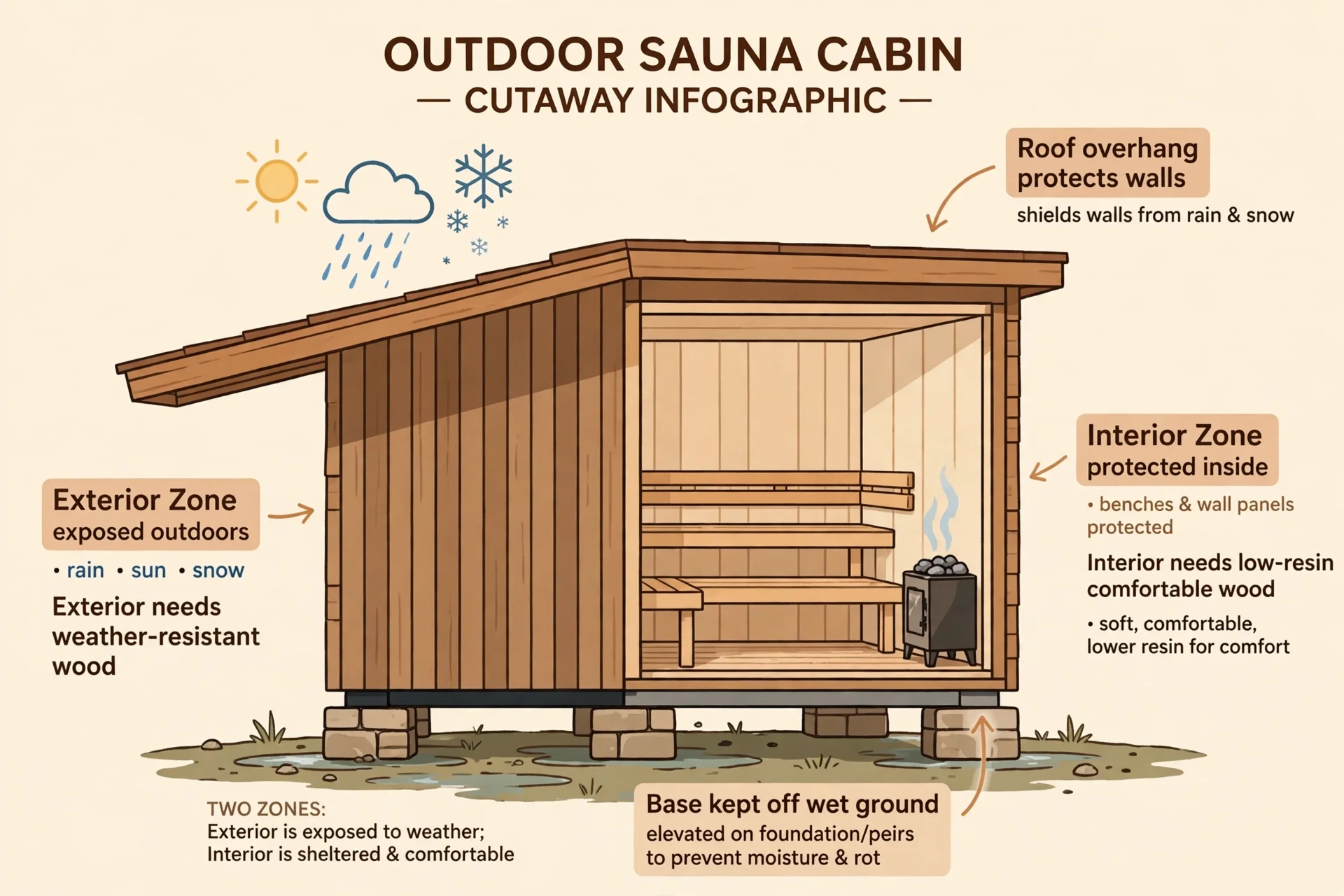
If you are buying a ready-made kit, check which wood is used where rather than assuming the whole cabin is one species. Many kits use Thermowood or cedar outside and spruce inside, which is a smart combination. If you are building from scratch, the same logic applies: spend the durability budget on the exterior, and choose the interior for comfort and looks.
Durability, Maintenance and Cost Compared
No single wood wins every category, which is why the comparison matters. Thermowood offers the best combination of weather resistance and dimensional stability, with moderate maintenance: occasional oiling if you want to hold its colour, less often if you accept silvering. Cedar offers natural durability and the most prized look and scent, but at the highest price and with a softness that shows wear. Spruce offers the lowest upfront cost and the classic pale interior, but demands the most consistent exterior care.
| Factor | Thermowood | Cedar | Spruce |
|---|---|---|---|
| Weather resistance outdoors | High — heat treatment resists rot and insects | High — natural oils resist decay and insects | Moderate — needs protection and treatment |
| Shape stability | High — swells and shrinks less with moisture | Good — stable for a natural wood | Moderate — moves more with moisture changes |
| Resin on hot surfaces | Very low | Very low | Can weep, especially around knots |
| Comfort against skin | Good — stays comfortable when hot | Excellent — soft and cool to the touch | Good with knot-free, high-grade boards |
| Exterior maintenance | Low to moderate — oil to keep colour | Moderate — oil to keep colour, or let it silver | Higher — regular treatment schedule needed |
| Relative cost | Mid to high | Highest of the three | Lowest of the three |
| Best outdoor role | Cladding and interior alike | Cladding and benches | Interior, or sheltered exterior with care |
Cost deserves a plain note. Prices vary widely by region, supplier, board grade and whether you buy a kit or loose timber, so treat any ranking here as relative, not as a quote. Get local quotes for the exact grade and profile you plan to use, and compare like with like: clear, knot-free cedar and rough, knotty spruce are not the same product tier, and the price gap partly reflects that.
Matching the Wood to Your Climate
Climate is the tiebreaker when two woods look equally appealing. In wet, coastal or snowy regions, where walls stay damp for long stretches, Thermowood’s low moisture uptake and stability give it the edge. Cedar also handles wet climates well, but it needs its ventilation and drainage details done properly, as every wood does.
In hot, sunny climates, the question shifts to sun and heat. All three woods will silver if left unoiled, and all benefit from a roof overhang that shades the walls. Cedar and Thermowood hold their shape better under strong sun and dry heat, while untreated spruce in harsh sun needs its treatment schedule kept up more strictly.
In cold climates with freeze-thaw cycles, trapped moisture is the enemy. Wood that absorbs less water and dries faster suffers less when that water freezes and expands. That points again to Thermowood or cedar for the exterior, with careful attention to drainage and to keeping the base clear of snow and standing water through winter. Our winter guide covers heating and snow care in more detail.
Maintenance: What Each Wood Actually Asks of You
Maintenance is where many buyers are surprised, because the brochure version and the real version differ. Here is the honest routine for each wood, outdoors. Interior care is lighter for all three: regular cleaning, prompt wiping of spills, and occasional oiling of benches with a product made for sauna wood.
Whichever wood you choose, three habits protect it more than any product. Keep the base clear of soil, leaves and snow so timber is not sitting in damp material. Keep gutters and roof edges working so water is thrown clear of the walls. And let the sauna dry and ventilate after use rather than sealing damp air inside. These basics cost little and add years to any cladding.
Heater Type, Fire Safety and Wood Choice
Wood choice and heater choice interact, especially with a wood-fired stove. Follow the stove manufacturer’s instructions for clearances and heat shielding, never leave a wood-fired stove unattended, and keep ash and chimney care on a regular routine. These rules apply regardless of which timber you clad the cabin in, and they are not a place to improvise.
One practical point: the interior wood nearest the heater sees the most intense heat cycling, so a stable, low-resin wood earns its keep there. If you are mixing species, putting your best interior timber around the heater wall and on the upper benches is money well spent. If you are still deciding between heater types, our comparison of wood-fired and electric heaters for outdoor saunas will help.
Decision Guide: Which Wood for Which Buyer
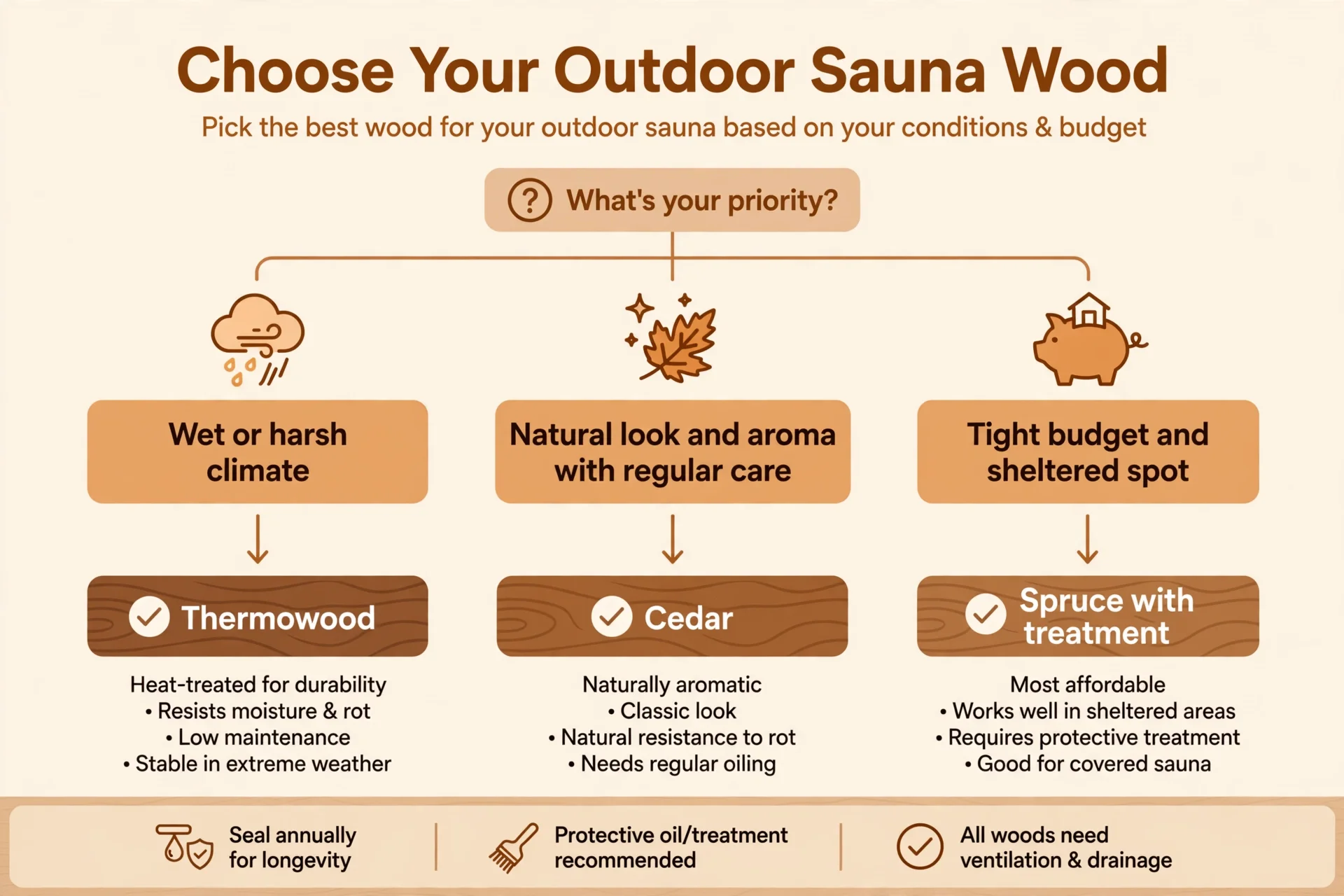
There is no wrong answer among the three, only a mismatch between wood and situation. The expensive mistake is not choosing cedar over Thermowood or vice versa. It is choosing a low-protection wood for an exposed site and then skipping the maintenance it needs, or paying for premium timber and then letting water pool against its base. Match the wood to the exposure, protect it with good design, and keep up the small routines, and any of the three will give you years of good saunas.
Before You Build: Planning Steps Worth Doing First
Wood is only one part of the project. Before ordering timber, work through the practical foundations: the base your sauna will sit on, whether your area needs a permit, what the whole project will cost, and which cabin shape suits your garden. Each of these decisions interacts with wood choice — a barrel shape, for example, sheds water differently from a flat-walled cabin, and a raised foundation changes how much moisture the lower boards face.
See our guides on the best foundation for an outdoor sauna, whether you need a permit for an outdoor sauna, outdoor sauna costs, and barrel vs cabin vs pod sauna shapes. For winter use, read our outdoor sauna winter heating and snow tips, and for heater choice, our wood-fired vs electric outdoor sauna heater comparison. For keeping the wood itself in good shape, see our guides to sauna wood oil and sauna wood wax.
Sauna Safety Basics
Whatever wood you choose, the session rules stay the same. Hydrate before and after, start with short sessions and build up gradually, and leave immediately if you feel dizzy or unwell. Do not drink alcohol before or during a sauna session. If you are pregnant, live with a heart or circulation condition or low blood pressure, or take medication that affects heat tolerance, check with a doctor first. Keep children, elderly users and pets to conservative, supervised use.
Frequently Asked Questions
What is the best wood for an outdoor sauna?
There is no single best wood for every outdoor sauna. Thermowood is the strongest all-rounder for exposed, wet or harsh climates because of its stability and resistance to rot and insects. Cedar is the best choice if you want natural durability with a warm look and scent and are happy with its higher cost. Spruce is the best budget option, especially for interiors and sheltered sites, as long as you keep up exterior treatment.
Is Thermowood better than cedar for an outdoor sauna?
Thermowood is generally more stable and lower-maintenance outdoors, and it usually costs less than premium cedar. Cedar wins on natural beauty, scent and a softer feel against skin. For a fully exposed cabin where low maintenance matters most, Thermowood has the edge. For a showpiece sauna where look and aroma matter most, cedar is hard to beat.
Can I use spruce for the outside of an outdoor sauna?
Yes, but it needs protection. Untreated spruce absorbs moisture and is more open to decay and insects than cedar or Thermowood, so it relies on a good roof overhang, ventilated cladding, a well-drained base and a regular exterior treatment routine. In a sheltered spot with that care, spruce works well. In a very exposed or wet site, Thermowood or cedar is the safer exterior choice.
Does outdoor sauna wood need oiling?
Exterior wood benefits from oiling if you want to preserve its colour, but it is not always essential for the wood’s survival. Thermowood and cedar can be left to weather to silver-grey, while spruce needs treatment more consistently to stay protected. Interior benches and panelling can be oiled occasionally with a product made for sauna wood, following the product’s instructions.
Can I mix different woods in one outdoor sauna?
Yes, mixing is common and sensible. Many builders use a weather-resistant wood such as Thermowood or cedar for exterior cladding and a comfortable, affordable wood such as spruce for interior panelling. The key is choosing each wood for the job it does: weather resistance outside, comfort and stability inside.