
Wood-Fired vs Electric Outdoor Sauna Heater: Heat, Cost and Convenience Compared
Choosing between a wood-fired and an electric heater is one of the biggest decisions you will make for an outdoor sauna. Both can produce a wonderful sauna session, but they feel different, cost different amounts to run, and ask different things of you before and after each use.
This guide compares the two side by side, so you can pick the heater that fits your sauna, your property, and the way you actually like to sauna.
Please read this first. This article is general guidance only, not professional, building, electrical, or medical advice. Rules for sauna heaters, chimneys, electrical work, and permits vary by location, so check with your local code or permit office and follow your heater manufacturer’s instructions before you buy or install anything.


Paid Links - As an Amazon Associate, I earn from qualifying purchases.
Electrical work should be done by a licensed electrician. For wood-fired stoves, follow the manufacturer’s clearances exactly, never leave a lit stove unattended, and keep up with chimney and ash care. Sauna safely: stay hydrated, keep sessions short, leave the sauna if you feel unwell, and do not drink alcohol before or during a session. If you are pregnant, have a heart condition, take medication, or have any health concern, check with your doctor before using a sauna.
How Each Heater Works
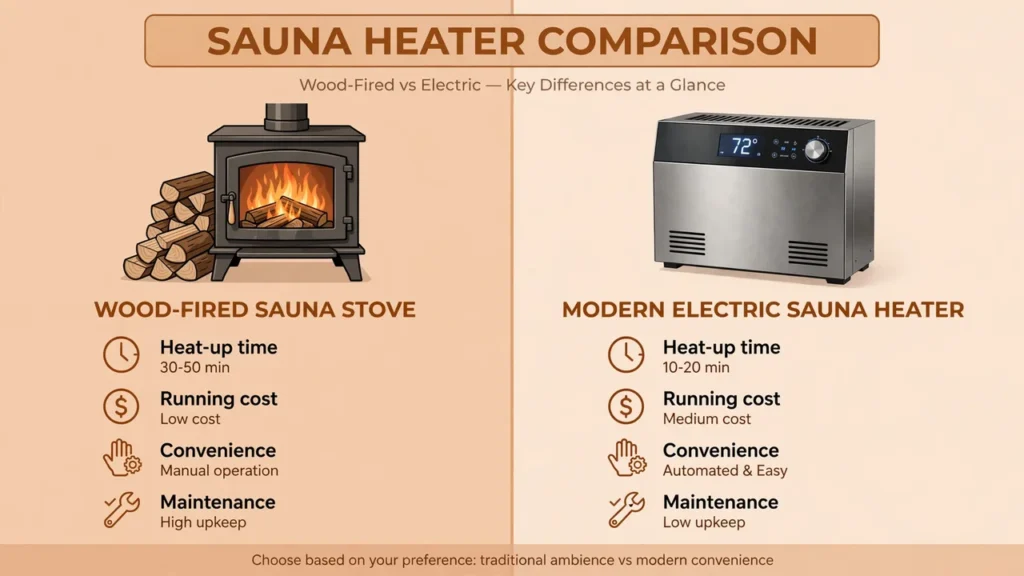
A wood-fired sauna stove burns logs in a firebox and heats the sauna stones above it. The heat is radiant and direct, and many sauna lovers say it feels softer and more traditional. You control the heat by adding wood and adjusting the airflow, which takes a little practice.
An electric sauna heater uses heating elements to warm the same kind of stones. You switch it on, set the temperature on a control panel, and the heater does the rest. There is no fire to tend and no wood to store, which is why electric heaters are popular for busy households.
Both types heat the stones, and both let you pour water on the stones for steam, known as löyly. The difference is less about the stones and more about how the heat is made and managed.
Heat-Up and Heat Quality
Wood-fired heaters are often described as giving a deep, enveloping heat. Part of that is the fire itself: the crackle, the smell of wood, and the ritual of building the fire are part of the experience for many people. Heat-up tends to be a slower, more hands-on process, because you light the fire and tend it until the room is ready.
Electric heaters are more predictable. You set a temperature and wait, without checking a fire or adding fuel. The heat is steady and easy to repeat from one session to the next, which suits people who want a sauna ready with little fuss.


Paid Links - As an Amazon Associate, I earn from qualifying purchases.
Neither heat is automatically better. If you love the ritual and the atmosphere of a fire, wood will probably win on feel. If you value a simple, repeatable session, electric is hard to beat.
Cost: What to Budget For
Upfront, a wood-fired stove and an electric heater can sit in a similar ballpark, but the full cost picture is wider than the heater alone. A wood stove usually needs a chimney, flue parts, and a suitable base, while an electric heater usually needs a dedicated electrical circuit installed by a licensed electrician.
Running costs also differ. Wood costs depend on whether you cut, buy, or season your own firewood, and on how often you sauna. Electricity costs depend on your local tariff, the heater’s size, and how long each session lasts. That is why any figure you see online should be treated as a planning estimate only, never as a quote for your home.
To compare fairly, add up the heater, installation, fuel or electricity, and ongoing maintenance for a typical year of use. For a broader look at what an outdoor sauna can cost overall, see our guide to outdoor sauna costs.
Maintenance matters too. A wood stove needs ash removal, chimney cleaning, and occasional checks of the firebox and door seals. An electric heater needs far less routine care, though elements and controls can wear out over time and need replacement.
Convenience and Everyday Use
Convenience is where the two heaters pull furthest apart. An electric heater suits a quick evening session: switch it on, get changed, and step in when it is ready. Some models even offer timers or remote controls, though you should always follow the manufacturer’s safety guidance for any timer or remote feature.
A wood-fired heater asks more of you, and many owners see that as a feature rather than a chore. Lighting the fire, feeding it, and cleaning up afterwards become part of the ritual. If you sauna mainly at a cabin or off-grid property, wood also has a practical advantage: it does not depend on the electricity supply.
Think honestly about how you will use the sauna on a normal weeknight, not just on a perfect weekend. The heater you will actually use is the right heater, even if the other one sounds more romantic on paper.
Sizing and Installation Notes
Heater size must match your sauna room. A heater that is too small will struggle to reach temperature, while one that is far too large can make the room hard to control. Manufacturers publish sizing guidance for their own models, so use that guidance for the exact heater you are considering rather than guessing.
Your sauna’s shape matters as well. A barrel, cabin, or pod sauna heats differently because of its volume, insulation, and airflow, so read our comparison of barrel vs cabin vs pod saunas before you settle on a size. Insulation, bench layout, and ventilation all affect how a heater performs in real life.
Installation rules also differ. Electric heaters need the right circuit, cable, and clearances, installed by a licensed electrician. Wood stoves need correct clearances to combustible materials, a properly installed chimney that clears the roof as the manufacturer directs, and a non-combustible base. When in doubt, ask a professional rather than improvising.
Safety Basics for Both Heaters
Every sauna heater gets very hot, so safety starts with following the manufacturer’s instructions for clearances, guards, and ventilation. Keep towels, buckets, and anything flammable away from the heater, and make sure children are supervised around a hot sauna.
For wood-fired stoves, never leave a lit stove unattended, let ash cool fully before disposal, and have the chimney inspected and cleaned on the schedule your manufacturer and local guidance recommend. A blocked or damaged chimney is a serious fire and smoke risk, so do not ignore soot build-up or strange smells.
For electric heaters, never modify the wiring, cover the heater, or pour water in a way the manufacturer does not allow. If the heater, cable, or control shows damage, stop using it and have it checked by a qualified professional. You can learn more about the electric option in our guide to the electric sauna stove.
Whichever heater you choose, good stones matter for safe, even steam. Our guide to sauna stones for heaters explains what to look for and when to replace cracked or crumbling stones.
Which Heater Should You Choose?
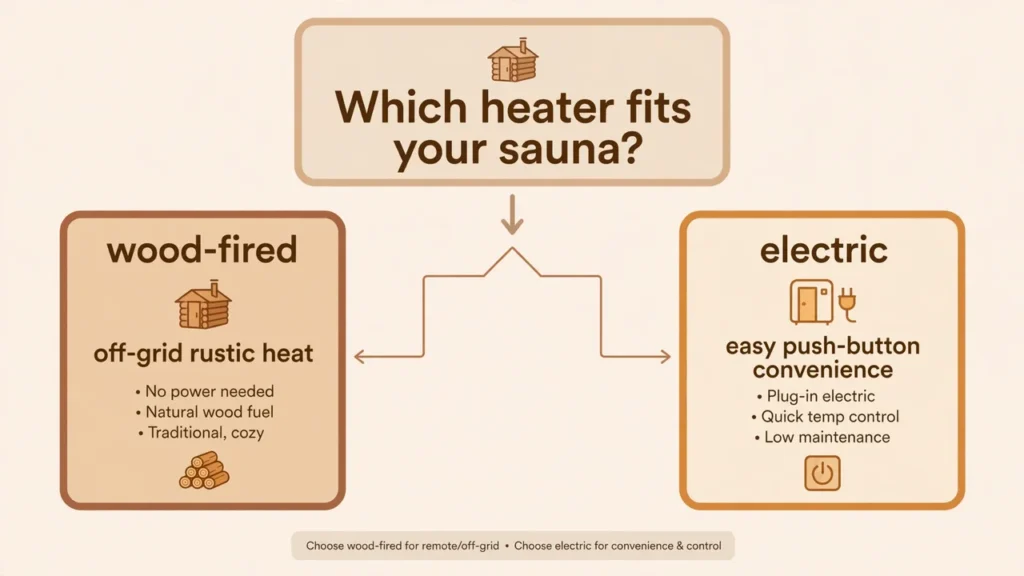
Choose wood-fired if you love the traditional ritual, sauna off-grid or at a cabin, enjoy tending a fire, and have dry firewood storage and time for chimney care. It rewards patience with atmosphere that no switch can quite copy.
Choose electric if you want the simplest sessions, sauna often on weeknights, prefer precise temperature control, or do not want to store wood and clean a chimney. It is also the easier choice where a suitable electrical supply is already available.
Still torn? Ask yourself three questions: how often will I sauna, how much hands-on effort do I enjoy, and what does my property already support? Your honest answers will usually point to one heater more clearly than any comparison chart can.
Frequently Asked Questions
Is a wood-fired or electric sauna heater better?
Neither is better for everyone. Wood-fired heaters offer a traditional feel and work off-grid, while electric heaters offer simpler, more predictable sessions. The best choice depends on how often you sauna, how much hands-on effort you enjoy, and what your property supports.
Which heater is cheaper to run?
It depends on your local electricity tariff, firewood prices, and how often you sauna. Compare the heater, installation, fuel or electricity, and maintenance over a typical year, and treat any online figure as a planning estimate only, not a quote.
Can I use an electric heater in a sauna without mains electricity?
No, an electric heater needs a suitable electrical supply installed by a licensed electrician. If your sauna site has no mains electricity, a wood-fired heater is usually the practical choice, subject to local rules and manufacturer guidance.
Do wood-fired saunas need more maintenance?
Yes, generally. Wood-fired stoves need ash removal, chimney cleaning and inspection, and checks of the firebox and seals. Electric heaters need less routine care, though elements and controls may need replacement over time.
Are saunas good for your health?
Saunas are wellness tools for relaxation and enjoyment, not treatments. They do not cure illness, detox the body, or guarantee weight loss. Stay hydrated, keep sessions short, leave if you feel unwell, and check with your doctor if you are pregnant, have a heart condition, or take medication.