
You step outside, heater switched on, towel in hand, and the same question comes up every time. How long before this sauna is actually ready? The honest answer is that it depends on your heater, your sauna size, and the weather outside. Most outdoor saunas take somewhere between 30 and 75 minutes to reach a comfortable bathing temperature.
This guide gives you realistic preheat ranges by heater type, explains what changes those times, and walks you through a simple routine you can repeat every session. All times below are typical ranges, not guarantees. Your sauna, your heater, and your climate will shift the numbers a little in either direction.
Please note: This article is general information, not medical advice. Saunas are wellness tools, not treatments. Hydrate before and after, keep sessions short, and leave right away if you feel dizzy or unwell. If you are pregnant, live with a heart or circulation condition, or take medication that affects heat tolerance, check with your doctor first. Preheat times in this guide are typical ranges and will vary with sauna size, insulation, heater power, and weather.


#Paid Links
The Short Answer: Typical Preheat Times at a Glance
If you only need one number to plan around, use 45 minutes. That covers most small to medium outdoor saunas with a properly sized heater on a mild day. Smaller cabins with strong heaters can be ready in half an hour, while large cabins and wood-fired stoves on cold days can take well over an hour.
The table below shows the typical range for each heater type, measured from switching the heater on to reaching a normal bathing temperature of roughly 150 to 195 degrees Fahrenheit (65 to 90 degrees Celsius). The ranges assume a heater matched to the sauna size. An undersized heater will always take longer, no matter how patient you are.
| Heater type | Small sauna (2-4 people) | Medium sauna (4-6 people) | Large sauna (6+ people) |
|---|---|---|---|
| Electric heater | 30-45 minutes | 40-60 minutes | 50-75 minutes |
| Wood-fired stove | 45-60 minutes | 50-75 minutes | 60-90 minutes |
| Gas heater | 30-45 minutes | 35-55 minutes | 45-70 minutes |
| Infrared outdoor sauna | 15-25 minutes | 20-30 minutes | 25-35 minutes |
Infrared saunas look much faster in the table, and they are, but the comparison is not quite like for like. An infrared cabin warms your body directly with radiant heat, so it feels ready at a lower air temperature. A traditional sauna needs the air and the wood to heat up fully before it feels right.
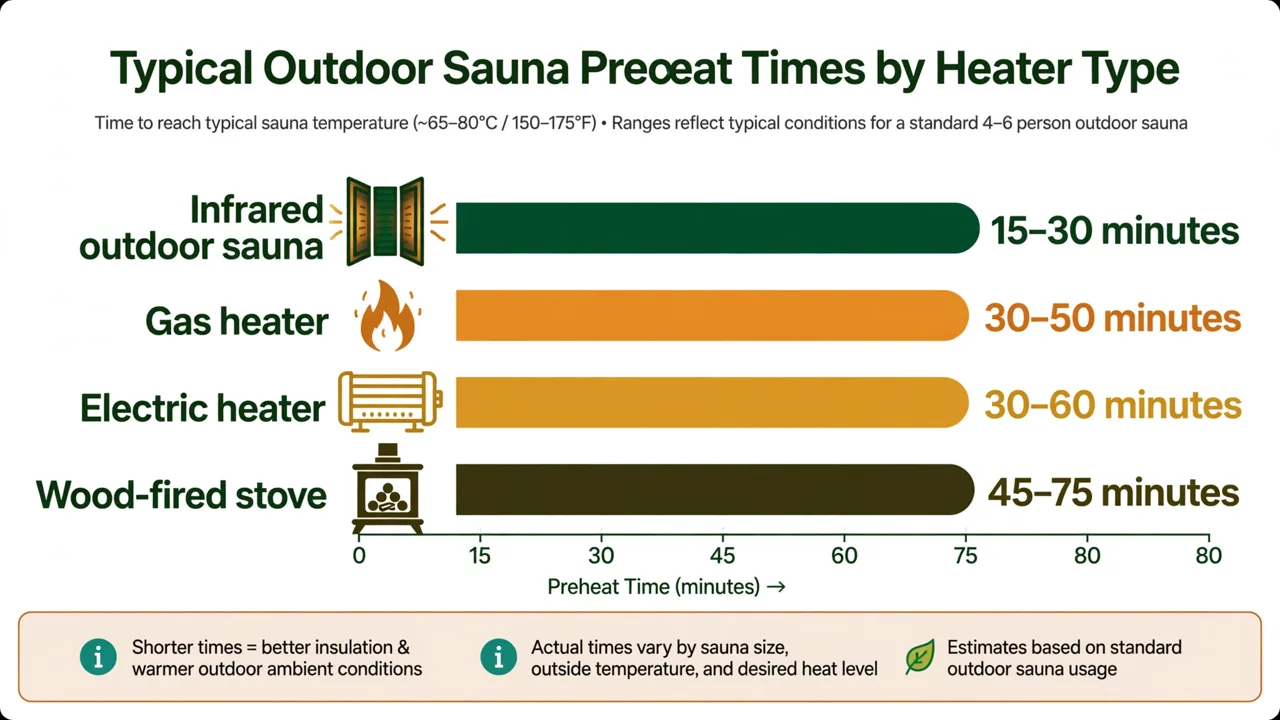
Preheat Times by Heater Type
Each heater type warms a sauna in a different way, and that changes both the wait and the experience. The sections below explain what to expect from each one and where the time actually goes.
Electric Heaters: Typically 30 to 60 Minutes
Electric heaters are the most predictable option, which is why they are the easiest to plan around. A correctly sized electric heater in a well-insulated cabin usually reaches bathing temperature in 30 to 45 minutes for a small sauna and 40 to 60 minutes for a medium one. Larger cabins can take up to 75 minutes.
Heater power is the biggest factor. A 6 kW heater suits a small cabin, while a medium cabin often needs 8 or 9 kW. If your heater is undersized for the space, preheat times stretch out and the sauna may struggle to hold temperature on cold days. If you are choosing a heater, size it for your cabin volume and your climate, not just for the number of seats.


#Paid Links
Electric heaters also reward a simple habit: switch the heater on, close the door, and leave it alone. Every time you open the door to check, warm air escapes and the clock effectively restarts on the last few degrees. A remote start or timer, where your model supports one, lets you start the preheat from inside the house so the sauna is ready when you walk out. If you are still deciding between heater types, our comparison of wood-fired vs electric outdoor sauna heaters covers the running costs and practical trade-offs in detail.
Wood-Fired Stoves: Typically 45 to 75 Minutes
Wood-fired stoves take the longest, and most wood-sauna owners accept the wait as part of the ritual. A small cabin with a well-built fire usually reaches temperature in 45 to 60 minutes. A medium or large cabin takes 50 to 75 minutes, and a cold start in deep winter can push past 90 minutes.
The fire itself needs time. You light it, build it up gradually, and let the stove body and the stones heat through before the room follows. Dry, seasoned firewood makes a real difference here. Damp or green wood burns slowly, smokes more, and adds many minutes to the wait. Keep your wood dry and under cover, and you will notice the difference on the very next session.
Wood stoves also need your attention in a way electric heaters do not. Never leave a lit stove unattended while it is building up, and follow the clearance distances in your stove manual exactly. Keep the chimney and flue clean and clear of creosote, and empty ash only once it is fully cold. Our guide to wood-fired sauna stove care, chimney cleaning, and ash safety explains the routine in full.
Gas Heaters: Typically 30 to 55 Minutes
Gas heaters sit close to electric heaters on speed. A small cabin typically warms in 30 to 45 minutes, and a medium cabin in 35 to 55 minutes. Gas burners put out strong, steady heat, and they recover quickly after the door opens, which is handy if several people are coming and going.
Gas installation is a job for a licensed professional, and that applies to the heater, the gas line, and the ventilation. Never install or modify gas equipment yourself. Have the system checked on the schedule your installer or manual recommends, and keep the area around the burner clear. If you ever smell gas, leave the area, do not switch anything electrical on or off, and call your gas utility or emergency services from outside.
Infrared Outdoor Saunas: Typically 15 to 30 Minutes
Infrared cabins are the quickest to feel ready, usually in 15 to 30 minutes. The panels warm up fast, and because infrared heat warms your body directly, you do not need to wait for the whole cabin to reach traditional sauna temperatures. Most people step in once the cabin feels comfortably warm, often around 110 to 130 degrees Fahrenheit (43 to 54 degrees Celsius).
That speed comes with a different feel. Infrared heat is gentler and less intense than a traditional stove, and there is no steam from water on hot stones. Some people love that, and some miss the strong heat of a traditional sauna. It is a matter of taste, and the shorter wait is a genuine advantage if you sauna on weekdays or in short windows.
What “Ready” Really Means: Air Temperature vs Warm Benches
Here is the detail most new sauna owners miss. The thermometer can read 175 degrees Fahrenheit while the benches still feel cool to the touch. Air heats fast, but wood is slow to absorb heat. If you sit down on cold benches, the session feels chilly even though the air is hot.
A sauna is truly ready when the air is at your target temperature and the benches and walls feel warm. That usually takes an extra 10 to 15 minutes beyond the moment the thermometer first hits your target. Budget for that extra time, and your first minutes inside will feel far better.
Thermometer placement matters too. A thermometer near the ceiling reads much hotter than one at bench height, because hot air rises. Place your thermometer at head height when seated on the top bench, on the wall opposite the heater. That gives you the number that matches what your body actually feels.
Stones matter as well. The stones on a traditional heater store heat and release it as steam when you ladle water over them. Cold stones make weak steam, even in a hot room. Give the stones time to heat through, and test with a small ladle of water. Good steam that rises and fills the room tells you the stones are ready.
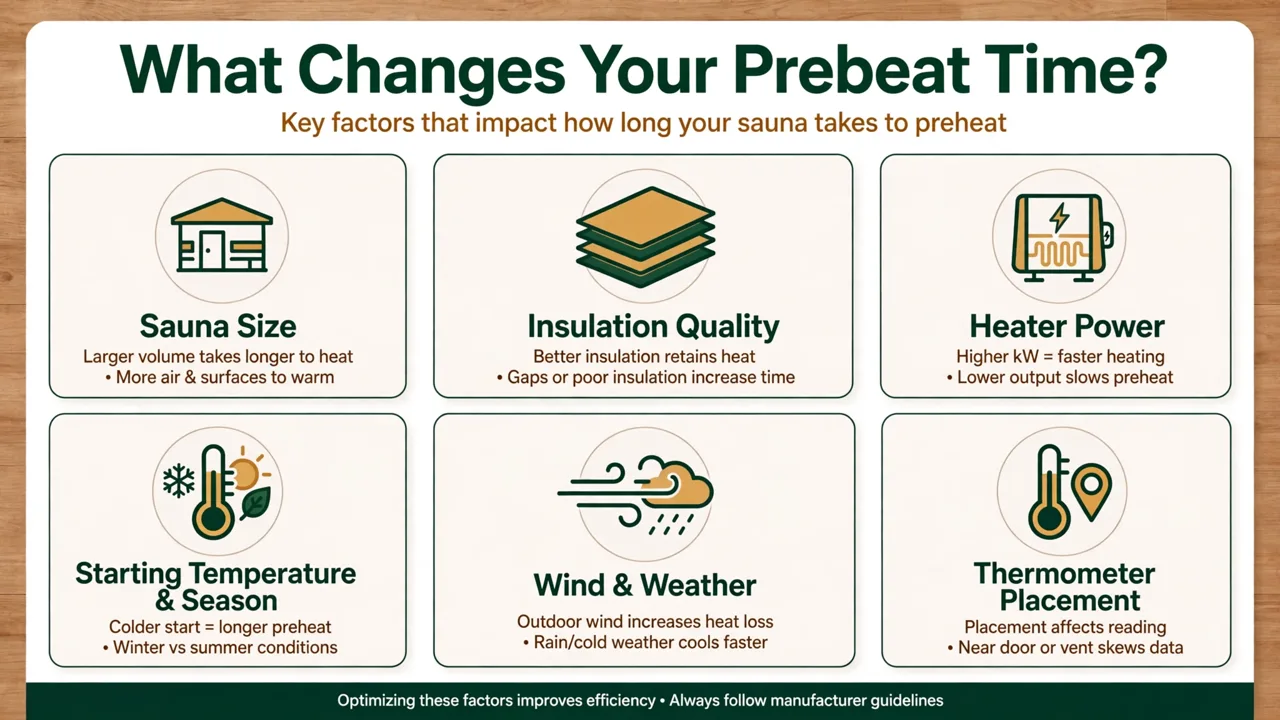
6 Factors That Change Your Preheat Time
Two identical heaters can take very different times to warm two different saunas. These six factors explain why, and most of them are things you can improve.
1. Sauna Size and Volume
A bigger cabin holds more air and more wood, so it takes longer to heat. This is the simplest factor of all, and the one people most often underestimate. A two-person barrel sauna warms far faster than a six-person cabin, even with the same heater power. If you are still planning your build, our guide on how to size an outdoor sauna will help you match the cabin to your household instead of oversizing it.
2. Insulation Quality
Insulation decides how much of your heater’s output stays inside the cabin and how much leaks out through the walls and roof. A well-insulated sauna with foil, rockwool, and a proper vapour barrier heats faster and holds temperature better. A thin-walled cabin with gaps loses heat as fast as the heater makes it. If your sauna is slow, draughts and thin insulation are the first things to check. Our guide to outdoor sauna insulation with foil, rockwool, and vapour barriers explains what good insulation looks like.
3. Heater Power vs Cabin Volume
A heater that is too small for the cabin will take forever, and it will struggle on cold days. A heater that is too large heats fast but cycles on and off, which can make temperature control jumpy. Match the heater to the cabin volume using the manufacturer’s sizing chart, and factor in your climate. Cold regions need more power for the same cabin size than mild ones.
4. Starting Temperature and Season
Heating a sauna from 70 degrees Fahrenheit takes far less time than heating one from 20 degrees. Summer preheats are the quickest, and winter preheats the slowest. In cold weather, add 15 to 30 minutes to the mild-day ranges in the table above. A sauna that has been used recently also warms faster, because the wood is still holding some heat from the last session.
5. Wind, Exposure, and Placement
Wind strips heat from the outside of the cabin, especially from thin walls and around the door. A sauna sheltered by a fence, hedge, or the house itself heats faster than one standing exposed on an open deck. Good placement is worth real minutes on every session, and it also makes the walk to and from the sauna far more pleasant.
6. Ventilation and Door Discipline
Ventilation is essential for fresh air and safe use, but an open vent or a door left ajar during preheat lets warm air out. Keep vents in their normal operating position while preheating, and keep the door closed. Check the door seal too. A worn seal leaks heat the whole session. Our guide to outdoor sauna ventilation explains how to balance fresh air with heat retention.
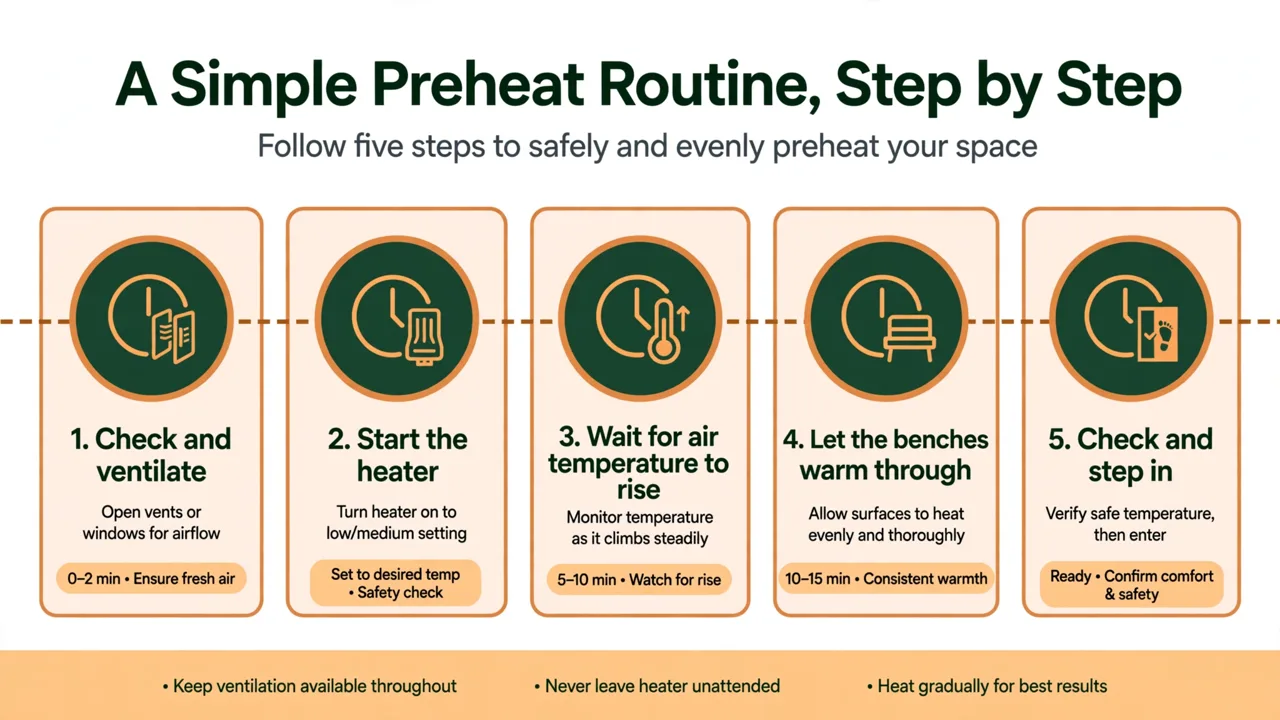
A Simple Preheat Routine, Step by Step
A repeatable routine takes the guesswork out of preheating. Follow these steps in order, and adjust the timing to your own sauna as you learn how it behaves.
- Check the sauna first. Open the door, look inside, and confirm the cabin is clear and dry. Check that the heater, stones, and benches are in good order, and that nothing is stored against the heater.
- Close the vents to their normal setting and shut the door. You want the heat to build inside the cabin, not escape through an open door while you get ready.
- Start the heater. For electric or gas, set your target temperature. For wood, light a small fire first and build it up gradually with dry, seasoned wood. Never leave a lit wood stove unattended.
- Wait for the air temperature to reach your target. This is the longest step. Use the time to shower, drink a glass of water, and lay out towels. Avoid opening the door to check.
- Give the benches and stones 10 to 15 extra minutes. The air may be ready before the wood is. Touch the top bench. When it feels warm rather than cool, the cabin is ready.
- Test the steam and step in. Ladle a small amount of water onto the stones. If it bursts into soft steam that fills the room, you are good to go. Start with a short session, especially if you are new to saunas.
7 Safe Ways to Heat Your Sauna Faster
You cannot cheat physics, but you can remove the things that slow your sauna down. These tips are all safe and simple, and together they can save 10 to 20 minutes on a typical preheat.
- Start from a warmer cabin. A sauna stored in sun or used earlier in the day starts warmer. Even a few degrees of starting temperature help.
- Keep the door closed. Every opening lets out a burst of hot air. Check the temperature through the window or with a remote control instead.
- Use dry, seasoned wood. For wood-fired stoves, dry wood burns hotter and faster. Damp wood is the single most common cause of slow wood-fired preheats.
- Check the door seal and vents. Replace a worn seal and confirm vents sit in their normal position. Small leaks add up over a 45-minute preheat.
- Insulate properly. If your cabin is thin-walled or poorly insulated, upgrading insulation is the best long-term fix for slow heating. It pays back on every session.
- Use a timer or remote start. Where your heater supports it, start the preheat from indoors so the waiting happens while you do something else.
- Keep the heater and stones maintained. Clean stones and a heater in good order transfer heat better. A yearly check, as in our outdoor sauna maintenance calendar, keeps everything working as it should.
What you should not do is overload a wood stove, block vents to trap heat, or turn an electric heater above its rated setting. Those shortcuts risk fire, damage, or a heater that shuts itself down. If your sauna is suddenly much slower than usual, look for a real cause, such as a worn seal, wet wood, or a heater fault, rather than forcing it.
Common Preheat Mistakes to Avoid
Most preheat problems come from a handful of avoidable mistakes. The most common is stepping in too early, when the air is hot but the benches are cold. The session feels disappointing, and people blame the sauna instead of the wait.
Another common mistake is trusting a thermometer placed in the wrong spot. A sensor near the ceiling or right above the heater reads far hotter than the air where you sit. Place the thermometer at seated head height on the wall opposite the heater, and trust that number instead.
Opening the door repeatedly to check is a third classic. It feels like monitoring, but each opening dumps hot air outside and adds minutes. Check once near the expected time, or use a remote display if your heater has one. Finally, do not forget the stones. Pouring water on cold stones makes a weak hiss instead of real steam, and it cools the stones further.
How Season and Weather Change the Wait
Summer is the easy season. A cabin starting at 70 degrees Fahrenheit or warmer can reach bathing temperature in the lower half of every range in this guide. Spring and autumn sit in the middle, and winter is the real test.
In winter, expect to add 15 to 30 minutes to the mild-day ranges. Snow on the roof, frozen wood, and a cabin starting near freezing all slow the warm-up. Wind chill makes it worse on exposed sites. Plan ahead, start the preheat earlier, and keep the door closed. For full cold-weather detail, including snow care and winter routines, see our guide to outdoor sauna heating in winter, with snow tips.
Rain matters less than cold, but a wet cabin still takes longer. Dry the benches and floor before preheating if rain has blown in, and check that the roof and door keep water out. Damp wood inside the cabin absorbs heat that should be warming the air.
Frequently Asked Questions
How long does an outdoor sauna take to heat up?
Most outdoor saunas take 30 to 75 minutes to reach a normal bathing temperature, depending on the heater type, sauna size, insulation, and weather. Electric and gas heaters typically take 30 to 60 minutes, wood-fired stoves typically take 45 to 75 minutes, and infrared outdoor saunas typically take 15 to 30 minutes.
Why is my outdoor sauna taking so long to heat up?
The most common causes are an undersized heater, poor insulation, wet firewood, a worn door seal, or cold winter weather. Check the door seal and vents first, then confirm the heater is sized for your cabin volume. For wood-fired stoves, switch to dry, seasoned wood and make sure the chimney is clean.
Can I leave my outdoor sauna heater on while I wait?
Electric and gas heaters with timers or thermostats are designed to run unattended during preheat, following the manufacturer’s instructions. A wood-fired stove should never be left unattended while the fire is building. Always follow your heater manual and your local safety guidance.
What temperature should an outdoor sauna reach before I go in?
Most people sauna at 150 to 195 degrees Fahrenheit (65 to 90 degrees Celsius), measured at seated head height. Beginners should start at the lower end and keep the first sessions short. Infrared cabins feel ready at lower air temperatures, often around 110 to 130 degrees Fahrenheit (43 to 54 degrees Celsius).
How do I know when the benches are warm enough?
Touch the top bench with your hand. When it feels warm rather than cool, the wood has absorbed enough heat. This usually takes 10 to 15 minutes after the air first reaches your target temperature, so budget the extra time rather than stepping in as soon as the thermometer hits your number.
Does an outdoor sauna heat up slower in winter?
Yes. In winter, add roughly 15 to 30 minutes to the mild-day preheat times, because the cabin starts near freezing and loses more heat to cold air and wind. Starting the preheat earlier, keeping the door closed, and sheltering the cabin from wind all help. Our winter heating guide covers snow care and cold-weather routines in detail.
Plan the Wait, Then Enjoy the Heat
Preheating an outdoor sauna is mostly a matter of planning. Give an electric or gas heater 30 to 60 minutes, a wood-fired stove 45 to 75 minutes, and an infrared cabin 15 to 30 minutes. Add extra time in winter, and add 10 to 15 minutes for the benches to warm through.
Start the heater, keep the door closed, and use the wait well. By the time you step in, the air, the benches, and the stones will all be ready, and the session will feel the way a sauna should.