
An outdoor sauna in hot climates is a different kind of project from the same sauna in a cool one. When the air outside is already warm for most of the year, the sauna does not start from cold. It starts from warm, stays warm between sessions, and faces sun, dust and dry air every single day.
That changes almost every decision an owner makes. Ventilation has to work harder, because the air coming in is already hot. Wood dries out faster and needs more regular care. Heater sizing, roof design and even the direction the sauna faces all matter more when there is no cool season to give the building a rest.
This guide covers year-round hot-climate ownership: desert, tropical and arid regions where heat is the normal condition, not a summer exception. It is about design, materials and maintenance rhythms that hold up over years, not about getting through one hot afternoon.


#Paid Links
What “Hot Climate” Means for an Outdoor Sauna
A hot climate, for sauna purposes, is any place where warm or hot weather lasts most of the year. That includes desert regions with fierce sun and very dry air, tropical regions with heat plus humidity, and arid inland areas where days are hot and nights cool sharply. Each of these stresses a sauna differently, but they share one trait: the building never gets a long cool, damp rest the way it would in a temperate climate.
In a cool climate, the sauna cools fully between sessions, the wood reabsorbs a little moisture from the air, and the roof and walls get a break. In a hot climate, the cabin can sit warm all day, the exterior timber bakes in the sun, and dust settles into every joint. Maintenance that feels optional in a mild climate becomes the thing that decides whether the sauna lasts ten years or three.
It helps to be honest about which kind of heat you live with before you build or buy. A desert sauna needs shade and dust management above all. A tropical sauna needs airflow and mould prevention just as much as heat control. An arid inland sauna needs wood care, because wide swings between hot days and cool nights pull moisture in and out of the timber again and again.
How Heat Behaves Differently When the Air Is Already Hot
A sauna heater warms the air inside the cabin, but it is not working in isolation. The starting temperature of that air matters. When the air inside the cabin is already warm from a hot day, the heater has less work to do to reach bathing temperature, and the cabin reaches temperature faster than the same sauna would on a cold morning.
That sounds like a benefit, and in one way it is: shorter heat-up times and less energy per session. Our guide to how long an outdoor sauna takes to heat up explains the factors that set heat-up time, and ambient temperature is one of the biggest. But a fast heat-up also means the cabin can overshoot if you run the heater the way you would in winter, so hot-climate owners need to learn a lighter touch with the controls.
The second difference is what happens after the session. In a cool climate, opening the door after a session floods the cabin with cold air and the interior cools quickly. In a hot climate, the air that rushes in is still warm, so the cabin cools slowly. Benches, walls and the heater stay warm for longer, and moisture from the session takes longer to leave the wood.


#Paid Links
The third difference is the sun itself. A dark roof or a west-facing wall can absorb a great deal of solar heat during the day, so the cabin can be hot before the heater is even switched on. That stored heat is not the same as a controlled sauna session, and it can dry the exterior timber while the interior stays humid after use. Good design separates the two problems: keep solar heat out of the structure, and manage session heat and moisture deliberately.
Ventilation Design for Hot Climates
Ventilation is the single most important design decision for an outdoor sauna in hot climates. It is also the one most often treated as an afterthought. A sauna needs fresh air during sessions for comfort and safety, and it needs airflow after sessions so the interior dries out. When the incoming air is hot, both jobs get harder, so the design has to be deliberate rather than a single small vent near the floor.
Our full guide to outdoor sauna ventilation covers the basics of intake and exhaust placement. In a hot climate, those basics matter even more, and a few extra choices make the difference between a cabin that feels fresh and one that feels stuffy and stale.
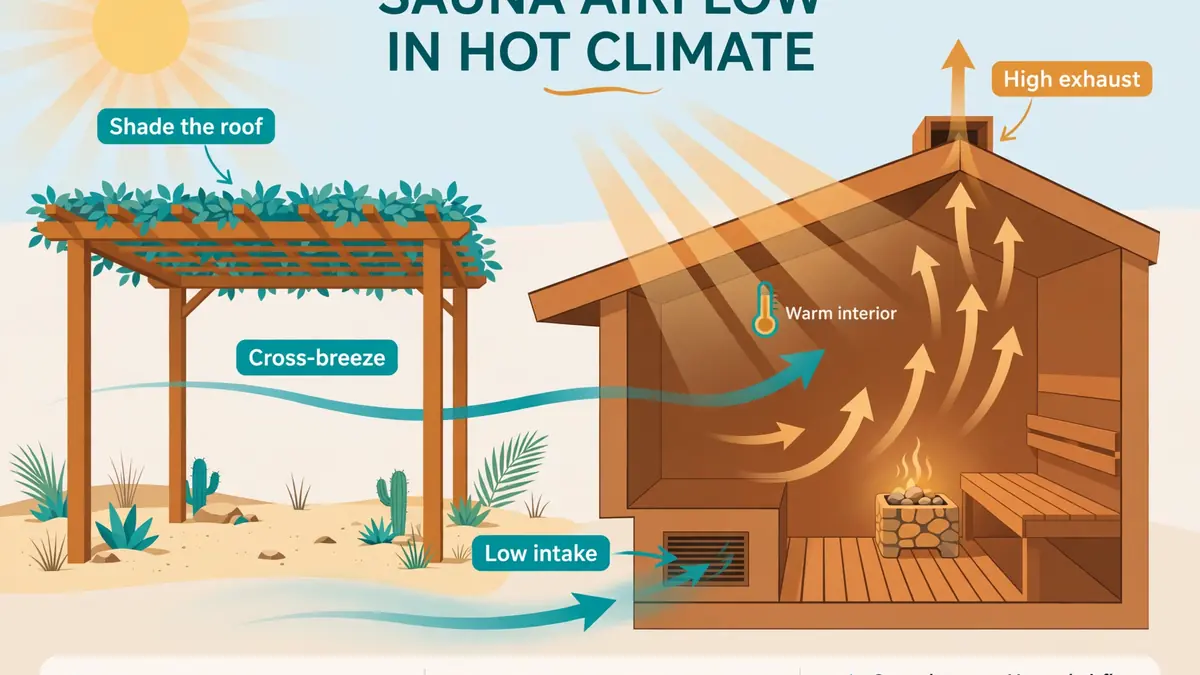
Bring air in low, let hot air out high
The classic arrangement still applies: a fresh-air intake low down, ideally near the heater so incoming air is warmed as it enters, and an exhaust vent high on the opposite wall so hot, stale air can leave. In a hot climate, the height difference matters more, because the temperature gap between inside and outside is smaller and the natural pull of rising hot air is weaker. A generous vertical distance between intake and exhaust helps the cabin breathe even when the day is hot.
Make both vents adjustable, not fixed holes. On a mild evening you may want them wide open; on a scorching afternoon you may want the intake partly closed so the cabin does not fill with dusty hot air while it sits unused. Adjustable vents with simple sliding covers are cheap, reliable and easy to use, and they give you control that a fixed hole never will.
Use the breeze instead of fighting it
Where you place the intake relative to the prevailing wind changes how well the sauna ventilates. An intake on the windward side catches the breeze and pushes fresh air through the cabin. An exhaust on the sheltered side lets air leave without fighting the wind. This is one of the reasons siting matters so much, and our guide to outdoor sauna placement, sun, wind, drainage and privacy is worth reading alongside this one.
In very hot, still conditions there may be little breeze to work with. That is when a small, well-placed vent fan can help, particularly for drying the cabin after a session. A fan should move air through the cabin and out, not just stir the same air around. If you add one, have it installed by a licensed electrician, and choose a model rated for hot, humid conditions.
Ventilate after every session, not just during it
The drying period after a session is where hot-climate saunas most often go wrong. The cabin is warm, the wood is damp from steam and sweat, and the air outside is warm too, so the moisture has nowhere urgent to go. Leave the vents and the door open after a session until the interior feels dry to the touch. In humid tropical heat this can take longer than you expect, so build it into your routine rather than rushing it.
Never close a damp sauna up tight for the night. Trapped moisture in warm wood is an open invitation to mould and to that stale, musty smell that is hard to remove once it sets in. If your sauna sits unused for days in humid heat, open it up and let it air at least once a week, even if nobody is bathing.
Siting and Orientation for Permanent Heat
Where the sauna stands matters more in a hot climate than almost anywhere else, because the sun is a daily force rather than a seasonal visitor. A cabin that faces the afternoon sun head-on will absorb heat all day, every day, and its west-facing wall and roof will age faster than the rest of the building.
As a rule, orient the sauna so its largest surfaces avoid the harshest afternoon sun where you can. Morning sun is gentler and helps dry the building after a cool night; afternoon sun is the one that bakes timber and drives heat into the cabin. If your plot does not allow a perfect orientation, shade becomes the answer instead, which is covered in the roofing and shade section below.
Think about the ground under the sauna too. Hot climates often mean hard, dry ground, dust, and sudden heavy rain after long dry spells. Good drainage matters even where rain is rare, because a single downpour can pool water against the base of a cabin that has never been tested by rain. Raise the sauna slightly, keep the base clear of soil and leaf litter, and make sure water runs away from the building, not towards it.
Wind is a friend in a hot climate, and a sauna tucked into a still, sheltered corner will feel hotter and stuffier than one that catches a breeze. At the same time, an exposed position in a desert can drive dust and sand into every gap. The balance is a spot with airflow but with a windbreak of planting or fencing on the side the dust comes from, rather than a solid wall that blocks the breeze entirely.
Privacy and shade planting deserve a thought together. Fast-growing shade trees and tall shrubs can transform a sauna spot, but keep planting clear of the cabin walls and roof so leaves do not pile up, branches do not rub the timber, and airflow around the building is not blocked. Leave a clear gap you can walk around, and you will thank yourself at maintenance time.
Heater Choice and Sizing When Ambient Air Is Already Hot
Heater sizing guides are usually written for cold climates, where the heater must lift the cabin from near freezing to bathing temperature. In a hot climate the starting point is far warmer, so the same size heater will heat the cabin faster and can overshoot if it is left running at full power. That does not automatically mean you should buy the smallest heater available, but it does mean the choice deserves a fresh look rather than a copy of a cold-climate recommendation.
An electric heater with a good thermostat and a timer is often the easiest fit for hot climates. It holds a steady temperature, it can be set to a lower target on very hot days, and it switches off cleanly when the session ends. That control matters when the margin between a pleasant session and an overheated one is smaller than it would be in winter. Have any electric heater installed by a licensed electrician, and follow the manufacturer’s instructions for clearances and ventilation.
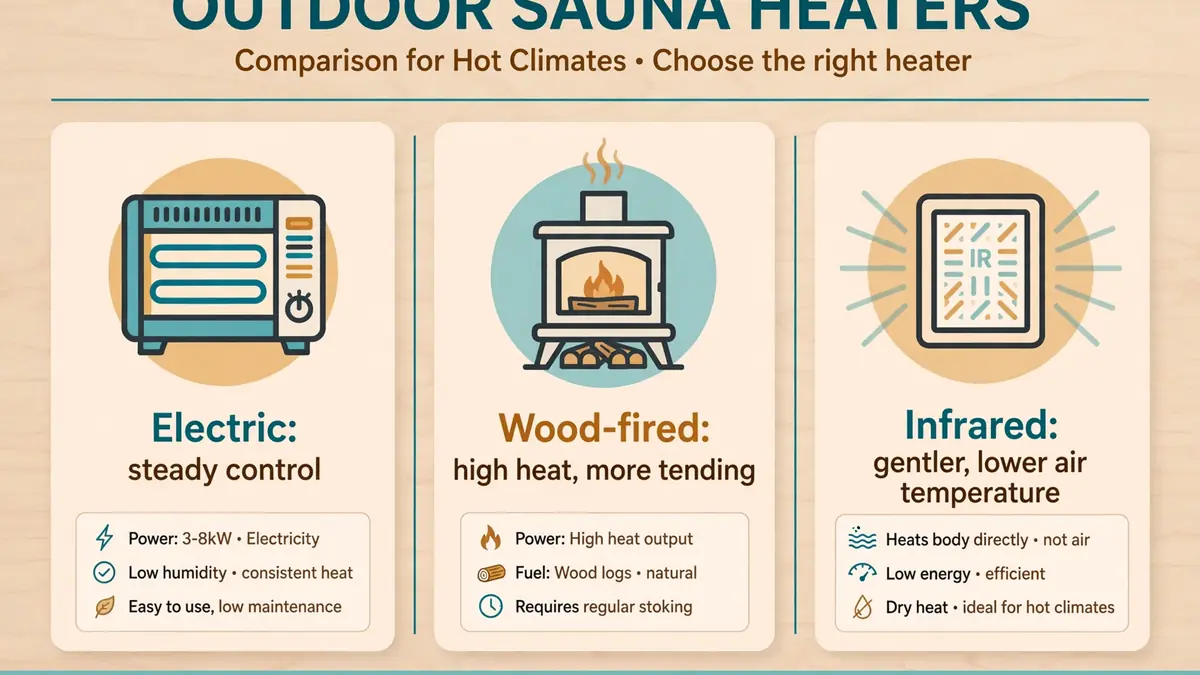
A wood-fired stove is a different experience, and many sauna lovers prefer it. In a hot climate it brings two extra considerations. The first is tending: a wood stove keeps producing heat as long as it is fed, so on a hot day it is easy to push the cabin past a comfortable temperature. The second is the fire itself: in dry, hot conditions, fire safety is not a formality. Keep the area around the sauna clear of dry leaves and debris, never leave a lit stove unattended, and follow the manufacturer’s clearance instructions exactly.
Our comparison of wood-fired vs electric outdoor sauna heaters walks through the trade-offs in full. In a hot climate, the short version is this: electric gives you precision, wood gives you atmosphere and independence from the grid, and either can work well if it is sized and used with the climate in mind.
Infrared panels are a third option worth considering where heat tolerance is a concern. An infrared sauna warms the body more directly and the air less, so the cabin air stays cooler than in a traditional sauna. Some people find that gentler in an already hot climate. Infrared panels still need proper installation and ventilation, and they are a different bathing experience, so try one before committing if you can.
Practical sizing notes for hot climates
- Ask the heater manufacturer or supplier about sizing for your climate, not just your cabin volume. A heater sized for a cold climate may be more than you need.
- A thermostat you can trust matters more in a hot climate, because the gap between comfortable and too hot is narrower.
- Plan for shorter heat-up times, and learn your cabin’s rhythm on mild days before you try a session on the hottest day of the year.
- Keep the heater’s safety clearances clear at all times, and never store towels, buckets or wood against a hot heater or stove.
- If you use a wood stove, store firewood away from the sauna in a dry, shaded spot, and keep the path between the two clear.
Wood Care in Persistent Heat and Sun
Wood is the soul of a sauna, and it is also the part most punished by a hot climate. Sun, heat and dry air pull moisture out of timber, and the damage shows up slowly: hairline cracks, a grey faded surface, joints that open a fraction wider each year, and boards that feel rough under the hand. None of this happens in a week, which is exactly why it is easy to miss until it becomes a repair job.
The exterior of the sauna takes the worst of it. Ultraviolet light breaks down the surface of the wood, and heat drives out moisture, so the outer boards dry, shrink and crack first. The interior faces a different stress: repeated cycles of heat and steam, then cooling, then heat again. Both need attention, but they need different kinds of attention.
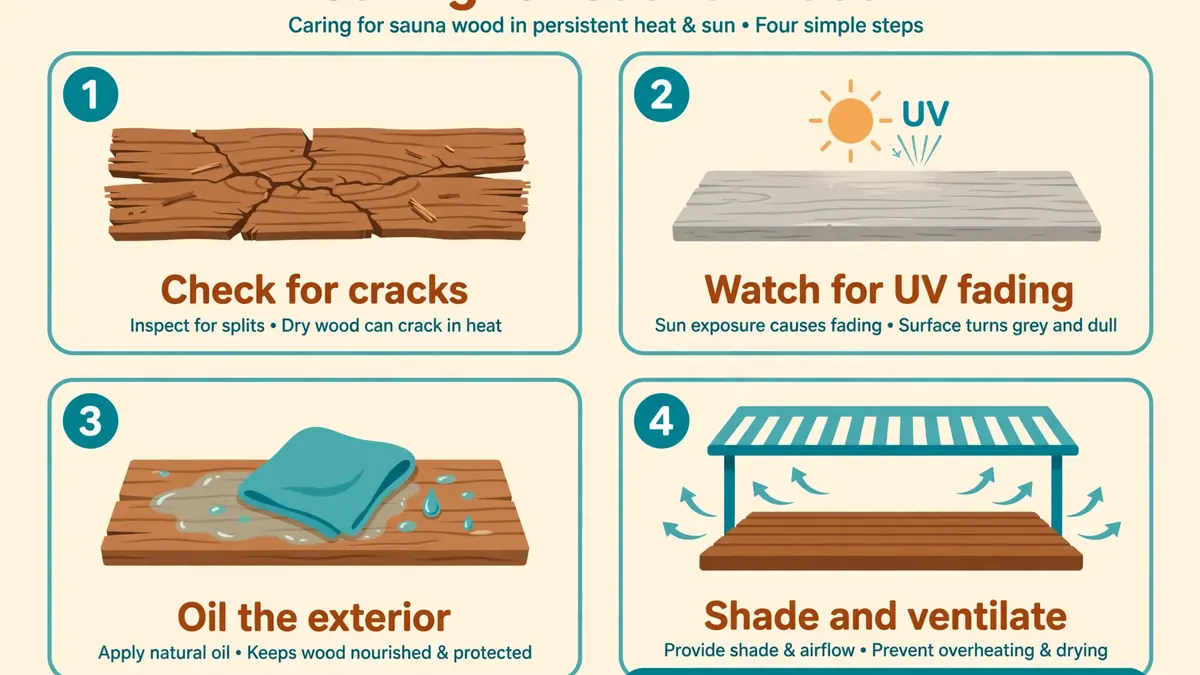
Choosing wood that suits the heat
Some timbers handle heat and sun better than others, and the choice you make at the start shapes every maintenance year that follows. Cedar is popular for good reason: it is naturally resistant to decay and insects, and it smells wonderful. Thermally modified wood, often called thermowood, has been heat-treated to improve its stability and resistance to moisture, which can be a real advantage where the timber is stressed daily. Spruce is lighter and cheaper but needs more protection. Our comparison of thermowood vs cedar vs spruce for outdoor saunas goes into the strengths and limits of each.
Whatever timber you choose, buy from a reputable supplier and ask whether it is suited to outdoor use in a hot, sunny climate. Interior-grade boards that would be fine inside a house can fail quickly on a sun-baked exterior wall. The cheapest board is rarely the cheapest over ten years.
Protecting the exterior
The exterior needs a protective finish that suits your timber and your climate, applied before the sun gets its first season at it. Oils made for exterior sauna wood soak in and slow moisture loss; they need reapplying more often in a hot climate than the tin suggests, because sun and heat wear them down faster. A wax finish can add a further layer of protection on some timbers. Whatever you use, choose a product made for sauna exteriors, follow the maker’s instructions, and test it on a small hidden area first.
Shade is the best wood protection there is, and it costs nothing once it is built. A roof overhang, a pergola, or a shade sail that keeps direct sun off the walls will do more for the timber than any finish. If your sauna has no shade at all, adding some is the single most useful upgrade a hot-climate owner can make.
Caring for the interior
Interior wood should never be painted or varnished, because finishes can release fumes when heated and can make benches uncomfortably hot or slippery. Instead, keep the interior clean and dry, sand benches lightly when they feel rough, and treat the wood only with products made for sauna interiors, if you treat it at all. A light sanding once or twice a year is often all the interior needs.
Watch the joints and the lower boards most closely. The lowest boards sit nearest the damp floor and the intake air, and they are usually the first to show wear. If a board is cracked through, soft, or stained in a way that does not sand out, replace it rather than hoping it improves. Small repairs done early stay small.
Roofing, Shade and the Building Envelope
The roof is the first line of defence against sun and rain in a hot climate, and it deserves more thought than a simple cover. A light-coloured roof reflects more sunlight than a dark one, which can make a real difference to how hot the cabin gets during the day. A roof with a generous overhang shades the walls as well as the top, protecting the timber on all sides.
Ventilation above the roof matters too. A roof that traps a layer of superheated air against the cabin will pass that heat downwards. A ventilated roof space, or a roof with an air gap under the covering, lets hot air escape instead of cooking the structure from above. If you are building new, ask your builder about this. If you are upgrading, a simple shade structure above the roof can achieve much of the same effect.
Insulation still matters in a hot climate, even though it feels like a cold-climate concern. Good insulation keeps the heat you generate during a session inside the cabin, and it keeps the sun’s heat out during the day. It also slows the swing between hot days and cool nights, which is kinder to the wood. Foil vapour barriers and mineral wool are common choices, and they need to be installed correctly to work, so follow the manufacturer’s guidance or use a builder who has done sauna work before.
Do not forget the door. A well-fitting door with a good seal keeps session heat in and dust out. In a hot, dusty climate, gaps around the door let in fine sand that settles on benches and into joints. Check the seal at least once a year, and replace it when it no longer closes snugly.
Water, Humidity and Drying Out
Hot climates are not all dry. A tropical sauna owner faces heat plus humidity, which is a different challenge from desert dryness. Humid air slows drying, so the cabin stays damp longer after every session, and mould can take hold in corners, under benches and behind panels. In that case, airflow is your best friend, and the post-session drying routine from the ventilation section is not optional.
In a dry desert climate the problem is the opposite: the air is so dry that the wood gives up moisture constantly, and the cabin can feel harsh and dusty. A small amount of water on the stones during a session adds welcome humidity to the air, but do not overdo it. The goal is comfortable air, not a wet cabin. After the session, the dry air will do most of the drying work for you, which is one genuine advantage of desert heat.
Wherever you are, keep water out of places it does not belong. Splashes on the floor should be mopped or left to dry with the door open, and buckets should be emptied rather than left standing. Standing water in a warm cabin goes stale quickly and can stain the floor. A floor with a slight fall towards a drain, or simply towards the door, makes this easy.
If your region has a rainy season, prepare for it before it arrives. Clear the gutters and the ground drainage, check the roof for lifted edges or cracked covering, and make sure the base is not sitting in a hollow where water can pool. A sauna that survives eleven dry months can be damaged by one week of rain it was never prepared for.
A Hot-Climate Maintenance Rhythm
A sauna in a hot climate rewards routine. The owners whose cabins look good after a decade are rarely the ones who did one big renovation; they are the ones who did small things often. A simple rhythm, tied to the calendar rather than to memory, keeps the work small and the surprises few.
Our outdoor sauna maintenance calendar sets out the year in detail. The table below adapts that rhythm for hot climates, where inspection and exterior care need to happen more often and where the rainy season, if you have one, sets its own deadline.
| When | What to do | Why it matters in a hot climate |
|---|---|---|
| After every session | Open vents and door until the cabin is dry; wipe benches; empty buckets | Warm, damp wood is the fastest route to mould and stale smells |
| Weekly | Sweep out dust and sand; check the floor is dry; air the cabin if unused | Dust builds up fast in dry heat and works into joints |
| Monthly | Inspect exterior boards for cracks and fading; check door seal and vents; clean the heater area | Sun damage shows up gradually, and early catches stay cheap |
| Every few months | Re-oil exterior wood as needed; sand benches lightly if rough; check roof and gutters | Finishes wear faster under strong sun and need topping up |
| Before the rainy season | Clear drainage, check the roof covering, make sure water runs away from the base | One wet week can do more damage than months of dry heat |
| Yearly | Deep clean, inspect the structure and heater, replace worn boards and seals, review fire safety | A yearly check keeps small wear from becoming a rebuild |
Coastal owners have one more item on the list. Salt air corrodes metal fittings and hardware far faster than inland air, so hinges, screws, heater parts and light fittings need regular checks. Our guide to outdoor saunas in coastal climates covers salt-air protection in detail, and it pairs naturally with this guide if your hot climate comes with a sea breeze.
Session Habits That Change in a Hot Climate
The sauna itself is only half the story. How you use it changes too when the weather is hot. Your body is already warm before you step inside, so the session starts from a different place than it would on a cold day, and the cool-down afterwards matters just as much as the heat itself.
Start with shorter sessions than you would in cool weather, especially if you are new to the sauna or returning after a break. Ten minutes can be plenty on a very hot day. Build up gradually over weeks, and pay attention to how you feel rather than chasing a target time. There is no prize for staying in longest.
Hydration deserves real attention in hot weather, because you will have been losing water all day before you even sit down. Drink water before your session, keep water nearby, and drink again afterwards. Do not drink alcohol before or during a session: alcohol and heat are a poor combination, and heat tolerance drops sharply after drinking.
Cooling down needs a plan in a hot climate. In a cool climate, stepping outside into cold air does much of the work. In a hot climate, the air outside may still be warm, so a cool shower, a shaded rest spot, or a cold plunge, if you have one, becomes part of the session rather than an afterthought. Rest in the shade, out of direct sun, and give your body time to return to normal before doing anything strenuous.
Timing your sessions helps as well. Early morning and evening sessions are usually the most comfortable, because the cabin has not been baking all day and the air is at its coolest. A midday session in peak heat is possible, but it is the hardest version of the experience, and it is the one most likely to leave you feeling drained rather than refreshed.
For session-by-session tips on the hottest days of the year, our companion guide to outdoor sauna in summer: overheating, shade and ventilation tips covers shade, vent settings and pre-cooling for individual sessions. Think of that article as the seasonal companion to this one: it helps you through a hot afternoon, while this guide helps you own a sauna in a hot place all year.
Warning Signs to Watch For
A hot climate gives a sauna a hard life, and the building will tell you when something is wrong if you know what to look for. Most problems start small and stay cheap if they are caught in the first season. Left alone, they compound.
- Cracks that widen or run along a board. Small surface checks are normal in dry heat, but a crack you can fit a fingernail into, or one that grows month by month, needs attention.
- Grey, bleached patches on the exterior. This is ultraviolet damage. It is cosmetic at first, but it means the surface protection has gone and the wood beneath is next.
- A musty smell that does not clear with airing. This points to moisture trapped somewhere, often under a bench or behind a panel. Find the damp spot rather than masking the smell.
- Soft or spongy boards. Press suspect boards firmly. Softness means the wood is breaking down and the board should be replaced.
- Rust on fittings, hinges or heater parts. In dry heat this is slow, but in coastal or humid heat it can move fast. Replace rusted hardware before it fails.
- A heater that behaves differently. Longer heat-up times, uneven heat, or a thermostat that no longer holds a setting are all reasons to have the heater checked by a professional.
- Gaps opening at joints or around the door. Timber moves with heat and moisture, but gaps that grow steadily can let in dust, insects and rain.
If you find any of these, deal with the cause, not just the symptom. A cracked board replaced without adding shade will crack again. A musty smell aired out without finding the damp spot will return. Hot-climate sauna ownership is mostly about reading the building and responding early.
Frequently Asked Questions
Can you have an outdoor sauna in a hot climate?
Yes. An outdoor sauna works well in a hot climate with the right design: good ventilation, shade over the roof and walls, a heater you can control precisely, and a regular wood-care routine. The challenges are different from a cold climate, but they are manageable, and heat-up times are often shorter.
Does a sauna take longer to heat up when it is hot outside?
No, it is usually the opposite. When the air inside the cabin is already warm, the heater has less work to do, so the sauna reaches bathing temperature faster. The risk is overshooting, so use the thermostat carefully and learn your cabin’s rhythm on mild days first.
What is the best wood for an outdoor sauna in a hot climate?
Cedar and thermally modified wood are popular choices because they are stable and resist decay, while spruce needs more protection. The best choice depends on your budget, your local availability and how much maintenance you are willing to do, so compare the options before you commit.
How do you keep an outdoor sauna cool enough to use in summer heat?
Shade the cabin, ventilate it well, run shorter sessions, and bathe in the early morning or evening when the air is coolest. A heater with a reliable thermostat helps you hold a comfortable temperature instead of overshooting on very hot days.
How often should you oil the outside of a sauna in a hot climate?
More often than the product label suggests for a mild climate, because sun and heat wear finishes down faster. Inspect the exterior monthly and re-oil when the surface looks dry or faded rather than following a fixed calendar date.
Is a wood-fired or electric heater better in a hot climate?
Electric heaters are usually easier to control precisely, which helps when the air is already warm. Wood-fired stoves give a traditional experience and work without grid power, but they need more tending and extra care with fire safety in dry conditions. Either can work well if it is sized and used with the climate in mind.
The Bottom Line
Owning an outdoor sauna in a hot climate is entirely practical, and it can be deeply rewarding. The sauna heats up faster, the garden is usable all year, and the building becomes a permanent part of outdoor life rather than a winter-only retreat. But it asks for a different kind of ownership than the same sauna in a cool place.
The pattern is simple once you see it: shade the building, design the ventilation properly, choose a heater you can control, look after the wood little and often, and dry the cabin after every session. Do those five things, and the sauna will give you years of good sessions. Skip them, and the sun and heat will slowly take the building apart.
Start with the easiest wins. Check your vents and your shade this week, look at the exterior timber with fresh eyes, and set a monthly reminder to inspect the cabin. A hot-climate sauna does not need a heroic effort. It needs steady attention, and it repays it every single session.