
A steam sauna in summer feels very different from the same session in January. The air outside is already warm and humid, your body is already working to stay cool, and the steam room adds a second layer of heat on top of that. Used with care, a short summer steam session can still be a relaxing part of a warm-weather routine. Used carelessly, it can leave you overheated, dehydrated, and wiped out for the rest of the day.
This guide explains how heat and humidity build up in a steam sauna during summer, how to spot overheating early, and how to build a session and cool-down routine that fits hot weather. It also covers who should take extra care, how to keep a home steam room dry and mould-free in the humid months, and the mistakes that catch people out most often.
Please note: This article is for general information only and is not medical advice. Steam saunas are wellness tools, not treatments. If you are pregnant, live with a heart or circulation condition or low blood pressure, or take medication that affects how you handle heat, check with your doctor before using a steam sauna in summer.


#Paid Links
Why Summer Changes the Steam Sauna Equation
A steam sauna works by surrounding you with hot, humid air. In winter, the contrast between the cold air outside and the warm steam room is part of the appeal, and your body starts the session from a cool baseline. In summer, that baseline is gone. You may arrive at the steam room already warm from the day, already sweating, and already a little short on fluids.


#Paid Links
That matters because sweating is your main cooling system. In dry heat, sweat evaporates and carries heat away from your skin. In a steam room, the air is close to saturated with moisture, so sweat evaporates very slowly. Your body keeps sweating, but the cooling effect is much weaker. Add a hot summer day to that picture, and the margin between a pleasant session and an overheated one gets noticeably smaller.
Humidity outside the steam room plays a role too. On a humid summer day, stepping out of the steam room into muggy air does not cool you down as quickly as stepping into cool, dry air. Your cool-down takes longer, and your core temperature stays raised for longer after the session ends. That is why the cool-down routine matters just as much as the session itself in summer, and why this guide spends as much time on what happens after the steam as on what happens inside it.
How Heat and Humidity Work Inside a Steam Sauna
Steam rooms usually run cooler than dry saunas. A typical steam room sits somewhere around 40 to 50 degrees Celsius, while a dry sauna often runs much hotter. The steam room feels intense anyway because the humidity is near 100 percent. Hot, wet air transfers heat to your skin far more effectively than hot, dry air, so the same temperature feels much hotter.
Inside the room, your body responds in a predictable sequence. Blood vessels near the skin widen to release heat, your heart rate rises, and you start to sweat heavily. In a dry sauna, much of that sweat evaporates. In a steam room, it mostly runs off your skin in streams. You are losing fluid either way, but in steam you may not realise how much you are losing because the sweat does not dry.
In summer, two things change this picture. First, you are likely to start the session warmer and less well hydrated than in winter, especially if you have been outdoors, exercising, or working in the heat. Second, the room itself may take less time to feel overwhelming, because your body has less cooling capacity left in reserve. Shorter sessions are the simple answer, and they are the theme of the rest of this guide.
Summer Session Lengths: A Practical Guide
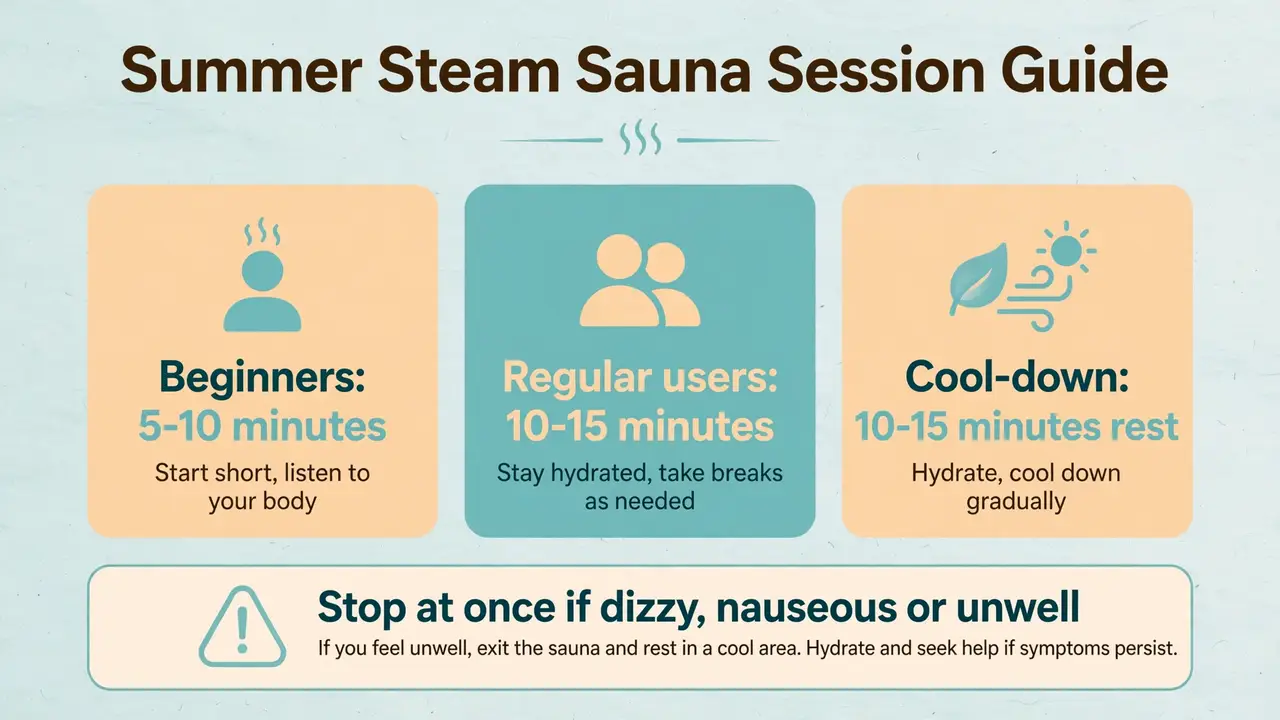
There is no single session length that suits everyone. Fitness, age, health, how hot the day has been, and how used to steam you are all change what is sensible. The table below gives conservative starting points that most healthy adults can use as a guide, not as a target to beat. If you feel unwell at any point, the right session length is zero, and you should step out straight away.


#Paid Links
| Who you are | Suggested summer session | Rest between rounds | Notes |
|---|---|---|---|
| New to steam saunas | 5 to 10 minutes | 10 to 15 minutes | One round only to start with |
| Occasional user | 10 to 15 minutes | 10 to 15 minutes | One or two rounds at most |
| Regular user, used to steam | 10 to 15 minutes | 10 to 15 minutes | Still shorten sessions on very hot days |
| After exercise or sun exposure | 5 to 10 minutes | 15 minutes or more | Cool down and rehydrate first |
| Older adults or anyone with a health condition | Shorter than usual, or skip it | As long as needed | Doctor’s advice comes first |
Notice that the suggested times for a regular user in summer are shorter than the times many people use in winter. That is deliberate. A 15-minute summer session can feel as demanding as a noticeably longer winter one, because your body is already carrying a heat load before you sit down. There is no benefit in chasing your winter times through July and August.
If you want more detail on session timing in general, our guide to how long you should stay in a steam sauna covers the basics for every season. The summer rule is simple: take the time you would use in cooler months and trim it. Your body will tell you quickly if you have trimmed too little.
Overheating: What It Feels Like and When to Stop
Overheating in a steam sauna rarely arrives without warning. Most people feel it building in stages, and the earlier you notice it, the easier it is to deal with. The first signs are often subtle: a heavy, close feeling in the air, a headache starting behind the eyes, or a sense that your breathing has become harder work than it should be. None of these means something serious is happening yet, but all of them mean it is time to step out.
The clearer warning signs should never be ignored or pushed through. If you feel dizzy, light-headed, or nauseous, leave the steam room immediately. The same applies if your heart is racing uncomfortably, if you feel confused or unusually weak, or if you stop sweating while still feeling very hot. Stopping sweating in a hot environment is a sign your body is struggling to cope, and it deserves a prompt response, not another few minutes on the bench.
Warning signs to watch for
- Dizziness, light-headedness, or a feeling that the room is spinning
- Nausea or a sudden loss of appetite for the session
- A headache that is getting worse rather than easing
- A racing or pounding heartbeat that feels uncomfortable
- Confusion, difficulty thinking clearly, or unusual clumsiness
- Muscle cramps, weakness, or shaky legs
- Skin that feels very hot but has stopped sweating
- Feeling faint or close to passing out
If you feel faint, confused, or very unwell after leaving the steam room, move to a cool place, sip water, and get help if the symptoms do not ease quickly. In a gym or spa, tell a member of staff. At home, let someone else in the house know. Heat-related illness can develop faster than people expect, and getting help early makes a real difference. If symptoms are severe, call your local emergency number.
One habit that helps a lot is deciding your exit point before you sit down. Tell yourself you will leave after ten minutes, or at the first sign of discomfort, whichever comes first. It sounds trivial, but it stops the quiet negotiation that happens inside a steam room, where every extra minute feels like a small thing until it is not.
A Safer Summer Session, Step by Step
A good summer steam session is planned, not improvised. The steps below take about half an hour from start to finish, including the cool-down, and they work for both home steam rooms and gym or spa steam rooms. Skip nothing on a very hot day, and be honest with yourself about how the day has already treated your body.
- Hydrate before you start. Drink a glass of water in the hour before your session, and another small glass shortly before you go in. Do not arrive thirsty and try to catch up afterwards.
- Let your body settle first. If you have just come in from the sun, finished exercising, or done physical work, wait until your breathing is normal and you have cooled down a little. Going straight from a hot run into a steam room stacks heat on heat.
- Take a quick lukewarm shower. Rinsing off sweat and sunscreen before you enter keeps the steam room cleaner and helps your skin start sweating evenly. Use lukewarm water, not cold, so you do not shock your system.
- Sit or lie on the lower bench if you are new or sensitive to heat. Heat rises, so the lower bench is cooler than the upper one. This small choice can make the difference between a comfortable session and an overwhelming one.
- Keep the session short. Aim for 5 to 10 minutes if you are new, and 10 to 15 minutes if you are a regular user. Set a timer if your steam room does not have a clock in view.
- Listen to your body, not the clock. If you feel dizzy, nauseous, or unwell at minute six, the session is over at minute six. The timer is a maximum, not a target.
- Step out slowly. Stand up gradually, hold the rail if there is one, and give your blood pressure a moment to adjust. A few people feel light-headed when they stand up quickly after a steam session, and summer heat makes that more likely.
- Cool down properly. Follow the cool-down routine in the next section before you consider a second round. Most people find one good round is plenty on a hot day.
Two things are worth leaving out of every summer session. The first is alcohol, before or during the session, because it impairs your judgement and your body’s ability to handle heat. The second is a second or third round on a day when you are already feeling the heat. There will be cooler days for longer sessions, and your steam room will still be there.
The Cool-Down Routine That Works in Summer
Stepping out of a steam room into a hot, humid summer day does not cool you down quickly. The air outside may be nearly as warm as your skin, and if it is humid, sweat still evaporates slowly. A deliberate cool-down routine closes that gap, and it is worth treating as part of the session rather than an afterthought.
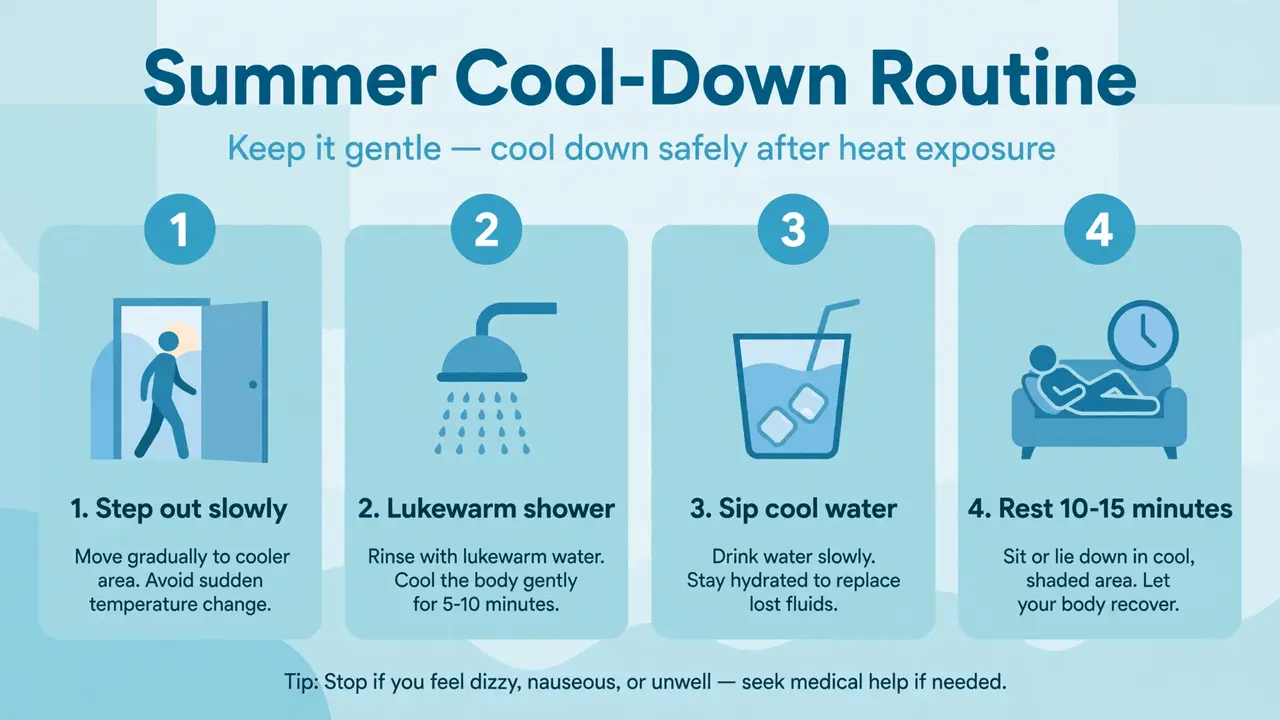
Step one: step out slowly and breathe
Give yourself a minute or two just outside the steam room. Sit down if you feel at all unsteady, and let your breathing settle. Your body is still shedding heat, and rushing into the next activity interrupts that process. A bench or chair near the steam room is the right place for this pause.
Step two: take a lukewarm shower
A lukewarm shower rinses off sweat and starts bringing your skin temperature down gently. Avoid an ice-cold shower straight after steam, especially on a hot day. Very cold water can feel shocking and may cause your blood vessels to tighten up, which slows heat loss rather than speeding it. Lukewarm water, followed by a few minutes of air drying, works better for most people.
Step three: sip cool water
Drink water slowly rather than gulping a large amount at once. A glass of cool water over several minutes replaces fluid without upsetting your stomach. If you have sweated heavily, a drink with a pinch of salt or an electrolyte drink can help replace what you have lost, but plain water is enough for most short summer sessions. Avoid alcohol entirely until you are fully cooled down and rehydrated.
Step four: rest for 10 to 15 minutes
Rest somewhere cool, ideally indoors or in the shade, for at least 10 to 15 minutes. This is when your core temperature comes back down. If you go straight back out into the sun, or jump into a second round too soon, you undo most of the cool-down. If you still feel hot, flushed, or tired after resting, skip the second round and call the session done.
The timing of your session matters here too. Many people find a steam session feels best in the morning or evening during summer, when the day is cooler, rather than in the middle of the afternoon heat. Our guide to the best time to use a steam sauna looks at timing across the whole year, and the summer takeaway is straightforward: pick the coolest part of the day you can.
Hydration: The Part People Underestimate
Sweating is how your body cools itself, and a steam session makes you sweat a lot. In summer, you are already losing fluid through the day before you even open the steam room door. Put the two together and dehydration becomes the most common problem with summer steam use, and the easiest one to prevent.
Before the session
Drink water through the day, not just in the minutes before the session. A glass or two in the hour beforehand is a sensible top-up, but it cannot fix a whole day of low fluid intake. If your urine is dark yellow, you are already behind on fluids and should rehydrate before you consider a steam session at all.
During the session
Most people do not drink inside a steam room, and for a short session that is fine. For a longer session or a second round, a small bottle of water kept just outside the door lets you sip during the rest break. Do not bring glass into a steam room. A plastic bottle left outside the door is the practical option.
After the session
Keep drinking after you finish. A glass of water during the cool-down and another one over the following hour is a reasonable guide for a short session. If you feel thirsty, headachy, or unusually tired later in the day, drink more water and rest. A headache after a steam session is often a sign you did not replace enough fluid, and it is a useful warning for next time.
Be cautious with caffeine and alcohol around a summer session. Both can add to fluid loss, and alcohol also dulls the judgement you need to notice overheating early. Save the celebratory drink for well after you have cooled down and rehydrated.
Who Should Skip or Shorten Summer Sessions
Most healthy adults can use a steam sauna in summer with shorter sessions and a proper cool-down. Some people should be more cautious, and some should skip the steam room on hot days altogether. The groups below are the ones our safety guidance covers most often, and the advice is the same in every season: when in doubt, ask your doctor first.
Pregnant users
Pregnancy changes how the body handles heat, and raising core temperature is a concern during pregnancy. Anyone who is pregnant should check with their doctor before using a steam sauna, in summer or at any other time of year. If your doctor advises against it, skip the steam room and enjoy the other parts of your wellness routine instead.
People with heart or circulation conditions
Steam raises your heart rate and widens blood vessels near the skin. For people with a heart or circulation condition, that extra workload deserves a doctor’s view first. This matters more in summer, because heat is already placing demands on the same system. Never start or continue steam use against medical advice, and leave the room at once if you feel chest discomfort, breathlessness, or an irregular heartbeat.
People with low blood pressure
Low blood pressure and steam are an awkward combination. The widening of blood vessels in a steam room can lower blood pressure further, which is why some people feel faint when they stand up after a session. Summer heat adds to the effect. If you have low blood pressure, keep sessions very short, rise slowly, and sit down to cool off rather than standing around.
Children and older adults
Children and older adults handle heat less efficiently than healthy younger adults, and they may not notice or report overheating as quickly. Children should only use a steam sauna with adult supervision, for very short sessions, and only if they are comfortable and happy to leave at once. Older adults should follow the same short-session guidance and take extra care with hydration and the cool-down. Pets should never be taken into a steam room.
Anyone taking medication that affects heat tolerance
Some medicines change how much you sweat, how your blood pressure responds to heat, or how thirsty you feel. Blood pressure medicines, some heart medicines, and medicines that reduce sweating are examples. If you take regular medication, check the leaflet or ask your doctor or pharmacist whether steam use in hot weather needs any extra care.
Steam Sauna in Summer vs Winter
The winter version of this routine looks quite different, and comparing the two shows why a single all-year approach does not work. In winter, you arrive cool, the steam room feels like a welcome warm-up, and the cool-down in crisp air drops your temperature quickly. Sessions can be a little longer, and a second round feels manageable for many regular users.
In summer, every part of that picture flips. You arrive warm, the steam room adds heat to a body that is already working to stay cool, and the cool-down in humid air takes longer. Shorter sessions, longer rests, and more water are the adjustments that make the difference. Our companion guide to a steam sauna in winter covers the cold-weather side in full, and reading the two together gives you a routine that works all year.
The same seasonal thinking applies to other sauna types, though the details change. An outdoor sauna in summer faces a different set of problems, with direct sun and shade doing much of the work that humidity does in a steam room. If you use more than one type, our guide to an outdoor sauna in summer is a useful companion read.
Looking After Your Steam Room in Summer
Summer is the hardest season for a home steam room, not the easiest. Warm, humid air is exactly what mould and mildew need to grow, and a steam room that is used regularly and then closed up damp is an ideal home for them. A little extra care in summer protects both the room and the people who use it.
Ventilate and dry after every session
Leave the steam room door open after each session so moist air can escape and surfaces can dry. If your steam room has a fan or vent, run it for a while after you finish. Wiping down benches and walls with a clean towel helps too, and it takes less than a minute. A room that dries out between sessions is a room that stays fresh.
Clean more often in the humid months
Sweat, skin oils, and moisture build up faster in summer, so a cleaning routine that works in winter may not be enough in July and August. Clean benches and floors regularly with a cleaner suitable for your steam room surfaces, and follow the manufacturer’s instructions for your generator and room materials. Our guide to how to clean a steam sauna walks through the routine in detail.
Watch for mould and damp smells
Check corners, grout lines, and the areas around the door seal for early signs of mould. A musty smell is often the first warning, before anything is visible. If you find mould, clean it promptly with a product suitable for the surface, improve ventilation, and check that the room is drying fully between sessions. A home steam room is never maintenance-free, and pretending otherwise is how small damp problems become expensive ones.
Mind the generator on very hot days
Your steam generator works harder when the room and the water supply are already warm, and it may reach temperature faster than usual. That is not a problem in itself, but it is another reason to keep sessions short and to let the room cool and dry between uses. Follow the manufacturer’s guidance for your model, and have the generator serviced if you notice unusual noises, smells, or slow steam production.
Common Summer Mistakes
Most summer steam problems come from a short list of avoidable mistakes. Run through this list before your next hot-weather session and see if any of them sound familiar.
- Keeping winter session lengths. A 20-minute winter session is not a summer session. Trim the time and add a longer rest.
- Arriving dehydrated. A day in the sun or a workout before the steam room means you are already behind on fluids. Rehydrate first.
- Skipping the cool-down. The cool-down is part of the session, not an optional extra. Ten to 15 minutes of rest and water makes the next day feel very different.
- Drinking alcohol before or after. Alcohol dulls your warning signs and adds to fluid loss. Save it for later, after you have cooled down and rehydrated.
- Stacking heat on heat. A hot run, a sunbathing session, and a steam room in the same afternoon is too much heat in one day. Space them out.
- Ignoring the warning signs. Dizziness and nausea are your body asking you to stop. The steam room will still be there tomorrow.
- Closing a damp steam room. Shutting the door on a wet room in summer invites mould. Leave it open to dry every time.
- Using the steam room every day in a heatwave. During very hot weather, even regular users benefit from fewer, shorter sessions. Our guide to how often you should use a steam sauna covers frequency across the year.
A steam sauna in summer is not something to fear, and it is not something to push through either. Short sessions, plenty of water, a real cool-down, and an honest eye on how you feel are enough to keep it enjoyable all through the hot months. When the weather turns, your winter routine will be waiting, and you will be glad you looked after yourself in the meantime.
Frequently Asked Questions
Is it safe to use a steam sauna in summer?
For most healthy adults, yes, with shorter sessions and a proper cool-down. Keep sessions to 5 to 15 minutes depending on your experience, drink water before and after, and leave at once if you feel dizzy or unwell. If you are pregnant, live with a heart or circulation condition or low blood pressure, or take medication that affects heat tolerance, check with your doctor first.
How long should a steam sauna session last in summer?
Beginners should aim for 5 to 10 minutes, and regular users for 10 to 15 minutes. After exercise or sun exposure, shorten that to 5 to 10 minutes and rest for at least 15 minutes afterwards. These are starting points, not targets, and feeling unwell is always a reason to leave earlier.
What are the signs of overheating in a steam sauna?
Watch for dizziness, light-headedness, nausea, a worsening headache, a racing heartbeat, confusion, muscle cramps, or skin that feels very hot but has stopped sweating. Any of these means you should leave the steam room immediately and cool down. If symptoms do not ease quickly, get help.
How should I cool down after a steam sauna in summer?
Step out slowly, take a lukewarm shower, sip cool water over several minutes, and rest somewhere cool for 10 to 15 minutes. Avoid an ice-cold shower straight after steam, and do not go straight back into the sun or into a second round before you have rested.
Should I drink water before a steam sauna session?
Yes. Drink water through the day, and have a glass or two in the hour before your session. Drink another glass during the cool-down and more over the following hour. If you feel thirsty or headachy later in the day, drink more water and rest.
Can I use a steam sauna every day in summer?
Daily use is possible for healthy regular users, but during very hot weather it is wiser to use the steam room less often and keep sessions short. Listen to your body, stay well hydrated, and take a day off if you feel tired or overheated. Frequency should drop in a heatwave, not rise.
How do I stop mould in a steam room during summer?
Leave the door open after every session so the room can dry, run the fan or vent if you have one, wipe down benches and walls, and clean more often in the humid months. Check corners and grout lines for early mould and clean it promptly. A steam room that dries fully between sessions stays fresh far longer.