
What does a steam sauna do to your body? In short: it raises your skin and core temperature, widens your blood vessels, increases your heart rate, and triggers heavy sweating — a set of changes that can temporarily ease congestion, relax your muscles, and calm your nervous system. Some of these effects are backed by decent research. Others, like “detoxing” or major weight loss, are mostly overstated.
Here’s a full breakdown of what actually happens in there, what the evidence supports, and how to use a steam sauna safely.
What Is a Steam Sauna, and How Does It Work?
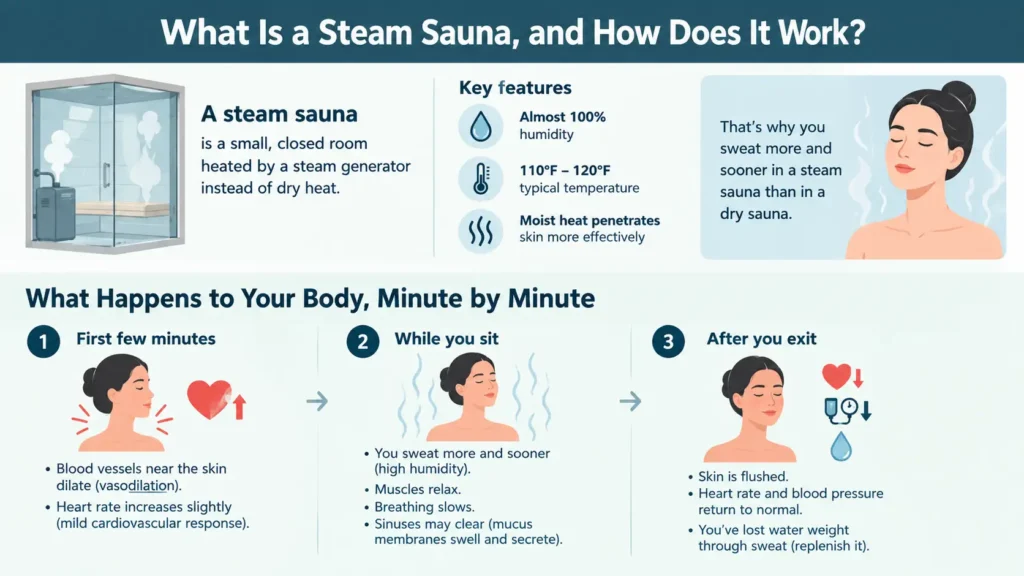
A steam sauna, also known as a steam room, is a small, closed room that is heated by a steam generator instead of dry heat. It maintains almost 100% humidity and a cooler air temperature than a dry sauna, typically between 110°F and 120°F.


Paid Links - As an Amazon Associate, I earn from qualifying purchases.
That’s the whole point of that humidity. Because moist heat penetrates your skin more effectively than dry air, you begin to sweat more and sooner in a traditional wood or electric sauna than in a moist heat sauna.


Paid Links - As an Amazon Associate, I earn from qualifying purchases.
What Happens to Your Body, Minute by Minute
In the first few minutes, your blood vessels near the skin’s surface dilate (vasodilation) to promote heat loss, while your heart rate slightly increases (mild cardiovascular response). Because the air in steam rooms is so humid, it can’t soak up any more water from your skin, which is why they feel so sweaty compared to dry saunas.
As you sit in the heat, your muscles relax, your breathing slows, and your mucous membranes swell a little and secrete more mucus, which is why many people feel their sinuses clear.
When you exit the room, your skin is flushed, your heart rate and blood pressure have usually returned to normal, and you’ve lost a measurable amount of water weight through sweat that you need to replace.
Steam Sauna Benefits: Graded by Evidence Strength
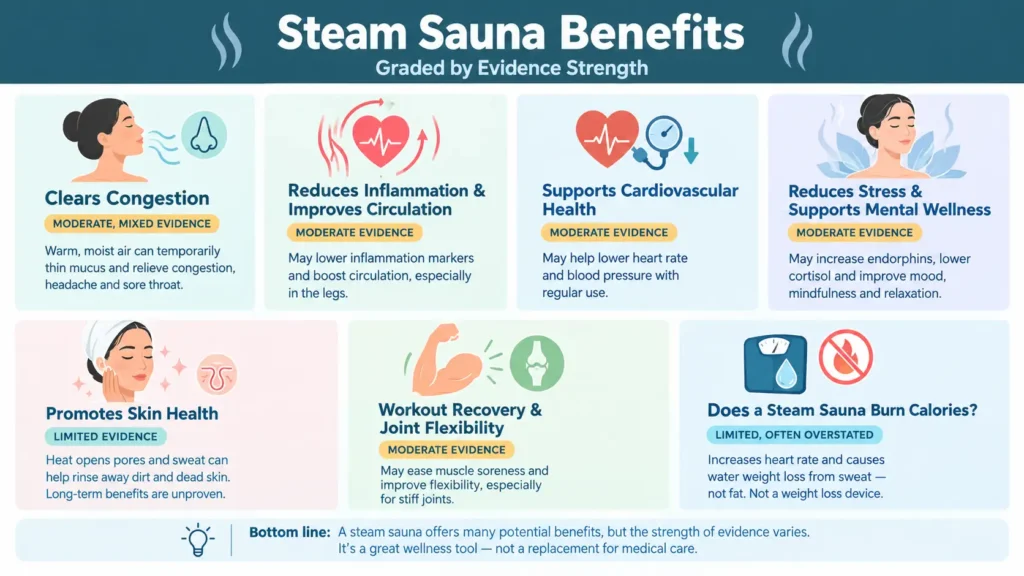
Clears Congestion — Moderate, Mixed Evidence
That is the most common advantage of steam rooms. The warm, moist air can temporarily thin mucus and relieve nasal congestion, headache, and sore throat.
The study is, however, truly mixed. Some trials reported actual short-term relief with steam congestion treatment, and a review of several clinical trials for steam inhalation for the common cold reported mixed results: some people felt better, others simply felt their noses were hot.
Key takeaway: Steam can offer real, temporary congestion relief for many people, but it isn’t a scientifically proven cure for colds or sinus infections.


Paid Links - As an Amazon Associate, I earn from qualifying purchases.
Reduces Inflammation and Improves Circulation — Moderate Evidence
Heat therapy in general has been associated with decreased systemic inflammation, such as C-reactive protein, a blood marker of inflammation, though the study was conducted on dry sauna bathing, not steam rooms specifically, and researchers have recommended more direct studies on steam rooms.
In addition, moist heat has been demonstrated to enhance circulation, especially in the lower legs, which can aid in skin healing and vascular health.
Key takeaway: The anti-inflammatory and circulation benefits are promising and plausible for steam rooms, but much of the strongest evidence still comes from dry-heat sauna research rather than steam specifically.
Supports Cardiovascular Health — Moderate Evidence
Sitting in a steam room can trigger the release of aldosterone, a hormone involved in regulating blood pressure. Some research has found that regular short steam sessions — around 10 to 15 minutes, once a week for 12 weeks — were associated with reductions in heart rate and both systolic and diastolic blood pressure in healthy adults.
Key takeaway: There’s reasonable evidence that regular, moderate steam sauna use may support healthy blood pressure, but it should never replace medical treatment for a diagnosed heart condition.
Reduces Stress and Supports Mental Wellness — Moderate Evidence
Many people find steam rooms deeply relaxing, and there’s a plausible biological reason: heat exposure may prompt the release of endorphins and lower cortisol, the body’s main stress hormone.
Separate research has connected heat-based relaxation practices, including steam sauna use for mental wellness, with improved mindfulness, better mood, and — in a study on Finnish sauna bathers — a lower long-term risk of dementia, though that finding needs more direct steam-specific research to confirm.
Key takeaway: Even without other proven benefits, the stress-relief and relaxation effect of a steam sauna session is one of its most consistently reported upsides.
Promotes Skin Health — Limited Evidence
Heat opens your pores, and the resulting sweat and condensation can help rinse away surface dirt and dead skin, which may leave skin looking clearer and more even-toned in the short term. There isn’t strong long-term research proving steam rooms treat specific skin conditions like acne or eczema, so treat this as a nice side effect rather than a proven skincare treatment.
Workout Recovery and Joint Flexibility — Moderate Evidence
Heat penetrates into muscle tissue and can help ease delayed-onset muscle soreness (DOMS) after a hard workout. One study found moist heat worked as effectively as — and faster than — dry heat for muscle recovery. Separately, applying heat to a joint before activity has been shown to increase flexibility and relaxation, which is part of why some athletes use steam rooms as part of a warm-up or pain relief routine.
Key takeaway: A steam sauna session can genuinely help with post-workout soreness and pre-activity flexibility, especially for people managing stiff joints or arthritis.
Does a Steam Sauna Burn Calories? — Limited, Often Overstated
Yes, your heart rate does increase in a steam sauna, and if you use one immediately after exercise, it can slightly prolong that elevated heart rate. However, any weight lost during a session is water weight from sweat and not fat, and it will come back once rehydrated. While a steam sauna can slightly support a diet and exercise plan, it is not a weight loss device by itself.
Who Should Avoid a Steam Sauna
Steam sauna use is generally safe, but skip it — or get medical clearance first — if any of the following apply:

- You’re pregnant
- You’re immunocompromised or recovering from surgery
- You currently have a fever or are fighting an illness
- You have uncontrolled high or low blood pressure, or a heart condition
- You’ve recently had a heart attack or stroke
- You’re taking medication that affects blood pressure, hydration, or heat sensitivity
- You’ve been drinking alcohol
How to Use a Steam Sauna Safely
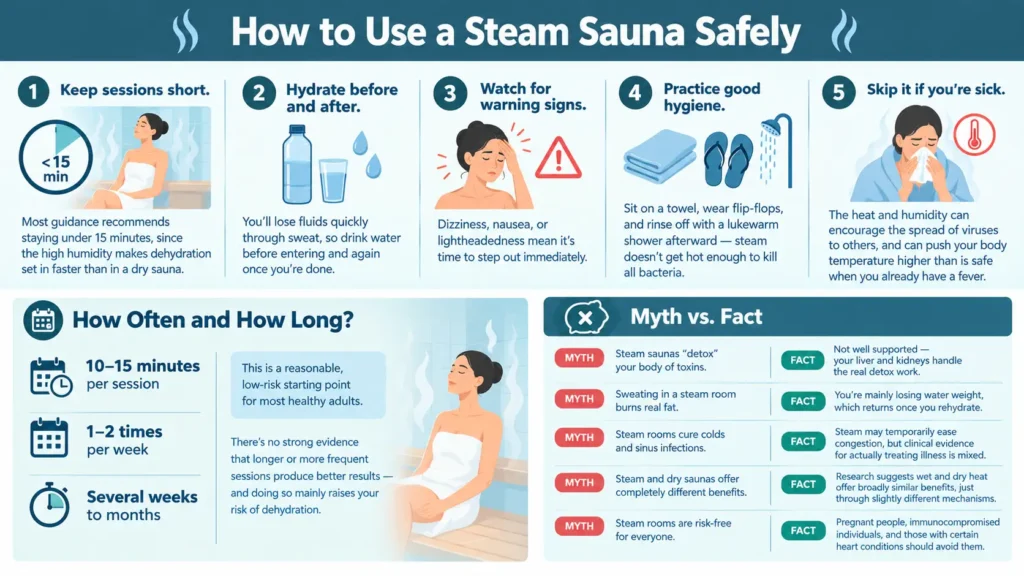
- Keep sessions short. Most guidance recommends staying under 15 minutes, since the high humidity makes dehydration set in faster than in a dry sauna.
- Hydrate before and after. You’ll lose fluids quickly through sweat, so drink water before entering and again once you’re done.
- Watch for warning signs. Dizziness, nausea, or lightheadedness mean it’s time to step out immediately.
- Practice good hygiene. Sit on a towel, wear flip-flops, and rinse off with a lukewarm shower afterward — steam doesn’t get hot enough to kill all bacteria, so good hygiene habits matter.
- Skip it if you’re sick. The heat and humidity can encourage the spread of viruses to others, and can push your body temperature higher than is safe when you already have a fever.
How Often and How Long Should You Use a Steam Sauna?
Research showing measurable benefit for things like blood pressure used sessions of around 10 to 15 minutes, once or twice a week, over a period of several weeks to months. That’s a reasonable, low-risk starting point for most healthy adults. There’s no strong evidence that longer or more frequent sessions produce better results — and doing so mainly raises your risk of dehydration.
Myth vs. Fact
| Myth | Fact |
|---|---|
| Steam saunas “detox” your body of toxins | Not well supported — your liver and kidneys handle the real detox work |
| Sweating in a steam room burns real fat | You’re mainly losing water weight, which returns once you rehydrate |
| Steam rooms cure colds and sinus infections | Steam may temporarily ease congestion, but clinical evidence for actually treating illness is mixed |
| Steam and dry saunas offer completely different benefits | Research suggests wet and dry heat offer broadly similar benefits, just through slightly different mechanisms |
| Steam rooms are risk-free for everyone | Pregnant people, immunocompromised individuals, and those with certain heart conditions should avoid them |
FAQs About What Does a Steam Sauna Do to Your Body
What does a steam sauna do to your body?
It increases skin temperature, core temperature, blood vessel dilation, heart rate, and heavy sweating, which can help temporarily relieve congestion, relax muscles, and reduce stress.
Is a steam sauna good for you?
For most healthy people, yes, in moderation. Studies have shown that frequent steam or heat sauna sessions can provide small benefits in circulation, blood pressure, muscle recovery and stress relief.
What is the difference between a steam sauna and a regular sauna?
A steam sauna is a type of sauna that features moist heat at 95-100% humidity and a lower temperature of 110-120°F, while a traditional sauna features dry heat at 150-195°F with much lower humidity.
Can a steam sauna help with congestion?
It can provide some short-term relief by thinning mucus and calming irritated sinuses, but studies vary on its effectiveness in treating colds.
Does a steam sauna burn calories or help you lose weight?
Not permanently. When you sweat, you lose water weight that will be restored when you rehydrate. It isn’t a substitute for diet and exercise.
What is the recommended time to spend in a steam sauna?
Most advice is to keep sessions to no more than 15 minutes, as the moisture in the air can cause dehydration to occur more quickly.
How many times a week should you go to a steam sauna?
Based on available research, one to two sessions per week is a common and well-tolerated starting point.
Is it safe to use a steam sauna every day?
While healthy adults might be able to use it occasionally every day, most research protocols involved 1–2 sessions per week. Check with your doctor if you have any cardiovascular condition.
Are there people who should stay away from a steam sauna?
Steam saunas should be avoided by pregnant women, people with a fever, people with an uncontrolled heart condition, people who have been drinking alcohol, or people who are immunocompromised or recovering from surgery.
Does a steam sauna really cleanse your body?
Not in the way it’s usually sold. There’s not much evidence that sweating actually gets rid of any real toxins — your liver and kidneys are your primary detox organs.
Does a steam sauna help sore muscles after exercise?
Yes, probably due to better blood flow and the heat reaching the muscle tissue, which can help relieve delayed onset muscle soreness (DOMS) more quickly than passive rest alone.
Is a steam sauna good for your skin?
It may temporarily open pores and remove surface dirt, making the skin appear clearer and flushed, but there is little long-term evidence that it treats certain skin conditions.
Does a steam sauna increase or decrease blood pressure?
Some studies indicate that regular, brief sessions are correlated with lowered blood pressure in healthy adults, but individuals with blood pressure problems should seek medical clearance before beginning.
Final Thoughts
A steam sauna isn’t a cure-all, but it isn’t just hype either. The honest picture: there’s decent evidence for stress relief, muscle recovery, temporary congestion relief, and modest cardiovascular benefits. The detox and major weight-loss claims you’ll see on wellness blogs don’t hold up nearly as well.
If you’re healthy and want to try it, keep sessions under 15 minutes, hydrate well, and check with your doctor first if you’re pregnant, immunocompromised, or managing a heart condition. Used sensibly, a steam sauna is a low-risk way to relax and potentially pick up a few real physical benefits along the way.