
A steam sauna and a hot tub both promise the same thing at the end of a long day. Warmth, loosened muscles, and a quiet half hour that belongs to you. They get there in very different ways, and those differences matter more than most buyers expect.
A steam sauna wraps you in hot, humid air. A hot tub soaks you in hot water. One heats you from the outside in through moist air you breathe, and the other heats you through direct contact with water while jets massage your muscles. Both feel wonderful, but they suit different bodies, different homes, and different budgets.
This guide compares a steam sauna and a hot tub side by side on heat, recovery, relaxation, skin and breathing, safety, running costs, upkeep, and space. Every cost figure is a 2026 planning estimate, not a quote, and every health claim is kept honest. By the end, you should know which one fits your life, or whether you are one of the people who would genuinely enjoy both.


#Paid Links
Please read first: not medical advice.


#Paid Links
Saunas and hot tubs are wellness tools, not treatments. They cannot cure illness, prevent disease, or replace medical care. If you are pregnant, live with a heart or circulation condition or low blood pressure, or take medication that affects how you handle heat, check with your doctor before using either one. The guidance in this article is general information only.
The Short Answer
If you want deep, even heat that you breathe in, easy daily use in a small bathroom, and lower running costs, a steam sauna usually wins. If you want buoyancy that takes weight off sore joints, targeted jet massage, and a social soak with family or friends, a hot tub usually wins.
Recovery is close between the two, and the honest answer is that neither one has been proven to heal muscles faster. What matters most is which one you will actually use three or four times a week, because consistency beats any small difference in the research. Pick the one that fits your space, your routine, and your tolerance for upkeep.
Choose a steam sauna if
You want moist heat you breathe in, a compact indoor setup, lower water use, and a quick session after a workout or before bed.
Choose a hot tub if


#Paid Links
You want to float weightless in warm water, ease stiff joints, enjoy jet massage, and share long soaks with other people.
How Each One Heats You
The core difference between a steam sauna and a hot tub is the medium that carries the heat. A steam sauna uses hot, saturated air. A hot tub uses hot water. That one fact explains almost everything else in this comparison, from how hot each one feels to how much cleaning each one needs.
How a steam sauna works
A steam generator boils water and pipes the steam into a sealed, tiled room. The air inside reaches roughly 110 to 120 degrees Fahrenheit, and the humidity sits near 100 percent. You sit on a bench in a cloud of warm vapour, and the moisture condenses on your skin.
Because the air is fully saturated, sweat cannot evaporate the way it does in a dry sauna. Your body still sweats, and the moisture on your skin is a mix of your own sweat and condensed steam. The heat feels thick and enveloping, and most people find it intense even though the thermometer reads lower than a dry sauna. For the numbers behind a comfortable session, see our steam sauna temperature guide.
How a hot tub works
A hot tub heats a large body of water, usually to between 100 and 104 degrees Fahrenheit, and keeps it there with a heater and a pump. You sit immersed up to your shoulders, and the water transfers heat to your body by direct contact. Water carries heat far more efficiently than air, so a hot tub at 102 degrees can feel hotter than a steam room at 115 degrees.
Jets add a second effect that steam cannot offer. Pressurised water and air massage the muscles around your neck, shoulders, lower back, and legs. Buoyancy adds a third effect. In chest deep water, your body weighs only a fraction of what it weighs on land, which takes pressure off knees, hips, and ankles. That combination is why many people with stiff joints prefer water to air.
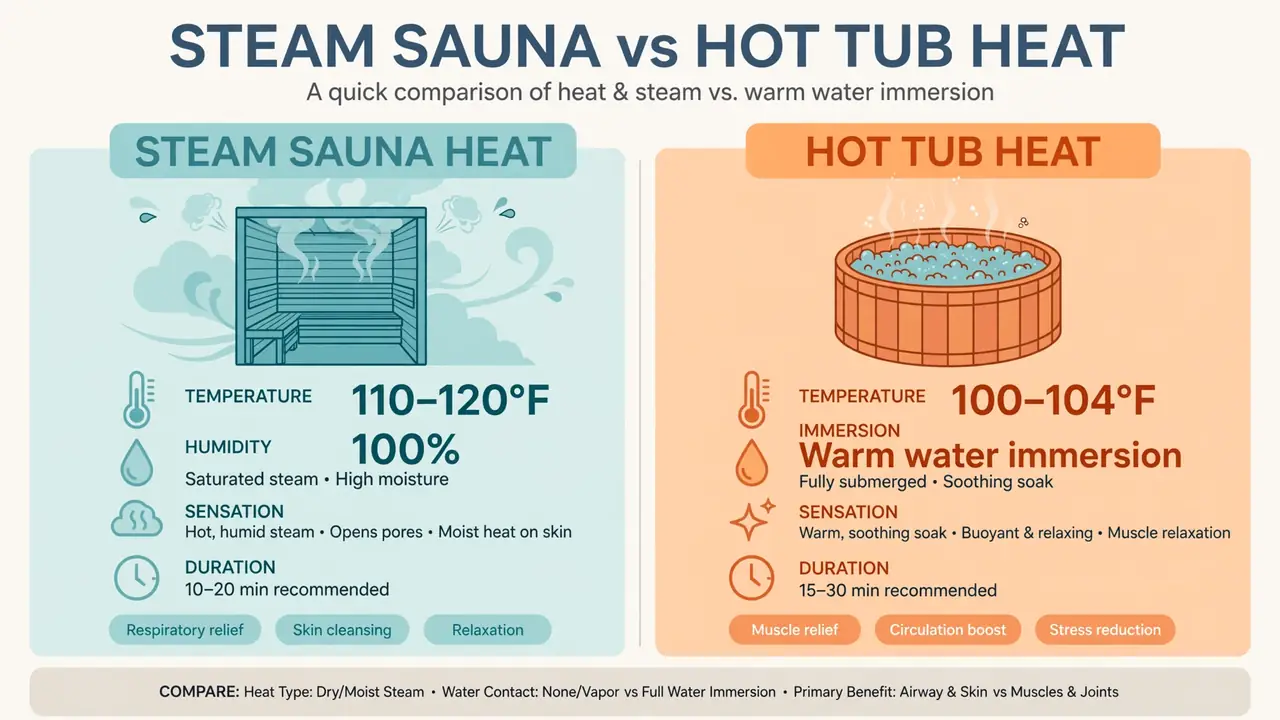
Heat, Humidity, and Temperature: The Numbers Side by Side
Numbers help, but they can mislead if you compare them directly. Air temperature and water temperature are not the same experience, because water transfers heat to skin about 25 times faster than air. A lower number in water can still feel hotter. Keep that in mind as you read the table below.
| Factor | Steam sauna | Hot tub |
|---|---|---|
| Typical temperature | About 110 to 120 F | About 100 to 104 F |
| Humidity | Near 100 percent | Not applicable, you are in water |
| How heat reaches you | Hot moist air and steam | Direct contact with warm water |
| Warm-up time | About 10 to 20 minutes | Hours from cold, minutes if kept hot |
| Typical session length | 10 to 20 minutes | 15 to 30 minutes |
| Cool-down needed | Yes, cool shower and rest | Yes, cool down and rehydrate |
| Breathing the heat | Yes, you breathe warm moist air | No, you breathe room air |
The warm-up time is a practical difference that surprises new buyers. A steam generator can have a small steam room ready in 10 to 20 minutes, so a spontaneous session is realistic. A hot tub holds hundreds of litres of water, and heating that volume from cold can take hours. Most hot tub owners therefore keep the water hot all the time, which is convenient but adds to the running cost.
How intense does each one feel? A rough guide
Steam sauna, moist heat you breathe in
Hot tub, full-body warm water immersion
Dry sauna, dry air at higher temperature
These bars show perceived intensity, not temperature. Water feels hotter than air at the same reading, and humidity makes steam feel stronger than its thermometer suggests.
What the Heat Actually Feels Like
Step into a steam room and the first thing you notice is the air itself. It feels thick, warm, and close, and every breath is warm and moist. Your skin dampens within seconds, your face flushes, and the heat builds steadily rather than hitting you all at once. Many people describe it as being wrapped in a warm towel.
Step into a hot tub and the sensation is different from the first second. The water holds you, your weight drops away, and warmth spreads through your muscles from the outside in. Jets add movement and pressure, and the sound of bubbling water is part of the experience. People often stay longer in a hot tub without noticing, because the water feels gentle even while it is steadily raising body temperature.
Which feeling you prefer is personal, and it is worth testing both before you spend money. Try a steam room at a gym or spa, then try a hot tub on a separate day. Notice how long you want to stay, how you feel when you get out, and how you sleep that night. Your own response is better evidence than any comparison article, including this one.
Recovery and Muscle Soreness: An Honest Look
Both steam saunas and hot tubs are widely used after exercise, and both can make sore muscles feel better in the moment. Warmth increases blood flow to the skin and muscles, relaxes tight tissue, and gives you a calm window to unwind. That short-term relief is real, and most regular users would confirm it from experience.
What neither one has been proven to do is speed up muscle repair itself. The research on passive heat after exercise is mixed and mostly small scale, and soreness the next day is influenced by sleep, nutrition, training load, and hydration as much as by any single recovery tool. Be cautious of any brand or article that promises faster recovery, guaranteed muscle repair, or a set number of extra training days.
Where the two do differ is in what they offer alongside the heat. A hot tub adds buoyancy and jets, which can feel especially good on stiff joints and a tight lower back. A steam sauna adds moist air that many people find soothing for breathing after a hard session, and it is easier to step in and out of quickly. If you train hard, read our guide on how to use a steam sauna for muscle recovery before building a routine around heat.
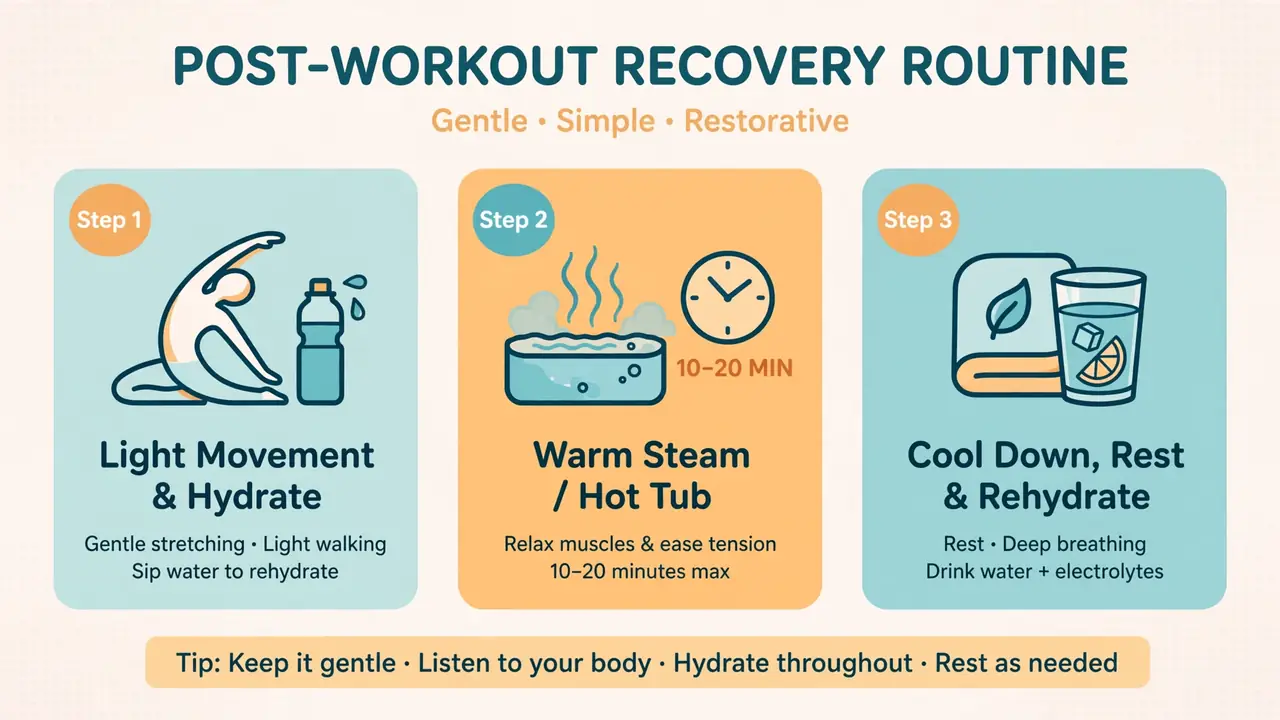
A sensible post-workout routine for either option
- Finish training, then cool down and sip water for 10 to 15 minutes before any heat.
- Take a short session of 10 to 20 minutes. Sit or recline, breathe normally, and leave early if you feel light-headed.
- Shower cool, drink water, and rest. Eat a normal post-workout meal rather than skipping food.
- Use heat two to four times a week at most to start, and build up only if you feel good the next day.
Timing matters too. Heat right before a workout can leave you tired and slightly dehydrated, so most people do better with heat after training or on rest days. Heat late in the evening can also interfere with sleep for some people, because body temperature needs to fall before you drift off. A session that ends an hour or two before bed usually works better than one right at bedtime.
Recovery features at a glance
Heat
Both deliver warmth that relaxes muscles and feels soothing after training.
Buoyancy
Hot tub only. Water lifts your weight off knees, hips, and ankles.
Jet massage
Hot tub only. Targeted water pressure for neck, back, and legs.
Relaxation and Sleep
Relaxation is where both options shine, and it is also where personal taste decides the winner. A steam sauna offers quiet, stillness, and a cocoon of warm air. There is nothing to do but sit, breathe, and let the day fall away. Many people find that simplicity deeply calming, and the ritual of a short session followed by a cool shower becomes a reliable way to mark the end of the working day.
A hot tub offers a different kind of calm. The water supports you, the jets work on tight spots, and the gentle sound of moving water covers household noise. It is also social in a way a steam room rarely is. Couples, families, and friends can talk, laugh, and unwind together in a hot tub, which makes it a shared ritual rather than a solo one. If connection matters as much as calm, that counts for a lot.
Sleep is a common reason people buy either one, and the evidence is encouraging but limited. Warming the body in the evening and then cooling down afterwards mimics the natural temperature drop that helps us fall asleep, and many people report better sleep on heat days. That said, no study has proven that a steam sauna or a hot tub reliably improves sleep for everyone, and results vary. If sleep is your main goal, try evening sessions for two weeks and keep a simple note of how you sleep. Your own pattern is the best guide, and our article on steam sauna for better sleep has practical timing tips.
Skin and Breathing
Steam is often described as good for skin, and there is a simple reason the claim feels true. Warm moisture softens the surface of the skin, opens pores, and makes cleansing feel more effective. Many people notice their skin looks fresher after a steam session, and a gentle wash afterwards can leave it feeling clean and soft.
The limits matter here too. Steam does not detox the skin, and sweating does not flush toxins out of the body in any meaningful way. The liver and kidneys do that work. People with eczema, rosacea, or very sensitive skin can also find strong heat irritating, so start with short sessions and watch how your skin responds. For a fuller look, see is a steam sauna good for your skin.
Breathing is where steam has a genuine edge. Warm, humid air can feel soothing on a stuffy nose and a dry throat, and many people find it easier to breathe deeply in a steam room than in dry air. That is a comfort effect, not a treatment, and it is not a substitute for medical care. Anyone with asthma or another breathing condition should talk to a doctor first, because hot humid air can trigger symptoms in some people.
A hot tub affects breathing differently. You breathe normal room air, which is gentler for people who dislike heavy humidity, but the warm water and steam rising off the surface can still feel pleasant. The bigger skin question for hot tubs is water chemistry. Chlorine or bromine keeps the water safe, but it can dry out skin and irritate eyes, so a rinse after every soak is a good habit.
Safety: Who Should Be Careful
Both steam saunas and hot tubs are safe for most healthy adults when used sensibly, and both can be risky when used carelessly. The safety rules are similar, and they are worth taking seriously every single time. Heat raises body temperature, lowers blood pressure, and causes fluid loss, so the basics apply to everyone.
- Drink water before and after every session, and keep a bottle nearby.
- Start with short sessions of 10 to 15 minutes and build up slowly.
- Leave immediately if you feel dizzy, nauseous, or unwell, and cool down.
- Never drink alcohol before or during a session.
- Do not use heat alone if you have a condition that could make you faint.
Pregnancy, heart conditions, and medication
Pregnant people should check with a doctor before using a steam sauna or a hot tub, because raising core body temperature is a real concern in pregnancy, especially in the first trimester. The same advice applies to anyone living with a heart or circulation condition, low blood pressure, or a condition that affects heat tolerance. Some medications, including certain blood pressure drugs and sedatives, also change how the body handles heat. Our detailed guide on steam sauna safety for children, pregnancy, and health conditions covers these groups in more depth.
Children and older adults
Children lose heat tolerance faster than adults and should only use heat with adult supervision, short sessions, and lower temperatures. Older adults can enjoy both options, but they should start gently, stay hydrated, and avoid getting up too quickly after a session, because blood pressure can dip when standing. A handrail in a hot tub and a non-slip floor in a steam room are small details that prevent real injuries.
Water safety in a hot tub
Hot tubs carry one risk that steam saunas do not, and it deserves honest attention. Warm, still water can grow bacteria quickly if the chemistry is neglected, and poorly maintained tubs have been linked to skin rashes, ear infections, and respiratory irritation. That does not mean hot tubs are dangerous. It means water testing, sanitiser, and filter cleaning are not optional chores. They are the core of safe ownership.
Temperature safety matters too. Water above 104 degrees Fahrenheit is too hot for soaking, and children and pregnant people need lower limits still. A reliable thermometer and a working thermostat are essential, and a locking cover keeps children and pets out when the tub is not in use. Never use a hot tub alone if you have a condition that could cause sudden dizziness or fainting.
Moisture and mould in a steam room
A steam room is a wet room by design, and that brings its own maintenance honesty. Without good ventilation, proper waterproofing, and a drying routine, moisture can feed mould and damage grout, seals, and nearby surfaces. A home steam room is never maintenance free, and anyone who tells you otherwise is selling something. Leave the door open after use, run the fan, wipe down surfaces, and inspect seals and grout regularly. If you are planning a build, read our guide on how to build a steam sauna at home before choosing materials.
Running Costs and Upkeep: 2026 Planning Estimates
Cost is where the two options pull apart most clearly. A steam sauna is usually cheaper to buy, cheaper to run, and cheaper to maintain. A hot tub costs more up front, costs more to keep hot around the clock, and needs regular spending on water chemistry and filters. Neither figure below is a quote. Prices vary by region, brand, installer, and local electricity and water rates, so get local quotes and verify current listings before buying.
Cost note: all figures in this section are 2026 planning estimates, not quotes. Ranges are deliberately broad because installation conditions, energy prices, and product quality vary widely. Treat them as a budgeting starting point, then confirm with local suppliers.
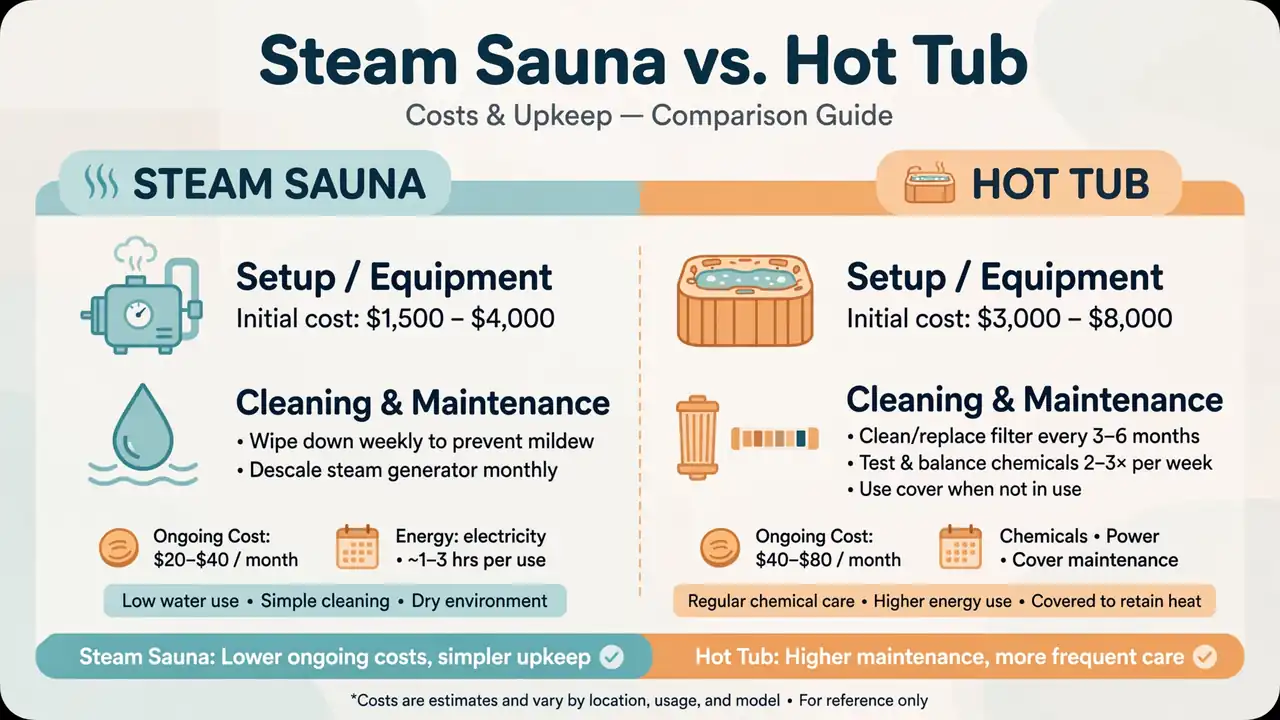
| Cost area | Steam sauna (estimate, 2026) | Hot tub (estimate, 2026) |
|---|---|---|
| Typical purchase and install | Roughly 2,000 to 8,000 dollars | Roughly 5,000 to 20,000 dollars |
| Electricity per session | Low, heat only when in use | Higher, water kept hot continuously |
| Monthly running cost | Roughly 10 to 40 dollars | Roughly 30 to 100 dollars or more |
| Water use | Small, a few litres per session | Large, hundreds of litres plus refills |
| Regular consumables | Descaler, cleaning products | Sanitiser, filters, test strips |
| Annual maintenance | Descaling, seal and grout checks | Filter changes, water changes, cover care |
| Typical lifespan with care | Generator about 10 to 15 years | Shell and equipment about 10 to 20 years |
Electricity is the biggest ongoing difference. A steam generator draws power only while it runs, so a 15 minute session costs a small amount. A hot tub heater and pump run all day and night to keep hundreds of litres at soaking temperature, and that standing cost adds up month after month, especially in cold climates. Our guide to the cost to run a steam sauna breaks the electricity maths down in detail.
What upkeep actually looks like week to week
Steam sauna upkeep is mostly about water quality and drying. Hard water leaves scale inside the generator, so descaling on the schedule in your manual is the single most important job. Wipe the bench and walls after use, leave the door open to dry, and check grout and seals every few months. The full routine is covered in our guide to steam generator maintenance, descaling, and hard water care.
Hot tub upkeep is more hands-on and less forgiving. Water needs testing two or three times a week, sanitiser needs topping up, filters need rinsing regularly and replacing on schedule, and the whole tub needs draining and refilling every few months. Skip the routine and the water will tell you quickly, through cloudiness, smell, or skin irritation. Before committing, be honest with yourself about whether you will enjoy that routine or resent it.
Monthly running cost, rough comparison (2026 estimates)
Steam sauna, used 3 to 4 times a week
Roughly 10 to 40 dollars a month
Hot tub, kept hot around the clock
Roughly 30 to 100 dollars a month or more
Bars are illustrative only. Your real costs depend on local energy prices, climate, insulation, and how often you soak.
Space and Installation
A steam sauna fits where a hot tub cannot. A compact steam shower can fit inside an existing bathroom, and a small two person steam room needs only a few square metres plus a water supply, a drain, and an electrical connection for the generator. That makes steam the easier choice for apartments, small homes, and anyone who wants heat indoors all year round.
A hot tub needs far more room and far more planning. Even a small two person tub is heavy when filled, so it needs a level concrete pad or a reinforced deck, a dedicated electrical circuit, and a way to drain hundreds of litres of water. Delivery access matters too. A tub that cannot fit through a gate or around a tight corner can turn into an expensive crane job. Measure twice, and check access before you order.
Installation rules vary by area, and this is not a topic to guess on. Some places require a permit or an inspection for electrical work, plumbing changes, or outdoor structures, and local rules differ widely. Check with your local authority and a licensed electrician before work starts. Our guide to steam shower cost in 2026 also covers what installation usually involves.
Which Should You Choose? A Decision Guide
By now you may already know your answer. If not, work through the profiles below and see which one sounds most like you. The right choice is the one that matches your body, your home, and the routine you will actually keep.
| Your situation | Best fit | Why |
|---|---|---|
| Small bathroom, no garden | Steam sauna | Fits indoors, quick to heat, low water use |
| Stiff joints, sore knees or back | Hot tub | Buoyancy and jets ease load and tension |
| Short on time, want quick sessions | Steam sauna | Ready in 10 to 20 minutes, easy to fit in |
| Want to relax with family or friends | Hot tub | Social soaking, room for several people |
| Tight budget, low running costs | Steam sauna | Lower purchase price and monthly costs |
| Love breathing warm moist air | Steam sauna | Humidity soothes nose and throat |
| Dislike humidity, prefer open air | Hot tub | You breathe normal air while soaking |
| Happy with regular water care | Hot tub | Testing and filters become a simple habit |
Pick a steam sauna if you want quick, quiet, low-cost heat
A steam sauna suits people who want a short daily ritual without a big project. You come home, press a button, wait a few minutes, and sit in warm steam for 15 minutes before a cool shower and an early night. It suits small homes, busy schedules, and anyone who loves the feeling of breathing warm moist air. It also suits people who want lower running costs and less weekly maintenance.
Pick a hot tub if you want floating, jets, and shared soaks
A hot tub suits people who want their body held by water. If your knees ache, your lower back is tight, or you simply love the feeling of floating while jets work on your shoulders, water offers something air cannot. It also suits households that will use it together, because a shared soak is a genuine social pleasure. Just be sure you have the space, the budget, and the patience for water care.
Still torn? Try before you buy
Before spending thousands, spend a little time testing. Book a steam room session at a gym or spa, and book a hot tub session somewhere else on a different day. Pay attention to how each one makes you feel during the session, how you feel an hour later, and how you sleep. If one of them leaves you thinking about the next session, that is your answer. If you are remodelling a bathroom, our comparison of steam sauna vs infrared sauna for a bathroom remodel may also help you weigh the indoor options.
Can You Have Both?
Some people do, and the combination can work well if the budget and the space allow it. A steam shower in the bathroom covers quick daily sessions and breathing comfort, while a hot tub in the garden covers long weekend soaks and social evenings. Used on different days, they complement each other rather than competing.
That said, both is a luxury, not a need. Most households will get far more value from one option used four times a week than from two options used once a month each. If you are choosing between a good steam setup and a cheap hot tub, pick the good one. Quality, comfort, and reliability matter more than owning both. And remember that a home spa is only worth it if the upkeep stays manageable, so do not double your maintenance unless you genuinely enjoy the routine.
Frequently Asked Questions
Is a steam sauna or a hot tub better for muscle recovery?
Neither has been proven to speed up muscle repair. Both can ease soreness and help you relax after training, which many people find valuable. A hot tub adds buoyancy and jet massage, which can feel better on stiff joints, while a steam sauna is quicker to use and easier to fit into a daily routine. Choose based on which one you will use consistently.
Which costs more to run, a steam sauna or a hot tub?
A hot tub usually costs more. A steam generator uses electricity only during a session, so monthly costs are roughly 10 to 40 dollars in 2026 estimates. A hot tub keeps hundreds of litres hot around the clock, so monthly costs are roughly 30 to 100 dollars or more. Actual costs depend on local energy prices, climate, and how often you use it.
Is a steam sauna hotter than a hot tub?
A steam sauna reads hotter on a thermometer, at about 110 to 120 degrees Fahrenheit, while a hot tub sits at about 100 to 104 degrees. But water transfers heat faster than air, so a hot tub can feel hotter than the numbers suggest. Humidity also makes steam feel more intense than dry air at the same temperature.
Can I use a steam sauna or hot tub every day?
Many healthy adults do, with short sessions of 10 to 20 minutes and good hydration. Start with two to four sessions a week and build up only if you feel well the next day. If you are pregnant, live with a heart or circulation condition, or take medication that affects heat tolerance, check with your doctor first.
Which is better for sleep, a steam sauna or a hot tub?
Both can help you wind down, because warming up and then cooling down mimics the temperature drop that supports sleep. Many people report better sleep on heat days, but no study has proven a reliable effect for everyone. Try evening sessions that end one to two hours before bed and track your own sleep for two weeks.
Which needs more maintenance?
A hot tub needs more. Water testing two or three times a week, sanitiser, filter rinsing, and draining every few months are all essential. A steam sauna needs descaling, wiping down, drying after use, and regular checks of grout and seals. Neither one is maintenance free, and a neglected hot tub can develop water quality problems quickly.
Can I put a hot tub in a small garden?
Yes, if you have room for a level concrete pad or reinforced deck, a dedicated electrical circuit, drainage, and delivery access. Even a small tub is very heavy when filled, so the base and the access route matter more than the footprint. Check local rules and get a licensed electrician involved before installation.
The Bottom Line
A steam sauna and a hot tub are both good ways to bring warmth and calm into your week, and neither one is the wrong choice. Steam gives you quick, quiet, low-cost heat that you breathe in, and it fits neatly into a bathroom and a busy life. A hot tub gives you floating, jets, and shared soaks, and it asks for more space, more money, and more weekly care in return.
The best test is the simplest one. Try both, notice how your body responds, and choose the one you can picture yourself using three or four times a week for years. That is the one that will actually change how you feel, and that is worth far more than any feature list.