
A steam sauna feels wonderful on tired muscles, and the warm, wet air seems like it should be good for your hair too. After all, steam is just water, and moisture is what dry hair craves. The real picture is more mixed than that, and it matters how you handle your hair before, during and after a session.
Steam can soften hair, make conditioning treatments work better and leave your scalp feeling clean and refreshed. It can also leave hair frizzy, tangled and harder to manage, and repeated wet heat without aftercare can dry out some hair types over time. The difference comes down to preparation, session length and what you do in the minutes after you step out.
This guide walks through the whole routine for steam sauna hair and scalp care, from the rinse before you go in to the cool-down afterwards. It covers what steam does to different hair types, the mistakes that cause the most damage and when it is better to skip the steam room altogether.


#Paid Links
Health note: this article is not medical advice. Steam saunas are wellness tools, not treatments for hair loss or scalp conditions. If you have a scalp condition, hair loss, are pregnant, live with a heart or circulation condition or low blood pressure, or take medication that affects heat tolerance, check with a doctor before using a steam sauna.


#Paid Links
How Steam Actually Interacts With Your Hair and Scalp
A steam room fills the air with warm water vapour, usually at close to 100 percent humidity and at temperatures around 100 to 120 degrees Fahrenheit (38 to 49 degrees Celsius). Your hair absorbs some of that moisture, and the heat makes the outer layer of each strand, the cuticle, lift slightly. That is why hair often feels softer and more flexible straight after a steam session.
The same process explains the downsides. When the cuticle lifts, hair loses its smooth surface, so strands catch on each other and frizz appears, especially in wavy and curly hair. Hair also swells as it absorbs water, and the repeated swelling and shrinking as hair dries can weaken the strand over time. This is sometimes called hygral fatigue, and it is one reason hair that is steamed often without proper care can feel rougher rather than healthier.
What the Warmth Does to Your Scalp
Heat increases blood flow to the skin, including the scalp, and the damp warmth softens flakes and product build-up. Many people find their scalp feels cleaner and less tight after a session, and a gentle scalp massage in the steam can feel very soothing. The warmth can also loosen oil and styling residue, which makes the post-session wash more effective.
That warmth is not the same as a treatment, though. Better blood flow to the scalp is a pleasant short-term effect, and it does not mean new hair will grow. Anyone selling a steam routine as a cure for thinning hair is overstating what the evidence shows.
Why Steam Feels Different From Dry Sauna Heat
In a dry sauna your hair dries out as the session goes on, which is why many people wear a towel or cap to protect it. In a steam sauna the opposite happens, and your hair gets wetter the longer you stay. That wet heat is gentler on the strand in the moment, but it also means your hair spends the whole session swollen with water.
The practical result is that steam suits conditioning and softening, while dry heat suits people who want to keep hair dry. If you love steam but hate the frizz, the routine around the session matters more than the steam itself, and that is where most of this guide is focused.


#Paid Links
What Steam Can (and Cannot) Do for Your Hair
It helps to be clear about the limits before building a routine. Steam is a useful tool for hair care, and it is not a therapy. The honest summary below is what most hair and dermatology sources agree on, and it keeps expectations realistic.
What Steam Can Genuinely Help With
- Deep conditioning. Warmth and moisture help conditioner penetrate the hair shaft more effectively, so a conditioning mask applied before a steam session usually works better than the same mask applied at room temperature.
- Softening dry or coarse hair. Steam adds moisture to the hair temporarily, which makes stiff, dry hair feel softer and easier to comb through while it is damp.
- Loosening scalp build-up. The damp warmth softens flakes, dried styling product and excess oil, so a gentle wash after the session removes them more easily.
- Improving manageability. Hair that has been steamed and then conditioned is often easier to detangle, because the strands are softer and more flexible while wet.
What Steam Does Not Do
- It does not grow hair. There is no reliable evidence that steam saunas stimulate hair growth or reverse hair loss. Hair growth is driven mainly by genetics, hormones, nutrition and overall health.
- It does not detox your scalp. The idea that sweating pushes toxins out of the body through the skin is not supported by evidence. Sweat is mostly water and salt, and the liver and kidneys handle detoxification.
- It does not repair split ends or damage. Once a hair strand is split or broken, no amount of steam can fuse it back together. Steam can make damaged hair look and feel better temporarily, and only a trim removes the damage.
- It does not replace washing. Steam softens residue but does not clean hair. A proper wash after the session is still needed, especially if you use styling products.
If you see a product or a spa claiming that steam opens the pores on your scalp to grow new hair, treat that as marketing, not science. The scalp benefits of steam are real but modest, and they are about cleanliness, comfort and conditioning, not regrowth.
Before Your Session: Preparing Hair and Scalp
A few minutes of preparation before you step into the steam makes the whole session easier on your hair. The goal is simple: start with clean, detangled, lightly protected hair, and avoid anything that will bake into the strands under the heat.
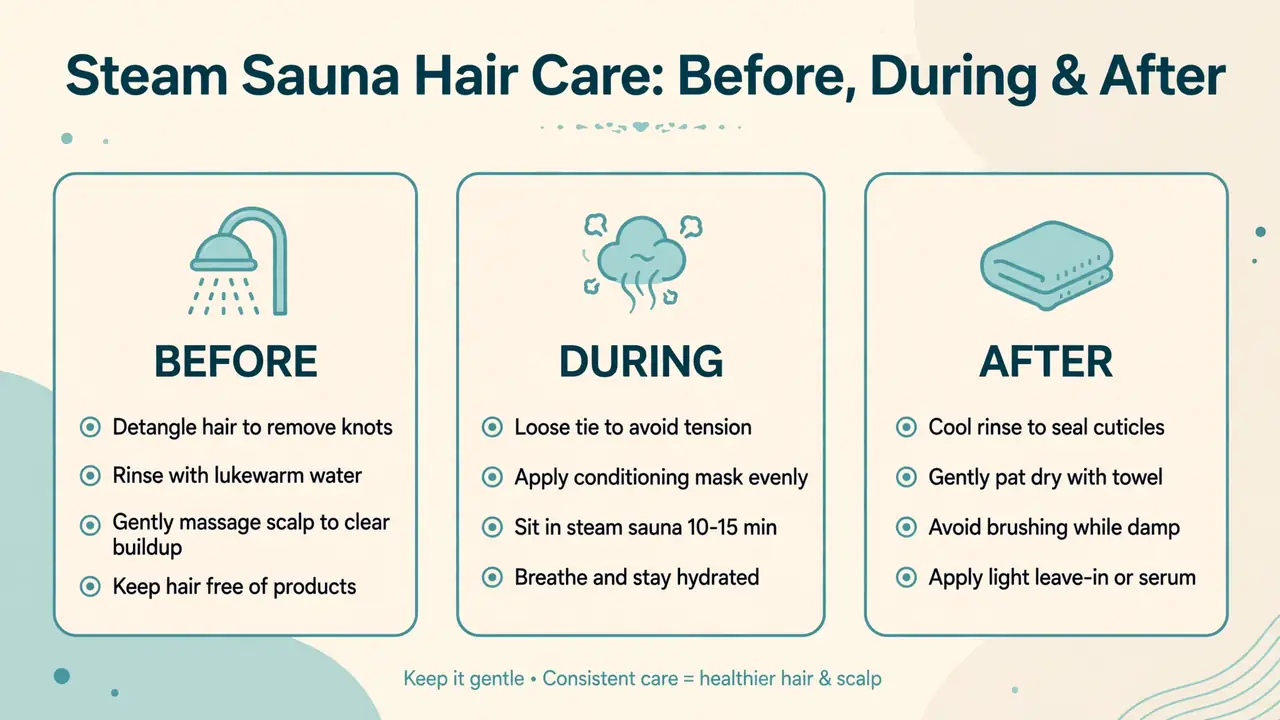
- Rinse with lukewarm water. A quick rinse removes dust and loose product and wets the hair evenly, so it absorbs steam moisture more uniformly.
- Detangle gently. Use a wide-tooth comb on damp hair, starting at the ends and working up. Wet hair is at its most fragile, so never yank through knots.
- Apply a light conditioner or hair oil if your hair is dry. A small amount of conditioner or a few drops of a light oil on the mid-lengths and ends acts as a buffer against the wet heat. Keep it off the scalp unless your scalp is very dry.
- Tie hair loosely. A loose braid or a low, soft bun keeps hair off your neck and shoulders and reduces tangling. Avoid tight elastics, metal clips and bobby pins, which can snag wet hair and get uncomfortably hot.
- Skip heavy styling products. Gels, sprays and waxes can melt and mix with sweat and steam, then dry into a sticky film that is hard to wash out. Save styling products for after the session.
- Drink water before you go in. Hydration starts before the session, not after. A glass of water beforehand helps you tolerate the heat and keeps the session comfortable. For more on staying hydrated around heat sessions, see our infrared sauna hydration guide, which covers the same before-and-after habits that apply to steam.
If you plan to use the session as a conditioning treatment, apply your hair mask at this stage instead of plain conditioner. A mask with ingredients suited to your hair type, left on under the steam, is the single most useful hair treatment a steam sauna offers.
During the Session: What to Do With Your Hair
Once you are inside, the best approach is to leave your hair mostly alone. The steam is doing the work, and fiddling with wet hair in the heat usually creates tangles rather than preventing them. Keep your hair tied up loosely and let the moisture work through it.
Keep Sessions Short
Short sessions are kinder to your hair and your body. Most steam sauna guidance suggests starting with 10 to 15 minutes, and beginners should start even shorter and build up gradually. Long sessions do not give your hair extra benefit, and they increase the time your strands spend swollen with water. They also raise the risk of dizziness and overheating, so there is no reason to push past the point of comfort.
If you are new to steam, or you are using a public steam room for the first time, read our guide to steam sauna hygiene and etiquette in hotels and gyms before you go. It covers the unwritten rules that keep shared steam rooms pleasant for everyone, including how to handle towels and hair in a public setting.
Massage Your Scalp Gently
A light scalp massage with your fingertips feels good in the steam and helps distribute the moisture and any conditioner you applied. Use the pads of your fingers, not your nails, and keep the pressure gentle. There is no need to scrub, and scrubbing wet hair roughly is one of the fastest ways to cause breakage.
If you applied a hair mask, the massage helps work it through, but resist the urge to comb it through in the steam. A comb on swollen, wet hair under heat pulls harder than the same comb on damp hair at room temperature.
Watch for Warning Signs
Leave the steam room right away if you feel dizzy, nauseous, short of breath or unusually hot. These are signs your body needs to cool down, and they are not something to push through. The same applies if your scalp starts to sting or itch sharply, which can happen if you have a cut, sunburn or an irritated patch of skin. Sit down in a cool area, sip water and let your body temperature settle before deciding whether to go back in.
After Your Session: The Cool-Down Routine That Matters Most
The minutes after a steam session matter more for your hair than the session itself. Hair is at its weakest when it is wet and warm, and the way you rinse, dry and detangle it now decides whether the steam leaves it soft or frizzy. Treat this part as the main event, not an afterthought.
- Cool down first. Spend a few minutes in a cooler area and let your body temperature settle before you wash your hair. Jumping straight under a hot shower keeps the cuticle open and the hair swollen for longer.
- Rinse with cool or lukewarm water. A cool rinse helps the cuticle lie flat again, which is what gives hair its shine and smoothness. It does not need to be icy, and lukewarm is fine if a cold rinse is uncomfortable.
- Wash with a gentle shampoo. Use a mild shampoo and focus on the scalp, letting the lather run down the lengths rather than scrubbing the ends. One wash is usually enough, and a second wash can strip the moisture the steam just added.
- Condition the lengths and ends. Apply conditioner from the mid-lengths to the ends, leave it for a couple of minutes, then rinse. This step seals in moisture and replaces some of what the heat and washing removed.
- Pat dry, never rub. Squeeze water out gently with a soft towel or an old cotton T-shirt. Rubbing wet hair with a rough towel roughs up the cuticle and creates frizz and breakage.
- Detangle with care. Use a wide-tooth comb or your fingers, starting at the ends. If your hair tangles easily, a small amount of leave-in conditioner helps the comb glide through.
- Let hair air dry when you can. Air drying is the gentlest option after steam. If you need a dryer, use the lowest heat setting and a heat protectant, and keep the dryer moving rather than holding it on one spot.
One habit worth building is drying your hair fully before you go out into cold air or put on a hat. Damp hair in cold weather feels uncomfortable, and a hat pressed over wet hair can flatten it into an odd shape and trap moisture against the scalp for hours.
Steam Sauna Hair Care by Hair Type
Not all hair reacts to steam the same way. Fine hair can go limp, curly hair can frizz, and colour-treated hair needs extra care because the cuticle is already more open. The table below gives a starting point for each hair type, and you can adjust from there based on how your own hair responds.
| Hair type | How steam affects it | Best approach |
|---|---|---|
| Fine or thin | Can go flat and limp, and heavy conditioner weighs it down | Skip pre-session oil, use a light conditioner only on the ends, keep sessions short |
| Thick or coarse | Softens well and holds moisture, but can take a long time to dry | Use a conditioning mask before the session, dry thoroughly afterwards |
| Curly or wavy | Frizz is the main risk, and curl pattern can loosen temporarily | Loose braid before the session, leave-in conditioner after, avoid brushing when dry |
| Colour-treated | Steam can speed up colour fading, since the cuticle opens and dye molecules wash out | Use colour-safe conditioner, keep sessions shorter, rinse with cool water |
| Oily scalp | Steam loosens oil and build-up, which helps, but over-washing afterwards can trigger more oil | Keep conditioner off the scalp, wash once with a gentle shampoo, avoid hot water |
| Dry or damaged | Benefits most from steam conditioning, but is also the most fragile when wet | Pre-session mask every time, handle wet hair very gently, avoid heat styling after |
Colour-treated hair deserves a special note. Steam opens the cuticle, and colour molecules can escape through that opening, so frequent long steam sessions can fade colour faster than usual. If you have just had your hair coloured, wait at least a few days before your next steam session, and keep the sessions shorter and cooler when you do go back.
What to Avoid in a Steam Sauna
Most steam-related hair problems come from a short list of avoidable habits. None of them is dramatic on its own, but repeated week after week they add up to dryness, breakage and frizz that is hard to reverse without a cut.
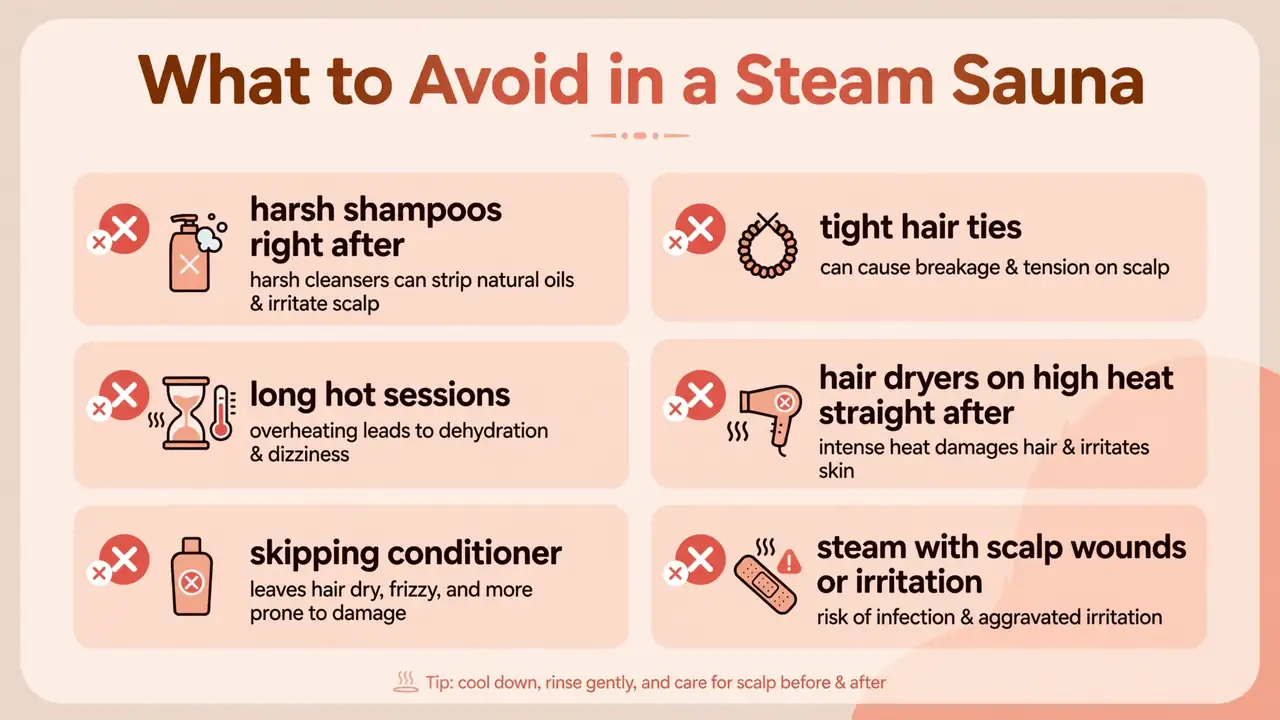
- Harsh shampoo straight after steaming. A strong clarifying shampoo on freshly steamed hair strips away the moisture you just added. Use a gentle shampoo and save clarifying washes for non-steam days.
- Tight ties, metal clips and bobby pins. Wet hair under heat is fragile, and a tight elastic or a metal pin creates a pressure point where strands snap. Use a soft scrunchie or a loose braid instead.
- Long sessions for the sake of it. Staying in the steam for 30 minutes does not condition your hair twice as well as 15 minutes. It mostly means more time with swollen, vulnerable strands and a higher chance of overheating.
- High-heat blow drying straight after. Hair that has just been through wet heat does not need a blast of dry heat on top of it. If you must use a dryer, use the cool or low setting and a heat protectant.
- Skipping conditioner after the session. Steam adds moisture, but washing removes some of it again. Conditioning afterwards is what locks the benefit in, and skipping it leaves hair drier than before the session.
- Steaming with a cut, sunburn or irritated scalp. Heat and humidity can sting broken skin and make irritation worse. Wait until the scalp has healed before your next session.
- Leaving hair damp under a hat or towel for hours. A warm, damp scalp is a comfortable place for yeast and bacteria to grow, and it can also leave hair smelling musty. Dry your hair properly and let the scalp breathe.
How Often Should You Steam for Hair Benefits?
There is no single right frequency, because it depends on your hair type, how long your sessions are and how well you care for your hair afterwards. A useful starting point is once a week, with a conditioning mask, and then adjusting based on what your hair tells you.
| Frequency | Session length | Best for |
|---|---|---|
| Once a week | 10 to 15 minutes | Most hair types, including colour-treated and fine hair |
| Twice a week | 10 to 15 minutes | Thick, coarse or very dry hair that benefits from regular conditioning |
| Every other week | 10 minutes | A cautious start for sensitive scalps or newly coloured hair |
| Daily or near-daily | Short sessions only | Not recommended as a hair routine, since repeated wetting and drying weakens strands over time |
Pay attention to how your hair feels over a few weeks rather than after a single session. If it feels softer and easier to manage, your frequency is working. If it feels limp, frizzy or unusually tangly, cut back to once a week or shorten your sessions. Hair that starts snapping more than usual is a clear sign to reduce steam exposure and focus on conditioning and gentle handling for a while.
Age and health matter here too. Older adults often have drier hair and thinner skin, so shorter, gentler sessions are the safer choice. Our guide to steam sauna safety for seniors covers safe temperatures, session lengths and health checks in more detail, and the same conservative approach applies to anyone with a health condition that affects heat tolerance.
Home Steam Room Care: Ventilation, Mold and Towel Hygiene
A home steam room is not maintenance-free, and the same moisture that softens your hair can feed mold if the room is not cared for. This matters for your scalp as well as your house, because a moldy steam room is an unhealthy place to breathe and to sit with wet hair and open pores.
Ventilate and Dry the Room After Every Session
Leave the door open after a session so the room can dry out, and run the ventilation fan if your steam room has one. Wipe down the benches and walls if they stay wet, and do not leave damp towels sitting in the room. A room that dries fully between sessions is far less likely to develop mold or a musty smell.
If you are planning or maintaining a home steam setup, it is worth understanding how the equipment itself ages. Our guide to how long a steam generator lasts explains the lifespan and upkeep of the main component, and regular maintenance is part of keeping the steam clean as well as reliable.
Keep Towels and Hair Tools Clean
Use a fresh towel for each session, and wash towels and hair wraps regularly in hot water. A towel that stays damp between sessions can develop a smell and carry bacteria back onto your scalp. The same goes for combs and brushes used on wet hair after steaming, so rinse them and let them dry fully between uses.
In a shared or public steam room you cannot control the cleaning schedule, so the simple protections matter most. Sit on your own towel, keep your hair tied up and off shared surfaces, and shower and wash your hair properly afterwards.
Watch for Leaks and Damp Patches
Steam rooms live with constant moisture, so small leaks can turn into bigger problems if they are ignored. Check regularly for damp patches, peeling sealant or a persistent musty smell, and fix problems early. Our guide to fixing a leaking steam room walks through the common causes and the practical fixes, and catching a leak early is far cheaper than repairing mold damage later.
When to Skip the Steam Room
Most people can enjoy a steam sauna safely with a sensible routine, but there are times when skipping the session is the right call. Your hair and scalp will not miss one session, and the risks of going in when you should not are not worth it.
- Active scalp conditions. If you have an inflamed scalp, an infection, open sores or a flare-up of eczema or psoriasis, wait until it settles. Heat and humidity can worsen irritation, and a shared steam room can spread some infections.
- Fresh colour, bleach or chemical treatment. Give colour or chemical treatments a few days to settle before steaming, since heat and moisture can fade colour and stress freshly treated hair.
- Sunburned scalp. A sunburned scalp is already damaged and sensitive, and steam will sting and may slow healing. Wait until the burn has fully settled.
- Feeling unwell, pregnant or with a heart condition. If you are ill, pregnant, or live with a heart or circulation condition, low blood pressure or medication that affects heat tolerance, check with a doctor first. The heat affects your whole body, not just your hair.
- After drinking alcohol. Alcohol and steam are a poor combination. Alcohol affects your ability to judge heat and stay hydrated, so skip the steam room entirely on days you have been drinking.
If you are unsure whether a steam sauna is right for you, a quick conversation with your doctor is worth more than any article. This is especially true if you are considering a home steam room, where the temptation to use it daily is higher. For a broader comparison of wet and dry heat, our steam sauna versus hot tub guide may help you decide which kind of heat suits your routine and your health.
Frequently Asked Questions
Is a steam sauna good for your hair?
It can be, when used sensibly. Steam adds moisture, softens hair and helps conditioning treatments work better, which is useful for dry or coarse hair. It does not grow hair or repair damage, and long or very frequent sessions without proper aftercare can leave hair frizzy and weaker over time.
Should I wash my hair before or after a steam sauna?
Both, in different ways. Rinse with lukewarm water before the session to remove loose product and wet the hair evenly, then wash properly with a gentle shampoo after the session, followed by conditioner. The post-session wash is the one that matters most, since it removes the sweat, oil and residue the steam loosened.
Can I put conditioner in my hair before a steam sauna?
Yes, and it is one of the best uses of a steam session. A conditioning mask applied before you go in works better under the warm, damp air than it would at room temperature. Apply it to the mid-lengths and ends, keep it off the scalp unless your scalp is very dry, and rinse it out with the post-session wash.
Does steam sauna damage hair?
Occasional steam sessions with a good routine are unlikely to damage healthy hair. The risk comes from frequent long sessions, rough handling of wet hair, harsh shampoo afterwards and high-heat drying straight after steaming. With short sessions, gentle detangling and proper conditioning, most people see softer hair rather than damage.
How long should I stay in a steam sauna for hair benefits?
Ten to fifteen minutes is enough for the conditioning benefit, and beginners should start shorter. Longer sessions do not add extra benefit for your hair, and they increase the time your strands spend swollen with water, as well as the risk of overheating. Leave sooner if you feel dizzy or uncomfortable.
Is steam bad for colour-treated hair?
Steam can speed up colour fading, because the heat opens the hair cuticle and colour molecules wash out more easily. If your hair is coloured, keep sessions shorter, use a colour-safe conditioner, rinse with cool water afterwards and wait a few days after a fresh colour before steaming.
Steam can be a genuinely useful part of a hair care routine, as long as it is treated as a conditioning aid rather than a cure. Keep sessions short, protect your hair before you go in, condition it properly afterwards, and listen to what your hair and your body tell you. Done that way, the steam room can leave your hair softer and your scalp feeling fresh, without the frizz and breakage that come from getting the routine wrong.