
That first step out of bed can tell you everything. If your heel feels stiff, tender, or sharp when you stand up in the morning, and it eases a little as you move, you may be dealing with plantar fasciitis. Many people with sore heels wonder whether an infrared sauna for plantar fasciitis could help, and whether the heat is safe for their feet.
The honest answer is measured. Gentle infrared heat may ease stiffness and soreness for some people, especially with rest, sensible footwear, and gentle stretching. It is not a treatment for plantar fasciitis, and it will not repair the tissue on its own. This guide explains what may help, what to avoid, and how to build a cautious session routine.
We keep the claims careful throughout. Research on sauna use and pain is mostly observational, which means it shows an association rather than proof of cause, and most well-known sauna studies looked at traditional dry saunas rather than infrared models.
Please read first: this is not medical advice.


#Paid Links
Saunas are wellness tools, not treatments. This article shares general information only. If you are pregnant, live with a heart or circulation condition or low blood pressure, have diabetes or reduced feeling in your feet, or take medication that affects heat tolerance, check with a doctor first. Persistent, worsening, or sharp heel pain needs a doctor or podiatrist, not a sauna session.
What Plantar Fasciitis Actually Is
Plantar fasciitis is irritation of the plantar fascia, the thick band of tissue that runs along the bottom of your foot from your heel bone to your toes. Think of it as a bowstring that supports the arch of your foot. Every step pulls on it, and over time that repeated strain can cause small damage and soreness, most often right where the band meets the heel.



#Paid Links
The classic pattern is pain with the first steps of the day, or after sitting for a while. The heel often feels stiff and tender at first, then loosens as you walk. For some people the ache returns after a long day on their feet. Pain that stays sharp, gets worse over weeks, or appears after an injury is a different story, and it deserves medical attention.
Who tends to get it
Plantar fasciitis is common, and it does not pick only athletes. Runners can develop it, but so can people who stand all day at work, people who recently increased their activity, and people whose shoes offer little arch support. Tight calves, flat feet, high arches, and extra body weight can all add load to the plantar fascia.
Age plays a part too: the tissue becomes less flexible, and the fat pad cushioning the heel thins over time. That is one reason heel pain often appears in middle age, even without a change in routine. It means the tissue has been asked to do more than it could comfortably handle.
What it feels like, day to day
- A sharp or stabbing ache in the heel with the first steps in the morning
- Tenderness when you press the inside edge of the heel
- Stiffness that eases as you move, then returns after rest
- A dull ache after standing or walking for a long time
- Pain that flares after a run, a long walk, or a day in flat shoes
That morning pattern is a useful clue. Overnight the fascia tightens slightly, so the first steps stretch it again and hurt most. Gentle movement usually loosens it, which is why many people feel better by mid-morning and worse again by evening.



#Paid Links
What plantar fasciitis is not
Heel pain has several causes, and not all of them are plantar fasciitis. A heel spur, a stress fracture, a pinched nerve, Achilles tendon trouble, or an inflamed bursa can all cause pain in the same area. A heel spur is a small bony growth that sometimes shows up on an X-ray, but it is often not the source of the pain. That is why a proper diagnosis matters before you settle on any home routine, sauna included.
If your heel pain came on suddenly after a twist, a fall, or a loud pop in the foot, skip the home experiments and get checked promptly. The same applies if the foot is swollen, hot, red, or numb, or if you cannot put weight on it. Those signs point to something that needs a clinician, not a heat session.
How Infrared Heat Works on Feet and Lower Legs
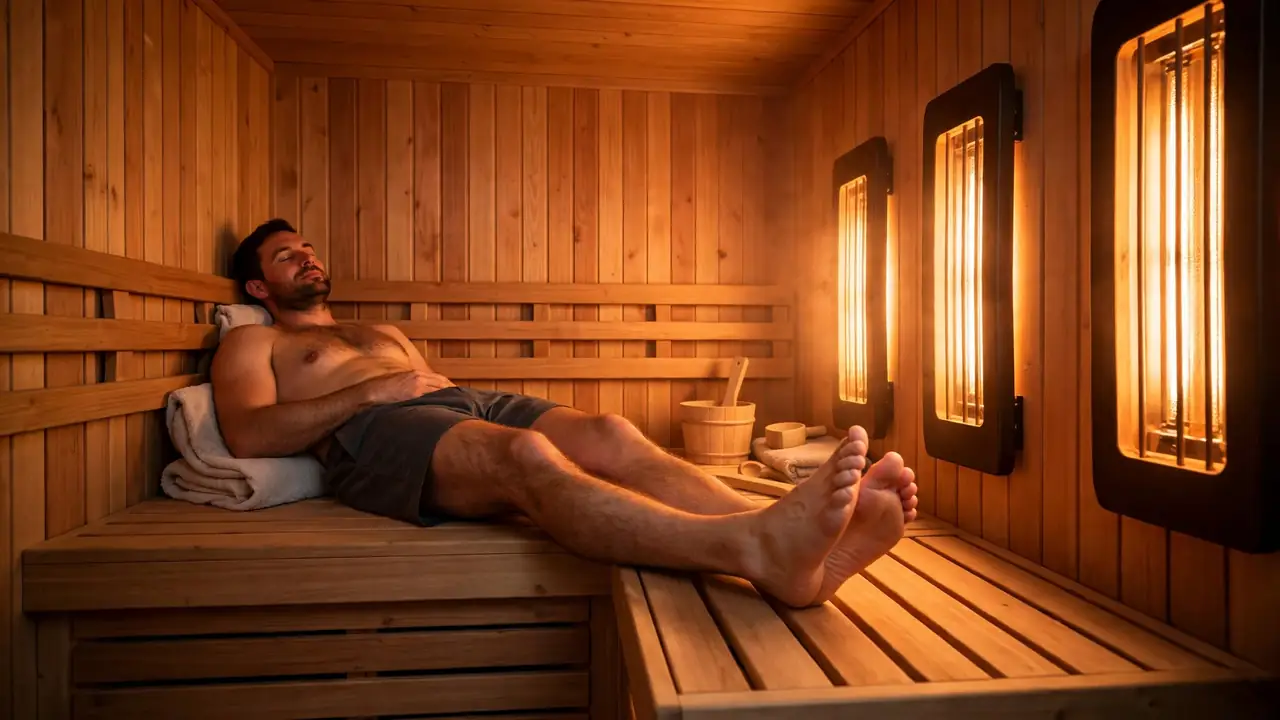
An infrared sauna warms you differently from a traditional sauna. Instead of heating the air around you to a very high temperature, infrared panels emit radiant heat that warms your body more directly. The air usually stays cooler, often in the range of around 45 to 60 degrees Celsius, which many people find easier to sit in. If you want the fuller picture, our guide to how an infrared sauna works explains the panels, the wavelengths, and the difference from a traditional sauna.
For feet, that gentler air temperature can be an advantage. You are not stepping into a scorching room. You sit, your feet rest on a bench or a towel, and the warmth builds gradually.
Blood flow to the skin and muscles tends to increase as the body warms, which is the same reason a warm bath can make stiff muscles feel looser. That feeling of loosening is real, but it is temporary, and it should not be mistaken for healing the fascia itself.
Why warmth can feel good on a stiff heel
Warmth tends to relax tight muscles, and tight calves are closely linked to plantar fasciitis. The calves connect to the heel through the Achilles tendon, and when they are tight they pull harder on the heel with every step. Warming the lower legs may help them feel less stiff, taking a little pressure off the heel for a while.
Warmth also changes how we notice pain. A comfortable, warm sensation can compete with a dull ache for your attention, which is one reason people often feel better during and shortly after a session. That relief is worth having, but it is not the same as the tissue recovering.
What the research does and does not say
There is no strong evidence that infrared saunas treat plantar fasciitis. No large, well-controlled trial has tested infrared sauna sessions as a treatment for this specific condition, and it would be misleading to claim otherwise. What exists is a broader, softer evidence base: some observational studies link regular sauna use with general wellbeing, and some small studies report that people with musculoskeletal aches feel better after warm sessions. Those findings are interesting, but they are associations, not proof that a sauna will help your heel.
So the fair summary is this: gentle infrared heat is a comfort measure that may ease stiffness and soreness for some people with plantar fasciitis. It is not a cure, not a substitute for medical care, and not a reason to skip the steps that actually help the fascia recover, such as supportive footwear, stretching, and sensible activity levels.
What May Help: Gentle Warmth, Done the Right Way
If you try an infrared sauna for plantar fasciitis, the goal is gentle warmth, not maximum heat. Think of it as a warm-up for your feet and calves, not a test of endurance. The people who get the most from it tend to be the ones who keep sessions short, keep the temperature moderate, and pay attention to how their feet feel the next morning.
Start low and build slowly
Your first sessions should be short. Ten minutes at a moderate temperature is a sensible starting point for most healthy adults. If that feels comfortable and your feet feel no worse the next day, you can add a few minutes at a time over the following weeks. There is no prize for the longest session, and longer is not better for a sore heel.
Temperature matters as much as time. Many infrared cabins let you set the temperature, and a moderate setting is the right choice when your feet hurt. If you feel uncomfortably hot, sweaty in a stressed way, or light-headed, the session is too hot or too long for you that day.
Step out, cool down, and drink water. You can read more about sensible durations in our guide to how long to stay in an infrared sauna.
| Experience level | Session length | Temperature feel | How often |
|---|---|---|---|
| First 1 to 2 weeks | 10 minutes | Mild to moderate, comfortable | 2 times a week |
| Settling in (weeks 3 to 4) | 10 to 15 minutes | Moderate, never stifling | 2 to 3 times a week |
| Comfortable routine | 15 to 20 minutes | Moderate, easy breathing | 2 to 3 times a week |
| Flare-up days | Skip or 5 to 10 minutes only | Mild, gentle warmth | Rest first, sauna second |
General guidance only, for healthy adults. These are starting points, not prescriptions. Your doctor may advise something different.
Stretch after the warmth, not during the heat
Warmth can make stretching feel easier, and that is where a sauna session may add the most value for plantar fasciitis. After you step out and cool down for a few minutes, your calves and feet are warm and a little looser. That is a good moment for gentle stretching, done slowly and without bouncing.
- Calf stretch against a wall. Face a wall, step one foot back, keep the back heel on the floor, and lean forward gently until you feel a mild pull in the calf. Hold for about 20 to 30 seconds, then switch sides.
- Plantar fascia stretch. Sit down, cross the sore foot over the opposite knee, and gently pull the toes back toward your shin until you feel a stretch along the arch. Hold for about 20 to 30 seconds.
- Towel stretch. Sit with the leg straight, loop a towel around the ball of the foot, and pull gently toward you. Keep the knee straight and the pull mild.
- Toe and arch rolls. Place a tennis ball or a cold water bottle on the floor and roll it slowly under the arch for a minute or two. Keep the pressure light, and stop if it hurts.
Stretching should feel like a mild pull, never a sharp pain. If a stretch hurts, ease off or skip it. Two or three gentle rounds are enough. Aggressive stretching, especially on a painful heel, can make things worse rather than better.
Support your feet outside the sauna too
A sauna session lasts twenty minutes. Your shoes carry you for the rest of the day, so they matter far more. Supportive shoes with a cushioned heel and decent arch support reduce the load on the fascia with every step, while flat, thin-soled shoes and worn-out trainers do the opposite. If you stand all day, a cushioned insole or a proper fitting can be a better investment than any sauna accessory.
Activity matters as well. Plantar fasciitis often flares when activity jumps suddenly, such as a new running plan or a holiday with far more walking than usual. Building activity up gradually, and resting when the heel flares, gives the tissue a chance to settle. A sauna cannot undo a week of overloading, but it can be a pleasant part of a calmer routine.
Hydration and cooling down
Drink water before and after your session. Saunas make you sweat, and even a short session can leave you mildly dehydrated if you go in thirsty. Keep a glass of water nearby, and sip rather than gulping a large amount at once.
Avoid alcohol before and during a session entirely. Alcohol affects how your body handles heat, and it raises the risk of dizziness and falls.
Cool down gradually. Sit for a few minutes after stepping out and let your body temperature settle before standing for long or walking far. Rushing from a hot cabin straight into a long walk on hard floors is a poor way to treat a sore heel.
A Practical Session Routine for Sore Heels
Here is a simple routine that puts the guidance above together. It is written for a healthy adult who has already checked with a doctor if any of the risk factors in the disclaimer apply. Adjust it to your own comfort, and shorten or skip it on days when the heel is flaring.
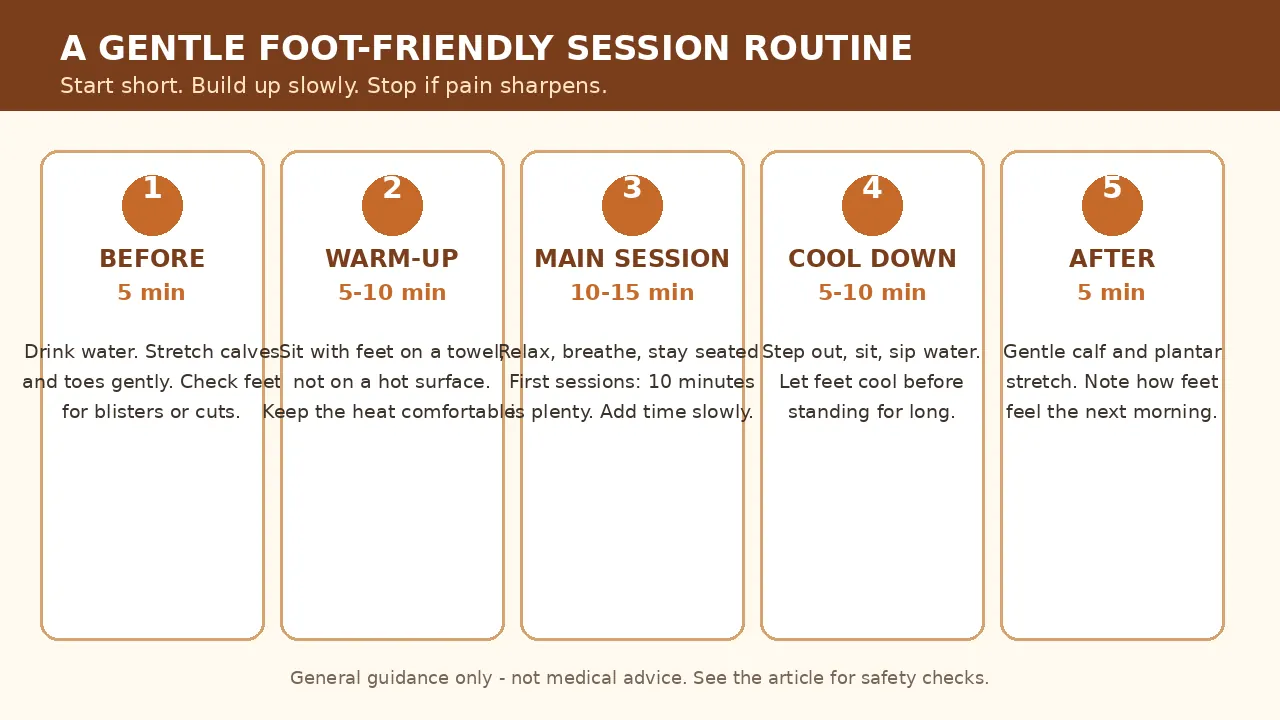
Before the session
- Drink a glass of water and use the bathroom first
- Check your feet for blisters, cuts, or sore spots
- Bring a clean towel to sit on and a second towel for your feet
- Set a timer so you do not lose track of time
- Wear loose, comfortable clothing and no tight socks
During the session
- Sit comfortably with your feet resting on a towel, not directly on a hot bench or floor
- Keep your breathing easy. If you feel short of breath, step out
- Do not stand in the sauna. Sitting keeps the load off your heels
- Leave straight away if you feel dizzy, nauseous, or unwell
- Do not try to stretch hard while you are hot and sweaty inside the cabin
After the session
- Sit and cool down for five to ten minutes, and sip water
- Do the gentle calf and plantar stretches described above
- Put on supportive shoes, not flat sandals or bare feet on hard floors
- Notice how your feet feel the next morning, and write it down if it helps
- If the heel feels worse the next day, shorten the next session or take a break
That last point is the most useful habit in this article. A simple note, such as “15 minutes, mild heat, heel looser next morning” or “20 minutes, too hot, heel worse”, tells you more over a month than any single session will. If the pattern shows no benefit after a few weeks, the sauna is probably not the tool for your heel, and your time is better spent on footwear, stretching, and medical advice.
What to Avoid: The Mistakes That Make Heel Pain Worse
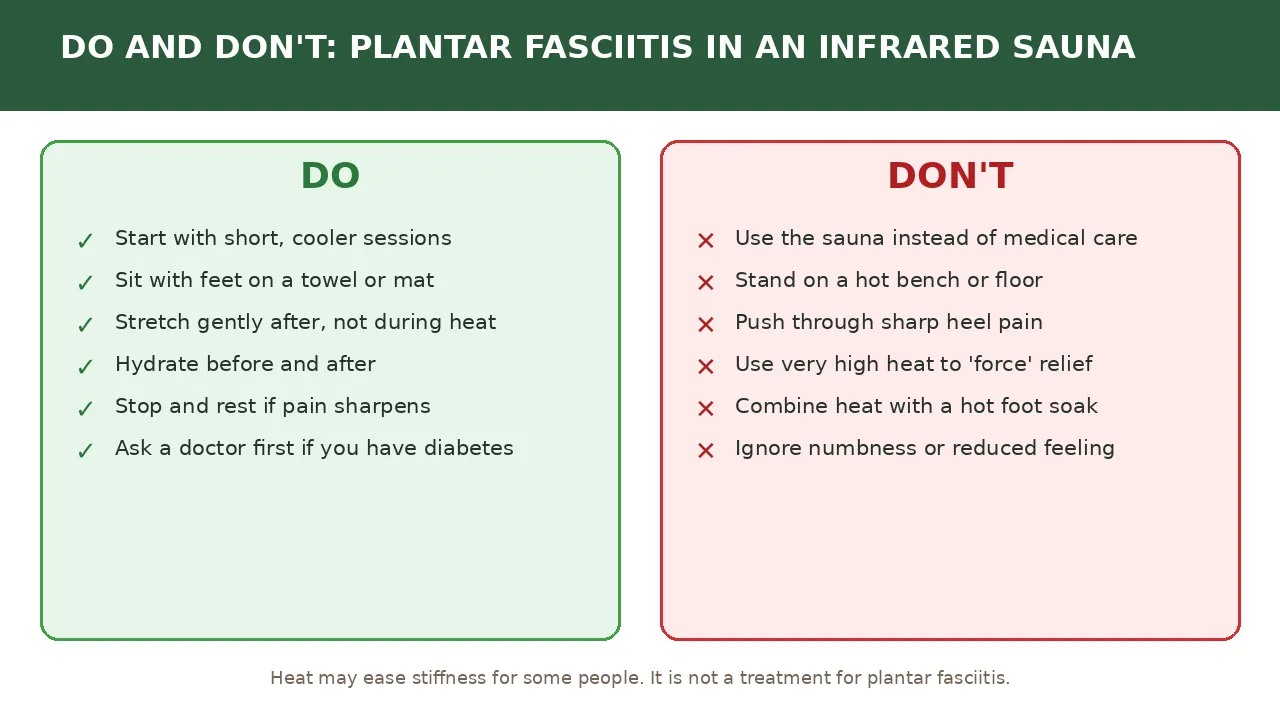
Most of the harm from sauna use with plantar fasciitis comes from doing too much, too hot, too soon, or from using the sauna as a reason to delay proper care. The list below is short, but each item matters. If you recognise yourself in any of them, that is useful information, not a reason to feel bad about it.
Too much heat, too soon
Cranking the cabin to its highest setting and staying in for half an hour is the most common beginner mistake. High heat does not heal tissue faster. It raises the risk of dizziness, dehydration, and burns, and it can leave your feet feeling more irritated afterwards. Our guide to the mistakes beginners make in an infrared sauna covers this pattern in more detail, and it applies doubly when your feet already hurt.
Standing on hot surfaces
Benches and floors inside a sauna can get hot enough to hurt the soles of your feet, especially if you stand on them. Sitting is the safe position. Always place a towel or a mat under your feet, and check the surface with your hand before you put your feet down.
This matters most for people with diabetes or reduced feeling in their feet, who may not notice a burn until it is already serious. If you have diabetes, read our guide on infrared sauna use with diabetes and talk to your doctor before any session.
Ignoring sharp pain
There is a difference between mild stiffness and sharp pain, and it matters. Mild stiffness that eases as you move is common with plantar fasciitis. Sharp, stabbing pain that gets worse during a session is a signal to stop.
Do not try to push through it, and do not assume that more heat will fix it. Pain is information, and in this case the information is that your foot needs rest and probably a clinician.
Using the sauna instead of medical care
A sauna session can feel like progress, and that feeling can quietly delay a doctor’s visit. If your heel pain has lasted more than a few weeks, keeps coming back, or is getting worse, book an appointment. A podiatrist or doctor can confirm the diagnosis, check for other causes, and suggest treatments with real evidence behind them, such as structured stretching programmes, orthotics, or physiotherapy. The sauna can sit alongside that care, but it cannot replace it.
Risky heat combinations
Combining a sauna with a very hot foot soak, a heating pad on the same foot, or a long hot bath on the same day can add up to too much heat on one small area. Feet have relatively thin skin and little padding, so they burn more easily than people expect. One gentle source of warmth at a time is enough. The same caution applies to heat rubs and creams: warming the skin with a cream and then heating it again in a sauna can irritate the skin and make it hard to judge how hot your feet really are.
Sauna use when you are unwell or dehydrated
Skip the sauna when you are ill, feverish, dehydrated, or hungover. Your body is already under strain, and adding heat makes that strain worse. The same applies after a very hard workout or a long day in the sun without enough water. A sore heel is a poor reason to sit in a hot cabin when the rest of your body is asking for rest and fluids.
Heat vs. Cold: Which One, and When?
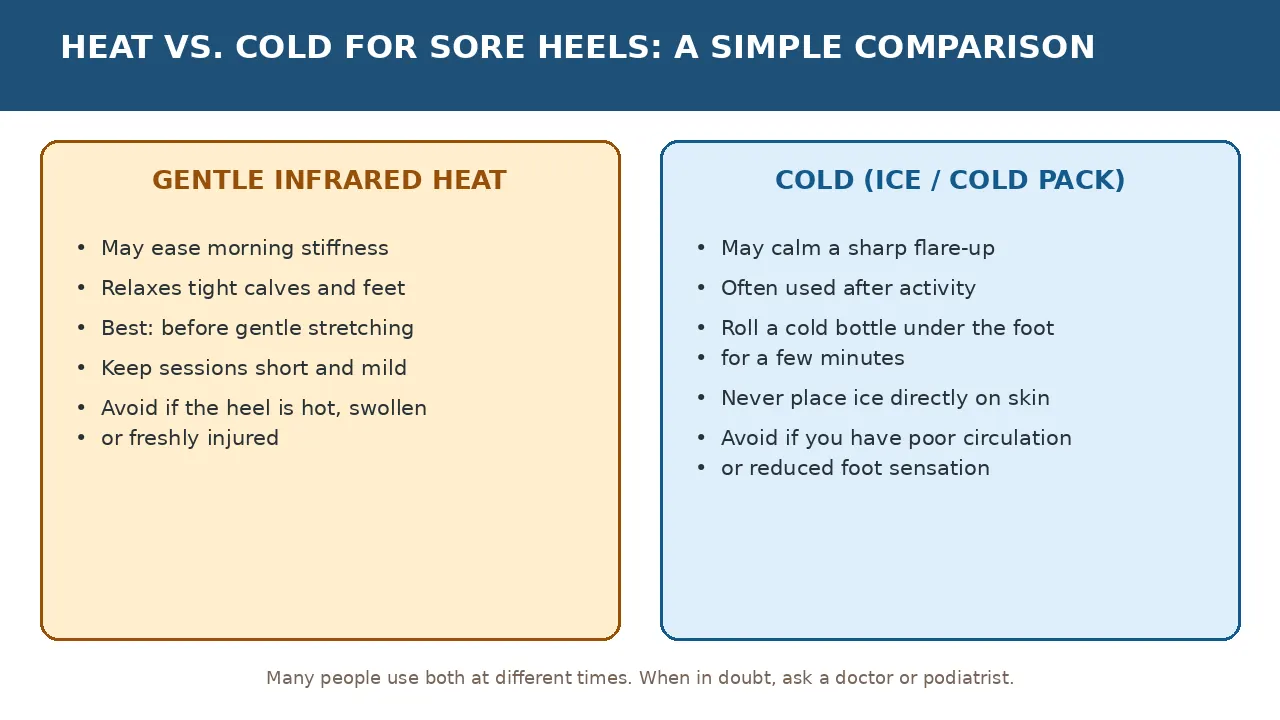
People with plantar fasciitis often ask whether heat or cold is better, and the honest answer is that both can help at different times. They do different jobs.
Heat tends to relax stiff tissue and ease morning stiffness. Cold tends to calm a sharp flare-up and reduce the feeling of throbbing after activity. Many people end up using both, at different moments, and that is a sensible approach.
When gentle heat may be the better choice
- Morning stiffness that eases once you start moving
- Tight calves that make the heel feel pulled and sore
- Before gentle stretching, when warm tissue stretches more comfortably
- On a rest day, when you want a calm, relaxing routine
When cold may be the better choice
- After a long walk, run, or day on your feet, when the heel throbs
- During a flare-up, when the heel feels hot or swollen
- When the pain is sharp rather than stiff and dull
A simple cold method is to roll a frozen water bottle under the arch for a few minutes, with a thin sock on. Keep the pressure light, and never place ice directly on bare skin. Ten minutes is usually enough, and you should stop if the foot goes numb. People with poor circulation or reduced foot sensation should ask a doctor before using cold therapy, just as they should before using heat.
Contrast therapy, alternating warm and cold, is sometimes suggested for sore feet, but the evidence for plantar fasciitis specifically is thin, and it adds risk for people with circulation problems or diabetes. For most people, choosing one approach at a time and noticing what helps is simpler and safer.
Warning Signs: Stop and See a Doctor
Most plantar fasciitis improves slowly with rest, stretching, and supportive footwear, but some signs mean you should stop experimenting and get medical advice promptly. Keep this list somewhere easy to find, and take it seriously.
- Sharp pain that does not ease. Pain that stays sharp for more than a few days, or that gets worse week by week, needs checking.
- You cannot put weight on the foot. If walking is very painful or impossible, do not wait.
- Swelling, heat, or redness. A hot, swollen, or red heel can signal inflammation or infection, not ordinary plantar fasciitis.
- Numbness or tingling. Loss of feeling, pins and needles, or a foot that feels different from the other one deserves prompt attention.
- Pain after an injury. A twist, a fall, a jump, or a popping feeling in the foot should be checked the same day if possible.
- A sore that will not heal. Any cut, blister, or sore on the foot that does not heal, especially if you have diabetes, needs urgent care.
- Pain in both heels that came on suddenly. Sudden pain in both feet can point to a different condition and should be assessed.
- Fever with foot pain. Fever plus a painful foot is a reason to seek care promptly.
During a session, step out at once if you feel dizzy, nauseous, short of breath, or faint, or if your heart is racing in a way that worries you. Cool down, drink water, and sit somewhere safe. If the symptoms do not pass quickly, seek medical help. Never stay in to “ride out” dizziness.
Who Should Check With a Doctor First
Saunas are safe for many healthy adults, but they are not right for everyone, and foot pain adds extra reasons to be careful. If any of the points below apply to you, talk to your doctor before your first session, and follow their advice over anything in this article.
Diabetes and reduced foot sensation
This is the most important group for this topic. Diabetes can damage the nerves in the feet, a condition called diabetic neuropathy, which reduces feeling.
If you cannot feel heat properly, you may not notice a burn until it is serious. Diabetes can also slow healing, so a small blister or burn can become a bigger problem. People with diabetes should get medical advice before using any sauna, check their feet carefully before and after every session, and never sit with bare feet on a hot surface.
Heart and circulation conditions
Heat makes blood vessels widen and the heart work harder. For most healthy people that is manageable, but for people with heart disease, circulation problems, or low blood pressure it can be risky. If you live with a heart condition, have had a heart attack or stroke, or take medication for blood pressure, ask your doctor whether sauna use is safe for you and what limits apply. Our guide on infrared sauna use and heart health explains why this check matters, but it does not replace your own doctor’s advice.
Pregnancy
Pregnant readers should check with their doctor or midwife before using any sauna, including an infrared cabin. Overheating in pregnancy carries risks, and the safe limits are a medical question. If your clinician says no, follow that advice. Foot pain in pregnancy is common, and safer ways to ease it include supportive shoes, gentle stretching, and rest with the feet raised.
Medication that affects heat tolerance
Some medicines affect sweating, blood pressure, or how alert you feel in the heat. Blood pressure medicines, some heart medicines, and medicines that cause drowsiness are examples. If you take regular medication, ask your doctor or pharmacist whether sauna use is safe for you. Bring a list of your medicines to the conversation so the advice is specific to you.
Other situations that call for caution
- Children and teenagers should only use a sauna with adult supervision and much shorter, cooler sessions
- Older adults may be more sensitive to heat and dehydration, so shorter sessions and a companion nearby are sensible
- Anyone with a skin condition, open wound, or recent foot surgery should wait until the skin has healed and a clinician agrees
- People who have fainted in the heat before should not use a sauna alone
If you are unsure whether any of these apply to you, that uncertainty is itself a reason to ask. A short conversation with a doctor is a better use of time than a cautious guess. You can also read our general safety guide, is an infrared sauna safe, for the broader safety picture before that conversation.
How This Fits With Other Foot and Body Pain
Plantar fasciitis rarely exists in isolation. Tight calves, sore knees, and a stiff lower back often travel with it, because the way you walk changes when your heel hurts. You may start limping slightly, shifting weight to the outside of the foot, or avoiding putting the heel down fully. Over weeks, that changed gait can strain the ankle, knee, hip, and back.
That is one reason a gentle sauna routine can feel helpful even when the heel itself does not change much. Warming and relaxing the calves and lower legs may ease some of the knock-on stiffness, and a calm twenty minutes of rest can lower the general tension that builds up when you are in pain. Readers dealing with back pain may find our article on whether an infrared sauna is good for chronic back pain useful, and those using heat for general muscle soreness can read our guide to infrared sauna use for muscle recovery.
A changed gait is also a reason to get the heel sorted rather than keep compensating for it. If your knee or hip starts to ache, or your back tightens on the same side as the sore heel, mention it to your doctor or physiotherapist. Fixing the heel problem usually helps the knock-on aches settle too.
Footwear, weight, and daily habits
Three everyday factors have a bigger effect on plantar fasciitis than any sauna routine. The first is footwear: supportive shoes with cushioning and arch support, replaced when they wear out. The second is activity load: increasing walking, running, or standing time gradually instead of all at once. The third is body weight, where it applies: extra weight adds load to the fascia with every step, and even a modest, gradual change can reduce that load over time.
None of these are quick fixes, and none are as pleasant as a warm sauna session. Think of the sauna as the pleasant part of the routine, while the shoes, the stretching, and sensible activity levels do the real work. Both have a place, but they are not interchangeable.
Frequently Asked Questions
Is an infrared sauna safe for plantar fasciitis?
For many healthy adults, a short, gentle infrared sauna session is generally considered low risk, but it is not a treatment for plantar fasciitis. Keep sessions short, keep the heat moderate, sit with your feet on a towel, and stop if pain sharpens. Check with a doctor first if you have diabetes or reduced feeling in your feet, a heart or circulation condition, low blood pressure, or if you are pregnant or take medication that affects heat tolerance.
How often can I use an infrared sauna with foot pain?
Two to three short sessions a week is a sensible starting pattern for most healthy adults, with at least a day of rest between sessions at first. Start with ten minutes and build up slowly only if your feet feel no worse the next morning. Skip sessions on flare-up days, and rest the foot instead.
Can an infrared sauna cure plantar fasciitis?
No. An infrared sauna cannot cure plantar fasciitis. Gentle heat may ease stiffness and soreness for some people, but the fascia still needs rest, load management, supportive footwear, stretching, and time. If your heel pain lasts more than a few weeks or keeps getting worse, see a doctor or podiatrist.
Is heat or cold better for plantar fasciitis?
It depends on the moment. Gentle heat may help morning stiffness and tight calves, especially before stretching.
Cold may help a sharp flare-up or throbbing after activity. Many people use both at different times. Never place ice directly on bare skin, and ask a doctor before using heat or cold if you have poor circulation or reduced feeling in your feet.
When should I see a podiatrist for heel pain?
See a podiatrist or doctor if the pain lasts more than a few weeks, keeps coming back, or gets worse; if you cannot put weight on the foot; if the heel is swollen, hot, red, or numb; if the pain followed an injury; or if you have diabetes and notice any foot sore, blister, or change in feeling. A proper diagnosis matters, because several conditions cause heel pain and they are treated differently.
Should I stretch in the sauna?
No, do not stretch hard inside the sauna. Stretch gently after you step out and cool down for a few minutes, when your calves and feet are warm and a little looser. Keep each stretch mild, hold it for about 20 to 30 seconds, and stop if it hurts. Stretching should feel like a gentle pull, never a sharp pain.
The Bottom Line
An infrared sauna for plantar fasciitis can be a pleasant, gentle addition to your routine, but it is a supporting player, not the treatment. The heat may loosen stiff calves, ease morning soreness, and give you a calm moment to stretch afterwards. That is a real benefit, and for some people it is enough to make the routine worth keeping.
What matters most is how you use it. Keep sessions short and moderate, sit with your feet protected on a towel, hydrate, and pay attention to how your heels feel the next morning. Avoid the traps: very high heat, long sessions, standing on hot surfaces, pushing through sharp pain, and using the sauna as a reason to put off medical care.
If your heel pain is persistent, worsening, or complicated by diabetes, reduced foot sensation, a heart condition, or pregnancy, talk to a doctor first. Get the diagnosis right, sort out supportive footwear, and build a stretching and activity plan with a clinician or physiotherapist. Then, if the sauna still appeals to you, enjoy it as the relaxing, gentle part of a sensible routine, and let your feet tell you whether it is helping.