
A steam sauna feels different from any other kind of heat. The air is thick with moisture, the temperature is lower than a dry sauna, and yet you can feel wiped out after a short session. That is because a steam room works on your body in its own way, and hydration is the part most people get wrong.
This guide covers steam sauna hydration from start to finish: how much water to drink before, during and after a session, when electrolytes help and when plain water is enough, and the warning signs that mean you should leave the steam room right away. Everything here is written for steam rooms specifically, because the 100 percent humidity changes the rules.
Please note: This article is general information, not medical advice. A steam sauna is a wellness tool, not a treatment. If you are pregnant, live with a heart or circulation condition or low blood pressure, or take medication that affects how you handle heat, check with your doctor before using a steam room.


#Paid Links
Why Steam Sauna Hydration Is Different
In a dry sauna, sweat evaporates off your skin and cools you down. In a steam room, the air is already full of moisture, so sweat has nowhere to go. It sits on your skin or drips off, and your body keeps sweating without getting the same cooling effect.


#Paid Links
That is why a steam session can feel harder than the temperature suggests. Steam rooms usually run cooler than dry saunas, yet many people feel hotter and tire faster. The heat still raises your core temperature and makes you sweat, and that sweat is fluid leaving your body.
The tricky part is that you cannot judge your fluid loss by how dry you feel. You may not notice how much you have sweated because your skin is already wet from the steam. People who are used to dry heat often underestimate how much water a steam session costs them, and they walk out feeling lightheaded or washed out.
What the humidity does to sweating
Your body cools itself by sweating and letting that sweat evaporate. In a steam room, the air is close to fully saturated with water vapour, so evaporation slows to almost nothing. Your body responds by sweating more, but the sweat does not cool you the way it would outdoors or in a dry sauna.
This is also why steam rooms can feel stuffy even at a modest temperature. The heat is not only in the air, it is in the moisture on your skin and in every breath you take. Short sessions are the sensible starting point, especially if you are new to steam. Our guide to steam sauna temperatures explains the usual ranges and how to set a comfortable level for your first visits.
Why you can feel drained after a short session
Feeling tired after a steam session is common, and mild tiredness that passes after water and rest is usually nothing to worry about. The combination of heat, humidity and fluid loss asks a lot of your body in a short time. Blood vessels widen in the heat, your heart works a little harder, and you lose water and salts through sweat.
If the tiredness feels heavy, or comes with dizziness, nausea or a headache, that is your body asking you to stop and rehydrate. Do not push through it to finish a planned session length. A shorter session with proper hydration beats a longer one that leaves you feeling unwell.


#Paid Links
How Much Water to Drink Around a Steam Session
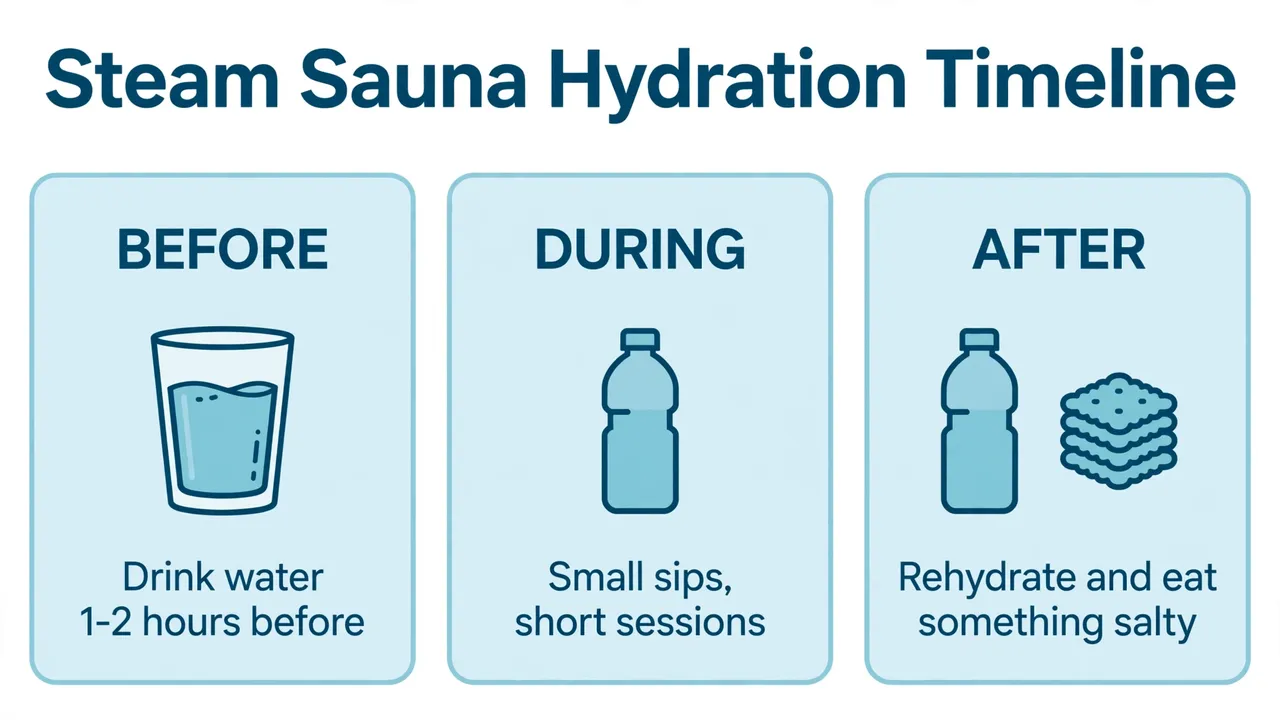
There is no single number that fits everyone, because fluid needs depend on your size, how long you stay in, how hot the room is and how much you sweat. The plan below is a simple starting point for a typical session of around 15 minutes. Treat it as a routine to build on, not a medical prescription, and let thirst guide you.
| When | What to drink | How much (starting point) |
|---|---|---|
| 1 to 2 hours before | Plain water | 1 to 2 glasses, sipped slowly |
| 30 minutes before | Plain water | 1 glass |
| During the session | Small sips of water | A few sips if you feel thirsty, or bring a bottle and take a sip every few minutes |
| Right after | Plain water | 1 to 2 glasses |
| Over the next hour | Water, plus a light snack or meal | Keep sipping until your urine is pale yellow and you feel normal again |
The most important glass is the one you drink before you step in. Going into a steam room already a little dehydrated, for example after exercise, a hot day or a night of poor sleep, makes the session harder and the recovery slower. Drink steadily in the hour or two before, rather than gulping a large amount at the last minute.
During the session, small sips are enough. You do not need to drink large amounts inside the steam room, and forcing down water while you feel hot and queasy can make nausea worse. Keep a bottle of water just outside the door or on a bench where it stays cool, and step out for a sip if you need one.
A simple rule for after the session
After you leave the steam room, drink a glass of water before you do anything else. Then keep sipping over the next hour while you cool down. A useful check is the colour of your urine: pale yellow means you are getting back on track, while dark yellow means you still need more water. This is a rough guide, not a test, but it is easy to use and it works for most people.
If you take more than one round in the steam room, rehydrate between rounds. A short cool-down with water outside the steam room counts as part of the session, not a break from it. If you are unsure how long a session should last, our guide on how long to stay in a steam sauna sets out sensible lengths for beginners and regular users.
Electrolytes After a Steam Session: When They Help
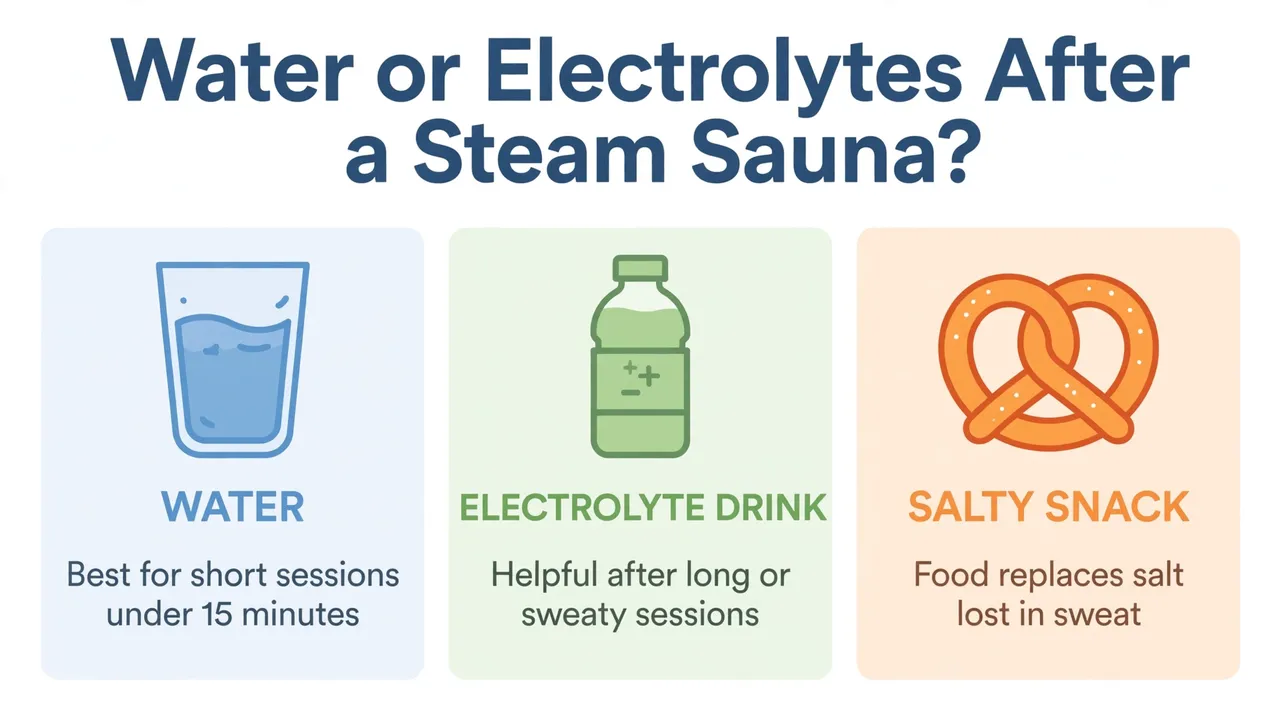
Sweat is not only water. It carries small amounts of salts with it, mainly sodium and potassium, along with smaller amounts of other minerals. After a short steam session, plain water and a normal meal are usually enough to replace what you lost. Your next meal will quietly top up the salts, and there is no need for a special drink.
Electrolytes become more useful when the session is long, when you take several rounds, or when you have already been sweating a lot that day, for example after exercise or work in the heat. In those cases, water alone can leave you feeling flat even after you have drunk plenty. A salty snack, a meal, or an electrolyte drink can help you feel normal again.
Water, food or an electrolyte drink?
- Plain water is the right choice for a single short session. Drink before and after, and eat normally afterwards.
- Water plus a salty snack works well after a longer session or two rounds. A handful of salted nuts, a bowl of soup or a normal salty meal covers the salts you lost.
- An electrolyte drink is worth considering after a long session, several rounds, or a session on top of heavy exercise. Look for one with sodium and potassium, and keep the sugar modest.
- Sports drinks are not necessary for most steam users. They can help after heavy sweating, but many are high in sugar, so water and food are often the better everyday choice.
One thing to avoid is drinking very large amounts of plain water in a short time after a long, sweaty session. That can dilute the salts in your blood and make you feel worse. Steady sipping, combined with food, is safer and more comfortable than gulping litre after litre. If you ever feel confused, very nauseous or unusually weak after a session, get medical advice rather than trying to fix it with more drinks.
Warning Signs: When to Leave the Steam Room Now
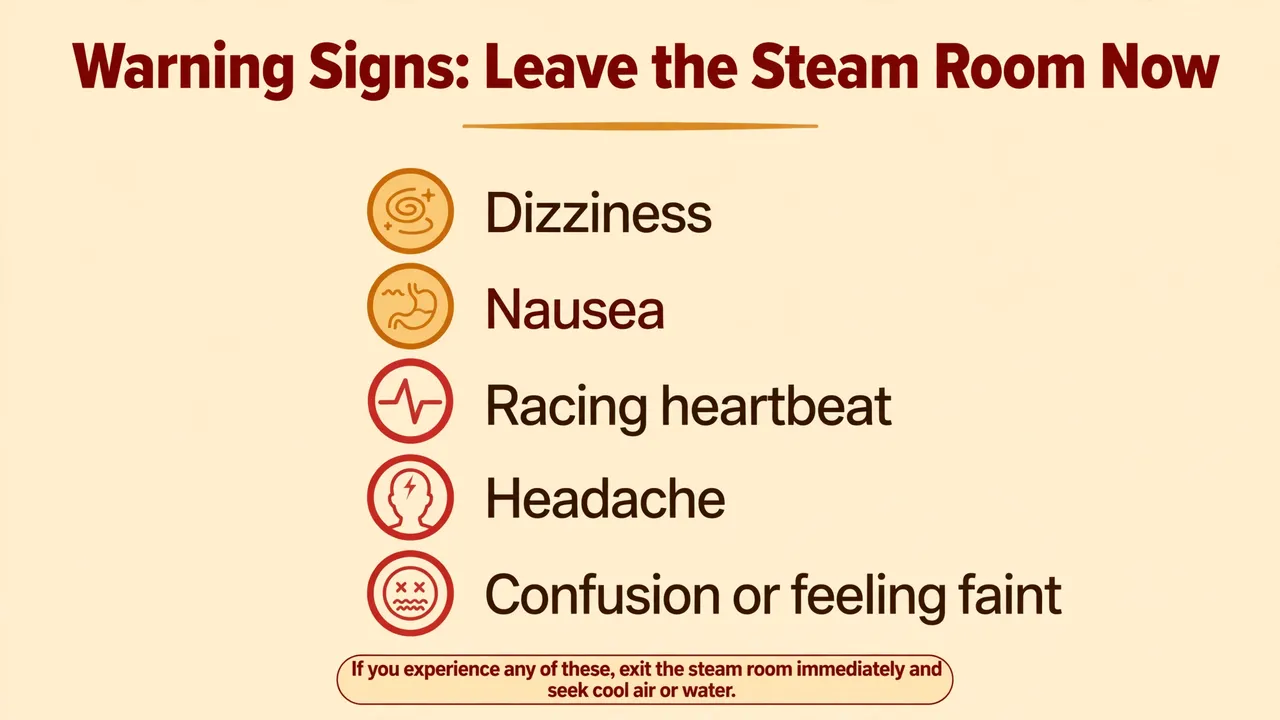
Your body gives clear signals when a steam session has gone far enough. The rule is simple: if something feels wrong, leave. You do not need to wait for a timer, and you do not need to finish a planned session. Step out, sit somewhere cool, and drink water.
- Dizziness or lightheadedness. The most common early sign. Sit down outside the steam room and sip water.
- Nausea or a queasy stomach. Heat and fluid loss can unsettle your stomach. Leave and cool down.
- A pounding headache. Often linked to heat and dehydration. Do not try to ride it out inside the steam room.
- A racing or irregular heartbeat. Your heart works harder in the heat, but a fast or uneven pulse that worries you means stop.
- Muscle cramps. Cramps in your legs or stomach can follow heavy sweating and salt loss. Leave, drink water and eat something salty.
- Feeling faint, confused or clammy. These are stronger signs. Leave at once, cool down, and seek medical help if they do not pass quickly.
- Stopped sweating while still feeling hot. In a steam room this is harder to spot, but if your skin feels dry and hot and you feel unwell, get out and cool down.
Children, older adults and anyone with a health condition should be watched more closely, because they may not notice or speak up about early signs. Our guide to steam sauna safety for children, pregnancy and health conditions sets out who should check with a doctor first and what shorter, gentler sessions look like. For older readers, the steam sauna guide for seniors covers safe temperatures and session lengths in more detail.
What to do if someone feels unwell
Help the person out of the steam room and into cooler air. Sit or lie them down, loosen tight clothing, and offer small sips of water if they are fully awake and able to swallow. A cool, damp cloth on the neck or forehead can help. Do not leave them alone until they feel clearly better.
Call for medical help if they faint, have chest pain, struggle to breathe, or stay confused or unwell after leaving the steam room and cooling down. These are not things to wait out at home. Heat illness can develop quickly, and it is always better to get checked and find out it was nothing serious.
Who Should Be Extra Careful With Steam and Hydration
Most healthy adults can enjoy a steam room safely with short sessions and good hydration. A few groups need more care, shorter sessions and a doctor’s advice before they start.
- People who are pregnant. Heat raises core temperature, and pregnancy changes how the body handles heat. Check with your doctor first, and skip the steam room if they advise it.
- People with a heart or circulation condition. Heat widens blood vessels and makes the heart work harder. A doctor can say whether steam is suitable for you and what limits to use.
- People with low blood pressure. Heat can lower blood pressure further, which raises the chance of dizziness or fainting when you stand up.
- People taking medication that affects heat tolerance. Some medicines change how much you sweat, how your blood pressure responds, or how thirsty you feel. Ask your doctor or pharmacist if you are unsure.
- Older adults and children. Both groups can overheat faster and may not notice the early signs. Keep sessions short and gentle, and never leave a child alone in a steam room.
- Anyone who is already unwell. If you have a fever, an upset stomach or a hangover, skip the steam room. Your body is already short on fluids, and heat will make it worse.
No alcohol before or during a steam session. Alcohol increases fluid loss, dulls your sense of how hot you feel, and raises the risk of dizziness and fainting. Save any drink for well after you have cooled down and rehydrated.
A Simple Steam Hydration Routine
Put the whole routine together and it looks like this. Once you have done it a few times, it becomes habit, and you will stop having to think about it.
- Two hours before: Start sipping water through the afternoon or morning so you arrive normally hydrated, not thirsty.
- Thirty minutes before: Drink a glass of water. Avoid a heavy meal right before the session, but do not go in on a completely empty stomach either.
- Before stepping in: Leave a bottle of water within easy reach outside the steam room, and take a final sip.
- During the session: Keep it short, especially at first. Step out for a sip if you feel thirsty, and leave at once if you feel dizzy or unwell.
- Cool down: Spend a few minutes in cooler air. A lukewarm shower is fine, but skip an icy plunge straight after a hot steam session if you are new to it.
- Rehydrate: Drink a glass of water, then keep sipping over the next hour. Add a salty snack or a normal meal if the session was long.
- Check how you feel: You should feel relaxed and a little tired, not washed out or headachy. If you feel rough, drink more water, rest, and shorten your next session.
Evening sessions deserve a little extra thought. A steam room late in the day can help you unwind, and many people sleep well afterwards, but going to bed dehydrated can leave you waking up thirsty or with a headache. Drink enough water after an evening session so you are not playing catch-up overnight. Our guide to steam saunas for better sleep covers timing and routine in more detail.
Common Steam Hydration Mistakes
- Skipping water before the session. Most people only think about drinking afterwards, but the glass you drink beforehand matters more.
- Judging fluid loss by how dry you feel. In a steam room your skin is wet from the steam, so you cannot tell how much you have sweated. Drink on a routine, not on how dry you feel.
- Staying in to finish a timer. A timer is a guide, not a target. Leave when your body says so.
- Drinking alcohol before a session. It dehydrates you and hides the warning signs. Keep it for after you have fully rehydrated.
- Gulping huge amounts of water at once. Steady sipping works better and feels more comfortable than forcing down a litre in one go.
- Forgetting the room itself. A home steam room needs drying out after every use, or damp and mould will follow. Open the door, run the fan, and wipe down wet surfaces.
Looking After Your Steam Room After the Session
Hydration is not only about your body. A steam room holds a lot of moisture after every session, and that moisture has to go somewhere. If you own a home steam room, leave the door open after use, run the ventilation fan, and wipe down benches and walls so they dry properly.
A home steam room is not maintenance-free, and pretending otherwise leads to mould, musty smells and damaged surfaces. Regular drying, a quick wipe-down and an occasional deeper clean will keep the room fresh and safe to use. In cold weather the moisture load is heavier, because warm damp air meets cold surfaces, so drying matters even more. Our winter steam sauna guide has practical tips for heating, humidity and drying through the colder months.
If you use a gym or hotel steam room, you do not need to worry about maintenance, but the same habits still help: shower before and after, and drink water before you head home. A steam sauna and a hot tub feel similar, but they hydrate you differently, since a hot tub keeps you sitting in warm water while a steam room fills the air with moisture, so the advice in this guide is written for steam rooms specifically.
Frequently Asked Questions
How much water should I drink before a steam sauna?
Drink one to two glasses of water in the hour or two before your session, sipped slowly, plus another glass about 30 minutes beforehand. Arriving normally hydrated matters more than any single glass, so do not try to catch up with a large amount at the last minute.
Can I drink water inside a steam room?
Yes, small sips are fine. Keep a bottle just outside the door or on a bench where it stays cool, and step out for a sip if you feel thirsty. Avoid gulping large amounts while you feel hot, as it can make nausea worse.
Do I need electrolytes after a steam sauna?
For a single short session, plain water and a normal meal are usually enough. Electrolytes or a salty snack help more after a long session, several rounds, or a session on top of heavy exercise, when you have sweated more and lost more salts.
Why do I feel dizzy after a steam sauna?
Dizziness after a steam session is often linked to heat and fluid loss. Leave the steam room, sit in cooler air and sip water. If dizziness keeps coming back, happens often, or comes with chest pain, fainting or confusion, get medical advice and talk to your doctor before your next session.
Is a steam sauna dehydrating?
A steam session makes you sweat, so you do lose fluid, even though your skin feels wet from the steam. That is why drinking before and after matters. With short sessions and steady hydration, most healthy adults recover quickly, but staying in too long without drinking can leave you dehydrated.
Should I drink coffee before a steam sauna?
Coffee is a mild diuretic, so it is not the best choice right before a steam session. Water is better. If you want coffee, have it earlier in the day and switch to water in the hour or two before you step into the steam room.
The Bottom Line
Steam sauna hydration is simple once you know the trick: drink before, sip during, and keep drinking after. The 100 percent humidity makes it easy to underestimate how much fluid you have lost, so build drinking into your routine instead of relying on how thirsty you feel. Short sessions, steady water, a salty snack after a long session, and an early exit at the first warning sign will keep steam bathing comfortable and safe.
If you are new to steam, start with a short session and a glass of water in each hand, one before and one after. Your body will tell you the rest. And if you ever feel dizzy, nauseous or unwell in the steam room, leave at once. The steam will still be there tomorrow.