
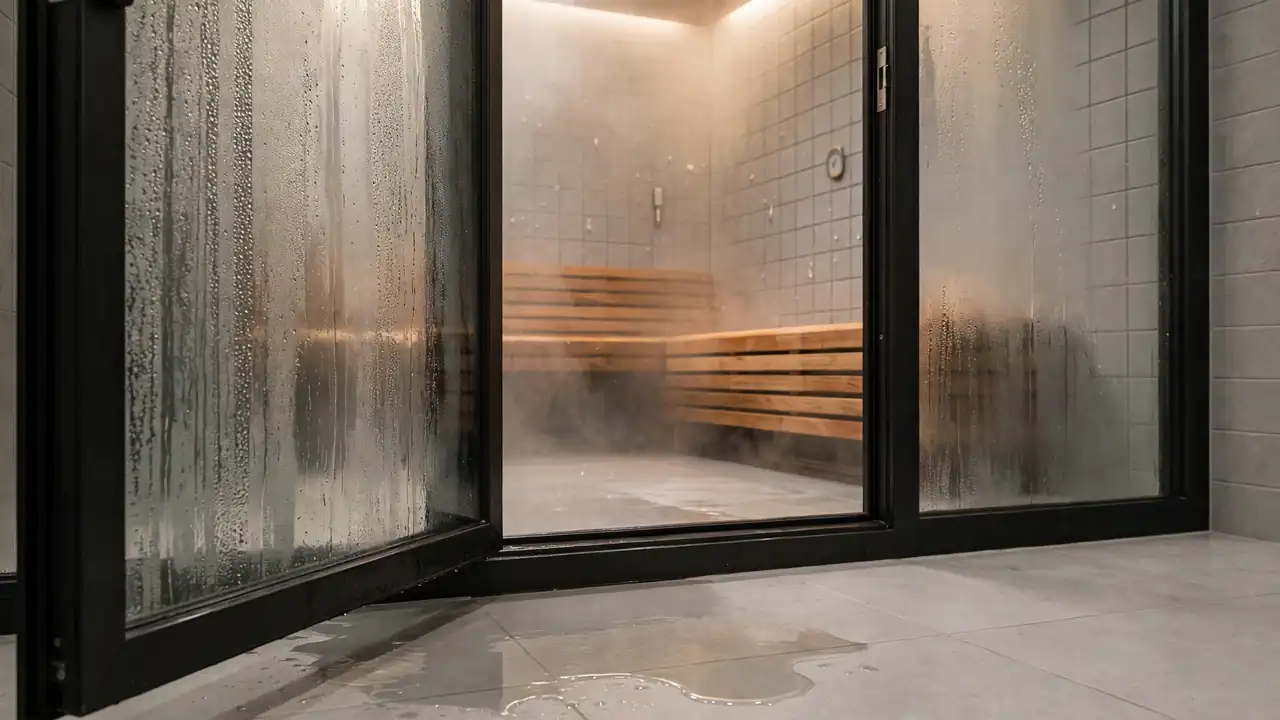
A puddle outside your steam room door is easy to ignore at first. It looks small, it dries up, and the steam room still works. That small puddle is worth taking seriously, though. Water that escapes a steam room can soak into floors and walls, and it can feed mold in places you cannot see.
Fixing a leaking steam room starts with finding the leak, not with buying sealant. Most leaks come from one of three places: the door seal, the grout and tile, or the drain. Each one leaves different clues, and each one needs a different fix. This guide walks you through the checks in order, from the easiest to the hardest, so you can fix the simple problems yourself and know when to call a professional.
Please read this first: This article is general guidance only. It is not a substitute for your local building code, your local permit office, or a licensed professional. Check your local code and permit rules before you open up walls, change plumbing, or alter a drain. Use a licensed plumber for plumbing and drain work, and a licensed electrician for any electrical work near the steam generator.


#Paid Links
If you find soft or swollen flooring, stained ceilings below the room, a musty smell that will not go away, or signs of rot, stop and get a professional assessment. A leak can signal water damage inside the structure, and that needs more than a tube of sealant. Safety basics: Stay hydrated, keep sessions short, and leave the room if you feel dizzy, sick, or unwell. Avoid alcohol before and during a session. If you are pregnant, have a heart condition, or take medication that affects blood pressure or heat tolerance, check with your doctor before using a steam room.


#Paid Links
Why Steam Rooms Leak
A steam room is a wet room that runs hot and full of steam, session after session. That combination is hard on every seal and joint in the room. Door seals flatten with use.
Grout dries out and cracks. Drains collect hair, soap, and mineral scale. Any one of these can let water out.
Leaks also get worse over time. A door that drips a little today can warp the floor outside the room in a few months. Cracked grout lets steam and water reach the wall behind the tile. A slow drain lets water sit on the floor, and standing water finds every gap.
It helps to know that a steam room is never maintenance free. The room needs regular cleaning, drying, and checks of seals and drains. That is normal for a wet, heated space, and it is part of owning one.
The three usual suspects
Most leaks fall into three groups. Door leaks show up as water on the floor just outside the door, often in a line under the bottom edge. Grout and tile leaks show up as damp patches, loose tiles, or stains on the wall or ceiling below. Drain leaks show up as slow draining, water that pools on the floor, or dampness around the drain cover.
Some leaks have more than one cause. A door that does not close fully can push water toward a drain that is already slow. That is why the diagnosis steps in this guide matter. Fix the cause you find, then test again before you move on.


#Paid Links
Before You Start: Safety and Preparation
Turn the steam generator off and let the room cool down before you inspect it. The room and the steam head stay hot after a session, and you do not want to work on seals or grout in a hot, steamy space. Let the room dry out as much as you can, and open the door so fresh air can get in.
Gather a few simple tools before you start: a torch, a dry towel, paper towels, a pencil, a small mirror, and your phone camera. The torch helps you see into corners and under the door. The paper towels help you find where water is coming from. The camera helps you record cracks and damp patches so you can compare them later.
Do not start pulling tiles off the wall or opening up the floor. Those are jobs for a professional, and they can make a small problem much bigger. The checks in this guide are visual checks and simple tests you can do without tools that cut or break anything.
What you will need
- A torch and a small mirror for corners and low gaps
- Dry towels and paper towels for leak tests
- A pencil or marker to mark damp spots
- Your phone camera to record what you find
- A bucket of clean water for drain and seal tests
- Rubber gloves and a basic grout cleaning brush
Find the Leak First: A Step by Step Diagnosis
Do not guess. Work through the room in order, and test one area at a time. Dry the room first, then look for the leak while the room is dry. A dry surface shows fresh water clearly, and you can see exactly where it appears.
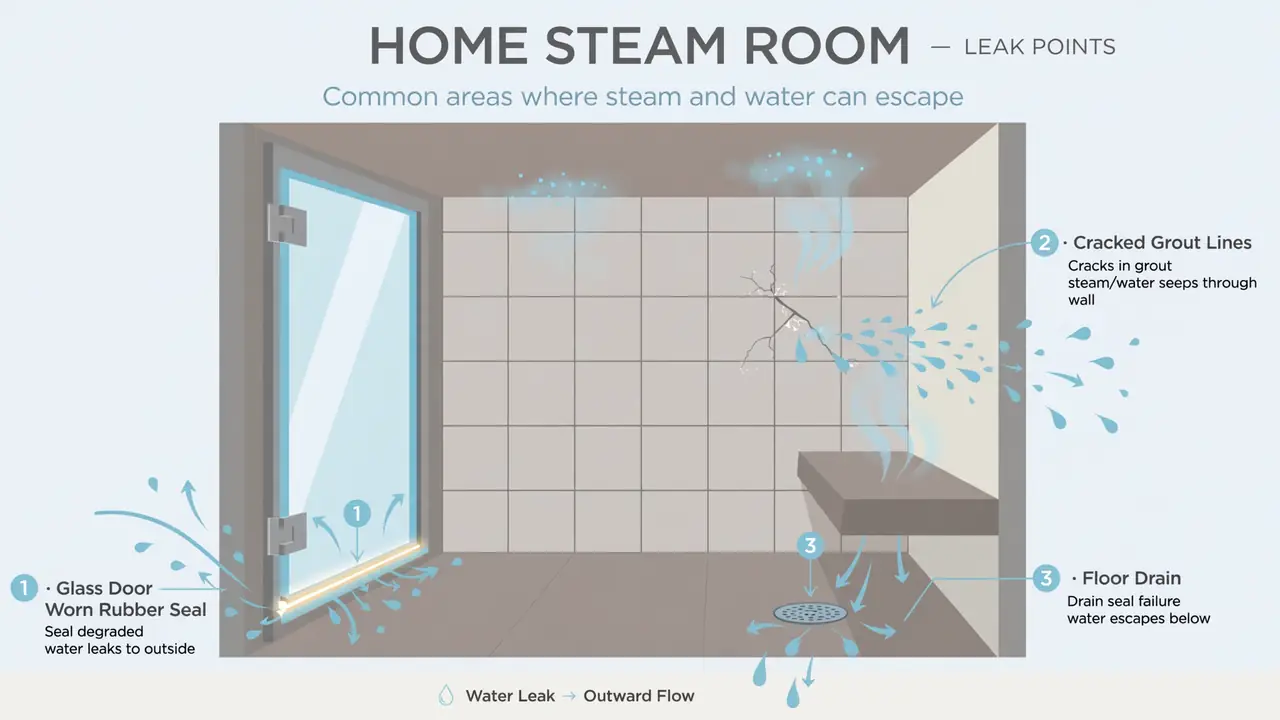
Step 1: Dry the room and look
Dry the floor, the door, and the walls with towels. Leave the door open for at least an hour so the room can air out. Then look closely at the door seal, the grout lines, and the drain. Use the torch to check the bottom corners of the door, the grout near the floor, and the joints where the walls meet the floor.
Look outside the room too. Check the floor just outside the door, the skirting boards nearby, and the ceiling of the room below if there is one. Water travels, so the damp patch you see may be some distance from the leak itself. A stain on a ceiling below the steam room often points to a leak in the floor or the drain.
Step 2: The paper towel test
Lay dry paper towels along the inside of the door threshold, along the wall and floor joints, and around the drain. Run the steam for a short session, about ten minutes, then turn it off and check the towels. The wet towel tells you where the water is getting out.
If the towel by the door is soaked but the others are dry, the door is your problem. If the towels along the wall are wet, look at the grout there. Repeat the test if the result is not clear. Two short tests are better than one long session, because a long session can wet everything and hide the source.
Step 3: Test the drain on its own
Pour a bucket of clean water slowly into the drain and watch how fast it goes down. It should drain away steadily, with no pooling around the cover. If the water sits on the floor or drains very slowly, the drain is partly blocked. If water appears around the drain cover, the seal around the drain may have failed.
Do this test with the steam off and the room dry, so you know the water you see came from the bucket. Note how long the water takes to clear. That gives you a simple baseline you can compare after you clean the drain.
Step 4: Check the door while it runs
Close the door and run the steam for a few minutes. Stand outside and watch the bottom edge and the sides of the door. Look for drips, a thin line of water, or steam escaping through a gap. Hold a dry paper towel just outside the bottom seal and see if it gets damp.
Also check how the door closes. It should meet the frame evenly, with no twist and no gap you can see light through. If the door has dropped on its hinges, the bottom corner may drag or sit high, and the seal cannot do its job.
| What you see | Most likely cause | Check first |
|---|---|---|
| Water in a line under the door | Worn or missing door seal | Bottom seal, door sweep, hinge alignment |
| Water on one side of the door only | Door out of alignment | Hinges, door frame, seal contact all round |
| Damp grout lines or loose tiles | Cracked or missing grout | Grout near the floor and in corners |
| Water pooling on the floor | Slow or blocked drain | Drain cover, trap, floor slope to the drain |
| Dampness around the drain cover | Failed drain seal | Joint between drain and floor |
| Stain on the ceiling below | Leak through floor or drain pipe | Call a professional, do not open the floor |
| Musty smell that will not go away | Hidden damp or mold behind tile | Ventilation, drying routine, professional check |
Write down what you found before you start fixing anything. A short note, such as door seal wet on the left, grout cracked in the back corner, drain slow, is enough. It keeps you from fixing the wrong thing, and it helps a professional if you need one later.
For background on how the room should have been sealed in the first place, read our guide to steam room waterproofing, tiling and ceiling materials. It explains the layers behind the tile, which helps you understand why grout alone is not a waterproof barrier.
Door Seals: Check and Fix
The door seal is the most common cause of a leaking steam room, and it is also one of the easiest to fix. A steam room door needs a tight seal all the way round. Water runs down the glass, pools at the bottom, and slips out under a worn sweep.
Start by looking at the seal itself. Run your finger along the rubber seal on the door and the frame. It should feel firm and springy.
If it feels flat, hard, cracked, or torn, it has reached the end of its life. Check the bottom sweep in particular, because that is where most of the water runs.
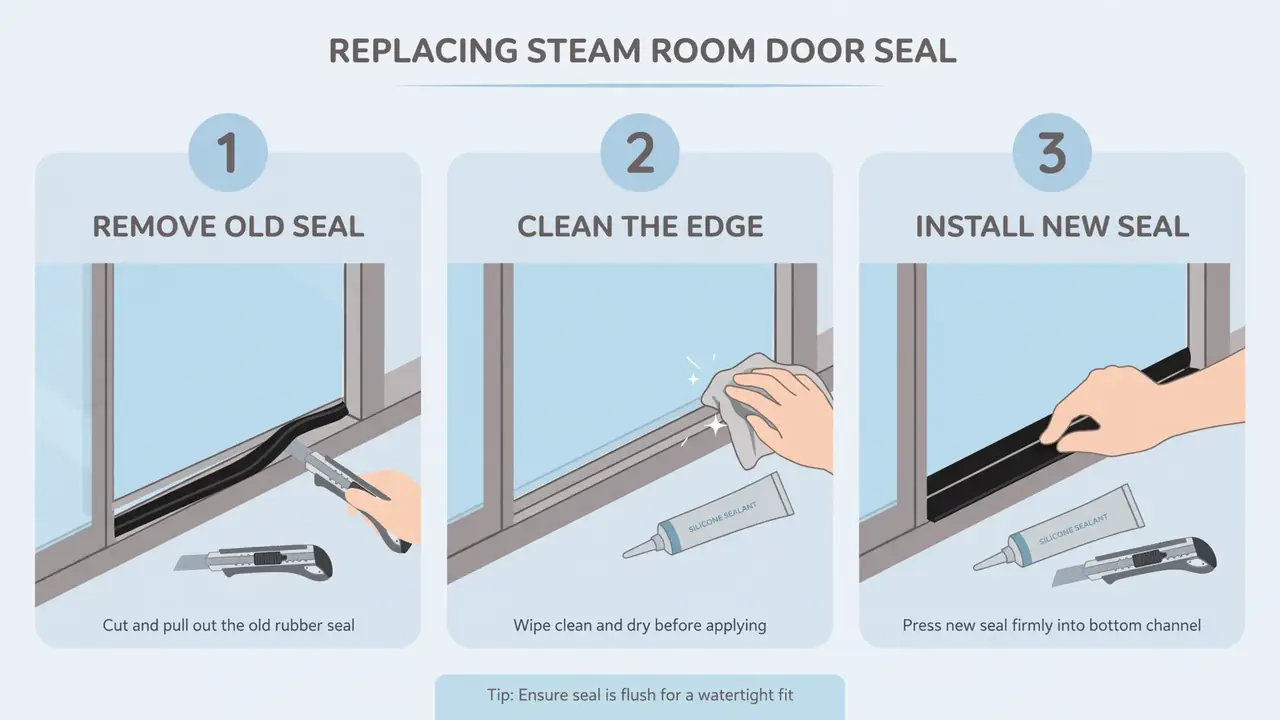
How to replace a door seal or sweep
- Measure the door width and note the seal type. Take a photo of the old seal and, if you can, take a small piece of it to the shop so you can match the profile.
- Remove the old seal. Most sweeps slide off or pull away from a channel at the bottom of the door. Clean the channel with a damp cloth and let it dry fully.
- Fit the new seal. Slide or press it into place, starting at one end and working across. It should sit evenly, with no twists or stretched sections.
- Trim the ends flush with the door edge. A seal that sticks out past the door will catch and tear, and a seal that is too short will leave a gap.
- Close the door and check the contact all the way round. The seal should touch the frame or the threshold evenly, with no light showing through.
- Run the paper towel test again. Lay a dry towel just outside the door, run the steam for ten minutes, and check whether the towel stays dry.
Buy a seal made for steam rooms, showers, or wet rooms, not a generic draught strip for an internal door. Steam room seals need to cope with heat and constant moisture. A seal that is not rated for wet use will go hard and crack again quickly.
When the door itself is the problem
A new seal will not fix a door that does not close properly. Check the hinges first. Tighten any loose screws, and look for hinges that have bent or worn. On a glass door, the hinge screws can loosen over time because the door is heavy and it is opened and closed every session.
If the door has dropped, the bottom corner may rub on the threshold while the top corner leaves a gap. Do not force the door or bend the hinges yourself if you are not confident. A glazing or door specialist can realign a glass door, and that is often a quick job for someone with the right tools.
Our guide to steam room bench, door and glass layout, including common sealing mistakes, covers door and glass choices in more detail. It is a useful read if your door has leaked more than once.
Grout and Tile: Check and Fix
Grout is the filler between tiles, and it takes a lot of punishment in a steam room. Heat, steam, cleaning products, and constant wetting and drying can crack it or wear it away. Once grout cracks, water can get behind the tile. That is when you see loose tiles, damp patches, and in time, damage to the wall behind.
It is important to be clear about one thing. Grout is not the waterproof layer. The waterproof layer sits behind the tile, under the surface you can see.
Grout helps, and it keeps water out of the joints, but it cannot do the job of a failed waterproof membrane on its own. If water is getting through the wall in a big way, or tiles are falling off, the problem may be deeper than the grout, and a professional should check it.
How to check grout and tile
- Look at every grout line near the floor first, then work up the walls. Pay close attention to corners and to the joints where walls meet the floor and the ceiling.
- Press gently on tiles near cracked grout. A tile that moves, sounds hollow when tapped, or feels loose needs attention.
- Look for dark grout lines that stay dark after the room dries. That can mean the grout is holding water.
- Check the sealant in the corners. Corners are usually sealed with silicone, not grout, because the joint moves slightly. Cracked or peeling silicone in a corner is a common leak point.
How to repair cracked grout
- Clean the grout lines with a grout brush and a mild cleaner made for bathrooms. Rinse and let the room dry fully before you start. Grout repair will not stick to a damp surface.
- Remove loose or crumbling grout with a grout rake or a small hand tool. Take out only the damaged grout, and be careful not to chip the tile edges.
- Vacuum or brush out the dust, then wipe the joints with a damp cloth and let them dry again.
- Mix or buy a grout made for wet rooms, and press it into the joints with a grout float or a small spatula. Work in small sections so the grout does not dry before you smooth it.
- Wipe off the excess with a damp sponge, rinse the sponge often, and leave the grout to cure for the time the product label states. Do not use the steam room until it has cured.
- Replace cracked silicone in corners with a silicone sealant made for bathrooms or steam rooms. Remove the old silicone fully first, clean the joint, and let it dry before you apply the new sealant.
Use products made for wet, heated rooms, and follow the curing times on the label. Rushing a grout repair is a common reason it fails again. If the same grout cracks again within a few weeks, or if tiles keep coming loose, stop patching and get a professional to check the wall and the waterproof layer behind it.
Regular cleaning helps grout last longer. Our guide on how to clean a steam sauna covers safe cleaning routines and products, so you can keep grout and tile in good shape without damaging the seals.
Drains: Check and Fix
The drain is the one part of a steam room that is meant to take water away, so a drain problem can look confusing. Water pools on the floor, the room stays wet after a session, and damp appears around the drain cover. In most cases the cause is simple: the drain is partly blocked, or the seal around it has failed.
How to check the drain
- Lift the drain cover if it lifts off easily, and look inside with a torch. Hair, soap residue, and mineral scale are the usual blockages in a home steam room.
- Check the floor slope. Water should run toward the drain from every part of the floor. If water pools in a corner away from the drain, the floor may not slope correctly, and that is a job for a professional.
- Look at the joint where the drain meets the floor. Cracks, gaps, or missing sealant around the cover can let water under the floor.
- Pour a bucket of water into the drain and time how long it takes to clear. A drain that clears slowly is partly blocked, even if it does not overflow.
How to clean a slow drain
- Remove the cover and take out any hair and debris by hand, wearing rubber gloves. Put the debris in a bag, not back down the drain.
- Clean the trap and the visible pipe with a brush made for drains. Rinse with clean water.
- Flush the drain with a bucket of clean water and check the flow again. Repeat the cleaning if the flow is still slow.
- Replace the cover, and check that it sits flat and seals around its edge.
Do not pour harsh chemical drain cleaners into a steam room drain as a first step. They can damage seals, pipes, and the drain finish, and they can leave fumes in a small, enclosed room. If manual cleaning does not clear the drain, call a licensed plumber.
Drain and ventilation problems often go together, because a steam room needs both water out and steam out in a controlled way. Our guide to steam shower drain and ventilation explains how the two systems work together.
Other Leak Spots People Often Miss
If the door, grout, and drain all check out, look wider. A steam room has several other places where water can escape, and each one needs a different kind of help.
The steam head and the generator
Check the steam head on the wall. It should sit tightly against the wall, with no gaps and no drips when the room is running. A loose steam head can leak water down the wall and onto the floor.
Do not take the steam head or the generator apart yourself. Turn the generator off, let it cool, and call a qualified technician or a licensed plumber if you see a leak there.
Regular generator care helps prevent leaks and scale build up. Our guide to steam generator maintenance, descaling and hard water care covers the routine checks that keep the generator and its connections in good working order.
The ceiling, the bench, and hidden pipes
Steam rises, so the ceiling takes a lot of moisture. Look for peeling paint, soft patches, or stains on the ceiling, and check the joints where the ceiling meets the walls. A ceiling that is not sloped or sealed correctly can drip condensation back into the room, and that can look like a leak from somewhere else.
Check the bench too. Water can pool under a bench or behind it, and a bench that sits against a damp wall can hide a leak for months. If the wood is soft, dark, or smells musty, it may have been wet for a long time.
Water supply pipes, drain pipes, and generator connections run behind walls and under floors. You cannot see them, and you should not open a wall to find them. The signs of a hidden pipe leak are a damp patch that keeps coming back, a stain that grows, or a musty smell. If you see those signs, turn the water supply to the steam room off if you can do so safely, and call a licensed plumber.
Fix Comparison: What to Do Yourself and What to Leave to a Professional
Not every leak needs a professional, but some do. The table below gives a simple comparison to help you decide. The time and cost figures are planning estimates only, not quotes. Prices vary by region, brand, installer, and the size of the room, so get a local quote before you commit to any professional work.
| Fix | Who can do it | Typical time | Planning cost estimate |
|---|---|---|---|
| Replace door seal or sweep | Confident DIY | 30 to 60 minutes | Low, seal plus basic tools |
| Realign a glass door | Door or glazing specialist | 1 to 2 hours on site | Moderate, get a local quote |
| Repair cracked grout in a small area | Confident DIY | 1 to 3 hours, plus curing time | Low, grout and sealant only |
| Replace silicone in corners | Confident DIY | 1 hour, plus curing time | Low |
| Clean a slow drain | DIY for surface debris | 30 minutes | Low, no parts in most cases |
| Repair a failed drain seal or pipe | Licensed plumber | Half a day or more | Moderate to high, get a local quote |
| Re-tile or repair waterproof layer | Professional tiler or builder | Several days | High, get at least two local quotes |
| Fix a generator or steam head leak | Qualified technician | 1 to 3 hours on site | Moderate, parts may add cost |
These estimates cover the work only, not the cost of repairing water damage to floors, walls, or rooms nearby. Water damage repair can cost far more than the leak fix itself, which is another reason to act early.
Dry It Out and Stop Mold Taking Hold
Fixing the leak is only half the job. The room also needs to dry out properly after every session, or mold can grow in the damp corners. Mold loves warm, wet, still air, and a steam room has all three if it is left closed and wet.
After each session, leave the door open for at least 30 minutes so steam can escape and fresh air can get in. Wipe down the bench, the walls near the floor, and the door glass if you can. Run the ventilation or the extractor fan if your room has one, and leave it running for a while after the session ends.
Do not leave wet towels, bath mats, or cleaning cloths inside the steam room. They hold moisture and they slow drying. Check the corners and the floor near the drain once a week for damp patches that do not dry. A patch that stays damp for days is a warning sign, even if you cannot see a leak.
If you already have mold, clean it with a product made for bathrooms and follow the label instructions. Wear gloves, open the door for air, and do not mix cleaning products. If mold covers a large area, if it keeps coming back after cleaning, or if anyone in the household has breathing problems, get professional advice before you clean it yourself.
A Simple Maintenance Routine That Prevents Most Leaks
A short routine, done regularly, will catch most leaks before they cause damage. You do not need to do everything every week. Split the checks across the month, and do a deeper check twice a year.
After every session
- Leave the door open and let the room air out
- Wipe down the bench and the lower walls
- Remove wet towels and mats from the room
Once a month
- Check the door seal for cracks, flat spots, and gaps
- Look at grout near the floor and in the corners
- Lift the drain cover and clear any hair or debris
- Check the floor outside the door for damp patches
Twice a year
- Do the full paper towel test after a short steam session
- Check the silicone in every corner and replace it if it is peeling
- Check the steam head, the bench, and the ceiling for damp or damage
- Book generator maintenance and descaling if you have hard water, following the maker guidance for your model
Keep a simple log of what you check and what you fix. A note on your phone, with the date and a photo, is enough. Over time that log shows you which parts wear out first in your room, and it helps a professional if you ever need one.
When to Stop and Call a Professional
Call a professional if any of these apply. Do not keep patching and hoping the problem goes away.
- Water is coming through a ceiling below the steam room
- Floors or walls feel soft, swollen, or spongy
- Tiles are falling off, or large areas of grout are missing
- The same leak comes back after two proper repairs
- You suspect a pipe leak behind a wall or under the floor
- There is a strong musty smell, or mold keeps coming back
- The leak involves the generator, the steam head, or electrical parts
When you call, describe what you found in plain words, and share the photos from your diagnosis. Tell the professional what you have already tried, and when the leak first appeared. Get the work in writing if it involves opening walls, changing pipes, or re-tiling, and check whether a permit is needed in your area before the work starts.
Frequently Asked Questions
Why is my steam room leaking from the door?
The door seal is the most common cause. The rubber seal or the bottom sweep wears out with heat and use, and water runs down the glass and out under the door. Check the seal for cracks and flat spots, check that the door closes evenly, and replace the seal if it is worn. If a new seal does not fix it, the door may need realigning.
Can I fix cracked grout in a steam room myself?
Yes, for a small area of cracked grout, if you are confident with basic DIY. Remove only the loose grout, clean and dry the joints, and refill them with a grout made for wet rooms. Let it cure for the time on the label before you use the steam room again. If tiles are loose, if large areas are cracked, or if the same grout cracks again quickly, get a professional to check the wall and the waterproof layer behind the tile.
Why does my steam room floor stay wet after a session?
A floor that stays wet usually points to a slow drain, a floor that does not slope toward the drain, or poor drying after the session. Clean the drain first, and test it with a bucket of water. Then leave the door open and run the ventilation after each session so the room can dry. If the drain is clear and the floor still pools water in one spot, the floor slope may need a professional check.
Is a leaking steam room dangerous?
A small leak is not usually an emergency, but it should not be ignored. Water can damage floors and walls, and damp can lead to mold. A leak near electrical parts, the generator, or the steam head needs care, so turn the generator off and get a qualified technician. If you see a stain on a ceiling below the room, or soft and swollen flooring, get a professional assessment promptly.
How often should I check my steam room for leaks?
Check the door seal, grout, and drain once a month, and do a full leak test twice a year. Check more often if you use the room daily, if you have hard water, or if you have had a leak before. A quick look after each session, and leaving the door open to dry the room, will catch most problems early.
Your Next Step
Start with the diagnosis, not the repair. Dry the room, run the paper towel test, and test the drain with a bucket of water. Most owners find the answer in under an hour, and most door and grout fixes are simple once the cause is clear.
Fix one problem at a time, test again, and write down what you found. If the leak is still there after a proper repair, or if you find soft floors, a stained ceiling below, or a leak near the generator, stop and call a licensed professional. A steam room that is dry, well sealed, and well ventilated will last far longer, and it will be a much safer and more pleasant place to use.