
A steam sauna feels gentle at first. The air is warm rather than scorching, the mist is soft on your skin, and ten minutes can pass before you notice how much you have sweated. That gentle feeling is exactly why steam sauna safety deserves a check first, because the heat still works hard on your heart, your blood pressure and your fluid balance, and the thick humidity makes it harder for your body to cool itself.
This guide is the practical check first companion to our side effects guide. Instead of repeating that list, it gives you per group session limits, supervision rules, a pre session checklist and clear warning signs, so you can decide before you step in whether today is a steam day, a shorter day or a day to skip it.
Please read first: This article is general information, not medical advice. A steam sauna is a wellness tool, not a treatment. If you are pregnant, live with a heart or circulation condition or low blood pressure, or take medication that affects heat tolerance, check with your doctor first. If you feel dizzy or unwell at any point, leave the steam room right away.


#Paid Links
The 60 Second Check: Three Questions Before You Step In
Most steam sauna safety decisions come down to three quick questions. Ask them every time, not just on your first visit, because health, medication and even a bad night of sleep can change the answer from one week to the next.


#Paid Links
If any answer points to caution, shorten the session or skip it. A missed session costs nothing, and pushing through warning signs can cost far more.
First, are you in a group that needs a doctor to clear you? That includes pregnancy, a heart or circulation condition, uncontrolled blood pressure, diabetes with nerve damage in your feet, severe asthma and any recent heart attack or stroke.
Second, are you well today? Fever, vomiting, diarrhoea, a hangover and dehydration are all reasons to stay out. Third, is someone nearby who knows you are in there? Children and older adults should never steam alone.
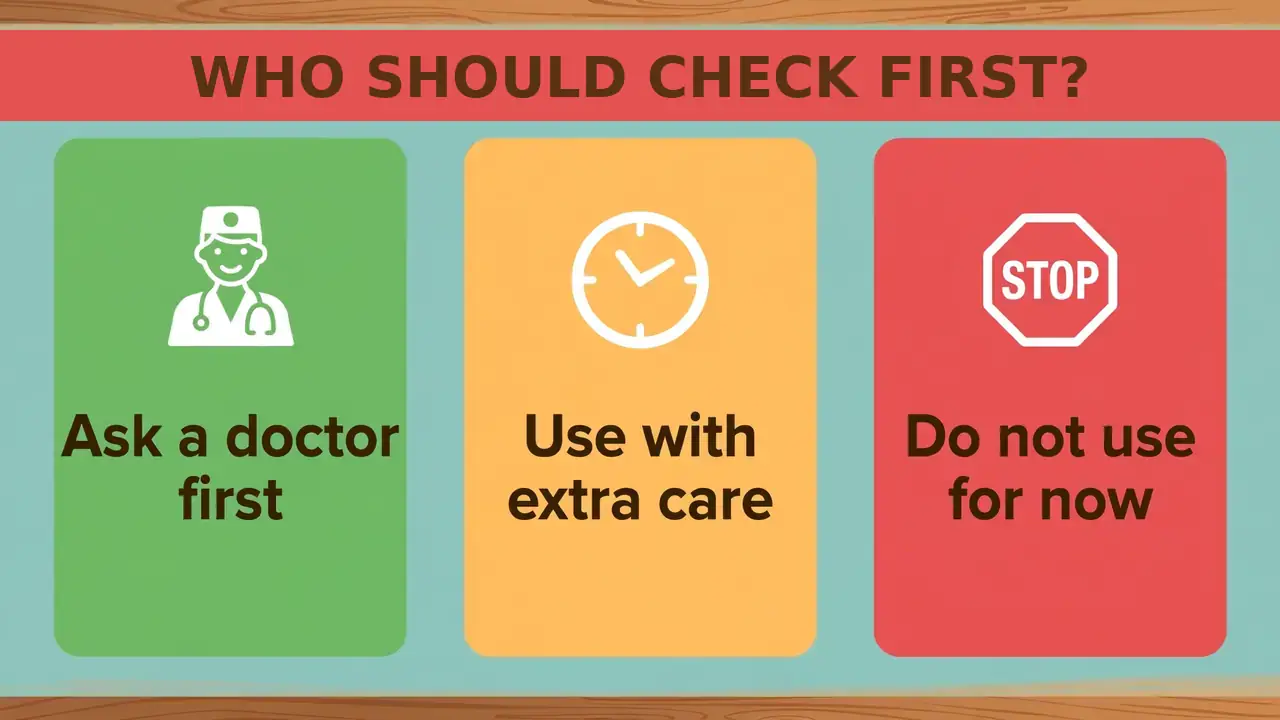
Ask a doctor first
Pregnancy, a heart condition, uncontrolled blood pressure, severe asthma, diabetes with foot nerve damage, or medicine that affects heat tolerance. A short chat with your clinician gives you a personal limit instead of a guess.
Use with extra care


#Paid Links
Children over six, teenagers, older adults, mild asthma and well controlled blood pressure. Keep sessions short and cool, stay supervised, and leave at the first sign of discomfort.
Do not use for now
Fever or active illness, a recent heart attack or stroke, unstable angina, decompensated heart failure, severe aortic stenosis, dehydration, or any alcohol in your system. Wait until you are well and cleared.
Why Steam Heat Hits Some Bodies Harder
A steam room works differently from a dry sauna. Most home and gym steam rooms run at about 40 to 45 degrees Celsius, which is 104 to 113 degrees Fahrenheit, with humidity close to 100 percent. That temperature looks modest next to a dry sauna, yet the saturated air stops sweat from evaporating, which is your main cooling system.
Heat also asks your heart to work harder. Harvard Health Publishing notes that pulse rate can rise by 30 percent or more during a sauna session, and that the average person can lose around a pint of sweat in a short session.
Blood vessels near the skin widen to release heat, which can drop blood pressure, especially when you stand up quickly. For a healthy heart that extra work is manageable, much like brisk walking, but for a heart that is already strained it can be too much.
Children feel heat differently again. They have more skin surface for their body weight, they sweat less efficiently than adults, and young children cannot always describe discomfort before it becomes a problem.
Older adults face the opposite side of the same coin, because ageing blunts thirst and temperature sensing, so dehydration can build quietly. Add medication that lowers blood pressure, and the margin for error shrinks further.
Temperature matters too. Our steam sauna temperature guide explains the usual ranges and how to check your thermostat, because a room that feels mild at the door can be much hotter on the top bench. Sit low, keep the steam gentle, and treat the timer as a ceiling rather than a target.
Session Limits at a Glance
The table below pulls every group limit in this guide into one place. Treat these as conservative starting limits, not medical advice and not targets to beat. Shorter is always fine, and your own doctor can set a different limit for your situation.
| Who | First session limit | Temperature and seat | Supervision |
|---|---|---|---|
| Healthy adult | 10 to 20 minutes | Usual range, lower bench | None, but never steam when ill |
| Teenager, 13 to 17, healthy | 10 to 15 minutes | Gentler, lower bench | Adult nearby |
| Child, 8 to 12 | 5 to 10 minutes | Cooler, lowest bench | Adult inside the room the whole time |
| Child, 6 to 7 | Up to 5 minutes | Cooler, lowest bench | Adult within arm’s reach the whole time |
| Child under 6 | Not recommended in this guide | Ask a paediatrician | None without medical advice |
| Pregnant | Avoid unless a clinician clears it | Brief and cool, if cleared | Clinician clearance first |
| Older adult, healthy | 5 to 10 minutes for first sessions | Cooler, lowest bench | Another person present |
| Health condition cleared by a doctor | Start at 5 minutes | Cooler, lowest bench | Another person present |
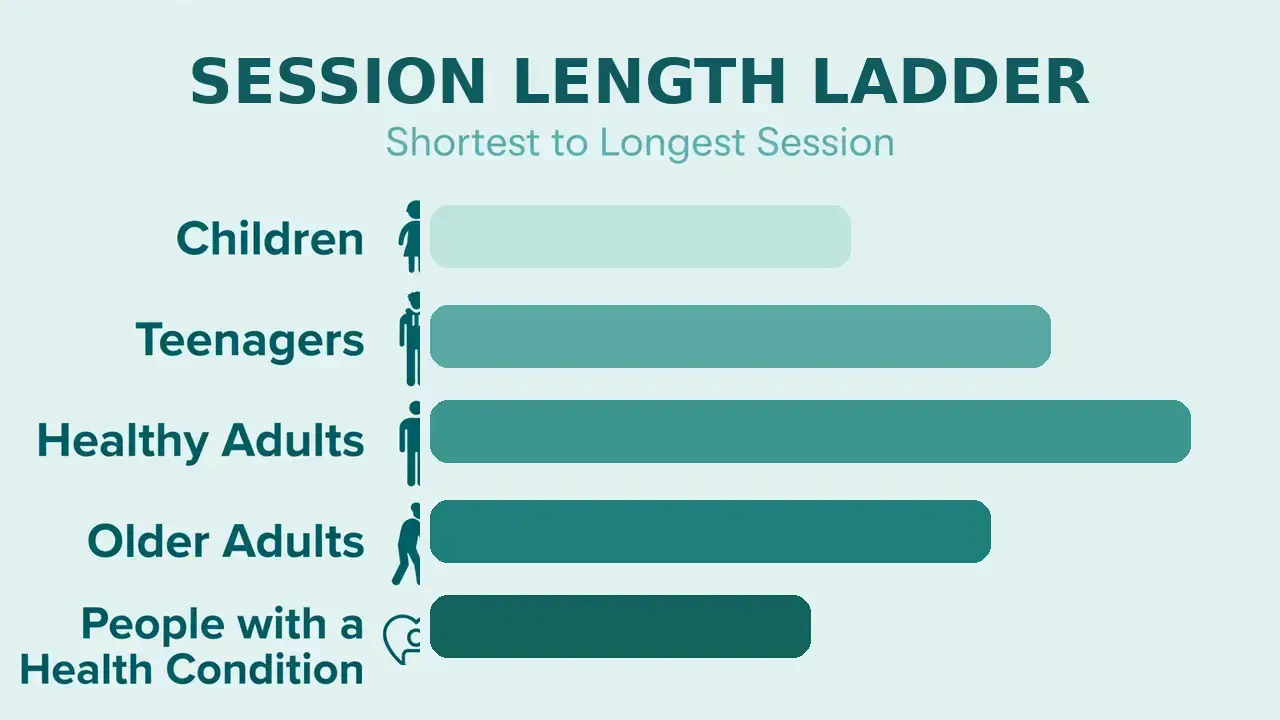
How the limits compare, at a glance:
Bars show conservative starting limits from the table above. They are guidance for planning, not medical advice.
For timing and weekly frequency, see our guide on how long you should stay in a steam sauna. The limits here are the safety ceiling for each group, and the timing guide fills in the routine around them.
Children in a Steam Sauna
Children are the group where guidance differs most by country, so honesty matters here. There is no single global medical guideline for children and sauna use. Finnish families have introduced babies to the sauna for generations, for a few minutes at a time on the lowest bench, while many Western paediatric sources suggest waiting until around age six. This guide follows the cautious side, because a home steam room is hotter and more humid than most people expect.
The reason for caution is physical, not cultural. A small 1990 study in Pediatrics put 61 children and 20 teenagers through a ten minute heat session matching an ordinary Finnish sauna, and found that younger children showed a clear strain on circulation, including a marked drop in stroke volume, which is the amount of blood the heart pumps per beat. The researchers concluded that small children need close supervision in heat, and that finding still shapes cautious guidance today.
Under Six: Best Avoided Unless a Paediatrician Advises Otherwise
Children under six regulate temperature less well than older children, they sweat less efficiently, and they cannot reliably describe overheating before it becomes serious. Most cautious guidance therefore recommends against sauna use for this age group.
If your family tradition includes sauna from infancy, that is a conversation for your own paediatrician, not a decision for a general guide. Never take a baby or toddler into a steam room to treat a cold or a fever, because heat will not cure an illness.
Ages Six to Twelve: Short, Cool and Always Supervised
For children around six to seven, keep first sessions to about five minutes, on the lowest bench, at a cooler setting, with an adult within arm’s reach. For children around eight to twelve, five to ten minutes is the usual cautious range, still on the lowest bench, still cool, and still with an adult inside the room. Let the child leave the moment they want to, even if the timer has barely started.
- Drink water before and after, and keep a drink within reach outside the steam room.
- Keep the child on the lowest bench, furthest from the steam outlet, and away from the heater and any hot surfaces.
- Skip the session entirely if the child has a fever, vomiting, diarrhoea, an ear infection or any active illness.
- Ask a paediatrician first if the child has a heart condition, epilepsy, severe asthma or takes medicine that affects temperature regulation.
- Cool down with lukewarm water, never a cold plunge, and watch for flushed skin, dizziness or unusual quietness afterwards.
Teenagers Thirteen and Up: Near Adult Rules, With an Adult Nearby
Healthy teenagers can generally follow near adult guidance, which means ten to fifteen minutes at a gentler setting to start, building up only if sessions stay comfortable. The key difference from adults is supervision and teaching. A teenager should know the warning signs, know where the exit and the water are, and have an adult in the building who knows they are steaming. Teach them that leaving early is the smart move, not a failure.
Pregnancy and Steam Saunas
Pregnancy is the group where the public guidance is clearest in tone. The NHS advises that there is little research on using saunas, hot tubs and steam rooms during pregnancy, and that you may choose to avoid them because of the risks of overheating, dehydration and fainting. That caution is strongest in the first twelve weeks, when a significant rise in core temperature carries the most risk.
The number most often cited is a core body temperature of about 38.9 degrees Celsius, or 102 degrees Fahrenheit. Guidance aligned with the American College of Obstetricians and Gynecologists advises avoiding activities that raise core temperature above that mark. A steam room is a particular challenge here, because the near saturated humidity stops sweat from evaporating, so your body loses its main way of shedding heat. You can feel only mildly warm while your core temperature is still climbing.
The practical advice follows from that. Unless your own doctor or midwife has specifically cleared steam use for you, avoid steam rooms and saunas during pregnancy, and choose a comfortably warm shower or bath instead.
If you have already had a steam session before realising you were pregnant, do not panic, and do tell your clinician at your next visit. If you are cleared for brief sessions, keep them short and cool, sit low and near the door, and leave immediately if you feel dizzy, nauseous, faint or unusually hot.
Heart and Circulation Conditions
Heat is exercise for your circulation without the movement. Your heart beats faster, blood vessels widen, blood pressure can fall when you stand, and fluid leaves through sweat. For a stable, well managed heart condition, some people do use saunas safely under their doctor’s guidance. For unstable conditions, the guidance is firmly against it, and the distinction between stable and unstable is one only your clinician can make.
When the Answer Is Usually No for Now
A 2018 review of sauna research in Mayo Clinic Proceedings lists the conditions in which sauna bathing is not advised. The list includes unstable angina, a recent heart attack, uncontrolled high blood pressure, decompensated heart failure and severe aortic stenosis. The same review notes that people with orthostatic hypotension, where blood pressure drops on standing, or severe heart valve disease should also take care. If any of these describe you, do not use a steam sauna until your treating team says otherwise, and do not treat a general article as clearance.
When a Doctor May Clear Short Sessions
If your condition is stable, your symptoms are controlled and your doctor has cleared you, the usual precautions are short sessions of no more than twenty minutes, a cooler steam setting, and a slow cool down afterwards. Some cardiology sources note that people resume sauna use after a heart attack once stable, sometimes after about two weeks, but that timing is a matter for your own treating team, not a rule in this guide.
- Stand up slowly, in stages, and sit on the edge of the bench for a minute before walking out.
- Skip the cold plunge and the ice bath. Sudden cold after heat can strain the heart and disturb rhythm and blood pressure.
- Do not combine a steam session with a hot tub, a long hot bath or vigorous exercise on the same day until your doctor agrees.
- Tell the person with you about your condition, so they know what to do if you feel unwell.
- Stop and seek urgent care for chest pain, pressure, breathlessness or fainting, and do not drive yourself.
Low Blood Pressure: The Fainting Risk Nobody Plans For
Low blood pressure is easy to overlook, yet it is one of the most common reasons people feel unwell in a steam room. Heat widens blood vessels near the skin, fluid leaves as sweat, and blood pressure can fall, especially when you stand up quickly. The result can be lightheadedness, blurred vision or a faint, and a faint on a wet tiled floor is a fall risk too.
If you know you have low blood pressure, or you often feel dizzy on standing, ask your doctor whether steam is suitable for you and what limits to use. If you are cleared, keep sessions short and cool, sit on the lowest bench, drink water before and after, and rise in stages. Sit for a minute, swing your legs down, stand slowly while holding a rail or the wall, and pause again before walking. Alcohol makes the blood pressure drop worse, so it stays off the list entirely.
High blood pressure deserves the same conversation. Harvard Health notes that blood pressure rises in some people during a sauna and falls in others. If your readings are high, low or poorly controlled, ask your clinician whether a steam sauna suits you. Uncontrolled high blood pressure belongs on the do not use for now list until it is better managed.
Diabetes, Asthma and Breathing Conditions
Diabetes changes the steam equation in two quiet ways. First, heat and sweating can shift blood sugar and fluid balance, so check glucose before and after a session, and carry fast acting glucose if you use insulin or medicines that can cause low blood sugar. Second, nerve damage in the feet, known as neuropathy, can dull the feeling of hot floors and benches, which raises the burn risk. Wear shower shoes, test surfaces with your hand, and inspect your feet afterwards for blisters or redness you may not have felt.
Keep sessions short and cool, stay hydrated, and skip the steam room on days when your blood sugar is unstable. Ask your doctor or diabetes nurse for a personal limit, and mention any heart or kidney condition as well. A steam sauna is never a treatment for diabetes, and it should never replace medicine, meals or monitoring.
Asthma and breathing conditions are more mixed. Some people find warm humid air soothing, while others find the thick steam triggers coughing, wheeze or a feeling of breathlessness. The difference is personal, which is why severe asthma belongs on the ask a doctor first list, and why anyone with asthma should sit near the door, keep their reliever inhaler within reach outside the steam room, and leave at the first sign of tightness. Added scents and essential oils can irritate airways too, so skip strong oils in a shared steam room.
The same logic applies to recent chest infections, pneumonia and long standing lung conditions. A steam room will not clear an infection, and heat plus dehydration can make recovery harder. Wait until you are fully well, and ask your clinician if your lung condition is severe or unstable. If you use oxygen or a nebuliser, a steam room is not a suitable place for that equipment.
Medications That Change How You Handle Heat
Several common medicines change how your body responds to heat, fluid loss or blood pressure, often without an obvious warning on the box. Diuretics, often called water tablets, increase fluid loss, which adds to sweat losses, and many blood pressure medicines lower blood pressure further as vessels widen in the heat.
Beta blockers can blunt the heart rate rise that normally helps the body cope with heat, and some antihistamines and psychiatric medicines can reduce sweating, which is your cooling system. Never skip a prescribed dose to use a steam room. Instead, raise the medicine with your doctor or pharmacist before your first session.
When you ask, bring the full list, including over the counter medicines, supplements and any medicine you take only some days. Ask whether any of them affect heat tolerance, sweating or blood pressure, and whether any increase dehydration risk.
Write the answers down with the date, because doses and medicines change, and a limit set a year ago may no longer fit. After any new blood pressure medicine, dose change or added diuretic, treat your next session as a brand new first session.
Older Adults: Shorter, Cooler and Never Alone
Older adults can enjoy steam saunas for years, and many do, but the safety margins narrow with age, and the body gives fewer early warnings. Thirst fades, so dehydration can build before you feel thirsty, and temperature sensing dulls, so a room that feels pleasant may already be too hot.
Balance can be less steady on wet tiles, and many older adults take several medicines at once that change heat tolerance. Frailty plus multiple health conditions is a clear reason to ask a doctor first, even if each condition alone seems mild.
The practical rules are simple. Keep first sessions to five to ten minutes, at a cooler setting, on the lowest bench, with another person present in the room or just outside it.
Tell that person about any heart condition, low blood pressure or medicine you take. Keep a phone within reach outside the steam room, wear non slip shower shoes, use rails when standing, and rise slowly in stages.
Cool down with lukewarm water rather than a cold plunge, sit for ten minutes afterwards, and drink water before you feel thirsty. If you use a portable steam tent at home, our portable steam sauna tent safety guide covers burn zones and ventilation checks that matter even more when balance and heat sensing are reduced.
Warning Signs: Exit Now and Cool Down
Warning signs are not a challenge to push through. They are your body asking you to leave, and the right response is to leave at once, not after one more minute.
Step out slowly, sit somewhere cool, and drink water. Do not try to finish the session, do not jump into a cold plunge, and do not drive until you feel fully back to normal.
If symptoms persist, worsen or include chest pain, fainting or severe breathlessness, seek urgent medical care and tell the responders that you were in a steam room.
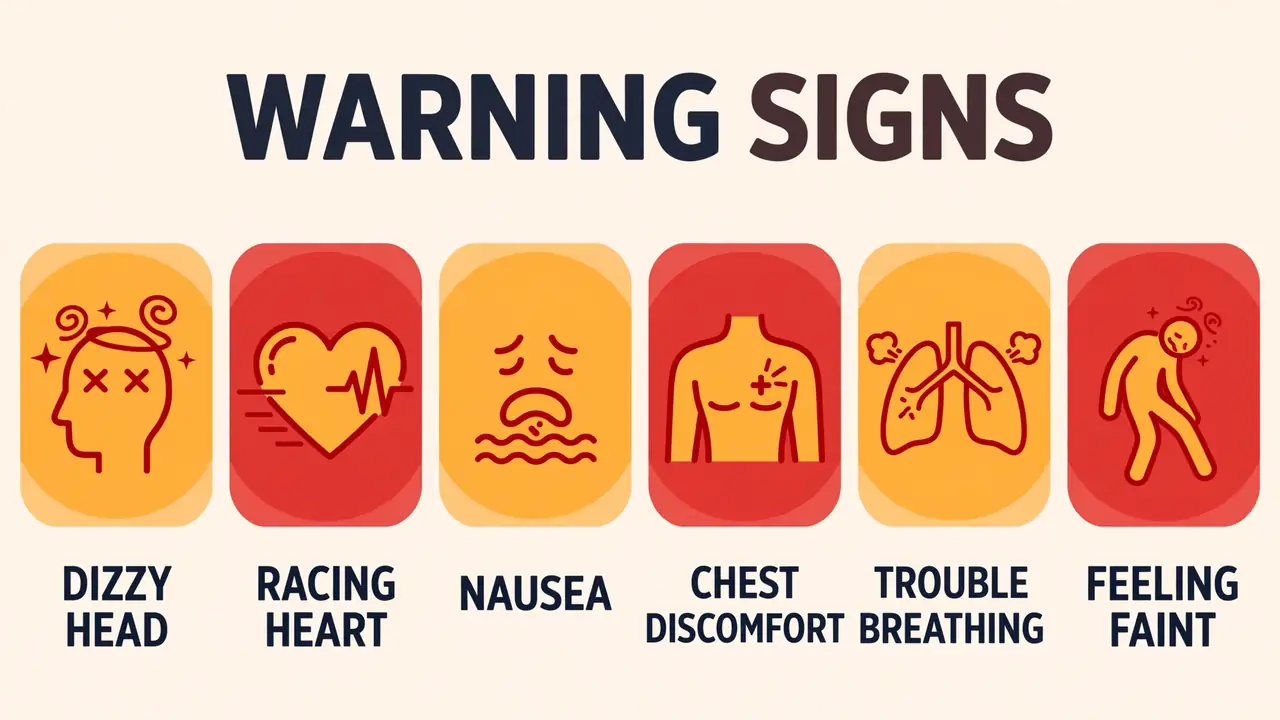
- Dizziness or lightheadedness. Sit down at once, then leave the steam room with help if needed.
- Racing or pounding heart. A faster pulse is normal in heat, but a pounding, irregular or frighteningly fast pulse is a sign to exit.
- Nausea or feeling unwell. Do not wait to see if it passes. Leave, cool down and drink water.
- Chest pain, pressure or tightness. Seek urgent care right away and do not drive yourself.
- Trouble breathing or wheeze. Leave for fresh air at once and use your reliever inhaler if you have one.
- Feeling faint, confused or unusually sleepy. These can signal overheating or a blood pressure drop. Sit or lie down in a cool place and get help.
- Headache, cramps or goosebumps in the heat. All three can be early signs of heat exhaustion. Stop, cool down and rehydrate.
- Skin that stops sweating while you still feel hot. This is a serious warning sign. Leave immediately and seek medical advice.
After any warning sign, take the rest of the day off from heat. Do not return for a second round, do not follow the steam with a hot tub, and do not use alcohol afterwards. Note what happened, including the temperature, the session length and any medicine taken that day, then share that note with your doctor before your next session.
Your Pre Session Checklist and a Safer First Session
A checklist is the single most useful tool in this whole guide. Run through it before every session, and keep a printed copy near your steam room if you steam at home. It takes less than a minute, and it catches the ordinary mistakes that cause most problems, like forgetting water or stepping in while already unwell.
Pre session checklist: tick every box before you step in
☐ I feel well today, with no fever, vomiting, diarrhoea or hangover
☐ I have checked with my doctor if I am pregnant, have a heart condition, low blood pressure or take heat sensitive medicine
☐ I have drunk water and eaten a light meal in the last two hours
☐ I have had no alcohol today and I have not taken a sedative
☐ Someone knows I am steaming, and my phone and water are within reach
☐ I know my time limit for today, and the timer is set
☐ The steam is set to the cooler end, and I will sit on the lowest bench
☐ My reliever inhaler, glucose tablets or other essentials are ready if I use them
The worked example below shows how a healthy adult can build up safely. It is a template for a first timer, not a prescription, and anyone with a health condition should use the shorter limits their own doctor has set instead.
| When | What to do | Why it matters |
|---|---|---|
| 1 to 2 hours before | Drink a glass of water and eat a light meal | You start hydrated, and food steadies blood sugar |
| Just before | Shower, set a 10 minute timer, place water and a towel outside the door | A timer stops drift, and water stays within reach |
| Minutes 0 to 5 | Sit on the lowest bench, breathe normally, notice how you feel | The lowest bench is coolest, and five minutes shows how your body reacts |
| Minutes 5 to 10 | Stay only if fully comfortable, or step out early with no fuss | Leaving early is safe, and ten minutes is a full first session |
| Right after | Rinse with lukewarm water, sit for 10 minutes, drink water slowly | Slow cooling avoids a blood pressure swing |
| Rest of the day | No second steam round, no hot tub, no alcohol | Heat exposures add up, and alcohol worsens dehydration |
Related Reading on Steam Sauna Safety
This guide is the check first companion to our side effects guide. For the full picture, including dehydration, dizziness, skin irritation and who faces the highest risk, read our steam sauna side effects guide. It covers the high risk groups in more depth, while this article gives you the limits, rules and checklist to act on.
Two practical companions are worth bookmarking as well. The steam sauna temperature guide explains the usual temperature ranges and how to verify your thermostat, and the guide to how long to stay in a steam sauna covers session timing and weekly frequency for healthy adults.
Frequently Asked Questions
Can children use a steam sauna?
Healthy children over six can use a steam sauna for short, cool, closely supervised sessions, with about five minutes for ages six to seven and five to ten minutes for ages eight to twelve, always on the lowest bench with an adult in the room. Children under six are best kept out unless a paediatrician advises otherwise, and any child with a fever, a heart condition, epilepsy or severe asthma should stay out until a doctor clears them.
Is it safe to use a steam sauna while pregnant?
The NHS advises that there is little research on sauna and steam room use in pregnancy, and that you may choose to avoid them because of the risks of overheating, dehydration and fainting, especially in the first twelve weeks. Unless your own doctor or midwife has specifically cleared steam use for you, avoid steam rooms and saunas during pregnancy and choose a comfortably warm shower or bath instead.
Can I use a steam sauna with high blood pressure?
Ask your doctor first, because blood pressure can rise in some people during a sauna and fall in others. Uncontrolled high blood pressure is a reason not to use a steam sauna until it is better managed. If your blood pressure is well controlled and your doctor clears you, keep sessions short and cool, stand up slowly, and skip the session on days when your readings are off.
How long should a first steam sauna session last?
Ten minutes is a full first session for a healthy adult, and five minutes is the right start for children, older adults and anyone with a health condition cleared by a doctor. Sit on the lowest bench at a cooler setting, set a timer, and leave early if you feel uncomfortable. You can add a few minutes on later sessions only if every session stays comfortable.
What should I do if I feel dizzy in a steam sauna?
Leave the steam room right away, sit or lie down somewhere cool, and drink water slowly. Do not try to finish the session, do not jump into cold water, and do not drive until you feel fully back to normal. Seek urgent medical care if the dizziness persists, if you faint, or if you have chest pain, severe breathlessness or confusion.
Can I use a steam sauna while taking blood pressure medicine?
Many people on blood pressure medicine do use steam saunas, but only after asking their doctor or pharmacist, because these medicines can lower blood pressure further as heat widens blood vessels. Never skip a prescribed dose to use a steam room. Bring your full medicine list to the conversation and ask for a personal session length and temperature limit.
Sources and Further Reading
Health guidance here draws on public sources and reviews, and it is general information, not medical advice. Key sources include a 2018 review of sauna bathing in Mayo Clinic Proceedings, Harvard Health Publishing on pulse and sweat loss, NHS pregnancy guidance, and paediatric guidance on children and heat. Findings cited here are observational unless stated otherwise, and they show associations rather than proving cause.
- Brown Health: Saunas and Your Heart, Is It Safe to Use a Sauna If You Have Heart Disease?
- NHS, Collingwood Surgery: Is It Safe to Use a Sauna or Jacuzzi If I Am Pregnant?
- Marterra Elements: Can Kids Use a Sauna? A Parent’s Guide to Age, Safety, and Temperature
- ThermoX Recovery: Sauna Safety, Who Should Be Careful