
A steam sauna is a heated room filled with warm, moisture-rich steam that helps the body relax and sweat. Unlike a dry sauna, it uses high humidity to create a softer and more comfortable heat experience. Steam saunas have been used for centuries in Roman baths and Turkish hammams for relaxation, muscle recovery, and wellness.
Many people use steam saunas to reduce stress, soothe sore muscles, improve circulation, support breathing comfort, and refresh the skin. They are commonly found in gyms, spas, hotels, and homes. Steam saunas are also popular after workouts because the moist heat may help the body recover faster.
However, steam saunas are not suitable for everyone. People with certain health conditions and pregnant individuals should talk to a healthcare provider before using one. Staying hydrated and limiting session time are important for safety.


Paid Links - As an Amazon Associate, I earn from qualifying purchases.
In this guide, you’ll learn what is a steam sauna, how it works, benefits, safety tips, and comparisons with dry and infrared saunas in this complete guide.


Paid Links - As an Amazon Associate, I earn from qualifying purchases.
What Is a Steam Sauna?
A steam sauna is a warm, enclosed space filled with hot steam and high humidity. It uses a steam generator to heat water and produce moist heat that surrounds the body. Unlike a dry sauna, a steam sauna creates wet, humid air instead of dry heat.
Most steam saunas have temperatures between 105°F and 120°F with humidity levels close to 100%. The warm steam helps the body sweat, opens pores, and creates a relaxing feeling. Many people use steam saunas to relax, soothe sore muscles, refresh the skin, and support breathing comfort.
Steam saunas are usually built with materials like tile, glass, acrylic, or wood that can handle heat and moisture. Adjustable vents help keep fresh air moving inside the sauna.
The idea of steam bathing comes from ancient Roman baths and Turkish hammams, where steam was used for cleansing, relaxation, and wellness. Finnish saunas also use steam through a method called löyly, where water is poured over hot stones to create steam.
How Does a Steam Sauna Work?
A steam sauna works by using a steam generator that heats water until it turns into steam. The steam then fills the room with warm, moist air and creates a relaxing, high-humidity environment.
Here’s how a steam sauna works:
- A steam generator heats water to create steam.
- The steam is released into a closed sauna room through vents or nozzles.
- Warm, moist heat spreads evenly around the room.
- Humidity levels stay close to 100%.
- The temperature usually stays between 40°C and 50°C (110°F to 120°F).
- High humidity makes the sauna feel hotter than it actually is.
- The warm steam helps open pores and promote deep sweating.
- Ventilation systems keep air moving and prevent too much moisture buildup.
Main Features of a Steam Sauna
- Warm and humid environment
- Moist heat instead of dry heat
- Deep sweating experience
- Relaxing atmosphere
- Even steam distribution inside the room
How Hot and Humid Does a Steam Sauna Get?
Steam saunas are not extremely hot compared to dry saunas, but they feel much more intense.


Paid Links - As an Amazon Associate, I earn from qualifying purchases.
Typical Conditions:
- Temperature: 110°F–120°F (43°C–49°C)
- Humidity: Nearly 100%
- Best comfort level: Around 115°F (46°C)
Because of full humidity:
- Sweat cannot evaporate properly
- The body heats up faster
- Warmth feels deeper and heavier
This affects your homeostasis, making your body work harder to cool itself.
What Happens to Your Body in a Steam Sauna?
When you enter a steam sauna, your body reacts immediately.
Main Effects:
- Sweat glands become highly active
- Body temperature rises
- Blood vessels expand (vasodilation)
- Blood flow increases throughout the body
- Heart rate rises slightly (like light exercise)
Other Effects:
- Muscles relax due to heat
- Skin feels cleaner and more hydrated
- Breathing may feel easier
- Body works to maintain temperature balance
Steam saunas naturally support your circulatory system and improve oxygen delivery.
Benefits of Using Steam Saunas
Steam saunas offer multiple wellness benefits when used correctly.
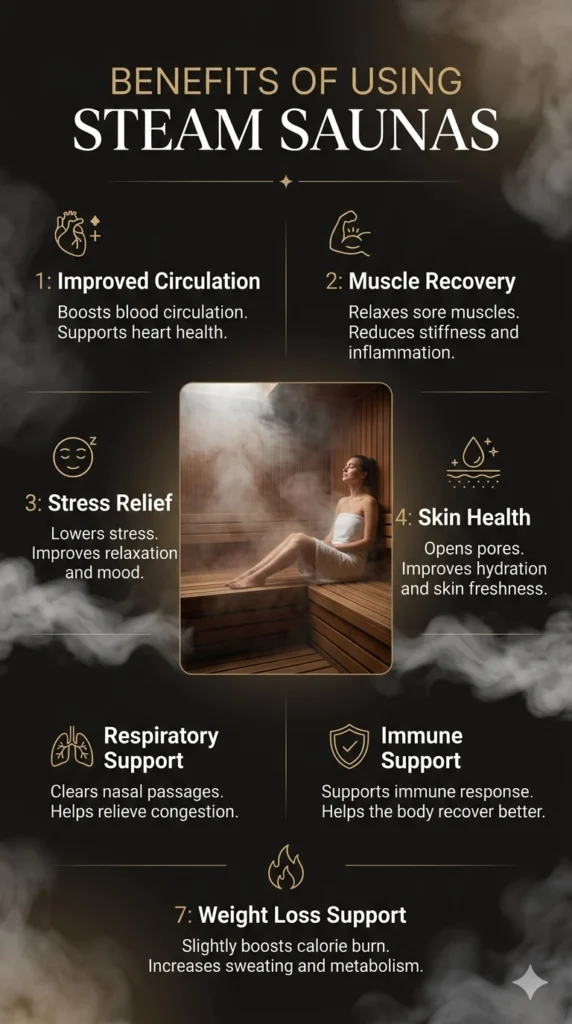
1. Improved Blood Circulation
Heat increases blood flow and supports the cardiovascular system.
Better circulation helps deliver oxygen and nutrients throughout the body.
2. Muscle Recovery & Pain Relief
Steam heat helps:
- Relax sore muscles
- Reduce joint stiffness
- Improve flexibility
- Support recovery after exercise
It also helps reduce inflammation in the body.
3. Stress Reduction
Steam saunas support mental relaxation by:
- Lowering stress hormones
- Releasing endorphins (feel-good hormones)
- Improving mood and calmness
4. Skin Health & Hydration
Steam helps improve skin by:
5. Respiratory Support
Warm steam helps:
- Clear nasal passages
- Loosen mucus in the respiratory tract
- Support sinus relief
It may help people with sinusitis or congestion feel better temporarily.
6. Immune System Support
Regular use may:
- Increase immune response activity
- Reduce stress (which supports immunity)
- Help the body react better to illness
7. Weight Loss Support
Steam saunas may slightly increase calorie burn by increasing:
- Heart rate
- Metabolism
- Sweating activity
This is linked to calorie expenditure, but it should not replace exercise.
Steam Sauna vs Dry Sauna
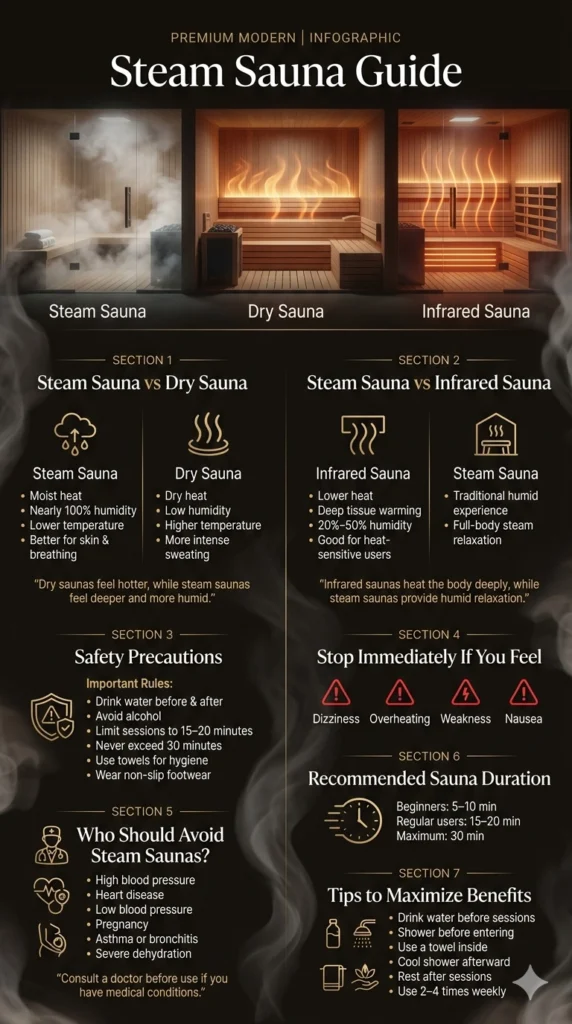
Steam Sauna
- Moist heat
- Nearly 100% humidity
- Lower temperature
- Better for skin and breathing
Dry Sauna
- Dry heat
- Low humidity
- Higher temperature
- More intense sweating
Dry saunas feel hotter, but steam saunas feel deeper and more humid.
Steam Sauna vs Infrared Sauna
Infrared saunas use infrared radiation to heat the body directly.
Infrared Sauna:
- Lower heat
- Deep tissue warming
- Lower humidity (20%–50%)
- Good for people sensitive to heat
Steam saunas feel more traditional and humid, while infrared saunas penetrate deeper into tissues.
Safety Precautions While Using a Steam Sauna
Steam saunas are safe when used properly.
Important Safety Rules:
- Drink water before and after
- Avoid alcohol (causes dehydration)
- Limit sessions to 15–20 minutes
- Never exceed 30 minutes
- Sit on towels for hygiene
- Wear non-slip footwear
Stop Immediately If You Feel:
- Dizziness
- Overheating (hyperthermia)
- Weakness
- Nausea
Who Should Avoid Steam Saunas?
Consult a doctor if you have:
- Hypertension (high blood pressure)
- Heart disease
- Hypotension (low blood pressure)
- Pregnancy
- Asthma or bronchitis
- Severe dehydration
Heat affects the cardiac output and may stress the heart.
How Long Should You Use a Steam Sauna?
- Beginners: 5–10 minutes
- Regular users: 15–20 minutes
- Maximum: 30 minutes
Stay hydrated to avoid dehydration and overheating.
Tips to Maximize Steam Sauna Benefits
- Drink water before sessions
- Shower before entering
- Use a towel inside
- Take a cool shower afterward
- Rest after each session
- Use 2–4 times per week
Choosing the Right Steam Sauna
When selecting a steam sauna:
- Choose indoor or outdoor setup
- Check size and capacity
- Prefer cedar or hemlock wood
- Ensure proper ventilation
- Pick quality steam generators
Good materials help prevent mold and improve durability.
Types of Steam Saunas
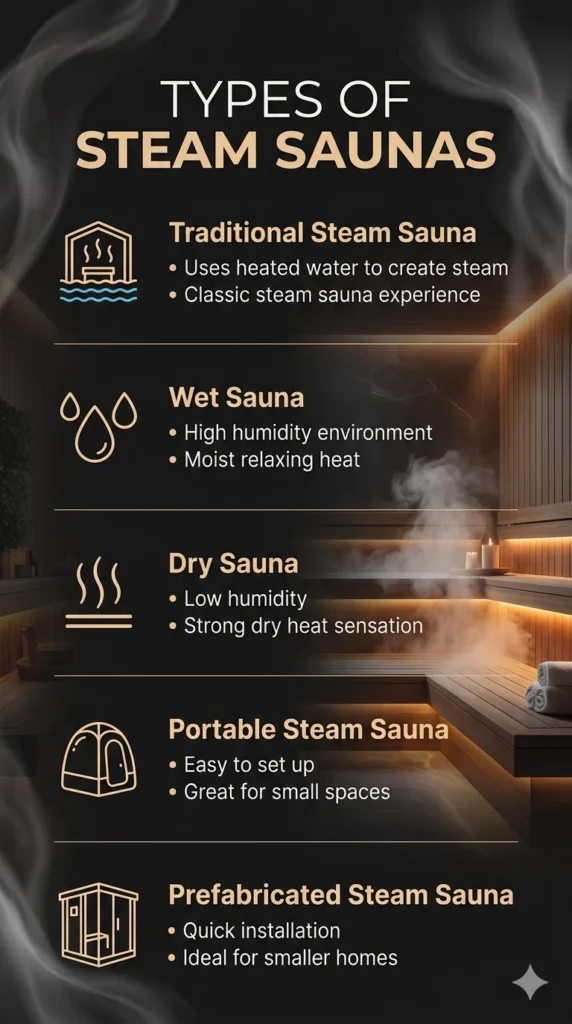
1. Traditional Steam Sauna
- Uses heated water to create steam
- Provides a classic steam sauna experience
2. Wet Sauna
- High humidity
- Moist heat environment
3. Dry Sauna
- Lower humidity
- Stronger dry heat
4. Portable Steam Sauna
- Compact and easy to set up
- Good for limited spaces
5. Prefabricated Steam Sauna
- Quick installation
- Suitable for smaller homes
Cleaning & Maintenance
Proper maintenance prevents bacteria and mold.
Daily Care:
- Wipe surfaces after use
- Leave door open for airflow
Deep Cleaning:
- Use vinegar or baking soda
- Avoid harsh chemicals
- Clean vents regularly
Good hygiene ensures long-lasting performance.
You May Also Like To Read:
FAQs About Steam Sauna
What Is a Steam Sauna?
A steam sauna is a heated room filled with warm, moist air created by a steam generator. It uses high humidity and moderate heat to help the body relax, sweat deeply, and improve overall wellness.
Why Steam Saunas Feel Different
Unlike a dry sauna that uses dry heat, a steam sauna uses moist heat to warm the body more gently. Because steam transfers heat efficiently, many people feel stronger heat even at lower temperatures.
Is a Steam Sauna Good for You?
Yes, steam saunas may support:
Better blood circulation
Muscle recovery
Stress reduction
Respiratory comfort
Skin hydration
Joint relaxation
Regular steam sauna sessions may also help improve relaxation and recovery after exercise.
How Hot Does a Steam Sauna Get?
Most steam saunas operate between:
110°F and 120°F (43°C to 49°C)
Humidity levels are usually close to 100%, which makes the heat feel much stronger.
What Are the Side Effects of Steam Saunas?
Possible side effects include:
Dehydration
Dizziness
Headaches
Overheating
Skin irritation in sensitive individuals
Drinking enough water before and after sessions helps reduce these risks.
Are Steam Saunas Good for Skin?
Yes, steam saunas may help:
Open pores
Remove dirt and oil buildup
Improve skin hydration
Leave skin feeling refreshed
Moist heat may also support better absorption of skincare products.
Final Thoughts
A steam sauna is a simple yet powerful way to support relaxation, recovery, and overall wellness through the use of warm, moist heat. By surrounding the body with high humidity and moderate temperatures, it helps trigger deep sweating, improves circulation, and promotes a calming effect on both body and mind.
Throughout this guide, we explored how steam saunas work, their potential benefits, safety precautions, and how they compare with other heat therapies like dry and infrared saunas. While steam saunas may support skin health, respiratory comfort, muscle recovery, and stress relief, they are most effective when used correctly and consistently.
It’s also important to remember that steam saunas are not suitable for everyone. People with certain medical conditions, pregnancy, or dehydration concerns should always consult a healthcare professional before use. Safe usage—such as staying hydrated, limiting session time, and listening to your body—is key to enjoying the experience without risks.
In the end, the best results come from balance. When used wisely, a steam sauna can become a valuable part of a healthy lifestyle, helping you relax, recover, and feel refreshed in a natural and enjoyable way.