
Far infrared saunas have become increasingly popular in gyms, spas, and home wellness spaces because they offer a more comfortable heat experience than traditional saunas.
Instead of heating the air around you, a far infrared sauna uses infrared heat waves to warm the body directly, helping users sweat at lower temperatures while still enjoying deep relaxation.
Many people choose far infrared sauna therapy for stress relief, muscle recovery, relaxation, circulation support, and overall wellness. If you have been researching for What Is a Far Infrared Sauna, you have likely seen terms like near infrared, far infrared, and full spectrum saunas.
Understanding these differences is important because each type of infrared sauna works differently and may provide different benefits and comfort levels.


Paid Links - As an Amazon Associate, I earn from qualifying purchases.
Compared to traditional saunas, infrared saunas are often easier to tolerate, more energy efficient, and suitable for modern home wellness routines.
In this guide, you will Learn What Is a Far Infrared Sauna, how it works, its benefits, risks, and how it compares to traditional and near infrared saunas.



Paid Links - As an Amazon Associate, I earn from qualifying purchases.
Key Takeaways
- A far infrared sauna uses infrared light waves to heat the body directly instead of heating the surrounding air like a traditional sauna.
- Far infrared saunas usually operate at lower temperatures, typically between 110°F and 140°F, making them more comfortable for many users.
- Far infrared heat can penetrate deeper into muscles and tissues, supporting relaxation, circulation, sweating, and recovery.
- Common types of infrared saunas include near infrared (NIR), mid infrared (MIR), far infrared (FIR), and full-spectrum saunas.
- Potential far infrared sauna benefits include stress relief, muscle relaxation, circulation support, skin health, and post-workout recovery.
- Deep sweating during infrared sauna sessions may support the body’s natural detoxification process.
- Compared to traditional saunas, infrared saunas generally warm up faster and are easier to tolerate for longer sessions.
- Risks and side effects may include dehydration, lightheadedness, and overheating if sessions are too long or hydration is poor.
- Most healthy adults can safely use a far infrared sauna regularly when using proper hydration and moderation.
- Choosing between far infrared, near infrared, or full-spectrum saunas depends on your comfort level, wellness goals, and preferred sauna experience.
What Is a Far Infrared Sauna?
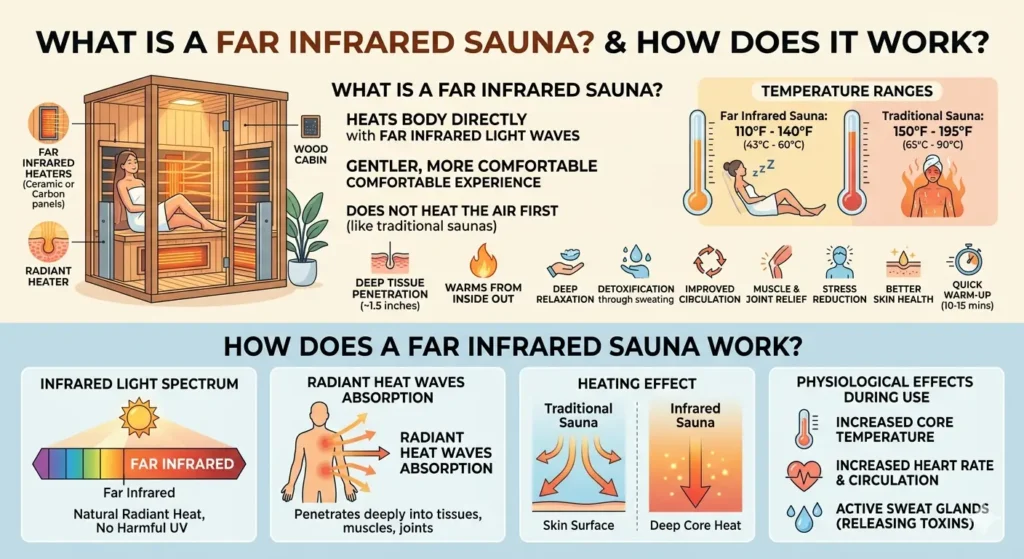
A far infrared sauna is a type of infrared sauna that uses far infrared light waves to heat the body directly instead of heating the air around you like a traditional sauna. This creates a gentler and more comfortable heat experience while still increasing the body’s core temperature effectively.
Unlike traditional saunas that usually operate at very high temperatures, far infrared saunas work at lower temperatures, typically between 110°F and 140°F (43°C–60°C). Traditional saunas often reach 150°F–195°F (65°C–90°C). Because the air stays cooler and drier, many people find infrared sauna sessions easier to tolerate and more comfortable for longer use.
Far infrared wavelengths can penetrate deeply into body tissues, reaching up to about 1.5 inches beneath the skin. This deep heat penetration helps warm the body from the inside out and encourages sweating, relaxation, circulation, and muscle recovery. Most far infrared saunas use ceramic or carbon panel heaters to emit far infrared radiation.
In a far infrared sauna, most of the heat directly warms the body rather than the surrounding air. This radiant heat therapy may support detoxification through sweating and can help with temporary muscle aches, joint stiffness, stress relief, and skin health. Some studies also suggest infrared sauna sessions may increase calorie burn.



Paid Links - As an Amazon Associate, I earn from qualifying purchases.
Far infrared saunas are popular in homes, gyms, spas, and wellness centers because they warm up faster than traditional saunas, usually within 10–15 minutes, and provide a more accessible experience for regular wellness routines.
How Does A Far Infrared Sauna Work?
A far infrared sauna works by using infrared light waves to heat the body directly instead of heating the surrounding air like a traditional sauna. This radiant heat is naturally absorbed by the body and helps raise core temperature while keeping the air around you at a more comfortable level.
Infrared Light And The Human Body
Far infrared light exists within the invisible part of the infrared spectrum and produces gentle radiant heat similar to the warmth from the sun, but without harmful UV radiation. The body naturally absorbs this heat, making far infrared sauna therapy a comfortable form of internal heating.
Deep Heat Penetration
Unlike traditional saunas that mainly warm the skin surface, far infrared heat penetrates deeper into tissues, muscles, and joints. This deep heat penetration helps relax tight muscles, support circulation, and encourage natural body responses like sweating and recovery.
Lower Ambient Temperatures
Because the heat targets the body directly, far infrared saunas operate at lower temperatures than steam or dry saunas. This creates a gentler sauna experience that many people can tolerate for longer sessions while still promoting sweating and relaxation.
Physiological Effects During Use
As the body warms, heart rate and blood circulation naturally increase. Sweat glands become more active, helping the body release toxins through sweat. Many users report deep relaxation, reduced muscle tension, and improved recovery after exercise or stress.
Benefits Of Using A Far Infrared Sauna
Regular use of a far infrared sauna is associated with several wellness benefits because of how the body responds to deep heat exposure. Unlike traditional saunas, far infrared saunas heat the body directly, promoting sweating, circulation, relaxation, and recovery at lower temperatures.
Supports Detoxification
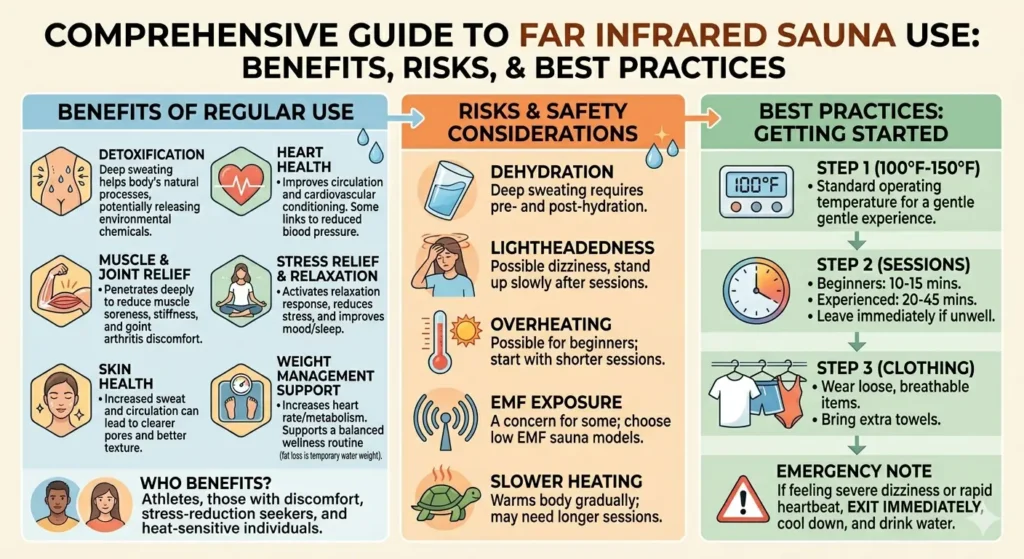
Far infrared saunas promote deep and sustained sweating, which may help support the body’s natural detoxification process. Some studies suggest sweat can contain substances such as heavy metals, BPA, and environmental chemicals stored in fat cells. The deep heating effect of far infrared sauna therapy encourages this sweating response while keeping the surrounding air more comfortable.
Improves Circulation And Heart Health
As body temperature rises during a far infrared sauna session, blood vessels expand and circulation improves. This may help deliver more oxygen throughout the body and support cardiovascular conditioning. Some research has also linked regular sauna use with reduced blood pressure and improved heart health markers.
Relieves Muscle And Joint Tension
Far infrared heat penetrates deeply into muscles and joints, helping reduce stiffness, muscle soreness, and tension. Many athletes and active individuals use far infrared saunas after exercise to support muscle recovery and relaxation. Some users with chronic discomfort, arthritis, or joint pain also report temporary relief.
Promotes Relaxation And Stress Relief
The gentle heat of a far infrared sauna helps activate the body’s relaxation response. Many users experience reduced stress, mental relaxation, improved mood, and better sleep quality after regular sauna sessions. Spending time in a quiet sauna environment may also support mindfulness and stress management routines.
May Support Skin Health
Increased sweating and improved circulation may help support clearer and healthier-looking skin. Some users report improvements in skin appearance, clogged pores, acne, and overall skin texture after consistent far infrared sauna use, although scientific evidence is still limited.
May Support Weight Management
Far infrared sauna sessions increase sweating and may temporarily raise heart rate and metabolism similar to light cardio activity. While sauna use can cause short-term water weight loss through sweating, this should not be confused with permanent fat loss. Some studies suggest infrared sauna therapy may support calorie burning as part of a balanced wellness routine.
Who Can Benefit From Far Infrared Saunas?
Far infrared saunas are commonly used by:
- Athletes and active individuals seeking muscle recovery
- People with muscle stiffness or joint discomfort
- Wellness-focused users interested in relaxation and stress reduction
- Individuals sensitive to the extreme heat of traditional saunas
- Fitness enthusiasts looking to support recovery routines
- People wanting a more comfortable daily sauna experience
Although many users report positive experiences, scientific research on some far infrared sauna benefits is still developing, and not all wellness claims are fully proven.
Risks and Side Effects
Far infrared saunas are generally considered safe for most healthy people, but there are still some risks and side effects to keep in mind. Understanding proper heat levels, hydration, and session timing can help make sauna use safer and more comfortable.
Dehydration
Because far infrared saunas promote deep sweating, dehydration can occur if you do not drink enough water before and after your session. Staying hydrated is important to help your body recover properly.
Lightheadedness And Dizziness
Some users may experience dizziness or lightheadedness during or after a sauna session, especially if they move too quickly. It is recommended to stand up slowly and allow your body time to adjust when entering or leaving the sauna.
Overheating
Although far infrared saunas operate at lower temperatures than traditional saunas, overheating is still possible, especially for beginners or during long sessions. Starting with shorter sessions at lower heat settings can help reduce this risk.
EMF Exposure
Some far infrared saunas may produce electromagnetic fields (EMFs). While modern low EMF infrared saunas are designed to reduce exposure, this remains a concern for some users when choosing a sauna system.
Slower Heating Effect
Compared to near infrared saunas, far infrared saunas warm the body more gradually. Because of this, some people may need longer sessions to achieve their desired heat and sweating effects.
Safety, Heat Levels, And Comfort
Far infrared saunas usually run at temperatures between 120°F and 150°F, creating gentle and even warmth that many beginners find easier to tolerate. Near infrared saunas can feel more intense on the skin because they use focused light and localized heat.
For most healthy adults, daily far infrared sauna use is generally considered safe. However, beginners should start with shorter sessions and consult a healthcare provider if they have underlying medical conditions.
If you experience severe dizziness, rapid heartbeat, or signs of overheating, leave the sauna immediately, cool down slowly, and drink water.
What to Expect
Most far infrared saunas operate between 100°F and 150°F. Beginners often start with 10–15 minute sessions, while experienced users may stay inside for 20–45 minutes.
Wear loose, breathable clothing such as a T-shirt, shorts, or a bathing suit. Because sweating is common, bringing extra clothes or towels may help make the experience more comfortable.
Choosing The Right Far Infrared Sauna
Choosing the right far infrared sauna depends on your available space, wellness goals, budget, and preferred features. While all far infrared saunas use similar heating technology, models can differ in size, materials, heater type, and overall comfort.

Space And Usage Needs
Far infrared saunas are available in different sizes, from compact one-person units to larger family-sized cabins. A 1 person infrared sauna works well for small spaces or private sessions, while larger models are better for shared use or dedicated wellness rooms.
Portable FIR tents are budget-friendly and require less space, while cabin saunas offer a more permanent setup for home wellness routines.
Materials And Build Quality
High-quality infrared saunas are commonly built from durable woods such as hemlock or cedar. Material quality affects insulation, durability, moisture resistance, and overall comfort. Cedar is especially popular because it naturally resists moisture and becomes stronger over time.
When possible, look for saunas made with FSC-certified wood and chemical-free glues for a safer indoor environment.
Heating Technology
Some saunas use only far infrared heating, while full-spectrum infrared saunas combine near, mid, and far infrared wavelengths for a wider range of heat therapy options.
Carbon and ceramic heaters are both commonly used in modern infrared saunas:
- Carbon heaters provide gentle and even heat
- Ceramic heaters heat quickly and create stronger intensity
Full-spectrum systems allow users to combine deep far infrared heat with targeted near infrared therapy.
Low EMF Levels
Many buyers prefer low EMF or zero EMF infrared saunas to reduce electromagnetic field exposure. Modern sauna models are often designed to minimize EMF levels while maintaining effective heating performance.
Additional Features
Some far infrared saunas include features designed to improve comfort and usability, such as:
- Adjustable temperature controls
- Ergonomic seating
- Chromotherapy lighting
- Bluetooth speakers
- Digital control panels
While these features are not essential, they may improve the overall sauna experience for regular users.
You May Also Like To Read:
- Does Infrared Sauna Help Headaches? Benefits, Risks & Science
- What Does an Infrared Sauna Do to Your Body? Expert Guide
FAQs About Far Infrared Saunas
What is the difference between near and far infrared saunas?
Near infrared focuses more on the skin surface, while far infrared penetrates deeper into muscles and tissues.
Are far infrared saunas safe for daily use?
Yes, for most healthy adults when used properly and with hydration.
How long should a far infrared sauna session last?
Most sessions last between 20–40 minutes.
What temperature should a far infrared sauna be?
Most operate between 110°F–140°F.
Can far infrared saunas help with sleep?
Many users report better sleep and relaxation after regular sessions.
Is there a detox effect with far infrared saunas?
Deep sweating may support the body’s natural detoxification process.
What are full-spectrum infrared saunas?
They combine near, mid, and far infrared wavelengths in one system.
Final Thoughts
Far infrared saunas have become a popular wellness option because they provide deep, comfortable heat without the extreme temperatures of traditional saunas. By using infrared light waves to heat the body directly, they may support relaxation, circulation, muscle recovery, sweating, and overall wellness while remaining easier to tolerate for many users.
Compared to traditional steam or dry saunas, far infrared saunas operate at lower temperatures and are often better suited for regular home use. They are also available in different formats, including full-spectrum and low EMF infrared saunas, allowing users to choose a setup that matches their comfort level and wellness goals.
While many people report benefits such as stress relief, improved recovery, better sleep, and relaxation, scientific research on some infrared sauna claims is still developing. Like any wellness practice, safe use, proper hydration, and moderation are important.
Whether you are looking for a gentler sauna experience, support for post-workout recovery, or a consistent self-care routine, a far infrared sauna can be a practical addition to a modern wellness lifestyle.