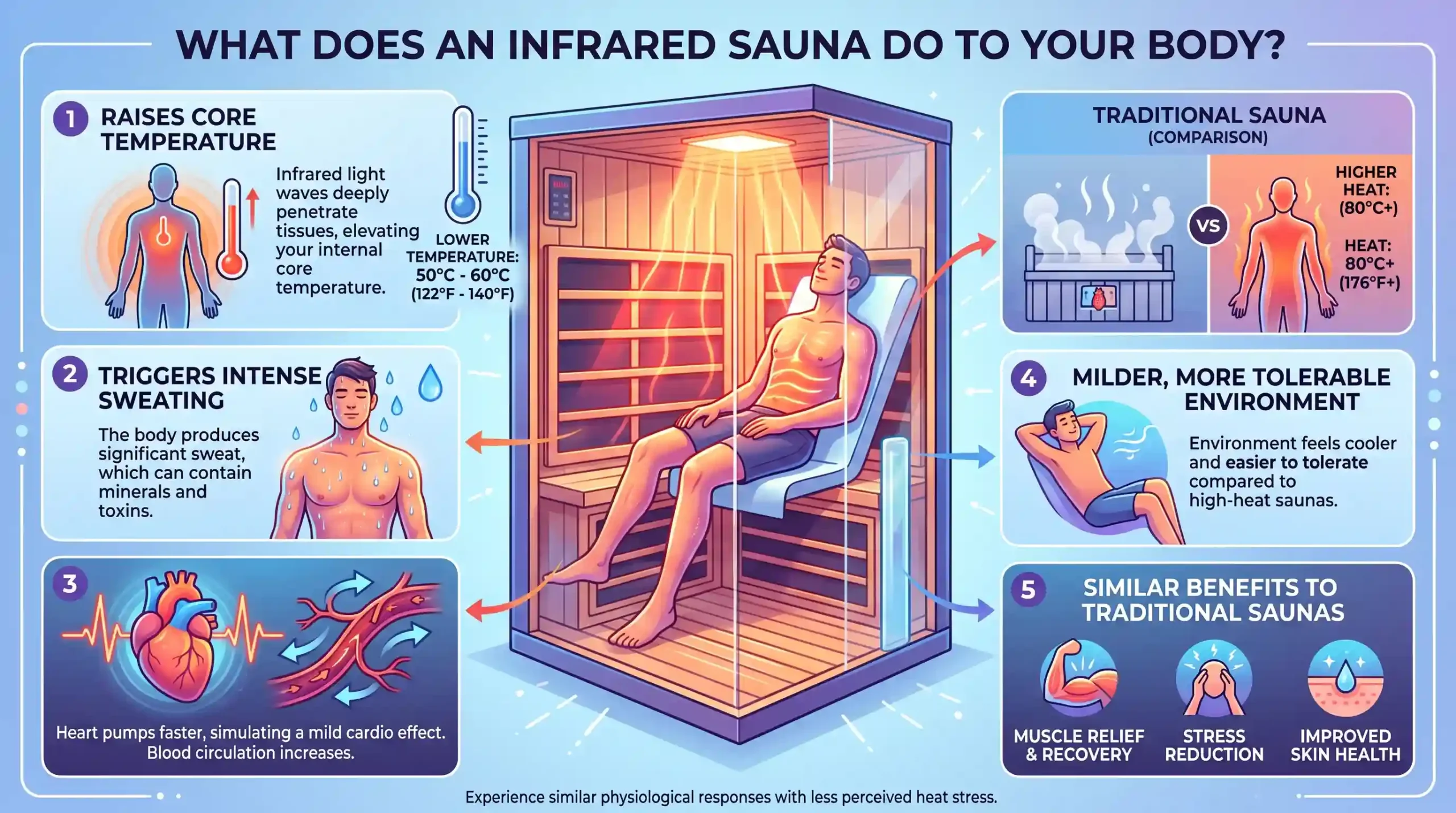
An infrared sauna warms your body directly using light waves that penetrate the skin, instead of heating the surrounding air like a traditional sauna. Because of this, the environment stays relatively cooler (usually around 50°C to 60°C, compared to 80°C or more in regular saunas), yet your core temperature still rises enough to trigger sweating, an elevated heart rate, and several physiological responses. The experience feels milder, but many of the benefits are similar to those of high-heat exposure.
Discover What Does an Infrared Sauna Do to Your Body, including its effects on heart health, muscle recovery, skin, and stress. A complete expert guide to benefits and safety.
Disclaimer: The content provided on this blog is for educational and informational purposes only and is not intended to be a substitute for professional medical advice, diagnosis, or treatment.
Key Takeaways
- Infrared saunas heat your body directly using light waves, creating a milder and more comfortable experience than traditional saunas.
- They raise your core temperature, leading to sweating, improved circulation, and a temporary increase in heart rate similar to light exercise.
- Regular sessions may help which supports managing high blood pressure and heart health and support overall cardiovascular health.
- The deep heat can reduce muscle soreness and aid recovery by increasing blood flow to tissues.
- Infrared sauna use may lower stress levels by reducing cortisol and promoting relaxation.
- It can support skin health by boosting circulation and stimulating collagen production.
- Calorie burn during a session is modest and should not be considered a replacement for exercise.
- Safe use involves starting with shorter sessions, gradually increasing duration, and staying well-hydrated.
- While benefits are promising, more long-term research is still needed to fully confirm its effects.
How Infrared Heat Works Differently
Unlike traditional saunas that rely on hot air or steam to heat the body from the outside, infrared saunas use panels that emit far-infrared radiation. This type of energy is absorbed directly through the skin, allowing your body to warm from within. The increase in core temperature happens gradually, rather than through intense external heat.


Paid Links - As an Amazon Associate, I earn from qualifying purchases.
Because of this internal heating process, sweating begins at lower temperatures. Most sessions range between 125°F and 150°F, which feels much more comfortable than the 170°F+ temperatures found in conventional saunas. Even so, the overall effects on the body are quite comparable.
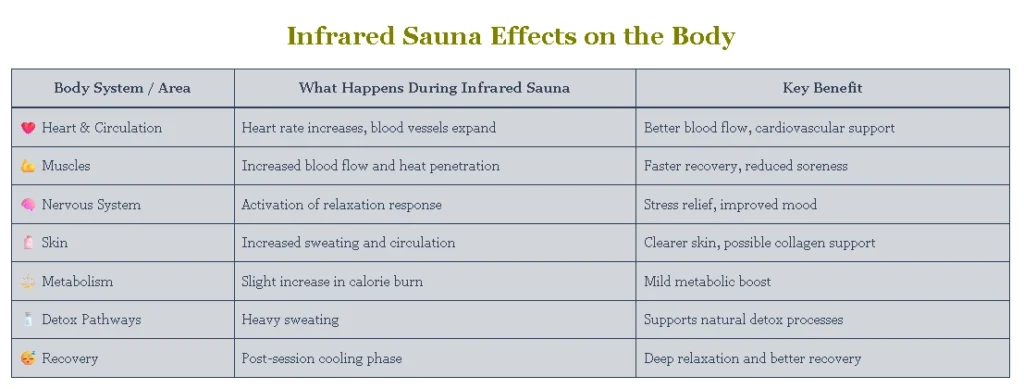
Infrared Sauna Effects on the Body
| Body System / Area | What Happens During Infrared Sauna | Key Benefit |
|---|---|---|
| ❤️ Heart & Circulation | Heart rate increases, blood vessels expand | Better blood flow, cardiovascular support |
| 💪 Muscles | Increased blood flow and heat penetration | Faster recovery, reduced soreness |
| 🧠 Nervous System | Activation of relaxation response | Stress relief, improved mood |
| 🧴 Skin | Increased sweating and circulation | Clearer skin, possible collagen support |
| ⚖️ Metabolism | Slight increase in calorie burn | Mild metabolic boost |
| 🧂 Detox Pathways | Heavy sweating | Supports natural detox processes |
| 😴 Recovery | Post-session cooling phase | Deep relaxation and better recovery |
Effects on Heart Rate and Blood Pressure
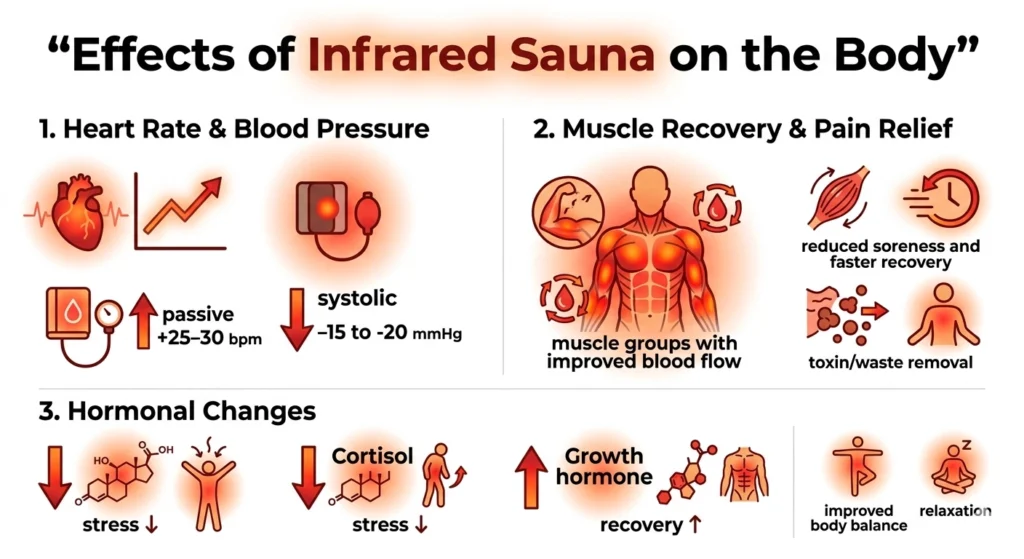
One of the most studied benefits of sauna use is its impact on the cardiovascular system. During a session, your core body temperature can rise by about 0.6°C, and your heart rate may increase by roughly 25–30 beats per minute. This is similar to the effect of light physical activity, which is why it’s sometimes referred to as “passive cardio.”



Paid Links - As an Amazon Associate, I earn from qualifying purchases.
Blood pressure tends to decrease both during and after a session. Some studies show an average drop of around 15–20 mmHg in systolic pressure and a smaller reduction in diastolic pressure.
The recovery period afterward is especially important. As your body cools down, the nervous system shifts into a more relaxed state. Heart rate variability improves, indicating stronger activation of the parasympathetic (rest-and-recovery) system. This is one reason many people feel calm and refreshed after a session.
Muscle Recovery and Pain Relief
Infrared saunas are commonly used by athletes and fitness enthusiasts to support muscle recovery. Heat increases blood circulation, helping deliver oxygen and nutrients to muscles while clearing out metabolic waste. This can reduce soreness after intense workouts.
For individuals with chronic pain or muscle tension, the deep heat may provide temporary relief by loosening tight muscles and reducing stiffness. While it’s not a cure, it can be a helpful addition to a broader pain management routine.



Paid Links - As an Amazon Associate, I earn from qualifying purchases.
Hormonal Changes
Regular sauna use may influence certain hormones in beneficial ways. Growth hormone levels can increase slightly, while cortisol (the main stress hormone) tends to decrease over time. Lower cortisol levels are linked to reduced inflammation and improved overall well-being.
These effects build gradually. A single session causes temporary changes, but consistent use over weeks may lead to more noticeable results.
Skin Health and Collagen Support
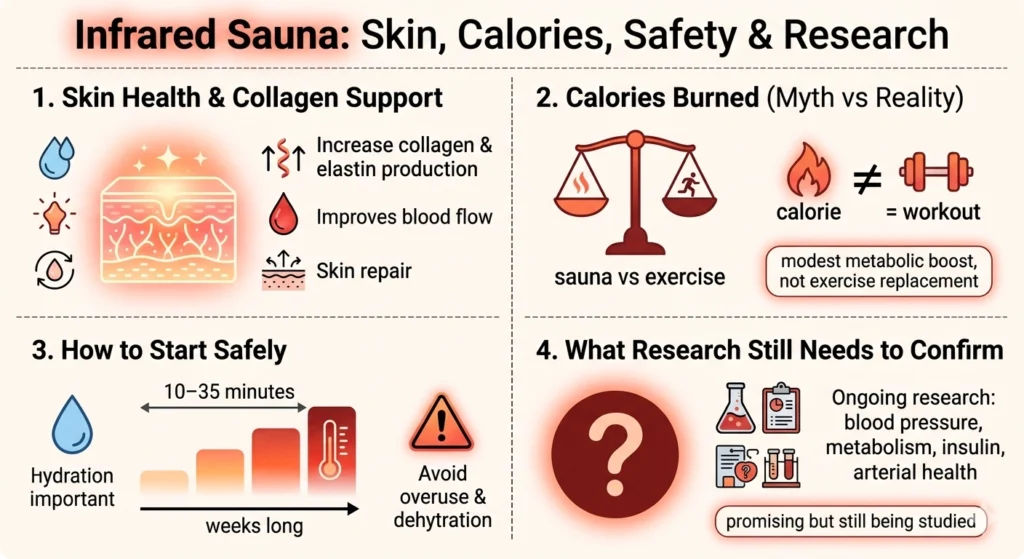
Infrared heat can stimulate the skin’s natural repair mechanisms, including the production of collagen and elastin—proteins responsible for firmness and elasticity. Increased blood flow to the skin helps nourish cells and supports regeneration.
Sweating also plays a role in maintaining the skin’s barrier function. With regular sessions, some people notice clearer, more hydrated, and healthier-looking skin, although results vary.
Do Infrared Saunas Burn Calories?
Claims that infrared saunas burn 400–800 calories in a single session should be taken cautiously. While your body does use extra energy to regulate temperature and maintain an elevated heart rate, it’s not comparable to actual exercise. learn how many calories does infrared sauna burn
Since there’s no muscle movement or resistance involved, the calorie burn is relatively modest. Think of it as a small metabolic boost rather than a replacement for physical activity.
How to Start Safely
Most research suggests sessions of 20 to 45 minutes for optimal benefits. Very short sessions offer limited effects, while going beyond 60 minutes may increase risks like dehydration without adding benefits.
A gradual approach works best:
- Weeks 1–2: 10–15 minutes at 125–130°F, 2–3 times weekly
- Weeks 3–4: 15–20 minutes at 130–135°F, 3–4 times weekly
- Weeks 5–6: 20–25 minutes at 135–140°F, 3–5 times weekly
- After 8 weeks: 25–35 minutes at 135–150°F, based on preference
Staying hydrated is essential. Sweating leads to fluid loss, so drinking water before, during, and after your session is important to avoid dehydration and maintain the benefits.
What Research Still Needs to Confirm
While current studies suggest positive effects on cardiovascular health, recovery, and relaxation, much of the evidence comes from smaller trials. Larger and more detailed studies are ongoing.
Some research is exploring whether consistent infrared sauna use can improve blood pressure, blood sugar levels, insulin sensitivity, and arterial health in people with metabolic conditions. These results will help clarify the long-term role of infrared therapy.
FAQs
How often should you use an infrared sauna?
Most people benefit from using an infrared sauna 3–4 times per week. Beginners can start with 1–2 sessions weekly and gradually increase frequency based on comfort and tolerance.
How long should a session last?
A typical session lasts between 20 and 45 minutes. If you’re new, start with 10–15 minutes and slowly work your way up to longer sessions.
Is an infrared sauna safe for everyone?
Infrared saunas are generally safe for healthy individuals. However, people with heart conditions, low blood pressure, or those who are pregnant should consult a healthcare professional before using one.
Can infrared saunas help with weight loss?
They may support weight management by slightly increasing calorie burn and improving recovery, but they are not a substitute for regular exercise and a balanced diet.
Do infrared saunas detox your body?
Sweating does help remove small amounts of toxins, but your liver and kidneys are primarily responsible for detoxification. Saunas can support overall wellness but shouldn’t be relied on as a detox solution.
What should you do before and after a session?
Before your session, drink water and avoid heavy meals. Afterward, rehydrate, allow your body to cool down, and consider a shower to remove sweat.
Are there any side effects?
Possible side effects include dehydration, dizziness, or overheating—especially if sessions are too long or hydration is inadequate. Listening to your body and staying hydrated helps minimize risks.
Final Thoughts
Infrared saunas offer a simple and effective way to support overall wellness without the intensity of traditional heat exposure. By gently raising your core temperature, they can promote relaxation, improve circulation, and assist with muscle recovery. While they’re not a replacement for exercise or medical treatment, they can be a valuable addition to a healthy lifestyle when used consistently and safely.
As research continues to grow, infrared sauna therapy shows strong potential for both physical and mental benefits—making it a practical option for anyone looking to enhance recovery, reduce stress, and feel better overall.