
If you live with asthma, a steam sauna can feel like a gamble. Some people step out of the steam saying their chest feels looser and their breathing feels easier. Others step out coughing, tight chested, and wishing they had stayed outside. Both reactions are real, and both make sense once you understand what warm, moist air does inside sensitive airways.
This guide is about steam sauna and asthma, and it looks at steam saunas specifically, not dry saunas and not infrared cabins. Steam means humid heat, air that is close to saturated with moisture, and breathing that warm air deep into your lungs for the whole session. That combination is what makes steam different from every other kind of sauna, and it is why the advice for asthma is more cautious here than it is for dry heat.
Please read this first: this article is general information, not medical advice. A steam sauna is a wellness tool, not a treatment for asthma. It does not replace your prescribed inhalers, your controller medicine, or your asthma action plan. If you have asthma, check with your doctor before your first steam session, especially if your asthma is uncontrolled or you have had a recent flare. Never use a steam sauna as a substitute for prescribed medication.


#Paid Links
The Short Answer: Can You Use a Steam Sauna With Asthma?
There is no single yes or no answer to steam sauna and asthma, because asthma is different from person to person and steam affects people in opposite ways. If your asthma is well controlled, you have no symptoms on the day, and heat and humidity have never bothered you before, a short, careful first session is something many people with asthma can try after talking it over with their doctor. If your asthma is flaring, you are wheezing today, or you know that hot, humid air sets your symptoms off, the steam room is best avoided until things settle.


#Paid Links
The honest picture is mixed. Warm, moist air can soothe a dry nose and throat and may help mucus feel easier to clear, which is why some people with asthma enjoy steam.
Asthma + Lung UK says hot, humid air can make breathlessness and wheezing worse, and the US Centers for Disease Control and Prevention lists high humidity among the weather conditions that can trigger an asthma attack. So the same steam that comforts one person can tighten another person’s airways.
Direct research is very limited. We found no large controlled trial of steam rooms in people with asthma, so most of what we know comes from studies of steam inhalation, hot baths, and dry saunas, plus guidance from respiratory health bodies.
What Makes a Steam Sauna Different for Your Airways
A steam sauna is a small, sealed, tiled room filled by a steam generator. The air temperature is lower than in a dry sauna, but the humidity is far higher, close to 100 percent. You are breathing warm, moisture heavy air with every breath, and that air reaches deep into your airways.
That matters because asthma is a condition of sensitive, reactive airways. In asthma, the airways are inflamed and the muscles around them can tighten quickly in response to a trigger. Heat, humidity, sudden temperature changes, strong smells, and airborne irritants can all act as triggers, and a steam room can contain several of them at once.
A dry sauna exposes you mainly to heat, while a steam sauna adds humidity, scents, and cleaning chemicals to the mix.


#Paid Links
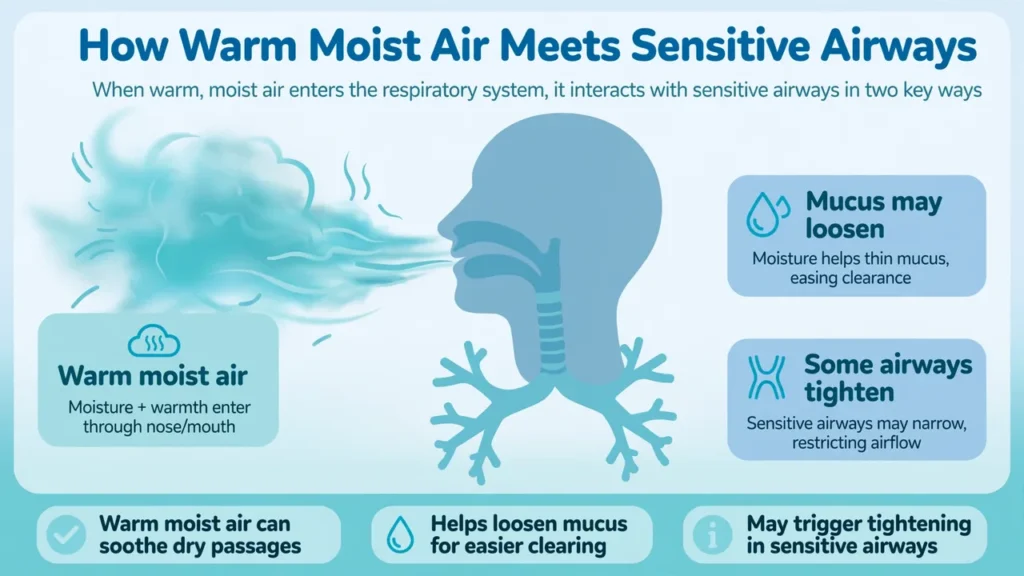
The steam room adds two more factors that are easy to overlook. First, the air is thick and still, so if you start to feel breathless, there is no fresh breeze to help you recover. You need to walk out to cooler, fresher air. Second, public steam rooms are shared spaces, and other users may add scented oils while the room itself may carry cleaning product smells or mould in damp corners.
Why Warm, Moist Air Can Feel Soothing
It helps to start with the positive side, because it explains why so many people with asthma are drawn to steam in the first place. The comfort people describe is real, even if it is not a treatment effect. Warm, moist air can ease dryness in the nose and throat, and that alone can make breathing feel easier for a while.
Mucus May Feel Easier to Clear
The American Lung Association notes that a warm, humid environment can help loosen chronic mucus. In a steam room, the moisture in the air can thin mucus in the nose and upper airways, so it feels easier to clear with a gentle cough or a blow of the nose. For someone whose asthma comes with a lot of congestion, that feeling of clearer upper airways can be a genuine relief.
It is important to keep this in perspective. Loosening mucus in the nose and throat is not the same as opening the lower airways in the lungs. Asthma involves swelling and tightening deep in the lungs, and steam does not treat that inflammation.
The comfort is mostly in the upper airways, and it is temporary. Once you leave the steam, the effect fades.
Dryness and Irritation May Ease for a While
Many people with asthma notice that dry air irritates their airways, especially in winter or in air conditioned rooms. Warm, moist air does the opposite. It keeps the lining of the nose and throat from drying out during the session, which can reduce that scratchy, irritated feeling that sometimes leads to coughing. Some people also find the slow, warm breathing in a steam room relaxing, and relaxation itself can help breathing feel less laboured.
A small 2016 study of bathing habits in people with asthma found this split clearly. About 17 percent of participants said their symptoms improved while bathing in hot water, while a larger share felt worse. That study looked at hot baths rather than steam rooms, so the numbers do not transfer directly, but the pattern matches what steam users report.
Why the Same Steam Can Trigger Symptoms
For many people with asthma, the same warm, moist air that soothes a dry throat can also set symptoms off. The triggers follow from how reactive airways respond to heat, humidity, and sudden change, and from what else is floating in the steam room air.
Hot, Humid Air Itself Can Tighten Airways
The most direct trigger is the steam itself. When sensitive airways meet a sudden rush of very hot, very humid air, the muscles around the airways can tighten as a protective reflex. That narrowing is bronchospasm, and it is what produces wheezing, coughing, and chest tightness. A small laboratory study often cited in this area found that people with mild asthma who breathed fast through hot, humidified air showed a sharp rise in airway resistance, much larger than with room temperature air, and the hot air made them cough.
This does not happen to everyone, or on every visit. It is more likely when the steam is at its thickest, such as just after the generator cycles on, or when you breathe quickly and deeply through your mouth. Breathing slowly through your nose, sitting away from the steam outlet, and keeping the session short all help.
Sudden Temperature Changes Add to the Strain
A second trigger is the swing from hot to cold. Stepping from a hot steam room into a cold shower, a cold plunge, or cold outdoor air can irritate reactive airways, and cold air is itself a well known asthma trigger. In the 2016 bathing study mentioned above, a sudden change in air temperature was the second most commonly reported trigger after vapour inhalation, and about 28 percent of participants said hot baths triggered their asthma symptoms.
The practical lesson is to cool down gently. Leave the steam room, sit in a warm room for a few minutes, and let your breathing settle before you shower or step outside. Skip the cold plunge on a day when your chest feels at all sensitive.
Scents, Chemicals, and Mould in the Room
The third group of triggers is not the steam at all, but what rides in it. Essential oils and scented products are common in steam rooms, and the American Lung Association notes that inhaling certain oils can trigger asthma symptoms in sensitive people, with very little evidence behind claimed anti-inflammatory benefits. Menthol and eucalyptus are frequent culprits. If a room smells strongly of scent, that is a warning sign, not a benefit.
Public steam rooms carry other irritants too. Chlorine from a nearby pool, strong cleaning products, and mould growing in damp corners or grout can all irritate airways. People with allergic asthma should be extra careful here, because the same damp environment that grows mould also stirs up dust mites. Our guide to steam saunas for allergies looks at this overlap in more detail, and it is worth reading if your asthma is allergy driven.
When to Skip a Steam Sauna
Some days the right decision is simply not to go in. Skipping a session is not a failure. It is the asthma action plan working as it should. The situations below are the clearest reasons to stay out of the steam room, even if you normally enjoy steam without any trouble.
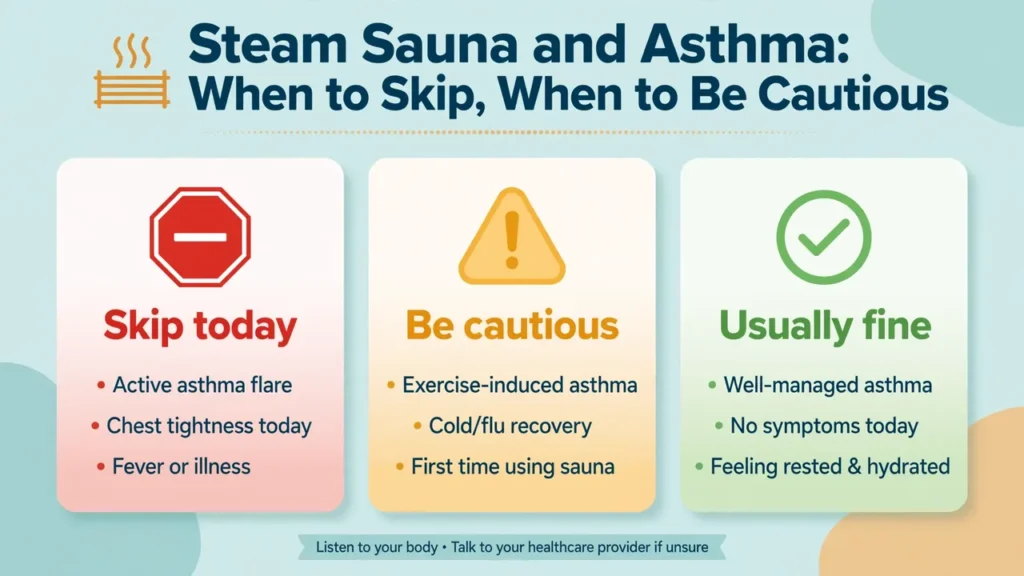
- Skip today if you are having a flare. Active wheezing, chest tightness, coughing that will not settle, or needing your reliever inhaler more than usual all mean your airways are already reactive. Steam will not calm them.
- Skip today if you are ill. A cold, flu, chest infection, or fever is a reason to stay out. Breathing hot, humid air while your airways are infected can make breathing feel harder, and rest is the better choice. Our guide to using a steam sauna when sick covers this in full.
- Skip today if your peak flow is much lower than usual. If you measure peak flow and the reading is well below your personal best, treat that as your airways telling you they are narrowed already.
- Skip it if you have had a recent asthma attack. Asthma + Lung UK advises a follow-up appointment after any asthma attack, even if you feel better. Wait until your clinician is happy with your control before returning to the steam room.
- Be cautious if your asthma is exercise induced. Heat, heavy breathing, and exertion can combine, so a steam session after hard exercise deserves extra care.
- Be cautious on your first visit. You do not yet know how your airways will respond, so treat the first session as a short test with an easy exit.
One more rule is worth stating plainly. If you use your reliever inhaler three or more times a week, Asthma + Lung UK says that is a sign your asthma may be getting worse and you should see your doctor soon. That is a medical question first and a sauna question second. Sort out your asthma control before you worry about steam sessions.
A Cautious First Session, Step by Step
If your asthma is well controlled, you have no symptoms today, and your doctor is happy for you to try, a first steam session should be short, calm, and easy to leave. The steps below are designed so that you can stop at any point without fuss. Bring your asthma action plan, follow it, and let the people around you know where your inhaler is.
- Check in with your doctor first. Ask specifically about steam rooms, not just saunas in general. Mention how often you use your reliever, whether heat or humidity has ever triggered you, and whether you have exercise induced symptoms.
- Pick a good day. Choose a day with no symptoms, no cold, good sleep the night before, and no known trigger exposure. Avoid days when pollen, pollution, or a chest cold is already bothering you.
- Take your controller medicine as prescribed. Do not skip a dose to test the steam, and never use a steam session as a substitute for your inhaler.
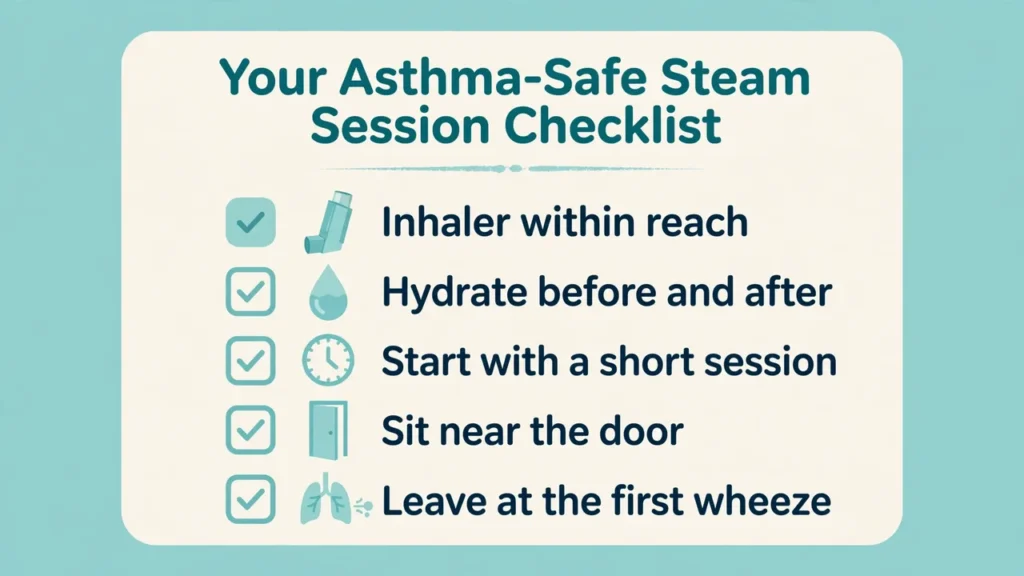
- Keep your reliever inhaler within easy reach. Leave it just outside the steam room, somewhere you or a companion can grab it in seconds. Heat and moisture are not kind to inhalers, so do not take it into the steam itself.
- Hydrate before you go in. Drink a glass of water beforehand, and have water ready for afterwards. Our steam sauna hydration guide explains how much to drink and which warning signs mean you are running low.
- Go in with someone, or tell staff where you are. Do not try steam alone for the first time with asthma. A companion or a member of staff should know you have asthma and where your inhaler is.
- Sit near the door, on a lower bench. The air is cooler and less steamy lower down and near the exit, and you can leave quickly if you need to.
- Start with just a few minutes. Five minutes is plenty for a first test. Breathe slowly through your nose, and pay attention to your chest rather than trying to relax through early warning signs.
- Leave at the first sign of trouble. Wheezing, chest tightness, a persistent cough, or feeling dizzy are all exit signals. Do not wait to see if it passes. Step out into fresh air, sit down, and use your reliever inhaler as your action plan directs.
- Cool down gently and rehydrate. Sit in a warm room for a few minutes before showering, drink water, and notice how your breathing feels over the next hour. If symptoms linger, treat them as you normally would and seek medical advice.
How did the test go? If a short session felt comfortable and your breathing stayed normal for the hour afterwards, you can build up slowly on later visits, adding a few minutes at a time. If you coughed, wheezed, or felt tight, take that seriously.
Mention it to your doctor, and do not assume the next visit will be different. Some people find that steam simply does not suit their asthma, and that is useful information.
Session Length, Temperature, and How Often to Go
Shorter is safer when you have asthma, especially at the start. Many beginner guides suggest 5 to 10 minutes for a first steam session, and that is a sensible ceiling for a first test with asthma. Even experienced steam users with asthma often keep sessions shorter than people without breathing conditions, and they treat 15 minutes as a generous upper limit rather than a target. Our guide to how long to stay in a steam sauna gives the general ranges, and the asthma advice here is to stay at the short end of them.
Temperature works the same way. Steam rooms run cooler than dry saunas, but the humidity makes the heat feel stronger than the number on the dial suggests. Sit on a lower bench where the air is cooler, and avoid sitting right beside the steam outlet where bursts of fresh steam are hottest.
Our steam sauna temperature guide explains the settings and how to use them. For asthma, the cooler end of the comfortable range is the better place to start.
Frequency deserves the same caution. Once or twice a week is plenty while you are learning how your airways respond. Keep a simple note of each session, how long you stayed in, and how your breathing felt afterwards. Patterns show up quickly when you write them down, and they give your doctor something concrete to work with.
Hydration and Cooling Down
Sweating in a steam room loses water fast, and dehydration can make breathing feel harder and leave you light headed. Drink water before your session, and do not try to push through thirst or dizziness. If you take medication that affects how you handle heat or fluids, ask your doctor about it first. The steam sauna hydration guide covers water and electrolytes in detail, along with the warning signs that mean you should stop and rehydrate.
Cooling down matters just as much as the session itself. Step out into fresh air, sit down, and give your breathing a few minutes to settle before you shower. A lukewarm shower is kinder to reactive airways than a cold one, and it avoids the sudden temperature swing that can trigger coughing or tightness. Skip the cold plunge and the ice bath on steam days, and save contrast routines for a time when your asthma is settled and your doctor is comfortable with them.
Steam Sauna or Dry Heat: Which Is Easier on Asthma?
People with asthma often ask whether a dry sauna or an infrared cabin would suit them better than steam. The honest answer is that the research is thin for all of them, and individual responses vary so much that no type wins for everyone. Dry heat has slightly more research behind it than steam.
A small 1989 study of 12 men with obstructive lung disease found lung function improved after dry sauna sessions, and a large Finnish cohort study linked frequent traditional sauna use with fewer respiratory diseases over time. The Finnish study was observational, so it shows an association rather than proof of cause, and it studied traditional dry sauna, not steam.
Infrared cabins are a different case again. They warm the body with radiant heat rather than hot, humid air, so the air you breathe stays drier and closer to room humidity. Some people with asthma find that easier, while others find dry heat irritating in its own way. Our guide to infrared saunas for asthma relief covers the dry heat side of the question in full, and it is the right companion piece if you are comparing types before you buy or join a gym.
The practical way to compare is to test one type at a time, on separate days, with the same cautious approach. Try a short steam session and note how you feel, then try a short dry or infrared session on another day and compare. That way you learn what your own airways prefer.
Asthma, Allergies, and Colds: How They Overlap
Asthma rarely travels alone. Many people with asthma also have allergies, and the two conditions share triggers. Pollen, dust mites, pet dander, and mould can set off both allergic symptoms and asthma symptoms, and a damp steam room can stir up mould and dust mites if it is not cleaned and ventilated well.
If your asthma is allergy driven, check that the steam room is clean, dry between uses, and free of visible mould before you go in. A home steam room needs the same care, with good ventilation and drying after every session.
Colds and chest infections deserve a clear rule of their own. Do not use a steam sauna while you have a cold, a chest infection, or a fever, even if the steam feels soothing on a blocked nose. Breathing hot, humid air while your airways are infected can make breathing feel harder, and the American Lung Association notes that a sauna can worsen a respiratory infection by drying the airways.
Rest and fluids are the right response. Wait until you have fully recovered, then ease back in with a short session.
Blood pressure is another factor worth a mention, because heat lowers blood pressure for many people and steam can add to that effect. If you also live with low blood pressure or a heart condition, read our guide to steam saunas and blood pressure and talk to your doctor about both conditions together.
What to Do If Symptoms Start in the Steam Room
Even a careful session can go wrong, so know the plan before you go in. The first step is always the same. Leave the steam room straight away.
Do not try to breathe through it, and do not wait to see if it passes. Step into cooler, fresh air, sit down, and try to stay calm. Fast, panicky breathing makes tight airways feel worse.
Use your reliever inhaler as your asthma action plan directs, and follow the plan step by step. If your symptoms ease and your breathing returns to normal, rest, drink water, and do not go back into the steam.
If your reliever is not helping, your symptoms are getting worse, or you are struggling to speak in full sentences, treat it as an emergency. Call emergency services, or ask someone nearby to call for you, and keep using your action plan while you wait. Never steam alone with asthma, and never without your inhaler in easy reach.
After any scare in the steam room, tell your doctor what happened. Note how long you were in, how steamy the room felt, whether scents were present, and how quickly symptoms started. That detail helps your doctor work out what the trigger was.
Talking to Your Doctor: Questions Worth Asking
A short conversation with your doctor before your first session is the single most useful step in this whole guide. Bring your asthma action plan and your inhaler, and be specific about what you want to try.
- Is my asthma controlled well enough to try a steam sauna?
- Are heat or humidity known triggers for me, based on my history?
- How long should my first session be, and how often can I go?
- Should I take my reliever inhaler before a session, or only if symptoms start?
- Do any of my medicines affect how I handle heat or dehydration?
- Are there warning signs that mean I should stop trying steam altogether?
If your doctor advises against steam, that advice is specific to you and worth following. It may be that dry heat suits you better, or that no sauna is sensible until your control improves. Children, older adults, and anyone who is pregnant should be extra careful, and our guide to steam sauna safety for children, pregnancy, and health conditions covers those situations in detail.
The Bottom Line
Steam sauna and asthma have a complicated relationship. Warm, moist air can soothe a dry nose and throat and help mucus feel easier to clear, which is why some people with asthma enjoy steam. The same steam can also trigger wheezing, coughing, and chest tightness in others, because hot, humid air is a recognised asthma trigger.
Neither reaction means the other person’s experience was wrong. Asthma is individual, and steam is a strong stimulus.
If your asthma is well controlled and your doctor is happy for you to try, a short first session with your inhaler nearby, a companion present, and an easy exit is a reasonable test. If your asthma is flaring, you are ill, or heat and humidity have triggered you before, stay out of the steam room and look after your breathing first. A steam sauna is a pleasant wellness habit, not a treatment, and it is never worth a frightening breathing episode. Listen to your airways, keep your inhaler close, and let your doctor guide the decision.
Frequently Asked Questions
Is a steam sauna safe for asthma?
It depends on your asthma. If your asthma is well controlled, you have no symptoms on the day, and your doctor is happy for you to try, a short first session is often possible. If your asthma is flaring, you are wheezing, or hot humid air has triggered you before, it is safer to stay out. There is no large controlled trial of steam rooms in people with asthma, so treat a first visit as a careful test.
Can steam help asthma or make it worse?
Both can happen. Warm, moist air can soothe a dry nose and throat and may help mucus feel easier to clear, which some people find comforting. The same steam can also trigger bronchospasm in others, because hot humid air is a recognised asthma trigger. Steam does not treat the inflammation behind asthma, and it is not a substitute for prescribed inhalers or your asthma action plan.
How long should a first steam session be with asthma?
Keep it very short. Five minutes is plenty for a first test. Sit on a lower bench near the door, breathe slowly through your nose, and leave at the first sign of wheezing, tightness, or dizziness. If that goes well, you can build up slowly on later visits, adding a few minutes at a time.
Should I bring my inhaler into the steam room?
Keep your reliever inhaler within easy reach, but leave it just outside the steam room rather than taking it into the heat and moisture. Tell a companion or a member of staff where it is. Never go into a steam room with asthma and no inhaler nearby.
Can I use a steam sauna when my asthma is flaring?
No. Skip the steam room during a flare, while you are ill with a cold or chest infection, or when your peak flow is much lower than usual. Steam will not calm already reactive airways. Wait until your symptoms have settled and your asthma is back under control, and check with your doctor after any asthma attack before returning.
Is a dry sauna or infrared sauna better than steam for asthma?
There is no clear winner, and the research is thin for every type. Dry heat has slightly more research behind it, including a small older study that found improved lung function after dry sauna, and a large Finnish cohort study that linked frequent traditional sauna use with fewer respiratory diseases. That study was observational, so it shows an association rather than proof of cause, and it studied dry sauna rather than steam. The best approach is to test one type at a time, on separate days, and see how your own airways respond.
Sources and Further Reading
Guidance in this article comes from respiratory health bodies and published summaries. Asthma + Lung UK advises that hot, humid air can make breathlessness and wheezing worse, and that steam inhalation can trigger symptoms for some people. The US Centers for Disease Control and Prevention lists high humidity among weather conditions that can trigger an asthma attack. The American Lung Association notes that a warm, humid environment can help loosen chronic mucus, and that a sauna can worsen a respiratory infection.
- Healthline: Asthma Attack and Hot Showers, including a summary of a 2016 study of bathing habits in people with asthma
- Asthma.net: Asthma and Saunas, Hot Tubs, and Baths
This article is general information, not medical advice. If you have asthma, talk to the doctor who manages your care before using a steam sauna, and always follow your asthma action plan.