
Congested, swollen, and thinking about going to the sauna? One of the most popular sauna health questions on the internet is: is infrared sauna good for a sinus infection? — and the truth is, it’s not as straightforward as some sauna retailers blogs make it seem.
The quick answer is that an infrared sauna will not cure a sinus infection, but it can temporarily make your sinus congestion easier to deal with, and help you relax while your body is working to overcome the infection. Not everyone should use it, however, if you are ill with a fever, very unwell, or have a heart condition, avoid the sauna until you have recovered or consulted your doctor.
Key Takeaways
- Infrared sauna heat can temporarily thin mucus and ease congestion, similar to a hot shower or steam inhalation — it’s comfort care, not treatment.
- There’s very little direct research on infrared saunas and sinusitis specifically. Most of the supporting evidence comes from broader studies on heat therapy, steam inhalation, and general sauna safety.
- A fever, chills, or feeling generally unwell are reasons to stay out of the sauna — added heat stress can make you feel worse, not better.
- Bacterial sinus infections still need medical evaluation. A sauna session won’t clear a bacterial infection or replace antibiotics if you need them.
- If you do use one, keep sessions short (10–15 minutes), stay hydrated, and stop immediately if you feel dizzy, faint, or nauseated.
What Is a Sinus Infection?
Sinusitis, also known as a sinus infection, occurs when the lining of your sinuses becomes inflamed and swollen, usually following a cold, allergy attack or upper respiratory infection. It leads to pressure on the face, congestion in the nose, thick discoloured mucus, headaches and occasionally a loss of smell.
Sinus infections are most often caused by a virus and resolve on their own in 7-10 days with rest, fluids, and symptom management. Bacterial sinus infections are likely to persist (usually for more than 10 days) or improve and then worsen, and may require antibiotic treatment.


Paid Links - As an Amazon Associate, I earn from qualifying purchases.
It is important to know what type you have, as this will determine if heat therapy is even a viable option at this time.
Is Infrared Sauna Good for a Sinus Infection
Infrared saunas use light waves to warm your body directly, rather than heating the surrounding air the way a traditional sauna does. That direct warmth is where any potential sinus relief comes from. Here’s what’s actually plausible, based on how heat affects the body:



Paid Links - As an Amazon Associate, I earn from qualifying purchases.
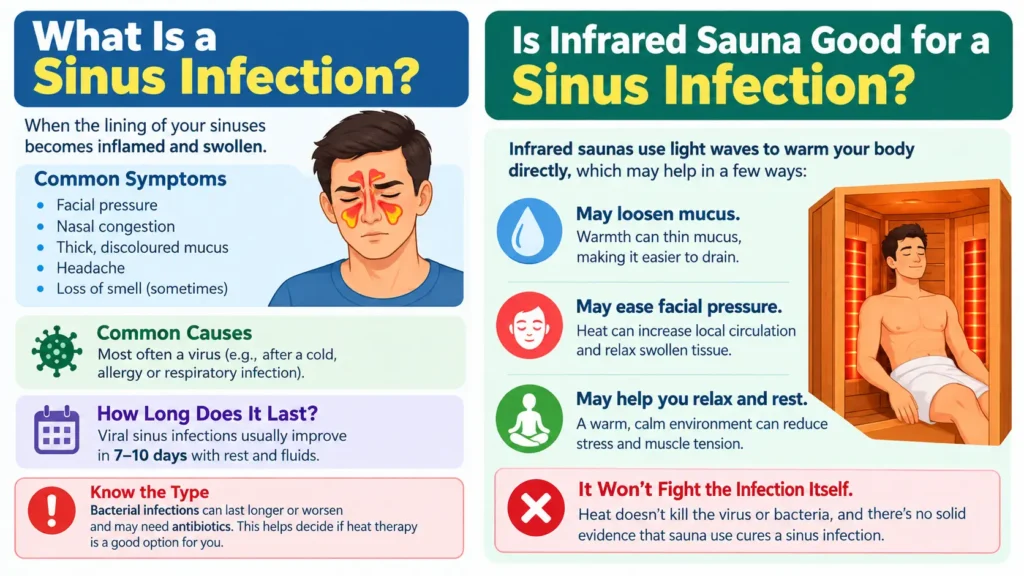
It may loosen mucus. Warm, humid air (and warmed tissue) can thin thickened mucus, making it easier to drain and blow out — the same reason a hot shower or a humidifier can bring temporary relief.
It may ease facial pressure. Heat causes blood vessels near the skin’s surface to widen. Better local circulation can relax tight, swollen tissue around the sinuses and take some of the edge off pressure-related pain.
It may help you relax and rest. Sinus infections are exhausting. A calm, warm environment can lower stress and muscle tension, which won’t cure anything but can make you feel more comfortable while your body does the work of healing.
It will not fight the infection itself. Some sauna marketing claims that raising your body temperature creates an “artificial fever” that boosts immunity. That’s an oversimplification. A real fever is a tightly regulated immune response — voluntarily sitting in heat isn’t the same physiological event, and there’s no solid clinical evidence that sauna use shortens or cures a sinus infection.



Paid Links - As an Amazon Associate, I earn from qualifying purchases.
What Does the Research Actually Say?
This is where a lot of sauna companies overstate the evidence, so it’s worth being direct: there is very little research specifically testing infrared saunas on sinus infections. Most of what’s cited is either about general heat therapy, traditional Finnish saunas, or steam inhalation for upper respiratory symptoms — not infrared light on sinusitis specifically.
What we do know from related research:
- A widely cited 2016 clinical trial published in the Canadian Medical Association Journal looked at steam inhalation for chronic sinus symptoms and found it didn’t meaningfully outperform usual care over the longer term, though many patients reported short-term comfort. Steam inhalation is not the same exposure as sitting in an infrared cabin, but it’s the closest evidence base sauna companies tend to point to.
- A 2018 review in Mayo Clinic Proceedings on sauna bathing found saunas are generally safe for most healthy adults and may support cardiovascular health, but it also lists fever and acute infections as situations where sauna bathing should be avoided.
- No large, peer-reviewed clinical trial has tested infrared sauna sessions as a treatment for acute or chronic sinusitis. If you see a specific percentage (like “reduces inflammation by 30%”) attached to sinus relief on a sauna retailer’s site, treat it with skepticism — it’s very likely a marketing statistic, not a clinical finding.
The honest takeaway: heat and moisture can make congestion feel better in the moment, in the same way a hot drink or steamy bathroom does. That’s a real, reasonable comfort measure — it just isn’t a documented cure.
Risks and When You Should Avoid the Sauna
Heat is a mild physical stressor on your cardiovascular system — your heart rate rises, your blood vessels dilate, and you lose fluid through sweat. When you’re already fighting an infection, that added load matters more than usual.
| Situation | Why it’s a concern | What to do instead |
|---|---|---|
| You have a fever | Adding external heat on top of a fever raises the risk of overheating and dehydration | Wait until your temperature is back to normal |
| Severe congestion with facial pain/swelling, vision changes, or a fever above 101.5°F (38.6°C) | These can signal a more serious infection needing medical care | See a doctor promptly instead of using heat therapy |
| You feel dehydrated, dizzy, or very fatigued from being sick | Sauna sweating compounds fluid loss | Rest and rehydrate first |
| You have heart disease, uncontrolled high blood pressure, or a history of fainting | Heat exposure adds cardiovascular strain | Get medical clearance before any sauna use |
| You’re pregnant | Elevated core body temperature is generally advised against, especially in the first trimester | Ask your OB before using any sauna |
| You’ve been drinking alcohol or taking sedatives | These impair your ability to sense overheating | Never combine sauna use with alcohol |
| You’re on medications like diuretics, beta-blockers, or certain antihistamines | These can affect hydration or heat regulation | Ask your pharmacist or doctor first |
If none of these apply and you just have ordinary, mild sinus congestion from a cold, a short, well-hydrated sauna session is a low-risk comfort option for most healthy adults.
Infrared Sauna vs. Steam Sauna vs. Traditional Sauna for Congestion
| Type | How it heats you | Humidity | Best for sinus comfort? |
|---|---|---|---|
| Infrared sauna | Direct light-based heat on the body; air stays cooler (roughly 120–140°F / 49–60°C) | Low/dry | Gentle warmth; easier to tolerate longer, but dry air alone doesn’t loosen mucus as directly as moisture does |
| Traditional (Finnish) sauna | Heats the surrounding air (150–195°F / 65–90°C) | Low, unless water is added to rocks | More intense heat; can feel harsher on breathing passages if very dry |
| Steam room / steam sauna | Heats air with wet steam | Very high | Often the most immediately soothing for congestion because moist heat directly hydrates nasal passages |
If your main goal is short-term decongestion, a humid steam room or a warm shower with the door closed may actually bring more noticeable relief than a dry infrared cabin. Infrared saunas shine more for relaxation, muscle recovery, and lower-intensity heat exposure, sinus relief is a secondary, mild benefit at best.
How to Use an Infrared Sauna Safely When You Have Sinus Congestion
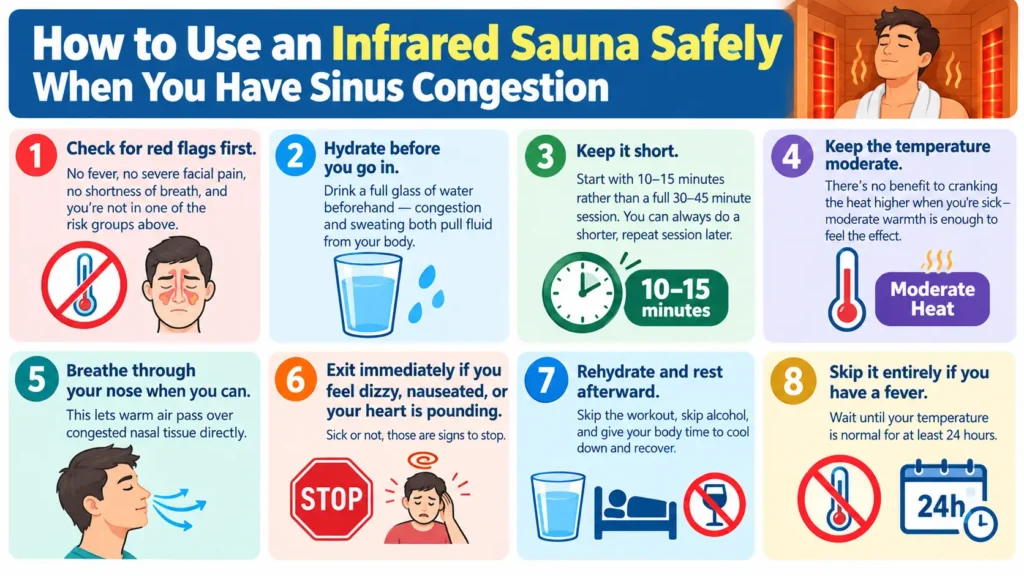
- Check for red flags first. No fever, no severe facial pain, no shortness of breath, and you’re not in one of the risk groups above.
- Hydrate before you go in. Drink a full glass of water beforehand — congestion and sweating both pull fluid from your body.
- Keep it short. Start with 10–15 minutes rather than a full 30–45 minute session. You can always do a shorter, repeat session later.
- Keep the temperature moderate. There’s no benefit to cranking the heat higher when you’re sick — moderate warmth is enough to feel the effect.
- Breathe through your nose when you can. This lets warm air pass over congested nasal tissue directly.
- Exit immediately if you feel dizzy, nauseated, or your heart is pounding. Sick or not, those are signs to stop.
- Rehydrate and rest afterward. Skip the workout, skip alcohol, and give your body time to cool down and recover.
- Skip it entirely if you have a fever. Wait until your temperature is normal for at least 24 hours.
When to See a Doctor Instead of Reaching for the Sauna
Heat therapy is a comfort measure, not a substitute for medical care. Contact a healthcare provider if you have:
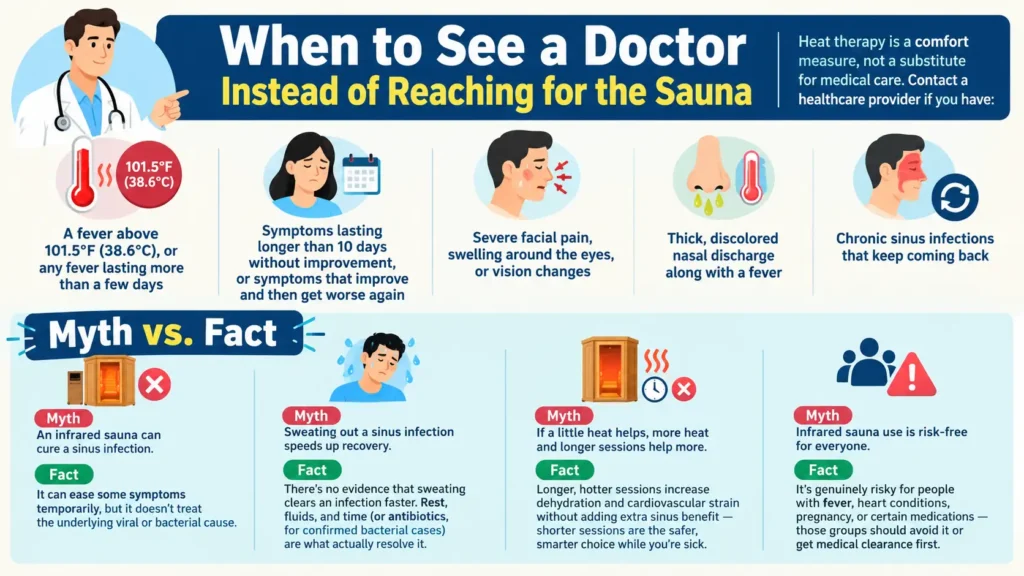
- A fever above 101.5°F (38.6°C), or any fever lasting more than a few days
- Symptoms lasting longer than 10 days without improvement, or symptoms that improve and then get worse again
- Severe facial pain, swelling around the eyes, or vision changes
- Thick, discolored nasal discharge along with a fever
- Chronic sinus infections that keep coming back
Myth vs. Fact
Myth: An infrared sauna can cure a sinus infection. Fact: It can ease some symptoms temporarily, but it doesn’t treat the underlying viral or bacterial cause.
Myth: Sweating out a sinus infection speeds up recovery. Fact: There’s no evidence that sweating clears an infection faster. Rest, fluids, and time (or antibiotics, for confirmed bacterial cases) are what actually resolve it.
Myth: If a little heat helps, more heat and longer sessions help more. Fact: Longer, hotter sessions increase dehydration and cardiovascular strain without adding extra sinus benefit — shorter sessions are the safer, smarter choice while you’re sick.
Myth: Infrared sauna use is risk-free for everyone. Fact: It’s genuinely risky for people with fever, heart conditions, pregnancy, or certain medications — those groups should avoid it or get medical clearance first.
Frequently Asked Questions
Is it OK to use an infrared sauna with a sinus infection?
This depends on your symptoms. For people who are not ill with underlying heart or health issues, and who do not have a fever, a brief, well-hydrated session is usually safe if they are experiencing mild congestion. If you are feeling unwell or have a temperature, miss it until you are better.
Can an infrared sauna get rid of a sinus infection faster?
No. No clinical studies have shown that using a sauna can reduce the duration of a sinus infection. It can help relieve congestion and pressure in the short term, but the infection must be allowed to take its course or treated medically if it is bacterial.
Is infrared sauna better than a steam room for sinus congestion?
Not necessarily. Steam rooms humidify the air directly, and many people find this more immediately soothing to congestion. Infrared saunas provide a more mild and dry heat, which is easier to endure for longer periods but does not have the same effect on the nasal passages.
How long should I stay in an infrared sauna if I’m sick?
Try to keep sessions short (about 10 to 15 minutes) instead of a regular full-length session. Listen to your body and leave early if you feel unwell.
Does infrared sauna use exacerbate a sinus infection?
Yes, if you are dehydrated, have a fever, or ignore symptoms of dizziness or discomfort. When heat stress occurs in combination with an infection, it may make you feel even worse.
If I have a fever due to a sinus infection, should I avoid the sauna?
Yes. Taking extra heat when already feverish can lead to overheating and dehydration. Wait until your temperature is normal for 24 hours.
Does infrared sauna help sinus infections caused by allergies?
The same general comfort effects apply — warmth can help temporarily relieve congestion — but sauna use does not treat the allergic trigger. More targeted options include antihistamines, allergen avoidance, and nasal rinses.
Is it safe to use an infrared sauna when suffering from a sinus infection and high blood pressure?
Always consult your doctor first. When exposed to heat, your heart rate increases and blood pressure changes, and when coupled with an active infection, it puts additional stress on your cardiovascular system.
Which is better for a sinus infection, dry heat or wet heat?
Moist heat (steam, hot shower, humidifier) is more directly effective at thinning the mucus because it is adding moisture to the air that you are breathing. Dry infrared heat is softer and not as immediately hydrating.
Will an infrared sauna help with a sinus headache?
The heat and relaxation may help alleviate sinus pressure and headache pain caused by tension in some individuals, but the results are not permanent and will only last for a short time.
Can I use an infrared sauna every day when I have a sinus infection?
For healthy adults, short daily sessions are generally okay if you are symptom appropriate (no fever, reasonably well). If you feel more tired than better, stop or slow down.
Are infrared saunas safe for pregnant women who suffer from sinus congestion?
This should be discussed with an OB-GYN first. Sauna use is not recommended for any level of congestion during pregnancy, particularly in the first trimester, because of the risk of elevated core body temperature.
If I have a bacterial sinus infection, what should I do instead of a sauna?
Visit a health care provider for evaluation. Bacterial sinusitis may need antibiotics, and heat therapy alone won’t resolve the underlying infection.
Final Thoughts
Is Infrared Sauna Good for a Sinus Infection? If you have mild sinus congestion, as long as you do not have a fever or any condition that makes it unsafe to be in heat, and you stay hydrated and keep your time in the infrared sauna short, it can be a safe and comfortable way to relieve congestion.
It’s worth being clear-eyed about what it can’t do: it won’t cure a sinus infection, and it’s not a substitute for medical care if your symptoms are severe, prolonged, or getting worse. Use the heat for what it’s good for—temporary comfort and relaxation—and allow rest, fluids and (as necessary) your doctor to do the rest.