
Choosing between an infrared sauna dome, a cabin and a blanket usually starts with the wrong question. Most buyers ask which format is best, when the question that decides everything is much simpler: which format fits your space, your room and the way you actually live?
All three formats use infrared heat, but they ask very different things of your home. A cabin wants a permanent corner and standing height. A dome wants a bed-length spot on the floor and stays out between sessions. A blanket wants almost nothing at all, folding away into a cupboard when you are done. This guide compares the three side by side through that space-first lens, so you can rule formats in or out before you fall for a model that cannot fit through your door.
Please Read This First: A Short Disclaimer
This article is for general information only and is not medical advice. Infrared saunas are wellness tools, not treatments. They do not cure, prevent or treat any condition, and no format can promise detox results or guaranteed weight loss.
If you are pregnant, live with a heart or circulation condition or low blood pressure, or take medication that affects heat tolerance, check with a doctor before using a sauna. The build and electrical guidance here is general information only: check your local code and permit rules, follow the manufacturer’s instructions, and use a licensed electrician for any installation work.


Paid Links - As an Amazon Associate, I earn from qualifying purchases.
The safety basics apply to every format. Hydrate before and after, start with short sessions, leave immediately if you feel dizzy or unwell, and do not drink alcohol before or during a session.
The Short Answer: Pick by Space First, Format Second
If you have almost no spare space and need something that disappears after each session, the blanket is the only format that truly does that. If you have a bed-length floor area but no spare standing room, a dome gives you a lie-down sauna experience without asking for a cabin’s corner. If you have a permanent corner, full standing height and room you are happy to give over to a sauna, a cabin gives you the most comfortable, shareable, sit-up experience of the three.



Paid Links - As an Amazon Associate, I earn from qualifying purchases.
That ranking flips as soon as your home changes. Renters, movers and small-flat dwellers often find the blanket or dome far more practical than a cabin, even if they prefer the idea of a cabin. People with a spare room they can dedicate to wellness usually find the cabin wins on comfort and routine, because it is always there, always ready, and never needs to be unfolded or set up.
What Each Format Actually Is
The Dome: A Lie-Down Shell With Your Head Out
An infrared sauna dome is a rigid, shell-like unit you lie inside, usually on a mat on the floor, with your head outside the dome. Infrared panels in the shell warm your body while your head stays in normal room air, which many people find more comfortable than a fully enclosed space. Most domes are a single bulky piece: they do not fold, and they are not designed to be packed away between sessions.
The dome’s space bargain is distinctive. It needs no standing height at all, because you lie flat, but it does need a clear bed-length patch of floor that stays devoted to it. That makes it a strong fit for a bedroom or spare room with floor space to spare, and a poor fit for a home where every square of floor is already in use.
The Cabin: A Small Sit-Up Room of Your Own
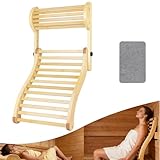
An infrared sauna cabin is a small wooden enclosure with infrared panels on the walls, a bench to sit on, and usually a glass door. You sit upright inside while the panels warm your body and the cabin air, which feels closest to a traditional sauna visit brought into the home. Cabins are built for regular, repeated use and become a permanent part of the room they stand in.


Paid Links - As an Amazon Associate, I earn from qualifying purchases.
The cabin asks the most of your home. It needs a dedicated corner, full standing height, a delivery path wide enough to get its panels or assembled unit into the room, and a suitable power supply. In return it offers the most room to sit comfortably, change position, and — in larger models — share a session. If you want to compare the cabin against the blanket in more depth, including cost per use, see our sauna blanket vs infrared sauna cabin guide.
The Blanket: Infrared Heat That Folds Away
A sauna blanket is a wrap-around mat with infrared heating elements inside. You lie down on a bed or sofa, wrap it around your body, and it warms you directly, with your head left outside. Afterwards you wipe it down, fold it away, and the room goes back to normal.
The blanket’s space bargain is the simplest of the three: it borrows a bed or sofa for the session and a cupboard the rest of the time. That makes it the natural starting point for renters, small flats, and anyone who is not yet sure infrared heat is for them. Its trade-off is experience rather than space: it is a solo, lie-down session, not a sit-up sauna room you can share.
Dome vs Cabin vs Blanket: The Space Comparison
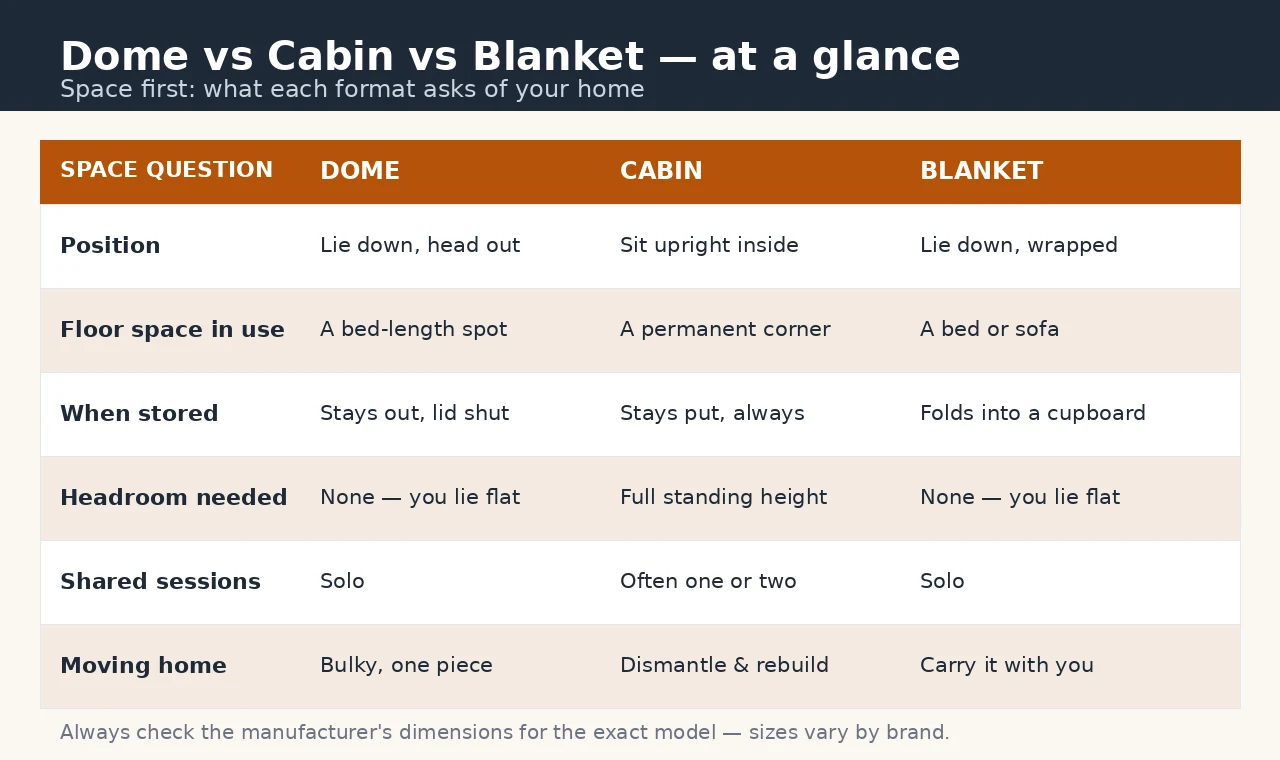
The table below is the heart of this guide. Read it as a set of space questions, not a league table: the format that wins is the one whose demands your home can meet without a fight.
| Space question | Dome | Cabin | Blanket |
|---|---|---|---|
| Position | Lie down, head out | Sit upright inside | Lie down, wrapped |
| Floor space in use | A bed-length spot | A permanent corner | A bed or sofa |
| When stored | Stays out, lid shut | Stays put, always | Folds into a cupboard |
| Headroom needed | None — you lie flat | Full standing height | None — you lie flat |
| Shared sessions | Solo | Often one or two people | Solo |
| Moving home | Bulky, one piece | Dismantle and rebuild | Carry it with you |
Two rows deserve a second look. Headroom is the dome’s quiet superpower: rooms with low or sloping ceilings that could never hold a cabin can often hold a dome, because nobody stands up inside it. Storage is the blanket’s: a format that folds away does not compete with furniture, guests or daily life for floor space, which is why it suits homes where space is the binding constraint.
Footprint, Headroom and Storage: The Three Space Tests
Every format passes or fails on three tests, and they are worth applying in order. First, footprint: the floor area the format occupies while you use it. A cabin’s footprint is permanent, a dome’s is a bed-length patch that stays claimed, and a blanket’s is borrowed from furniture you already own. If a format’s footprint collides with a door swing, a walkway or a bed you need every night, it fails this test no matter how good it looks.
Second, headroom and ceiling shape. Cabins need full standing height, plus clearance for assembly, so low ceilings, beams and sloping attic roofs can rule them out entirely. Domes and blankets sidestep this test completely, which is why they keep appearing in rooms cabins cannot enter. Always measure the ceiling at the exact spot, not just the room’s headline height, and remember door frames and light fittings.
Third, storage and the room between sessions. A blanket lives in a cupboard. A dome lives where you use it, lid shut, looking like a piece of equipment in the room. A cabin lives where it stands, permanently. Be honest about which of those you will tolerate for months: a dome that annoys you every time you walk past it will get used less than a blanket you barely notice, however much you liked the dome on day one.
Which Room Fits Which Format?
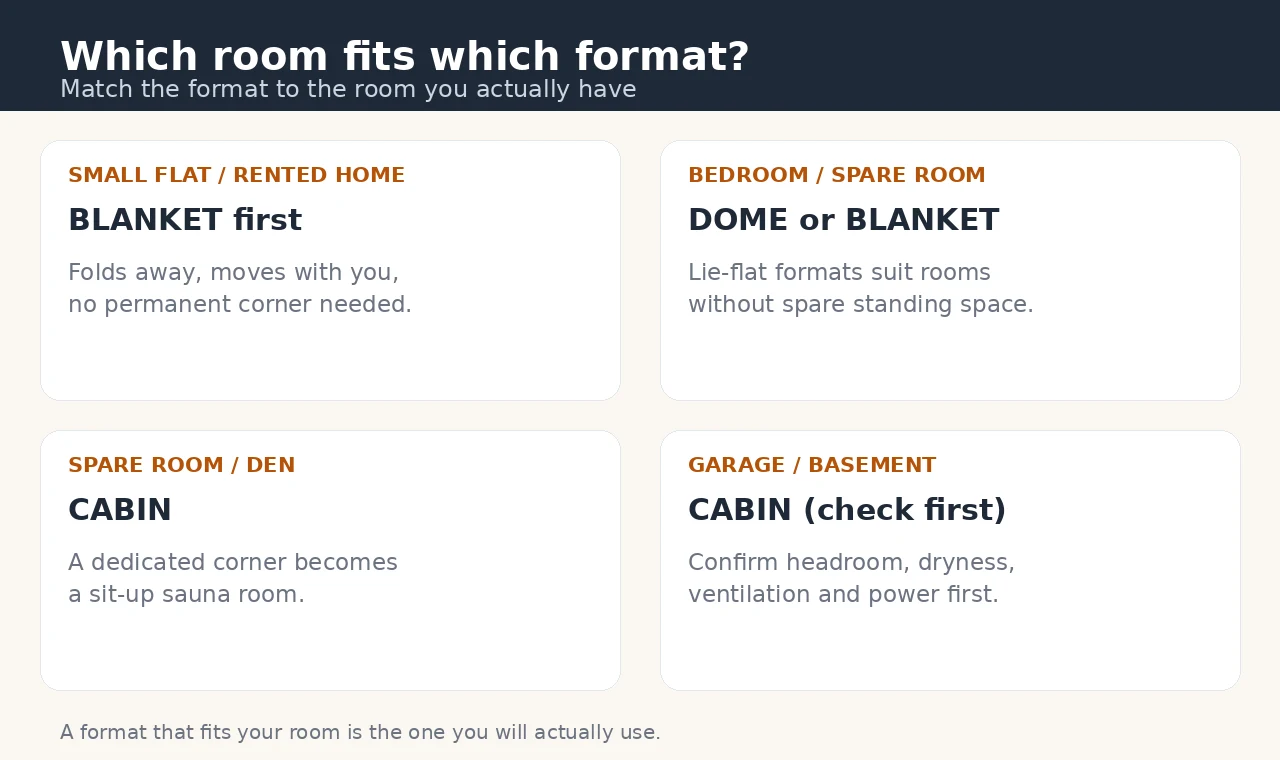
Small Flat or Rented Home: Blanket First, Dome Second
In a small flat, the blanket is usually the only format that asks nothing permanent of the home. It needs no landlord permission for installation in the way a fixed cabin might, it moves with you, and it stores away when guests visit. Check your tenancy terms and the manufacturer’s guidance before buying any format, but the blanket’s footprint argument is hard to beat here.
A dome can work in a flat only if one room has a bed-length floor area you are happy to keep claimed. That is a bigger commitment than it sounds in a small home, where floor space is the scarcest resource. A cabin in a small flat is rarely practical: it needs a permanent corner, delivery access and a power supply that the flat may not offer without work.
Bedroom or Spare Room: Where Domes Earn Their Keep
Bedrooms and spare rooms are the dome’s natural home. They already have a bed-length scale of floor, they are private, and they do not need standing-height clearance for a lie-down unit. A dome beside a bed or in a spare-room corner turns an underused patch of floor into a regular sauna spot without rebuilding the room.
A spare room can also host a small cabin, and this is where the choice gets interesting. If the room is genuinely spare and you want a sit-up, shareable sauna, the cabin’s comfort may win. If the room still doubles as a guest room or office, the dome or blanket keeps the room flexible. Ask which job the room must still do, and let that answer choose the format.
Spare Room, Den or Dedicated Wellness Corner: Cabin Territory
When a room can be given over to the sauna, the cabin comes into its own. It rewards a permanent corner with the most comfortable sessions of the three, room to sit upright and breathe, and — in two-person models — shared downtime. Corner cabins deserve a special look here: our guide to the two-person corner infrared sauna shows how a corner shape can make a cabin fit rooms that a standard rectangle cannot.
Garage or Basement: Possible for Cabins, With Checks First
Garages and basements tempt buyers with space, but they bring their own checks. Confirm headroom, dryness, ventilation and airflow, a suitable floor, and the power supply before assuming a cabin will work there. Damp or poorly ventilated spaces are a poor home for a wooden cabin, and a cold, draughty garage changes the session experience entirely. Domes and blankets can suit these rooms too, but only if the room is dry, clean and comfortable enough to lie down in.
The Measure-First Checklist: Five Checks Before You Order
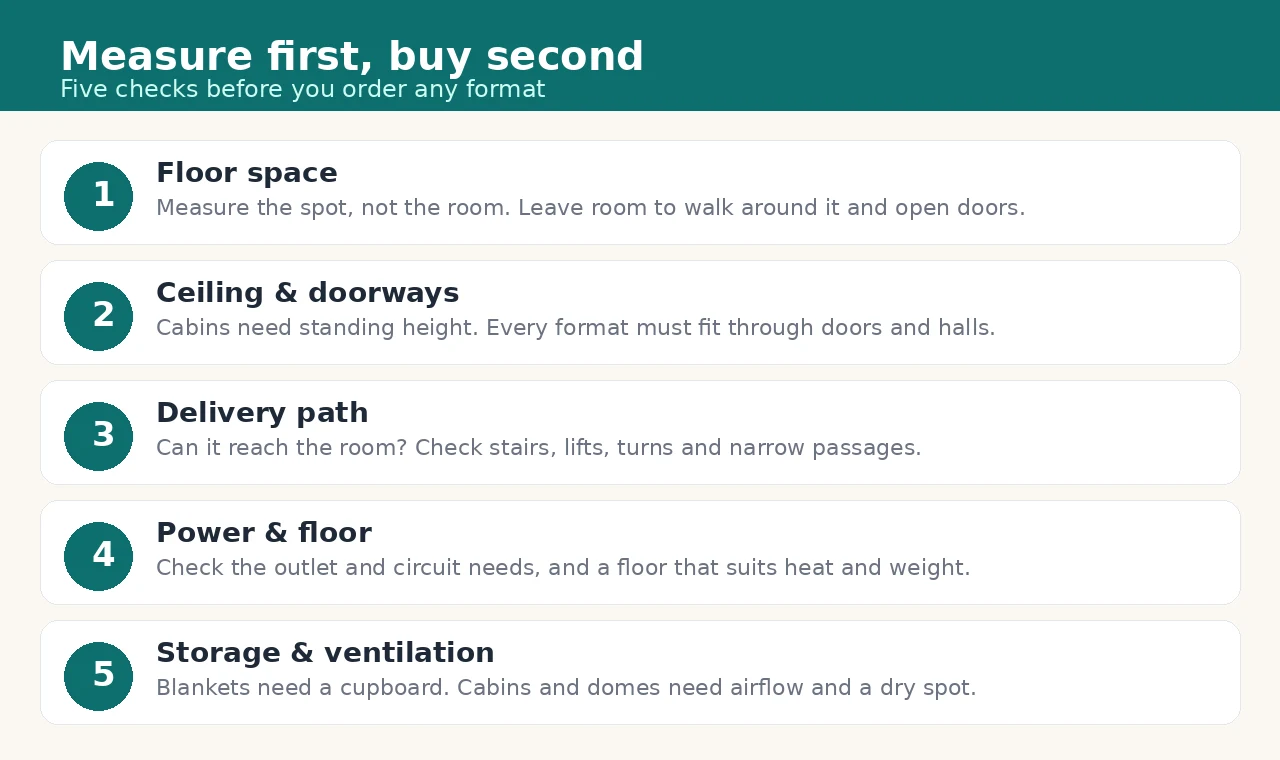
Measure the spot, not the room. A room can sound large while its only usable corner is small, blocked by a radiator, or crossed by a door swing. Mark the format’s footprint on the floor with tape, using the manufacturer’s dimensions for the exact model, and live with that outline for a day before ordering.
- Floor space. Measure the exact spot, including room to walk around the unit and open its door or lid.
- Ceiling and doorways. Check standing height for a cabin, and door, hall and stair widths for every format’s delivery path.
- Delivery path. Confirm the unit — or its largest panel — can reach the room, including stairs, lifts and tight turns.
- Power and floor. Check the outlet and circuit requirements on the product listing, and a floor suited to heat and weight.
- Storage and ventilation. Blankets need a cupboard; cabins and domes need airflow and a dry, comfortable spot.
Power deserves emphasis, because it quietly rules formats out. Some cabins need a dedicated circuit or a higher-capacity outlet, and that means a licensed electrician, not an extension lead and hope. Check the manufacturer’s requirements, your local code, and get a professional assessment before you buy, not after the unit arrives. The same caution applies to any new wiring for a dome or blanket setup that goes beyond a standard outlet.
Comfort, Routine and the Format You Will Actually Use
Space decides what fits, but comfort decides what gets used. A cabin you love but rarely enter is worse value than a blanket you reach for regularly. Sit-up comfort, room to stretch, and a dedicated ritual all favour the cabin. Lying down with your head free favours the dome and blanket, and people who dislike enclosed spaces often prefer them for exactly that reason.
Think about setup friction too. A cabin is ready the moment you open its door. A dome needs you to lie down and close the shell, which is quick but still a small ritual. A blanket needs unfolding, laying out and wrapping, then wiping and folding afterwards. None of these steps is hard, but small frictions add up across dozens of sessions, so choose the routine you can picture yourself repeating.
Shared use is the cabin’s clearest comfort win. Domes and blankets are solo by design, so a household where two people want to sauna together will outgrow them quickly. If shared sessions matter, that alone can settle the choice, provided the cabin passes the space tests above. For a different three-way shape comparison — this time for outdoor styles — see our barrel vs cabin vs pod sauna guide.
Who Should Choose Which?
Choose a dome if you have a bed-length floor area to keep, want to lie down with your head out, and do not need to share sessions or fold the unit away. It suits bedrooms and spare rooms, low ceilings, and buyers who want more presence than a blanket without giving a room over to a cabin.
Choose a cabin if you have a permanent corner with full standing height, a delivery path that works, and a suitable power supply — and you want the most comfortable, regular, shareable sauna of the three. If the cabin will be app-controlled, read our smart infrared sauna safety guide before switching on remote start.
Choose a blanket if space is tight, you rent or move often, you want the lowest-commitment way to try regular infrared sessions, or you need a format that vanishes into a cupboard between uses. It is also the sensible pick if you prefer lying down, dislike enclosed spaces, or are still deciding whether infrared heat suits you at all.
Sauna Safety Basics for Every Format
Whichever format you choose, the same safety basics apply. Drink water before and after your session, and keep early sessions short while you learn how your body responds to the heat. Leave immediately if you feel dizzy, nauseous or unwell, and cool down gradually.
Do not drink alcohol before or during a sauna session, since alcohol and heat together raise the risk of dizziness and dehydration. If you are pregnant, live with a heart or circulation condition, have low blood pressure, or take medication that affects how you handle heat, check with your doctor before using a sauna. Saunas are wellness tools for relaxation and enjoyment, not treatments for illness.
Frequently Asked Questions
Which infrared sauna format needs the least space?
The blanket needs the least space. It borrows a bed or sofa for the session and folds into a cupboard afterwards, so it needs no permanent floor area at all.
Does an infrared sauna dome need headroom?
No. You lie flat inside a dome with your head outside it, so it needs no standing height. It does need a clear bed-length patch of floor that stays devoted to it.
Is an infrared sauna dome the same as a sauna blanket?
No. A dome is a rigid shell you lie inside, while a blanket is a flexible wrap that goes around your body. A dome stays out between sessions, while a blanket folds away for storage.
Can I put an infrared sauna cabin in a flat?
It depends on the flat. A cabin needs a permanent corner, full standing height, a delivery path that fits its panels, and a suitable power supply. Check your tenancy terms, the manufacturer’s requirements and your local code first, and use a licensed electrician for any new wiring.
Which format is best for two people?
The cabin. Domes and blankets are solo by design, while larger cabins are built for one or two people to sit upright and share a session.
What should I measure before buying any infrared sauna format?
Measure the exact floor spot, the ceiling height at that spot, every doorway and turn on the delivery path, and the storage space for a blanket or the permanent corner for a cabin. Check the power requirements on the product listing before you order.
The format that fits your space is the format you will actually use. Measure honestly, picture the unit in the room between sessions as well as during them, and let the room — not the brochure — make the final call.