
After a hard training session, a long run, or a week of heavy lifting, the same question comes up again and again. Should you climb into an infrared sauna or sink into a hot tub? Both feel good. Both promise faster recovery.
Both are sold as the perfect way to unwind after exercise. The honest answer is that they work in different ways, and the right choice depends on what your body needs, how much space and money you have, and how you like to recover.
This guide compares infrared sauna vs hot tub use for recovery, side by side. You will find out how each one heats your body, what each one does well, what each one cannot do, what each one costs to buy and to run, and how to fit either one into a sensible recovery routine. Every figure here is a planning estimate for 2026, not a quote, and prices vary by brand, region, and installer.
Please note: This article is general information, not medical advice. Infrared saunas and hot tubs are wellness tools, not treatments. Hydrate before and after each session, start with short sessions, and leave right away if you feel dizzy or unwell. Do not drink alcohol before or during a session. If you are pregnant, live with a heart or circulation condition, have low blood pressure, or take medication that affects how you handle heat, check with a doctor first.


#Paid Links
The Short Answer: Infrared Sauna vs Hot Tub at a Glance
If you want dry, gentle heat that you can use often, that heats up in minutes, and that costs little to run, an infrared sauna is usually the easier pick. If you want warm water, buoyancy, and the feeling of your muscles floating while jets work on tight spots, a hot tub is hard to beat.
Neither one is a cure. Neither one replaces sleep, food, or rest days. Both can support recovery when they are used sensibly.



#Paid Links
The simplest way to decide is to think about what bothers you most after training. Sore, stiff muscles that feel better when they are warm and loose often respond well to either option. Swollen joints or a body that feels heavy and tired often feel better in warm water, because the water takes your weight. A person who wants a quick daily heat session before bed often finds an infrared sauna easier to fit into a routine, because there is no water to balance and no chemicals to manage.
- Choose an infrared sauna if you want dry heat, fast heat up times, low running costs, and a small footprint indoors.
- Choose a hot tub if you want warm water soaking, buoyancy for aching joints, massage jets, and a social way to relax.
- Use both if you have access to both, and alternate them across the week rather than stacking long sessions of each on the same day.
How an Infrared Sauna Heats Your Body
An infrared sauna does not heat the air the way a traditional sauna does. Instead, infrared panels send out radiant heat that warms your skin and the surface of your body directly. The air inside the cabin stays cooler than a traditional sauna, which is why many people find infrared heat easier to sit in for 20 to 40 minutes at a time.
A typical home infrared sauna runs at about 110 to 140 degrees Fahrenheit, or about 43 to 60 degrees Celsius. That range is a typical operating range, not a target you must hit. Many users start at the lower end and only turn the heat up as they get used to it. The cabin usually heats up in 10 to 20 minutes, and some smaller models are ready even sooner.
What the heat feels like
Infrared heat feels like warm sunshine on your skin rather than the heavy, steamy air of a traditional sauna. You sweat, often quite a lot, but the air stays breathable. That makes it a popular choice for people who find very hot saunas uncomfortable or hard to breathe in. You can read, listen to music, or simply sit quietly while the panels warm you.



#Paid Links
Why people use it for recovery
People use infrared saunas after training because gentle heat can help muscles feel looser and more relaxed. Users often report that stiffness eases, that they feel calmer, and that they sleep better after an evening session. The research on infrared saunas and recovery is limited, and most of the stronger sauna studies looked at traditional dry saunas rather than infrared models, so it is best to treat these benefits as promising rather than proven.
If you want the fuller picture on how heat relates to sore muscles, our guide to infrared sauna for muscle recovery looks at the topic in more depth, including timing and session length after different kinds of training.
How a Hot Tub Heats Your Body
A hot tub heats your body in a very different way. You sit in warm water, usually between 100 and 104 degrees Fahrenheit, or about 38 to 40 degrees Celsius, and the water warms you from the outside in. The water also lifts some of your body weight, which is why sore knees, hips, and lower backs often feel better the moment you step in.
What the soak feels like
Hot tub water feels soft and supportive. Your muscles stop holding you up, your joints get a break, and the warmth spreads slowly through your whole body. Most people soak for 15 to 30 minutes. Longer soaks can leave you feeling light headed or overheated, so it is wise to keep sessions short and to drink water before and after.
Why people use it for recovery
People use hot tubs after training because warm water soaking is linked in user reports to looser muscles, less stiffness, and a calmer mood. The buoyancy effect is real and simple. When water supports your weight, the load on sore joints drops, and tight muscles can relax. Jets add gentle pressure that many people find soothing on the neck, shoulders, and lower back.
Heat Compared: Dry Radiant Heat vs Warm Water
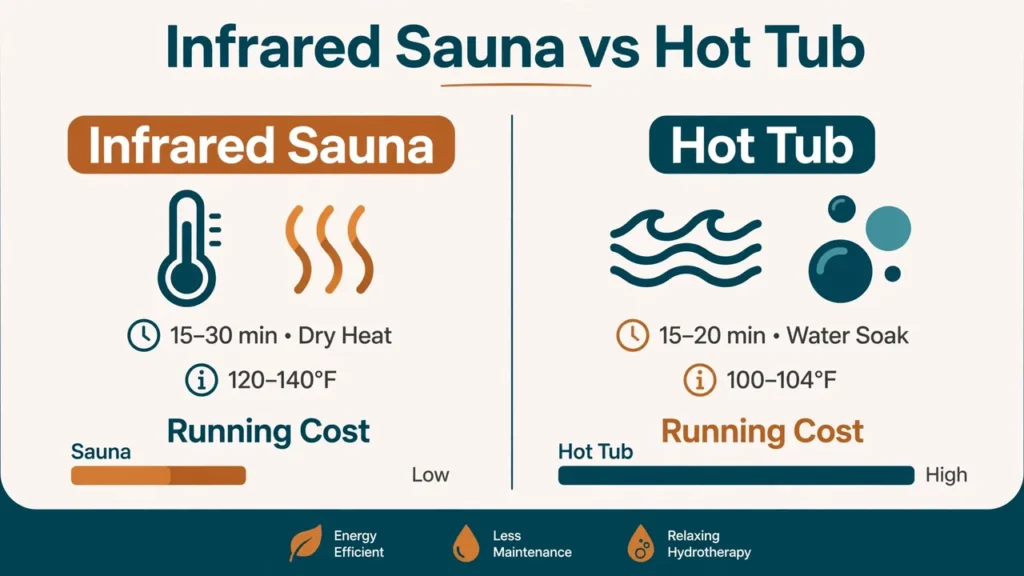
The core difference between an infrared sauna and a hot tub is the way heat reaches your body. An infrared sauna warms you with dry radiant heat in air. A hot tub warms you with water that surrounds you completely. That one difference shapes everything else, from how fast you warm up to how you feel afterwards.
| Factor | Infrared sauna | Hot tub |
|---|---|---|
| How heat reaches you | Dry radiant heat from panels warms your skin directly | Warm water surrounds your body and warms you evenly |
| Typical temperature | About 110 to 140 F (43 to 60 C) air temperature | About 100 to 104 F (38 to 40 C) water temperature |
| Heat up time | About 10 to 20 minutes from cold | Hours from cold, or kept hot around the clock |
| Typical session length | About 20 to 40 minutes | About 15 to 30 minutes |
| Buoyancy and joint relief | None, you sit on a bench | Yes, water supports much of your body weight |
| Massage effect | None, heat only | Yes, jets push warm water against muscles |
| Moisture | Dry air, no steam | Full water immersion, humid air above the tub |
| Best for | Quick daily heat, gentle sweating, evening wind down | Soaking sore joints, relaxing muscles, social use |
What Recovery Actually Means After Training
Recovery is not one thing. It is several processes happening at once. Muscles repair tiny damage from training. The nervous system calms down after effort.
Sleep quality affects how well you bounce back. Stress hormones settle. Fluid and food replace what you used. Heat can support some of these processes, but it cannot do the job on its own.
The three things heat can help with
- Relaxation. Warmth helps muscles loosen and helps the mind slow down after effort, which makes it easier to rest.
- Blood flow. Heat widens blood vessels near the skin, which users often link to a feeling of warmth spreading through tired muscles.
- Sleep. A gentle rise and then fall in body temperature after an evening heat session is linked in user reports to easier sleep, which in turn supports recovery.
Muscle Soreness and Stiffness: Which One Helps More?
Delayed onset muscle soreness, the ache that peaks a day or two after a hard workout, is the most common reason people reach for heat. Both an infrared sauna and a hot tub can make sore muscles feel better in the moment. The difference is in how that relief arrives and how long it seems to last.
An infrared sauna tends to help with general stiffness. The dry heat warms the surface of the body, sweat flows, and muscles feel looser as you sit. Many users say the effect is gentle and even, and that they feel warm for a while after stepping out. Because the heat is mild, you can use an infrared sauna more often, even daily, as long as you stay hydrated and keep sessions short.
A hot tub tends to help more with specific sore spots. Jets aimed at the lower back, shoulders, or calves give a focused feeling that a sauna cannot match.
Buoyancy also matters. When your body weight is supported by water, sore joints and tired legs get a real break. People with aching knees or a stiff lower back often say the hot tub gives faster relief, even if the effect fades sooner after they get out.
Timing matters as well. Using heat right after a very hard session can feel good, but some people prefer to wait an hour or two, eat, drink water, and then take a gentle heat session. Our guide on infrared sauna before or after workout covers the timing question in detail, including when to use heat and when to rest instead.
Sleep and Relaxation After Evening Sessions
Sleep is where recovery really happens, and both options can help you get there. A warm session in the evening raises your body temperature, and the cool down afterwards is linked in user reports to drowsiness and easier sleep. That cool down effect is one of the most consistent things people report about evening heat, in both saunas and hot tubs.
An infrared sauna fits an evening routine well because it is quick and dry. You can take a 20 to 30 minute session, shower, and be in bed an hour later without feeling damp or chilled. Many users say the dry heat leaves them calm rather than sleepy in the moment, and that sleep comes more easily once they cool down. If evening sessions interest you, our guide to infrared sauna for better sleep explains timing, session length, and the cool down step in more detail.
A hot tub can feel more sedating in the moment, because warm water and buoyancy relax the whole body at once. Some people find they feel drowsy the moment they step out, which is pleasant if bedtime is near. Others find the warm water leaves them feeling heavy or a little groggy. Either way, it is best to finish a hot tub session at least 30 to 60 minutes before bed, so your body temperature has time to settle and you are not still overheated when you lie down.
A Recovery Session, Step by Step
Whichever option you choose, a good recovery session follows the same simple pattern. Cool down first, hydrate, take a gentle heat session, cool down again, and then eat and rest. The steps below work for an infrared sauna, with the hot tub notes in brackets where the routine differs.
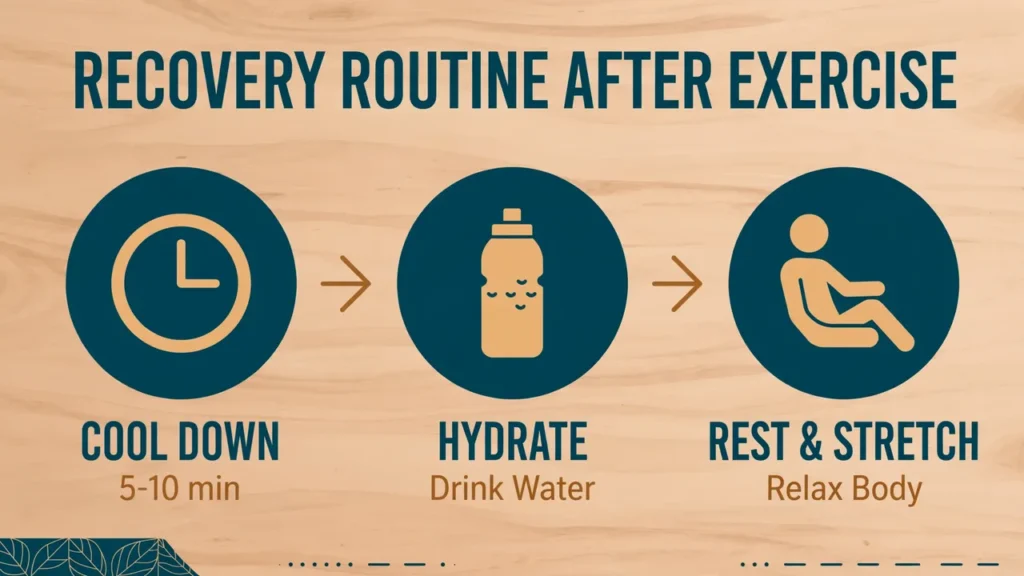
- Finish your workout and cool down for 5 to 10 minutes. Walk, stretch lightly, and let your breathing settle before you add heat.
- Drink water before you start. Have a glass of water nearby during the session too, and sip as you go.
- Shower quickly. A short rinse removes sweat and, for a hot tub, keeps the water cleaner.
- Take a short heat session. Aim for 20 to 30 minutes in an infrared sauna, or 15 to 20 minutes in a hot tub, and stop sooner if you feel dizzy, sick, or too hot.
- Cool down slowly. Sit or lie down for a few minutes, let your body temperature fall, and drink more water.
- Eat and rest. A meal with protein and carbohydrate, plus a good night of sleep, does more for recovery than any extra heat session.
Hydration deserves a special note, because both options make you lose fluid. An infrared sauna makes you sweat. A hot tub makes you sweat too, even though you are sitting in water, and it is easy to forget that because you feel wet already. Our infrared sauna hydration guide explains how much to drink before and after a session, and the signs that you need more fluid.
How often should you use heat for recovery?
Most people do well with three to five gentle sessions a week, rather than a long session every day. Your body needs rest days too. If you train hard five days a week, you might use heat on three of those days and skip it on the others. If you feel tired, run down, or unusually sore, take a day off from heat as well as from training.
Running Costs: What Each One Costs to Use
Running cost is where an infrared sauna and a hot tub differ the most. An infrared sauna only uses power while it is heating up and running. A hot tub uses power all day to keep its water warm, plus water, chemicals, and filters. Over a year, that gap adds up to a real difference in your bills.
All figures in this section are planning estimates for 2026, not quotes. Electricity prices vary by region and tariff, and actual costs depend on your model, your climate, and how often you use it. Treat the numbers below as a way to compare the two options, not as a promise of what you will pay.
| Running cost factor | Infrared sauna | Hot tub |
|---|---|---|
| Power use while running | About 1.5 to 2 kW for a typical 2 person cabin | Heater and pumps draw power, plus standby heating all day |
| Typical cost per session | Roughly 10 to 30 US cents per 30 minute session at typical residential rates | Harder to price per soak, because the tub heats water around the clock |
| Typical monthly running cost | Roughly 3 to 10 US dollars a month for regular use | Roughly 30 to 100 US dollars a month, depending on climate and insulation |
| Water use | None, apart from drinking water and a shower | Regular top ups plus a full water change every few months |
| Chemicals and filters | None | Sanitizer, pH balancers, and replacement filters through the year |
| Energy when idle | Zero when switched off | Steady use to hold water temperature |
A worked example makes the gap clear. Take a typical two person infrared sauna rated at about 1.5 kW. A 30 minute session uses about 0.75 kWh of electricity.
At a typical residential rate, that works out to roughly 10 to 20 US cents per session. Use it four times a week, and the monthly cost stays in the low single digits in dollars.
If running costs matter to you, the infrared sauna wins clearly. If you love soaking and you are happy to pay for the comfort, the hot tub can still be worth it. Just go in with your eyes open about the monthly bill. For a closer look at sauna running costs on their own, see our guide to how much it costs to run an infrared sauna.
Upfront Cost and Installation
Upfront cost is the second big practical difference. A home infrared sauna is a self contained cabin that arrives in panels, slots together, and plugs into a standard outlet in many cases. A hot tub is a large, heavy piece of equipment that needs a strong base, a water supply, drainage, and a proper electrical hookup. The install work is not in the same league.
| Upfront factor | Infrared sauna | Hot tub |
|---|---|---|
| Typical purchase price range | About 1,500 to 6,000 US dollars for a home cabin, as a 2026 planning estimate | About 5,000 to 15,000 US dollars for a home model, as a 2026 planning estimate |
| Installation work | Usually simple assembly, often by the owner, with a standard outlet for smaller models | Concrete or reinforced base, licensed electrician, water fill and drainage plan |
| Space needed | About 4 by 4 feet for a 2 person cabin, indoors or in a sheltered spot | About 7 by 7 feet or more, plus access space around the tub |
| Weight and access | Light panels carried in through a normal door | Heavy shell, often needs a crane or several people and a clear path |
| Can it move with you? | Often yes, it can be taken apart and moved | Rarely, moving a hot tub is a major job |
| Permits and codes | Check local rules, but most cabins need no permit | Check local code and permit rules, and use a licensed electrician |
All purchase prices above are planning estimates for 2026, not quotes. Prices vary by brand, size, materials, and retailer, so check current listings and get local quotes before you buy. A small one person infrared cabin costs far less than a large four person model with premium wood and extra features. The same spread applies to hot tubs, where size, jets, insulation, and brand make a large difference.
Space, Maintenance, and Day to Day Life
Infrared sauna: low upkeep, small footprint
An infrared sauna needs a corner of a room, a spare room, a garage, or a sheltered spot outside. A two person cabin takes up about as much floor space as a small wardrobe.
Cleaning is simple. Wipe the benches and floor after use, leave the door open to air it out, and clean the wood now and then with a mild cleaner made for sauna use. There is no water to treat and no filter to change.
Most owners find the weekly upkeep takes only a few minutes. The main jobs are wiping sweat from the benches, keeping the cabin dry, and checking the panels and controls now and then. If you rent your home, an infrared sauna is also easier to live with, because it can often be taken apart and moved when you leave. Our guide on renting vs buying an infrared sauna covers the practical questions for renters, including landlord permission and moving costs.
Hot tub: more space, more weekly care
A hot tub needs a solid outdoor spot with room around it for access, a cover lifter, and steps. It also needs a water source for filling and a place for drained water to go. Inside, the tub needs a floor that can handle splashes and humidity, which rules out many rooms unless they are built for it.
Weekly care is real work. You test the water, add sanitizer, balance the pH, clean the filter, and wipe the shell and cover.
Every few months you drain the tub, clean it, and refill it. Skip the water care and the tub can turn cloudy or develop a smell, and the water can irritate skin. People who love soaking usually accept this as part of the deal, but it is worth knowing before you buy.
Safety: Who Should Be Careful With Heat and Soaking
Heat is safe for most healthy adults when it is used gently, but it is not safe for everyone, and it is not safe in every situation. A little caution goes a long way, especially if you are new to heat or you live with a health condition.
- Hydrate first. Drink water before and after every session, and keep water within reach while you sit.
- Start short. Begin with 10 to 15 minutes at a lower setting, and build up only as your body gets used to the heat.
- Leave if you feel unwell. Dizziness, nausea, a racing heart, or feeling faint are signs to get out, cool down, and drink water right away.
- No alcohol. Do not drink alcohol before or during a sauna or hot tub session, as it raises the risk of dehydration and overheating.
- Check with a doctor first if you are pregnant, live with a heart or circulation condition, have low blood pressure, or take medication that affects how you handle heat.
- Keep children safe. Children overheat faster than adults, and hot tubs add a drowning risk, so supervise children closely and keep sessions short and cool.
Which One Should You Choose?
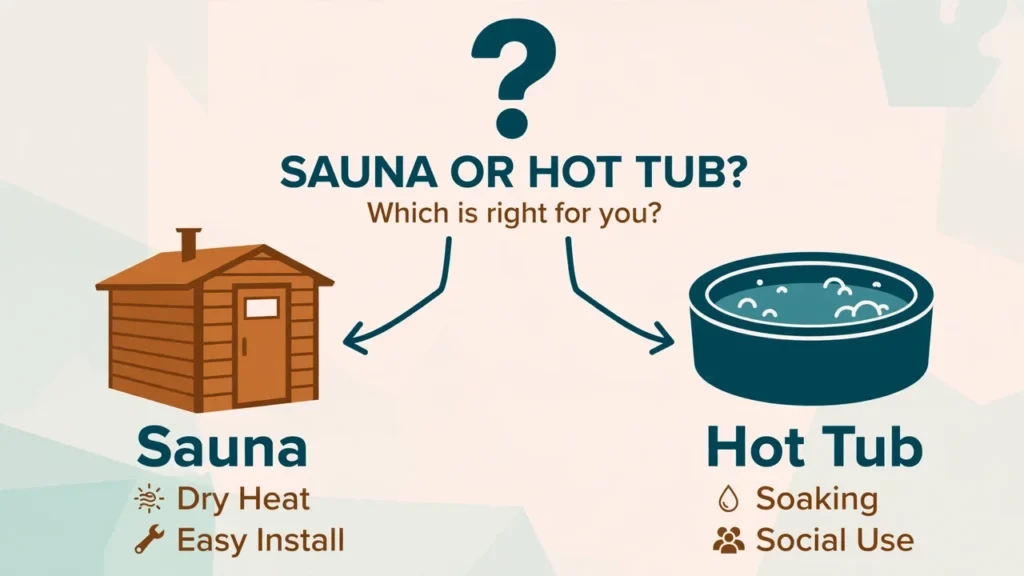
Pick an infrared sauna if you answer yes to most of these
- You want a heat session you can fit into a busy day, with a fast heat up and no water care.
- You live in an apartment or a small home and need something that fits in a corner.
- You want the lowest running costs and the simplest upkeep.
- You like dry heat and find steamy rooms hard to breathe in.
- You rent, or you may move, and you want something you can take with you.
Pick a hot tub if you answer yes to most of these
- Your joints ache and you love the feeling of weightless soaking in warm water.
- You want jets that work on tight shoulders, a sore lower back, or tired calves.
- You have a garden or a strong outdoor spot with room for a tub and its cover.
- You enjoy relaxing with family or friends, and you want a social way to unwind.
- You are happy to test water, add chemicals, and pay a higher monthly running cost.
Can You Use Both an Infrared Sauna and a Hot Tub?
Yes, you can use both, and many athletes and gyms do exactly that. The trick is to use them on different days, or at different times of day, rather than stacking two long heat sessions back to back. Two heat sessions in a row add up to a lot of fluid loss and a lot of time spent overheated, which can leave you more tired rather than more recovered.
One final note on comparisons. If you have already read about steam saunas and hot tubs, you will know that steam brings its own mix of humid heat and moisture care. This article stays focused on infrared heat, which is dry and radiant, because that is the comparison most home buyers are actually making. The steam version of the question is covered in our separate guide to steam sauna vs hot tub, and the two guides reach different conclusions because the heat itself is different.
Frequently Asked Questions
Is an infrared sauna or a hot tub better for muscle recovery?
Both can help sore muscles feel better, but in different ways. An infrared sauna gives gentle dry heat that suits whole body stiffness and fits a quick daily routine. A hot tub gives warm water, buoyancy, and jets that suit aching joints and specific sore spots.
Most people find the hot tub gives faster relief for one painful area, while the sauna is easier to use often. Neither one replaces rest, sleep, and food.
Which costs less to run, an infrared sauna or a hot tub?
An infrared sauna costs far less to run. A typical 30 minute session costs roughly 10 to 30 US cents in electricity at typical residential rates, as a 2026 planning estimate. A hot tub keeps water hot around the clock, so monthly running costs are often estimated at 30 to 100 US dollars, plus water, chemicals, and filters. The exact figures vary by region, tariff, climate, and model.
Can I use an infrared sauna and a hot tub on the same day?
Yes, but keep both sessions short and drink plenty of water. Two long heat sessions in one day can leave you dehydrated and overheated. Most people do better using one on training days and the other on rest days, or spacing them several hours apart. If you feel dizzy or unwell, stop and cool down.
How long should a recovery session last?
Aim for 20 to 30 minutes in an infrared sauna, or 15 to 20 minutes in a hot tub. Beginners should start with 10 to 15 minutes and build up slowly. Longer is not better. Stop sooner if you feel dizzy, sick, or too hot, and always cool down and drink water afterwards.
Is a hot tub or an infrared sauna better for sore knees?
A hot tub is usually the better pick for sore knees, because warm water supports your body weight and takes load off the joint while jets soothe the muscles around it. An infrared sauna can still help with general stiffness around the knee. If a knee is swollen, hot, or painful to move, skip heat and soaking and seek professional advice instead.
Do I need a permit for an infrared sauna or a hot tub?
Rules vary by area, so check with your local permit and code office before you buy. Most small infrared sauna cabins need no permit, though a model that needs a dedicated circuit should be wired by a licensed electrician. A hot tub often needs a proper base and a licensed electrician, and some areas ask for a permit for the electrical work or the base. Never state local rules as fact without checking.
The Bottom Line
An infrared sauna and a hot tub both earn their place in a recovery routine, but they earn it for different reasons. The infrared sauna is the practical choice. It heats up fast, costs little to run, fits in a small space, and needs almost no upkeep. It suits people who want a quick, gentle heat session they can repeat often without thinking about water, chemicals, or bills.
The hot tub is the comfort choice. It wraps you in warm water, lifts the weight off sore joints, and uses jets to work on the spots that hurt most. It costs more to buy and more to run, and it asks for weekly water care, but for many people the feeling of soaking after a hard day is worth every bit of that effort.
Choose the one that fits your home, your budget, and the way you like to recover. Use it gently, hydrate well, keep sessions short, and let sleep and rest do the heavy lifting. That is how heat earns its place in recovery, whichever side of the comparison you land on.