
An outdoor sauna can turn a good rental into a memorable one. Guests remember the quiet heat after a cold day, the steam, the slow evening outside. For a host or landlord, though, a sauna is also a piece of equipment that guests use unsupervised, and that changes the job. You need clear rules, a cleaning routine that holds up between stays, and a basic understanding of where your responsibility begins and ends.
This guide covers the practical side of running an outdoor sauna for rental properties. It looks at guest use, house manual wording, cleaning between guests, damage checks, and liability basics in general terms. It is written for hosts who list on booking platforms and for landlords with longer term tenants, and it assumes a standard wood fired or electric outdoor sauna rather than a specialist commercial setup.
Please read first: This article is general guidance only. It is not legal advice and it is not medical advice. Saunas are wellness tools, not treatments. Rules, insurance terms and permit requirements vary by place, platform and policy, so check with your insurer, your booking platform and your local permit office before you rely on anything here. Guests who are pregnant, live with a heart or circulation condition, or take medication that affects heat tolerance should check with a doctor before using a sauna.


#Paid Links
Why a sauna changes how you run a rental
Most rental amenities are passive. A guest uses a coffee machine or a television and the risk stays low. A sauna is different because heat, water, wood and electricity meet in one small room, and guests use it alone. That combination is exactly why it needs its own rules instead of a single line in the house manual.
A sauna also attracts a particular kind of guest behaviour. People want to try it late at night, after drinks, or for far longer than is sensible on a first visit. Some guests will bring children in, pour water on stones in ways the heater was not built for, or leave wet towels on benches. None of this is malicious. It is simply what happens when guests meet equipment they do not own and have not been shown how to use.
The good news is that most problems are preventable with three things: clear instructions written before arrival, a cleaning and inspection routine after every stay, and a setup that makes safe use the easy option. A timer, a thermometer, a simple rules card on the wall and a clean, dry sauna do more than any long list of warnings.
Set expectations before guests arrive
Guests follow rules they understand. They ignore rules they discover halfway through a stay. Put the sauna information where guests will actually see it: in the listing, in the pre arrival message, and in a short printed card inside the sauna itself. Three short mentions beat one long paragraph buried in a house manual.
What to say in the listing
Your listing should say who the sauna is for and how it works in plain language. Mention the type of sauna, whether it is wood fired or electric, the usual heat up time, and the maximum number of people it seats. If children under a certain age should not use it, say so. If the sauna is shared with other guests or another unit, say that too, because shared use changes cleaning and scheduling.
Be honest about access. If the sauna needs to be booked in time slots, if it is closed on changeover day for cleaning, or if it is unavailable in deep winter, guests would rather know before they book than find out on arrival. Clear limits in the listing also protect you if a guest later claims the amenity was not as described.


#Paid Links
The pre arrival message
A short message a day or two before check in is the best place for the practical details. Keep it to five or six lines: how to start the sauna, how long to wait before entering, the suggested first session length, and where towels are kept. End with one line asking guests to read the rules card inside the sauna before their first session.
This message also does quiet work for liability. When a guest has been told the rules in writing before arrival, there is a clear record that the information was shared. Keep the message short enough that guests actually read it, and keep a copy of what you sent.
House manual wording you can adapt
Your house manual should carry the full version of the sauna rules. The wording below is a starting point, not a legal document, and you should adapt it to your sauna type, your platform rules and local guidance. Keep the tone friendly and direct, and keep each rule to one sentence where you can.
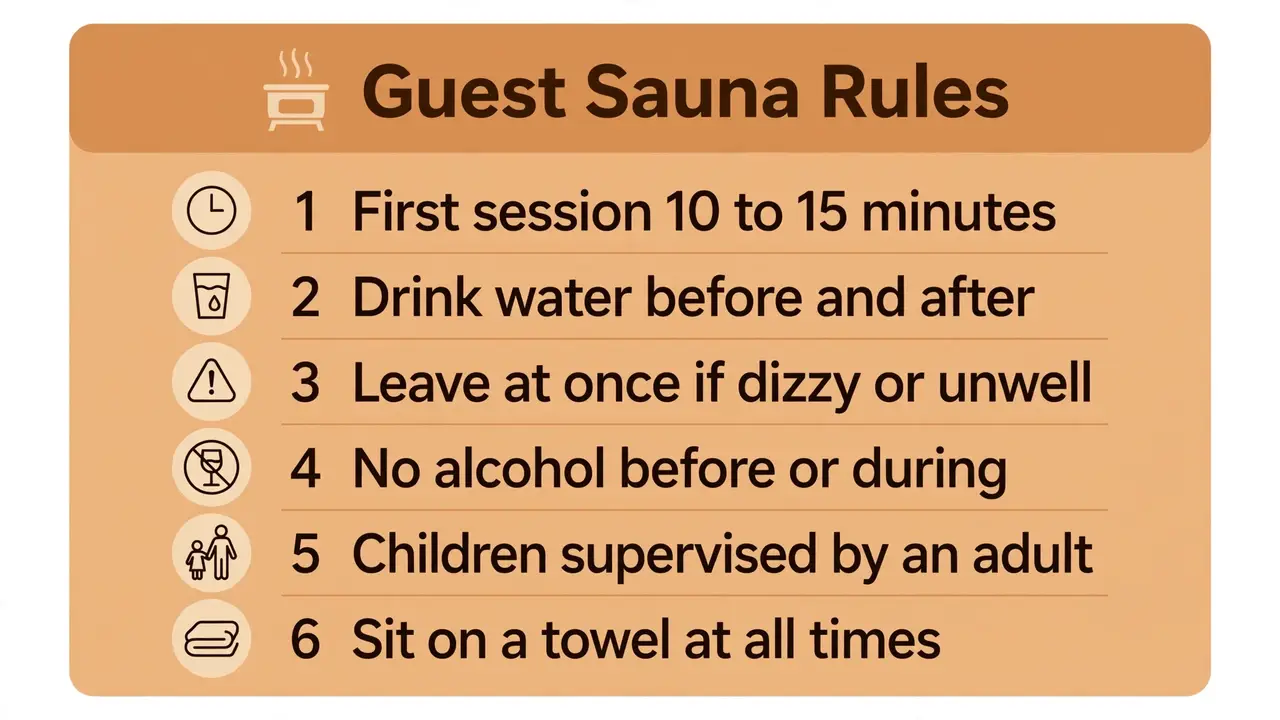
- Please shower before entering the sauna and sit on a towel at all times.
- First sessions should be short, around 10 to 15 minutes, with a cool down break before a second round.
- Drink water before and after your session. Leave the sauna at once if you feel dizzy, unwell or overheated.
- Do not use the sauna after drinking alcohol, and do not bring glass into the sauna.
- Children must be supervised by an adult at all times and should use shorter sessions.
- Please leave the sauna clean and dry for the next guest, and tell us about any damage straight away.
If you host on a platform such as Airbnb, check whether the platform has its own sauna or hot tub rules and make sure your manual matches them. Platform rules can change, and a manual that contradicts them creates confusion for guests and for you. For ideas on how a sauna can add value to a listing, see our guide on whether an outdoor sauna can add value to your home or Airbnb.
Guest rules that keep sessions safe
Safe guest use comes down to a small set of habits. Guests do not need a lecture on physiology. They need clear, simple limits they can remember in the heat: short first sessions, plenty of water, no alcohol, and a clear instruction to get out if they feel unwell. Put these on a card inside the sauna where they can be read at a glance.
Keep first sessions short
Most guests have no idea how long they should stay in. Suggest 10 to 15 minutes for a first session, then a break to cool down and drink water before deciding on a second round. A sand timer or a simple wall clock inside the sauna helps far more than a written warning, because guests can see the time passing.
Longer sessions are a personal choice for experienced sauna users, and you should not present a maximum as a medical rule. What you can do is set a house rule that sessions should be broken up with cooling breaks, and that nobody should fall asleep in the sauna. That wording is practical, easy to follow, and easy to enforce.
Hydration, food and alcohol
Ask guests to drink water before and after a session, and to keep water nearby. A short note in the manual that sauna use on an empty stomach or after a very heavy meal can feel uncomfortable is enough. You do not need to give dietary advice, and you should not.
Alcohol and saunas do not mix. State plainly that guests should not use the sauna after drinking, and do not leave alcohol in or near the sauna area. This is one rule worth repeating in the listing, the pre arrival message and the card on the wall, because it is the rule guests are most likely to test after an evening out.
Health conditions and children
Your rules should ask guests who are pregnant, who live with a heart or circulation condition or low blood pressure, or who take medication that affects heat tolerance, to check with a doctor before using the sauna. You are not giving medical advice by asking this. You are pointing guests towards their own doctor, which is the right place for that decision.
Children need adult supervision at all times in and around a sauna, and shorter sessions than adults. Set a clear minimum age or supervision rule for your property and write it down. If your sauna has a hot stove or heater with exposed surfaces, a guard rail and a clear warning sign matter even more, because children touch things out of curiosity.
Do not allow pets in the sauna. Heat that feels pleasant to an adult can be dangerous for an animal, and animals cannot tell you they are overheating. A single line in the manual covers it.
Heat, steam and the heater
Show guests how to use the heater correctly. For an electric sauna, explain the controls and the timer in two or three sentences. For a wood fired sauna, explain how much wood to use, where the fire is lit, and that the stove should never be left burning unattended. Guests should never be asked to light a fire they have not been shown how to manage safely.
Water on the stones is part of the experience in many traditional saunas, but guests often pour far too much. A small ladle and a short instruction, such as one ladle at a time with a pause between pours, prevents sudden bursts of steam and keeps water off the floor. If your heater manual forbids pouring water on it, say so clearly and remove the ladle so the instruction is obvious. Good outdoor sauna ventilation also matters here, because fresh air keeps the heat comfortable and helps the room dry afterwards.
The between guest cleaning routine
Cleaning is where a rental sauna succeeds or fails. Guests notice a dirty sauna at once, and a damp, uncleaned sauna is where smells and mould start. A consistent routine after every stay, not a deep clean once a month, is what keeps the room fresh and the wood in good condition.
Budget the time honestly. A proper between guest clean of a small outdoor sauna usually takes 20 to 30 minutes once you know the routine, plus drying time. Build that into your changeover schedule rather than treating it as an afterthought, and keep the cleaning supplies in a labelled box near the sauna so nothing gets skipped for lack of equipment.
Step by step: after every guest stay
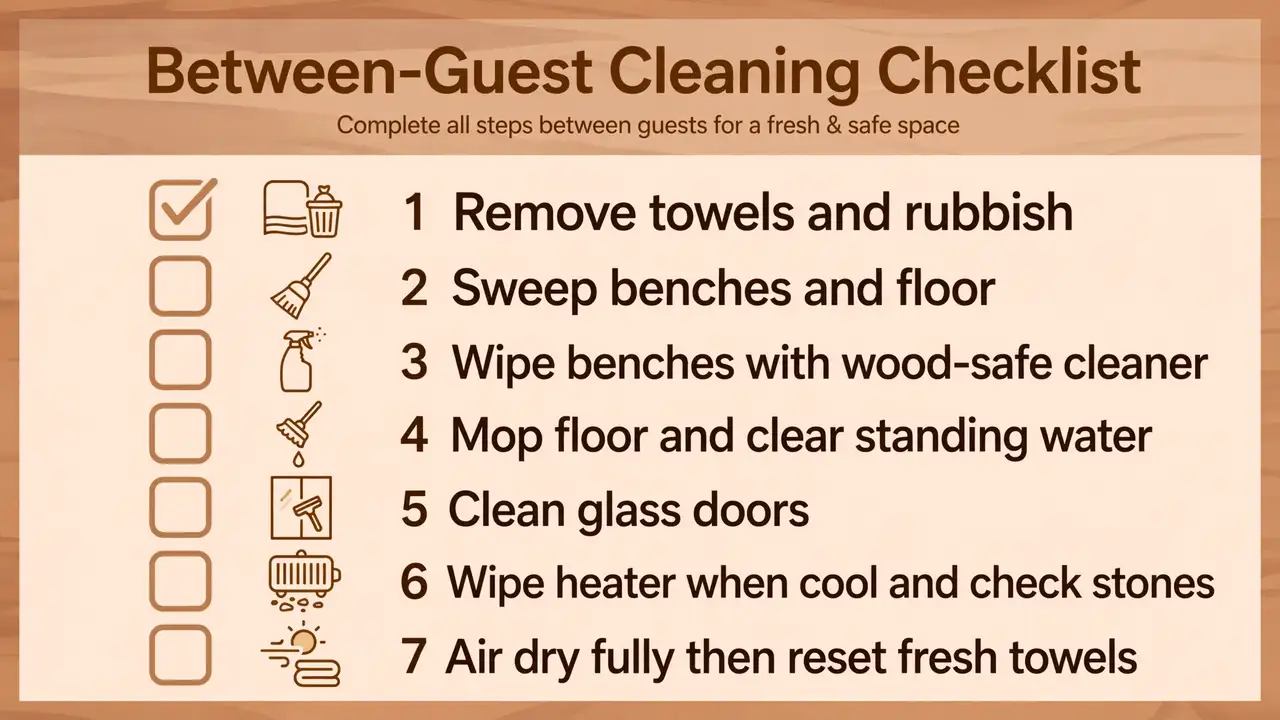
- Remove all towels, rubbish and personal items, and open the door and vents to let fresh air in.
- Sweep the floor and benches to remove leaves, hair and grit, then wipe the benches with a damp cloth and a mild, wood safe cleaner.
- Wipe the floor, including under the benches, and mop up any standing water.
- Clean glass doors and windows with a streak free glass cleaner so the next guest sees a clear view, not fingerprints and steam marks.
- Wipe the heater exterior when cool, check the stones for cracks or crumbling, and clear ash from a wood fired stove.
- Check the bucket, ladle and thermometer, and replace anything that is cracked or missing.
- Leave the door ajar and the vents open until the room is fully dry, then close up and reset fresh towels and the rules card.
Use only cleaners that are safe for sauna wood. Harsh chemicals can leave smells that intensify in the heat, and they can damage the timber over time. A mild soap solution or a cleaner made for sauna wood is usually enough for routine cleaning. Rinse well and let the wood dry fully, because damp wood is where problems begin.
Towels, mats and laundry
Towels are part of the hygiene system, not an optional extra. Provide fresh towels for every stay and ask guests to sit on a towel at all times. Used towels should go straight into the laundry, never back onto a hook for the next guest. If you provide seat mats or headrests, wash them on the same cycle as the towels.
Keep spare towels in the property so a guest who wants a second session does not reuse a damp one. A small note in the sauna asking guests to hang used towels outside the sauna, not on the benches, keeps moisture out of the wood and makes your changeover faster.
Drying and ventilation after cleaning
Drying is the most skipped step and the most important. A sauna that is closed up while still damp will smell musty within days, and mould can follow in humid weather. Leave the door open and the vents working until benches and floor feel dry to the touch, and longer in wet or cold weather. If your sauna has a small heater drying cycle, run it briefly with the door slightly open after cleaning, following the manufacturer instructions.
Check the room again before the next guest arrives. A quick look and a sniff test cost a minute and catch the problems that a checklist misses. If the room still smells damp, give it more air time and check the ventilation before blaming the cleaner. Our guide to outdoor sauna rain, humidity and mould prevention explains how roofing, drainage and airflow work together to keep the structure dry.
Weekly and seasonal deep clean tasks
Between guest cleaning keeps the sauna usable. A weekly and seasonal routine keeps it lasting. Set these tasks on a calendar so they happen even in busy weeks, and keep a short log of when each one was done. A log helps you spot patterns, such as a bench that stains faster than the rest, and it shows a cleaner or property manager exactly what is expected.
- Weekly: sand lightly any stained or rough bench spots with fine sandpaper, following the wood grain, and wipe down the walls.
- Weekly: check and clean the drainage area outside the sauna door so water does not pool against the timber.
- Monthly: inspect the heater elements or stove, clean out ash and soot, and check the chimney or flue if you have a wood fired stove.
- Monthly: check door seals, hinges and handles, and oil or adjust them before they stick or leak heat.
- Seasonally: inspect the roof, exterior cladding and base for water damage, and clear leaves and debris from around the sauna.
- Seasonally: check the stones, replace any that are cracked or crumbling, and restack them loosely so air can move between them.
Seasonal work deserves a proper slot in your diary, not a rushed hour before a guest arrives. Autumn is a good time to check the roof and weatherproofing before winter, and spring is a good time to inspect for winter damage and refresh the exterior. Our outdoor sauna maintenance calendar gives a month by month version of this routine if you want a ready made schedule to follow.
Damage and wear checks after every stay
Every changeover is also an inspection. Walk the sauna slowly, look at the benches, the floor, the heater and the door, and note anything that has changed since the last stay. Small damage caught early is a cheap repair. The same damage found months later is often a replacement.
What to look for
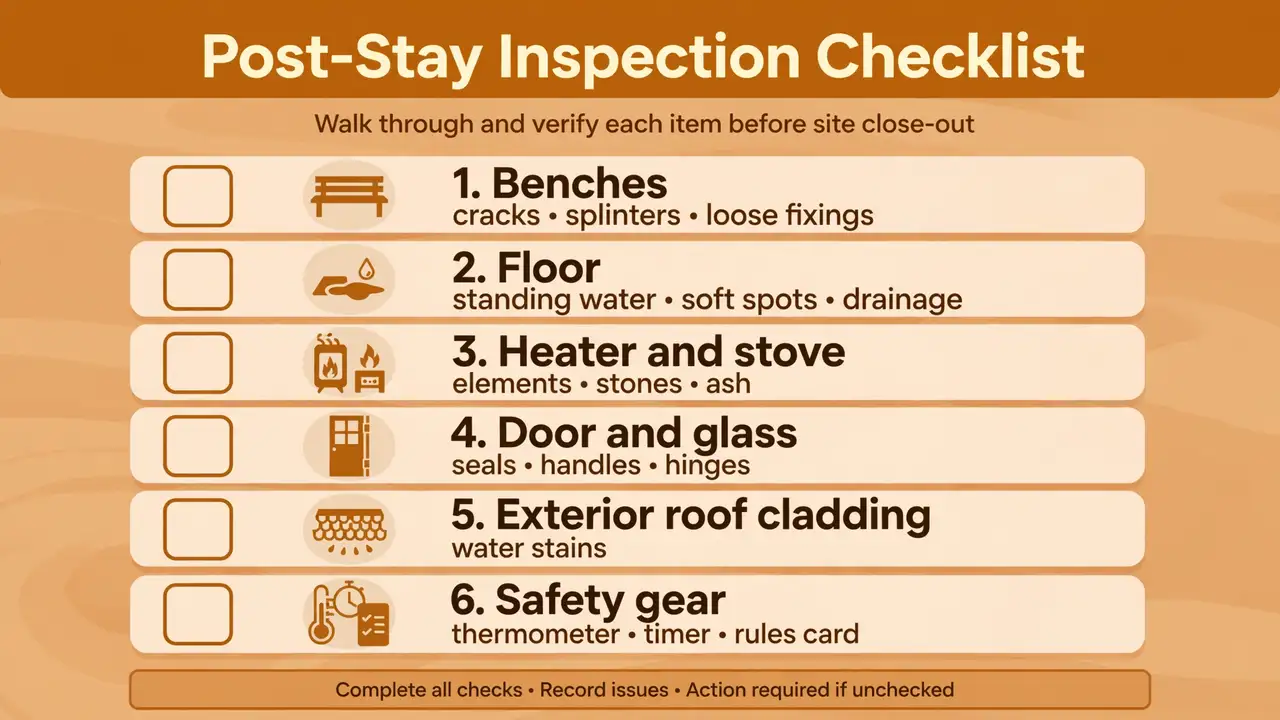
- Benches: cracks, splinters, loose fixings, stains that will not clean off, and wobble when pressed.
- Floor: standing water, soft spots, warped boards, and drainage that is slow or blocked.
- Heater and stove: damaged elements, cracked stones, ash build up, a door that does not close, and any scorch marks near the stove.
- Door and glass: seals that have come loose, cracked panes, handles that stick, and hinges that sag.
- Exterior: roof damage, loose cladding, water stains on the walls, and vegetation touching the structure.
- Safety equipment: thermometer and timer working, rules card present and readable, fire extinguisher in date if you provide one, and the path to the sauna clear and lit.
Handling damage and guest reports
Ask guests to report damage as soon as they notice it, and make it easy to do so. A line in the manual and a message after check out are enough. When a guest reports something, thank them, take a photo, and decide whether the sauna is safe to use before the next guest arrives. If you are unsure, close the sauna until it has been checked. A closed sauna disappoints one booking. An unsafe sauna risks far more.
Keep a simple record of damage and repairs with dates and photos. This helps with insurance claims, with platform disputes, and with your own maintenance planning. It also helps you decide when a repair is a wear and tear cost you should absorb, and when it is damage you can reasonably raise with a guest through the platform process.
For minor wear such as a stained bench or a worn door seal, fix it between stays and move on. For anything involving the heater, the electrics, the flue or the structure, bring in a qualified professional rather than improvising. Our guide to outdoor sauna security and weatherproofing also covers locks, covers and storm preparation, which protect the sauna between stays as well as during them.
Liability basics for hosts and landlords
Liability is the part of this topic that worries hosts most, and it is also the part where general articles must be most careful. No article can tell you what your insurance covers or what the law says in your area. What it can do is explain the areas to check, so you can have informed conversations with your insurer, your platform and a local professional.
Talk to your insurer before you list the sauna
Start with your insurance. Tell your insurer that the property has an outdoor sauna used by guests, and ask what your policy covers and what it excludes. Some policies treat a sauna as part of the building, others treat guest use of heat equipment as a separate risk, and some require specific safety features before cover applies. Do not assume your standard landlord or homeowner policy covers guest sauna use.
Ask in writing, keep the reply, and ask what would happen if a guest were injured or if the sauna caused a fire. If your insurer asks for changes, such as a guard rail, a timer, or a professional installation certificate, treat those as conditions of cover and complete them before the next booking. If you change insurer or policy, repeat the conversation rather than assuming the new policy matches the old one.
Platform rules and guest agreements
Booking platforms have their own rules for amenities such as saunas and hot tubs. Some require safety information in the listing, some require specific disclosures, and some limit what you can claim about an amenity. Read the platform rules that apply to your listing and keep your listing, your manual and your messages consistent with them.
For longer term tenancies, the tenancy agreement is the place to record sauna use. A short clause that names the sauna, states the house rules, and says who is responsible for cleaning and reporting damage gives both sides clarity. Have a local professional review any clause you add rather than copying wording from another country or another type of property.
Permits, local code and installation
Whether an outdoor sauna needs a permit depends on where you live, how large it is, how it is heated, and whether it is a permanent structure. Do not take a general article as an answer. Check with your local permit or building office, and keep any approval or written confirmation on file. If you are buying or building a sauna for a rental, ask the question before you build, not after.
Electrical and plumbing work should be done by licensed professionals, and gas or wood fired installations need a qualified installer too. Keep certificates and invoices, because insurers and platforms may ask for them. Our guide on whether you need a permit for an outdoor sauna explains the questions to ask your local office, and our outdoor sauna cost guide covers the budget side of a new installation.
Waivers, signs and record keeping
Some hosts ask guests to sign a waiver before using the sauna. Whether a waiver has any effect depends on local law and on how it is written, so do not rely on a downloaded template. If you want to use one, have a local professional draft or review it, and keep signed copies with your booking records.
Warning signs inside the sauna are a simpler and more reliable step. A clear sign with the key rules, placed where guests can read it before sitting down, supports safe use and shows that the rules were visible. Record keeping matters just as much: keep copies of your rules, your cleaning log, your inspection notes and your insurer correspondence, because those records are what you will reach for if anything is ever questioned.
What to do when something goes wrong
Even with good rules, things go wrong. A guest feels faint, a heater stops working, a bench cracks, or water leaks onto the floor. Having a simple plan in advance means you respond calmly instead of improvising under pressure. Write the plan down, keep it in the property, and make sure anyone who manages the property for you knows it.
- If a guest feels unwell, they should leave the sauna at once, cool down, drink water and rest. If symptoms do not pass quickly, or if the guest loses consciousness, call emergency services and follow their instructions.
- Close the sauna until you know what happened and whether it is safe to use again.
- Take photos and notes while the details are fresh, including times and what the guest reported.
- Contact your insurer promptly if there is an injury or significant damage, and follow their process for reporting.
- Do not restart a faulty heater, stove or electrical fitting yourself. Use a qualified professional.
- Tell the next guest honestly if the sauna will be closed, and offer what you can in return, such as a partial refund or an alternative.
Keep a first aid kit and a phone with signal near the sauna area, and make sure the address of the property is written where a guest can find it in an emergency. These are small steps, but they are the ones that matter most when minutes count.
A simple host checklist for every stay
Running a rental sauna is a routine, not a project. The hosts who do it well are not the ones with the most expensive sauna. They are the ones with a routine they actually follow: rules shared before arrival, a clean and dry sauna for every guest, a quick inspection at every changeover, and records kept up to date. Build the routine once, write it down, and let it run.
- Before arrival: rules sent, towels ready, sauna clean and dry, rules card in place.
- During the stay: guests use the sauna in short sessions, with water nearby and no alcohol.
- After check out: full clean, damage check, drying time, and notes logged.
- Weekly and seasonally: deeper cleaning, heater and roof checks, and stone and seal inspection.
- Yearly: insurer conversation, platform rules check, permit and certificate review.
If you are still choosing a sauna for a rental, think about durability and simplicity as much as looks. A robust heater, easy to clean benches, a reliable door and clear controls will save you more time over a season than a stylish feature that guests struggle to use. And if you share facilities with other guests, the hygiene and etiquette ideas in our guide to steam sauna hygiene and etiquette in hotels and gyms are a useful cross check, even though that guide covers shared steam rooms rather than a private outdoor sauna.
Frequently asked questions
Can guests use an outdoor sauna at a rental property?
Yes, guests can use an outdoor sauna at a rental property when the host provides clear rules and keeps the sauna clean and well maintained. Set out who may use it, how long first sessions should last, and what to do if someone feels unwell. Check your insurance, your booking platform rules and your local permit office before you offer it as an amenity.
How should I clean an outdoor sauna between guests?
Remove towels and rubbish, sweep the benches and floor, wipe benches and floors with a mild wood safe cleaner, clean the glass, wipe the heater when cool, and check the bucket and ladle. Leave the door open and the vents working until the room is fully dry before the next guest arrives. Fresh towels should be provided for every stay.
What guest rules should I include for a rental sauna?
Include short first sessions of around 10 to 15 minutes, drinking water before and after, leaving the sauna at once if dizzy or unwell, no alcohol before or during use, adult supervision for children, and sitting on a towel at all times. Ask guests who are pregnant, live with a heart or circulation condition, or take medication affecting heat tolerance to check with a doctor first.
Do I need extra insurance for a sauna at a rental property?
You should ask your insurer directly, because cover varies by policy, place and property type. Tell them the sauna is used by guests and ask what is covered, what is excluded, and whether any safety features or certificates are required. Keep the reply in writing and repeat the conversation if you change insurer or policy.
Do I need a permit for an outdoor sauna at a rental?
Permit rules vary by place, sauna size, heating type and whether the structure is permanent. Check with your local permit or building office before you build or list the sauna, and keep any approval in writing. Electrical, plumbing and wood fired installations should be handled by licensed professionals.
What should I do if a guest damages the sauna?
Ask guests to report damage straight away, take photos, and decide whether the sauna is safe to use before the next guest arrives. Close it if you are unsure and have a qualified professional check anything involving the heater, electrics or structure. Keep a dated record of the damage and the repair, and follow your platform process for any guest charge.