
Winter changes the way an infrared sauna feels, and it changes the way you should use one. Cold air, dry indoor heat, short days, and long evenings all shape your routine. A session that felt easy in July can feel very different in January, when you step out of a warm cabin into a cold hallway and your body has to adjust all over again.
That is why a cold season routine matters more than a single session tip. An infrared sauna in winter works best as a steady habit, with short starter sessions, a warm room, enough water, and a regular time of day. This guide builds that habit step by step, so you can enjoy the warmth without pushing too hard on a cold, tired, or unwell day.
You will find a four week starter ladder, a sample weekly schedule, a preheating plan for a cold room, and clear guidance on what to do when you feel a cold coming on and when you are actually ill. Everything here is general wellness guidance. It is not a treatment plan, and it does not replace advice from your own doctor.
Please read first: this is not medical advice. Saunas are wellness tools, not treatments. If you are pregnant, live with a heart or circulation condition or low blood pressure, or take medication that affects heat tolerance, check with a doctor before using an infrared sauna. Stop a session at once if you feel dizzy, faint, nauseous, or unwell, and seek medical help if symptoms do not pass quickly.


Paid Links - As an Amazon Associate, I earn from qualifying purchases.
Key takeaways
- Start short in winter, then build up slowly over four weeks.
- Preheat the cabin and the room around it before you step in.
- Drink water before and after every session, and eat a light snack if you feel shaky.
- Use the sauna earlier in the evening when you want better sleep.
- Skip the sauna when you have a fever, flu symptoms, or feel faint.
- Keep the routine steady at three to four sessions a week rather than daily marathons.
Why Winter Changes Your Infrared Sauna Routine
Cold weather cools your skin, your hands, and your feet before you even reach the sauna. Your body then has to warm up from a lower starting point, which is one reason a winter session can feel slower to get going. The cabin itself may also start colder, especially in a garage, basement, or spare room that is not heated all day.
Dry winter air adds another factor. Heated indoor air holds little moisture, and a sauna session adds sweating on top of that. You may not notice thirst as quickly in winter as you do in summer, yet you still lose fluid. That is why hydration needs a deliberate place in a winter routine rather than being left to chance.


Paid Links - As an Amazon Associate, I earn from qualifying purchases.
Short days matter too. Many people feel lower in mood and energy when daylight shrinks, and sleep can become lighter or less regular. A warm, quiet sauna session can become a useful evening wind down, but only when it is timed well and kept gentle. A late, very hot session that leaves you wired or sweaty is not the same as a calm early evening routine.
Winter also brings more colds and flu, and that changes the decision you make before each session. A sauna does not prevent colds or flu, and it does not cure them. Knowing when to use it, when to shorten it, and when to skip it entirely is one of the most useful parts of a cold season routine.
What a Good Winter Routine Looks Like
A good winter routine has four parts that repeat every week. First, a regular schedule of three to four sessions, with rest days in between. Second, short to moderate session lengths that you increase slowly.
Third, a warm up and cool down that protect you from the cold shock of stepping out. Fourth, simple habits around water, food, light, and sleep that support the routine as a whole.

Paid Links - As an Amazon Associate, I earn from qualifying purchases.
Consistency matters more than intensity. Three calm sessions a week, done the same way each time, will serve most people better than one very long session followed by a week off.
| Part of the routine | Winter aim | What good looks like |
|---|---|---|
| Frequency | Steady, not daily | Three to four sessions a week with rest days |
| Session length | Short to moderate | Start at 10 to 15 minutes and build slowly |
| Preheating | Warm cabin and warm room | Preheat fully and keep the hallway warm |
| Hydration | Before and after | Water before, water after, and a light snack if needed |
| Timing | Earlier in the evening | Finish at least an hour before bed |
| Cool down | Slow and warm | Towel off, dress warmly, and rest for a few minutes |
If you are new to infrared saunas, start at the gentle end of every range in this guide. If you already use one regularly, winter is still a good time to shorten your first few sessions and rebuild, because the cold start changes how your body responds. Listen to how you feel on the day, and treat the numbers here as a starting point, not a target you must hit.
The Four Week Winter Starter Ladder
A ladder works better than a single fixed session length because it lets your body adjust in small steps. Each week adds a few minutes, and each week gives you time to notice how you feel the next morning. If a week feels too much, stay at that level for another week before moving up.
Week one is about learning the cabin. Sit for 10 to 15 minutes at a lower heat setting, and leave as soon as you feel comfortably warm. Do not try to sweat hard in week one. The aim is to finish feeling relaxed, not drained.
Week two adds a little time. Move to 15 to 20 minutes if week one felt easy, and keep the same gentle heat setting. Pay attention to your sleep that night and your energy the next day. If you feel tired or headachy, you may need more water or a shorter session, so go back a step rather than pushing on.
Week three is where most people settle into a comfortable rhythm. Sessions of 20 to 25 minutes feel warm and satisfying without leaving you wiped out. You can raise the heat setting slightly if your manufacturer guide allows it, but only by a small step, and only if you feel good at the lower setting first.
Week four brings you to a full winter session of 25 to 30 minutes. This is a sensible ceiling for most people, and there is no need to go beyond it to get value from the routine. Some people prefer to stay at 20 minutes all winter, and that is a fine choice if it suits them better.

Preheating a Cold Room: Do It Right
Preheating matters more in winter than in any other season. An infrared sauna heats your body directly with radiant heat, but the cabin panels and the bench still need time to warm up. Stepping into a cold cabin and waiting for it to warm around you is uncomfortable, and it tempts people to turn the heat up too high to compensate.
Start the sauna well before your session, and follow the preheat time in your manufacturer guide. Many cabins need 15 to 30 minutes to reach a comfortable starting temperature, and a cabin in a cold garage or basement may need the full time. Use that waiting time to drink water, lay out a towel and warm clothes, and let the room around the sauna warm up too.
Warm the space outside the sauna as well. A cold hallway or bathroom makes the cool down much harder, because you step from warm air into cold air with damp skin. If you can, heat the room for a while before your session, close the door, and keep a warm robe and socks ready for the moment you step out.
Keep the sauna door closed while it preheats, and avoid opening it to check every few minutes. Each opening lets warm air out and adds waiting time.
Session Length and Temperature in Winter
Infrared saunas heat differently from traditional saunas. The air temperature is usually lower, while the panels warm your body directly. That is why the air temperature number on the display does not tell the whole story, and why you should judge a session by how you feel rather than by chasing a high number.
Start at a lower heat setting and a shorter time, then adjust one thing at a time. If you raise the temperature and the time in the same session, you will not know which change made you feel uncomfortable. Change the time first for a week, then the temperature by a small step if you want more warmth.
Your guide to how long you should stay in an infrared sauna gives a fuller picture of session length, and the winter ladder in this article fits inside that guidance. In winter, the same lengths apply, but the warm up is slower and the cool down needs more care, so give yourself extra time at both ends.
For timing, the best time to use an infrared sauna is often late afternoon or early evening in winter, when the session can help you wind down. Morning sessions suit some people too, especially if they like warmth before facing a cold day, but avoid a long hot session right before bed if it leaves you restless.
Listen for early warning signs in every session. Feeling light headed, nauseous, very thirsty, or unusually hot are all reasons to leave at once.
| Experience level | Winter session length | Heat approach |
|---|---|---|
| Brand new | 10 to 15 minutes | Lowest comfortable setting |
| Settling in | 15 to 20 minutes | Same setting, longer time |
| Regular user | 20 to 25 minutes | Small temperature step up if comfortable |
| Experienced | 25 to 30 minutes | Comfortable setting, no need to go hotter |
Never use a sauna to try to sweat out a fever, and never stay in because you feel you should finish the time you planned. The timer is a guide, not a test. Leaving early is always the right choice when your body says so.
A Sample Weekly Winter Routine
A weekly routine removes the daily decision about whether to use the sauna. You know which days are sauna days, which days are rest days, and roughly how long each session will be. That regularity is what turns a nice idea into a habit that lasts until spring.
The sample below uses four sessions a week, with rest days spread between them. It suits a regular user who has finished the starter ladder. If you are still in your first month, use the ladder lengths instead, and keep the same pattern of days.
Monday is a gentle restart after the weekend, with a 20 minute session in the early evening. Tuesday is a rest day, with a walk outside in daylight if you can manage it, because daylight and movement support mood in the dark months.
Wednesday is a midweek session of 20 minutes, again in the early evening, and Thursday is a rest day. Friday brings a slightly longer session of 25 minutes as a wind down at the end of the working week.
Saturday is the longest session of the week at 25 minutes, with no rush to get out and get on with the day. Sunday is a gentle 15 minute session or a full rest day, depending on how you feel.

Adjust this pattern to fit your life. The days matter less than the shape: sessions spread through the week, rest days between them, and the longest session on a day when you are not in a hurry.
Hydration, Food, and Warming Up After a Session
Hydration is the quiet foundation of a winter sauna routine. Drink a glass of water before you step in, and keep water nearby for after. Many people find a second glass after the session, once they have cooled down, works better than gulping a large amount while still very warm.
Winter thirst is easy to miss. Cold air and dry indoor heat can leave you mildly dehydrated without the obvious thirst you feel on a hot summer day. If you often get a headache after a session, or feel tired the next morning, low fluid intake is one of the first things to check, along with session length.
Eat normally before a session, but avoid a heavy meal right beforehand. A light snack an hour or two before is enough for most people, and it helps if you tend to feel shaky when warm. After the session, eat a normal meal when you are hungry, and include some salt in your food if you have sweated a lot, since sweat carries salt away with water.
Avoid alcohol before and during a sauna session. Alcohol affects judgment and heat tolerance, and it adds to dehydration. That risk is higher in winter, when cold air can hide how warm and dehydrated you really are. Save any drink for well after you have cooled down, eaten, and drunk water.
Warming up after a session is just as important as warming up before it. Towel off, put on warm dry clothes, and add socks and a warm layer before you go into a cold part of the house. A warm drink can help, and a few minutes of rest lets your body settle before you go back outside or into a cold car.
If you need to go outside soon after a session, give yourself extra time. Damp hair and damp skin lose heat fast in cold air, so dry off fully, cover your head, and wear a warm coat. A short walk in cold air after a sauna can feel refreshing, but it should be brief and you should be dressed for the weather.
Mood, Light, and Sleep in the Dark Months
Winter mood is shaped by many things, and a sauna is only one small part of the picture. Short days, grey weather, less time outside, and broken sleep can all leave people feeling flat. A regular sauna routine can be a pleasant anchor in the day, but it is not a treatment for low mood, depression, or seasonal affective disorder, and it should never replace professional help when that is needed.
What a sauna can offer is a calm, warm, screen free pause. Sitting quietly in warm light, away from phones and chores, gives many people a sense of rest that is hard to find elsewhere in winter. That pause, repeated a few times a week, can become something to look forward to on dark evenings.
Light matters as well. Try to get outside in daylight when you can, even on cloudy days, and especially in the morning. Keep your home bright in the morning and dimmer in the evening, so your body gets clear signals about day and night.
Sleep is where a winter sauna routine can help most, but timing is the key. A session that ends at least an hour before bed, followed by a slow cool down, suits most people. The gentle drop in body temperature after warming up is often linked with feeling sleepy, and a regular evening routine can support a regular bedtime.
Our guide to using an infrared sauna for better sleep goes deeper into timing and evening habits, and it is worth reading if sleep is your main reason for starting a winter routine. The short version is simple: keep sessions earlier in the evening, keep them moderate, and keep the bedroom cool, dark, and quiet after.
If you use your sauna for stress and relaxation, the same gentle approach applies. A calm session, a slow cool down, and a quiet hour after can feel very different from a rushed session squeezed in late at night. For more on that side of the routine, see our guide to an infrared sauna for anxiety and stress, which covers breathing, pacing, and building a calm habit.
Watch for signs that you need more support than a routine can give. If low mood lasts for weeks, if sleep stays badly broken, or if you lose interest in things you usually enjoy, talk to a doctor or a mental health professional. A sauna can be part of a healthy winter, but it is not a substitute for care.
When You Feel a Cold Coming On
Winter brings a familiar question: should you use the sauna when you feel a cold starting? The honest answer is that there is no proven benefit, and the decision should be guided by how ill you feel and by caution, not by hope that heat will stop the cold.
If you have only a mild sniffle, no fever, and you feel otherwise well, some people choose a short, gentle session or choose to rest instead. Both are reasonable. A short session at a lower setting, with plenty of water, is the gentlest option if you do use the sauna. A rest day with warm drinks and an early night is often the wiser choice, and it costs you nothing.
Do not use a sauna to try to sweat out an illness. Sweating does not remove a virus, and pushing through a session when you are unwell can leave you more dehydrated and more tired. Rest, fluids, and time are the things that help a cold run its course.
When You Are Actually Ill: Skip the Sauna
When you are actually ill, the rule is simple: skip the sauna. Fever, flu symptoms, vomiting, diarrhoea, a bad cough, or feeling faint are all clear reasons to stay out. Your body is already working hard to fight illness, and adding heat stress does not help it.
A fever deserves special care. Never use a sauna to sweat out a fever, because heat can raise your body temperature further and increase fluid loss. Rest in a comfortable room, drink fluids, and follow advice from a doctor or pharmacist about fever care. Return to the sauna only when you have been free of fever and feeling well for at least a day, and restart with a short, gentle session.
Flu is another clear no. Flu often brings fever, aches, and exhaustion, and it can affect breathing and the heart. Even after the worst days pass, give yourself extra recovery time before resuming. A short session after a full recovery is a better restart than a long session too soon.
If you are unsure whether you are well enough, err on the side of rest. One missed session will not break your routine, and a week of gentle rest will not undo the habit you have built. Our guide to using an infrared sauna when sick covers this decision in more detail, including the signs that mean you should stay out and when to seek medical advice.
Children, older people, and anyone with a heart condition, low blood pressure, or a condition that affects heat tolerance should be extra cautious when ill. If in doubt, check with a doctor first. The same applies if you take medication that affects sweating, blood pressure, or heat tolerance.
Immunity: What We Know and What We Do Not Know
Many people start a winter sauna routine hoping it will protect them from colds. It is important to be clear about what research does and does not show. Some studies have found links between regular sauna use and fewer colds or better general health, but most of the well known studies were observational, which means they found an association, not proof of cause. They also mostly studied traditional dry saunas in Finland, not infrared saunas specifically.
That does not mean a sauna routine is useless. Regular warmth, relaxation, better sleep, and a steady routine may all support general wellbeing, and those things matter in winter. What it does mean is that no one should be promised that a sauna will prevent colds or flu, or that it will boost immunity in a guaranteed way.
For a fuller look at the evidence, read our related guide on whether an infrared sauna can boost your immune system. It explains the research in plain terms, including where the evidence is thin and where it is stronger. This article does not repeat that full answer, because its job is different: to give you a practical winter routine, not to restate the immunity debate.
The practical habits that genuinely support health in winter are familiar ones. Sleep regularly, eat well, drink enough water, get outside in daylight, wash your hands often, and keep up with vaccinations that your doctor recommends. A sauna routine can sit alongside those habits, but it cannot replace them.
Winter Specific Cautions for Indoor Infrared Saunas
Cold rooms and damp air need care. If your sauna sits in a garage or basement, check for damp, condensation, and cold draughts before winter. Wipe down the bench and floor after sessions, leave the door open briefly to air the cabin once it has cooled, and keep the area around the sauna dry. Damp plus cold is a recipe for mould and for a cabin that never feels warm.
Check the cabin itself before the cold season. Look for loose panels, damaged heater guards, worn seals, and a door that does not close properly. Small gaps let warm air out and cold air in, and they make the heater work harder.
Keep the path to and from the sauna safe. Winter floors can be slippery, especially if you step out with damp feet. Lay a bath mat or towel on the floor, wear warm socks or slippers, and keep the route well lit.
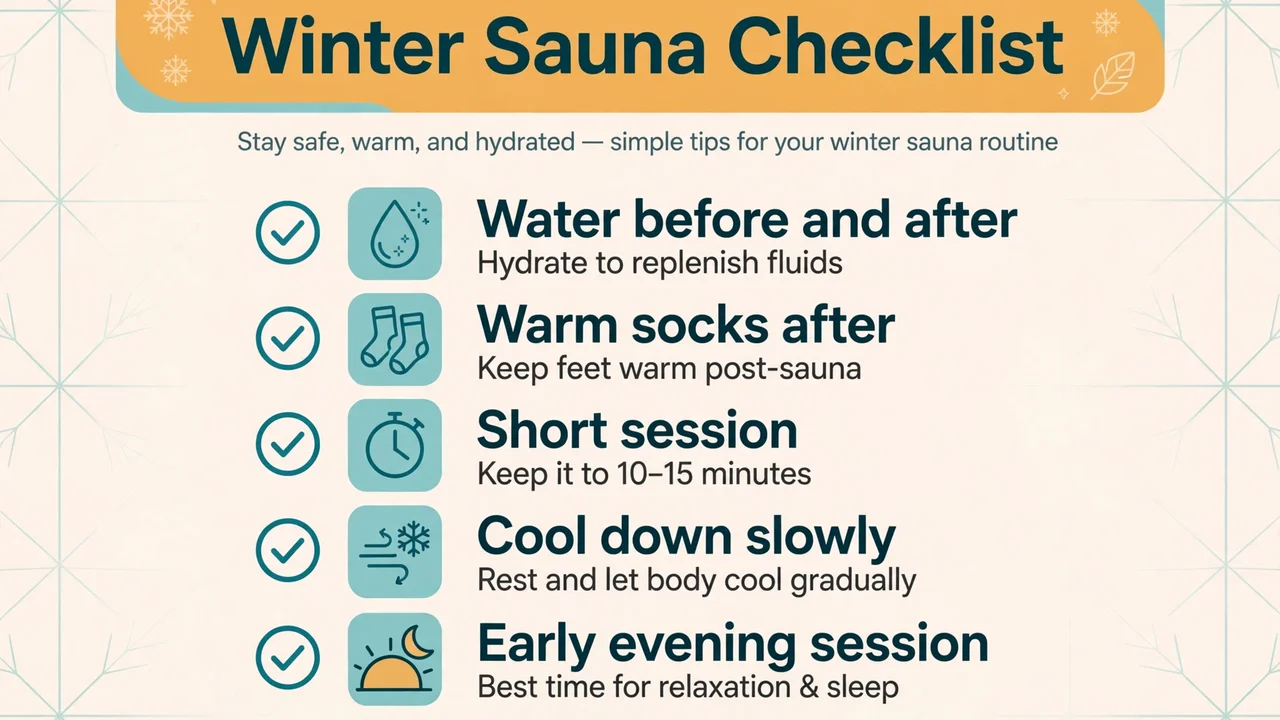
Your Winter Session Checklist
Use this short checklist before each session until it becomes automatic. It takes a minute, and it covers the things that cause most winter problems.
- Drink a glass of water and lay out a towel, robe, warm socks, and dry clothes.
- Preheat the sauna fully and warm the room you will step out into.
- Check how you feel. Skip the session if you have a fever, flu symptoms, or feel faint.
- Eat a light snack if you feel shaky, and avoid alcohol before the session.
- Set a timer for your planned length, and leave early if you feel unwell.
- Cool down slowly, towel off, dress warmly, and drink water again.
- Wipe down the cabin, air it briefly once cool, and note how the session felt.
Keeping a simple note of session length, how you felt, and how you slept can help you find your best pattern. After a few weeks, you will see which lengths and times suit you, and which leave you tired. That note is more useful than any fixed rule, because it is based on your own body.
Frequently Asked Questions
How often should I use an infrared sauna in winter?
Three to four sessions a week suits most people, with rest days in between. Daily long sessions are not needed, and rest days help your body recover and keep the habit sustainable.
How long should a winter infrared sauna session be?
Start at 10 to 15 minutes and build up slowly over four weeks to 25 to 30 minutes. Stay at a shorter length if that feels better, and always leave early if you feel dizzy or unwell.
Should I use an infrared sauna when I feel a cold coming on?
If you have only a mild sniffle and no fever and feel otherwise well, a short gentle session or a rest day are both reasonable choices. Do not use a sauna to try to sweat out an illness, and rest if symptoms are getting worse.
Can I use an infrared sauna with a fever or flu?
No. Skip the sauna when you have a fever, flu symptoms, vomiting, diarrhoea, or feel faint. Rest, drink fluids, and return only after you have been free of fever and feeling well for at least a day.
Does an infrared sauna in winter prevent colds or flu?
No. A sauna does not prevent colds or flu, and it does not guarantee stronger immunity. Regular warmth, relaxation, and better sleep may support general wellbeing, but they are not a shield against winter illness.
What is the best time of day for a winter sauna session?
Late afternoon or early evening suits most people, because it helps you wind down before bed. Finish at least an hour before bedtime, and avoid a long hot session late at night if it leaves you restless.
How do I preheat an infrared sauna in a cold room?
Follow your manufacturer guide and allow the full preheat time, often 15 to 30 minutes. Keep the door closed while it warms, heat the room you will step out into, and have a warm robe and socks ready.
How much water should I drink around a winter session?
Drink a glass of water before your session and another glass after you have cooled down. Drink more if you sweated a lot, and eat a light snack if you feel shaky or light headed.
Is an infrared sauna safe for mood and sleep in winter?
A calm, regular sauna routine can be a pleasant part of a healthy winter, and many people find warmth and quiet relaxing. It is not a treatment for depression or seasonal affective disorder, so seek professional help if low mood lasts for weeks.
When should I check with a doctor before using a sauna in winter?
Check with a doctor first if you are pregnant, live with a heart or circulation condition or low blood pressure, or take medication that affects heat tolerance. Also seek advice if you are ill, feel faint during sessions, or have any new health concern.
Conclusion: Keep It Warm, Short, and Steady
A winter infrared sauna routine does not need to be complicated. Preheat well, start short, drink water, cool down slowly, and repeat three or four times a week. Add daylight, a steady bedtime, and rest days, and you have a cold season habit that is easy to keep until spring.
Winter will test the routine in small ways. A cold room, a busy week, a sniffle, or a dark evening can all tempt you to skip a session or push too hard in the one you do take.
Start this week with a short session, and let the ladder do the work over the next month. By the time the coldest weeks arrive, the routine will feel natural, and the warm cabin will be one of the best parts of a winter evening.