
You’ve probably noticed that when you step out of a steam sauna and your skin looks better almost instantly flushed, dewy, alive. But that flush fades within the hour, and it doesn’t tell you what’s actually happening underneath, or whether the habit is helping your skin long-term or quietly working against it. The honest answer is that steam sauna can be genuinely good for your skin better than a dry sauna for most skin types, in fact but it’s not good for everyone, and how you use it matters as much as whether you use it at all.
Quick Answer: Steam saunas can benefit most skin types by boosting circulation, hydrating the surface layer of skin, and loosening trapped dirt and oil, but they’re not universally good. If you have rosacea, very oily/acne-prone skin, eczema, or certain heart conditions, steam heat can do more harm than good unless you use it carefully. Below is exactly how it works, who should use caution, and how to get the benefits without the downsides.
Disclaimer: The content provided on this blog is for educational and informational purposes only and is not intended to be a substitute for professional medical advice, diagnosis or treatment.
Key Takeaways
- Steam doesn’t “open” or “close” pores like little doors pores don’t have muscles but heat and moisture do soften the debris (oil, dead skin, dirt) sitting inside them, making it easier to remove.
- Steam saunas hydrate the outer skin layer and boost circulation, which can create a temporary glow.
- Saunas do not detox your skin. Your liver and kidneys handle detoxification sweat mainly removes water, salt, and trace amounts of other compounds.
- People with rosacea, active eczema flares, very oily/acne-prone skin, or cardiovascular conditions should talk to a dermatologist or doctor before regular use.
- The skincare you do after a steam session (cleansing, hydrating, moisturizing) matters just as much as the session itself.
- Pregnant women and people with certain heart conditions are generally advised to avoid steam rooms and saunas altogether.
What Actually Happens to Your Skin in a Steam Sauna
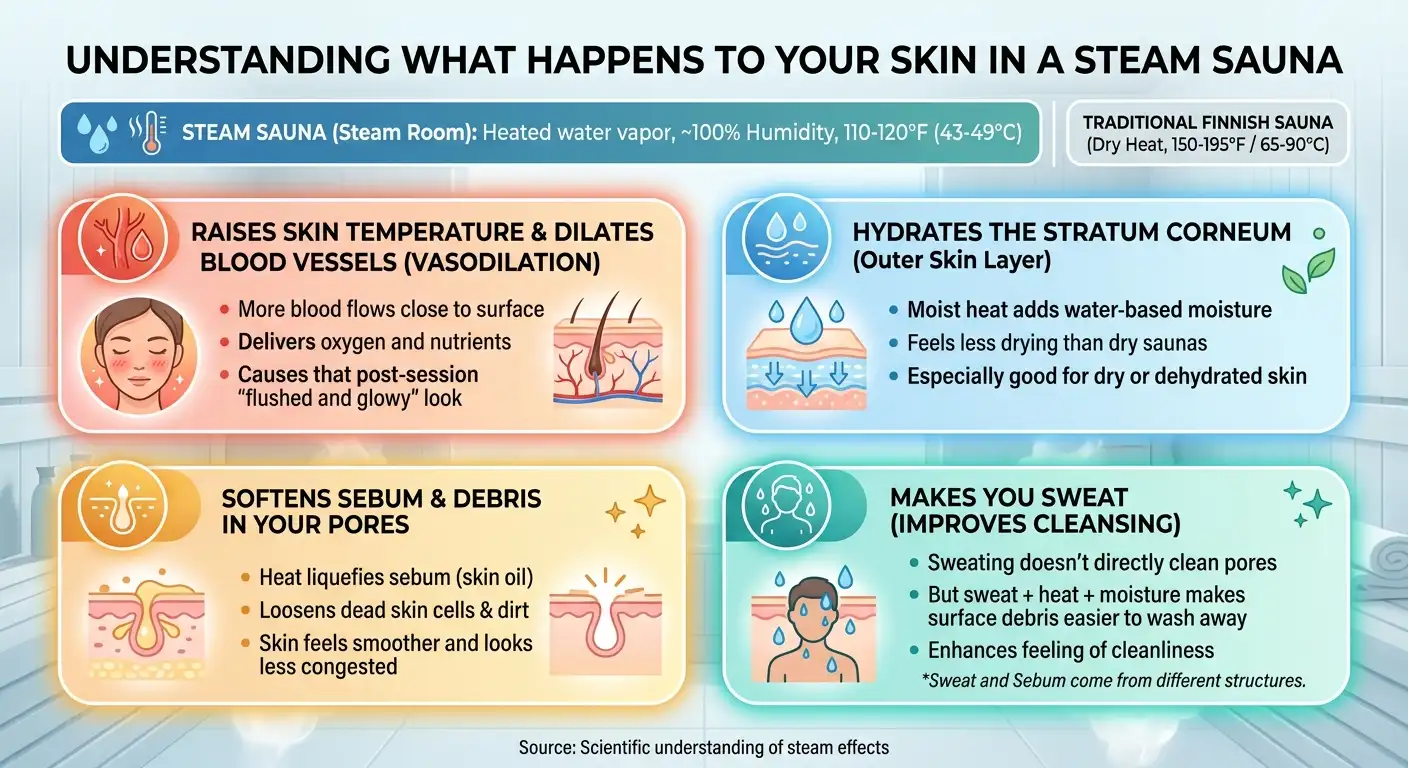
A steam sauna (or steam room) uses heated water vapor to create near-100% humidity at temperatures typically between 110°F and 120°F (43–49°C) much lower than the dry heat of a traditional Finnish sauna, which can run 150–195°F (65–90°C).


Paid Links - As an Amazon Associate, I earn from qualifying purchases.
That moist heat does a few measurable things to your skin:


Paid Links - As an Amazon Associate, I earn from qualifying purchases.
It raises your skin temperature and dilates blood vessels. This is called vasodilation, and it’s the main reason your face looks flushed and “glowy” right after a session. More blood is moving closer to the skin’s surface, delivering oxygen and nutrients.
It hydrates the outermost layer of skin (the stratum corneum). Unlike dry sauna heat, which pulls moisture out of skin, steam adds water-based moisture to the surface. This is why steam tends to feel less drying than a dry sauna, especially for people with naturally dry or dehydrated skin.
It softens sebum and debris in your pores. Heat liquefies the oil (sebum) and loosens dead skin cells and dirt sitting in your pores, which is why skin often feels smoother and looks less congested right after steaming.
It makes you sweat. Sweating itself doesn’t clean your pores sweat and sebum come out of two different structures in the skin but the combination of heat, moisture, and sweat does make it easier to wash away surface debris afterward. (For a full breakdown of whether sweating actually removes toxins, see our guide on does steam sauna detox really work.)
Myth vs. Fact Myth: Steam “opens” your pores so dirt falls out, then cold water “closes” them again. Fact: Pores don’t have muscles, so they physically cannot open or close like a door. What actually happens is that heat softens the material inside the pore (oil, debris), which makes it easier to loosen and remove usually with cleansing, not with the steam alone.
Is Steam Sauna Good for Your Skin? The Short Answer by Skin Type
Not every skin type responds to steam the same way. Here’s a quick breakdown before we go deeper.
| Skin Type / Condition | Generally Good Fit? | Why |
|---|---|---|
| Dry or dehydrated skin | Yes | Steam adds surface moisture and can ease flakiness |
| Normal / combination skin | Yes | Tends to tolerate heat and humidity well |
| Oily or acne-prone skin | Use caution | Humidity can increase oil production for some people; helps others by softening clogged pores highly individual |
| Sensitive skin | Use caution | Heat can trigger reactivity and temporarily weaken the skin barrier |
| Rosacea | Generally avoid | Heat is one of the most commonly reported rosacea triggers |
| Eczema (active flare) | Avoid during flares | Heat and sweat can irritate already-compromised skin |
| Eczema (well-managed/dry-type) | Use caution, ask a dermatologist | Some people find the humidity soothing between flares |
| Mature skin | Yes, with hydration follow-up | Improved circulation may support a healthier-looking glow |
If you fall into a “use caution” or “avoid” category, that doesn’t necessarily mean never it means talk to a dermatologist about your specific case and start with shorter, less frequent sessions if you do try it.


Paid Links - As an Amazon Associate, I earn from qualifying purchases.
The Real Benefits of Steam Saunas for Skin
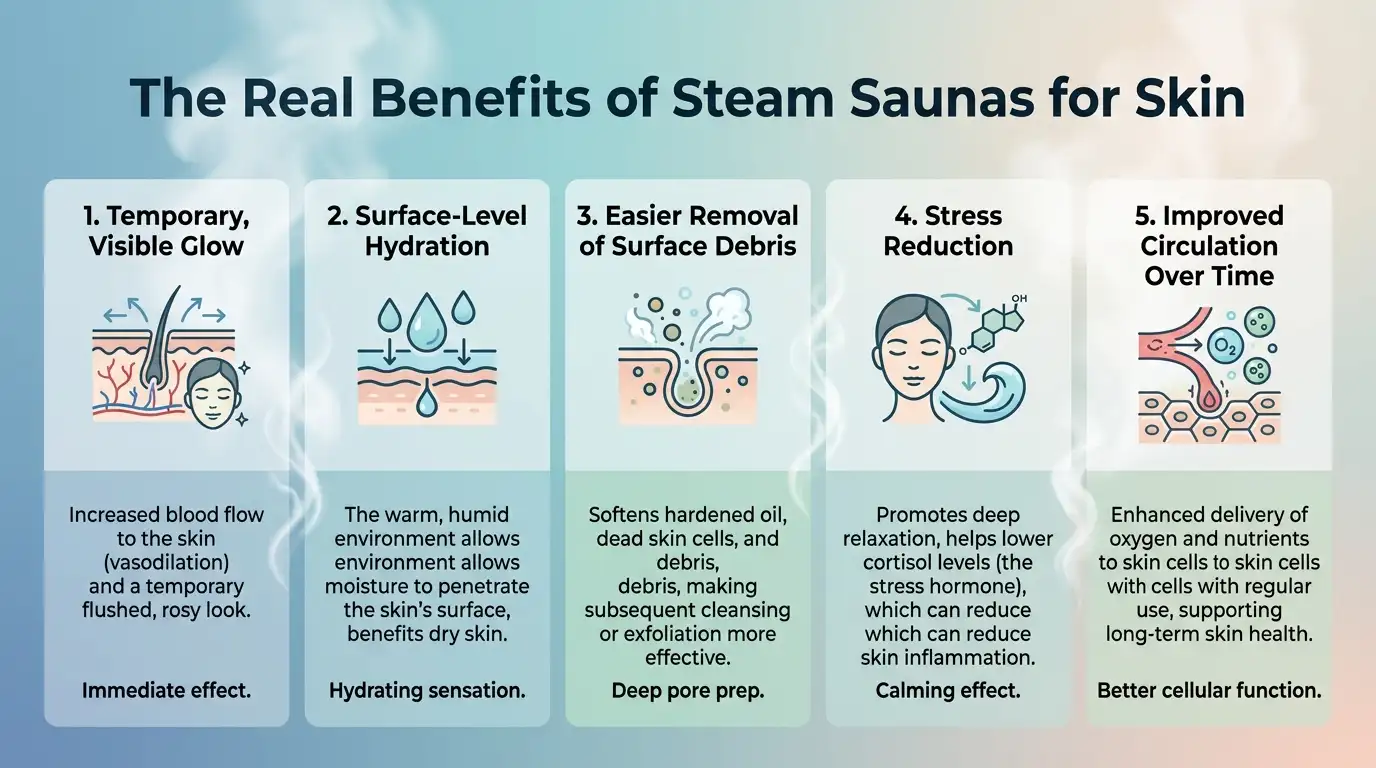
1. Temporary, Visible Glow
The vasodilation effect brings more blood to the surface of your skin, which is what creates that flushed, “lit from within” look many people notice right after a session. This effect is temporary it typically fades within an hour or two as your body cools back down.
2. Surface-Level Hydration
Because steam is humid heat rather than dry heat, it adds moisture to the skin rather than pulling it out. This is especially noticeable for people with naturally dry skin, who often find dry saunas uncomfortable but tolerate steam rooms well.
3. Easier Removal of Surface Debris
Heat softens the oil and dead skin sitting in your pores, which can make your next cleanse more effective. This is why many estheticians use steam before extractions or facials it’s a prep step, not a stand-alone treatment.
4. Stress Reduction (Which Shows Up on Your Skin)
Chronic stress raises cortisol, and chronically elevated cortisol is linked to accelerated skin aging and inflammation. The relaxation response from a warm, quiet steam session can help lower stress in the moment, which is an indirect but real skin benefit over time.
5. Improved Circulation Over Time
With consistent, moderate use, better circulation can mean more efficient delivery of oxygen and nutrients to skin cells, supporting overall skin function though this is a general wellness benefit rather than something that reverses specific skin conditions.
The Real Risks and Downsides
Steam sauna use isn’t risk-free for skin, and being upfront about the downsides is part of using it well.
Dehydration if you don’t rehydrate. Even though steam adds surface moisture, you’re still sweating and losing fluids. Skipping water before and after a session can leave your skin (and body) net-dehydrated.
Barrier disruption with overuse. Frequent, prolonged heat exposure can weaken the skin’s protective barrier over time, especially in people who already have sensitive or reactive skin. A compromised barrier shows up as increased redness, stinging with products that never used to bother you, or ongoing dryness.
Rosacea flare-ups. Heat is one of the most frequently reported rosacea triggers in a widely cited National Rosacea Society survey, the majority of respondents identified hot weather and hot baths as flare triggers. Dermatologists commonly advise rosacea patients to limit or avoid steam and sauna exposure.
Breakouts if you don’t cleanse afterward. Sweat mixing with bacteria, oil, and dead skin on unwashed skin can contribute to clogged pores. The fix is simple: cleanse your face within a reasonable window after your session rather than leaving sweat to dry on your skin.
Not a substitute for medical or dermatological treatment. Steam won’t clear cystic acne, won’t treat diagnosed eczema or psoriasis, and won’t “detox” your skin of toxins that’s not how sweat glands work.
For the full list of downsides beyond skin cardiovascular strain, dehydration, fertility considerations, and more see our guide to steam sauna disadvantages.
Who Should Be Cautious or Avoid Steam Saunas
This is the section most articles gloss over, so here it is directly.
Pregnant women. Medical guidance generally advises avoiding steam rooms and saunas throughout pregnancy because of the risk of raising core body temperature to unsafe levels, which has been linked to increased risk of neural tube defects, particularly in the first trimester. If you’re pregnant and want heat-based relaxation, ask your OB-GYN about safer alternatives like prenatal massage or a warm (not hot) bath.
People with heart conditions or unstable blood pressure. The rapid vasodilation from heat exposure makes your heart work harder to regulate blood flow and pressure. Anyone with cardiovascular disease, a recent heart attack, or uncontrolled blood pressure should get medical clearance first.
People with active skin infections, open wounds, or contagious skin conditions. Heat and humidity are not appropriate over broken or infected skin, and shared steam rooms carry a risk of spreading skin infections.
People with rosacea. As noted above, heat is a common and well-documented trigger.
People with poorly controlled diabetes. Reduced sensation from peripheral neuropathy can make it harder to notice burns or overheating; check with your doctor first.
Young children and infants. Their bodies regulate temperature less efficiently, so steam rooms are generally not recommended for this age group without close medical guidance.
Anyone who is dehydrated, has had alcohol recently, or has eaten a heavy meal within about 90 minutes. All of these increase your risk of dizziness, fainting, or overheating in a steam environment.
If you have any diagnosed medical condition or are unsure whether steam is safe for you, the responsible move is to ask your doctor or dermatologist before making it a habit not to guess.
How to Use a Steam Sauna for Healthier-Looking Skin: Step-by-Step
Before You Go In
- Remove all makeup and cleanse your face. Makeup and product residue can trap heat against the skin and clog pores that are about to open up to sweat.
- Hydrate. Drink water beforehand so you’re not starting a sweat session already dehydrated.
- Skip active skincare ingredients right before. Retinoids, exfoliating acids, and other actives can make skin more heat-sensitive; save them for after, once skin has calmed down.
During Your Session
- Keep it to 10–20 minutes. Most guidance recommends staying under 20 minutes per session, especially when you’re new to steam. (See our full guide on how long you should stay in a steam sauna for guidance based on experience level and goals.)
- Sit further from the steam vent if your skin feels too hot. Intense, direct heat exposure is harder on the skin barrier than gentle ambient warmth.
- Bring a clean, damp washcloth to gently dab your face if it feels like it’s drying out or overheating.
After You Get Out
- Shower or rinse promptly. This removes sweat, softened oil, and loosened debris before it has a chance to settle back into pores.
- Cleanse with a gentle, non-stripping cleanser. Avoid harsh, foaming, or high-pH cleansers right after heat exposure, since your barrier is more vulnerable in that window.
- Apply a hydrating serum, then moisturizer, while skin is still slightly damp. This helps lock in the surface hydration steam provided.
- Use sunscreen if you’re heading outdoors afterward. Heat-flushed, slightly sensitized skin is not the moment to skip SPF.
Steam Sauna vs. Dry (Finnish) Sauna vs. Infrared Sauna: Which Is Best for Skin?
| Feature | Steam Sauna | Dry (Finnish) Sauna | Infrared Sauna |
|---|---|---|---|
| Typical temperature | 110–120°F (43–49°C) | 150–195°F (65–90°C) | 120–150°F (49–65°C) |
| Humidity | Very high (~100%) | Low | Low |
| Effect on skin hydration | Adds surface moisture | Can dry out skin | Can dry out skin |
| Best suited for | Dry, dehydrated, or normal skin | Skin that tolerates dry heat well | Those seeking deeper tissue warmth at lower ambient temps |
| Caution for | Rosacea, active eczema flares | Rosacea, dehydration-prone skin | Rosacea, very sensitive skin |
| Sensation | Enveloping, moist heat | Intense, dry heat | Gentler ambient heat, deeper penetration |
There isn’t strong independent clinical evidence that any one of these three “wins” for skin health overall the right choice comes down to your skin type and how your body tolerates heat and humidity. If your skin leans dry or reactive to dry heat, steam is usually the more comfortable option. If you specifically dislike humidity or have a mold/humidity sensitivity, dry or infrared sauna may suit you better.
For a deeper dive specifically on skin, see which is better for skin: sauna or steam room. For the broader comparison beyond skin recovery, cardiovascular effects, and more see which is better, dry sauna or steam sauna.
Steam Sauna and Specific Skin Concerns
Acne and Breakouts
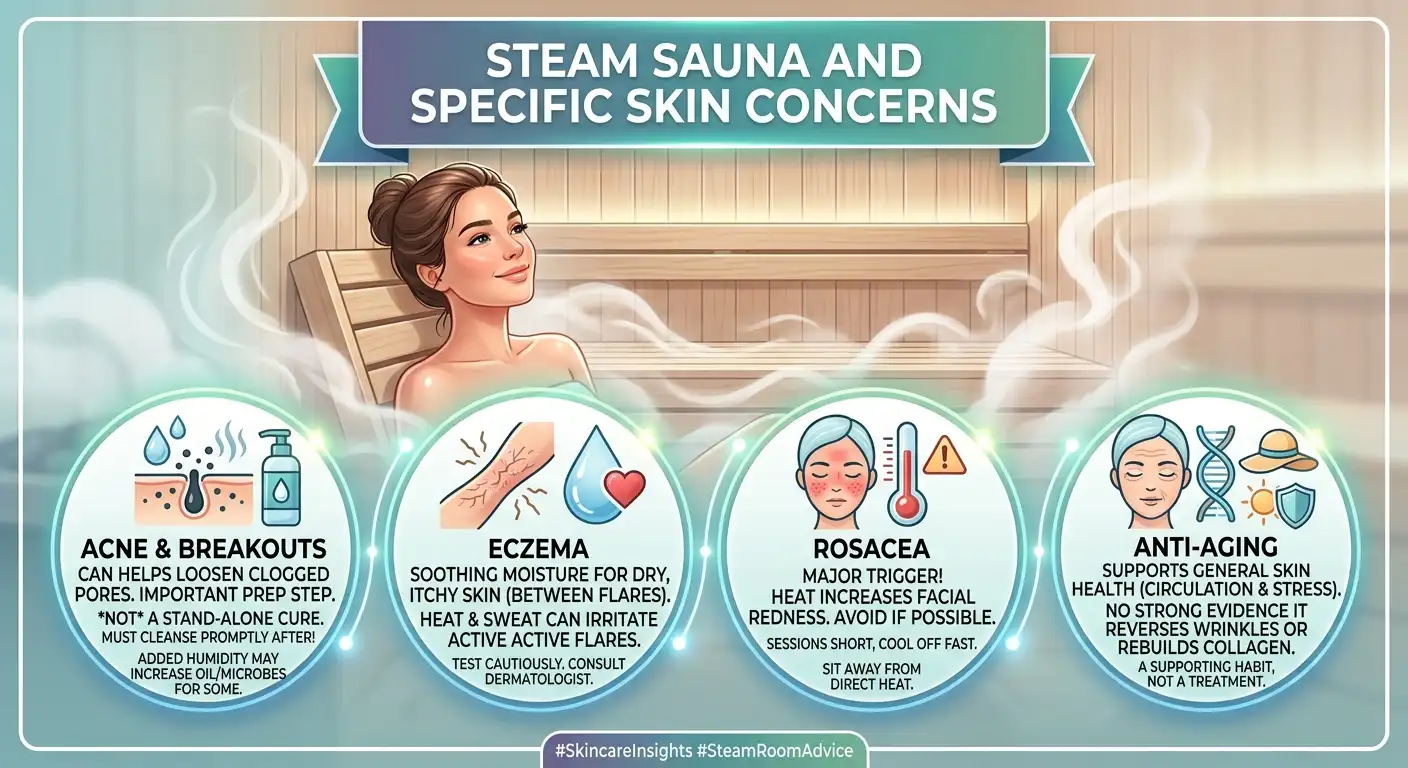
Steam can help loosen the material clogging pores, which is why many facials include a steam step before extractions. But steam alone won’t clear acne, and for some people especially those with oily or fungal-acne-prone skin added humidity can actually encourage more oil production or microbial overgrowth. If you’re acne-prone, the deciding factor is usually what you do immediately after: cleansing promptly tends to help; letting sweat and oil sit on skin tends to hurt.
Eczema
Between flares, some people with eczema find humidity soothing because it adds moisture to dry, itchy skin. But during an active flare, heat and sweat are common irritants that can worsen inflammation. If you have eczema, treat steam sauna use as something to test cautiously and stop immediately if it increases itching or redness and check with your dermatologist first.
Rosacea
This is the clearest case where caution is warranted. Heat is one of the most consistently reported rosacea triggers across patient surveys, and clinical trial protocols for rosacea treatments routinely instruct participants to avoid saunas and steam rooms in the 24 hours before assessments because heat reliably increases facial redness. If you have rosacea and want to try steam anyway, keep sessions very short, sit away from direct heat, and stop at the first sign of flushing beyond your baseline.
Anti-Aging
Improved circulation and reduced stress can support skin that looks healthier over time, but there’s no strong evidence that steam sauna use reverses wrinkles, rebuilds collagen, or provides an anti-aging treatment on its own. Be skeptical of any claim that a steam sauna alone will meaningfully change your skin’s aging trajectory that kind of change comes from consistent sun protection, a solid skincare routine, and broader lifestyle factors, with steam as, at most, a supporting habit.
FAQs
Is steam sauna good for your face specifically?
Yes, for most skin types steam can hydrate the surface layer and loosen debris in pores, which is why it’s often used as a pre-facial step. People with rosacea or very reactive skin should be more cautious with facial heat exposure specifically, since the face tends to show flushing most visibly.
How often should I use a steam sauna for skin benefits?
Two to three sessions per week of 10–20 minutes each is a common, moderate starting point cited by dermatologists. There’s no universal “correct” frequency pay attention to how your skin responds and scale back if you notice increased dryness, redness, or breakouts.
Does steam sauna open your pores?
Not literally pores have no muscles to open or close. What steam does is soften the oil and debris inside pores, making them easier to clear during cleansing.
Can steam sauna cause breakouts?
It can, mainly if sweat and softened oil are left on the skin afterward instead of being cleansed away. Prompt washing after a session significantly lowers this risk.
Is steam sauna better than a dry sauna for skin?
It depends on your skin type. Steam tends to be more hydrating and less drying, which usually makes it the better choice for dry or dehydrated skin. Dry sauna heat can be more dehydrating but some people simply prefer it and tolerate it well.
Should I moisturize before or after a steam sauna?
After. Cleanse first to remove sweat and loosened debris, then apply hydrating products while skin is still slightly damp to help lock in moisture. Heavy moisturizer or makeup before a session can trap heat and clog pores.
Can steam saunas help with acne?
They may help indirectly by softening clogged pores before cleansing, but they are not an acne treatment and won’t address the underlying causes of acne (hormones, bacteria, excess oil production, inflammation).
Is it safe to use a steam sauna every day?
Daily use isn’t necessarily dangerous for healthy adults with no contraindications, but daily heat exposure raises the risk of barrier disruption and dehydration for many people. Most guidance leans toward a few sessions per week rather than daily use, especially for sensitive or reactive skin.
Do steam saunas detox the skin?
No. Detoxification is a function of the liver and kidneys, not sweat glands. Sweat is mostly water and salt; while it does carry trace amounts of other substances, “sweating out toxins” through a steam session is not how the body’s detox systems work.
Can pregnant women use a steam sauna for their skin?
Medical guidance generally advises against steam rooms and saunas during pregnancy due to the risk of raising core body temperature, particularly during the first trimester. Talk to your OB-GYN before considering it.
Is steam sauna bad for sensitive skin?
It can be, if sessions are too long, too frequent, or the heat is too intense. Sensitive skin should start with short, less frequent sessions and watch closely for increased redness or reactivity to skincare products afterward.
What temperature is a steam sauna, and is that safe for skin?
Steam saunas typically run 110–120°F (43–49°C) at very high humidity. That’s generally safe for skin in short sessions for healthy adults, but always check facility guidelines and your own tolerance.
Can I wear skincare products or makeup into a steam sauna?
It’s best not to. Makeup and heavy products can trap heat against the skin and clog pores that are actively softening and sweating. Cleanse your face beforehand instead.
Does steam sauna help with dark circles or puffiness?
The temporary increase in circulation may reduce the appearance of puffiness briefly, but this effect is short-lived and not a treatment for the underlying causes of dark circles or chronic puffiness.
Final Thoughts
Steam saunas aren’t a skincare miracle, and they’re not something to avoid out of fear either. Used thoughtfully, steam can genuinely support healthy-looking skin: it hydrates the surface, softens the debris sitting in your pores, and gives your circulation a temporary boost that shows up as a glow.
The catch is that steam heat interacts differently with different skin types. If you have dry or normal skin, you’re likely to tolerate and even enjoy regular sessions. If you have rosacea, active eczema, or a cardiovascular condition, steam deserves real caution and in some cases, it’s best avoided entirely until you’ve talked to a doctor or dermatologist.
The single biggest lever you have isn’t the steam session itself it’s what you do before and after. Cleanse before you go in, keep sessions to a reasonable length, and cleanse and moisturize again once you’re out. That routine is what turns a pleasant, relaxing habit into one that actually supports your skin over time.