
Quick answer: Wipe down your infrared sauna with a damp cloth and mild cleaner after every session, do a deeper clean weekly, and do a full deep clean once a month. Never spray liquid directly on the heating panels, and skip bleach, ammonia, and harsh chemicals they damage both the wood and the electronics. A simple vinegar-and-water solution handles most of the cleaning you’ll ever need.
Infrared saunas don’t self-clean the way a scorching-hot traditional sauna does. They run at lower temperatures, so sweat, body oils, and moisture stick around on the wood instead of evaporating off. Skip the cleaning routine for too long, and you’re looking at odor, dark stains, and in humid climates mold.
The good news: cleaning an infrared sauna takes a few minutes most days and about 20-30 minutes for a monthly deep clean. Here’s exactly how to do it. (If you’re new to sauna ownership, it’s worth pairing this guide with our article on how to use an infrared sauna so you’re covering both proper use and proper care.)
Disclaimer: The content provided on this blog is for educational and informational purposes only and is not intended to be a substitute for professional medical advice, diagnosis or treatment.
Key Takeaways
- Wipe down surfaces after every session this one habit prevents most odor and staining problems.
- Never spray cleaner directly onto heating panels, control panels, or chromotherapy lights.
- Bleach, ammonia, and solvent-based cleaners can damage both wood and electronics avoid them entirely.
- A diluted white vinegar solution is safe, effective, and doesn’t leave toxic fumes when the sauna heats back up.
- Ventilation (leaving the door open after use) is the single most effective way to prevent mold and lingering odor.
- Different woods need different care cedar is more porous and absorbs oils faster than hemlock or basswood.
What You’ll Need
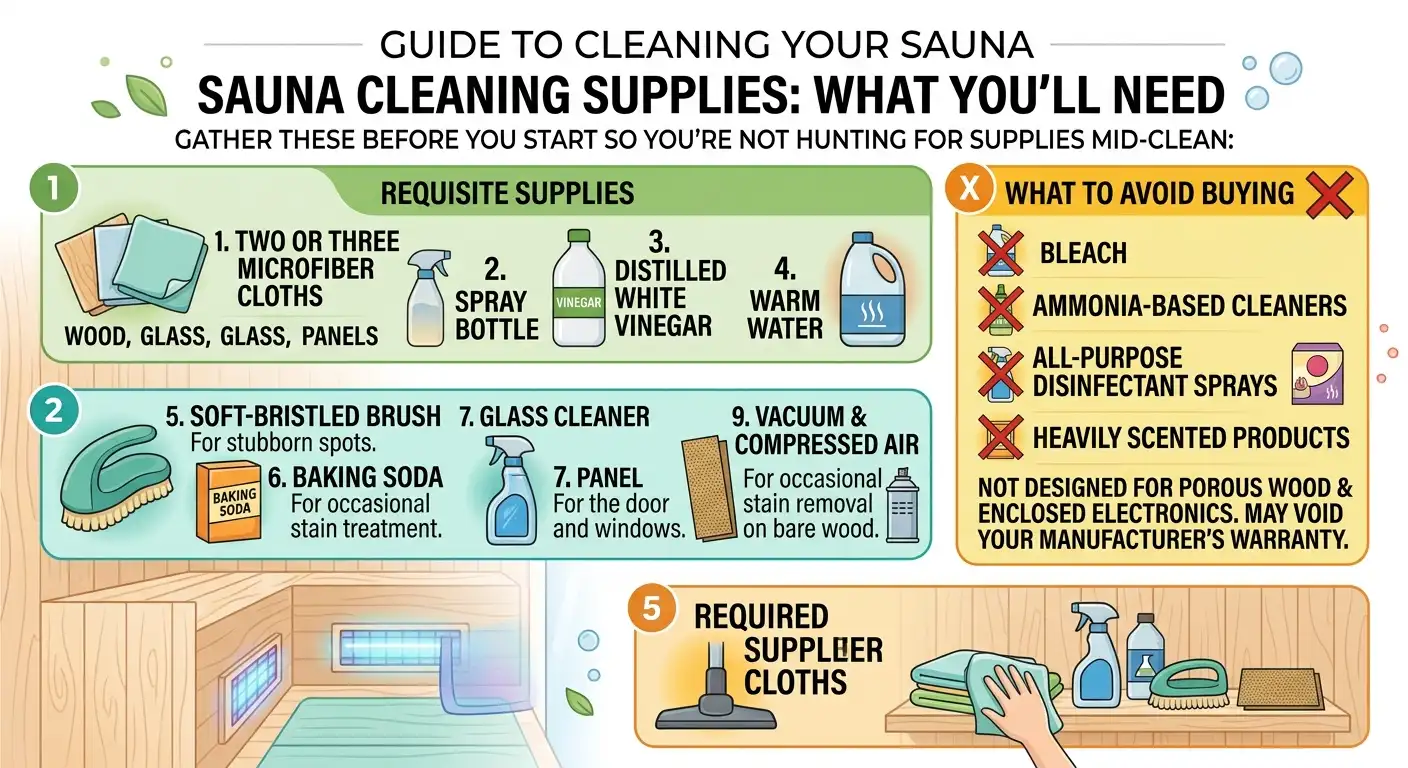
Gather these before you start so you’re not hunting for supplies mid-clean:


Paid Links - As an Amazon Associate, I earn from qualifying purchases.
- Two or three microfiber cloths (one for wood, one for glass, one for panels)
- A spray bottle
- Distilled white vinegar
- Warm water
- A soft-bristled brush (for stubborn spots)
- Baking soda (for occasional stain treatment)
- A glass cleaner (for the door and windows)
- Fine-grit sandpaper (for occasional stain removal on bare wood)
- A vacuum with a brush attachment or compressed air (for vents and corners)
What to avoid buying: bleach, ammonia-based cleaners, all-purpose disinfectant sprays, and heavily scented products. They’re not designed for the porous wood and enclosed electronics inside a sauna, and several can void your manufacturer’s warranty.
How to Clean an Infrared Sauna?
There’s no single answer it depends on how often you use it. Here’s a practical schedule based on usage level.



Paid Links - As an Amazon Associate, I earn from qualifying purchases.
| Usage Level | Wipe-Down | Deep Clean | Wood Inspection |
|---|---|---|---|
| Daily use | After every session | Weekly | Weekly |
| 3-4 times a week | After every session | Every 1-2 weeks | Every 2 weeks |
| Occasional (1-2x/week) | After every session | Monthly | Monthly |
| Rarely used | Before each use | Every 4-6 weeks | Every 4-6 weeks |
Regardless of how often you use it, plan on a full inspection of wiring, cords, and heater connections once or twice a year, and expect to lightly sand out stubborn wood staining every few months if you use the sauna heavily.
Step-by-Step: Cleaning After Every Session
This is the routine that matters most. It takes about five minutes and prevents nearly every long-term problem.
- Let the sauna cool down. Never clean while the unit is hot or the heaters are on.
- Wipe the bench, backrest, and walls with a cloth dampened in plain warm water or a diluted vinegar solution (about one part vinegar to four parts water). Focus on anywhere skin made direct contact.
- Dry the surfaces with a clean, dry cloth so moisture doesn’t sit in the wood overnight.
- Leave the door open for at least 30 minutes after cleaning so the interior can fully air out.
- Wash any towels or bench pads you used don’t leave damp fabric inside the cabin.
For a fuller rundown of your entire pre- and post-session routine not just cleaning see our guide on what to do before and after an infrared sauna.
Step-by-Step: Weekly Deep Clean
- Wipe down all interior surfaces with the vinegar-water solution, including corners, the underside of bench slats, and door tracks these are the spots where moisture hides.
- Check the floor (or floor mat, if removable) and let it air-dry separately if it’s damp.
- Clean the glass door and any windows using a glass cleaner sprayed onto a cloth first never spray it directly onto the glass while it’s inside the cabin, since overspray can drift onto nearby wood or panels.
- Inspect for early mold signs: dark spotting or a musty smell in corners, under the bench, or near the base of the walls. If you catch a spot early, wipe it with straight white vinegar on a cloth and dry it thoroughly.
Step-by-Step: Monthly Deep Clean
- Do the full weekly routine above.
- Inspect the heater panels (only once cool). Gently dust them with a dry microfiber cloth or a burst of compressed air. Never apply any liquid directly to a panel face, and don’t press hard on it.
- Clean the vents. Most units have ventilation openings near the floor and ceiling. Use a soft brush or your vacuum’s brush attachment to clear dust blocked vents trap moisture and make the heater work harder.
- Treat stubborn stains. Mix one tablespoon of baking soda with one gallon of water, apply it to stained wood with a soft brush, let it sit for 10-15 minutes, then wipe clean and dry thoroughly. For darker staining, lightly sand the spot with fine-grit sandpaper and buff away the dust with a dry cloth.
- Wipe the control panel and any chromotherapy lights with a soft, barely damp cloth never a wet one to remove fingerprints and dust.
- Air it out for a full hour with the door open before closing the cabin back up.
Cleaning Each Part of Your Sauna
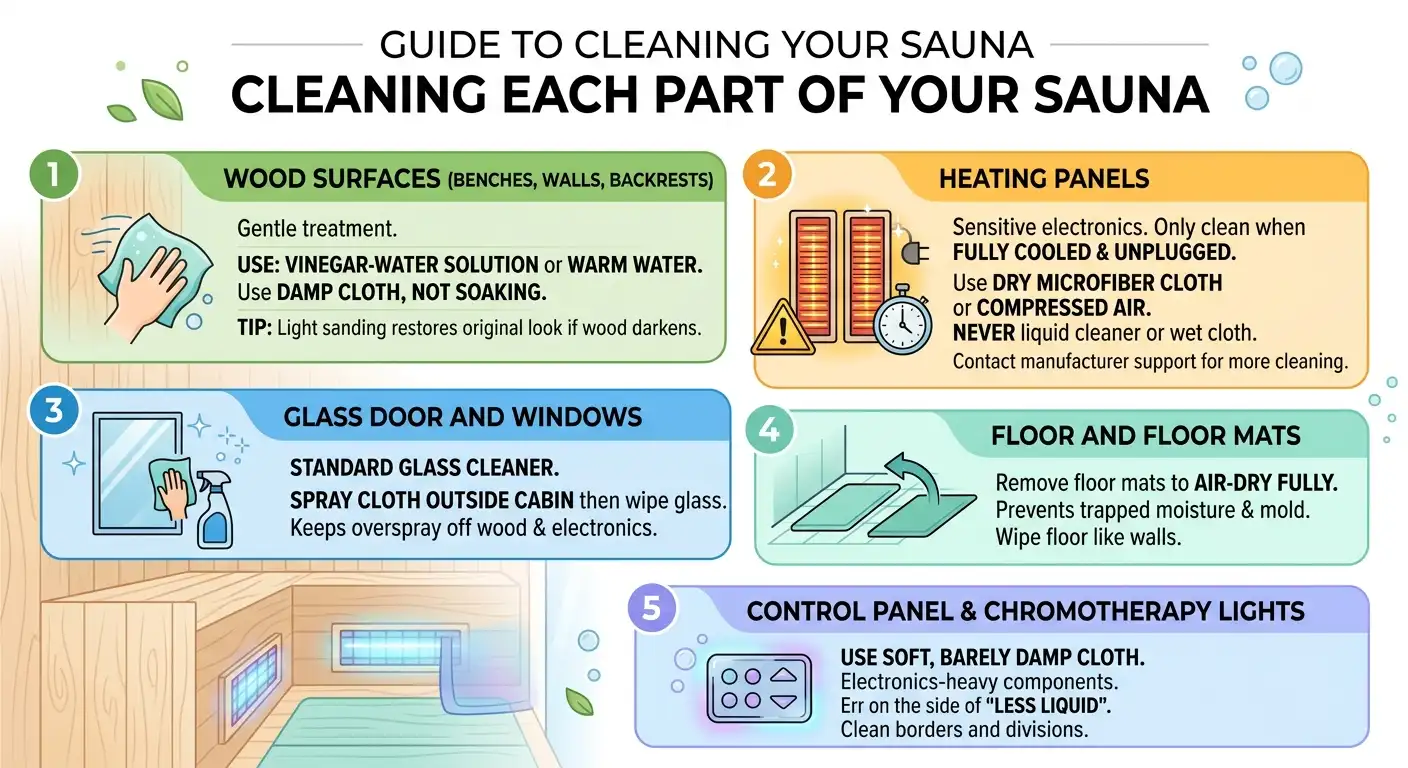
Wood Surfaces (Benches, Walls, Backrests)
Wood absorbs oils and sweat, which is why it needs the gentlest treatment on this list. Stick to a vinegar-water solution or plain warm water. Avoid soaking the wood a damp cloth is enough. If the wood darkens over time from repeated skin contact, that’s normal; a light sanding restores its original look.



Paid Links - As an Amazon Associate, I earn from qualifying purchases.
Heating Panels
These are sensitive electronics, not just surfaces. Only clean them when the unit is fully cooled and unplugged if your manual recommends it. Use a dry microfiber cloth or compressed air never a liquid cleaner, and never a wet cloth. If a panel needs more than dusting, that’s a job for your manufacturer’s support line, not a household cleaner.
Glass Door and Windows
A standard glass cleaner works fine here. Spray it onto your cloth outside the cabin, then wipe the glass this keeps overspray away from the wood and electronics inside.
Floor and Floor Mats
If your sauna has a removable floor mat, take it out periodically to air-dry fully; trapped moisture underneath is a common, overlooked mold spot. Wipe the floor itself the same way you’d wipe the walls.
Control Panel and Chromotherapy Lights
Use only a soft, barely damp cloth. These components are the most electronics-heavy part of the cabin, so err on the side of “less liquid” every time.
What Never to Use on an Infrared Sauna
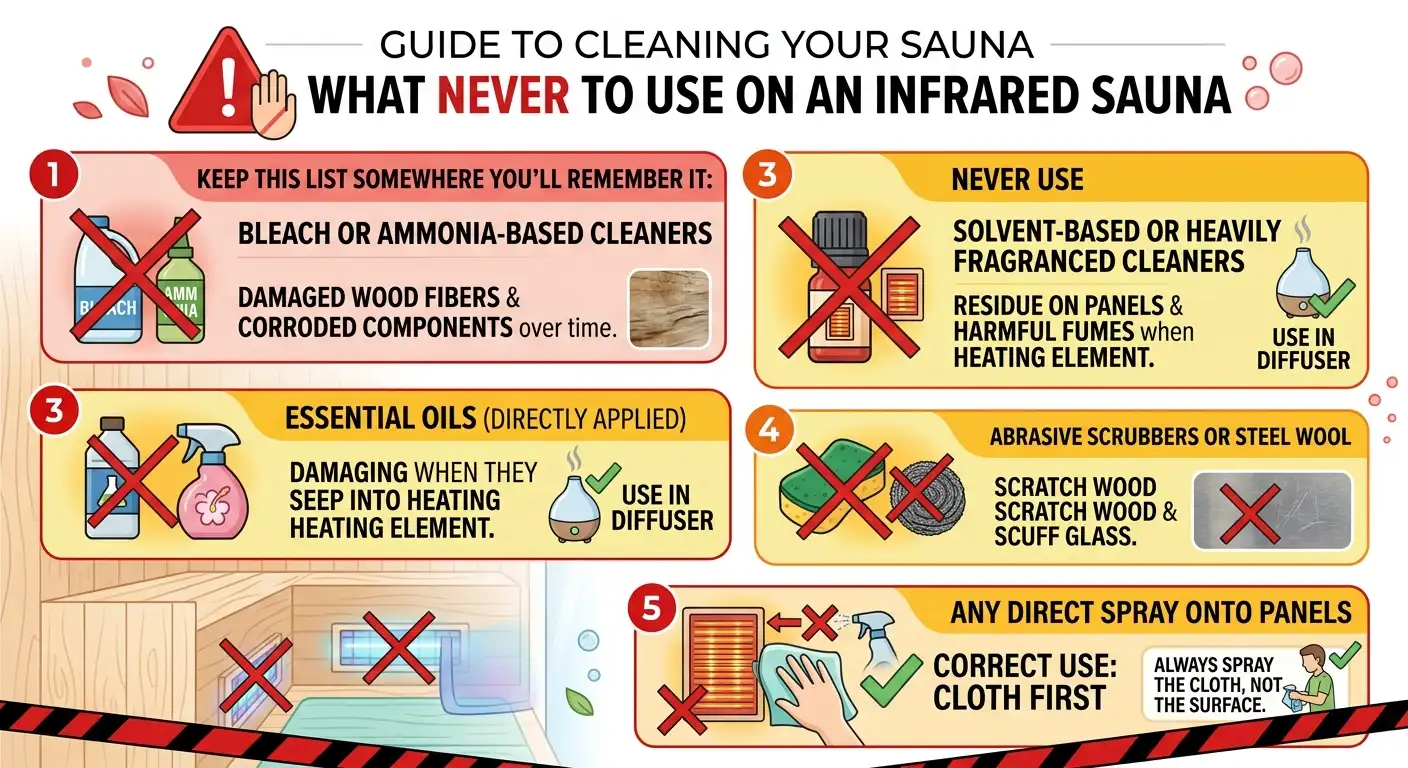
Keep this list somewhere you’ll remember it:
- Bleach or ammonia-based cleaners: they damage wood fibers and can corrode components over time.
- Solvent-based or heavily fragranced cleaners: fragrance oils can build up residue on panels and, when heated, produce fumes.
- Essential oils applied directly to panels or wood: pleasant in a diffuser, damaging when they seep into a heating element.
- Abrasive scrubbers or steel wool: these scratch wood and can scuff glass.
- Any spray applied directly onto a heating panel or control panel: always spray the cloth, not the surface.
Wood Type Comparison: How Care Differs by Species
| Wood Type | Porosity | Cleaning Frequency for Wood | Notes |
|---|---|---|---|
| Canadian Hemlock | Low | Monthly vinegar wipe-down | Resists odor absorption well; shows less staining |
| Western Red Cedar | High (more aromatic) | Every 3-4 uses | Natural oils have some antibacterial properties, but the wood absorbs sweat oils faster |
| Basswood | Low | Monthly | Lightest color, considered less allergenic for sensitive users |
If you’re not sure which wood your sauna uses, check your owner’s manual it changes how often the wood specifically (not the whole cabin) needs attention.
Preventing Odor and Mold Before They Start
Cleaning stops problems that have already started. Prevention stops them from starting in the first place.
- Ventilate every time. Leave the door open at least 30 minutes after each session, and a full hour after a deep clean. This one habit does more to prevent mold and odor than any product.
- Use a fan if airflow is limited, especially if your sauna sits in a basement, garage, or small room.
- Put a towel down on the bench and floor during use to catch the majority of sweat before it reaches the wood.
- Dry surfaces completely before closing the door don’t let dampness sit overnight.
- Check hidden spots regularly under bench slats, in corners, and around door tracks are where moisture and early mold most often hide unnoticed.
- Don’t leave damp towels or clothing inside the cabin. Wash them separately, right away.
Common Mistakes to Avoid
- Spraying cleaner directly onto panels or the control screen
- Using bleach because “it’s the strongest disinfectant” it’s also the fastest way to damage wood and void a warranty
- Skipping the wipe-down because the sauna “looks clean” (sweat and oils aren’t always visible)
- Closing the door immediately after a session, trapping moisture inside
- Ignoring a musty smell instead of checking for early mold
- Cleaning heating panels while they’re still warm or powered on
FAQs
How often should I clean my infrared sauna?
Wipe it down after every use, do a deeper clean weekly, and a full deep clean monthly. Adjust more often if you use it daily.
Can I use vinegar to clean an infrared sauna?
Yes. A diluted solution of about one part white vinegar to four parts water is one of the most commonly recommended options because it cleans effectively without leaving harsh fumes when the cabin heats up again.
Can I use Windex or regular glass cleaner inside a sauna?
Only on the glass, and only if you spray the cloth first rather than the glass directly, to keep overspray off the wood and panels.
Is bleach safe to use in an infrared sauna?
No. Bleach and ammonia-based products can damage the wood and, in some cases, the internal components, and their fumes are unpleasant and potentially harmful once the cabin heats up.
Why does my infrared sauna smell even after cleaning?
Persistent odor after cleaning usually means moisture or sweat is trapped somewhere you haven’t checked under bench slats, behind backrests, around door tracks, or under a floor mat. Inspect those spots directly rather than relying on scent products to mask it.
How do I clean the heating panels?
Only with a dry microfiber cloth or compressed air, and only when the unit is fully cooled. Never apply liquid directly to a panel.
Can mold actually grow in an infrared sauna?
Yes, especially in humid climates or poorly ventilated rooms. Infrared saunas produce less overall humidity than steam saunas, but sweat and trapped moisture can still create the damp conditions mold needs if the cabin isn’t ventilated and dried after use.
What’s the best cleaner for infrared sauna wood?
A diluted vinegar-water solution for regular cleaning, and a baking soda paste for stubborn stains. Purpose-made sauna wood cleaners are also a safe option if you’d rather use a pre-mixed product.
Do different wood types need different cleaning routines?
Yes. More porous woods like cedar absorb sweat oils faster and benefit from more frequent wiping, while denser woods like hemlock or basswood can go longer between wood-specific cleanings.
How do I remove sweat stains from sauna wood?
Try a baking soda paste first, left on for 10-15 minutes and then wiped clean. If the stain persists, a light sanding with fine-grit sandpaper followed by a dry buff usually resolves it.
Should I clean the exterior of my infrared sauna too?
Yes, especially if it’s installed outdoors or in a garage. Treat exterior wood like fine furniture, and check periodically for warping or moisture intrusion if it’s in a humid or exposed location.
Can I use a vacuum inside my sauna?
Yes, for dust in vents and corners use a soft brush attachment rather than direct suction on wood or panels.
How long should I leave the sauna door open after a session?
At least 30 minutes after a normal session, and up to an hour after a deep clean, to let moisture fully escape.
Will cleaning products void my sauna’s warranty?
Possibly, if you use bleach, ammonia, or other harsh chemicals not approved by the manufacturer. Check your owner’s manual, and when in doubt, stick to mild solutions like diluted vinegar or a cleaner the manufacturer specifically recommends.
Final Thoughts
An infrared sauna is a low-maintenance piece of wellness equipment, but “low-maintenance” doesn’t mean “no maintenance.” A five-minute wipe-down after each session, a slightly deeper weekly clean, and a proper monthly deep clean are enough to keep the wood, glass, and heating panels in good shape for years.
The two habits that matter most are also the simplest: wipe it down before moisture and oils have a chance to set in, and leave the door open afterward so the cabin actually dries out. Get those two right, and you’ll rarely deal with odor, staining, or mold in the first place.
If you’re ever unsure whether a product or method is safe for your specific model, your owner’s manual is the final word wood types, panel designs, and manufacturer-approved cleaners vary by brand.