Steam saunas have become a regular part of wellness regimens worldwide. Many people like to enjoy them for relaxation, or after a workout, or even for skin benefits.
But while steam rooms can feel rejuvenating, steam sauna side effects are very real, and are worth understanding before you start using them daily.
From the danger of dehydration to heart patient or pregnant woman complications, knowing the facts can help you enjoy the sauna safely.
In this guide, we’ll Discover everything about steam sauna side effects, risks, safety guidelines, and who should avoid using steam saunas. Learn about benefits, disadvantages, and precautions for heart health, skin, weight loss, and more.
Disclaimer: This article is for informational purposes only and does not constitute medical advice. Always consult a healthcare professional before using a steam sauna, especially if you have pre-existing health conditions. Use this information at your own risk.
Key Takeaways
Daily Use: Steam sauna can be safe for most adults, but overuse could lead to dehydration or dizziness.
Heart Health: People who have high or low blood pressure should speak to a doctor before using steam saunas.
Skin & Beauty: Steam saunas can help with skin hydration but can cause irritation for sensitive skin.
Pregnancy & Lactation: Steam saunas are not recommended for pregnancy, and caution should be taken during breastfeeding.
Age Considerations: Elderly and teenagers should limit exposure and watch for any fainting or dizziness.
Hygiene: Keeping the saunas clean is critical to minimise the risk of infection.
What Does a Steam Sauna Do to Your Body?

Before getting into the risks, it is important to know about the mechanism. When you step inside a steam sauna, the humidity (100%) and heat (usually somewhere between 110°F and 120°F) prompt your body’s thermoregulation process.
Your heart rate rises and blood vessels widen (vasodilation) to aid cooling of the body down. This often has the same effects as moderate exercise on the cardiovascular system.
While this can have a positive affect on circulation and give the muscles a break, it also puts a lot of stress on the cardiovascular system. The extreme sweating is the body’s attempt to cool off, and can result in major fluid and electrolyte loss if not handled properly.
Common Side Effects of using a Steam Sauna
While many people tolerate steam saunas well, there are chances of adverse reactions to steam sauna, especially with overuse or pre-existing conditions. Here are the most common steam sauna side effects to be on the lookout for.
1. Dehydration and Electrolyte imbalance
The first and most immediate risk is the steam sauna dehydration risk. Because the air is filled with moisture, the sweat cannot evaporate as efficiently as it would in a dry sauna. This prevents the body from cooling down effectively and you start sweating even more.
- Symptoms: Dry mouth, excessive thirst, dizziness and confusion.
- Prevention: Drink water that is added with electrolytes before getting in.
2. Dizziness and Fainting
Steam sauna dizziness causes tend to be associated with changes in blood pressure. The heat causes the blood vessels to enlarge and blood pressure to fall.
If you stand up too quickly after a session, gravity pulls the blood down to your legs, and your decreased blood pressure may not be able to pump enough blood into the brain.
- Steam sauna fainting prevention: Sitting up slowly and remaining seated for a minute before standing up. Do not ever use a steam room if you get dizzy.
3. Skin Irritation and Infections
Is steam sauna good for skin? Generally, yes – it does hydrate and open pores. However, use of steam sauna and skin irritation can occur. The hot humid atmosphere is a breeding ground for bacteria and fungi.
- Steam sauna infection risk: The athlete’s foot and toenail fungus are very common in public steam rooms.
- Steam sauna hygiene importance: Always sit on a clean towel and wear shower shoes. If you have open wounds or skin conditions such as eczema, then the heat can make the inflammation worse.
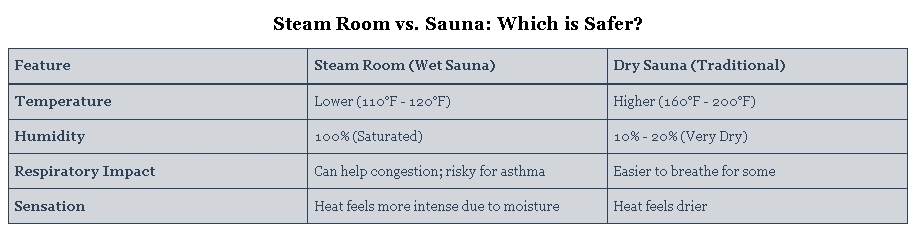
Steam Room vs. Sauna: Which is Safer?
A common debate in the wellness community is sauna vs steam room safety. While both provide heat therapy, they work differently.

Steam Room vs. Sauna: Which is Safer?
| Feature | Steam Room (Wet Sauna) | Dry Sauna (Traditional) |
|---|---|---|
| Temperature | Lower (110°F – 120°F) | Higher (160°F – 200°F) |
| Humidity | 100% (Saturated) | 10% – 20% (Very Dry) |
| Respiratory Impact | Can help congestion; risky for asthma | Easier to breathe for some |
| Sensation | Heat feels more intense due to moisture | Heat feels drier |
When comparing steam room vs sauna benefits, steam rooms are often better for congestion and skin hydration. However, the steam bath disadvantages include a higher risk of bacterial growth due to moisture and a greater challenge for the body to cool itself via evaporation.
High-Risk Groups: Who Should Avoid Using a Steam Sauna
Certain people should not be allowed to use steam saunas at all, or should consult strict medical advice. Understanding who has to avoid using steam sauna facilities is critical to safety.

Heart Patients and Blood Pressure Problems
Steam sauna and high blood pressure are an odd combination. While some studies suggest that saunas may be able to help lower blood pressure over time, the immediate effect of heat can cause dangerous spikes or drops.
- Steam sauna for heart patients: Someone suffering from unstable angina conditions or had recent heart attack or heart failure should not go to steam rooms. The heat makes the heart beat faster, which increases cardiac output and cardiac workload.
- Steam Sauna and low blood pressure: People who have hypotension are at a high chance of fainting because of further vasodilation.
Pregnancy Risks
Steam sauna and pregnancy risks are high. Increasing the core body temperature above 102deg F (38.9°C) during early pregnancy may contribute to the risk of neural tube defects and miscarriage. Pregnant women are usually cautioned against using steam rooms.
Diabetes Safety
Steam sauna and diabetes safety is an issue since heat can influence insulin absorption and blood sugar levels. Diabetics also often have neuropathy (nerve damage) which may prevent them from noticing when they are getting too hot which can result in burns – heat stroke.
Asthma and Respiratory Problems
While steam can open up clogged sinuses, the risk of steam sauna with asthma is very real for some people. The heavy, moist air feels like suffocating to some asthmatics, and could cause the bronchospasm rather than improving the situation.
Elderly and Teenagers
- Steam sauna safety for elderly: Older people have a reduced ability to regulate their body temperature to become dehydrated and are more likely to suffer from orthostatic hypotension (dizziness associated with standing up).
- Steam Sauna for teenagers: Generally safe in moderation, but teenagers should not spend too much time to prevent dehydration and to ensure they are not using the sauna to lose weight (this can cause eating disorders).
Specialized Saunas: Infrared Sauna and Ozone Sauna
Beyond the age-old steam rooms, new technologies have sprung up and with it a new set of advantages and disadvantages.
Side Effects of Infrared Steam Sauna
Infrared saunas use light to directly heat the body as opposed to air. Infrared steam sauna side effects are similar to traditional saunas, such as dehydration and dizziness, however, the heat penetrates to the deeper tissue, some users report increased joint pain or inflammation as a result if overused.
Ozone Steam Sauna Side Effect
Ozone saunas combine the use of ozone gas and steam. While people who believe in detox say that it does something good for them, the side effects associated with ozone steam sauna can be quite serious.
Inhaling ozone can cause irritation of the lungs and throat. The EPA cautions against breathing ozone because it can cause lung damage and aggravate chronic respiratory diseases.
Is Steam Sauna Safe Daily?
Is steam sauna safe daily? For healthy people, brief periods of daily exercise (10-15 minutes) may be safe and may even be good for you. However, to do so requires strict attention to hydration and paying attention to your body.
Long term side effects of sauna and steam bath usage are generally rare in healthy populations but chronic dehydration or heat exhaustion can occur if proper protocols aren’t followed. If you are suffering from chronic headaches or fatigue, lessen the number of times.
Side Effects of Sauna and Steam Bath to Men
There is a particular concern over male fertility. High temperature can temporarily decrease sperm count and motility. The testicles must be colder than the body temperature for good sperm making to occur.
Regular and prolonged exposure to steam sauna can have a mild contraceptive effect, although usually such effects are reversible after discontinuing use.
Steam Sauna Safety Instructions
To enjoy the benefits of steam room after workout or for relaxation without the risks follow these steam sauna safety guidelines:
- Hydrate: Drink 16-20 ounces of water before you go in.
- Limit Time: Begin with 5-10 min. Do not go for more than 20 minutes in each session.
- Avoid Alcohol: Never mix alcohol use with sauna. It makes dehydration faster and it makes one’s judgment about heat stress worse.
- Cool Down Gradually: Don’t rush into an ice bath the moment you have heart issues; let your body cool down naturally first.
- Listen to Your Body: If you feel nauseous, dizzy or stop sweating (a sign of heat exhaustion), leave immediately.
Benefits vs. Risks: A Well-Balanced View
Are steam saunas good for you? The answer depends to a large extent on the state of your health.
Steam Room Benefits:
- Muscles relaxation and recovery.
- Improved circulation.
- Hydration of the skin and cleaning of the pores.
- Relief from congestion.
Steam Sauna Disadvantages:
- Risk of dehydration.
- Possibility of dizziness/fainting.
- Infection Risk in Unsanitary Facilities
- Not recommended for those with severe cardiovascular issues and pregnancy.
Whether you are looking for to look for a place near you, or simply using your gym’s facilities, the rules of safety are the same.
You May Also Like To Read:
FAQs
What are some side effects of the steam sauna?
The main side effects are being dehydrated, getting dizzy, headaches, and low blood pressure. In extreme cases, heat exhaustion or heat stroke can result if the safety guidelines are ignored.
Is sauna better than steam room for weight loss?
Is sauna or steam room better for weight loss? Neither is a “magic bullet” when it comes to fat loss. Both cause sweating, which leads to a temporary loss of water weight. However, the increased heart rate can help to burn a little bit of calories. The consensus is they are best used as a supplement to a diet and exercise regime, not a primary form of weight loss.
Is Sauna or steam room better for skin?
Is steam sauna good for skin? Steam rooms are usually thought to be better for dry skin as the moisture helps the skin to become hydrated. Dry saunas may add to the drying of the skin. However, steam rooms can worsen acne or fungal infections if hygiene isn’t kept.
Can I take a steam sauna when breastfeeding?
There is no danger in using a steam sauna during breastfeeding in moderation as long as the mother remains well-hydrated. However, excessive sweating can cause dehydration, which can impact on milk supply. Always consult a doctor.
What is the Difference Between Steam Room Vs sauna Benefits?
The only major difference is the source of heat. Steam rooms use wet heat that is better for respiratory congestion and hydration of the skin. Saunas use dry heat which is often used by people who prefer intense muscle relaxation and find the humid air of a steam room suffocating.
Final Thoughts
Steam saunas provide a place of sanctuary to relax in and can be a great value addition to a wellness routine when used responsibly. However, as we have seen, often the line between rejuvenation and risk is a thin one.
Understanding your body’s limitations, whether it’s hydration, understanding when you’re getting dizziness or acknowledging that you have a pre-existing health condition is paramount.
While there are benefits regarding circulation and skin health that are desirable, there is a risk of imposing stress to the cardiovascular system.
By respecting the heat, following strict hygiene standards and speaking to healthcare professionals if in doubt, you can enjoy the soothing benefits of the steam room safely, without compromising your well-being.