
Infrared Sauna + Cold Plunge: A Beginner’s Contrast Therapy Protocol
Contrast therapy sounds dramatic — a hot sauna, then a plunge into cold water, then back again. In practice, a beginner version is far gentler than the social-media version suggests. This guide walks you through a slow, cautious first protocol built around an infrared sauna.
The idea is simple: you warm up in the sauna, cool down in cold water, and repeat the cycle once or twice. Fans of the routine say it leaves them feeling alert and refreshed afterwards. Treat that as personal experience, not a promised outcome — contrast therapy is a wellness routine, not a treatment, and it will not detox your body, cure illness, or guarantee faster recovery.
What contrast therapy actually is
Contrast therapy means alternating between heat and cold in a single session: the heat phase in a sauna, the cold phase in a plunge tub, an ice bath, or a cold shower. A beginner session might include two or three rounds of heat followed by cold, with a short rest between rounds.
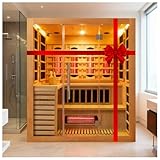
Infrared saunas suit beginners well for this routine. They heat your body directly with infrared panels rather than superheating the air around you, so the cabin usually feels gentler and easier to breathe in than a traditional sauna. You sit, you sweat, and you can step out the moment you have had enough.


Paid Links - As an Amazon Associate, I earn from qualifying purchases.
That gentler heat matters when cold water is next on the agenda. You want to arrive at the plunge warm and relaxed, not overheated or exhausted. If you are new to saunas, spend a few sessions using the infrared sauna on its own first, so you learn how your body responds to heat before adding cold water. Our guide to who should be cautious with infrared saunas is a useful pre-read if you have any health concerns.
The beginner protocol, step by step
The times below are conservative beginner starting points, not medical advice and not targets to hit. Individual tolerance varies widely, and shorter is always fine. The goal of a first session is to learn the routine, not to test your limits.


Paid Links - As an Amazon Associate, I earn from qualifying purchases.
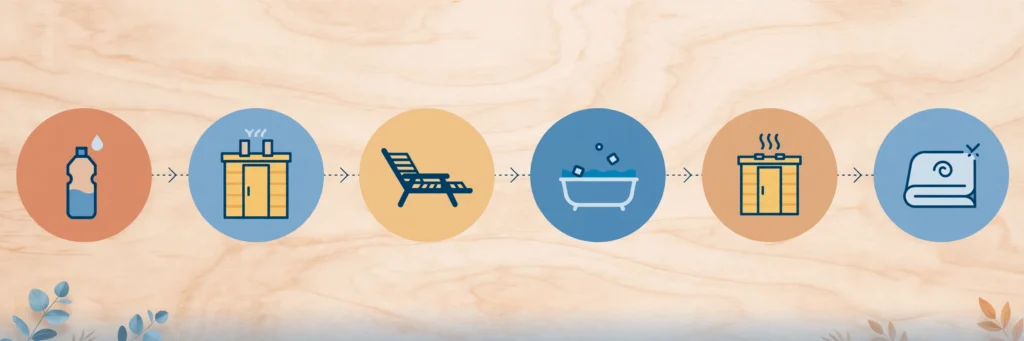
- Prepare. Drink water, have a light snack if hungry, and set out a towel, dry clothes, and water. Make sure someone else is nearby — never plunge alone as a beginner.
- Warm up in the infrared sauna. Use a comfortable, moderate heat rather than the maximum. Sit for a short first round — a few minutes is plenty — and step out once you feel warm and lightly sweaty.
- Rest and rinse. Sit for a couple of minutes, sip water, and let your breathing settle. A quick lukewarm rinse is optional.
- Enter the cold water gradually. Step in slowly, keep your hands on the edge, and breathe out slowly. Stay only briefly on your first attempt, and get out if you feel numbness or lose control of your breathing.
- Warm up again. Towel off, put on something dry, and return to the sauna for a second, equally short round. Many beginners stop after two rounds total.
- Finish warm and hydrated. End on the sauna round, not the plunge, for your first few sessions. Drink water, rest for a while, and eat something light. See our guidance on what to eat and drink around an infrared sauna session to plan the timing.
The cold-shock warning every beginner needs
A simple first-week plan
Two or three sessions in your first week is plenty, with a rest day between them. Keep every round short, keep the cold phase brief, and always finish warm. If a session leaves you feeling drained rather than refreshed, scale back the next one instead of pushing through.
- Session 1: one heat round, one brief cold dip, one final heat round — then rest and hydrate.
- Session 2: repeat session 1, only extending a round if the first session felt easy throughout.
- Session 3: try a third round if you want, still keeping the cold phase short and the finish warm.
Beginner mistakes worth avoiding
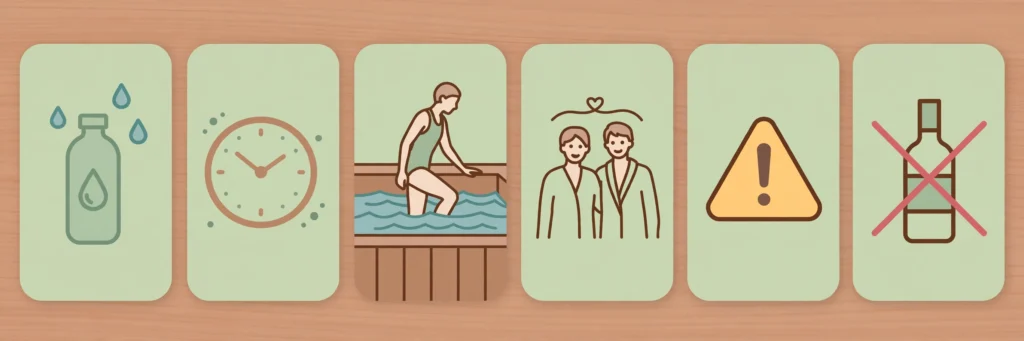
Do this: start short, enter cold water slowly, breathe steadily, finish warm, hydrate well, and bring a buddy.
Not this: maxing out the sauna heat, jumping into icy water, holding your breath, plunging alone, drinking alcohol first, or chasing a time target you saw online.
Another common mistake is treating contrast therapy as a shortcut to health. You may read dramatic online claims about immunity, recovery, or disease prevention — these are not established facts. Some sauna research often quoted, such as the Finnish cohort studies, is observational: it shows associations, not proof that saunas cause the outcomes, and those studies looked at traditional saunas rather than infrared models.


Paid Links - As an Amazon Associate, I earn from qualifying purchases.
Setting up your cold side
You do not need an expensive setup to start. A cold shower works as a first cold phase, and a basic plunge tub is the next step if you enjoy the routine. If you are shopping for one, our roundup of cold plunge tubs covers the main types and what to look for. Whatever you use, keep it clean, keep the water at a beginner-friendly coolness, and keep the edge within easy reach so you can exit fast.
Finally, listen to your body over any guide — including this one. Contrast therapy should feel invigorating, not punishing. If it regularly leaves you exhausted, headachy, or anxious, pause and talk to a healthcare professional before continuing. The best protocol is the one you can repeat comfortably, week after week.
Frequently asked questions
How long should a beginner stay in the cold plunge?
Keep it very brief at first — a short dip of well under a minute is plenty. Enter gradually, breathe steadily, and get out before you start shivering hard or feel numb. You can build up slowly over weeks, but there is no minimum time you must hit for the session to “count.”
Should I end on hot or cold?
As a beginner, end on the warm side. Finishing in the sauna lets your body rewarm comfortably and is the safer choice while you are still learning your tolerance. More experienced users sometimes finish cold, but that is not a goal you need to chase.
Can I use a cold shower instead of a plunge tub?
Yes — a cold shower is a perfectly good first cold phase. It is easier to control, easier to exit, and lets you cool down gradually from your feet upward. Many beginners start this way before deciding whether a plunge tub is worth buying.
How often can beginners do contrast therapy?
Two or three sessions per week, with rest days between them, is a sensible beginner rhythm. If you feel drained the next day, take an extra rest day rather than pushing on. Frequency matters far less than consistency and comfort.
Who should not try contrast therapy?
Skip it — or get medical clearance first — if you are pregnant, have a heart or circulation condition, low blood pressure, or take medication that affects heat or cold tolerance. Never plunge alone as a beginner, never use alcohol before a session, and stop immediately if you feel dizzy, unwell, or lose control of your breathing.