
An infrared sauna is a big purchase, and it is also a big box. Before you spend a few thousand dollars and give up a corner of your home, it is natural to ask whether renting one first is the smarter move. Renting lets you test the heat, the routine, and the space it takes up, all without a long term commitment. Buying gives you a sauna that is always there, at a cost per session that falls every time you use it.
This guide compares renting vs buying an infrared sauna across the three things that matter most: trial value, cost, and space. You will see worked cost examples for 2026, honest space and power numbers, and a simple decision framework you can apply in five minutes.
Please read first: this is not medical advice
Infrared saunas are wellness tools, not treatments. They do not cure illness, and they are not a substitute for medical care. If you are pregnant, live with a heart or circulation condition or low blood pressure, or take medication that affects how your body handles heat, check with your doctor before using a sauna. Keep sessions short when you start, drink water before and after, and step out right away if you feel dizzy, unwell, or overheated. Do not drink alcohol before a session.


#Paid Links
The Short Answer: Rent First If You Are Unsure, Buy If You Are Regular
If you have never used an infrared sauna, renting first is usually the better move. A few weeks of regular sessions will tell you more than any review can: whether you enjoy the heat, whether you actually make time for it, and whether the cabin fits your room and your routine. If you already use a sauna two or three times a week at a gym or spa, and you have a stable home with space for a cabin, buying usually wins on cost within two to three years.
The table below sums up the trade off in one view. The rest of this guide fills in the numbers behind each row, so you can check the verdict against your own home, budget, and habits.

#Paid Links
| Factor | Renting | Buying |
|---|---|---|
| Upfront cost | Low, often one month of rent or one session fee | High, about $150 to $4,500 depending on type (2026 estimates) |
| Cost over 3 years | About $2,160 at $60 a month, and it never stops | About $2,000 purchase plus small running costs, then nearly free per session |
| Trial value | Excellent, you test heat, size, and habit before committing | Low, unless the seller offers a home trial or easy returns |
| Space | Flexible, return it or fold it away when done | Permanent, the cabin needs a fixed spot in your home |
| Convenience | Good at home, poor if you must travel to a spa each time | Best, your sauna is ready whenever you are |
| Maintenance | Usually the rental company handles repairs | Yours to handle, including heater panels over time |
| Best for | First timers, renters, movers, and the curious | Regular users with a stable home and a fixed spot |
The right answer depends on how often you will use the sauna, how long you will stay in your current home, and how much you value flexibility over convenience. The sections below work through each factor in turn.
What Renting an Infrared Sauna Actually Means
Renting an infrared sauna is not one single product. It covers three quite different arrangements, and the costs, the trial value, and the practical hassles differ a lot from one type to the next.
Home rental: a sauna delivered to your door
With a home rental, a company delivers a portable cabin or a sauna blanket to your home for a monthly fee. Typical fees in 2026 run from about $30 to $90 a month, depending on the model and your area. A blanket is usually at the low end, while a one person cabin sits at the higher end. Delivery and collection fees may apply, so ask for the full first month total in writing before you agree.
Home rental is the closest thing to a true trial. You learn whether the sauna fits your room, whether the power supply copes, and whether you actually use it three times a week. Most agreements run month to month, so you can stop after one or two months if the habit does not stick. The trade off is that you never own the unit, so the monthly fee buys you use, not an asset. Some companies also offer rent to own, where monthly payments end in ownership, but the total usually exceeds the cash price, so read the contract with care.


#Paid Links
Pay per session: sauna at a spa, gym, or wellness studio
Pay per session means visiting a spa, gym, or wellness studio and booking a single infrared sauna session. Typical prices in 2026 run from about $20 to $45 per session, with multi session packs bringing the per session price down. This is the easiest way to try an infrared sauna for the first time, because there is no delivery, no installation, and no space needed at home.
The catch is convenience. A home sauna takes about a minute to start, while a spa visit adds travel, booking, and changing time. Many people who love the sauna at a spa use it less often than they expect once the novelty wears off, simply because the trip gets in the way. If you keep going twice a week for two months, that is strong evidence a home sauna would get real use.
What Buying an Infrared Sauna Actually Means
Buying means paying once, or in instalments, for a sauna that stays in your home. You choose the model, you find the space, and you look after it. In return, every session after the break even point costs little more than the electricity it uses. There are three main types to buy, and they differ sharply in price, space, and feel.
Sauna blankets: the cheapest way in
An infrared sauna blanket is a heated wrap you lie inside, usually on a bed or a yoga mat. Prices in 2026 typically run from about $150 to $500. Blankets need almost no floor space, they fold away into a cupboard, and they run from a standard wall outlet. They are the easiest option for small flats, for renters, and for anyone who wants to test infrared heat at the lowest possible cost.
The experience is different from a cabin, though. You lie flat, your head stays outside the blanket, and you cannot sit upright the way you can on a bench. Some people love the simplicity. Others find the blanket hot and close, and hard to relax in for a full session. Try both before you buy, because the feel matters as much as the price. Our comparison of a sauna blanket vs an infrared sauna cabin walks through the practical differences in detail.
Portable cabins and dome saunas: the middle ground
Portable cabins are small tent style or folding units with infrared panels, and dome saunas are curved pods you sit inside with your head out. Prices in 2026 typically run from about $300 to $900. They pack down for storage, they usually run from a standard outlet, and they suit homes where a wooden cabin will not fit. The trade off is build quality and heat. Portable units warm up well, but they rarely feel as solid or as even as a wooden cabin, and their panels may wear out sooner.
Portable models are a good rental choice too, because rental companies most often supply them. If you rent one for a month and love it, buying the same style is a low risk step. If you find it cramped or flimsy, you have learned that before spending money. See our guide to the best portable infrared saunas for the models that hold up best in everyday use.
Wooden cabins: the full home sauna
A wooden cabin is the classic home infrared sauna. You sit on a bench inside a small cedar or hemlock room, with heater panels around you. One person cabins in 2026 typically cost from about $1,200 to $3,000, and two person cabins from about $1,800 to $4,500. Larger cabins and premium brands cost more. Cabins need a fixed floor space, a nearby outlet, and in some cases a dedicated electrical circuit, which adds to the total cost.
Cabins are the most comfortable and durable option, and also the hardest to undo. Once assembled, a wooden cabin is heavy and awkward to move, and taking it apart, moving it, and rebuilding it takes hours and can damage joints and panels. If a move is likely within a year, rent or buy portable instead. Our guide to how to move an infrared sauna explains how to take a cabin apart safely. That is why buying a cabin deserves a trial first. If you are shopping in this price range, start with our guide to the best affordable infrared sauna models, then check the size and power numbers in the sections below before you order.
The Cost Comparison in Full
Cost is where most people start, and it is also where the numbers are easiest to get wrong. A rental looks cheap next to a $2,000 cabin, but the bill arrives every month and never ends. A purchase looks expensive on day one, but its cost per session falls with every use. The honest way to compare them is to add up the total cost over one, three, and five years for the same pattern of use.
Planning estimates, not quotes
All prices in this guide are 2026 estimates based on typical US listings and rental services. Real prices vary by brand, model, region, and installer. Treat the figures as planning ranges, get local quotes before you commit, and check current listings for the exact model you are considering. Electricity costs vary by state and tariff, so your running costs may differ from the examples here.
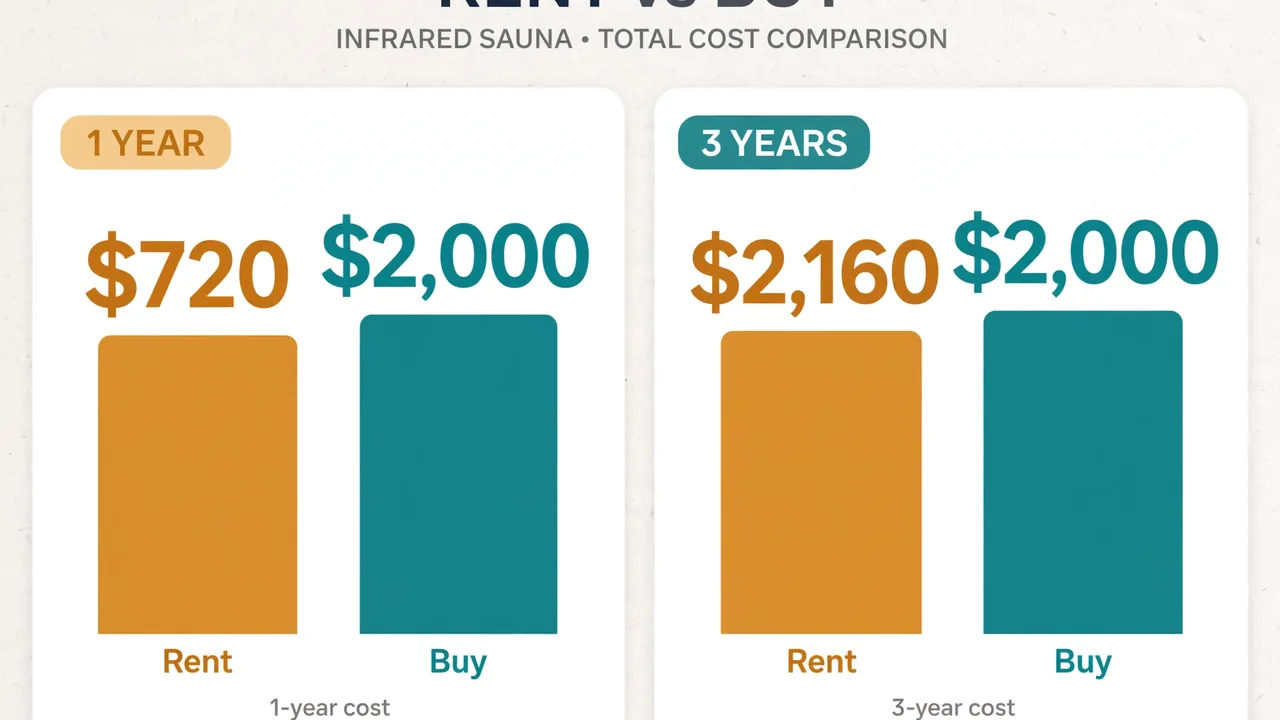
The table below uses one worked example: a one or two person cabin bought for $2,000, a home rental at $60 a month, and spa sessions at $30 each, twice a week. Your numbers will differ, but the pattern holds: renting wins in year one, buying pulls ahead by year three, and the gap grows every year after that.
| Option | Year 1 total | Year 3 total | Year 5 total | Cost per session in year 5 |
|---|---|---|---|---|
| Spa sessions, twice a week | About $3,120 | About $9,360 | About $15,600 | About $30 |
| Home rental, $60 a month | About $720 | About $2,160 | About $3,600 | About $7 at twice a week |
| Buy a $2,000 cabin | About $2,050 including running costs | About $2,150 including running costs | About $2,250 including running costs | About $4.30, falling each year |
| Buy a $350 blanket | About $375 including running costs | About $415 including running costs | About $455 including running costs | About $0.90 |
Two lessons stand out. First, spa sessions are by far the most expensive way to sauna regularly, even though a single visit feels cheap. At $30 a session twice a week, you would spend more in eight months than a mid range cabin costs to buy. Second, home rental and buying cross over at around three years. After that point, the buyer pulls ahead by about $720 a year at the rental rate in this example.
Running costs: the small number that still matters
Running an infrared sauna costs far less than most people expect. A typical session uses about 1 to 2 kilowatt hours of electricity, or roughly $0.30 to $0.60 per session at common US residential rates in 2026. Used twice a week, that is about $30 to $60 a year. Those are small numbers next to a rental fee, but they show how cheap an owned sauna is to run once the purchase is paid off.
Your exact running cost depends on cabin size, session length, temperature, and your local electricity rate. For a full breakdown by cabin size and session length, see our guide to how much it costs to run an infrared sauna.
Hidden costs on both sides
Neither option is free of extra costs, and the extras differ on each side. With a rental, watch for delivery and collection fees, damage deposits, and minimum rental periods. Some companies charge a setup fee on top of the first month, and some charge extra if the unit comes back dirty or damaged. Ask for every fee in writing before you sign.
With a purchase, the extras are delivery, installation, and any electrical work. Delivery for a wooden cabin often runs from free to about $200. If your cabin needs a dedicated circuit, a licensed electrician typically charges from about $200 to $800. Over the years, heater panels wear out and may need replacing, usually for about $200 to $600 depending on the model. A well kept cabin can also be resold for part of its purchase price, while rental payments buy you nothing to sell. For how long panels last and what replacement involves, see our guide to infrared sauna heater panel lifespan and replacement costs.
Space: The Trade Off Nobody Measures Twice
Space decides more purchases than price does. A sauna you cannot fit is a sauna you cannot use, however good the deal looks. Before you rent or buy, measure the spot where the sauna will live, and measure it twice: width, depth, and height, plus the doorways, hallways, and stairs on the delivery path.
The table below shows typical footprint and power figures for the three main types. Exact sizes and power ratings vary by brand and model, so always check the specification sheet for the exact unit you are considering, and leave a small air gap around a cabin for ventilation and for the door to open freely.
| Sauna type | Typical floor space | Typical power | Storage when not in use |
|---|---|---|---|
| Sauna blanket | About 60 by 90 cm, used on a bed or mat | About 800 watts, standard outlet | Folds into a cupboard |
| One person cabin | About 90 by 90 cm, plus door swing | About 1,500 watts, standard outlet in many models | Fixed, needs a permanent spot |
| Two person cabin | About 120 by 100 cm, plus door swing | About 2,200 watts, often a dedicated circuit | Fixed, needs a permanent spot |
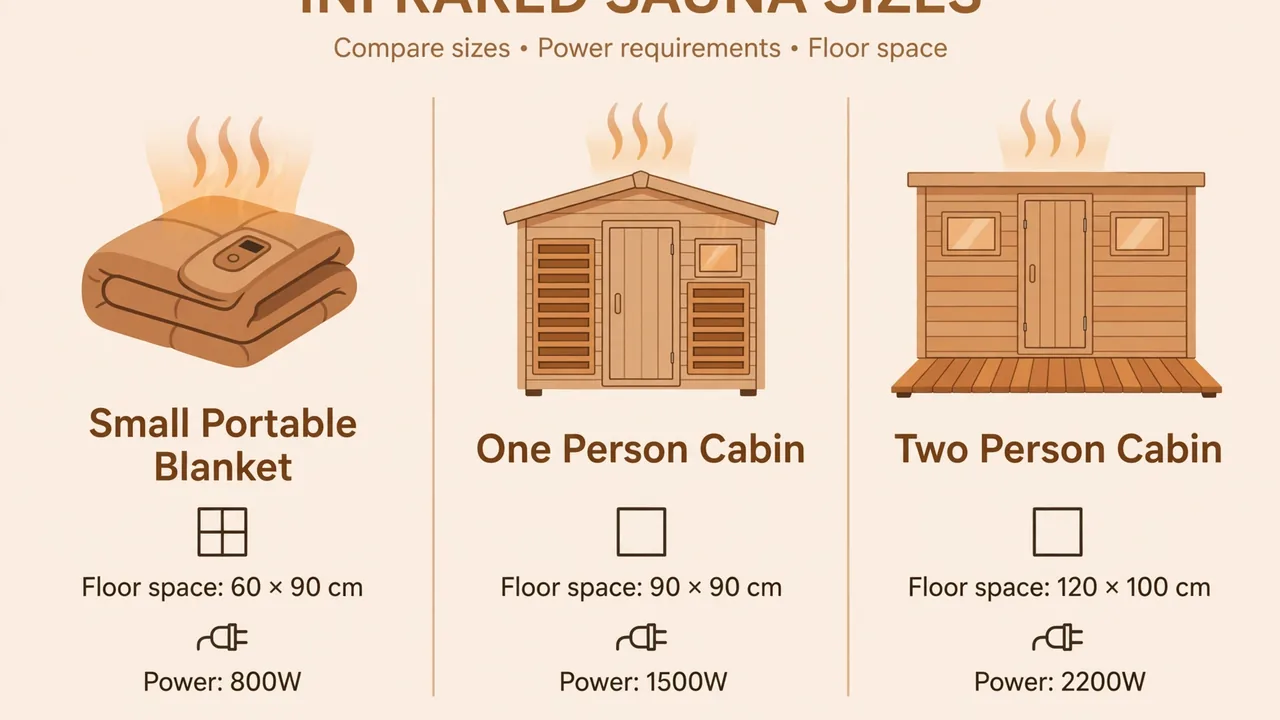
Renting shines on space because it is reversible. If the cabin crowds your bedroom, return it at the end of the month and try a blanket instead. If you buy a cabin and it crowds the room, you are stuck with it, or you face the cost and hassle of reselling it. That reversibility is worth a lot in a small home. If you rent your home, check your tenancy agreement and ask your landlord in writing before installing anything fixed or running new wiring.
Think about the room itself, not just the floor plan. A sauna needs a dry spot with good airflow, away from damp and direct water. Garages, basements, and spare bedrooms can all work, but each has quirks. A basement may need better ventilation, and a garage may get cold in winter, which means longer warm up times. If you are weighing a basement spot, read our guide to an infrared sauna in a basement before you decide. If you live in a flat, read our guide to an infrared sauna in an apartment, which covers landlord permission, noise, and shared walls.
Power and Installation: The Part People Forget
Power is the practical detail that turns a good purchase into a frustrating one. Most small infrared saunas, including blankets and many one person cabins, run from a standard household outlet. Larger cabins often need a dedicated circuit, which means an electrician, a new breaker, and sometimes a new cable run. That is general guidance only: check your local electrical code and your permit office, and always use a licensed electrician for new circuits or panel work.
Renting helps here too, because it lets you test the power question at low risk. If your outlet trips or your lights dim when the sauna runs, you have learned that your home needs electrical work before you own a cabin. If you buy first and then find the problem, you pay for the electrician on top of a purchase you cannot easily return. Our guide to infrared sauna power requirements explains outlets, circuits, and breakers in plain language, and our infrared sauna installation guide covers delivery, assembly, and the checks to run before your first session.
The Trial Question: How Renting Helps You Choose Well
The strongest reason to rent is not money. It is information. A trial tells you things no specification sheet can, including how your body reacts to infrared heat and whether a 20 minute session fits your evening or feels like a chore. Most buyers who regret a sauna purchase do not regret the model. They regret buying before they knew whether they were sauna people at all.
A good trial lasts at least three to four weeks, with two or three sessions a week. That is long enough for the novelty to fade and for your real routine to show up. A single session only tells you whether you liked the heat. A month tells you whether you will keep going back. Keep a simple log: the date, the session length, the temperature, and one line on how you felt afterwards. If the log shows steady use, buying starts to make sense. If it shows gaps and excuses, renting longer, or stopping, is the wiser choice.
What to test during your trial month
- Heat and comfort: try low, medium, and higher temperatures, and note which setting feels pleasant rather than punishing.
- Session length: start at 10 to 15 minutes, build up slowly, and find a length you can repeat without feeling drained.
- Time of day: test morning and evening sessions, and see which fits your schedule and your sleep. Our guide to the best time to use an infrared sauna explains the trade offs.
- Space and noise: check whether the cabin blocks a walkway, whether the fan bothers anyone, and whether the room feels stuffy afterwards.
- Recovery and routine: notice whether sessions fit around workouts, work, and family life, or keep getting pushed aside.
Renting Wins, Buying Wins: A Five Minute Decision Framework
If the tables have not settled the question yet, work through the three questions in the chart below. Answer them honestly, in order, and the right choice usually becomes clear.
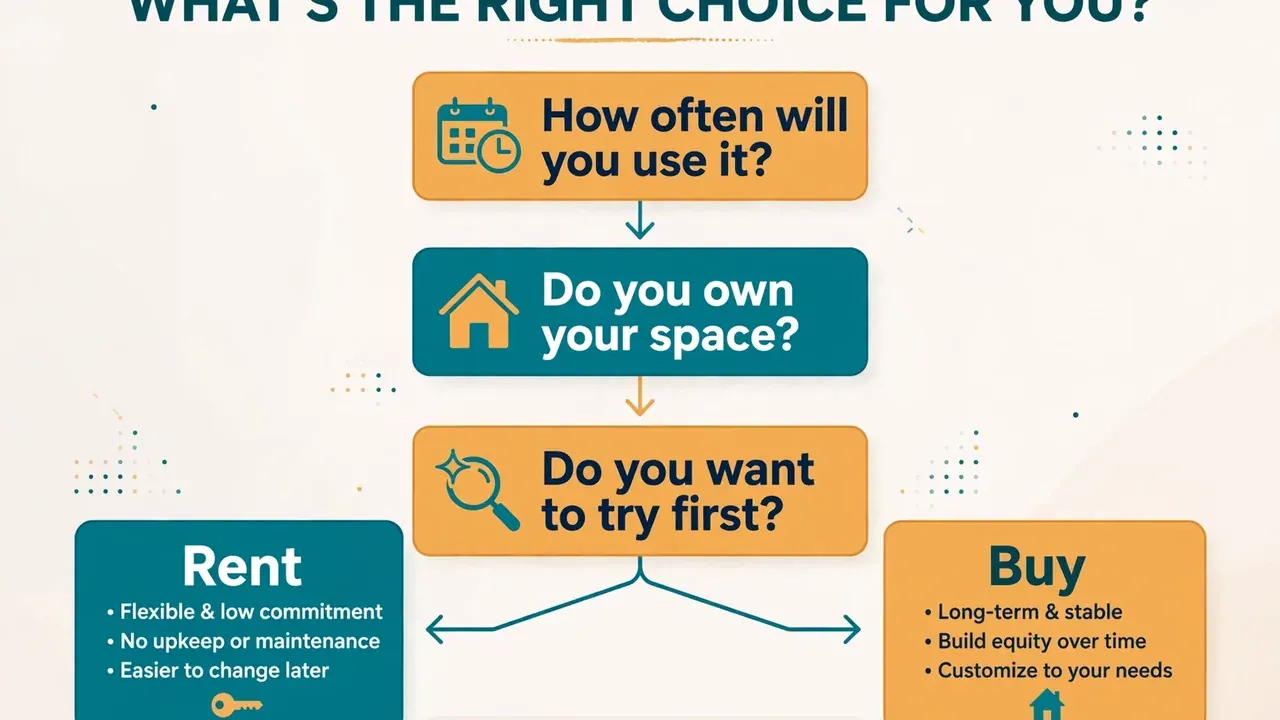
Renting usually wins when
- You have never used an infrared sauna and want a real trial before spending over $1,000.
- You rent your home, or you expect to move within the next year or two.
- Your space is tight, and you are not sure a cabin will fit your daily life.
- You prefer low commitment and no maintenance, even if it costs more over time.
Buying usually wins when
- You already use a sauna two or more times a week and have done so for months.
- You own your home and have a fixed spot with a suitable outlet.
- You plan to stay put for at least three years.
- You value walking in whenever you like, with no booking, travel, or monthly bill.
Quick decision checklist
If you can tick at least four of these, buying is probably right for you. If you tick two or fewer, rent first.
- I have used an infrared sauna at least 10 times and enjoyed it.
- I can picture using it twice a week or more for the next year.
- I have a measured spot in my home where a cabin fits with room to spare.
- My outlet and circuit can handle the model I want, or I can afford an electrician.
- I plan to stay in this home for at least three years.
- I am happy to clean the cabin and look after it over time.
Contracts and Warranties: What to Check Before You Sign or Click Buy
The paperwork matters as much as the price. A clear contract protects you whether you rent or buy, and a vague one is a warning sign. Read the terms before money changes hands.
Before you rent, check
- The full monthly fee, including delivery, collection, setup, and any deposit.
- The minimum rental period and the notice period for returning the unit.
- Who pays for repairs if a heater panel fails or a control panel stops working.
- What counts as damage, and how much of your deposit you could lose.
Before you buy, check
- The warranty length for the cabin, the heater panels, and the electrics, listed separately.
- The returns policy, including the return window, who pays return shipping, and any restocking fee.
- Whether the seller offers a home trial, and what condition the unit must be in to return it.
- The exact power requirement and whether your home needs a dedicated circuit.
One more check applies to both options: the seller or rental company itself. Look for a real address, a working phone number, and reviews that mention delivery, after sales support, and warranty claims. A company that answers questions before the sale is far more likely to answer them after it.
A Simple Plan: Try, Measure, Then Decide
If you take one plan from this guide, take this one. It costs little, it removes the guesswork, and it works whether you end up renting long term or buying with confidence.
- Book two or three pay per session visits at a local spa or studio, and try different temperatures and session lengths.
- If you enjoyed the sessions, rent a home unit for one month, ideally the same type you would buy.
- Measure your space, check your outlet, and note how the unit fits your room and routine.
- Keep a simple session log for four weeks, and count how many sessions you actually did.
- At the end of the month, run the numbers: multiply your rental fee by 36, compare it with the purchase price plus running costs, and ask whether you will still live here in three years.
- If the answer is yes on all counts, buy the model you trialled. If any answer is no, keep renting, or try a different type.
That plan turns a $2,000 gamble into a $60 experiment. It is the cheapest insurance a sauna buyer can purchase, and it is the reason renting first is the default advice in this guide.
Frequently Asked Questions
Is it cheaper to rent or buy an infrared sauna?
Renting is cheaper in the first year, and buying is usually cheaper after about three years. At $60 a month, renting costs about $720 in year one and $2,160 over three years, while a $2,000 cabin costs about $2,050 in year one including running costs and about $2,150 over three years. Your exact break even point depends on the rental fee and the purchase price you choose.
Can you rent an infrared sauna for home use?
Yes, some companies rent portable cabins and sauna blankets for home use on a monthly basis, usually for about $30 to $90 a month in 2026. Availability varies by area, so check local rental services and ask for the full first month cost, including delivery and any deposit, before you agree.
How much does it cost to buy an infrared sauna?
Sauna blankets typically cost about $150 to $500, portable cabins about $300 to $900, one person wooden cabins about $1,200 to $3,000, and two person wooden cabins about $1,800 to $4,500 in 2026. Delivery and any electrical work are extra, so budget for those on top of the purchase price.
How much space do I need for an infrared sauna?
A sauna blanket needs almost no floor space and folds away. A one person cabin needs about 90 by 90 cm plus room for the door to open, and a two person cabin needs about 120 by 100 cm plus door swing. Measure your spot twice, check the delivery path, and leave a small air gap around the cabin for ventilation.
Do I need an electrician to install an infrared sauna?
Most blankets and many one person cabins run from a standard household outlet and need no electrician. Larger cabins often need a dedicated circuit, which must be installed by a licensed electrician. Check the specification sheet for your exact model, check your local electrical code, and never attempt panel or wiring work yourself.
Is renting a good way to try an infrared sauna before buying?
Yes, renting for a month is one of the best ways to try an infrared sauna before buying. A four week trial with two or three sessions a week tells you whether you enjoy the heat, whether the sauna fits your space, and whether you will actually use it often enough to justify a purchase.
The Bottom Line
Renting vs buying an infrared sauna comes down to a simple trade. Renting buys you information and flexibility at a monthly price that never ends. Buying buys you convenience and low running costs at a one off price that takes about three years to pay back. If you are new to infrared heat, rent first and let a trial month answer the questions no guide can. If you are already a regular user with a stable home and a measured spot, buying is the better deal.
Whatever you choose, start gently. Keep sessions short at first, drink water before and after, and step out if you feel unwell. Check with your doctor if you have a health condition, are pregnant, or take medication that affects heat tolerance. Before you order a cabin, read our guide to is an infrared sauna safe and our infrared sauna dangers guide, so you know the safety basics before your first session at home.
Sources and Further Reading
Health claims in this guide are kept general on purpose. Observational research, including the Finnish cohort study by Laukkanen and colleagues published in JAMA Internal Medicine in 2015, has reported associations between frequent sauna use and cardiovascular outcomes, but association is not proof of cause. Talk to your doctor about whether sauna use suits your health.