
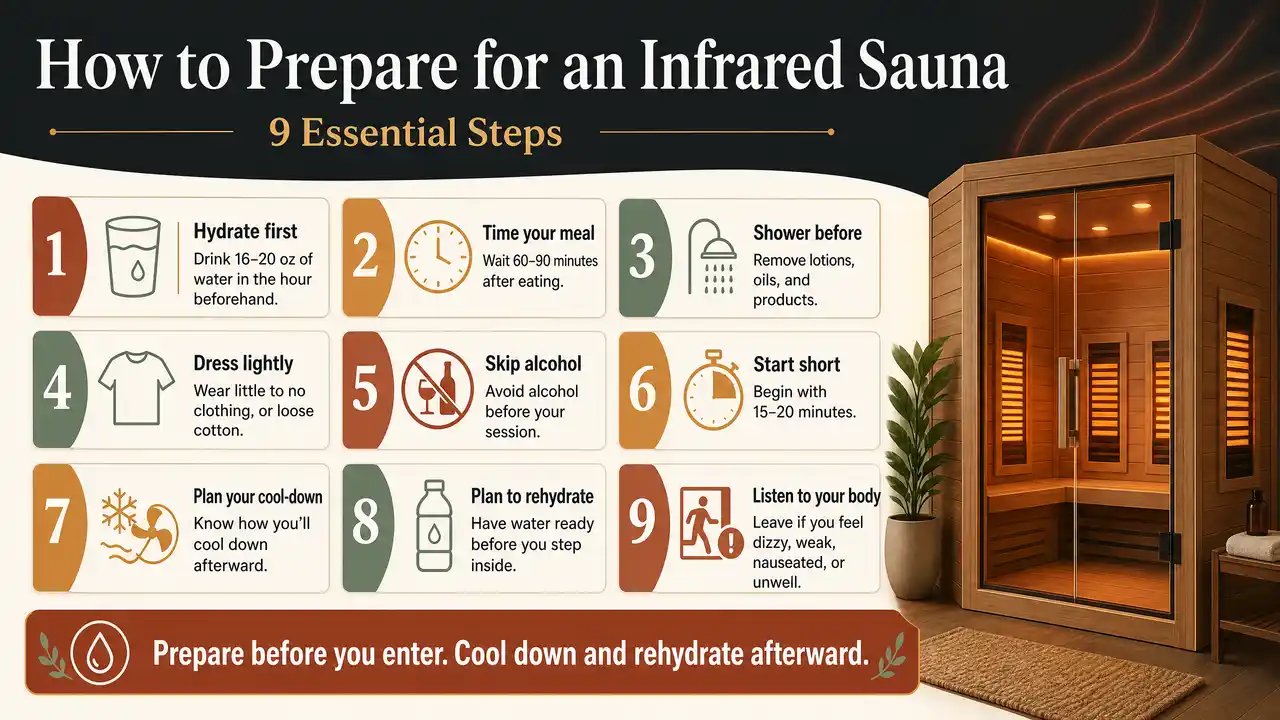
To prepare for an infrared sauna, drink 16–20 oz of water in the hour beforehand, wait 60–90 minutes after eating, shower to remove lotions and oils, wear little to no clothing (or loose cotton), skip alcohol, and plan a session of 15–20 minutes if you’re a beginner. Have a plan for cooling down and rehydrating afterward before you ever step inside.
That’s the short version. But if this is your first time, or your sessions haven’t been living up to the hype, the details matter and most guides skip the parts that actually trip people up. Here’s what to do, in order, and why each step earns its place.
Quick Pre- Infrared Sauna Session Checklist
- Drank 16–20 oz of water in the last hour
- Ate a moderate meal 60–90 minutes ago (or a light snack if needed)
- Showered and skin is free of lotion, oil, or makeup
- Wearing minimal or loose, breathable clothing
- No alcohol; caffeine kept light
- Decided on session length in advance
- Phone left outside; water bottle within reach
- Have a cooldown and rehydration plan ready for afterward
What Happens in Your Body During an Infrared Sauna Session
Before the how, it helps to know the why. An infrared sauna doesn’t heat the air around you the way a traditional sauna does. Infrared panels emit radiant heat that warms your body directly, which is why infrared cabins run cooler (often 110–140°F) than a traditional dry sauna, yet you can still work up a serious sweat.
That direct heating raises your skin and core temperature, sends more blood to your skin’s surface, and increases your heart rate a response some researchers have compared to the cardiovascular demand of a brisk walk. Your body responds by sweating to cool itself down.


Paid Links - As an Amazon Associate, I earn from qualifying purchases.
That’s the entire mechanism behind almost every benefit people chase in a sauna, and it’s also exactly why preparation matters: you’re asking your cardiovascular and cooling systems to do real work, and they perform better when you’ve set them up properly.
How to Prepare for an Infrared Sauna (9 Steps Guide)
1. Hydrate 30–60 Minutes Before You Start
This is the single most important step, and it’s the one people skip most often. You can lose a meaningful percentage of your body’s fluid through sweat during a session, and if you start out even mildly dehydrated, you’ll feel it as a headache, dizziness, or an early exit.



Paid Links - As an Amazon Associate, I earn from qualifying purchases.
Aim for 16–20 ounces (about 500–600 ml) of water in the hour before your session. Plain water is fine for most people, but if you sweat heavily or plan a longer session, add a pinch of sea salt or a low-sugar electrolyte source, since sweat carries out sodium, potassium, and magnesium along with water. Skip sugary sports drinks and juice the added sugar doesn’t help with heat tolerance.
Don’t wait until you feel thirsty. Thirst lags behind actual fluid loss, so by the time you notice it, you’re already a step behind.
2. Time Your Last Meal
You want to be neither starving nor stuffed. A full stomach pulls blood toward digestion right when your body needs that blood flow directed toward your skin to cool you down, which can leave you feeling sluggish or nauseated. An empty stomach, on the other hand, can bring on light-headedness once the heat kicks in.
The sweet spot is finishing a moderate meal 60–90 minutes before your session. If you’re hungry closer to your start time, a light snack a banana, a small handful of nuts is a better choice than anything heavy, fried, or rich. Learn more what is the best time to eat before an infrared sauna session.


Paid Links - As an Amazon Associate, I earn from qualifying purchases.
3. Shower First (No Lotions, No Perfume)
Rinse off before you go in, even if you showered earlier in the day. Lotion, sunscreen, makeup, deodorant, and body oil all sit on top of your skin and can partially block your pores — the same pores you need wide open to sweat effectively and let infrared heat do its job.
A warm-water rinse is enough; soap isn’t required. If you’re someone who dry brushes, doing it just before your shower can help clear away dead skin and support circulation, though this step is optional, not essential.
4. Choose the Right Clothing or None
Infrared heat interacts directly with skin, so less fabric between you and the panels means more of the radiant heat actually reaches you. Many people go in wearing nothing, a towel, or minimal loose-fitting cotton like a swimsuit or gym shorts. If you do wear something, stick to natural, breathable fabric synthetic material can trap heat unevenly and doesn’t let sweat evaporate the way you want it to.
Whatever you choose, bring a towel to sit on and one to wipe sweat as it builds. Leaving sweat sitting on your skin gives it a chance to be reabsorbed, along with whatever it’s carrying out.
5. Skip Alcohol and Go Easy on Caffeine
Alcohol affects blood pressure and heart rate in ways that work against what a hot sauna is already doing to your cardiovascular system. Combining the two increases the risk of dizziness, fainting, and in more serious cases heat-related illness. If you’ve been drinking, or you’re nursing a hangover, skip the sauna until you’ve fully rehydrated and the alcohol has cleared your system; sweating out a hangover is a myth that tends to make dehydration worse, not better. What else to avoid before and after your session?
Caffeine is a milder version of the same problem: it’s a mild diuretic, so a large coffee right before your session works against your hydration efforts. You don’t need to cut it out entirely just don’t stack a big cup of coffee on top of an already-tight hydration window.
6. Warm Up Your Circulation First (Optional but Effective)
This step isn’t required, but people who do it often report a more comfortable session. Light movement a short walk, a few sun salutations, some gentle stretching dilates your blood vessels and gets circulation moving before you add heat on top of it. It’s a small thing, but it can make the first five minutes in the sauna feel less like a shock and more like a continuation of what your body’s already doing.
7. Set Up Your Sauna Environment
A few small setup choices change how the session actually feels:
- Turn it on early. Infrared panels start emitting heat as soon as they’re switched on you don’t need to wait for the cabin to reach full temperature before stepping in. Many people prefer entering during the warm-up phase for a more gradual start.
- Leave your phone outside. Heat and moisture aren’t good for electronics, and a sauna session is one of the few genuinely screen-free windows in most people’s day. Use it.
- Bring water in. Keep it within reach (in a non-plastic bottle if your sauna instructions call for that) so you’re not tempted to skip mid-session hydration.
- Decide on music or silence in advance. If your sauna has chromotherapy lighting or a speaker, pick your setting before you start rather than fiddling with settings once you’re already warm.
8. Plan Your Session Length in Advance
Decide how long you’re staying before you go in, rather than deciding in the moment. Beginners tend to do best starting around 15–20 minutes and building up gradually as their heat tolerance increases. See the table below for a fuller breakdown by experience level.
9. Decide How You’ll Spend the Time
The sauna works best as a break from stimulation, not another screen to stare at. Before you go in, pick how you’ll use the time: slow breathing, meditation, simply sitting with your thoughts, or light stretching. Deciding in advance means you won’t spend the first few minutes bored and reaching for your phone.
Beginner vs. Experienced Session Guidelines
| Experience Level | Suggested Session Length | Suggested Frequency | Notes |
|---|---|---|---|
| Beginner (first 2–3 weeks) | 10–15 minutes | 2–3 times per week | Focus on comfort, not duration. Exit any time you feel unwell. |
| Intermediate | 15–25 minutes | 3–4 times per week | Increase time gradually, in 5-minute increments, as tolerance builds. |
| Experienced | 20–40 minutes | 3–5 times per week, some daily | Even regular users should still hydrate and cool down deliberately every session. |
These ranges are general guidance, not medical instructions your own tolerance, health status, and how your body responds on a given day should always take priority over any chart.
What to Do During Your Infrared Sauna Session
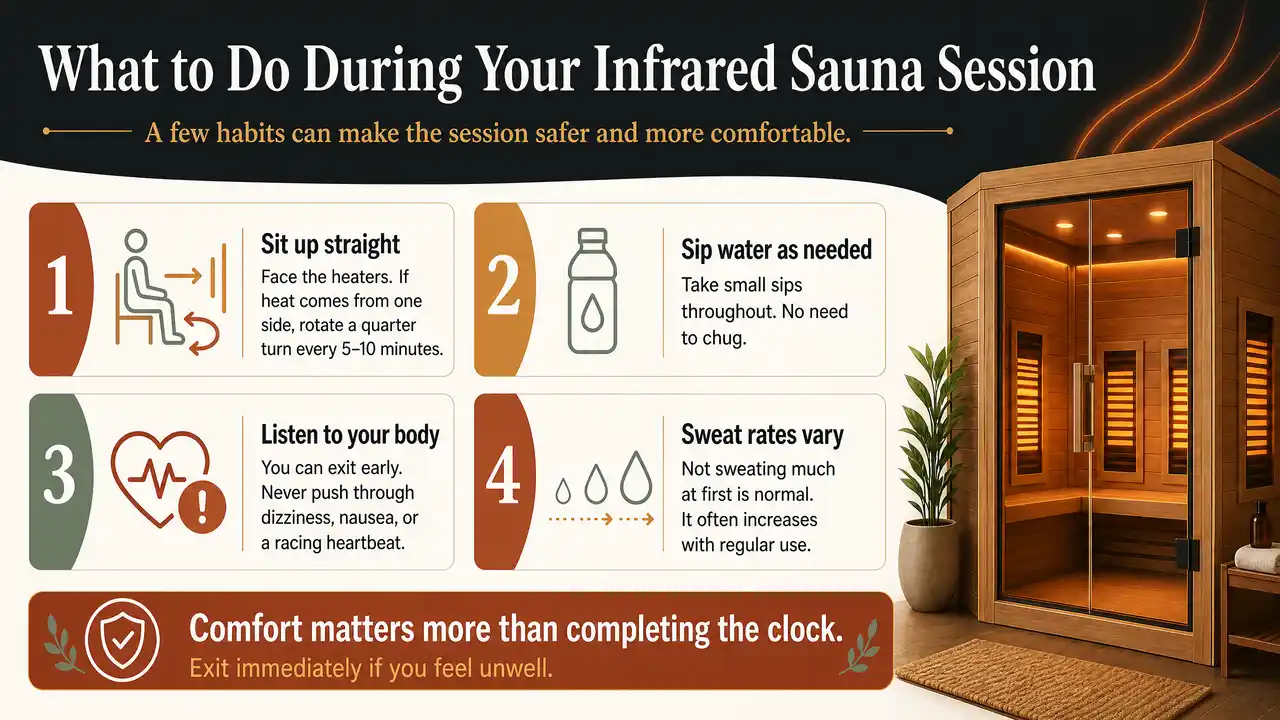
Preparation sets the stage, but a few habits during the session matter too:
- Sit up straight, facing the heaters. Most infrared panels are positioned to heat the front and back of your torso. If your sauna only heats from one side, rotate a quarter turn every 5–10 minutes for more even coverage.
- Sip water as needed. You don’t have to chug it, but small sips throughout the session help offset ongoing fluid loss.
- Pay attention to how you feel, not the clock. It’s fine to exit early. It’s not fine to push through dizziness, nausea, or a racing heartbeat to “finish” a planned session length.
- Everyone sweats at a different rate. If you’re new to sauna use, don’t be discouraged if you don’t sweat much the first few times this is normal and tends to increase with regular use.
What to Do After Your Infrared Sauna Session
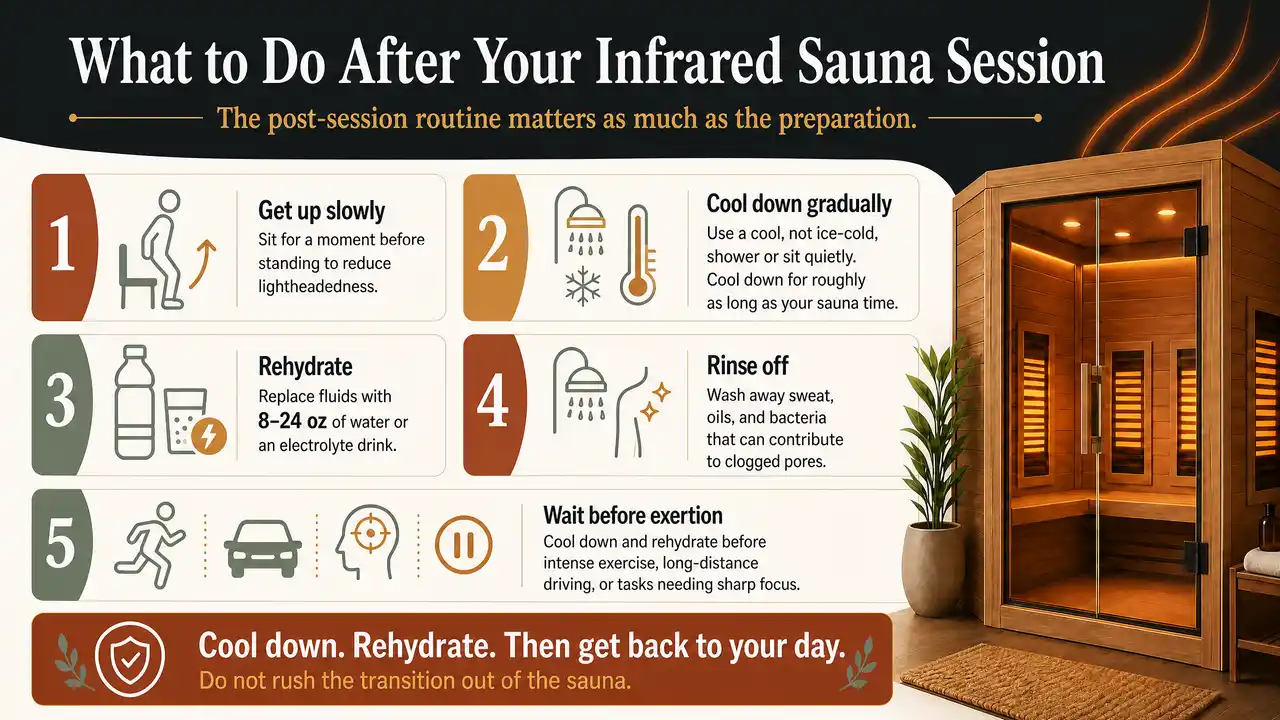
What happens after your session matters almost as much as what happens before it, and it’s the step most beginners rush.
- Get up slowly. Standing too quickly after time in the heat can cause a brief drop in blood pressure and lightheadedness. Sit for a moment before standing.
- Cool down gradually. A cool (not ice-cold) shower or a few minutes sitting quietly lets your core temperature come back down at a manageable pace. Many people find it helpful to spend roughly as much time cooling down as they spent in the sauna.
- Rehydrate. Replace fluids with 8–24 ounces of water or an electrolyte drink, depending on how long you were in and how much you sweat.
- Rinse off. Sweat left on the skin can mix with oils and bacteria and contribute to clogged pores. A rinse — cool or lukewarm — clears that away.
- Give yourself a few minutes before anything strenuous. Save intense exercise, driving long distances, or anything requiring sharp focus for after you’ve fully cooled down and rehydrated, not immediately after stepping out.
Who Should Not Use an Infrared Sauna (or Should Check With a Doctor First)
Infrared saunas are generally well tolerated by healthy adults, but they’re not risk-free for everyone. Talk to a doctor before use, or avoid sauna use altogether, if any of the following apply to you:
- Pregnancy. Raising core body temperature is generally not recommended during pregnancy; most guidance is to avoid infrared sauna use entirely and to check with your OB if you have questions.
- Heart conditions. Unstable angina, a recent heart attack, decompensated heart failure, or uncontrolled high or low blood pressure all warrant medical clearance first — sauna heat places a real cardiovascular demand on your body.
- Current illness or fever. Adding heat stress on top of an active infection can push your body temperature to an unsafe level.
- Certain medications. Diuretics, beta-blockers, and some blood pressure or blood-thinning medications can affect how your body handles heat and fluid loss. Check with a doctor or pharmacist if you’re on any of these.
- Alcohol or recreational drug use. Never combine sauna use with alcohol or drugs — this is one of the most common factors in sauna-related medical incidents.
- Young children. Most guidance advises against infrared sauna use for children under 12, since children regulate heat differently than adults.
- Severe dehydration or heat sensitivity conditions. If you’re already dehydrated, running a fever, or have a condition affecting your ability to sweat or regulate temperature, skip the session.
This isn’t a complete medical list, and it isn’t a substitute for professional advice — if you have any chronic condition or you’re unsure, a quick conversation with your doctor before you start a sauna routine is worth it.
Stop your session immediately and seek help if you experience: severe dizziness, confusion, chest pain, a rapid or irregular heartbeat, nausea that doesn’t pass, or any symptom that feels like more than normal warmth and sweating.
Common Mistakes That Ruin a Session
- Skipping water because you “forgot.” This is the number one reason people cut sessions short.
- Going in right after a heavy meal. You’ll likely feel sluggish rather than relaxed.
- Wearing synthetic fabric or too many layers. You’ll block the heat you’re trying to absorb.
- Setting an ambitious session length as a first-timer. Forty minutes on day one is a common way to have a bad first experience and never go back.
- Standing up too fast at the end. A quick way to feel dizzy for no good reason.
- Bringing your phone in. Not a safety issue, but it undercuts the entire point of the session.
Myth vs. Fact
Myth: You have to sweat heavily for the session to “count.” Fact: Sweat rate varies enormously from person to person and session to session. Consistency matters more than how visibly you’re sweating.
Myth: You can sweat out a hangover. Fact: A hangover is largely driven by dehydration, and sweating in a hot sauna while already dehydrated from alcohol can make things worse, not better.
Myth: More time in the sauna always means more benefit. Fact: Longer isn’t automatically better. Regular, moderate sessions you can sustain over months tend to outperform occasional marathon sessions.
Myth: Infrared saunas are risk-free because they run cooler than traditional saunas. Fact: Lower cabin air temperature doesn’t mean lower core body temperature. The same hydration and health precautions still apply.
FAQs
How much water should I drink before an infrared sauna?
Aim for about 16–20 ounces (500–600 ml) in the hour before your session and continue sipping water during and after.
Should I shower before an infrared sauna?
Yes. Rinsing off removes lotion, oil, sunscreen, and makeup that can block pores and interfere with sweating.
What should I wear in an infrared sauna?
As little as possible, or loose, breathable natural fabric like cotton. Synthetic materials trap heat unevenly and limit how much infrared heat actually reaches your skin.
Can I eat before an infrared sauna?
You can, but time it. Finish a moderate meal 60–90 minutes beforehand rather than going in on a full or completely empty stomach.
How long should a beginner stay in an infrared sauna?
Start with 10–15 minutes and build up gradually over a few weeks as your tolerance increases.
Is it safe to drink coffee before a sauna?
A small amount is usually fine, but heavy caffeine right before your session can work against your hydration and add to cardiovascular load. Keep it light.
Can I use an infrared sauna every day?
Many healthy adults can use one daily, as long as they stay properly hydrated and pay attention to how their body responds. If you’re new, build up frequency gradually rather than starting daily.
Should I exercise before or after my sauna session?
Light movement before a session (a short walk or gentle stretching) can help circulation. Save intense exercise for after you’ve fully cooled down and rehydrated not immediately before or during.
Is it normal not to sweat much during my first few sessions?
Yes. Sweat response varies by person and tends to increase with regular sauna use.
Can I bring my phone into the sauna?
It’s not recommended. Heat and humidity aren’t good for electronics, and most sauna manufacturers advise against it.
What should I do if I feel dizzy during a session?
Exit the sauna, sit or lie down, and rehydrate. If dizziness is severe or doesn’t pass quickly, seek medical attention.
Can I use an infrared sauna if I’m pregnant?
Most guidance advises against it, since raising core body temperature during pregnancy carries risk. Talk to your OB before considering it.
How soon after a workout can I use an infrared sauna?
Many people prefer using the sauna after exercise, once their heart rate has settled, for recovery purposes. Going in for a long session immediately before intense exercise can add fatigue and dehydration risk.
Do I need to take a cold shower after an infrared sauna?
A cool shower isn’t mandatory but cooling down gradually with a cool rinse or a few minutes of rest — helps your body return to baseline comfortably and closes pores that opened during sweating.
What’s the ideal temperature for an infrared sauna session?
Most infrared saunas operate between about 110°F and 140°F (43–60°C), lower than a traditional sauna. The right setting depends on your comfort and experience level.
My Final Thoughts
Preparing for an infrared sauna isn’t complicated, but the small details are what separate a session that leaves you feeling drained from one that leaves you feeling genuinely good. Hydrate ahead of time, time your meal, shower first, dress light, skip the alcohol, and plan your session length before you step in. Pay just as much attention to how you cool down and rehydrate afterward. If you have any underlying health condition, get medical clearance first — for everyone else, a little preparation is really all it takes to get consistent, comfortable results.