
You have likely been standing in a locker room hallway and stared at two unmarked doors and selected one. One was bone-dry and blistering. The other fogged up your view before you even got through the door. Similar objective – sweat, relax, recover – but the two distinctly different experiences.
Which one is the one you should choose?
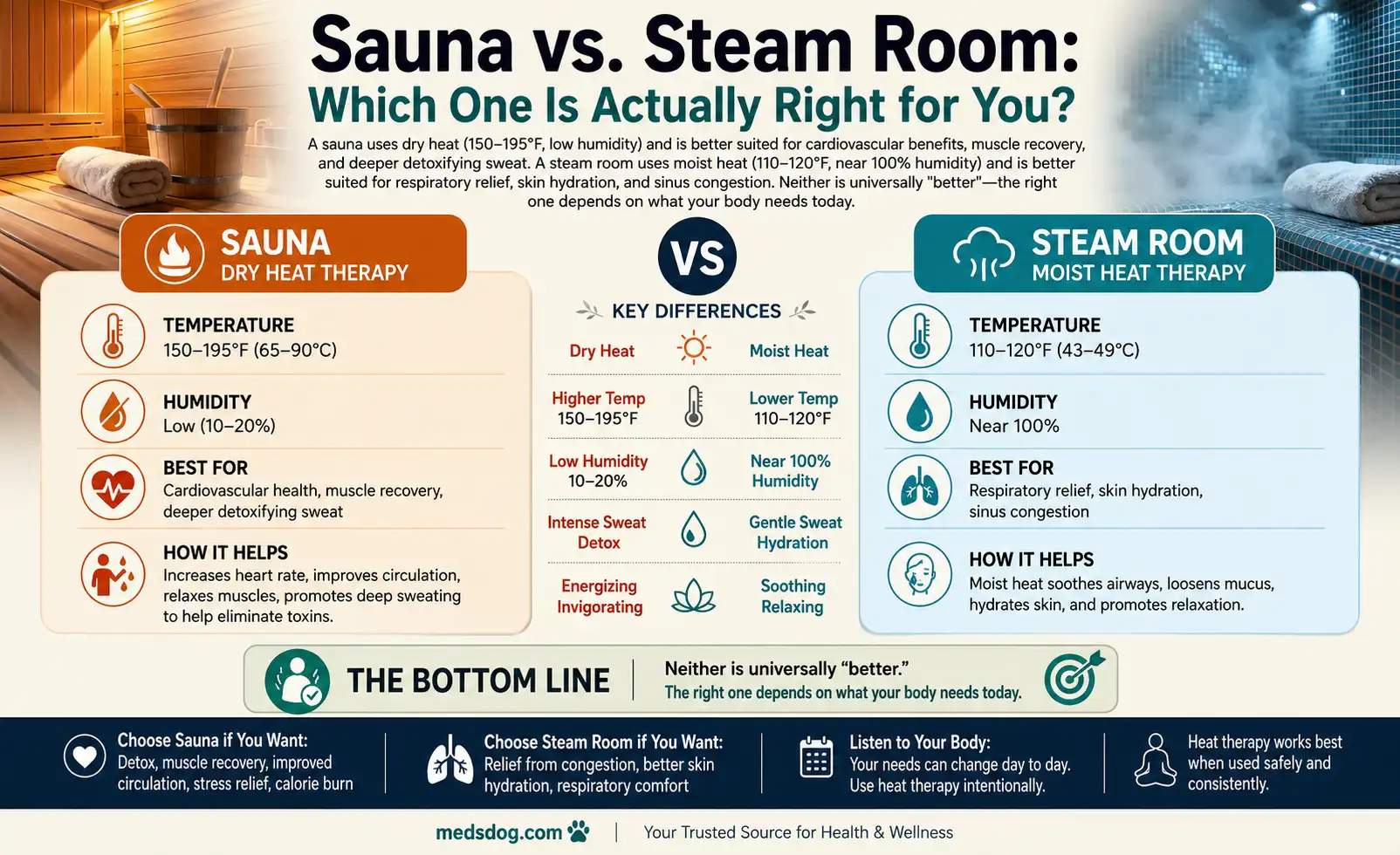
The short answer: A sauna uses dry heat (150–195°F, low humidity) and is better suited for cardiovascular benefits, muscle recovery, and deeper detoxifying sweat. A steam room uses moist heat (110–120°F, near 100% humidity) and is better suited for respiratory relief, skin hydration, and sinus congestion. Neither is universally “better” the right one depends on what your body needs today.


Paid Links - As an Amazon Associate, I earn from qualifying purchases.
Disclaimer: All the information in this guide is for informational purposes only. Speak with a healthcare professional beforehand if you are pregnant, have heart disease, abnormal blood pressure, a recent heart attack or stroke, epilepsy, or take medications that affect fluid balance or blood pressure.


Paid Links - As an Amazon Associate, I earn from qualifying purchases.
Below, we’ll break down exactly how each one works, what the science actually says about the benefits, who should avoid them, and how to choose (or alternate) between the two like a pro.
Key Takeaways
- Temperature: Saunas run 150–195°F; steam rooms stay cooler at 110–120°F.
- Humidity: Saunas sit at roughly 5–30% humidity; steam rooms hover near 95–100%.
- Best for muscles and heart health: Saunas, thanks to higher heat and evaporative sweating.
- Best for breathing and skin: Steam rooms, thanks to moisture that loosens mucus and hydrates skin.
- Session length: 10–20 minutes for saunas, 10–15 minutes for steam rooms — never treat either as an endurance test.
- Both work through “hormesis”: a mild, controlled stress response that can support cardiovascular and cellular health over time.
Sauna vs. Steam Room Overview
| Feature | Sauna | Steam Room |
|---|---|---|
| Heat type | Dry heat | Moist heat |
| Temperature | 150–195°F (65–90°C) | 110–120°F (43–49°C) |
| Humidity | 5–30% | 95–100% |
| Heat source | Wood stove, electric heater, hot rocks, or infrared panels | Steam generator boiling water |
| Best known for | Circulation, muscle recovery, cardiovascular health | Respiratory relief, skin hydration, sinus congestion |
| Typical session | 10–20 minutes | 10–15 minutes |
| Sweat evaporation | Yes — sweat evaporates off skin | No — humidity prevents evaporation, so skin stays wet |
| Feel | Intense, dry, sharp heat | Heavy, thick, enveloping heat |
What’s the Difference Between a Sauna and a Steam Room?
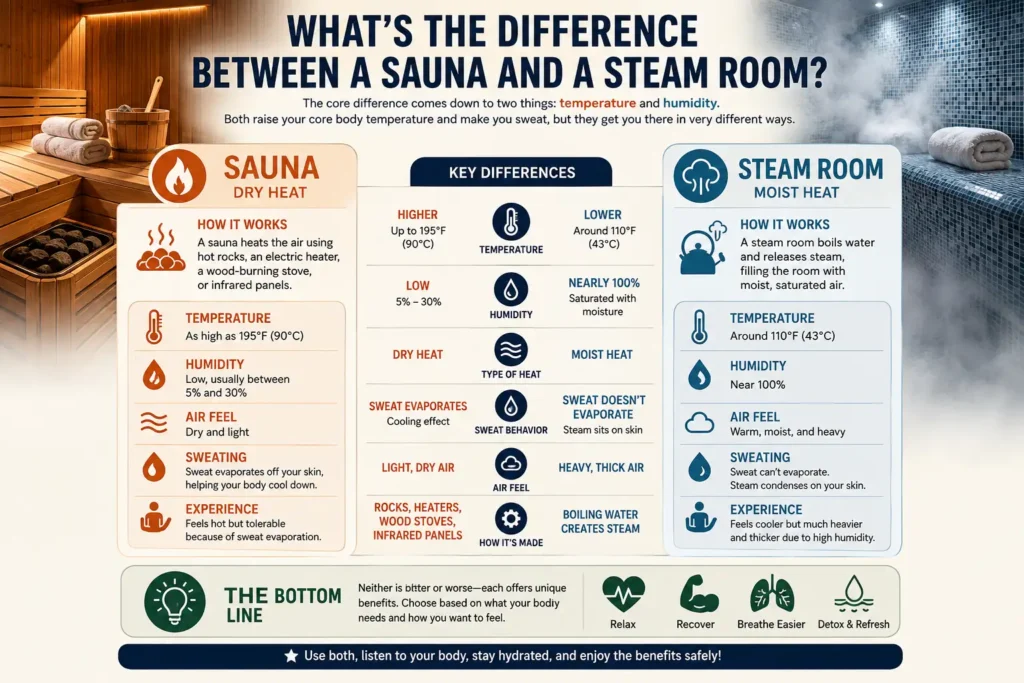
The core difference comes down to two things: temperature and humidity. Saunas and steam rooms are both rooms designed to create a heated environment that causes sweating and elevates your core body temperature. But they get you there in very different ways.
How a Sauna Works
A traditional sauna heats the air using hot rocks, an electric heater, a wood-burning stove, or infrared panels.Saunas utilize dry heat generated by rocks, electric heaters, or wood-burning stoves, keeping humidity low usually somewhere between 5% and 30% while air temperature climbs as high as 195°F (90°C).
Because the air is dry, your sweat can actually evaporate off your skin. That evaporation is your body’s built-in cooling system, which is part of why you can tolerate such high temperatures in a sauna without overheating as quickly as you might expect.
How a Steam Room Works
A steam room works the opposite way. Steam rooms produce moist heat by boiling water and releasing steam, which keeps the room noticeably cooler typically around 110°F but pushes humidity up to nearly 100%.
Because the air is already saturated with moisture, your sweat has nowhere to go. The water droplets you see on your skin in a steam room aren’t purely sweat much of it is condensed steam sitting on top of it. That’s why a steam room can feel so much heavier and thicker than a sauna, even at a lower temperature.


Paid Links - As an Amazon Associate, I earn from qualifying purchases.
Sauna vs. Steam Room: Which Is Better For You?
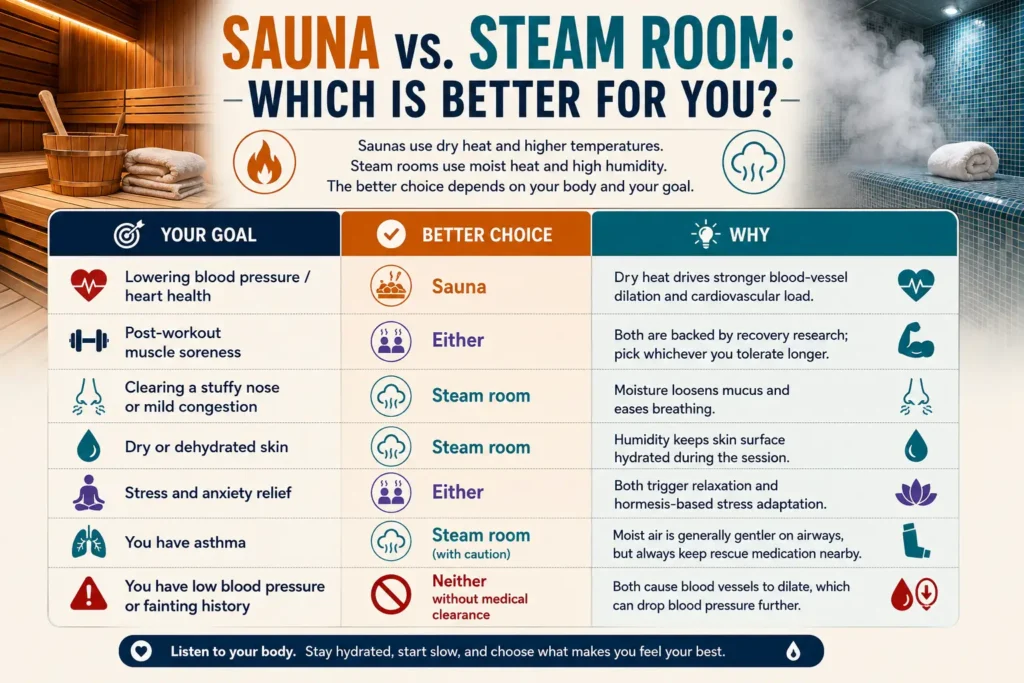
| Your Goal | Better Choice | Why |
|---|---|---|
| Lowering blood pressure / heart health | Sauna | Dry heat drives stronger blood-vessel dilation and cardiovascular load |
| Post-workout muscle soreness | Either | Both are backed by recovery research; pick whichever you tolerate longer |
| Clearing a stuffy nose or mild congestion | Steam room | Moisture loosens mucus and eases breathing |
| Dry or dehydrated skin | Steam room | Humidity keeps skin surface hydrated during the session |
| Stress and anxiety relief | Either | Both trigger relaxation and hormesis-based stress adaptation |
| You have asthma | Steam room (with caution) | Moist air is generally gentler on airways, but always keep rescue medication nearby |
| You have low blood pressure or fainting history | Neither without medical clearance | Both cause blood vessels to dilate, which can drop blood pressure further |
The honest review? You don’t have to pick a permanent side. Plenty of gyms and spas have both for a reason many people rotate between the two depending on the season, how their body feels that day, or whether they’re nursing sore muscles or a stuffy nose.
Is It Safe to Use a Sauna or Steam Room? Who Should Avoid Them
Both are generally safe for healthy adults when used correctly, but heat therapy isn’t risk-free.The main safety issues with heat therapy are heat strain, dehydration, fainting, breathing discomfort, and poorly maintained facilities
Talk to a doctor before using a sauna or steam room if you:
- Avoid steam or get individualized medical guidance during pregnancy, especially early pregnancy or if you’ve been advised to avoid hyperthermia. Elevated core body temperature in the first trimester has been associated with increased risk of certain birth defects, and most healthcare providers recommend avoiding saunas entirely during early pregnancy.
- Have unstable heart disease includes unstable cardiovascular disease, recent chest symptoms, serious heart rhythm disorders, or uncontrolled blood pressure. Severe heart failure is a contraindication, since the added stress from heat exposure can worsen symptoms and potentially trigger cardiac events.
- Have a history of fainting or low blood pressure. A history of fainting, heat intolerance, or symptomatic low blood pressure means you should get individualized guidance first.
- Have kidney disease or are on dialysis. Kidney disease, dialysis, fluid restriction, or electrolyte disorders are reasons to seek guidance before a session.
- Have epilepsy or a seizure disorder. Extreme temperature changes may lower the seizure threshold in susceptible individuals, so people with epilepsy should discuss sauna or steam use with their neurologist.
- Using a sauna or steam room when you’re sick: Currently have a fever or are sick. Medical professionals warn against entering a steam room with a fever, especially a high one, since the added heat could push your body temperature to dangerous levels and cause breathing difficulty or heatstroke. It’s also common courtesy heat can help viruses spread to others sharing the space.
- Older adults may benefit from steam rooms but should exercise caution due to the added stress on the heart and circulatory system, and many facilities set minimum age limits for children.
Warning signs to leave immediately: dizziness, lightheadedness, nausea, a racing or irregular heartbeat, difficulty breathing, or confusion. A heat session is not an endurance test if you feel uncomfortable, leave and cool down, either gradually or with a cold shower.
Sauna vs. Steam Room After a Workout
Both are popular post-workout rituals, but they serve slightly different purposes. A sauna’s higher heat and dry air tend to be favored for deep muscle relaxation and the cardiovascular “extra rep” effect your heart rate stays elevated a bit longer, similar to light cardio. A steam room’s moisture is often preferred when muscles feel tight and airways feel constricted, since the humidity can make breathing feel easier during recovery.
Neither should replace a proper cool-down or stretching. And timing matters: waiting until your heart rate has come down from intense exercise, rather than going straight from an all-out sprint into extreme heat, is the safer approach.
Is Sauna or Steam Room Better for Weight Loss?
Neither a sauna nor a steam room is meaningfully better for fat loss. However, a sauna is slightly more effective for calorie burning than a steam room due to its higher dry temperatures, but neither causes actual fat loss. Both can make your weight drop temporarily because you sweat out water; once you rehydrate, that weight returns. There is no clear evidence that either reliably burns enough fat to produce lasting weight loss.
| Goal | Sauna | Steam room |
|---|---|---|
| Temporary scale decrease | Possible, mainly from water loss | Possible, mainly from water loss |
| Long-term fat loss | Not established | Not established |
| Heat experience | Hot, dry air | Lower-temperature air with very high humidity |
| Better choice | Choose whichever you tolerate and enjoy more—not as a weight-loss method | Choose whichever you tolerate and enjoy more—not as a weight-loss method |
A sauna may make you sweat more noticeably, but that does not mean it causes more fat loss. High humidity in a steam room can make heat feel more intense and may increase heat strain for some people. The practical route to lasting weight loss is a sustainable calorie deficit supported by nutritious eating and regular physical activity; water has no calories and replacing sugary drinks with water can help reduce calorie intake.
If you use either facility, keep sessions brief, drink water, avoid alcohol, and leave immediately if you feel dizzy, weak, confused, short of breath, or unwell. Speak with a healthcare professional beforehand if you are pregnant, have heart disease, abnormal blood pressure, a recent heart attack or stroke, epilepsy, or take medications that affect fluid balance or blood pressure.
Steam Room vs Sauna For Acne
A small controlled study found that regular sauna users had changes in skin-barrier function and lower forehead surface sebum, but it did not establish that sauna use treats acne. Dermatology guidance emphasizes that sweat, oil, dirt, bacteria, and rubbing can contribute to breakouts, so leaving sweat on your skin is more important than whether the heat is dry or humid.
If you are thinks doing long session of sauna or steam room, remember neither a steam room nor a sauna is a proven acne treatment. However, both use heat to increase blood circulation and make you sweat, which helps soften trapped oil and dirt in your pores and can help to heal your acne problem. If you are acne-prone, a sauna may be slightly easier to tolerate than a steam room because sweat can evaporate more readily, but the difference is not well established. Both can temporarily increase heat, sweating, redness, and irritation.
| Consideration | Sauna | Steam room |
|---|---|---|
| Evidence for treating acne | Insufficient | Insufficient |
| Main potential benefit | May temporarily loosen surface oil and debris | May temporarily soften surface oil and debris |
| Main risk | Sweat, heat, and friction may aggravate breakouts | Sweat remains on the skin longer because of high humidity, which may worsen irritation for some people |
| Best approach | Use briefly, then cleanse gently | Use briefly, then cleanse gently |
If you choose to use one
Remove makeup first, use a clean towel to gently pat sweat rather than rub, and shower or wash your face soon afterward with a mild, oil-free or non-comedogenic cleanser. Apply a non-comedogenic moisturizer if your skin feels dry. Do not squeeze blemishes or scrub aggressively; irritation can make acne worse.
Avoid either room if your skin is already very inflamed, burning, sunburned, or irritated by acne medication. Stop if you feel dizzy, weak, short of breath, or unwell. For persistent, painful, cystic, or scarring acne, a dermatologist-directed treatment is much more reliable than heat therapy.
How to Use a Sauna or Steam Room Safely
- Hydrate before and after.
- The heat causes you to sweat and lose fluid, so it’s important to drink water beforehand and replenish afterward. Skip alcohol before a session — it accelerates dehydration and impairs your ability to notice warning signs.
- Shower first.
- Rinsing off sweat, lotion, and deodorant helps hygiene for you and everyone using the space after you, and removes anything that could interact with the heat.
- Keep sessions short, especially at first.
- Limit your time to 10–15 minutes as a beginner, and avoid staying in a steam room for more than about 15 minutes at a time.
- Sit on a towel.
- This is both a hygiene standard and a comfort measure on hot benches.
- Remove metal and jewelry.
- Watches, rings, and other jewelry can become very hot in a steam room the same applies in a sauna, where metal can burn skin on contact.
- Never go in alone if you’re new to it.
- Beginners should never use a sauna alone, in case of dizziness or fainting.
- Cool down gradually.
- Step out, let your heart rate settle, and rehydrate before jumping straight into another activity.
- Don’t rush your ladle in a sauna.
- Pour water slowly onto the rocks and wait between ladles to avoid a scalding blast of steam.
Sauna vs. Steam Room Pros & Cons
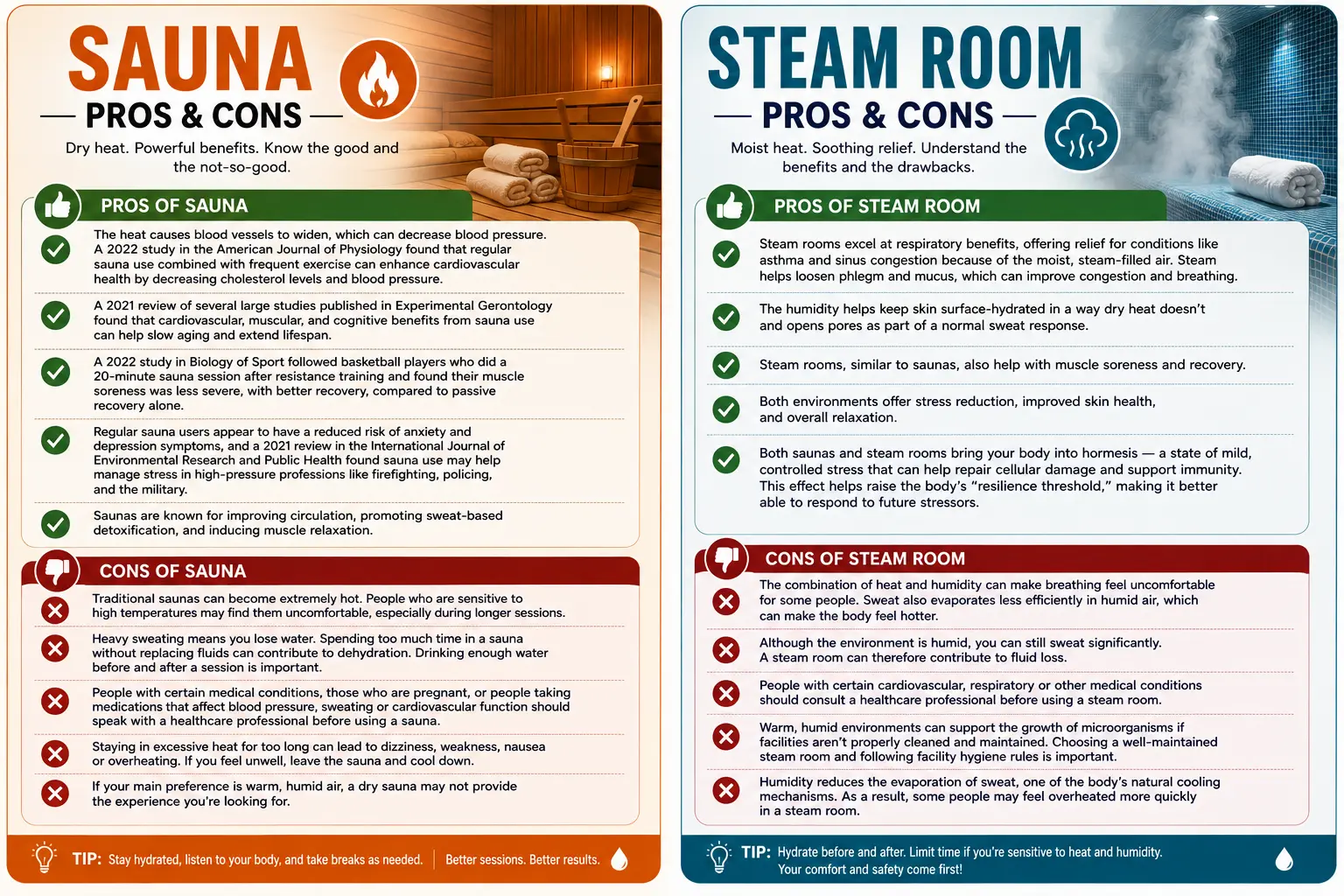
Pros of Sauna
- The heat causes blood vessels to widen, which can decrease blood pressure. A 2022 study in the American Journal of Physiology found that regular sauna use combined with frequent exercise can enhance cardiovascular health by decreasing cholesterol levels and blood pressure.
- A 2021 review of several large studies published in Experimental Gerontology found that cardiovascular, muscular, and cognitive benefits from sauna use can help slow aging and extend lifespan.
- A 2022 study in Biology of Sport followed basketball players who did a 20-minute sauna session after resistance training and found their muscle soreness was less severe, with better recovery, compared to passive recovery alone.
- Regular sauna users appear to have a reduced risk of anxiety and depression symptoms, and a 2021 review in the International Journal of Environmental Research and Public Health found sauna use may help manage stress in high-pressure professions like firefighting, policing, and the military.
- Saunas are known for improving circulation, promoting sweat-based detoxification, and inducing muscle relaxation.
Cons of Sauna
- Traditional saunas can become extremely hot. People who are sensitive to high temperatures may find them uncomfortable, especially during longer sessions.
- Heavy sweating means you lose water. Spending too much time in a sauna without replacing fluids can contribute to dehydration. Drinking enough water before and after a session is important.
- People with certain medical conditions, those who are pregnant, or people taking medications that affect blood pressure, sweating or cardiovascular function should speak with a healthcare professional before using a sauna.
- Staying in excessive heat for too long can lead to dizziness, weakness, nausea or overheating. If you feel unwell, leave the sauna and cool down.
- If your main preference is warm, humid air, a dry sauna may not provide the experience you’re looking for.
Steam Room Pros
- Steam rooms excel at respiratory benefits, offering relief for conditions like asthma and sinus congestion because of the moist, steam-filled air.Steam helps loosen phlegm and mucus, which can improve congestion and breathing.
- The humidity helps keep skin surface-hydrated in a way dry heat doesn’t and opens pores as part of a normal sweat response.
- Steam rooms, similar to saunas, also help with muscle soreness and recovery.
- Both environments offer stress reduction, improved skin health, and overall relaxation.
- Both saunas and steam rooms bring your body into hormesis — a state of mild, controlled stress that can help repair cellular damage and support immunity. This effect helps raise the body’s “resilience threshold,” making it better able to respond to future stressors.
Steam Room Cons
- The combination of heat and humidity can make breathing feel uncomfortable for some people. Sweat also evaporates less efficiently in humid air, which can make the body feel hotter.
- Although the environment is humid, you can still sweat significantly. A steam room can therefore contribute to fluid loss.
- People with certain cardiovascular, respiratory or other medical conditions should consult a healthcare professional before using a steam room.
- Warm, humid environments can support the growth of microorganisms if facilities aren’t properly cleaned and maintained. Choosing a well-maintained steam room and following facility hygiene rules is important.
- Humidity reduces the evaporation of sweat, one of the body’s natural cooling mechanisms. As a result, some people may feel overheated more quickly in a steam room.
Myth vs. Fact
| Myth | Fact |
|---|---|
| “Sweating a lot means you’re flushing out more toxins.” | Sweat is mostly water, electrolytes, and a small amount of waste products. Your liver and kidneys do the heavy lifting for detoxification — heat sessions are not a substitute. |
| “A sauna session is the same as a workout.” | Heat exposure raises heart rate and can offer some cardiovascular stimulus, but it doesn’t build muscle, strength, or the same metabolic adaptations that exercise does. |
| “You should stay in as long as you can handle it.” | A steam or sauna session isn’t an endurance test — leaving as soon as you feel uncomfortable is the safer approach, not a failure. |
| “The water weight you lose is fat loss.” | A rapid scale change after a heat session reflects water loss, not a meaningful reduction in body fat. That weight typically returns once you rehydrate. |
| “Steam rooms are always more humid, so they’re automatically ‘gentler.'” | Steam rooms are cooler in temperature, but the constant, inescapable humidity can feel just as intense or more so for people sensitive to moist heat. |
FAQs
What’s hotter, a sauna or a steam room?
A sauna is hotter in terms of raw air temperature, reaching up to 195°F versus a steam room’s 110–120°F. However, a steam room’s near-100% humidity can make the heat feel just as intense because your sweat can’t evaporate to cool you down.
Can you use a sauna and a steam room on the same day?
Yes, many people alternate between the two in the same visit. If you’re new to heat therapy, try one at a time first so you can learn how your body responds before combining them.
How long should you stay in a sauna or steam room?
Most guidance suggests 10–20 minutes for a sauna and 10–15 minutes for a steam room, especially for beginners. Listen to your body — leave earlier if you feel dizzy, nauseated, or unwell.
Is a steam room or sauna better for weight loss?
Neither is an effective weight-loss tool on its own. The immediate weight drop you see after a session is water loss from sweating, not fat loss, and it typically returns once you rehydrate.
Which is better for a cold or congestion, a sauna or steam room?
A steam room is generally considered better for congestion, since the moist air can help loosen mucus and ease breathing. That said, research on steam therapy specifically curing colds is limited, and it’s not a substitute for medical treatment.
Can I use a sauna or steam room every day?
There’s no universally “correct” frequency — some healthy adults tolerate several sessions a week, while others need more recovery time between sessions. Cut back if you notice persistent fatigue, headaches, excessive thirst, poor sleep, or dizziness.
Is it safe to use a sauna or steam room while pregnant?
Most healthcare providers recommend avoiding both, especially in early pregnancy, since elevated core body temperature has been linked to increased risk of certain birth defects. Always check with your OB-GYN first.
Do saunas or steam rooms help with skin?
Both can support skin health. Dry sauna heat promotes sweating that can help clear pores, while steam room humidity hydrates the outer layer of skin. Neither replaces a regular skincare routine.
What should I wear in a sauna or steam room?
A swimsuit, workout clothes, or a towel are the standard choices, depending on the facility’s rules. Avoid tight synthetic fabrics that trap heat uncomfortably and always remove jewelry and metal accessories first.
Can beginners go straight into a sauna at full temperature?
It’s better to start with shorter sessions (around 5–10 minutes) at a facility’s standard temperature rather than trying to “push through” a longer session right away. Build up your tolerance gradually over multiple visits.
Do saunas or steam rooms lower blood pressure long-term?
Regular sauna use has more direct research linking it to lower blood pressure over time, largely tied to consistent, long-term use combined with a generally active lifestyle — not from a single visit.
My Final Thoughts
A sauna and a steam room are both legitimate heat-therapy tools they just specialize in different things. If your priority is cardiovascular health, deep muscle recovery, and dry, intense heat, reach for the sauna. If you’re dealing with congestion, dry skin, or you simply prefer a gentler, moisture-rich environment, the steam room is likely the better fit.
The safest approach is the simplest one: start with shorter sessions, hydrate well, listen to your body’s warning signs, and check with a doctor first if you have a heart condition, are pregnant, or manage a chronic illness. From there, you’re free to experiment and there’s nothing wrong with using both, depending on what your body needs that day.