
Steam saunas offer a relaxing and therapeutic experience, but they are not without risks. While many enjoy the warm, humid environment for muscle relaxation and detoxification, there are significant steam sauna disadvantages you should know before stepping in.
From potential dehydration and skin irritation to cardiovascular stress, understanding the pros and cons can help you use steam rooms safely and maximize benefits while avoiding harm.
Discover the top steam sauna disadvantages and risks for 2026. Learn about side effects, indoor & infrared sauna drawbacks, post-workout benefits, and safety tips to enjoy steam rooms without harm.


Paid Links - As an Amazon Associate, I earn from qualifying purchases.
Disclaimer: This article is for informational purposes only and is not medical advice. Consult a healthcare professional before using steam saunas, especially if you have existing health conditions.


Paid Links - As an Amazon Associate, I earn from qualifying purchases.
Key Takeaways
- Steam saunas can cause dehydration and lower blood pressure.
- People with cardiovascular issues should be cautious.
- Overuse may lead to skin irritation or respiratory discomfort.
- Infrared steam saunas carry fewer risks but still require moderation.
- Always hydrate and limit sessions to avoid adverse effects.
What Are Steam Sauna Disadvantages?

Steam Sauna disadvantages are the possible health risk and side effects that are involved in using steam rooms on a consistent basis or improperly. While many people are looking to avail the benefits of a steam bath, such as relaxation, an improved circulation, and recovery after a workout, it’s important to understand the downsides to avoid any health complications.
Common Disadvantages Include:
- Dehydration: High humidity and heat can result in excess sweating which can increase the risk of dehydration.
- Low Blood Pressure: Excessive exposure can lead to dizziness, fainting or low blood pressure.
- Skin Issues: Sensitive skin may suffer from dryness, irritation or flare-ups of skin cancers such as eczema.
- Respiratory Challenges: Individuals suffering from asthma or lung ailments can find the humid environment to be a trigger for discomfort.
- Heart Stress: People with heart disease or hypertension may be at a higher risk for cardiac stress.
Indoor Steam Sauna Disadvantages
Indoor steam saunas are popular for home use, but they come with unique risks:
| Risk | Description |
|---|---|
| Mold & Bacteria Growth | Poorly ventilated indoor saunas can harbor mold due to constant humidity. |
| Electrical Hazards | Steam and water around electrical units increase the risk of accidents. |
| Space Limitations | Overcrowding can make heat management difficult, intensifying health risks. |
Understanding indoor steam sauna disadvantages is key to safe home use. Regular cleaning, ventilation, and temperature control help mitigate most risks.
Infrared Steam Sauna Disadvantages
Infrared steam saunas use infrared light to warm up the body instead of the air. While they can often be considered as gentler than a traditional steam, they are not risk free.
Disadvantages Include:
- Skin burns (potential) from direct exposure to infrared over prolonged periods of time.
- Dehydration if fluids are not rehydrated.
- Limited detox benefits as compared to traditional steam rooms.
Despite these disadvantages, the disadvantages of infrared steam sauna are usually much milder than traditional steam rooms, making them a safer option for a large number of people.
Steam Bath Disadvantages
Steam baths are known as a relaxing and detoxifying method, but it can also be dangerous:


Paid Links - As an Amazon Associate, I earn from qualifying purchases.
- Overheating and Hyperthermia.
- Exacerbation of chronic health conditions such as heart disease or diabetes.
- Possibly feeling dizzy, feeling nauseous, or fainting after prolonged use.
These are disadvantages which highlight the importance of session timing, hydration and medical clearance if you have any pre-existing conditions.
Sauna Benefits and Disadvantages
While the disadvantages of steam sauna are quite noteworthy, when combining the benefits and cons, a full picture is obtained:
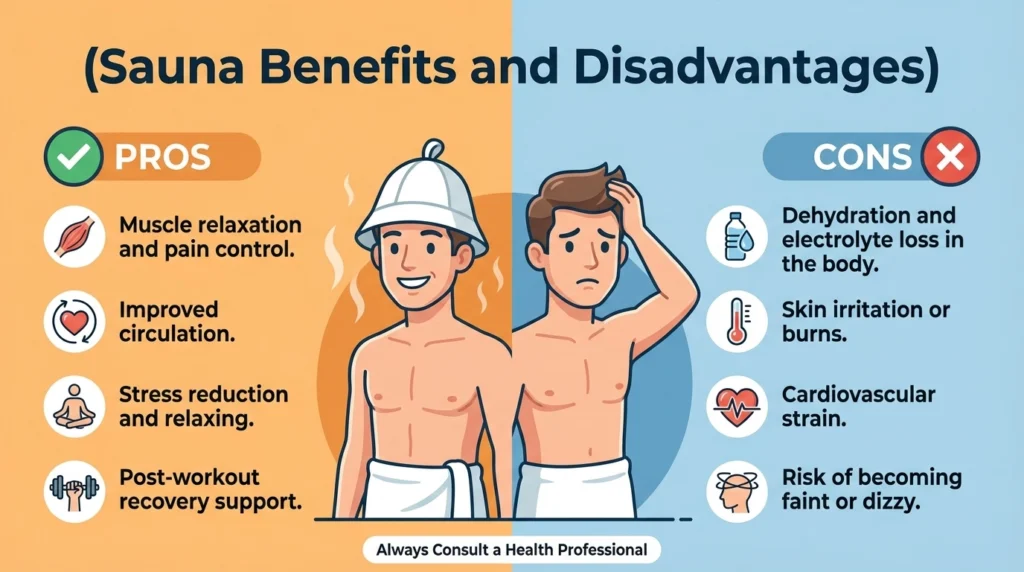
Pros:
- Muscle relaxation and pain control.
- Improved circulation.
- Stress reduction and relaxing.
- Post-workout recovery support.
Cons:
- Dehydration and electrolyte loss in the body.
- Skin irritation or burns.
- Cardiovascular strain.
- Risk of becoming faint or dizzy.
Understanding both sides enables users to enjoy the benefits and reduces the negative effects.
Is Sauna or Steam Room Better for Weight Loss?
Many ask the questions if steam rooms or saunas are better for weight loss. Both can cause a temporary water weight loss from sweat but neither burns significant amounts of fat. Excessive use can cause dehydration so it’s a good idea to use them in moderation. Steam sauna drawbacks in weight loss situations are Electrolyte imbalance and the strain on the cardiovascular system.
Benefits of Steam Room After Workout
Steam rooms can help with post-workout recovery, as they can be used to relax the muscles and improve circulation. It’s important to be aware of possible disadvantages, though:
- Over heating can make post exercise dehydration worse.
- Increased heart rate may stress cardiovascular systems which are already stressed from exercise
- Irritating skin & respiratory system if used for too long.
Moderate sessions of 10-15 minutes along with hydration allows the greatest benefits with least steam sauna side effects.
Advantages and Disadvantages of Sauna and Steam Bath
| Type | Advantages | Disadvantages |
| Traditional Steam Sauna | Detoxification, muscle relaxation, stress relief | Dehydration, dizziness, skin irritation, cardiovascular stress |
| Infrared Steam Sauna | Gentler heat, fewer cardiovascular risks | Skin burns, limited detoxification, dehydration if prolonged |
| Steam Bath | Improved circulation, relaxation, post-workout recovery | Hyperthermia, dizziness, worsening chronic conditions |
By weighing these pros and cons, users can choose the sauna type that fits their health goals safely.
Steam Sauna Side Effects
Some general side effects of steam sauna are:
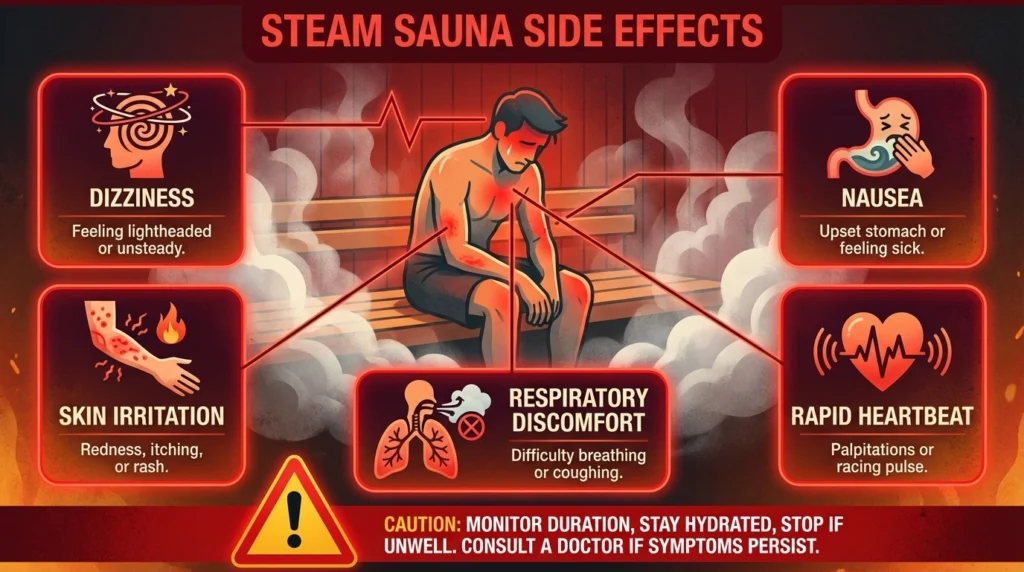
- Dizziness and fainting
- Nausea and headache
- Skin redness or rashes
- Frequent heartbeat or palpitations
- Respiratory discomfort
These side effects are usually caused by overuse, dehydration, or underlying health conditions.
Steam Sauna Pros Cons
Pros:
- Relaxation and stress management
- Pain in muscles and joints relieving
- Improved circulation
- Post-workout recovery aid
Cons:
- Chance of dehydration and electrolyte depletion
- Skin irritation or burns
- Cardiovascular strain
- Possibility of dizziness or fainting
Understanding these pros and cons guarantees safer and more effective use of steam saunas.
You May Also Like To Read:
FAQs
Are steam saunas healthy?
Yes, when used correctly, steam saunas can aid in relaxation, circulation and recovery. However, through overuse or improper use, risks can be increased.
How long should a steam sauna session be?
For most adults, 10-20 minutes is a safe amount of time. And always hydrate before and after.
Can children use steam saunas?
Children are more sensitive to heat. Consult a pediatrician and reduce exposure to short sessions.
Is steam better than sauna?
Both have their advantages and their disadvantages. Steam offers high humidity and dry sauna offers high heat and low humidity. Select on health needs and tolerance
Can steam saunas promote weight loss?
They may assist temporarily by water loss but do not burn much fat. Safe hydration is essential.
Final Thoughts
To sum it up, knowing the steam sauna disadvantages as well as their advantages can be a way to safely and enjoyably use them. Moderation, hydration, and awareness of individual health conditions are important.
By adhering to these guidelines, you can enjoy the relaxing and recuperating benefits of steam saunas without having to deal with the possible side effects.