Infrared saunas have swept the wellness world, promising relaxation, detoxification, and a glowing “after” photo that looks like you just spent a week at a spa.
But before you crank up the heat and settle in for a sweat session, it is crucial to look past the marketing hype. While generally safe for most people, there are specific infrared sauna dangers that rarely get the spotlight.
From potential risks to your eyes to the complex debate over electromagnetic fields (EMFs), understanding these hazards is the key to safe usage.
break down the infrared sauna dangers explained: cancer myths, EMF exposure, eye risks, pregnancy concerns, and side effects how to use infrared saunas safely.


Paid Links - As an Amazon Associate, I earn from qualifying purchases.
Disclaimer: This content is for informational purposes only and does not constitute medical advice. Always consult with a healthcare professional before starting any new heat therapy regimen.
Key Takeaways
- Dehydration is the #1 Risk: The intense sweating can lead to rapid fluid loss; hydration is non-negotiable.
- EMF Exposure Varies: Not all saunas are created made equal; low-EMF models are essential for safety.
- Eye Safety is Critical: Infrared heat can damage the eyes if proper protection isn’t used.
- Skin Reactions Occur: Some users experience “toxic sweat” breakouts or heat rashes.
- Contraindications Exist: Pregnant women and those with heart conditions must consult a doctor first.
1. The Reality of EMF Exposure
One of the hottest topics on forums such as Reddit that deals with safety is infrared sauna dangers EMF. Electromagnetic Fields (EMFs) are invisible fields of energy,



Paid Links - As an Amazon Associate, I earn from qualifying purchases.
which are commonly associated with the electrical wiring and wireless devices. Because infrared saunas use electricity to heat the infrared heating elements, there is EMF emission.
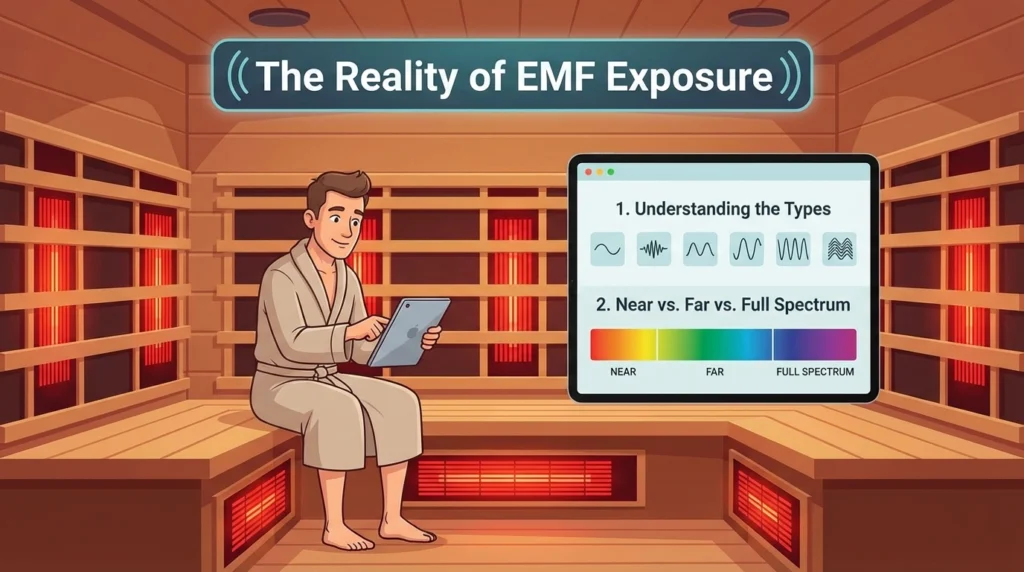
Understanding the Types
If you do research on the emf dangers of home infrared sauna models, you will come across three types:
- Electric Fields: Due to voltage.
- Magnetic Fields: Are produced by the flow of current.
- Radio Frequency: Used in some wireless controls.
The concern comes with the prolonged exposure. While the scientific community continues to debate the long-term effects of low level EMFs, many users report symptoms such as fatigue or headaches after using older or poorly shielded models.
Near vs. Far vs. Full Spectrum
The level of risk might be dependent on the kind of sauna.



Paid Links - As an Amazon Associate, I earn from qualifying purchases.
- Far Infrared Sauna Dangers: Here are the most common. Quality manufacturers use shielding to prevent EMF from escaping but cheap imports skip this.
- Near Infrared Sauna Dangers: These are often incandescent bulbs. While generally they are lower readings in terms of EMF, you have to be careful when it comes to the intensity of the light and how close you sit to the bulbs.
- Full Spectrum Infrared Sauna Dangers: These are a combination of near, mid and far wavelengths. Make sure the model you choose has verified low-EMF ratings in all spectrums.
How to Avoid It: Always request third-party EMF testing results before buying. Look for “Low EMF” or “No EMF” certifications.
2. Can Infrared Saunas Cause Cancer? The Radiation Debate
A very common fear that comes up among search queries is can infrared saunas cause cancer or infra-red sauna radiation dangers. It is important to make a difference between ionizing and non-ionizing radiation.
The Science vs. The Fear
According to the American Cancer Society, as well as general consensus at institutions such as the Mayo Clinic, infrared radiation is non-ionizing. This means that it does not have enough energy to cause damage inside cells to DNA (as opposed to X-rays or ultraviolet (UV) light).
However, the search term can infrared saunas cause cancer mayo clinic one often ends up talking about heat therapy in general. While infrared light itself isn’t carcinogenic, prolonged exposure to hot heat can be harmful.
- The Verdict: There is no evidence to suggest that infrared saunas cause cancer. In fact, some studies suggest that hyperthermia (heat therapy) may be beneficial in cancer treatment protocols by weakening of the cancer cell.
- The Caveat: If you have a history of skin cancer or pre-cancerous lesions you should consult with a dermatologist as heat can increase inflammation in compromised skin.
3. Eye Safety: A Hidden Hazard
We tend to think about protecting our skin but infrared sauna dangers eyes is an important subject that is overlooked. The eyes are also very sensitive to heat and light.
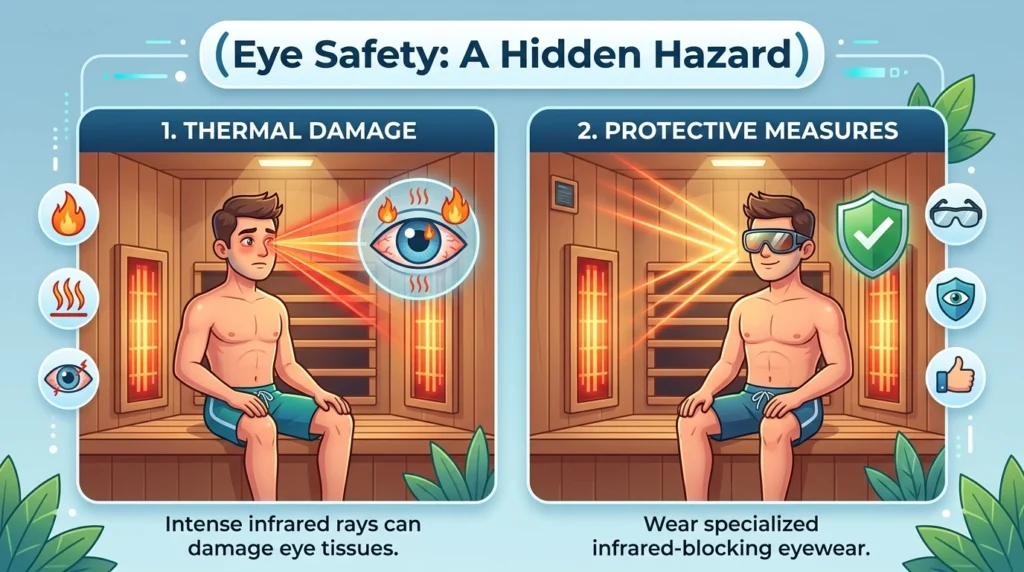
Thermal Damage
Staring straight at the infrared heaters can cause thermal trauma to the retina and the lens. In time, this could potentially lead to cataract formation. This is especially true for the near infrared sauna dangers, where bulbs can be very bright.
Protective Measures
Never see the heating elements from the front. If your sauna has bright near-infrared bulbs, you can consider wearing protective goggles like those used in tanning beds or you can just keep your eyes closed during the session.
4. Pregnancy, Skin Reaction and Hair Health
When browsing infrared sauna skin before and after photos you usually can see clear and glowing skin. However, the reality is that sometimes it may be different, especially in the early stages of use.
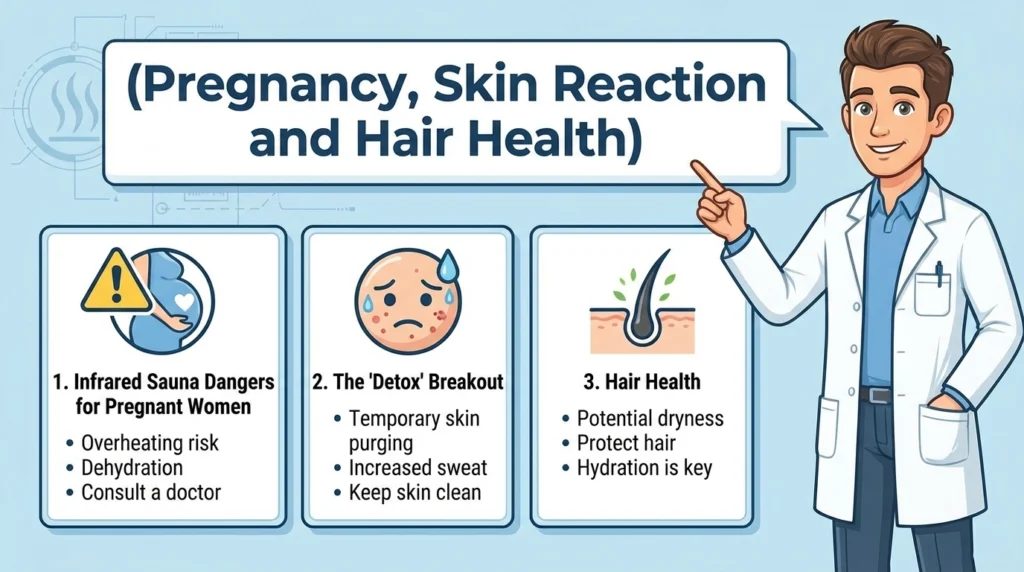
Infrared Sauna Dangers for Pregnant Women
High heat exposure during early pregnancy has been linked to increased risk of neural tube defects in some studies involving hot tubs and fevers.
Because infrared saunas elevate core temperature, most doctors advise pregnant women to avoid sauna use, especially in the first trimester.
Always consult a healthcare provider first.
The “Detox” Breakout
As you wet the body, you provide the body with the release of toxins. While this is good in the long run it can cause temporary breakouts. This is sometimes referred to as infrared sauna toxicity through the skin. You may experience:
- Rashes (heat rash).
- Itching (pruritus).
- Temporary acne flare-ups.
Hair Health
A common question is, are infrared saunas bad for your hair? The heat can dry out the strands of hair and cause them to be brittle. Just as you are protecting your skin, you should be protecting your hair.
Tip: Wear a towel or wrap your head to protect your hair from the direct heat and a leave-in conditioner if you are one who uses them frequently.
5. The Risk of “Overdose” and Dehydration
Yes, it is possible to have too much of a good thing. Infrared sauna overdose risks: physiological stress that the body is exposed to due to excessive heat exposure.
Dehydration and Electrolyte Imbalance
Infrared sauna produces a deep sweat. Unlike a traditional sauna in which air is heated, the infrared heats your body directly, often causing you to sweat more profusely at lower temperatures. This can lead to:
- Severe dehydration.
- Dizziness.
- Fainting.
- Kidney strain.
Heart Health Implications
For healthy people, the higher heart rate is similar to a moderate exercise. However, for everyone with cardiovascular problems, the infrared sauna dangers to heart health are real.
The heat causes blood vessels to dilate which can cause blood pressure to drop to dangerous levels or produce arrhythmias in susceptible people.
Comparison: Infrared Sauna vs Traditional Sauna Safety
Traditional saunas have high ambient heat (often 180°F+). Infrared saunas run at lower temperatures (120°F – 150°F) and have a deeper penetrating effect.
- Traditional: High heat can be suffocating to some; increased risk of heat stroke by ambient temperature.
- Infrared: Lower ambient heat is generally better tolerated, but the deep tissue heating imposes different stresses on the cardiovascular system.
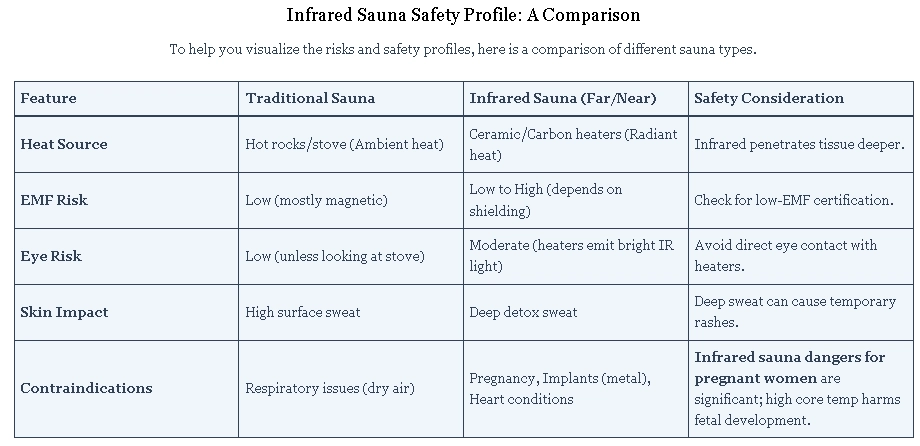
Infrared Sauna Safety Profile: A Comparison
To help you visualize the risks and safety profiles, here is a comparison of different sauna types.
| Feature | Traditional Sauna | Infrared Sauna (Far/Near) | Safety Consideration |
|---|---|---|---|
| Heat Source | Hot rocks/stove (Ambient heat) | Ceramic/Carbon heaters (Radiant heat) | Infrared penetrates tissue deeper. |
| EMF Risk | Low (mostly magnetic) | Low to High (depends on shielding) | Check for low-EMF certification. |
| Eye Risk | Low (unless looking at stove) | Moderate (heaters emit bright IR light) | Avoid direct eye contact with heaters. |
| Skin Impact | High surface sweat | Deep detox sweat | Deep sweat can cause temporary rashes. |
| Contraindications | Respiratory issues (dry air) | Pregnancy, Implants (metal), Heart conditions | Infrared sauna dangers for pregnant women are significant; high core temp harms fetal development. |
Who should not use infrared saunas?
People with the following conditions should avoid infrared saunas or consult a doctor:
- Pregnancy (risk of fetal overheating).
- Severe heart conditions.
- Implants (metal pins, pacemakers).
- Hemophilia.
- Recent stroke or heart attack history.
Essential Infrared Sauna Precautions
To mitigate infrared sauna harmful effects, follow these strict safety guidelines:
- Hydrate: Drink water before, during, and after. Consider adding electrolytes.
- Limit Time: Start with 10-15 minute sessions. Do not exceed 30-40 minutes.
- Avoid Alcohol: Never mix alcohol consumption with sauna use.
- Check Medications: Some medications (diuretics, beta-blockers) can interfere with your body’s ability to regulate heat.
- Listen to Your Body: If you feel dizzy, nauseous, or lightheaded, exit immediately.
Top 10 Benefits of Infrared Sauna (Weighing the Risks)
Despite the infrared sauna dangers listed above, the benefits often outweigh the risks for healthy individuals who take precautions. Here is a quick summary of why people use them:
- Detoxification: Heavy metal excretion (arsenic, lead, mercury).
- Relaxation: Lower cortisol levels.
- Pain Relief: Reduced muscle soreness and joint pain.
- Cardiovascular Health: Improved endothelial function (for healthy users).
- Skin Health: Improved tone and texture (post-detox).
- Circulation: Enhanced blood flow.
- Weight Loss: Calorie burning through increased heart rate.
- Immunity: Simulated fever state may boost immune response.
- Muscle Recovery: Faster healing times.
- Sleep Quality: Deeper, more restful sleep patterns.
You May Also Like To Read:
- Infrared Sauna vs. Traditional: Which Is Better For You
- What to Do Before and After an Infrared Sauna
FAQs
Can infrared saunas cause cancer?
No. According to current medical understanding, including insights from the Mayo Clinic, infrared saunas use non-ionizing radiation, which does not damage DNA like UV rays or X-rays. There is no evidence linking them to cancer development.
Are infrared saunas bad for your hair?
Yes, they can be. The intense heat can dry out hair shafts. It is recommended to wrap your hair in a towel or apply a protective oil/conditioner before entering.
What are the dangers of infrared sauna blankets?
Infrared sauna blanket dangers are similar to cabin saunas but include a higher risk of overheating because the blanket is in direct contact with your skin. Ensure the blanket has an auto-shutoff timer and stay hydrated.
Is it safe to use an infrared sauna every day?
For most healthy adults, daily use is safe if sessions are kept short (20-30 minutes). However, if you experience chronic fatigue or dehydration, reduce frequency to 2-3 times a week.
Final Thoughts
Navigating the world of wellness trends can often feel like walking on a tightrope between groundbreaking health benefits and taking an unexpected risk.
Infrared saunas are no different. While the temptation to deep detoxify and to build up muscles is great, respecting the potential infrared sauna dangers is what makes a beneficial therapy versus a dangerous experience.
The truth is, most of the side effects are not from the technology itself, but from the way that we use it. Whether it’s sticking their head in the sand regarding the warning signs of dehydration, avoiding the proper research around EMF or pushing their bodies beyond their limits, the risks are often within their control.
By staying informed-to know the nuances between near and far infrared, to protect your eyes and to recognize your body’s unique limits-you turn these “hidden dangers” into manageable safety protocols.
Ultimately, an infrared sauna should be a place of healing and not a place of stress. Choose quality equipment, pay to hydration and always listen to the signals that your body is sending you.
When approached with caution and knowledge, the heat can in fact be one of your best allies on your journey to better health. Stay safe, stay hydrated and enjoy the warmth responsibly.