
Sauna Blanket vs Infrared Sauna Cabin: Honest Pros, Cons & Cost per Use
Please read this first: This article is for general information only and is not medical advice. Infrared saunas are wellness tools, not treatments. If you are pregnant, live with a heart or circulation condition or low blood pressure, or take medication that affects heat tolerance, check with a doctor before using one.
Choosing between a sauna blanket and an infrared sauna cabin is really a choice between two very different experiences. Both use infrared heat, but one wraps around you on the sofa and the other gives you a small room to sit in. That difference shapes almost everything else, from comfort and space to long-term cost.
At a Glance: Blanket vs Cabin
| Feature | Sauna Blanket | Infrared Sauna Cabin |
|---|---|---|
| Space needed | Almost none when folded away | A dedicated corner or room |
| Experience | Lying down, wrapped in heat | Sitting upright in a heated cabin |
| Upfront cost | Usually much lower | Usually much higher |
| Portability | Easy to move and store | Fixed once installed |
| Shared use | One person at a time | Often built for one or two people |
How a Sauna Blanket Works
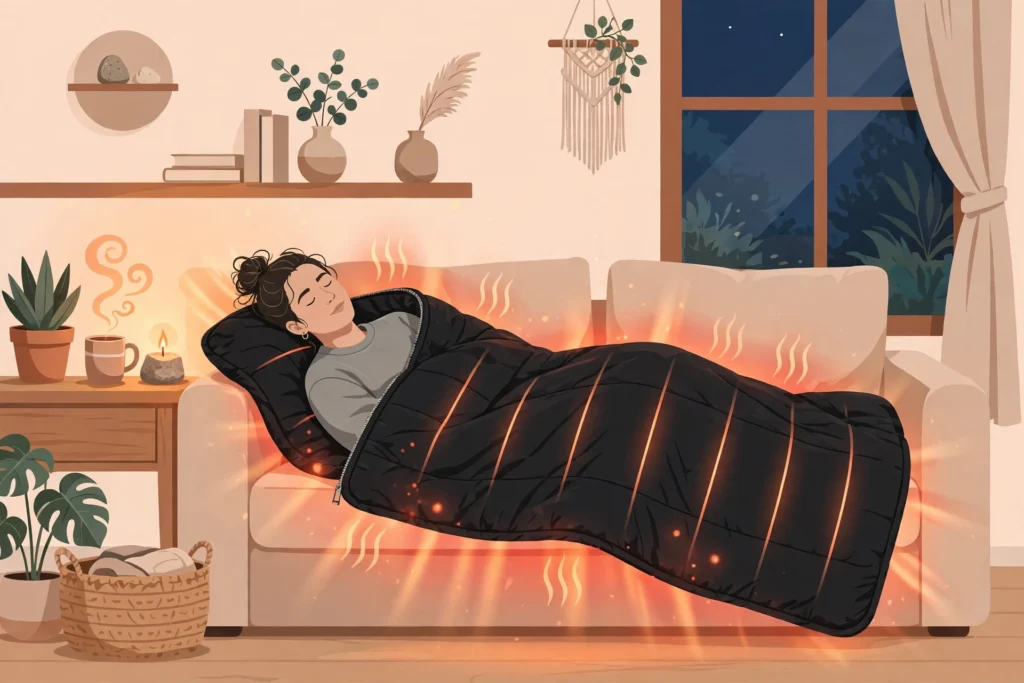
A sauna blanket is a wrap-around mat with infrared heating elements inside. You lie down, wrap it around your body, and it warms you directly. Most designs leave your head outside the blanket, which many people find more comfortable than a fully enclosed space.
Setup is simple: lay the blanket on a bed or sofa, plug it in, and lie down. Afterwards, wipe it down, fold it away, and the room goes back to normal. See our guide on how to use an infrared sauna blanket for more detail.


Paid Links - As an Amazon Associate, I earn from qualifying purchases.
Sauna Blanket Pros
- Low upfront cost. A blanket is usually far cheaper to buy than a cabin, which makes it an easier first step into infrared heat.
- Tiny footprint. If you live in a flat or a small home, a blanket that folds into a cupboard is a genuine advantage.
- Portable. You can move it between rooms, take it to another home, or store it when guests visit.
- Less intimidating. People who dislike enclosed spaces often prefer lying down with their head free.
Sauna Blanket Cons
- It is a solo, lying-down experience. You cannot sit upright, stretch out, or share it with a partner.
- Comfort varies. Some people feel restricted wrapped in a blanket, and lying still for a whole session is not for everyone.
- Cleaning matters. Sweat stays in contact with the blanket, so wiping it down after every session is part of the routine.
- Less of a ritual. A blanket session can feel like a gadget session rather than a dedicated sauna break.
See also do infrared sauna blankets work and our best infrared sauna blanket roundup before buying.
How an Infrared Sauna Cabin Works
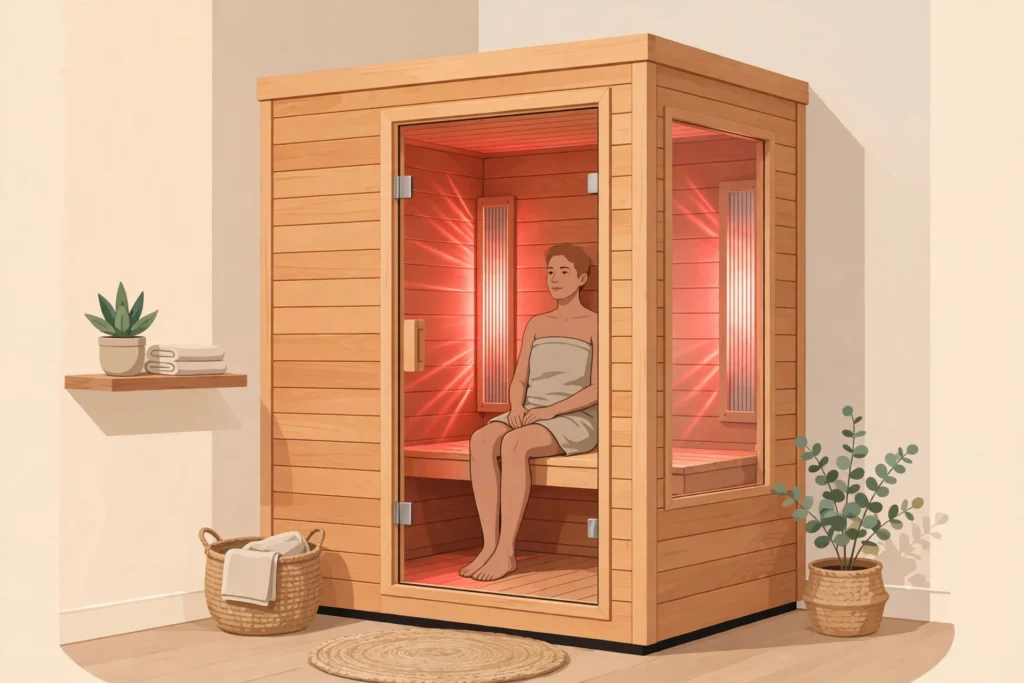
An infrared sauna cabin is a small wooden enclosure with infrared panels mounted on the walls. You sit inside on a bench while the panels warm your body and the cabin air. It feels much closer to a traditional sauna visit, just at home.


Paid Links - As an Amazon Associate, I earn from qualifying purchases.
A cabin needs planning: floor space, a suitable power supply, and a spot where heat will not damage nearby walls or flooring. Electrical work should be left to a licensed electrician, and you should check your local code and permit requirements before buying.
Infrared Sauna Cabin Pros
- A proper sauna feel. Sitting upright in a warm wooden cabin is a more immersive, relaxing ritual for most people.
- Room to breathe and move. You can sit comfortably, change position, and in larger models share the session.
- Built for regular use. A cabin is designed to be used often, and it becomes a permanent part of your home routine.
- Better for couples and families. A two-person cabin turns sauna time into shared downtime.
Infrared Sauna Cabin Cons
- Higher upfront cost. A cabin costs substantially more than a blanket, before delivery and any electrical work.
- It takes up space permanently. Once installed, that corner of the room belongs to the sauna.
- Not portable. Moving house means dismantling, transporting, and reinstalling it.
- More to maintain. Wood, benches, and panels need occasional cleaning and care to stay in good condition.
For other enclosure shapes, see our barrel vs cabin vs pod sauna comparison.
Comfort and Daily Routine: The Deciding Factor
On paper, cabins win on comfort and blankets win on convenience. In real life, the deciding factor is usually which one you will actually use. A cabin you love but rarely enter is worse value than a blanket you reach for three times a week.
Cost per Use: How to Work It Out Honestly
Cost per use is a better comparison than the price tag alone. It spreads the purchase price over the sessions you realistically expect, then adds running costs. Use this simple method for both options:


Paid Links - As an Amazon Associate, I earn from qualifying purchases.
Cost per session = (purchase price ÷ expected number of sessions) + electricity cost per session. To estimate electricity, check the wattage on the product label, multiply by the session length in hours to get kilowatt-hours, then multiply by your local electricity rate. Your actual rate and usage will differ, so treat the result as a planning estimate.
That formula explains why the two options can end up closer than the price tags suggest. A blanket starts cheap, so even modest use keeps its cost per session low. A cabin starts expensive, but if two people use it regularly for years, its cost per session falls steadily over time.
Cost note: All figures in this article are planning estimates, not quotes. Prices vary by region, brand, and installer, so get local quotes and verify current listings before buying.
Who Should Choose Which?
Choose a sauna blanket if you are new to infrared heat, short on space, renting, or want the lowest-cost way to try regular sessions. It is also a sensible pick if you prefer lying down, dislike enclosed spaces, or want something you can store away.
Choose an infrared sauna cabin if you already enjoy sauna sessions, have a permanent spot for one, and want a comfortable, shared, long-term setup.
Before You Buy: A Short Checklist
- Measure your space honestly, including doorways and ceiling height for a cabin.
- Check the power requirements and whether you need an electrician.
- Read the safety guidance and cleaning instructions before ordering.
- Confirm the warranty, returns policy, and what the seller covers.
- Verify current specs and listings, since models and prices change.
Whichever you choose, start with short sessions, drink water before and after, avoid alcohol, and step out immediately if you feel dizzy or unwell.
Frequently Asked Questions
Is a sauna blanket as good as an infrared sauna cabin?
It depends what you mean by good. A blanket delivers infrared heat at a lower cost and in far less space, while a cabin offers a more comfortable, immersive, and shareable sauna experience. Neither is better for everyone.
Which is cheaper per use, a sauna blanket or a cabin?
A blanket is usually cheaper per use at first because its purchase price is much lower. A cabin can catch up over time if it is used often, especially by two people, because its cost is spread over many more sessions.
Do I need an electrician for an infrared sauna cabin?
Often, yes. Freestanding cabins may plug into a standard outlet, but many models need a dedicated circuit. Check the manufacturer’s requirements, your local code, and use a licensed electrician for any new wiring.
Can I use a sauna blanket every day?
Many people use blankets regularly, but listen to your body and keep sessions short at first. Stay hydrated, step out if you feel unwell, and check with a doctor first if you are pregnant, have a heart or circulation condition or low blood pressure, or take medication that affects heat tolerance.
Should I buy a blanket first and a cabin later?
That is a sensible path if you are unsure. A blanket lets you test how often you really use infrared heat before committing to the cost and space of a cabin. If you already sauna often, going straight to a cabin may be better value.