
How to Size a Steam Generator: A kW Guide by Room Size and Materials
Choosing the right steam generator size is the most important decision in a steam room project. Too small, and you wait far too long for steam that never quite fills the room. Too large, and the room feels clammy and hard to control. This guide covers the standard volume-based sizing method, so you can reach a sensible starting point before talking to a supplier or installer.
One note up front: the kilowatt (kW) figures here are general planning guidance only, not manufacturer specifications. Brands size their units differently, and the manufacturer’s sizing chart for the exact model you buy always wins.
Steam Safety Basics First
Steam rooms are intense heat environments. Drink water before and after, keep sessions short, and step out at once if you feel dizzy, nauseous, or unwell. Do not use one after drinking alcohol. Check with your doctor first if you are pregnant, have a heart or circulation condition, have low blood pressure, or take medication affecting heat tolerance.


Paid Links - As an Amazon Associate, I earn from qualifying purchases.
Step 1: Measure the Room and Work Out Its Volume
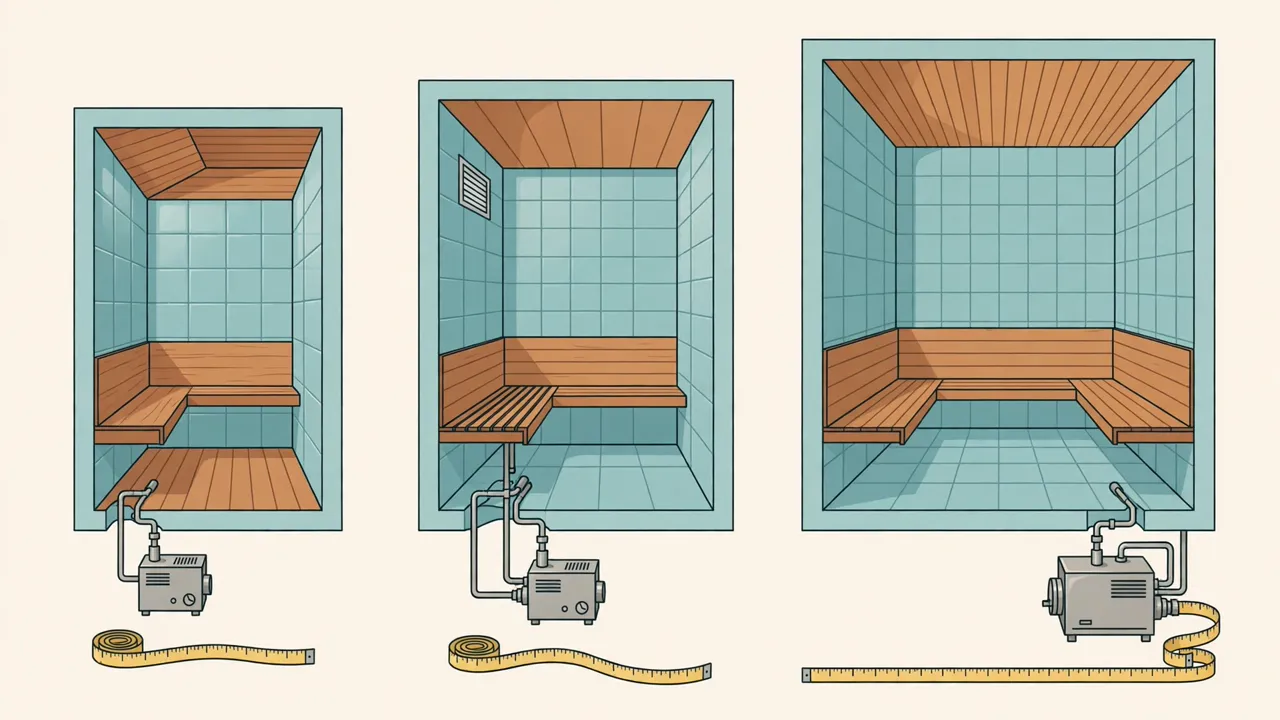
Sizing starts with volume, not floor area. Measure the length, width, and ceiling height of the finished steam room — the inside of the sealed space once tiles and benches are in place — and multiply them: length × width × height = cubic feet (or cubic metres).


Paid Links - As an Amazon Associate, I earn from qualifying purchases.
For example, a room 5 feet long, 4 feet wide, and 7 feet high gives 5 × 4 × 7 = 140 cubic feet. Measure carefully: a foot of extra ceiling height adds a surprising amount of volume. If a bench, recess, or sloped ceiling changes the shape significantly, use the largest overall dimensions for a safe starting figure, then discuss the detail with your installer.
Step 2: Find a Rough kW Starting Point
Once you have your volume, place the room in a broad size band. These ranges are rough planning figures for a typical well-sealed, tiled room — confirm them against the manufacturer’s chart for your chosen model:
- Small rooms (up to about 150 cubic feet): often fall in the lower kW range, roughly 3 to 6 kW as a starting point.
- Medium rooms (about 150 to 350 cubic feet): often fall in the middle range, roughly 6 to 9 kW.
- Large rooms (about 350 cubic feet and up): often need 9 kW or more; very large rooms may need a higher-capacity setup, only as the manufacturer’s chart directs.
Step 3: Adjust for Wall and Floor Materials
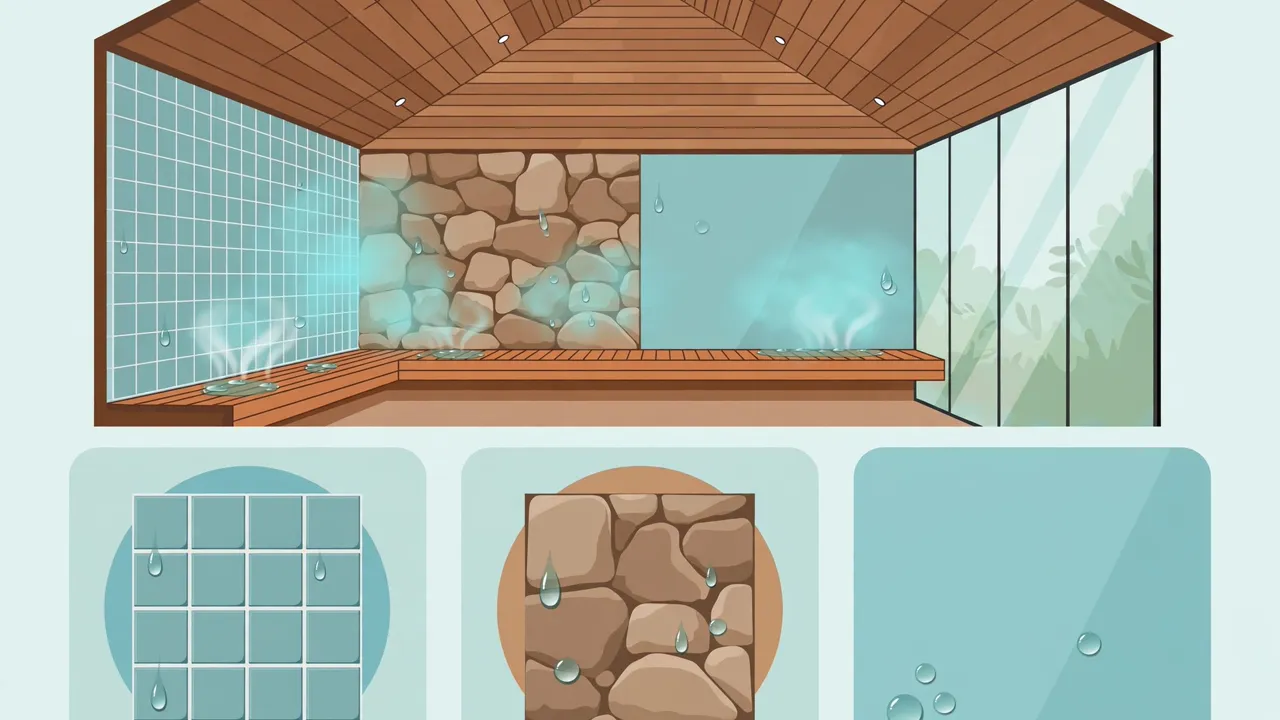
Materials matter because some surfaces absorb heat and others reflect it. Dense surfaces such as natural stone soak up more heat before the room feels steamy, so a mostly stone room usually needs a little more power than the same room in lighter materials. Ceramic tile is the common middle ground, and most sizing charts assume it.
Acrylic and fibreglass enclosures warm up quickly and lose less heat to the walls, so they may sit at the lower end of a kW band. The trade-off is that they are less forgiving of poor sealing: gaps let steam escape fast, which no amount of extra power fixes well. Sealing and insulation matter at least as much as raw kW.
Uninsulated or exterior-facing walls deserve special attention: a steam room against a cold outside wall, or in an unheated space, loses heat through those surfaces. If any wall is uninsulated, mention it to your supplier or installer — they may suggest moving up within your kW band, improving insulation first, or both.
Step 4: Factor In Glass, Ceiling Height, and Shape
Glass is the biggest adjustment in many modern steam rooms. A full glass door or large glass panel loses heat far faster than a tiled wall, and a floor-to-ceiling glass front can push a room up a whole kW band. As a planning habit, treat a room with extensive glass as if it were one size larger, then confirm with the manufacturer’s chart.


Paid Links - As an Amazon Associate, I earn from qualifying purchases.
Ceiling height works the same way. Most sizing guidance assumes a ceiling around 7 to 8 feet; a 9-foot or higher ceiling generally needs more power than a standard-height room of the same footprint. A slightly sloped ceiling helps too: it lets condensation run down to the walls instead of dripping, and keeps steam closer to the bathers.
Worked Examples: Small, Medium, and Large
Small: a compact en-suite steam shower
A room of 4 × 4 feet with a 7-foot ceiling gives 112 cubic feet — in the small band, so a lower-kW unit is the natural starting point. Fully tiled with a standard door, there is no reason to push higher; with a large glass front, consider the upper end of the small band.
Medium: a family steam room
A room of 6 × 5 feet with an 8-foot ceiling gives 240 cubic feet, squarely in the medium band. In tile with a normal door, a mid-range unit is the sensible starting point. With stone walls and a glass panel, the same room may justify moving toward the top of the medium band.
Large: a two-bench steam room
A room of 8 × 6 feet with an 8-foot ceiling gives 384 cubic feet, in the large band. Here manufacturer guidance becomes essential: depending on materials and glass, the right answer may be a higher-capacity single unit or a setup the manufacturer specifically supports for larger rooms. Do not simply pick the biggest unit available.
Undersized vs Oversized: What Each Feels Like
An undersized generator announces itself quickly: steam takes a long time to appear, the room never quite feels full, and opening the door lets out most of what you had. The unit runs almost constantly, which can shorten its life. If your room is borderline between two bands, this is the main argument for choosing the higher one — but only with the manufacturer’s chart agreeing.
An oversized generator feels different: steam arrives in a sudden rush, the room feels wet rather than warm, and temperature swings as the unit cycles on and off. Both problems share a lesson: sizing is about matching, not maximising.
Steam, Moisture, and Maintenance: An Honest Word
A steam room is never maintenance-free, and anyone who tells you otherwise is overselling. Steam leaves moisture on every surface, so good ventilation, leaving the door ajar after use to let the room dry, and regular cleaning are part of owning one. Mould grows where damp surfaces stay damp.
Design choices help a lot: waterproofing behind the tiles, a floor drain or a sensible slope toward it, and grout and sealant rated for wet rooms. For cleaning routines, see our guide on how to clean a steam sauna. If you are still planning the build, our guide to building a steam sauna at home covers construction in more detail.
Disclaimer: Guidance, Codes, and Professionals
Please note: this article is general guidance only, not installation advice. Steam generators involve electrical and plumbing work, and rules vary by location. Check your local code and permit requirements with your local authority, and have installation carried out by licensed electricians and plumbers. Final sizing should always follow the manufacturer’s sizing chart for the exact model you buy.
Your Step-by-Step Sizing Checklist
- Measure the finished inside length, width, and ceiling height.
- Multiply them to get the room volume in cubic feet or cubic metres.
- Find your broad size band (small, medium, or large) as a starting point.
- Adjust up for stone walls, extensive glass, high ceilings, or uninsulated surfaces.
- Check the manufacturer’s sizing chart for your exact model.
- Confirm electrical, water, drainage, and ventilation with licensed professionals.
- Check local code and permit requirements before ordering.
- Plan drying and cleaning routines to prevent moisture and mould.
Frequently Asked Questions
How do I calculate steam generator size?
Multiply length by width by ceiling height to get volume in cubic feet, then match it to a broad kW band. Adjust for materials, glass, ceiling height, and uninsulated surfaces, and confirm your choice against the manufacturer’s sizing chart.
What happens if my steam generator is too small?
A too-small generator takes a long time to produce steam, may never fill the room, and runs almost constantly. Opening the door can empty the room of steam, and constant running may shorten the unit’s life.
Can a steam generator be too powerful?
Yes. An oversized generator can flood a small room with steam too quickly, making it feel clammy and wet, and cycle on and off in short bursts that make temperature hard to control. Sizing is about matching the room, not maximising power.
Does glass increase the steam generator size I need?
Usually, yes. Glass loses heat much faster than a tiled wall, so a room with a large glass door or panel often needs more power. Treat a room with extensive glass as if it were one size larger, then confirm with the manufacturer’s chart.
Do I need a professional to install a steam generator?
Yes, for the electrical and plumbing work. Steam generators must be installed by licensed electricians and plumbers, and you should check local code and permit requirements with your local authority first.