
If your question is “Can Infrared Sauna Make You Sick?” My Honest answer is Yes, but before you swear off your sauna sessions for good, it’s worth understanding why. In almost every case, the culprit isn’t the sauna itself. It’s how it was used.
Too much time inside, not enough water beforehand, standing up too fast, or going in already run-down are the real reasons people walk out feeling worse instead of better.
That doesn’t mean the risk is zero, though. For a small number of people, and in a small number of situations, feeling sick after a session really is a signal that something needs medical attention. The trick is knowing which category you’re in.
Quick disclaimer before we dive in: this article is meant to educate, not diagnose. It isn’t a substitute for advice from your own doctor, especially if you’re pregnant, managing a heart condition, or taking medication that affects how your body handles heat.


Paid Links - As an Amazon Associate, I earn from qualifying purchases.
Can Infrared Sauna Make You Sick? Quick Answer
If you’ve ever left a session feeling lightheaded, a little queasy, flushed, or wiped out, you’re not imagining things, and you’re definitely not alone. That combination usually comes down to heat plus dehydration plus your blood vessels widening to help you cool off, which can drop your blood pressure just enough to make you feel off. It’s uncomfortable, but it’s rarely dangerous, and it usually fades within half an hour once you cool down and drink some water.
What’s not normal is anything more severe than that: confusion, a heartbeat that won’t calm down, chest pain, fainting, or skin that goes hot and dry instead of sweaty. Those aren’t “detox symptoms” or a sign the sauna is working extra hard. They’re your body telling you to get out and, in some cases, get help.



Paid Links - As an Amazon Associate, I earn from qualifying purchases.
The effects of an Infrared Sauna on Your body
An infrared sauna doesn’t work the way a traditional steam or dry sauna does. Instead of heating the air around you to extreme temperatures, it uses infrared light to warm your body directly, while the room itself stays noticeably cooler, usually somewhere between 110°F and 140°F, compared to 150°F to 195°F in a traditional sauna.
Because the heat is going straight into your skin and tissue rather than just the air, plenty of people sweat just as much, or more, even though the room “feels” milder than they expect. While you’re sitting there relaxing, your body is actually working hard behind the scenes.
Your heart rate climbs, sometimes to a level similar to a brisk walk or light jog, as it pumps more blood toward your skin to help release heat. Your blood vessels near the surface widen to let that heat escape, which can lower your blood pressure a bit.
You sweat, which means you’re losing water along with electrolytes like sodium and potassium. And your core temperature ticks upward slightly, which happens to be the same mechanism behind most of the wellness benefits people chase and most of the side effects people complain about.



Paid Links - As an Amazon Associate, I earn from qualifying purchases.
None of this is a problem for a healthy adult using a sauna the way it’s meant to be used. Trouble tends to show up only when one of these responses goes further than your body was ready for, which is almost always tied back to how long you stayed in, how hot it was, and how prepared your body was going in.
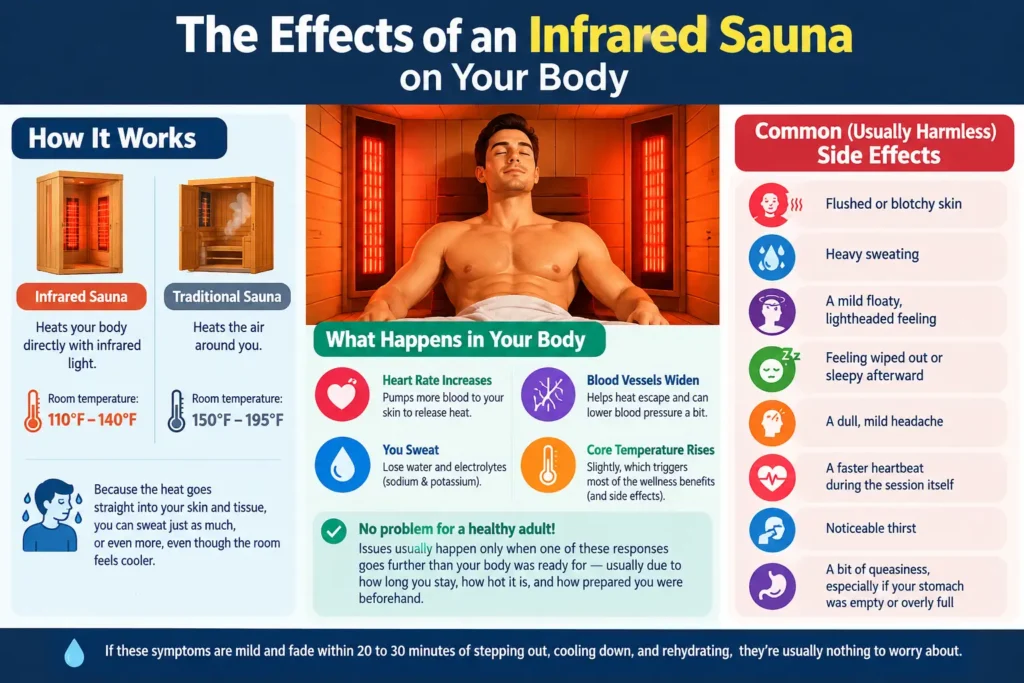
Common (Usually Harmless) Side Effects
These are the ones people report constantly, especially in their first handful of sessions or after staying in longer than they meant to:
- Flushed or blotchy skin
- Heavy sweating
- A mild floaty, lightheaded feeling
- Feeling wiped out or sleepy afterward
- A dull, mild headache
- A faster heartbeat during the session itself
- Noticeable thirst
- A bit of queasiness, especially if your stomach was completely empty or overly full going in
If these symptoms are mild and fade within 20 to 30 minutes of stepping out, cooling down, and rehydrating, there’s usually nothing to worry about. Where things shift is when symptoms don’t fade, get worse instead of better, or overlap with the warning signs covered next.
Why You Might Feel Sick After an Infrared Sauna
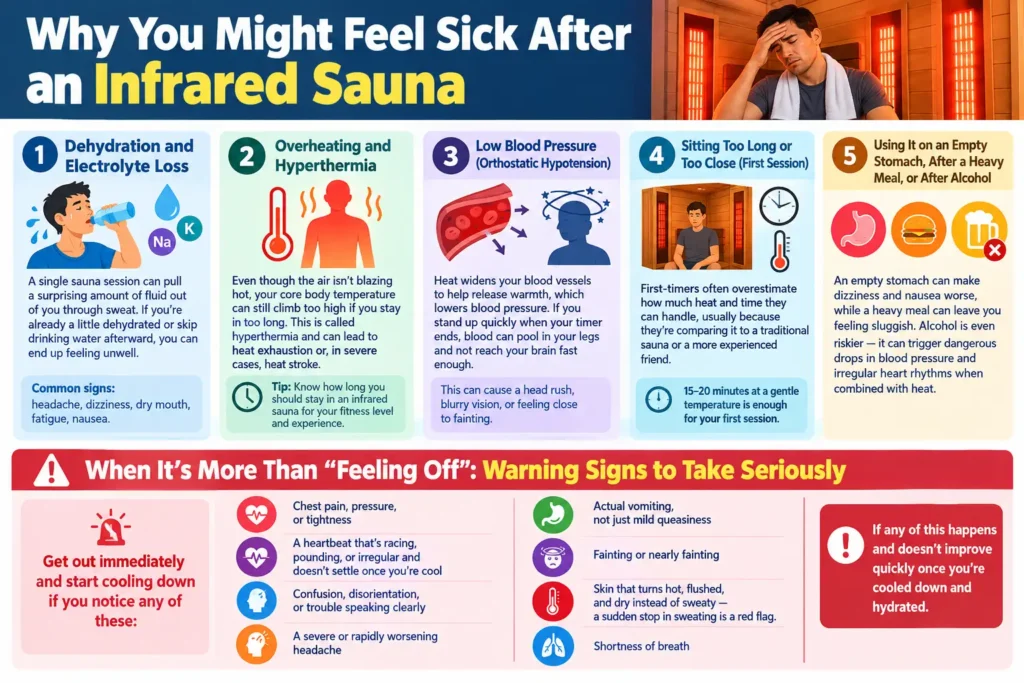
Dehydration and electrolyte loss
A single sauna session can pull a surprising amount of fluid out of you through sweat. If you walked in already a little dehydrated, or you skip drinking water afterward because you’re rushing off to the next thing, you can end up dealing with a genuine, if mild, case of dehydration. That shows up as a headache, dizziness, a dry mouth, fatigue, and yes, nausea.
Overheating and hyperthermia
Even though the air isn’t blazing hot, your core body temperature can still climb higher than it should if you stay in too long. This is called hyperthermia, and it’s the underlying mechanism behind both heat exhaustion and, in more extreme cases, heat stroke.
Knowing how long you should actually stay in an infrared sauna for your fitness level and experience is one of the simplest ways to avoid this entirely.
Low blood pressure (orthostatic hypotension)
Heat causes your blood vessels to widen so your body can shed excess warmth, and that naturally lowers blood pressure. If you pop up quickly the moment your timer goes off, blood can briefly pool in your legs instead of reaching your brain fast enough, and that’s the head rush, blurry vision, or near-fainting feeling that catches people off guard.
Sitting too long or too close on your first session
First-timers almost always overestimate how much heat and time they can handle, usually because they’re comparing it to a traditional sauna or to what a more seasoned friend does.
Fifteen to twenty minutes at a gentle temperature is genuinely enough for a first session, and pushing past that “just to get the full effect” is one of the most common reasons people end up feeling awful afterward.
Using it on an empty stomach, after a heavy meal, or after alcohol
An empty stomach tends to make lightheadedness and nausea worse, while a heavy meal right before can leave you feeling sluggish and uncomfortable.
Alcohol is its own separate issue entirely. Combining it with heat is a well-documented way to trigger dangerous drops in blood pressure and irregular heart rhythms, since both alcohol and heat independently widen your blood vessels and chip away at your body’s ability to compensate.
When It’s More Than “Feeling Off”: Warning Signs to Take Seriously
Get out immediately and start cooling down if you notice any of these:
- Chest pain, pressure, or tightness
- A heartbeat that’s racing, pounding, or irregular and doesn’t settle once you’re cool
- Confusion, disorientation, or trouble speaking clearly
- A severe or rapidly worsening headache
- Actual vomiting, not just mild queasiness
- Fainting or nearly fainting
- Skin that turns hot, flushed, and dry instead of sweaty — a sudden stop in sweating during heat exposure is a red flag, not a good sign
- Shortness of breath
If any of this happens and doesn’t improve quickly once you’re cooled down and hydrated, or if it involves chest pain, confusion, or fainting, treat it as a medical emergency rather than something to sleep off.
Heat Exhaustion vs. Heat Stroke: Know the Difference
| Heat Exhaustion | Heat Stroke (Medical Emergency) | |
|---|---|---|
| Skin | Cool, pale, clammy, heavy sweating | Hot, flushed, dry or barely sweating |
| Pulse | Fast but weak | Rapid and strong |
| Body temperature | Elevated, usually under 103°F | Above 103°F |
| Mental state | Weakness, irritability, mild confusion | Confusion, slurred speech, possible loss of consciousness |
| Other signs | Nausea, headache, dizziness, muscle cramps | Vomiting, seizures, collapse |
| What to do | Cool off, loosen clothing, sip water, rest | Call 911 immediately, cool with wet cloths while waiting, don’t give fluids unless fully alert |
Think of heat exhaustion as your body waving a yellow flag. Ignore it, and it can escalate into heat stroke, which is a red flag, a true medical emergency, not something to push through.
Who Should Avoid Infrared Saunas or Get Medical Clearance First
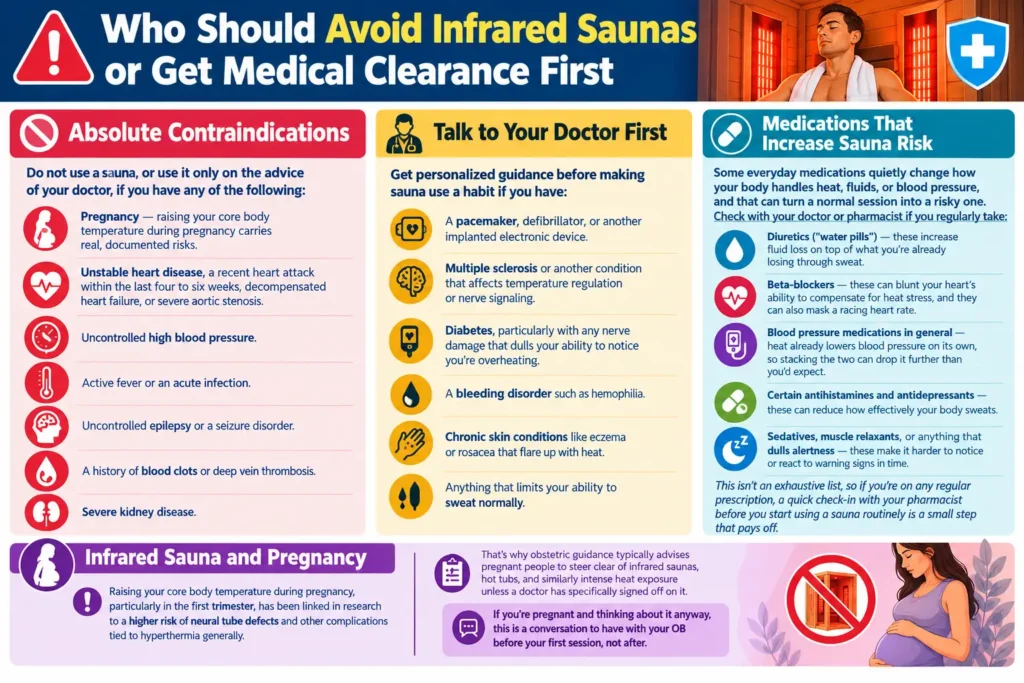
Absolute contraindications
Do not use a sauna, or use it only on the advice of your doctor, if you have any of the following:
- Pregnancy — raising your core body temperature during pregnancy carries real, documented risks
- Unstable heart disease, a recent heart attack within the last four to six weeks, decompensated heart failure, or severe aortic stenosis
- Uncontrolled high blood pressure
- Active fever or an acute infection
- Uncontrolled epilepsy or a seizure disorder
- A history of blood clots or deep vein thrombosis
- Severe kidney disease
Talk to your doctor first
Get personalized guidance before making sauna use a habit if you have:
- A pacemaker, defibrillator, or another implanted electronic device
- Multiple sclerosis or another condition that affects temperature regulation or nerve signaling
- Diabetes, particularly with any nerve damage that dulls your ability to notice you’re overheating
- A bleeding disorder such as hemophilia
- Chronic skin conditions like eczema or rosacea that flare up with heat
- Anything that limits your ability to sweat normally
Medications That Increase Sauna Risk
Some everyday medications quietly change how your body handles heat, fluids, or blood pressure, and that can turn a normal session into a risky one. It’s worth checking with your doctor or pharmacist if you regularly take:
- Diuretics (“water pills”) — these increase fluid loss on top of what you’re already losing through sweat
- Beta-blockers — these can blunt your heart’s ability to compensate for heat stress, and they can also mask a racing heart rate that would otherwise be your early warning sign
- Blood pressure medications in general — heat already lowers blood pressure on its own, so stacking the two can drop it further than you’d expect
- Certain antihistamines and antidepressants — these can reduce how effectively your body sweats
- Sedatives, muscle relaxants, or anything that dulls alertness — these make it harder to notice or react to warning signs in time
This isn’t an exhaustive list, so if you’re on any regular prescription, a quick check-in with your pharmacist before you start using a sauna routinely is a small step that pays off.
Infrared Sauna and Pregnancy
Raising your core body temperature during pregnancy, particularly in the first trimester, has been linked in research to a higher risk of neural tube defects and other complications tied to hyperthermia generally.
That’s why obstetric guidance typically advises pregnant people to steer clear of infrared saunas, hot tubs, and similarly intense heat exposure unless a doctor has specifically signed off on it. If you’re pregnant and thinking about it anyway, this is a conversation to have with your OB before your first session, not after.
Infrared Sauna and Skin, Eyes, and EMF: Separating Fact from Fear
Some of the scarier claims floating around online blend together research on very different technologies. Here’s a more accurate breakdown:
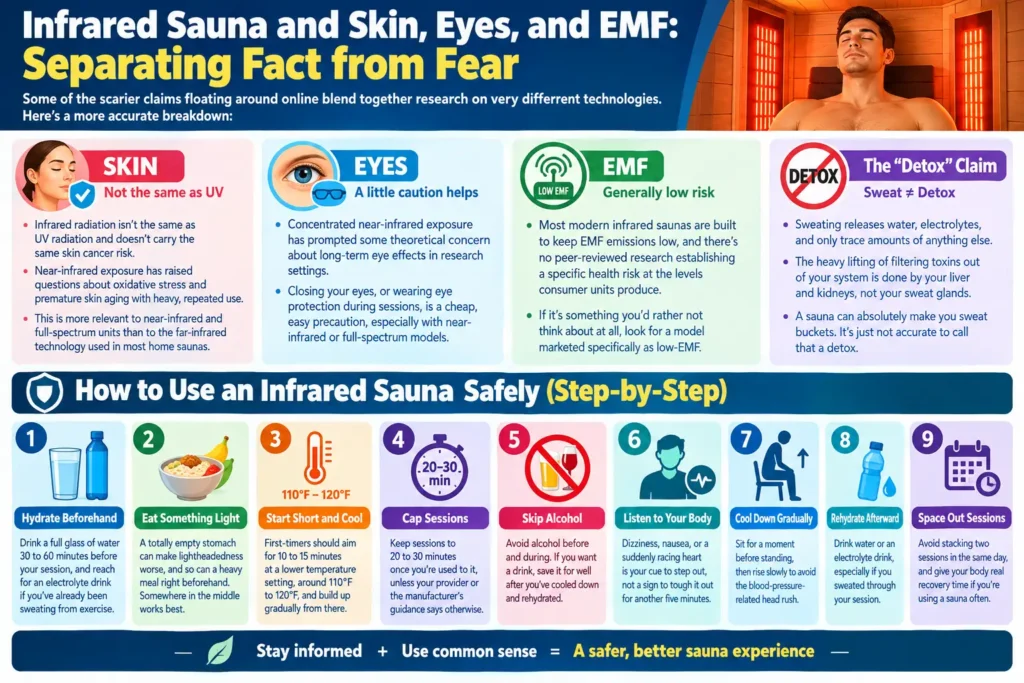
- Skin: Infrared radiation isn’t the same as UV radiation and doesn’t carry the same skin cancer risk. That said, research on near-infrared exposure specifically has raised questions about oxidative stress and premature skin aging with heavy, repeated use. This is more relevant to near-infrared and full-spectrum units than to the far-infrared technology used in most home saunas.
- Eyes: Concentrated near-infrared exposure has prompted some theoretical concern about long-term eye effects in research settings. Closing your eyes, or wearing eye protection during sessions, is a cheap, easy precaution, especially with near-infrared or full-spectrum models.
- EMF (electromagnetic fields): Most modern infrared saunas are built to keep EMF emissions low, and there’s no peer-reviewed research establishing a specific health risk at the levels consumer units produce. If it’s something you’d rather not think about at all, look for a model marketed specifically as low-EMF.
- The “detox” claim: Sweating releases water, electrolytes, and only trace amounts of anything else. The heavy lifting of filtering toxins out of your system is done by your liver and kidneys, not your sweat glands. A sauna can absolutely make you sweat buckets. It’s just not accurate to call that a detox.
How to Use an Infrared Sauna Safely (Step-by-Step)
- Hydrate beforehand. Drink a full glass of water 30 to 60 minutes before your session, and reach for an electrolyte drink if you’ve already been sweating from exercise.
- Eat something light first. A totally empty stomach can make lightheadedness worse, and so can a heavy meal right beforehand. Somewhere in the middle works best.
- Start short and cool. First-timers should aim for 10 to 15 minutes at a lower temperature setting, around 110°F to 120°F, and build up gradually from there.
- Cap sessions at 20 to 30 minutes once you’re used to it, unless your provider or the manufacturer’s guidance says otherwise.
- Skip alcohol before and during. If you want a drink, save it for well after you’ve cooled down and rehydrated.
- Listen to your body. Dizziness, nausea, or a suddenly racing heart is your cue to step out, not a sign to tough it out for another five minutes.
- Cool down gradually. Sit for a moment before standing, then rise slowly to avoid the blood-pressure-related head rush that catches so many people off guard.
- Rehydrate afterward with water or an electrolyte drink, especially if you sweated through your session.
- Space out your sessions. Avoid stacking two sessions in the same day, and give your body real recovery time if you’re using a sauna often. If you’re specifically dealing with an illness, it’s worth reading up on using an infrared sauna when you’re already sick before assuming heat will help rather than backfire.
Infrared Sauna Safety Checklist
- [ ] Cleared any relevant medical conditions with your doctor
- [ ] Drank water in the hour before your session
- [ ] Had a light meal, not an empty stomach
- [ ] Set a timer and chose a moderate temperature
- [ ] Skipped alcohol before and during
- [ ] Know the early warning signs of heat exhaustion
- [ ] Kept water nearby to sip during longer sessions
- [ ] Planned to stand up slowly at the end
- [ ] Have an electrolyte drink or snack ready afterward
Myth vs. Fact
| Myth | Fact |
|---|---|
| Sweating a lot means you’re detoxing effectively | Sweat is mostly water and electrolytes; your liver and kidneys handle actual detoxification |
| Hotter and longer is always better | Cranking up the heat and staying in longer mostly raises your risk of side effects, not the benefit |
| Infrared saunas can’t hurt you because the air is cooler | Your body still absorbs plenty of heat directly, so overheating and dehydration are both still very possible |
| Feeling sick is a normal “healing crisis” | Real symptoms like chest pain, confusion, or fainting are warning signs, full stop, not proof of detoxing |
| All infrared saunas carry identical risks | Near-infrared, far-infrared, and full-spectrum units differ meaningfully in their skin, eye, and EMF considerations |
What to Do If You Feel Sick During or After a Session
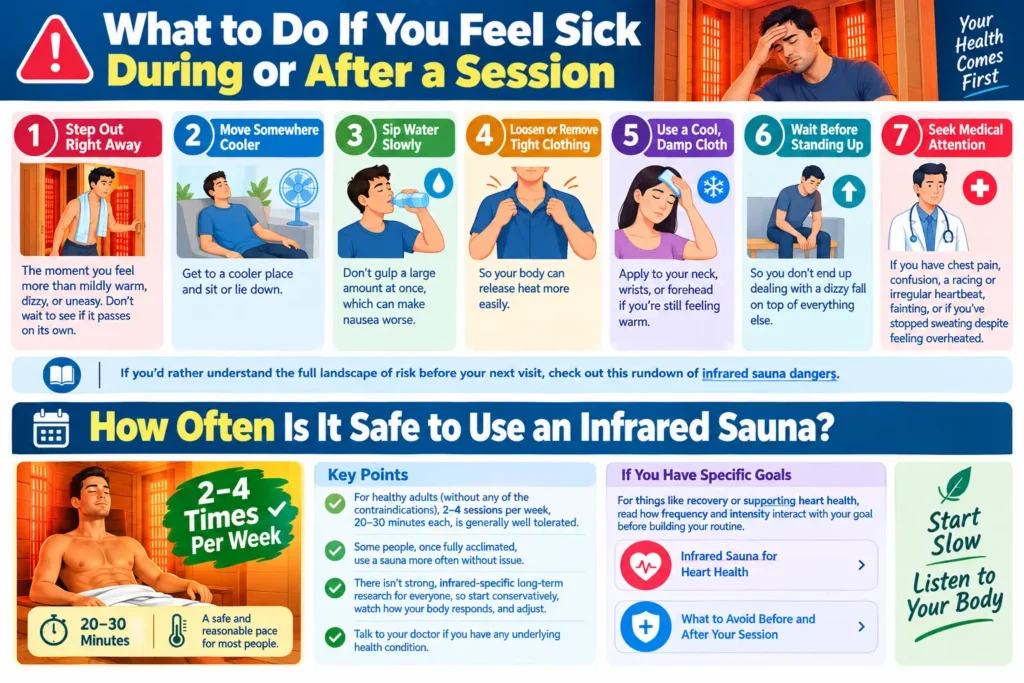
- Step out right away the moment you feel more than mildly warm, dizzy, or uneasy. Don’t wait to see if it passes on its own.
- Move somewhere cooler and sit or lie down.
- Sip water slowly. Gulping a large amount at once can make nausea worse.
- Loosen or remove tight clothing so your body can release heat more easily.
- Use a cool, damp cloth on your neck, wrists, or forehead if you’re still feeling warm.
- Wait until you feel steady before standing up, so you don’t end up dealing with a dizzy fall on top of everything else.
- Seek medical attention if you’re dealing with chest pain, confusion, a racing or irregular heartbeat that won’t settle, fainting, or if you’ve stopped sweating despite still feeling overheated. If you’d rather understand the full landscape of risk before your next visit, this rundown of infrared sauna dangers is a solid place to start.
How Often Is It Safe to Use an Infrared Sauna?
For healthy adults without any of the contraindications above, most guidance points toward two to four sessions a week, at 20 to 30 minutes each, as a reasonable pace that most people tolerate well. Some people, once fully acclimated, use a sauna more often than that without any issue.
There isn’t strong, infrared-specific long-term research pinning down an ideal frequency for absolutely everyone, so the safest approach is to start conservatively, pay close attention to how your body responds, and adjust from there, ideally with input from your doctor if you’re managing any underlying health condition.
If your goal involves something more specific, like recovery or supporting heart health, it’s worth reading how frequency and intensity interact with that particular goal before building your routine around it, and being extra mindful of what to avoid before and after your session so you’re not undoing the benefit with poor timing.
Frequently Asked Questions
Can an infrared sauna make you sick the first time you use it?
Yes, this is fairly common. First-time users often stay in too long, use too high a temperature, or aren’t adequately hydrated, leading to dizziness, nausea, or a headache. Starting with a shorter, cooler session usually prevents this.
Is it normal to feel nauseous after an infrared sauna?
Mild, short-lived nausea can happen due to heat, dehydration, or an empty stomach. Nausea that’s severe, doesn’t improve after cooling down and rehydrating, or comes with vomiting is not something to brush off.
Why do I get a headache after using an infrared sauna?
Headaches after a session are usually linked to mild dehydration or a temporary drop in blood pressure. Drinking water before and after your session, and avoiding overly long sessions, typically resolves this.
Can infrared saunas cause dehydration?
Yes. Heavy sweating without adequate fluid replacement is one of the most common causes of feeling unwell during or after a session.
Should I eat before an infrared sauna?
A light meal beforehand is generally better tolerated than either a heavy meal or a completely empty stomach.
Can infrared sauna use trigger low blood pressure symptoms?
Yes. Heat causes blood vessels to widen, which can lower blood pressure and cause dizziness or fainting, especially when standing up quickly after a session.
Is infrared sauna use safe during pregnancy?
Generally, no — most guidance advises pregnant individuals to avoid infrared saunas due to the risks associated with raising core body temperature, unless a doctor has specifically approved it.
How long should a beginner stay in an infrared sauna?
10–15 minutes at a lower temperature setting is a sensible starting point, gradually increasing time and heat as your body adjusts over several sessions.
Final Thoughts
Feeling a little flushed, tired, or thirsty after an infrared sauna session is normal and part of how your body responds to heat. Feeling genuinely sick, dizzy to the point of nearly fainting, nauseous enough to vomit, or dealing with chest pain or a racing heart that won’t settle is your body telling you something went wrong with how the session was used, not a sign the sauna is “working.”
The good news is that almost every serious risk here is preventable with a few consistent habits: hydrate before and after, start short and build up gradually, skip alcohol, know your own medical risk factors, and get out the moment something feels more than mildly uncomfortable.
Used this way, infrared saunas are a low-risk wellness tool for most healthy adults. Used carelessly, or by someone with an unaddressed medical risk factor, they can genuinely make you sick.
If you’re unsure whether infrared sauna use is right for you, especially with a heart condition, pregnancy, or regular medication use, a short conversation with your doctor before your first session is the safest place to start.