When you have ever completed a strenuous exercise and stood at the entrance of a wellness center of your gym, seeing two wooden doors, you might have thought: What is the Difference Between Sauna and Steam Room? They both assure the feeling of relaxation, sweating, and that post-workout glow, which, however, the feeling in each room is overwhelmingly different.
The biggest difference in sauna vs steam room is the nature of heat that they emit: in a sauna, the heat is dry and usually it is produced by a wood stove or hot rocks whereas in a steam room it is a moist heat produced by a steam generator that boils boiling water.
Although they all provide therapeutic advantages and increase your body temperature, it is possible to find out the differences between the levels of humidity, temperature, and construction and choose the one that better fits your health priorities.


Paid Links - As an Amazon Associate, I earn from qualifying purchases.
It comes down to what you like to do or what your body can handle, despite whether you are wanting to relax your sore muscles, heal your skin or just unwind, the decision between a steam room sauna experience or not, is all a matter of preference.


Paid Links - As an Amazon Associate, I earn from qualifying purchases.
Key Takeaways
- Saunas are used for dry heat, and in steam rooms, the heat is humid.
- Steam rooms are more favorable on respiratory health and hydration of the skin.
- Saunas can aid in muscle recovery and circulation.
- Both are good promoters of relaxation and stress relief.
- The decision to wear it is based on comfort, health requirements and preference.
What is a Sauna?
When humans talk of traditional heat therapy they are talking about a sauna. The sauna is a room used to bring in dry heat sessions and it has its origin in Finland.
The heat inside a conventional sauna is usually between 160 o C and 200 o C (71 C to 93 C), with an extremely low relative humidity (usually between 5 and 20 percent).
There are several methods of producing the heat of a sauna:
- Wood-burning stoves: This is the most traditional one, and it offers a ceremonial smell and a strong heat.
- Electric heaters: They are widespread in contemporary gyms and houses and are easy to manage and clean.
- Infrared heaters: These are heaters that warm your body directly not the air surrounding you (a slightly different experience but usually referred to under the umbrella of sauna).
Due to the dry air, most users like sprinkling water on hot rocks to produce a short burst of steam (in Finnish called loyly), and temporarily raises the humidity and makes the experience of heat on the skin more intense.
In case you are doing research on the benefits of using the sauna as a cardiovascular health tool, it will be discovered that the dry heat enables many people stay longer in the sauna than the fierce humid heat of a steamer.
What is a Steam Room?
Unlike the dry air in a sauna, a steam room is an essentially airtight room that is pumped with steam by a generator to form 100 percent humidity.


Paid Links - As an Amazon Associate, I earn from qualifying purchases.
Due to the high level of moisture in the air, the temperature in a steam room is usually low, between 110F and 120F (43C to 49C). However, the temperature may be increase or decrease on the basis of sauna steam room difference.
Nevertheless, do not be misled by the low temperature. The intensity of the heat is further enhanced by the high humidity which makes the body sweat more and at a faster rate compared to a dry climate.
The high moisture content of steam rooms also frequently causes the use of non-porous surfaces such as ceramic tile, glass, or acrylic, as wooden surfaces would eventually bow and break when subjected to that degree of constant moisture.
The atmosphere in a steam room resembles the rain forest of a tropical or a dense fog. It gives a feeling of a blanket of warmth that is very relaxing to respiratory conditions and skin hydration.
Sauna and Steam Room Difference
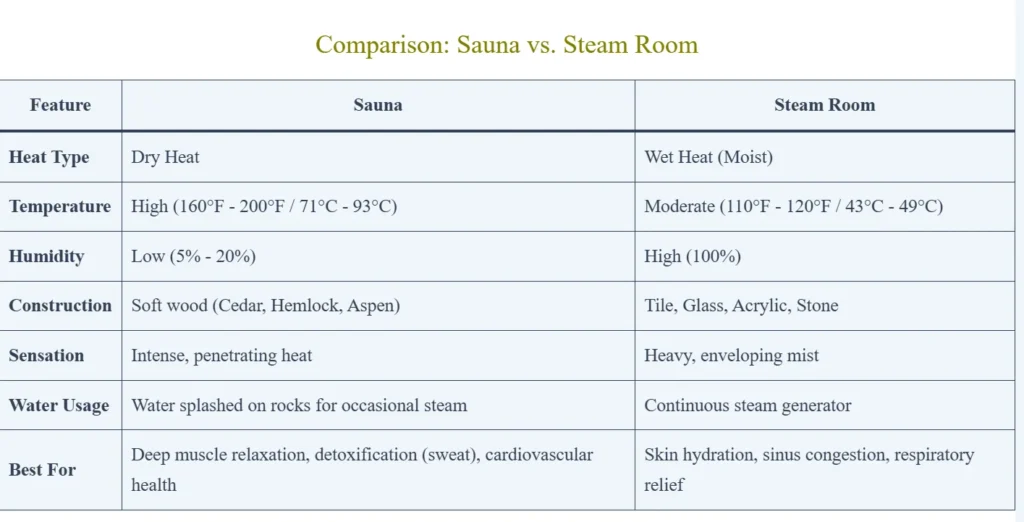
In order to see the real distinction in the difference between sauna and steam room, we must look at how your body can react to the different environments. The key differences are summarized in the table below.
Comparison: Sauna vs. Steam Room
| Feature | Sauna | Steam Room |
|---|---|---|
| Heat Type | Dry Heat | Wet Heat (Moist) |
| Temperature | High (160°F – 200°F / 71°C – 93°C) | Moderate (110°F – 120°F / 43°C – 49°C) |
| Humidity | Low (5% – 20%) | High (100%) |
| Construction | Soft wood (Cedar, Hemlock, Aspen) | Tile, Glass, Acrylic, Stone |
| Sensation | Intense, penetrating heat | Heavy, enveloping mist |
| Water Usage | Water splashed on rocks for occasional steam | Continuous steam generator |
| Best For | Deep muscle relaxation, detoxification (sweat), cardiovascular health | Skin hydration, sinus congestion, respiratory relief |
The Physical Sensation
The first thing that you will notice are the feeling on your skin and in your lungs.
Sauna: The atmosphere is sharp and hot. It is easy to breathe but your skin feels like it is being baked. You can wipe off this sweat and your skin will stay fairly dry.
Steam Room: The air has a heavy wet feel to it. Every breath is moist and your skin is instantly covered with a layer of condensation and perspiration. It may be more difficult to breathe for those with asthma because of the density of the air, but it is excellent to loosen phlegm in the airways.
When comparing steam and sauna, it sort of is a matter of choice between a desert environment and a tropical rainforest.
Benefits of Using a Steam Room Therapy
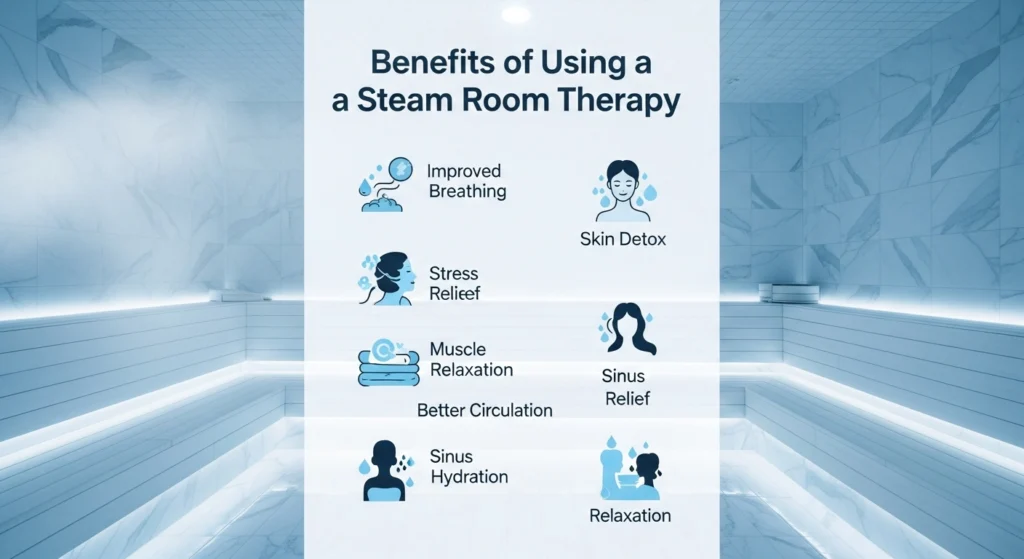
It is the high humidity that is the game-changer here. The benefits of steam room sessions are especially remarkable for the respiratory health and skin health.
- Respiratory Relief: The moist heat can help to loosen the mucus in the throat and lungs, which can help to relieve congestion from colds, bronchitis, or allergies. It opens up the airways and is able to soothe irritated nasal passages.
- Skin Hydration: Unlike the dry heat of a sauna it is sometimes possible to dry out the skin if you’re not careful, the steam increases oil production and hydrates the skin.
This can leave your face dewy and soft. It also helps to open pores, which can help in deep cleaning (but always wash your face after to remove the impurities). - Circulation: Similar to how a sauna works, the heat stimulates blood vessels to dilate (vasodilation) which helps blood circulation and lowers blood pressure in the short run.
Benefits of using a steam room further include the reduction of stress hormones and the promotion of a sense of calm, which is quite a lot to do with the warm, cocooning environment.
Benefits of Sauna Therapy
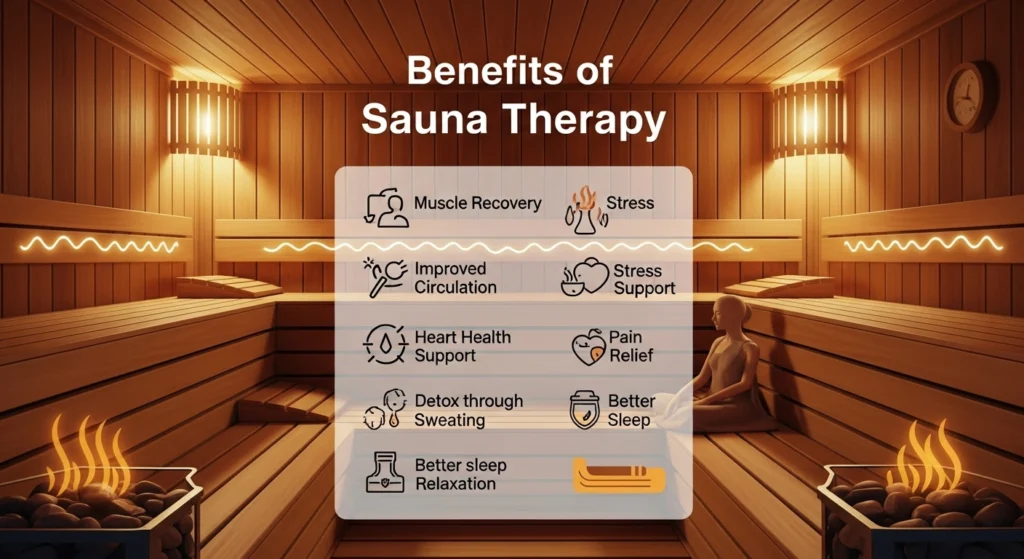
Saunas are the Powerhouses of Heat Therapy. When analyzing the sauna steam room difference, the sauna presents a higher temperature to provide a greater cardiovascular workout for the heart.
- Deep Muscle Recovery: The penetrating dry heat penetrates to the deep tissue of the muscle, which helps to relax hard muscles and reduce stiffness after a workout. It is one of the favorites by athletes for recovery.
- Cardiovascular Health: Studies have shown that regular sauna use is linked to a lower risk of developing fatal cardiovascular diseases. The heart rate is elevated during a session (sometimes to the point of 120-150 beats per minute) as if a moderate aerobic exercise were being performed.
- Detoxification: While the kidneys and liver are the body’s primary organs of detoxification, the heavy sweating effect of using a sauna can aid in the removal of small amounts of heavy metals and chemicals from the body through the skin.
- Growth Hormone Release: Some research suggests that the high heat stress in a sauna may stimulate the release of human growth hormone (HGH), which plays an important role in muscle repair and metabolism.
Safety Precaution(s) and Risks
Before you make a choice between a sauna vs steam room, it is essential that you think about safety. Both environments are stressing the body, the main way being that they increase your core temperature.
Dehydration
The most common risk of both is dehydration. You lose large quantities of water when you sweat.
- Recommendation: Drink a glass or two of water before going in and one glass of water after you go in. Avoid alcohol before, during or immediately after your session because this increases the risk for dehydration and low blood pressure (hypotension).
Heat Intolerance
If you are pregnant or have heart disease or high blood pressure, you need to check with your physician before you use heat therapy. The rush of pressure in the blood and the stress on the heart can have a lethal effect on vulnerable people.
Hygiene
Because a steam room is a wet and warm environment, it is a breeding ground for bacteria and fungi if not cleaned properly.
- Tip: Always sit upon a towel and wear flip flops to prevent contact with the surface that may harbor the athlete’s foot or other organisms. Ideally, shower before entering to ensure the space is clean.
Sauna Steam Room Difference: Installation and Maintenance
If you are looking at adding one of these to your home, the sauna steam room difference spans to installation and maintenance requirements.
Sauna Maintenance
Saunas are low maintenance compared to other things. Because the environment is dry and the wood is naturally antibacterial (particularly cedar), all you usually have to do is vacuum or sweep the floor from time to time and wipe the benches down with a mild detergent.
You will not have to worry as much about the growth of mold or mildew because they are discouraged by the lack of moisture.
Steam Room Maintenance
Steam rooms take much more maintenance. The constant moisture can cause mold and mildew if the grout and caulking are not checked on a regular basis.
The steam generator must be flushed and descaled from time to time to remove mineral build up (especially if you have hard water). You also need to make sure that the room is completely watertight so as not to cause damage to the surrounding structure of your home.
Sauna vs steam room setups also differ in energy costs; generally speaking, when using a steam generator, lots of water and electricity will be used in order to keep the water boiling, whereas with an electric sauna heater, electricity will be used to heat stones, which can be very efficient, provided the insulation is good.
Which One Should You Choose?
The preference between steam or sauna often comes down to personal preference with regards to comfort and health goal.
Choose a Sauna if:
- You prefer a dry environment that is easy to breathe.
- You would want to have higher temperatures if you want to deeply relax your muscles.
- You love the ritual of throwing water on rocks (if using a traditional sauna)
- You want to simulate a moderate cardiovascular workout.
Choose a Steam Room if:
You have a stuffy nose or congestion in the chest.
You have dry skin and would like to hydrate your skin.
You find the searing dry heat of a sauna intolerable to your lungs.
You like it more cool but with a “wetter” heat feeling.
Many enthusiasts enjoy “contrast therapy” which involves a shift of the two, or the sauna and a cold plunge pool. This method is thought to further stimulate circulation and decrease inflammation.
You May Also Like To Read:
FAQs
Which is better for weight loss sauna or steam room?
Neither is some magic bullet for weight loss. While you will lose water weight through sweating in both, this is temporary, and returns as soon as you rehydrate. However, the minor increase in metabolic rate and heart rate may supplement a healthy diet and exercise routine.
Can I go in a sauna or steam room when you have a cold?
Yes, having a steam room is often a better option when you have a cold as the moist heat helps to loosen the congestion and soothe the throat. However, if you have a fever, it is better to avoid both as elevating the body temperature further on will stress the body.
How long should I be in a sauna or steam room?
For beginners, 10 to 15 minutes of time should be the start. Experienced users may stay up for 20 or 30 minutes. Always listen to your body, if you feel dizzy, lightheaded or nauseous, get out of there.
Is sauna steam room difference important for asthmatics?
For many asthma sufferers, dry heat can sometimes aggravate the airways and the moist heat of a steam room is a better choice than dry heat. However, some people find the heavy humidity of a steam room suffocating. This depends on the individual so go slowly.
Do I need to wear clothes in a sauna or in a steam room?
In most commercial gyms in the US, a swimsuit or a towel is necessary. In private places or even in some European cultures, nudity is commonplace and generally accepted. The most important is the comfort and hygiene.
Final Thoughts
Ultimately, it is not a matter of which one is “better,” the sauna or steam room, but which one is creating the experience you are looking for. Both have immense benefits to circulation, skin health, muscle recovery and mental relaxation.
The dry burning heat of a sauna offers a traditional and intense relaxing experience along with the moist, humidive embrace of a steam room, which provides respiratory relief and hydration to the skin.
By knowing the sauna steam room difference in respect to humidity, temperature and construction, you can make an informed choice based on your health needs.
Whether you go for the wood-paneled warmth of a sauna steam room combo or the tiled mist of a steam generator, as long as you take the time to relax, unwind and take care of your body.
Always remember to stay hydrated and consult with a healthcare professional if you have any underlying health concerns.