If you’re wondering which is better dry sauna or steam sauna, the honest answer is: it depends on your health goals.
A dry sauna provides an extreme heat with a low level of humidity, which is preferred by many for recovering their muscles and cardiovascular conditioning.
A steam sauna (steam room) makes use of moist heat resources that are gentler on the skin and respiratory system and are therefore popular for respiratory comfort purposes while also providing skin hydration benefits.
Both have actual wellness benefits – it just comes down to comfort, health needs, and how the body reacts to heat.
Disclaimer: This article is for informational purposes only and does not constitute medical advice. Always consult with a healthcare professional before starting any new heat therapy regimen, especially if you are pregnant or have pre-existing health conditions like heart disease or high blood pressure. Use saunas and steam rooms responsibly.
Key Takeaways
- Heat Source Matters: Dry saunas involve high heat with low humidity (baked stones) and steam saunas (steam rooms) have low temperatures with 100% humidity (boiling water).
- Health Goals: Dry saunas are better for deep muscle relaxation and post-workout recovery. Steam saunas are generally preferable for respiratory problems as well as for extreme hydration of the skin.
- Weight Loss: Both cause sweating and temporary water weight loss but the dry sauna is usually able to raise your core temperature higher, possibly with a slight metabolic edge.
- Usage: You can use both on the same day, but experts often suggest using the dry sauna first to help open pores, and then the steam room for a great clean.
Dry Sauna vs. Steam Sauna: Understanding the Core Differences
Before we get into the benefits, we have to get into the basic mechanics. The debate of dry sauna vs steam sauna isn’t so much which is “hotter,” but how the heat is delivered.

What is a Dry Sauna?
A traditional dry sauna, sometimes based on Finnish tradition, involves the use of a stove for heating rocks. The temperature is normally between 150°F and 195°F (65°C and 90°C) Because the humidity is very low (usually between 10% and 20%), the air is very dry and intense.
You can pour water over the hot rocks to obtain a burst of steam (called “löyly”), temporarily increasing humidity but the room is still much drier than in a steam room.
What Is a Steam Sauna (Steam Room)?
Often known as a Turkish bath or Hammam, a steam sauna is an enclosed space with moist heat inside. The temperature is lower than a dry sauna, typically between 110°F and 120°F (43°C to 49°C ). However, the level of humidity is 100%.
This wet heat feels much hotter than what the actual thermometer says because your sweat can not evaporate to cool you down. It is heavy, misty and more clammier than usual.
The Health Showdown: Who Would Be The Winner?
To find out which is better for you steam sauna or dry sauna, we need to look at specific categories of health.
1. Muscle Recovery and Post Workout Benefits
If you frequent the gym, you have probably heard the argument of sauna vs. steam room after workout – which is better?

The Dry Sauna Advantage:
Dry saunas are typically the choice for athletic recovery. The high, dry heat gets deep into the muscle tissue for vasodilation (widening of blood vessels).
This helps to increase the blood supply to the tired muscles, flushing out the metabolic waste products such as lactic acid and blunting inflammation. Many athletes like the dry heat as it puts them in a state of fever which can aid in faster cellular repair processes.
The Steam Sauna Role:
Steam rooms can help loosen up tight muscles but the lower temperature doesn’t have the same amount of deep tissue penetration as a dry sauna. However, the moist heat can be very soothing in the case of joint stiffness or arthritis.
Verdict: For the improvement in muscle recovery and growth the dry sauna wins.
2. Skin Health: The Glow Factor
When asking is sauna or steam room is better for skin, the answer is related to your skin type.

Steam Sauna to Hydrate and Clear Acne:
Steam rooms are more like a facial on steroids. The wet heat helps to open up the pores and soften the surface of the skin. The condensation has a hydrating effect on the epidermis which can be fantastic on dry skin types.
Furthermore, the profuse sweating helps to flush out of the skin impurities and bacteria, which can cause acne.
Dry Sauna for Circulation:
The intense heat of a dry sauna increases circulation which brings oxygen and nutrients to the skin’s surface. However, for those with eczema or very sensitive skin, the dry heat is sometimes irritating or drying.
Verdict: If you are looking for hydration and acne control, the steam room is the way to go. If you want increased circulation and radiance the dry sauna is a great choice.
3. Weight Loss: Fact or Fiction?
A rather frequent question heard in fitness forums is this: steam sauna vs dry sauna for weight loss?
First, a reality check: neither is a magic pill to make you burn fat. Most of the weight that you lose right after a session is water weight.

The Dry Sauna Edge:
Because the temperatures are higher in a dry sauna, your body has to work harder in order to cool down. This gets your heart rate up quite a bit – in some studies it has been suggested that it can have similar cardiovascular effects of a brisk walk.
This increased heart rate, combined with the increased temperature of the core may result in a slightly higher calorie burn than sitting in a steam room.
The Steam Sauna Reality:
While steam rooms do increase your heart rate, it is usually less intense than the dry heat shock of a sauna.
Verdict: For transient water weight loss, and a slightly increased metabolism, the dry sauna or steam room battle is won by the dry sauna.
4. Respiratory Health
If you suffer from asthma, allergies or congestion the steam room is the clear winner.

Steam Sauna Benefits:
The moist heat is great for loosing phlegm and mucus in the lungs and throat. It is a good expectorant in nature. The humidity helps to soothe the irritated airways which makes it easier for you to breathe.
Dry Sauna Caution:
The dry air can sometimes irritate the mucous membranes and throat and this makes it more difficult for some people with respiratory conditions to breathe comfortably.
The “Real World” Perspective: What Reddit and Quora Say
It’s one thing reading scientific studies what do actual users think? If you look for which is better dry sauna or steam sauna quora or fitness threads on Reddit, you begin to see some patterns.
- The “Gym Rat” Consensus: On places such as Reddit, the dry sauna is overwhelmingly preferred by fitness lovers. Users report better sleep, better DOMS (delayed onset muscle soreness) recovery and a more “cleansing” sweat.
- The Relaxation Crowd: On Quora and other discussion boards one will often see users in favor of the steam room due to their needs to relax their minds or because of their respiratory issues. They describe the sensation as a “warm blanket” that is easier to tolerate in a longer time than the intense heat of a dry sauna.
Practical Guide: How to Use them Correctly
Knowing the difference between dry sauna and steam sauna is one thing, using them properly is another. Here are some answers to the most common logistic questions.
Sauna or Steam Room First?
If you have access to both at your gym or spa, you may be wondering: sauna or steam room first?
The general rule of thumb is the following: Dry before Wet.
- Start with the Dry Sauna: The dry heat will open up your pores and cause a heavy sweat. This begins the process of detoxification and your heart rate increases.
- Rinse: Take a quick cool or lukewarm shower to get the initial sweat off and close up your pores somewhat.
- Finish with the Steam Room: The steam room will re-open your pores in the hydrated environment. The moist heat will help to clear out any remaining impurities, and soften your skin after the intense dry heat.
Can I Use Sauna and Steam Room Same Day?
Yes, absolutely. In fact, alternating between hot and cold (or wet and dry) environment is a staple of hydrotherapy. However, listening to your body is very important.
If you opt to use both, these are some tips to follow:
- Hydration is Key: You will lose a massive amount of fluids. Drink water before, during (if possible), and after your sessions.
- Limit Time: Don’t spend 20 minutes in each. Try 10-15 minutes in the sauna, a cool shower and then 10-15 minutes in the steam room.
- Watch for the Dizziness: When you move in from the heat to a standing position, blood pressure drops. Stand up slowly.
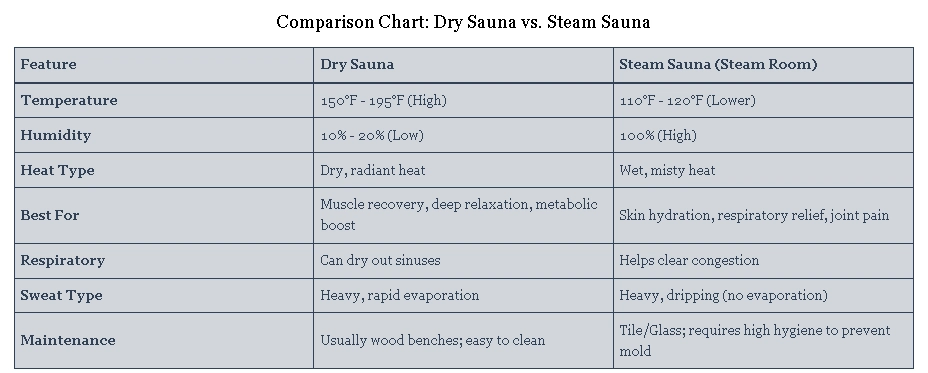
Comparison Chart: Dry Sauna vs. Steam Sauna
| Feature | Dry Sauna | Steam Sauna (Steam Room) |
|---|---|---|
| Temperature | 150°F – 195°F (High) | 110°F – 120°F (Lower) |
| Humidity | 10% – 20% (Low) | 100% (High) |
| Heat Type | Dry, radiant heat | Wet, misty heat |
| Best For | Muscle recovery, deep relaxation, metabolic boost | Skin hydration, respiratory relief, joint pain |
| Respiratory | Can dry out sinuses | Helps clear congestion |
| Sweat Type | Heavy, rapid evaporation | Heavy, dripping (no evaporation) |
| Maintenance | Usually wood benches; easy to clean | Tile/Glass; requires high hygiene to prevent mold |
Choosing Which is Better for You: Dry or Steam Sauna
Ultimately, the choice between better steam or dry sauna is a matter of personal preference and particular health requirements.
Choose a Dry Sauna if:
- You want a vicious heat, a “purifying” sweat.
- You are an athlete who is concerned with muscle recovery and growth hormone stimulation.
- You don’t like the sensation of air that is thick and wet or “clammy” skin.
- You want to elevate your heart rate to a big jump.
Choose a Steam Sauna if:
- You have breathing problems, such as asthma or sinus congestion.
- You have dry skin, or want the “spa-like” facial effect.
- You prefer the low temperature and wish to feel warm.
- You find dry heat uncomfortable or irritating to your nose/throat.
Safety Considerations
While heat therapy is good, it is not good for everyone.
- Pregnancy: Always consult a doctor prior to using saunas or steam rooms.
- Heart Conditions: The rapid increase and decrease in heart rate and blood pressure rate can be dangerous for those with unstable heart conditions.
- Dehydration: You should never use a sauna or steam room when under the influence of alcohol. This greatly puts one at risk of dehydration and fainting.
You May Also Like To Read:
FAQs
Which is better for detox dry sauna or steam room?
Both cause sweating which is a form of detoxification. However, the dry sauna is generally regarded as the more effective one for “deep sweating” as the high temperatures require the body to work harder to maintain its temperature and can therefore expel more heavy metals and toxins through sweat.
What is better dry sauna or steam sauna circulation?
The dry sauna is the winner when it comes to circulation. The intense heat provides for a more dramatic expansion of blood vessels (vasodilation) which can help lower blood pressure over time, improving vascular function.
How long to stay in each?
As a beginner, you should start with 8-10 minutes. Experienced users can meditate for a longer period of time (15-20 minutes), but never extend past the point of discomfort. Always go out right away if you are dizzy or sick to your stomach.
Do I take a shower after the sauna or steam room?
Yes. A lukewarm or cool shower after a session helps to rinse off the sweat and bacteria, close your pores while cools down your body temperature gradually.
Final Thoughts
At the end of the day, the debate of which is better dry sauna or steam sauna doesn’t have a winner as they serve a slightly different purpose. Think of it as being a choice between a hard workout and a restorative yoga session.
If you can stand the high heat and want to maximise muscle recovery, circulation and that deep “detox” sweat, the dry sauna is surely your best friend.
On the other hand, if you have problems with your respiratory system, or if you just really want to soothe your skin and crave a good, intense hydration of water, or just find the dry heat too suffocating, the steam room is a soothing, therapeutic sanctuary.
The best approach? Don’t limit yourself. If your facility has both, try out the alternating routine we talked about. Your body is different and the “better” option is the final one making you feel your absolute best and encouraging you to come back for more on a regular basis.