Infrared saunas have surged in popularity as a wellness tool, praised for their ability to detoxify the body, improve circulation, and promote deep relaxation.
However, unlike traditional steam saunas that heat the air around you, infrared saunas use light waves to heat your body directly. This unique mechanism often raises valid safety questions. So, what protection do you need in an infrared sauna?
To safely enjoy an infrared sauna session, you primarily need to protect your eyes from intense light and dryness, shield your hair from heat damage, maintain proper hydration, and ensure your skin is free of barrier-blocking lotions.
While infrared saunas are generally safe for most people, understanding the specific protective measures for your eyes, skin, and body ensures you reap the benefits of infrared sauna therapy without unnecessary risks.
Below, we dive deep into the specific gear, clothing choices, and health precautions you should take to make your sauna experience both safe and effective.
Medical Disclaimer: This content is for informational purposes only and does not constitute medical advice. Infrared sauna therapy may not be suitable for everyone. Always consult with a qualified healthcare professional before beginning any new wellness routine, especially if you are pregnant, have a heart condition, or take photosensitizing medications.
Key Takeaways
Before we dissect the science and details, here are the things you should know about infrared sauna safety:
- Eye Safety is Crucial: Infrared light has the ability to penetrate deep tissue, it is recommended to protect your eyes with special goggles to avoid cornea dryness and possible lens damages in the long run.
- Less is More (Clothing): Bare skin is the most infrared absorbent. If using an infrared sauna blanket, be sure to wear natural fibers such as cotton so that you don’t risk burns and off-gassing of plastics.
- Hydration is Non-Negotiable: You sweat much more than you think. Drink water before, during and after, so that you do not get dizzy.
- Hair Protection: Heat can cause the shafts of hair to dry out. To cover the hair with a towel or turban.
- No Metal or Electronics: Remove jewelry to avoid burns and leave electronics outside to avoid overheating and EMF exposure.
Do You Need Eye Protection for an Infrared Sauna?
One of the most common questions users have – and that can be found frequently on forums such as Quora around topics of what protection do you need in an infrared sauna quora – center around eye safety.
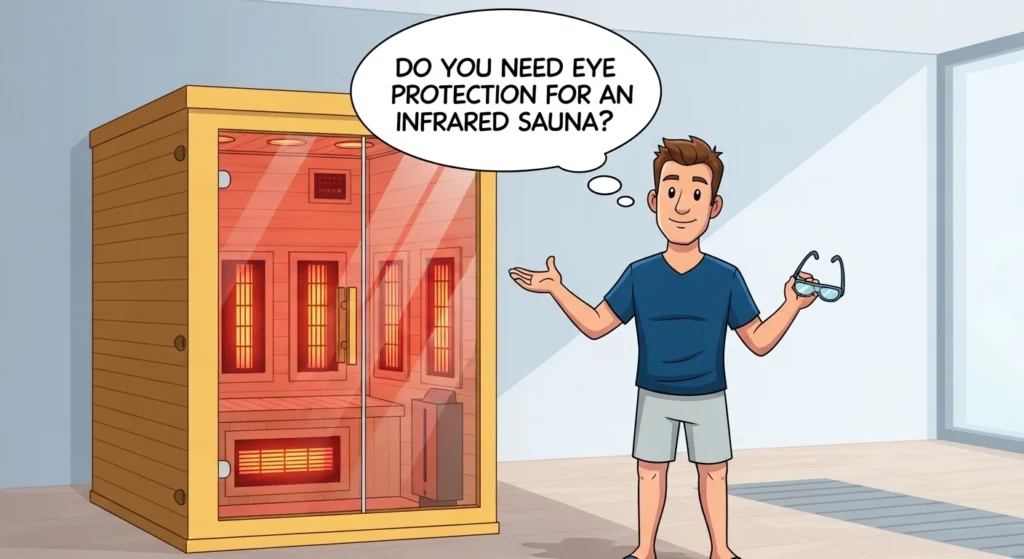
The short answer is: Yes, you should be wearing eye protection.
Is Infrared Sauna Safe for Eyes?
While infrared saunas don’t emit harmful UV-radiation (the kind that cause sunburn), they emit concentrated beams of light energy. Staring directly at the infrared heaters can over time cause thermal damage to the eyes. The risk is not of sudden blindness, but of cumulative damage instead.
The lens of the eye is especially sensitive to infrared radiation. Prolonged unprotected exposure can cause:
- Corneal Dehydration: The intense heat can dry out the surface of your eyes causing irritation and a “gritty” feeling.
- Lens Opacity: Prolonged, high intensity has been associated with “glassblower’s cataract“, which is a clouding of the lens of the eye caused by heat. While this is uncommon in non-frequent sauna users, it points to the potential for serious danger from intense IR light.
Best Eye Protection for Infrared Sauna
When searching for infrared sauna eye protection, ordinary sunglasses are not good enough. They are designed to block UV rays and not infrared heat.
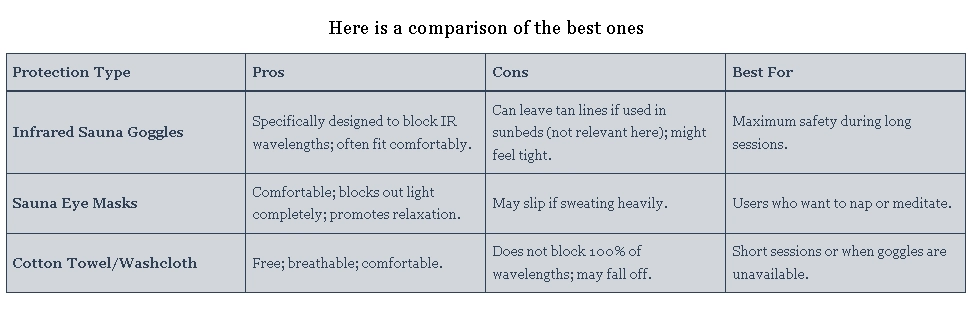
Here is a comparison of the best ones
| Protection Type | Pros | Cons | Best For |
|---|---|---|---|
| Infrared Sauna Goggles | Specifically designed to block IR wavelengths; often fit comfortably. | Can leave tan lines if used in sunbeds (not relevant here); might feel tight. | Maximum safety during long sessions. |
| Sauna Eye Masks | Comfortable; blocks out light completely; promotes relaxation. | May slip if sweating heavily. | Users who want to nap or meditate. |
| Cotton Towel/Washcloth | Free; breathable; comfortable. | Does not block 100% of wavelengths; may fall off. | Short sessions or when goggles are unavailable. |
If you are wondering, “do you need to wear eye protection in infrared sauna sessions strictly for medical reasons?” consult your ophthalmologist, especially if you have pre-existing eye conditions like glaucoma.
However, for general wellness, wearing infrared sauna goggles or simply keeping your eyes closed and turning your head away from the heaters is the standard safety protocol.
Clothing and Skin: What To Wear (And What Not TO)
When one thinks of what infrared sauna etiquette is about, clothing is a major debate. Should you go nude, wear a swimsuit or wrap up in a towel?
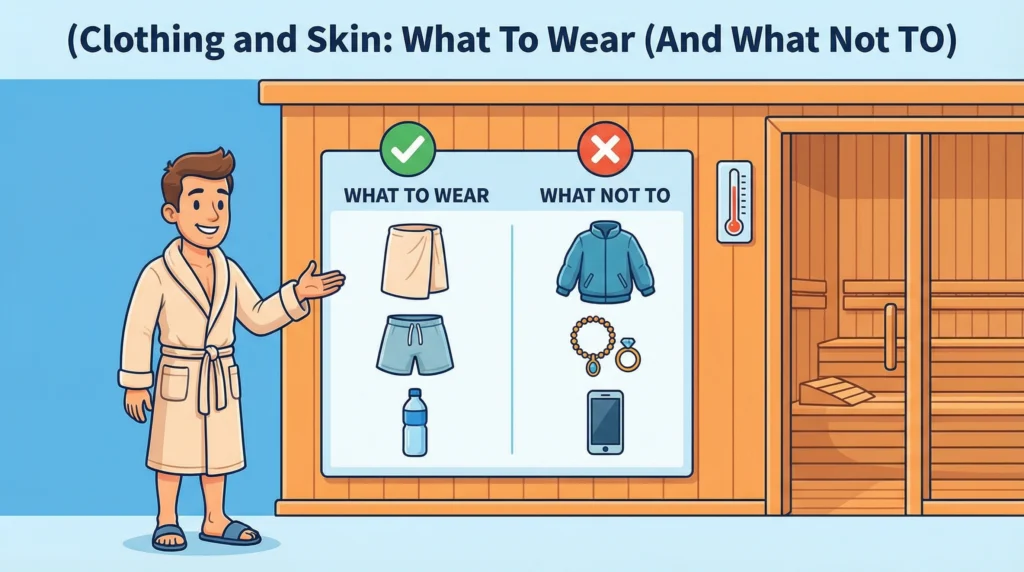
The Case for Bare Skin
Infrared heat works by penetrating the skin directly. Clothing creates a barrier that can reflect or absorb some of the infrared waves before they reach your body. For maximum benefits of infrared sauna therapy, being nude is the most effective method.
However, there are factors of hygiene and modesty. If you are in a public setting, it is usually against the rules to be nude. In the private home setting, it is the choice of many enthusiasts.
Should You Have Clothing on in an Infrared Sauna Blanket?
Infrared sauna blankets have become a trendy alternative to go home. The question “should you wear clothes in an infrared sauna blanket” is important for safety.
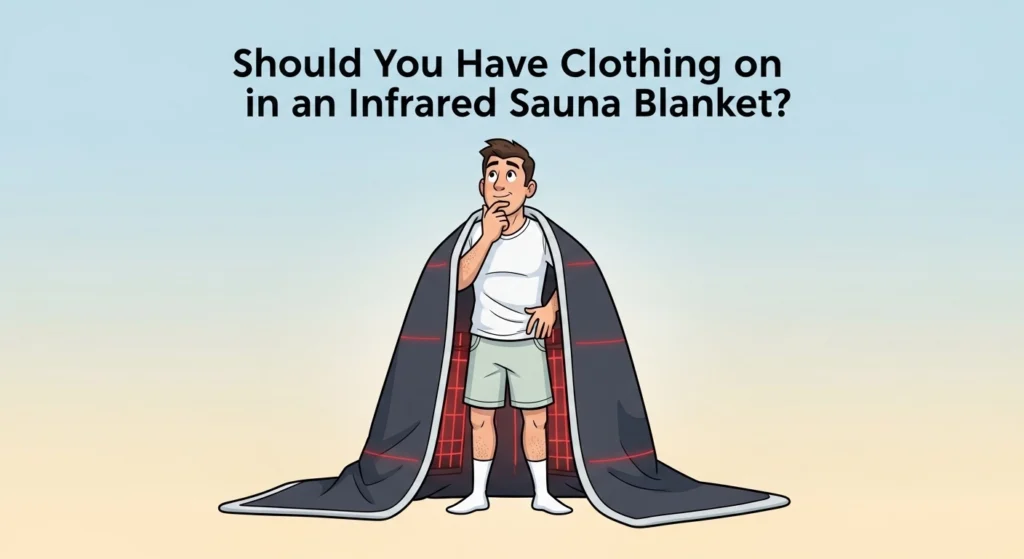
Yes you should wear clothes in an infrared sauna blanket.
However, since your body is in direct contact with the heating elements (only separated by a liner) wearing clothing serves as a protective barrier.
- Wear Cotton: Opt for cotton clothes which are loose fitting and made of 100% cotton. Cotton is breathable and does not melt down and release toxic fumes when heated.
- Avoid Synthetics: Polyester, nylon, or spandex (like yoga pants or your swumsuits) are made of plastic. When they are heated they can release chemicals on your skin or in rare cases they can melt a little.
Skincare Dos and Don’ts
In order to get the most out of your sweat session, your skin must be prepped correctly.
- Remove Makeup and Lotions
Before entering, clean your face and body. Makeup can clog the pores and prevent sweat and toxins from being removed. Lotions form a seal on the skin which reflects infra-red waves, limiting the detox effect. - Remove Jewelry
Metal becomes hot very quickly under the infrared light. Rings, necklaces or bracelets can get so hot that they burn your skin. Always take off all metal accessories. - Protect Your Hair
Do you need to protect your hair in an infra-red sauna? Absolutely. The heat can dry out the hair shaft causing brittleness and frizz. The heat opens up the cuticle of hair, and this is great for conditioning treatments, but horrible for “dry” heat.
Tip: Put on a shower cap, a thick cotton beanie or wrap your hair in a towel. This keeps the heat off your strands and helps to preserve the natural moisture of your hair.
Understanding Electromagnetic Field (EMF) Protection
A common concern that has been raised with the use of infrared saunas is that of EMF (Electromagnetic Field) exposure. Since infrared saunas are powered by electricity, EMFs are produced.
- Low EMF vs. No EMF: Most high quality saunas are “Low EMF” meaning that they are negligible and safe by international standards.
- How to Protect Yourself: If you are sensitive to EMFs, look for a “Low EMF” or “Ultra Low EMF” certified sauna. You can also use earthing mats inside the sauna, if the manufacturer says it is OK to do this, although you can normally get away with sitting on a wooden bench to get you away from the wiring.
Internal Protection: Hydration & Supplements
When one asks what protection do you need in an infrared sauna we often forget about internal protection. The severe perspiring causes a loss of fluids and electrolytes.
The Hydration Rule
Drink at least 16 ounces of water 30 minutes before your session. Bring water inside with you. If you become dizzy or lightheaded, leave immediately.
Electrolyte Balance
Sweat isn’t just water, it’s salt and minerals. Replenishing electrolytes (sodium, potassium, magnesium) after the sauna is essential in order to avoid headaches and fatigue. Consider:
- Coconut water.
- High quality electrolyte powders.
- A pre-consult snack such as a banana post the session.
Visualizing the Safety Equipment: What to Carry
To help you prepare here is a checklist of protective items you should bring to your sauna session.
Sauna Safety Gear Checklist
- Large Cotton Towels: One to sit on (to protect the wood from sweat), one to wipe off sweat and one for hair.
- Water Bottle: Glass or stainless steel is best.
- Infrared Sauna Goggles: Important if you are going to be facing the heaters or leave your eyes open.
- Loose Cotton Clothing: For the ride home or in blankets.
- Slip-on Sandals: To protect feet from bacteria in shared floors (although many will prefer to go barefoot to get the grounding).
General Safety Tips for Infrared Sauna Use
- Stay Hydrated: Infrared sauna use promotes sweating, so drink water before and after sessions.
- Limit Session Duration: Beginners should start with 10–15 minutes and gradually increase.
- Monitor Temperature: Keep infrared saunas at recommended temperatures (usually 110–130°F).
- Listen to Your Body: Stop immediately if you feel dizzy, lightheaded, or overheated.
- Consult Your Doctor: People with medical conditions, pregnancy, or medications should consult a healthcare professional before use.
Who Should Avoid Infrared Saunas? (Contraindications)
Even with the right protection infrared saunas aren’t for everyone. You should not use or consult a doctor if:
- You are pregnant.
- You Have a Heart Condition (Pacemaker, Recent Heart Attack)
- You have hemophilia (bleeding is increased by heat).
- You are taking photosensitizing medications (heat can raise the sensitivity of the skin).
- You have implants (metal pins, silicone, etc.) – check with your doctor since the heat may affect them.
You May Also Like To Read:
FAQs
Can I wear contact lenses in the infrared sauna?
It is highly recommended to take off contact lenses before your session. The heat can cause the lenses to dry out and shrink slightly, which can cause discomfort or even scratching of the cornea. If you have to wear them, use rewetting drops but it is safer to remove them.
Do I need to be concerned about UV radiation?
No Infrared saunas do not produce UV (Ultraviolet) radiation. You will not suffer from a tan or sunburn from an infrared sauna. The spectrum is strictly infrared light (Far, Mid or Near) which is felt as heat, not radiation of light which burns the skin like the sun.
How long should a beginner in an infrared sauna stay?
If you are new to using infrared saunas, take it slow. Try for 10 to 15 minutes at a lower temperature (around 110degF – 120degF). As your body becomes acclimated, you can work up to normal sessions that run between 30 to 45 minutes at 130F – 150F.
Is it OK to use an infrared sauna daily?
For most healthy people, it is generally safe to use daily. However, listen to your body. If you are feeling exhausted or dehydrated, drop your frequency down to 3-4 times per week.
Why Do I Feel Like I Have a Sunburn After the Sauna?
This is probably Erythema ab igne, or transient vasodilation. Your blood vessels enlarge to help cool you down. It normally subsides after an hour. If it persists or it is painful, the temperature might have been too high for your skin type.
Final Thoughts
Stepping into an infrared sauna should be the most relaxing part of your day, not a source of anxiety. While the list of protective measures—goggles, hydration, clothing choices—might seem extensive at first glance, they quickly become second nature.
Ultimately, the answer to what protection do you need in an infrared sauna comes down to respecting your body’s limits and the power of the heat.
You don’t need a hazmat suit; you just need a good pair of infrared sauna goggles, a cotton towel, and a bottle of water. By taking these simple precautions, you aren’t complicating the experience; you are enhancing it.
You are ensuring that every drop of sweat contributes to your well-being without compromising your eyes, skin, or hydration levels.
As you continue your infrared sauna use, you’ll find your own rhythm and routine. Start slow, listen to your body, and prioritize safety over endurance.
The benefits of infrared sauna therapy—from glowing skin to deep muscle relief—are best enjoyed when you are comfortable and protected. Here’s to a safer, sweeter sauna experience