A steam sauna – also called a steam room or steam bath – utilizes moist heat to warm up the body, aid in relaxation, benefit the skin, muscle recovery and increase respiratory comfort.
Unlike dry saunas, steam saunas have nearly 100% humidity and are therefore very beneficial for hydration of the skin, for sinus relief, and for post-workout recovery, if used correctly and safely.
In this in-depth guide, we’ll take a look at the health benefits of a steam sauna, how it compares to a traditional sauna, its cons, and if a steam room or a steam sauna is better for skin, weight loss and recovery.
Key Takeaways
Before we dive into some of the more in-depth science, here is a quick look at some of the proven health benefits of a steam sauna:
- Respiratory Relief: The moist heat helps to clear congestion and soothe airways, making it excellent for colds or asthma.
- Skin Health: Moisturizes the skin, opening pores and may help treat skin conditions such as acne and eczema.
- Post-Workout Recovery: Relax tight muscles and reduce the build up of lactic acid (benefits of steam room after workout).
- Circulation Boost: Dilates blood vessels to improve blood flow and cardiovascular health.
- Stress Reduction: Reduces the level of cortisol, relaxes with heat therapy.
10 Proven Health Benefits of a Steam Sauna
1. Improved Cardiovascular Health
When you are sitting in a steam room the heart rate is increased and the circulation of blood vessels is expanded (vasodilation). Research suggests that this “passive exercise” can help lower blood pressure, as well as to improve overall heart function. For those wondering what are the health benefits of sitting in a sauna or steam room, one of the most scientifically backed reasons to start is the cardiovascular boost.

2. Improved Skin Moisture and Clearness
If you’ve ever wondered, is sauna or steam room better for skin, the answer is always more leaned towards the steam room. While a dry sauna helps you to sweat, the 100% humidity in a steam room actually helps to hydrate the outer layers of your skin. It opens up the pores to flush out the dirt and oil, making it a perfect nature treatment of acne, as well as dull complexion.

3. Rapid Post-Workout Recovery
One of the major benefits of steam room after workout sessions is reduction of muscle tension. The moist heat goes deep into the muscles, which helps to flush out metabolic wastes, such as lactic acid. This can save a lot of the “stiff” feeling that you get the morning after a heavy lifting session.

4. Respiratory and Sinus Relief
Unlike the dry air of Finnish sauna, steam rooms are a giant humidifier. Mist is warm and helps to thin mucus and open up airways. This makes a steam sauna a go-to remedy for people suffering from chronic bronchitis, seasonal allergies or a stubborn common cold.

5. Stress Reduction and Cortisol Control
The heat stimulates the release of endorphins (the body’s ‘feel good’ hormones) and at the same time decreases cortisol (the stress hormone). This dual action helps to get your nervous system from a “fight or flight” state to a “rest and digest” state.

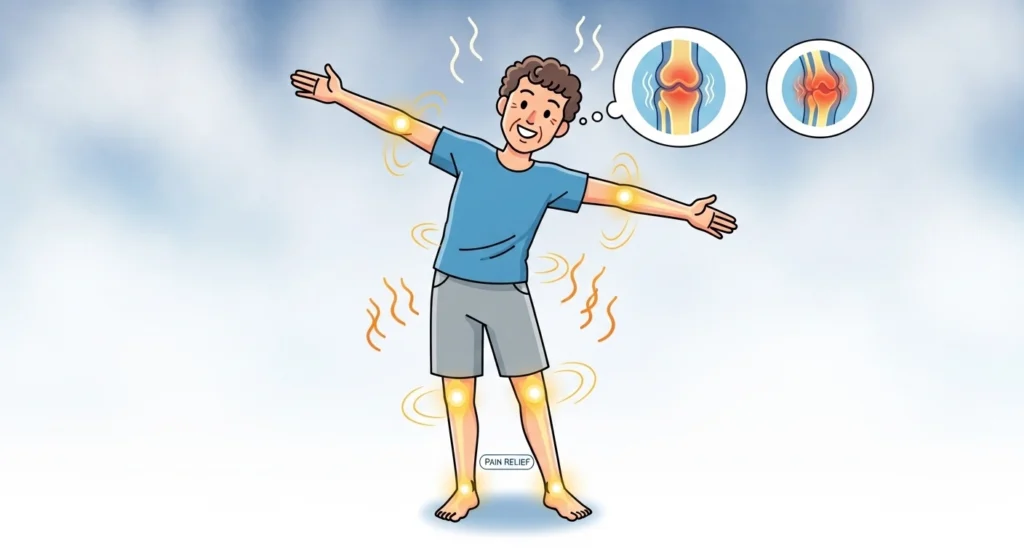
6. Flexibility of Joint and Pain Relief
For those who are suffering arthritis or general joint stiffness, the moist heat from a steam room is a gentle way of increasing mobility. It warms the synovial fluid in your joints, so that they move more smoothly and are less painful.
7. Immune System Support
Hyperthermia (raising the body temperature) simulates the presence of a mild fever. This stimulates the production of white blood cells which are the main defenders of your immune system. Regular sessions may help you to ward off seasonal illnesses better.

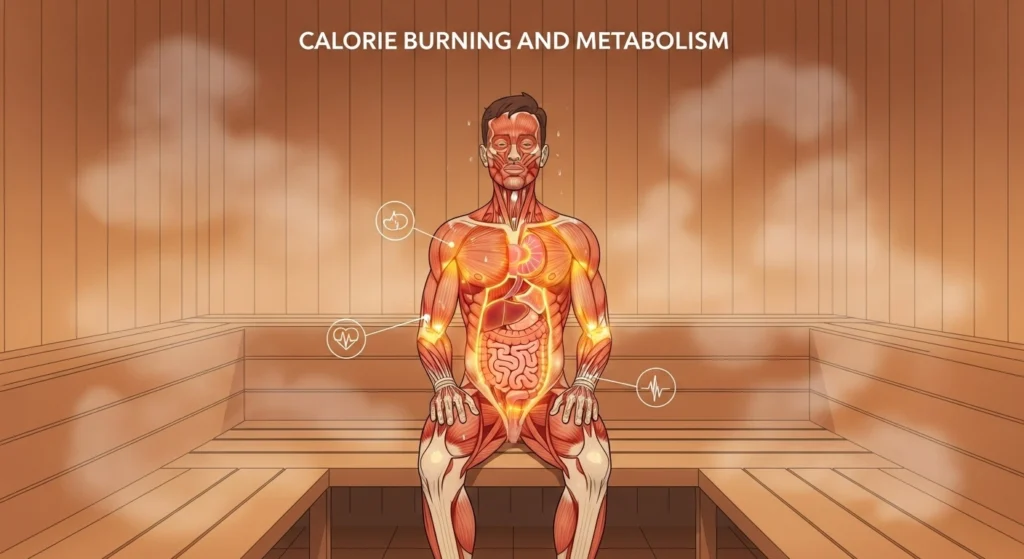
8. Calorie Burning and Metabolism
While it’s not a substitute for the gym, is sauna or steam room better for weight loss. Both can help, but because a steam room contains high humidity the body works harder to cool itself down, so your metabolism will be increased and you will burn more calories during the session.
9. Detoxification Through Sweating
Our Skin is our Largest Organ for Elimination. The intense sweating encountered in a steam sauna assists the body to purge heavy metals and environmental toxins that we are exposed to in our day-to-day lives.

10. Deep, Restful Sleep
Steam room in the evening can regulate your circadian rhythm. The increase in core body temperature followed by a quick cool off once you are out of bed signals to your brain that it is time to release melatonin and you will go into deeper sleep cycles.

Steam Room vs Sauna Which is Right for You?
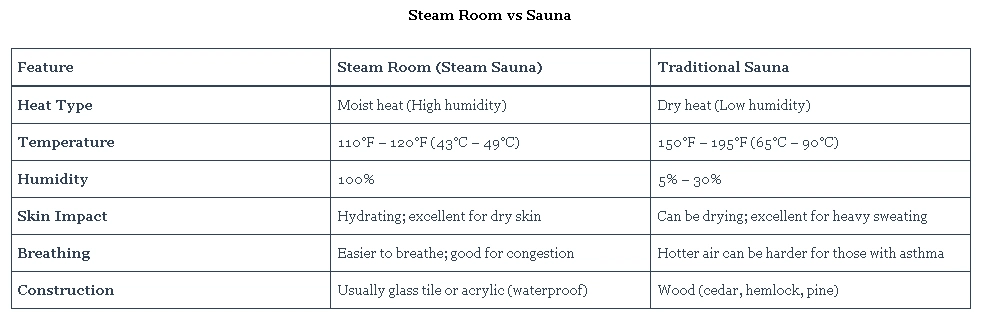
Understanding the steam room vs sauna debate is essential for choosing the right therapy. While both use heat to provide health benefits, the “vibe” and physiological impact differ.
Steam Room vs Sauna
| Feature | Steam Room (Steam Sauna) | Traditional Sauna |
|---|---|---|
| Heat Type | Moist heat (High humidity) | Dry heat (Low humidity) |
| Temperature | 110°F – 120°F (43°C – 49°C) | 150°F – 195°F (65°C – 90°C) |
| Humidity | 100% | 5% – 30% |
| Skin Impact | Hydrating; excellent for dry skin | Can be drying; excellent for heavy sweating |
| Breathing | Easier to breathe; good for congestion | Hotter air can be harder for those with asthma |
| Construction | Usually glass tile or acrylic (waterproof) | Wood (cedar, hemlock, pine) |
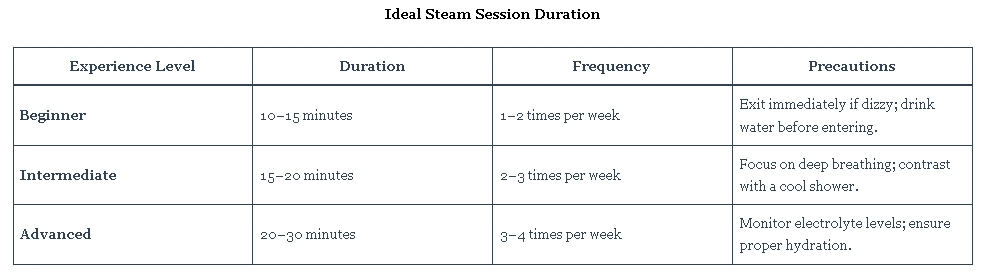
Ideal Steam Session Duration
How long should you stay in? Use this chart as a guideline based on your experience level.
| Experience Level | Duration | Frequency | Precautions |
|---|---|---|---|
| Beginner | 10–15 minutes | 1–2 times per week | Exit immediately if dizzy; drink water before entering. |
| Intermediate | 15–20 minutes | 2–3 times per week | Focus on deep breathing; contrast with a cool shower. |
| Advanced | 20–30 minutes | 3–4 times per week | Monitor electrolyte levels; ensure proper hydration. |
You May Also Like To Read:
FAQs
Is sauna or steam room better for skin?
It depends on your skin type. Steam rooms are typically better for dry or sensitive skin as the humidity provides hydration to the skin. Saunas (dry heat) are often preferred by people with oily or acne-prone skin who are looking for a deeper and more intense sweat to unclog the pores.
What are the advantages of steam room vs sauna?
The main difference is in the air quality. Steam rooms provide moist heat which is more beneficial for respiratory problems and hydration. Saunas provide dry heat which is often tolerated better for longer periods of time at warmer temperatures and can cause a more extreme sweat.
Can I use the steam room everyday?
Although most people like to work out daily, it is generally advised to make it 3-4 times a week to see how your body is reacting to the exercise, especially due to hydration levels and heart rate tolerance.
What are the benefits of sitting in the sauna or steam room for high blood pressure?
Some studies report that regular sauna use can lower the blood pressure over time because of its effects on the blood vessels. However, the immediate effect of heat can be to make rapid fluctuations. Always seek the advice of your doctor before using in case you have hypertension.
What are the health benefits of sitting in a sauna or steam room?
Both support relaxation, circulation, muscle recovery, and stress reduction when used responsibly
Final Thoughts
When one asks what are the benefits of a steam sauna the answer is multifaceted. It is a tool for physical recovery, a palace of mental relaxation and a booster for skin and respiratory health. Whether you are going into the debate steam room vs sauna, or researching the benefits of a portable steam sauna to add to your home, the basic benefits are the same; increased circulation, stress relief, and an increased sense of well-being.
Remember to be safe first. Hydrate before, during and after your session. Listen to your body – if you feel lightheaded, get out right away. When used properly, a steam sauna is a significant addition to a healthy lifestyle.
Disclaimer: This blog post is for informational purposes only and is not medical advice. Always consult with a healthcare professional before embarking on a new health regimen, especially if you have underlying medical conditions.