Steam Sauna for Athletes is more than a luxury — it’s a powerful recovery and performance tool. When used correctly, steam sessions can improve circulation, reduce muscle soreness, enhance flexibility, support endurance training, and promote faster recovery after intense workouts.
Whether you’re a marathon runner, CrossFit athlete, bodybuilder, or weekend warrior, a properly timed steam sauna session may help your body repair, adapt, and perform at a higher level.
In this complete guide, we’ll break down the science, compare sauna vs steam room, explore steam room benefits and disadvantages, and answer the most common athlete questions — including “is steam sauna good for athletes?” and “is sauna or steam room better for athletes?”
Disclaimer: This content is for informational purposes only and does not constitute medical advice. Always consult a healthcare professional before starting any new heat therapy regimen, particularly if you have cardiovascular conditions, Pregnant or other health concerns.
Key Takeaways
Enhanced Recovery: Steam saunas promote increased blood flow which helps to flush out the metabolic waste such as lactic acid, reducing the duration of muscle soreness.
Improved Flexibility: The wet heat is deep in the muscle tissues and will improve the elasticity and range of motion, which is essential for mobility training.
Performance Boost: Regular use can lead to better heat tolerance and plasma volume which can help endurance athletes.
Mental Relaxation: The calm environment helps reduce the levels of cortisol which helps mental recovery after high intensity training.
What Does a Steam Sauna Do to Your Body?
Understanding what a steam sauna for athletes does physiologically is essential.
Steam rooms operate at high humidity (near 100%) and moderate heat (110–120°F). The moist heat:
- Dilates blood vessels (vasodilation)
- Increases heart rate similar to light cardio
- Promotes sweating
- Loosens tight muscles
- Opens pores
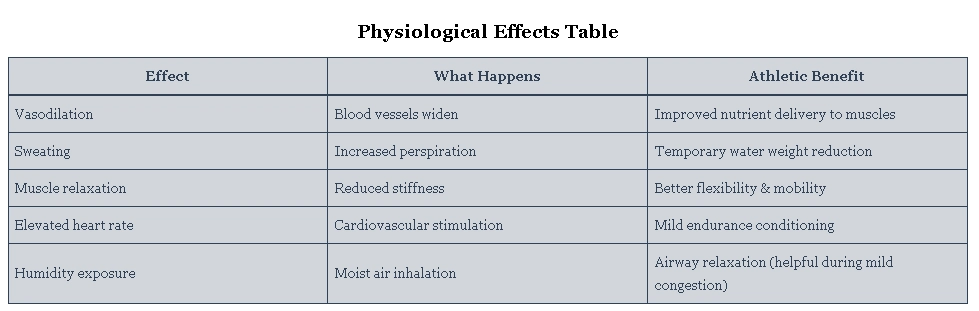
Physiological Effects Table
| Effect | What Happens | Athletic Benefit |
|---|---|---|
| Vasodilation | Blood vessels widen | Improved nutrient delivery to muscles |
| Sweating | Increased perspiration | Temporary water weight reduction |
| Muscle relaxation | Reduced stiffness | Better flexibility & mobility |
| Elevated heart rate | Cardiovascular stimulation | Mild endurance conditioning |
| Humidity exposure | Moist air inhalation | Airway relaxation (helpful during mild congestion) |
This is why many professional sauna athlete routines include steam sessions.
Sauna vs. Steam Room: Which is Better for Athletes?
One of the most common debates in the fitness community is sauna vs steam room benefits. While both offer heat therapy, they work differently and serve athletes in unique ways.
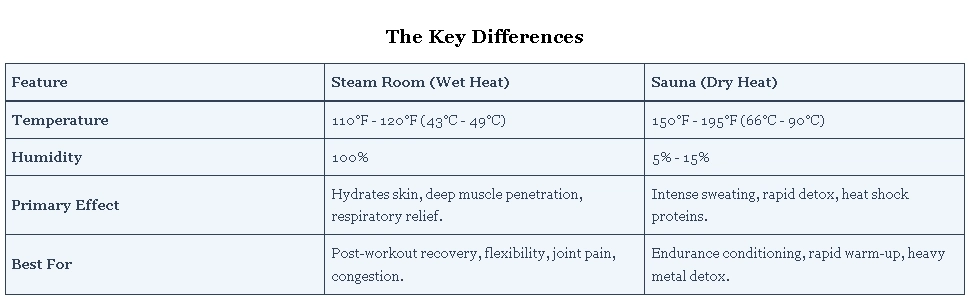
The Key Differences
| Feature | Steam Room (Wet Heat) | Sauna (Dry Heat) |
|---|---|---|
| Temperature | 110°F – 120°F (43°C – 49°C) | 150°F – 195°F (66°C – 90°C) |
| Humidity | 100% | 5% – 15% |
| Primary Effect | Hydrates skin, deep muscle penetration, respiratory relief. | Intense sweating, rapid detox, heat shock proteins. |
| Best For | Post-workout recovery, flexibility, joint pain, congestion. | Endurance conditioning, rapid warm-up, heavy metal detox. |
Is Sauna or Steam Room Better for Athletes?

The answer depends on your sport. For bodybuilders or powerlifters who have tight fascia and joints the moist heat of a steam room can be more beneficial for steam sauna for mobility training. On the other hand, endurance athletes may benefit from using the dry sauna to perform heat acclimatization protocols.
However, in terms of steam room vs sauna for athletes in terms of skin health, it is the steam room that comes out on top. If you are asking, “is sauna or steam room better for skin?”, the added moisture in a steam room will hydrate the skin, whereas due to the dry heat of a sauna, skin can feel parched unless moisturized immediately.
Top Benefits of Steam Sauna for Athletes
Why athletes have a religious use for saunas and steam rooms? Let’s break down the specifics of what the performance and recovery advantages are.
1.Faster Muscle Recovery and Soreness Recovery
One of the main benefits of steam room after workout is the decrease in delayed onset muscle soreness (DOMS). The heat stimulates more blood to the damaged muscles, giving them the nutrients they need to heal.
This process is important for steam sauna recovery time improvement so that athletes can train harder, sooner.
- For Lactic Acid Removal: Although the body naturally clears lactic acid, the enhanced circulation from a steam session can help clear the body of this acid more quickly, helping you recover more quickly after a grueling session.
2. Increased Flexibility and Mobility

If you are challenged with stiff joints or tight hamstrings, steam sauna for flexibility improvement is a game changer. The wet heat helps warm the connective tissues’ collagen fibers, which helps them become more pliable.
- Pro Tip: Do light static stretching while in the steam room (carefully!) or right after you get out in order to maximise range of motion gain. This is especially good as a pre workout steam sauna warm up prior to intense lifting or running.
3. Improved Endurance and Performance

Emerging research suggests that heat therapy can trigger the volume expansion of plasma. This means your blood volume is increased and your heart is better able to pump.
For runners and triathletes this means improved thermoregulation and steam sauna performance improvement. Steam sauna muscle endurance benefits can be measured by regular exposure.
4. Respiratory Health
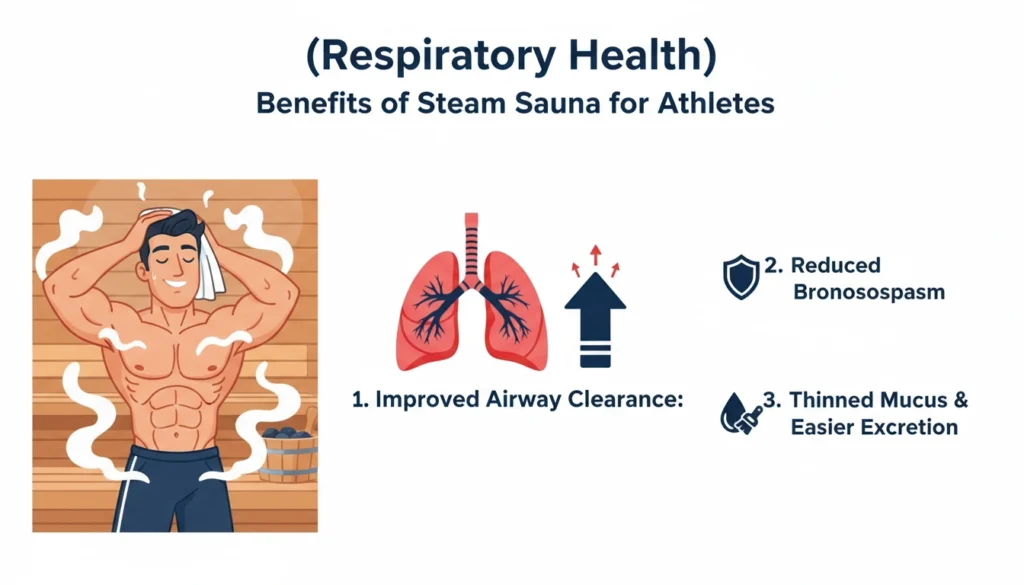
Intense cardio can hard work the lungs. Steam is excellent for clearing the airways, loosening phlegm, and for soothing the respiratory passages.
Many athletes ask “can steam sauna help cold?” While you don’t want to sit in a steam room if you have a high fever, or if you are in the acute infectious stage of a virus, the steam can help to relieve symptom congestion associated with mild colds, helping you to breathe easier when in training.
Sport-Specific Strategies
Steam Sauna for the Runner and Endurance Athletes
Using a steam sauna after marathon events or long runs helps to relax the leg muscles which have taken some pounding. The moist heat helps to soothe the joints and can prevent the stiffness that so often hits hours after a race.
For steam sauna for endurance athletes, consistency is the key – short sessions 3-4 times a week can help you heat adapt.
Steam Sauna for Bodybuilders and Heavy Lifters
For those who are focused on hypertrophy, steam sauna for bodybuilders is a specific type of beneficial. After a heavy lifting session muscles are swollen with metabolic waste. The steam helps to flush this out.
- After Leg Day: There is nothing quite like steam sauna after leg day. The deep heat penetrates the quadriceps and glutes easing that “cement legs” feeling.
- Heavy Lifting: If you are doing heavy lifting, using a steam sauna will also help reduce your neural fatigue from low-rep, high-weight lifting.
Steam Sauna for Crossfit and High Intensity Training
CrossFit athletes commonly workout their bodies to the limit using different functional movements. Steam sauna for crossfit recovery helps the repair of micro-tears in the muscle fiber caused from high intensity explosive movements.
It also works as a mental reset button as it calms down the central nervous system after a WOD (Workout of the Day).
How to Use a Steam Sauna Effectively
Knowing how long should you stay in a steam room is very important for safety and results.
The Protocol
- Hydrate First: Drink 16-20 oz of water before you go in.
- Timing: A normal session should last from 10 to 20 minutes. If you are a beginner, get started with 5 – 10 minutes.
- Post-Sauna: Cool off slowly. A tepid shower helps to close the pores and get your core temperature back down to normal.
- Re-hydrate: Weigh yourself before and after to see how much water weight you lost and drink that amount back as well as a little more.
Steam Sauna Before Competition
Using a steam sauna before competition can be a two-edged sword. A brief period of 5-10 minutes just before an event would be an excellent warm-up and mind focus tool. However, try not to sit for long periods that might cause dehydration or fatigue before the start of the event.
Steam Room Benefits and Disadvantages
While the positives outweigh the negatives, it is important to know the benefits and disadvantages of using a steam room.
Advantages:
- Low Impact: Great for injured athletes as there is no movement.
- Joint Health: great for arthritis/joint pain.
- Skin Health: Unclogs Pores and Improves Complexion.
Disadvantages/ Steam Bath Disadvantages:
- Dehydration Risk: High risk if not monitoring water intake
- Bacterial Growth: Public steam rooms can be a breeding ground for bacteria, if not properly cleaned. Always wear flip-flops.
- Not for Weight Loss: Many ask, “is sauna or steam room better for weight loss?” Neither is effective in fat loss. The weight lost is water weight, which returns as soon as rehydration takes place.
You May Also Like To Read:
FAQs
Is steam sauna good for athlete?
Yes, absolutely. It enhances circulation, helps the recovery of muscles, helps to reduce stiffness and facilitates mental relaxation, making it an excellent tool for almost any athlete.
Is the sauna or steam room better for weight loss?
Neither helps to promote real fat loss. Both are responsible for the water weight loss via sweating. While sitting in a steam room will work off a few calories because of the increased heart rate, it is not a substitute for exercise.
Can you convert a sauna to a steam room?
Technically, no. A dry sauna consists of wood and dry heat, and the steam room is a tiled or acrylic room that is meant to handle high moisture. Pouring water in a dry sauna gives a “loyly” (steam burst), but does not give the 100% humidity environment of a steam room. To convert one to the other, you can damage the structure.
Are saunas good for athletes’ skin?
Yes. The steam opens up pores and stimulates circulation to the skin, giving you a healthy glowing skin after a workout. It can help clear acne and improve skin texture and answers the question ‘is sauna or steam room better for skin’ positively for steam users.
What does a steam sauna do to your body?
It increases the core temperature, opens blood vessels, increases the heart rate and causes perspiration. This process enhances the cardiovascular system, removes metabolic wastes and relaxes the muscular system.
Final Thoughts
Ultimately, the decision to incorporate a steam sauna for athletes into your training regimen comes down to your specific goals and how your body responds to heat.
While it is not a magic bullet that replaces hard training or proper nutrition, the science is clear: the physiological benefits of wet heat therapy are substantial.
From accelerating the removal of metabolic waste to enhancing joint mobility and building mental resilience, the steam room offers a competitive edge that is hard to ignore.
Whether you are debating sauna vs steam room benefits or simply looking for relief after a grueling steam sauna after leg day, the key takeaway is balance.
Use the steam room as a dedicated recovery tool—a place to disconnect from the noise of the gym and reconnect with your body’s recovery process.
Listen to your body, prioritize hydration, and treat your recovery with the same intensity as your training. That is the true secret to longevity in any sport.