
Many of us are seeking effective solutions for helping to increase our health, speed recovery, and even our skin. Two things that seem to be popular candidates for these discussions are Red Light Therapy vs Infrared Saunas.
While they are both using light to provide a therapeutic benefit, they are by no means the same.
Following the difference between Red Light Therapy vs Infrared Sauna is important to find the right tool for your specific health goals. Let’s spend some time going deep and learning what makes each of them unique, what benefits each of them brings, and how they compare and contrast between one another.
Key Takeaways
- Red Light Therapy employs different wavelengths of visible red and near-infrared light to stimulate cellular function at the mitochondrial level.
- Infrared Saunas use infrared heat which causes an increase in core body temperature which causes a deep sweat and promotes detoxification.
- The main difference is their mechanism: for RLT it is photobiomodulation (effect of light on cells), for infrared saunas – thermotherapy (effect of heat on the body).
- Both provide a number of health benefits, but for different reasons and in different ways.
- Whether you choose one over the other is based on your specific goals whether it is targeted cellular repair or systemic detoxification and relaxation.
Red Light Therapy vs Infrared Sauna
| Feature | Red Light Therapy | Infrared Sauna |
| Primary Mechanism | Photobiomodulation (light interacting with cells) | Thermotherapy (heat raising core body temperature) |
| Type of Light Used | Visible red (630-700 nm) & Near-Infrared (700-1100 nm) | Near-Infrared, Mid-Infrared, & Far-Infrared (heat perception) |
| Depth of Penetration | Cellular level, stimulates mitochondria | Deeper penetration, raises core body temperature |
| Sensation During Use | Gentle warmth, no significant sweating | Significant heat, induces profuse sweating |
| Main Goals | Cellular repair, anti-aging, pain relief, muscle recovery, anti-inflammation, mood | Detoxification, relaxation, pain relief, cardiovascular support, stress reduction |
| Primary Interaction | Light particles absorbed by cells | Radiant heat absorbed by the body |
| Effect on Body Temp | Minimal increase | Significant increase in core body temperature |
| Hydration Needs | Regular hydration is always good, but not critical during a session | Crucial to hydrate before, during, and after sessions |
What is Red Light Therapy?
You may have heard buzzwords such as “photobiomodulation” or “low level light therapy” when researching Red Light Therapy.
These terms basically refer to the same thing-that the use of certain wavelengths of light, mainly red (630 – 700 nm) and near infrared (700 – 1100 nm), stimulate cellular function.
Think of it similar to giving your cells a little wake up call with light!
How Does Red Light Therapy Work?
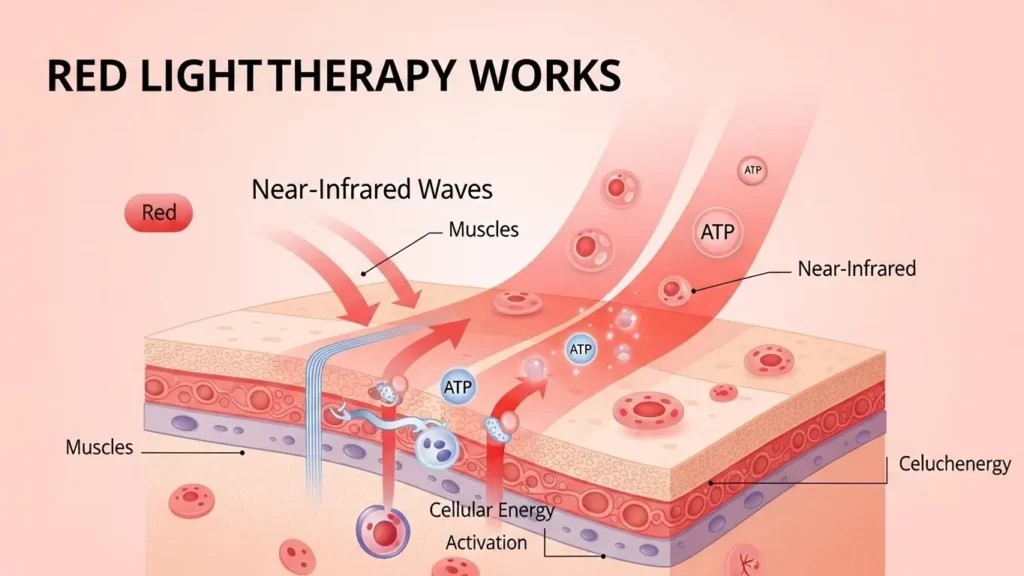
At the center of Red Light Therapy lies its interaction with the mitochondria, which are commonly referred to as the “powerhouses” of our cells.
When the red and near-infrared light passes through the skin, it’s absorbed by some chromophores and in particular cytochrome c oxidase in the mitochondria. This absorption initiates a cascade of positive cell functions:
- Increased ATP Production: This is very important. Adenosine triphosphate or ATP is the fuel of your cells. More ATP = more power for the cells to perform their role which can range from tissue repair to combatting inflammation.
- Nitric Oxide Release: Light exposure also aids in the release of nitric oxide from cells resulting in better blood flow circulation. Better blood flow means more oxygen and nutrients are delivered to the tissues and this helps in healing and recovery.
- Reduced Inflammation: Red light has been shown to modulate the inflammatory pathways, helping to calm down overactive immune responses and reduce swelling and pain.
- Antioxidant Boost: It may help to improve the function of the antioxidant enzymes, which is beneficial for fighting against oxidative stress and protecting the cells from damage.
Advantages of Red Light Therapy
The range of cellular effects of red light are translated into a broad range of health benefits that make Red Light Therapy incredibly attractive to many.
- Skin Health & Anti-Aging: One of our best selling treatments! Red light boosts collagen and elastin production which can help to reduce wrinkles and fine lines and improve skin tone and texture. It’s also fabulous in wound healing and reduction of wound scarring.
- Muscle Recovery &Performance: Athletes and fitness enthusiasts often resort to red light therapy to accelerate muscle recovery, reduce delayed onset muscle soreness (DOMS), and even to improve performance to optimize energy at the cellular level.
- Pain Relief: Due to its anti-inflammatory properties and its ability to improve circulation, red light can be effective in treating a number of different types of pain, including joint pain, back pain, and neuropathic pain.
- Improved Sleep Quality: Addressing the circadian rhythm by avoiding exposure to blue light in the evening can lead to improved sleep quality by way of exposure to red light.
- Hair Growth: Some studies have suggested that red light can help to stimulate the hair follicles and promote hair growth, as well as decrease hair loss.
- Mood & Cognitive Function: There is a growing body of research into the potential effects of red light on mood and cognitive function which may be due to the positive effects of red light on the health of brain cells and circulation.
What is Infrared Sauna?
Unlike traditional saunas which heat the air around you, infrared saunas use infrared heaters to release radiant heat which directly penetrates through your body. This distinction is very important in understanding why they feel differently and provide different benefits than their traditional counterparts – and of course Red Light Therapy.
How Do Infrared Saunas Work?
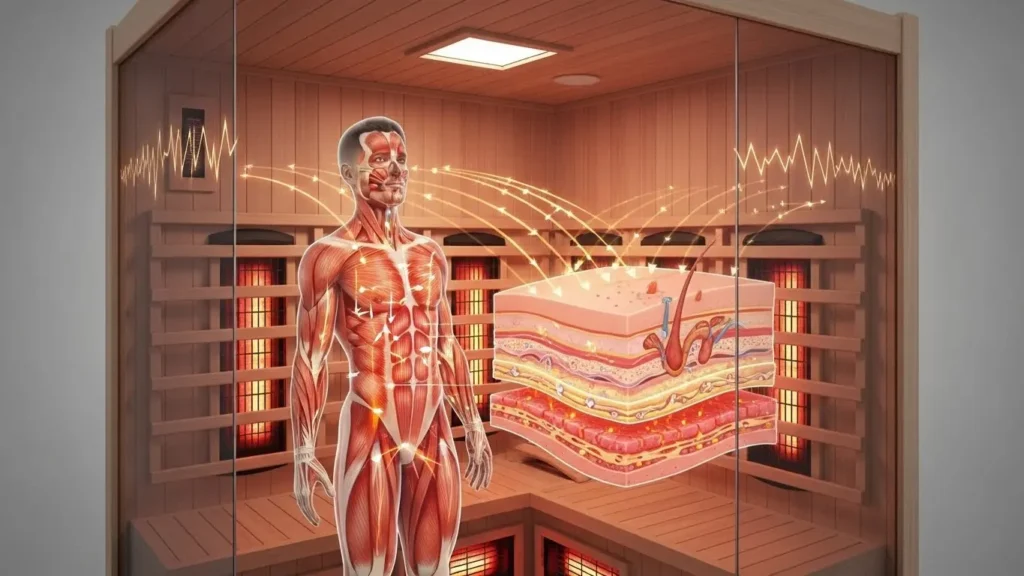
The basic principle of infrared sauna is thermotherapy – the use of heat for therapeutic purposes. Infrared light is in itself a spectrum of light we feel as heat. In an infrared sauna, there are infrared trees (associated with the panels) which emit different wavelengths of infrared:
- Near-Infrared (NIR): These are shorter wavelengths with allow them to penetrate the skin in a more superficial manner. They can be frequently linked to regenerative processes of cells and wound healing similar to some aspects of red light therapy but broadly speaking in a heat context.
- Mid- Infrared (MIR): These are longer wavelengths that penetrate slightly deeper providing improved circulation and muscle relaxation.
- Far-Infrared (FIR): These are the longest of the wavelengths and effect the deepest – and indeed penetrating the deepest, the core of your body. FIR is mostly involved in the process of increasing the core temperature of the body thereby making us sweat in deep and detoxifying manner.
When your body absorbs these infrared waves, your internal temperature increases causing:
- Increased Heart Rate & Circulation: Similar to a warm up cardiovascular workout, your heart pumps faster and thus increases blood flow throughout your body.
- Profuse Sweating: The End Object! Infrared saunas promote a much deeper sweat, at a much lower ambient temperature than traditional saunas, and are thus more comfortable for some. This deep sweat is said to help release the toxins that are stored within the fat cells.
- Relaxation of Muscles: The heat has the ability to help relax the tight muscles and relieve tension.
Benefits of Infrared Saunas
The body-wide heating and detoxifying effects that infrared sauna offers are one of the reasons for the unique set of health benefits.
- Detoxification: This is arguably the greatest of all the benefits. The deep sweat infrared saunas cause is believed to help to excrete heavy metals, environmental toxins and other impurities from the body.
- Pain Relief & Muscle Relaxation: The penetrating heat can relieve the body knowingly of just about any aching muscles, stiff joints and any chronic pain situations by enhancing circulation and loosening the body.
- Stress Reduction & Relaxation The warmth and quiet nature of a sauna session is incredibly calming to the body and helps to promote a deep sense of relaxation and reduces stress.
- Improved Circulation: The boost in heart rate and blood flow experienced during a session can help promote better cardiovascular health in the long term.
- Weight Management (Indirect): Although not a direct weight loss tool, the elevated heart rate and calorie burning of exercise can result in the indirect burning of calories. Additionally, detoxification can help promote overall metabolic health.
- Skin Purification: Sweating helps to cleanse pores and get rid of dead skin cells leading to clearer, healthier looking skin.
Can You Use Red Light Therapy in conjunction with Infrared Sauna?
Absolutely! In fact, combined Red Light Therapy and an Infrared Sauna can provide a synergistic approach to wellness by using the best of both possible worlds. Many modern infrared saunas actually build red light panels right into the design so that you can use both therapies at the same time.
Imagine this: The deep, penetrating heat of the infrared sauna to help you relax, detoxify, and increase circulation while the targeted red and near-infrared light acts on the cellular level to reduce inflammation, increase collagen production, and accelerate recovery. It’s as if we injured therapeutic goodness times two!
If your sauna does not contain red light it is easy to treat yourself to separate sessions. One of then goes in for a red light therapy session to help get the cellular benefits, and then in an infrared sauna for detoxification and deep relaxation. The order is not pinned down rigidly, listen to your body and how best your routine feels.
FAQs
Is Red Light Therapy the Same Thereof as Infrared Sauna?
No, they are not the same. While they both utilize light within the electromagnetic spectrum, Red Light Therapy is focused on the objectives of stimulating cells with specific red and near-infrared light (photobiomodulation) whereas infrared saunas utilize infrared heat to-the comforts of an individually-sized sauna-treat you with infrared heat to raise your core body temperature, creating sweating (thermotherapy).
Which one is better for pain relief Red Light Therapy or Infrared Sauna?
Both can be great in terms of treating pain, but they operate in separate ways. Red Light Therapy by targeting the pain at a cellular level by reducing inflammation and thin-tissue by repair. Infrared Saunas relieve pain by relaxing muscles, circulation and encouraging detoxification, which have the potential to reduce body burden.
For point pain and damage, red light treatment may be more focused; for generalized muscle pain and stiffness, an infrared sauna may be more beneficial.
Is it possible to use both my Red Light Therapy and my Infrared Sauna together on the same day?
Yes, you absolutely can! Many people find the combination of the two therapies delivers more benefits. Some infrared saunas even have red light homers on them. If you are doing separate sessions, you can do them in back to back or other times of the day.
Which is better for detoxification?
An Infrared Sauna is typically thought to be better for detoxification as it helps to induce a deep, profuse sweat, which helps to excrete the heavy metals and toxins from the body. While red light therapy can help to promote overall cellular health which indirectly promotes detoxification pathways, it’s not the fact that red light therapy directly excretes toxins through sweat.
Are there any dangers to Red Light Therapy, and or Infrared Saunas?
Both therapies are relatively safe for most normal healthy people. For the red light therapy, make sure you are wearing eye protection if you are standing directly in front of the lights, again these are the higher power devices. For infrared saunas, the foremost risks associated with infrared sauna are dehydration, overheating, or dizziness.
Always drink water and do shorter sessions and consult a doctor if you have any underlying health conditions, especially cardiovascular, before using either. Consultation with your healthcare provider should be done by pregnant women, individuals with pacemaker or certainExtremely individuals with certain medical implants before using.
Conclusion: Taking the Best Healthy Step for You
When it comes to Red Light Therapy vs Infrared Sauna, it is clear they are unique and complementary tools in the modern wellness toolbox. Red Light Therapy comes into play when your objective is to perform targeted cellular rejuvenation, anti-aging, pain relief on a deeper level as well as muscle recovery. It’s about how to optimize your cells.
On the other hand, an Infrared Sauna is excellent for systemic detoxification, deep relaxation, cardiovascular support, and melting universal tension in the muscle through therapeutic heat and sweating.
Ultimately the choice between the two is personal and what is “better” for you calls for your individual health objectives and what your body requires most. For many, blending the two forms of therapy can offer a holistic approach to health and wellbeing.
Whether you opt for one or the other, you will be investing in some powerful ways to increase your vitality that are backed by science to help support your journey to optimum health.
So, listen to your body, do your research and just take in all the radiant benefits these incredible technologies have to offer!