An outdoor sauna tent is a portable sauna system that is used to create actual sauna heat in outdoor environments such as gardens, campsites or on overland excursions. Unlike traditional saunas, sauna tents are lightweight and easy to assemble and will work with both wood-burning and electric heaters.
This guide breaks down how sauna tents function, the top benefits of using a sauna tent, the steps to set one up properly, and some tips to buy the best sauna tent for your needs – whether for wellness at home, travel, or adventure.
Key Takeaways
- Portability Meets Wellness: An outdoor sauna tent offers the authentic sauna experience (up to 200degF+) without the permanence (and footprint) of a building.
- Versatile Heating While the “overland sauna tent” look is popular with wood-burning stoves, electric is available for the benefit of convenience in the backyard.
- DIY Potential: You can turn durable camping tents (such as the Savotta sauna tent models) into usable saunas using the right stove and chimney setup.
- Health Boost Regular use boosts cardiovascular health, facilitates recovery and alleviates stress.
- Safety First: Proper ventilation and heat-resistant materials are not negotiable when opting for sauna tents.
What Is an Outdoor Sauna Tent?
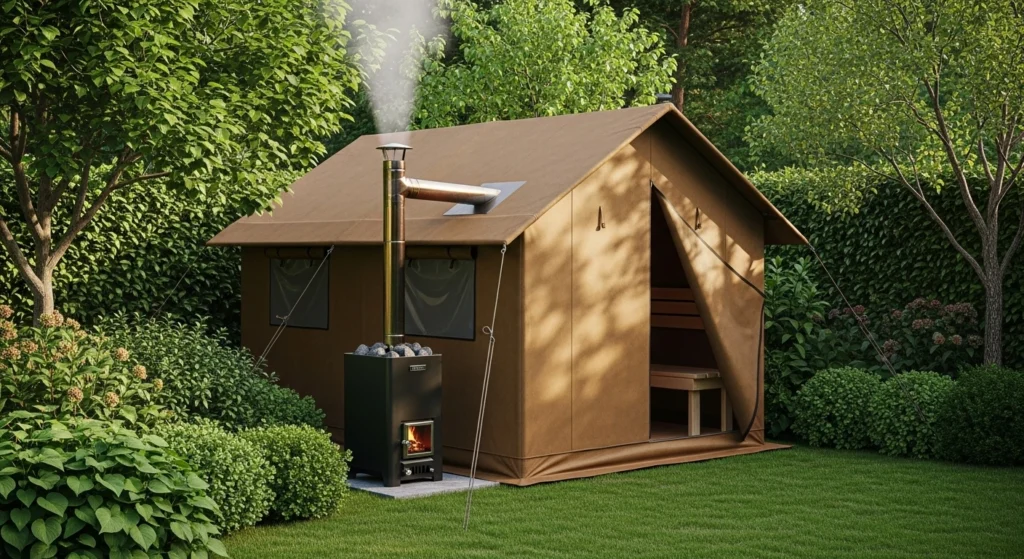
A sauna tent (also called a sauna in tent or tent sauna) is a heat resistant tent made out of insulated fabric that can maintain high temperature while being able to be ventilated safely. Inside, users sit on benches and with the aid of a heat source (typically a stove), the internal temperature is raised to that of a sauna.
To compare with fixed saunas, the sauna tent outdoor setup is more flexible and cheaper without losing the essence of the sauna.
Why Use an Outdoor Sauna Tent?
The allure of the sauna has existed for centuries, but the modern constraints – space, budget and zoning laws, for example – have often prevented people from building a sauna. Enter the sauna tent outdoor.
These aren’t ordinary camping tents that are cheap but are special structures that help retain high heat. For the active one, an overland sauna tent is a game-changer. It packs down into a manageable carry bag so that you can bring the luxury of a spa to the middle of the forest or the desert. Compared to a permanent structure, a best portable sauna tent has:
- Affordability: A fraction of the cost of a cedar sauna’s cost of construction.
- Setup Speed: Most can be set up in 15-30 minutes.
- No Permits: Since it is technically a temporary tent structure it usually bypasses the need for building permits.
The Health Values of Sauna Tent Outdoor
Why all that trouble of heating up a tent in the great outdoors? Because the benefits are so profound. When you sit in a sauna in tent conditions your core temperature rises which mimics a state of fever and is known to help the body fight off illness.
- Improved Circulation: The heat causes the blood vessels to dilate and improve blood flow and reduce blood pressure in the long term.
- Muscle Recovery: After a long hike or overlanding trip, the heat loosens up tight muscles and helps to decrease the build up of lactic acid.
- Mental Clarity: There is something uniquely calming about sweating inside a tent while looking outside at a forest or mountain range. It is a combination of “forest bathing” and heat therapy.
Benefits of Using a Sauna Tent Outdoors
Outdoor sauna tents are becoming more and more popular for good reasons:
1. Portability & Flexibility
Most portable sauna tents can easily be packed into a bag and easily transported. This makes them ideal for:
- Backyard use
- Camping trips
- Overland adventures
2. Authentic Heat Experience
High quality models can achieve similar temperatures to traditional saunas, provided used correctly, particularly wood heated models.
3. Cost-Effective Wellness
A best sauna tent is a much cheaper option than constructing a permanent sauna, but with similar relaxing benefits.
4. Outdoor Connection
Using a sauna outdoors is an added benefit for the sauna experience – fresh air cooldowns, getting into nature and seasonal usage are all advantages.
Types of Sauna Tents: The Best Sauna Tent For You
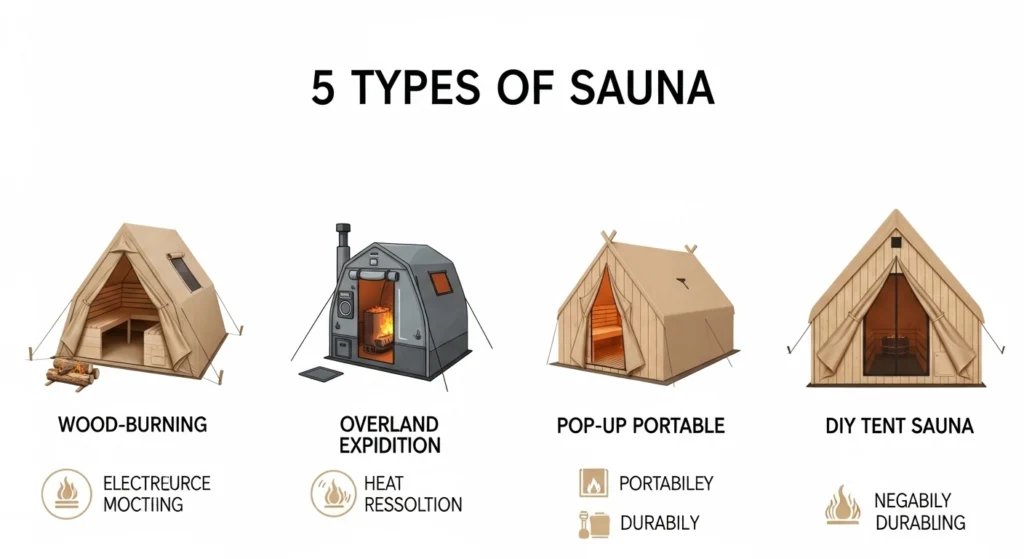
All sauna tents are not created equal. When you are looking for the best outdoor sauna tent guide, there are generally three different categories that you will come across.
1. Stand alone Canvas Sauna Tents
These are specially designed for high-heat. All too often they are double-wall construction with heavy-duty canvas (such as canvas or blends of canvas and polyesters) and a dedicated “stove jack” – a heat-resistant opening for the chimney pipe.
- Best For: When serious sauna use, winter camping, and backyard use is needed.
- Example: Savotta sauna tent is one of the best examples of rugged durability. Originally intended for hard use in the military, Savotta’s durability makes it a favorite among people looking for a best sauna tent that will endure snow and wind.
2. Pop-Up Personal Saunas
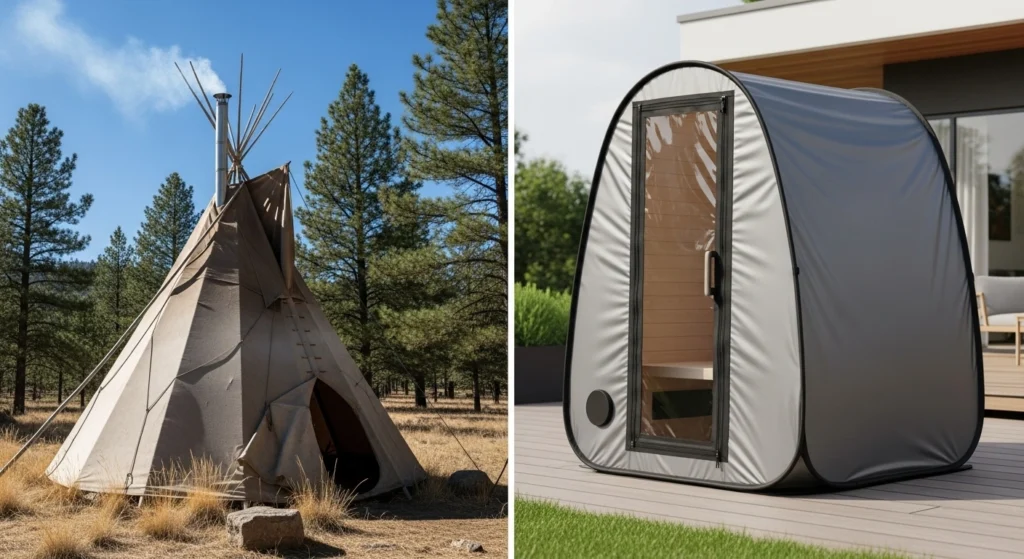
These are light weight, often single person domes. Often they make use of a Far Infrared (FIR) heater instead of a stove.
- Best For: Solo users, living in an apartment (with a balcony), and those looking to have the Electric Sauna Tent experience without the wood smoke.
3. Converted Camping Tents (Tent Sauna Do-It-Yourself)
For the adventurous, there is a tent sauna diy project in which you purchase a good canvas camping tipi or bell tent and convert it to use a portable wood stove.
- Best For: Do-it-yourself that already have a canvas tent and are looking to save money
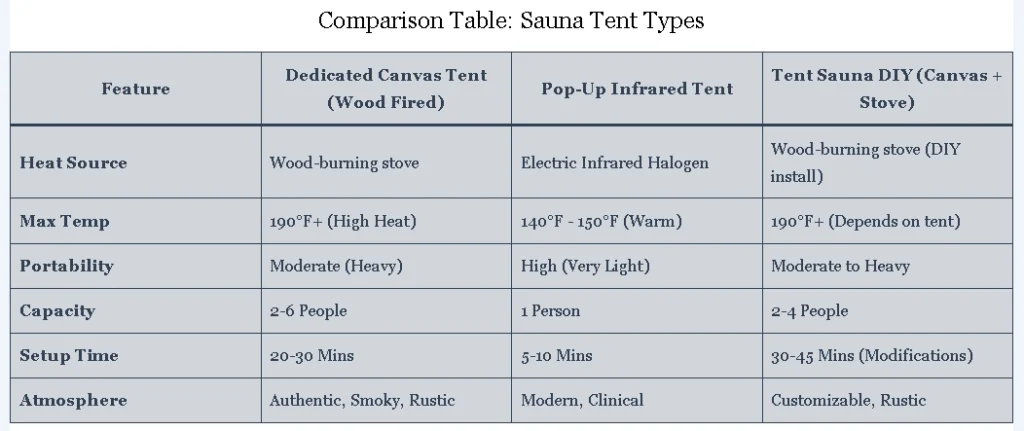
Comparison Table: Sauna Tent Types
| Feature | Dedicated Canvas Tent (Wood Fired) | Pop-Up Infrared Tent | Tent Sauna DIY (Canvas + Stove) |
|---|---|---|---|
| Heat Source | Wood-burning stove | Electric Infrared Halogen | Wood-burning stove (DIY install) |
| Max Temp | 190°F+ (High Heat) | 140°F – 150°F (Warm) | 190°F+ (Depends on tent) |
| Portability | Moderate (Heavy) | High (Very Light) | Moderate to Heavy |
| Capacity | 2-6 People | 1 Person | 2-4 People |
| Setup Time | 20-30 Mins | 5-10 Mins | 30-45 Mins (Modifications) |
| Atmosphere | Authentic, Smoky, Rustic | Modern, Clinical | Customizable, Rustic |
Buying Tips: How to Choose the Best Portable Sauna Tent
When you are trying to find the best portable sauna tent you need to look past the price tag. Here is a check list to ensure that you get a quality unit:
1. Durability of Materials and Insulation
The material determines the heat retention. A low-priced nylon tent will melt or leak heat immediately. Look for sauna tents constructed of:
- Canvas: Breathable, durable and heat resistant. It doesn’t melt easily.
- Oxford Cloth: A heavy weight, often treated polyester cloth which is water resistant and heat retardant.
2. The Stove Jack
If you are going the wood fire route (highly recommended for the outdoor sauna tent experience), the tent needs to have a stove jack. This is a fabric ring of silicone or fiberglass, which reinforces the hole where the chimney comes out. It prevents the hot metal pipe from coming into contact with the fabric of the tent and burning it.
3. Ventilation
It seems counter-intuitive to let air out but you must have the oxygen to allow the fire (if wood-burning) and to control the humidity. Look for adjustable vents toward the bottom and top.
4. Waterproofing
Since this is an outdoor sauna tent, rain is likely to occur. Make sure that your tent has a hydrostatic head rating of at least 3000mm or a treated canvas if you are going to be camping somewhere that rains.
The Case Study of the Savotta Sauna Tent Quality
In today’s world of overland sauna tent equipment the Savotta sauna tent is unique. Savotta is a Finnish company with a military gear history that knows what is required in a true sauna. Their tents are made to survive the sub zero temperatures of Lapland.
Why is it the best sauna tent in the eyes of enthusiasts?
- Military grade materials: Tear and extreme heat resistant.
- Thoughtful Design: Often have separate dressing rooms or vestibules so that your clothes don’t get wet while you’re sweating.
- Snow Load: It is strong enough to withstand a heavy accumulation of snow, which is something a normal camping tent is not able to do.
Setting Up The Outdoor Sauna Tent – Setup Guide
Setting up an electric sauna tent is typically as easy as unzipping it, plugging it up and zipping yourself inside. However, installation of a wood-burning sauna tent outdoor is more demanding. Here is what the step-by-step process is:
Phase 1: Site and Ground Prep
- Flat Ground: Find a level spot.
- Fire Safety: Remove dry leaves, grass and twigs within a 6-foot radius around the area where the tent is to be located.
- Ground Protection: Protect the tent floor below with a tarp or footprint to protect the floor from embers and moisture.
Phase 2: Tent Assembly
- Unpack the sauna tent and distribute it on the ground.
- Assemble the poles. For tipi styles, this normally consists of a central tripod.
- Pry up the tent and stake it firmly into the ground. The wind can catch a tent quite easily, however, especially in hot inside air and cold outside air.
Phase 3: Stove Installation
- Put wood stove inside of the tent.
- Join the sections of the chimney.
- Crucial Step Feeding the chimney pipe through the stove jack. Remember the pipe should extend at least 2-3 feet above the roof of the tent so that any sparks that might fall on the fabric can be avoided.
- The top of the chimney should be put together with a spark arrestor (a mesh cap).
Phase 4: The Heat Up
- Light a small fire in order to season the stove pipe.
- Gradually add larger wood.
- Safety Tip: Never leave a firing stove unattended in a tent.
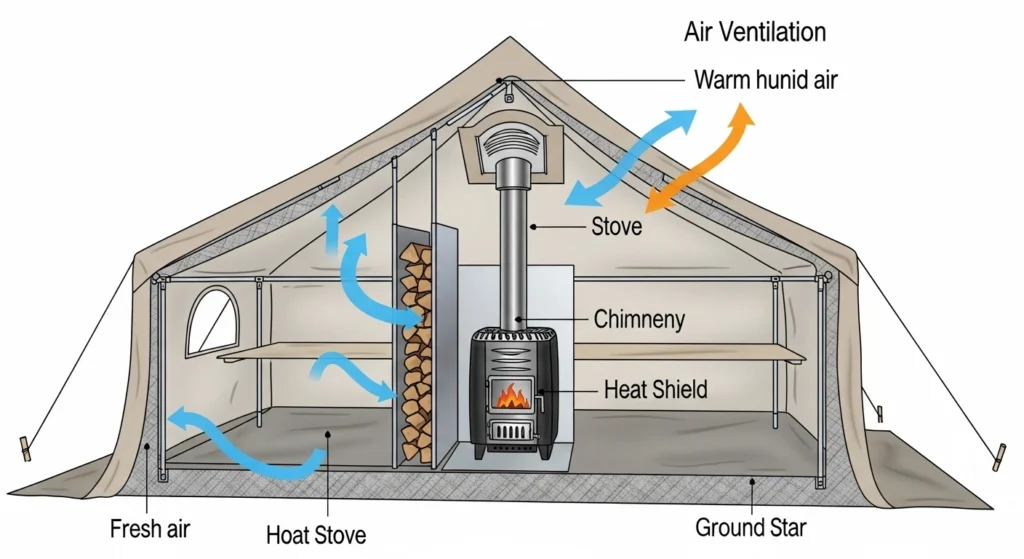
Tent Sauna D.I.Y: Can You Build Your Own?
In the event you are handy or so a tent sauna diy build can be incredibly rewarding. Many people begin with an ordinary cotton canvas bell tent (which is more breathable and heat safe than polyester) and add a stove jack kit themselves.
The Process:
- Buy the Tent: Make sure that it is 100% cotton or canvas.
- Buy a Stove Jack Kit: These can be bought online (these are typically made of silicone or fiberglass fabric).
- Cut the Hole: Measure Carefully On the roof or side wall. Cut an “X” or a circle (depending on the kit).
- Install the Jack: Use some high temperature adhesive and the hardware that it comes with to glue down the jack.
- Heat Shield: Install a heat shield (a piece of metal) between the stove and the tent wall to prevent the damage of radiant heat.
Note: DIY modifications can cause warranties to become invalid and can be risky if not performed correctly. You should always put the safety of using fire first.
Electric Sauna Tent vs. Wood Fired
If you have access to a power outlet at your campsite or in your backyard, you might consider an electric sauna tent.
- Pros: No smoke, no chopping the wood, perfect control of temperature, easier to clean.
- Cons: You are tied down to a power source. They often don’t get as hot or form the same “Loyly” (steam when water is thrown on rocks) as a wood stove.
To the purist, particularly the overland sauna tent user, the wood stove is the only option. The fragrance of the wood smoke combined with the fresh air is part of the ritual.
Maintenance and Care
To maintain your sauna tents:
- Dry it out: Never pack the tent up with it wet. Mold is the enemy of canvas.
- Ash Removal: Clean the wood stove after it is used each time to prevent corrosion.
- Inspect the Stove Jack: Regularly inspect for cracks or wear around the hole in the chimney.
You May Also Like To Read:
FAQs
How hot can a sauna tent get?
A good quality wood burning outdoor sauna tent is easily able to reach temperatures of 180 degrees F to 200 degrees F (82 degrees C to 93 degrees C) which is comparable to that of a permanent sauna.
Is it safe to use a wood stove in a tent?
Yes, as long as the tent design is designed for it. It should have flame retardant stove jack and proper ventilation. Never use a stove in a standard nylon camping tent the ones that are not rated for high heat.
Can I leave the sauna tent year round?
Although Savotta sauna tent models and other heavy duty canvas tents can stand the test of time during the winter months it tends to be better to take them down when not in use to extend the life of the fabric and zippers. The UV rays break down canvas with time.
What is the difference between a steam tent and the dry sauna tent?
Most outdoor sauna tents are low humidity saunas (dry sauna). You can throw water on the rocks of a wood stove to produce steam on a temporary basis but the tent itself is not made to trap high humidity like a steam room.
Are DIY tent saunas safe?
A tent sauna diy project can be safe if you use flame retardant materials (canvas) and a proper stove jack. Using a synthetic tent (nylon/polyester) for your wood burning sauna is a severe fire hazard and is not recommende
Final Thoughts
Whether you invest in a high-end Savotta sauna tent, a backyard electric sauna tent or dive into a tent sauna do-it-yourself project, the addition of a portable sauna to your outdoor lifestyle is transformative. It is the perfect compromise between rugged adventure and luxurious relaxing.
By following this guide to the best outdoor sauna tent, you are armed with the knowledge necessary to make a well-informed decision. So remember to prioritize safety, select the correct material for your climate, and enjoy the heat. There is nothing quite like sitting in 190 degree heat, with a gentle breeze to cool your face through the open door, knowing you can pack it all up and move to a new view tomorrow.
Disclaimer: Always seek the advice of a medical professional before starting any new health regimen especially high heat therapies such as saunas especially if you have cardiovascular problems or are pregnant.