For fitness enthusiasts and athletes, the quest for faster recovery is just as important as the workout itself. You’ve likely heard about heat therapy, but you might be wondering: is steam sauna good for muscle recovery? The short answer is yes.
Using a steam sauna for muscle recovery is a highly effective method to alleviate delayed onset muscle soreness (DOMS), flush out metabolic waste, and relax tight fascia.
The moist heat penetrates deep into muscle tissue, promoting vasodilation and increasing blood flow to speed up the body’s natural healing process.
in this depth guide we will Discover how a steam sauna for muscle recovery can reduce soreness, improve circulation, and enhance post-workout recovery. Learn benefits, best practices, and expert tips for faster muscle repair.
Disclaimer: This content is for educational purposes only and is not a substitute for professional medical advice. Heat therapy poses risks for individuals with heart conditions, blood pressure issues, or pregnancy. Always consult your physician before starting any new recovery treatment.
Key Takeaways
- Circulation Boost: Steam saunas significantly increase blood flow, delivering oxygen and nutrients needed to repair damaged muscle fibers.
- Pain Management: The moist heat helps soothe muscle spasms and reduces joint stiffness, making it ideal for pain relief.
- Duration Matters: Optimal sessions last between 15 to 20 minutes post-workout to maximize benefits without causing dehydration.
- Hydration is Critical: You must rehydrate adequately before, during, and after your session to replace lost fluids.
The Science Behind Steam Sauna for Muscle Recovery Benefits
When you exercise your body during a workout you cause microscopic tears in your muscle fibers. This is the natural process of building strength, but the process is inflamed and produces soreness. This is where the steam sauna for muscle recovery benefits come in.

Unlike dry saunas, a steam room works at lower temperatures (typically between 110°F and 120°F) but 100% humidity. This wet heat causes a phenomenon known as hyperthermia, which mimics a fever and triggers a systemic response in the body.
Vasodilation and Blood Flow
The heat causes your blood vessels to dilate (vasodilation). This lowers blood pressure and greatly increases circulation. For the recovering muscles this translates to quicker delivery of amino acids, glucose and oxygen – the building blocks of repair.
Simultaneously, this increased blood flow helps to shuttle away metabolic waste products such as lactic acid, which may be produced after hard exercise.
Hormonal Response
Research suggests that regular heat therapy can spike levels of Human Growth Hormone (HGH). HGH plays a pivotal role in tissue repair and muscle growth.
This hormonal boost answers the common question: is sauna good for muscle growth? While sitting in a steam room isn’t “lifting,” the hormonal environment it creates supports anabolic processes essential for growth.
Steam Room vs Sauna: Which is Better for Recovery?
One of the most controversial topics in the fitness community is steam room vs sauna efficacy. While both use heat for the therapy, the mechanism of action is different and this makes a difference to whether one is better for your needs.

The Difference in Heat
- Dry Sauna: Uses dry heat (often wood burning or an electric heating sauna) with very low humidity and temperatures ranging from 150 degrees Fahrenheit to 195 degrees Fahrenheit. The intense heat causes intense sweat very quickly.
- Steam Room: The room is filled with moist heat produced by a generator that boils water. The air is saturated with water vapour.
Is Sauna or Steam Room Better for Muscle Recovery?
If you are seeking deep tissue penetration and severe detoxification by sweating, a dry sauna may be better. However, when steam room vs sauna for muscle recovery, the steam room wins for post-workout recovery many times for a number of reasons:
- Joint Lubrication: The moist heat hydrates the skin and can help to lubricate the joints causing relief for those with arthritis or stiff connective tissue.
- Respiratory Benefits: However, intense workouts could leave you winded, the steam helps to clear the nasal passages and the lungs, which in turn improves the oxygen intake during recovery.
- Gentler on the Skin: The lower temperature is often more tolerable after a grueling workout when your core temperature is already high.
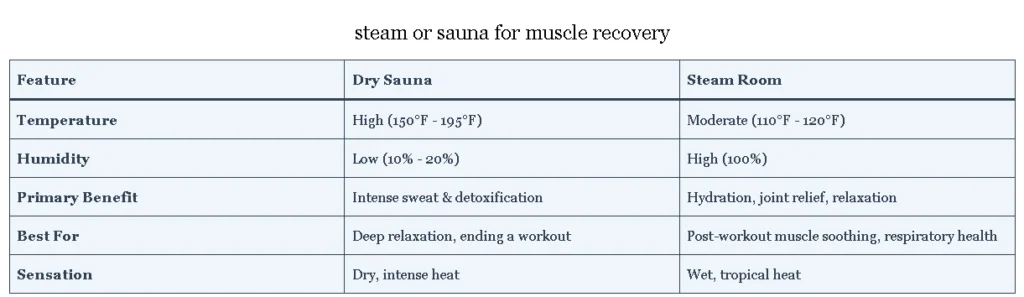
Below is a comparison to help you decide between steam or sauna for muscle recovery:
steam or sauna for muscle recovery
| Feature | Dry Sauna | Steam Room |
|---|---|---|
| Temperature | High (150°F – 195°F) | Moderate (110°F – 120°F) |
| Humidity | Low (10% – 20%) | High (100%) |
| Primary Benefit | Intense sweat & detoxification | Hydration, joint relief, relaxation |
| Best For | Deep relaxation, ending a workout | Post-workout muscle soothing, respiratory health |
| Sensation | Dry, intense heat | Wet, tropical heat |
Does Steam Room Help Muscle Recovery Immediately After Exercise?
The timing of your heat therapy is very important. The phrase steam sauna after workout is common, but should you go in immediately?
The best practice is to do a cool down first, but light. Stop exercising and let your heart rate settle for approximately 5-10 minutes. Jumping down head first into a steam room when your heart rate is at its peak can cause you to feel dizzy or faint.
Once you have cooled down a bit, it is quite immense the benefits of steam room after workout sessions. The heat helps your muscles to move from a state of tension to relaxation, and keeps the muscles from seizing up and becoming too stiff.
This transition phase is important in ensuring injuries are avoided in subsequent training sessions.
How to Use a Steam Room After Workout: A Step-by-Step Guide
Knowing how to use steam room after workout facilities safely is the key to reaping the rewards without any adverse effects. Here is a detailed protocol:

- Hydrate First: Consume at least 16 ounces of water before going in. The steam room will make you sweat a lot resulting in loss of fluid.
- Shower: Shower to wash off the sweat and bacteria. This is good etiquette and it opens your pores.
- Time Your Session: So, how long in sauna for muscle recovery is appropriate? Aim for 15 to 20 minutes. This amount of time is the magic window for elevating one’s core temperature and generating recovery benefits without becoming too hot.
- Cool Down: Leave the steam room and have a lukewarm or cool shower. This temperature difference (contrast therapy) is a slight shock to the system which further increases circulation.
- Rehydrate: Weigh yourself before and after to see how much water weight you lost, you should drink that much back plus little extra.
Visualizing the Recovery Process
Imagine your muscle fibers as a taut knotted rope. The steam sauna performs as a lubricant and heat source so that those knots can unravel gently. As the heat gets down, the “rope” becomes pliable, blood flows around it freely and the tension dissolves.
Benefits of Steam Room After Workout
Using a steam room post-exercise can improve recovery and reduce fatigue. Some of the main benefits of steam room after workout include:
- Faster recovery of muscle fibers
- Reduced joint stiffness
- Increased relaxation and stress relief
- Improved sleep quality
Is Sauna Good for Muscle Strain and Acute Pain?
There is a distinct difference between soreness (DOMS) and strain. Strain is an actual injury to the muscle or tendon.
If you have a new injury that is swollen, red or hot to the touch (acute inflammation), avoid heat. In the first 48 hours, ice is typically advised to help with the inflammation.
However, after the acute phase is passed, a sauna for muscle strain can be incredibly good. The heat helps to relax out the spasms which are often found around the injury site. By promoting the blood flow makes the damaged tissue to be repaired quickly.
If you are wondering, is sauna good for muscle recovery regarding those minor tweaks vs. serious injuries, the rule of thumb is: use heat for chronic aches and stiffness, and cold for acute, fresh inflammation.
Steam Room Benefits and Disadvantages
To provide a balanced view, we must look at both the steam room benefits and disadvantages.
The Advantages
- Reduced Stress: The heat lowers cortisol levels, the body’s stress hormone.
- Improved Skin Health: The steam opens pores and cleanses the skin, though this is secondary to muscle recovery.
- Increased Flexibility: The heat makes collagen fibers more elastic, allowing for better stretching routines inside the room.
The Disadvantages
- Dehydration Risk: If you stay too long or fail to drink water, you risk severe dehydration, which hampers recovery.
- Bacterial Growth: Wet environments are breeding grounds for bacteria. Always use a towel to sit on and ensure the facility is clean.
- Blood Pressure Concerns: If you have low blood pressure or heart conditions, the heat can cause fainting. Always consult a doctor.
Sauna for Muscle Recovery: Maximizing Results
To get the most out of your sauna muscle recovery routine, consider incorporating stretching while inside the steam room. Because the heat warms the fascia (connective tissue surrounding muscles), your flexibility increases temporarily.
Caution: Only do light, static stretches. Do not attempt dynamic bouncing movements as your muscles are relaxed and could be prone to overstretching.
Additionally, consider the best steam sauna for muscle recovery options if you are looking to install one at home. While gym steam rooms are convenient, home units allow you to control hygiene and timing better. Look for units with high-quality generators that provide consistent steam output.
You May Also Like To Read:
FAQs
Is steam sauna for everyone good for muscle recovery?
While generally safe, those with cardiovascular problems, pregnancy and certain heat sensitivities should avoid steam saunas. Always check with your physician before using heat therapy as an addition to your treatment regimen.
Is sauna steam room better for muscle recovery if I have arthritis?
Generally the steam room is preferred by arthritis sufferers. The moist heat is easier to bear than dry heat and achieves relief from stiffness without the intensity of a dry sauna.
How long in sauna for muscle recovery is too long?
Anything longer than 30 minutes and the risk of dehydration and heat exhaustion are increased. If you feel lightheaded, dizzy or feel nauseous, get out immediately.
Does steam room assist muscle recovery more so than ice baths?
They are used for different purposes. Ice baths (cryotherapy) are ideal for acute inflammation and numbing pain in the immediate post-peak of intense exertion. Steam saunas are better for relaxing tight muscles and improving range of motion in the days following a workout. Some athletes jump back and forth between the two.
Can I use a steam room before a workout?
You can but it relaxes the muscles and lowers blood pressure which might decrease your power output during lifting. It is usually recommended to use a steam room after a workout to help with cool down and repair process. After workout use is better then before.
Final Thoughts
Integrating a steam sauna for muscle recovery into your post-workout regimen is more than just a luxury; it is a strategic tool for longevity in fitness.
Whether you are a seasoned athlete or a weekend warrior, the ability to accelerate healing, flush out metabolic waste, and soothe aching joints can make the difference between stagnation and progress.
While the debate of sauna or steam room for muscle recovery will continue in locker rooms around the world, the answer ultimately lies in your personal preference and physiological response.
The steam room offers a gentler, hydrating heat that is exceptional for joint mobility and respiratory health, while the dry sauna offers intense detoxification. Both, however, deliver the most critical element for repair: increased blood flow.
Remember, heat therapy is a stressor, just like exercise. Treat it with respect. Stay hydrated, listen to your body, and use the guidelines provided here to maximize your results. By doing so, you aren’t just recovering; you are rebuilding a stronger, more resilient version of yourself.