
What is a Sauna Hat and Do You Need One? Walk into a traditional sauna in Finland or Estonia and you will probably see someone wearing a thick felt cap that looks made for a snowy hillside. It is not a fashion choice. It is a simple tool that keeps the hottest air in the room off your head.
If you have ever left a sauna early because your head felt too hot, or noticed your hair turning dry and brittle after a few sessions, this small accessory may be the fix.
This guide explains what a sauna hat does, which benefits are well supported, which claims are stretched, and when you can leave it at home.


Paid Links - As an Amazon Associate, I earn from qualifying purchases.


Paid Links - As an Amazon Associate, I earn from qualifying purchases.
Quick answer: A sauna hat is a heat-insulating cap, usually made of wool felt or linen, worn in a sauna to protect your scalp, ears, and hair from the hottest air in the room. It helps you stay comfortable during longer sessions. It does not make the room cooler.


Paid Links - As an Amazon Associate, I earn from qualifying purchases.


Paid Links - As an Amazon Associate, I earn from qualifying purchases.


Paid Links - As an Amazon Associate, I earn from qualifying purchases.
Key takeaways
- A sauna hat insulates your head. It does not change the sauna’s temperature.
- It is most useful in hot, traditional saunas.
- Wool felt insulates best. Linen feels lighter.
- Sources disagree about infrared saunas, so treat the hat as optional there.
- It will not stop natural hair loss.
- It is a comfort tool, not a safety device.
What Is a Sauna Hat?
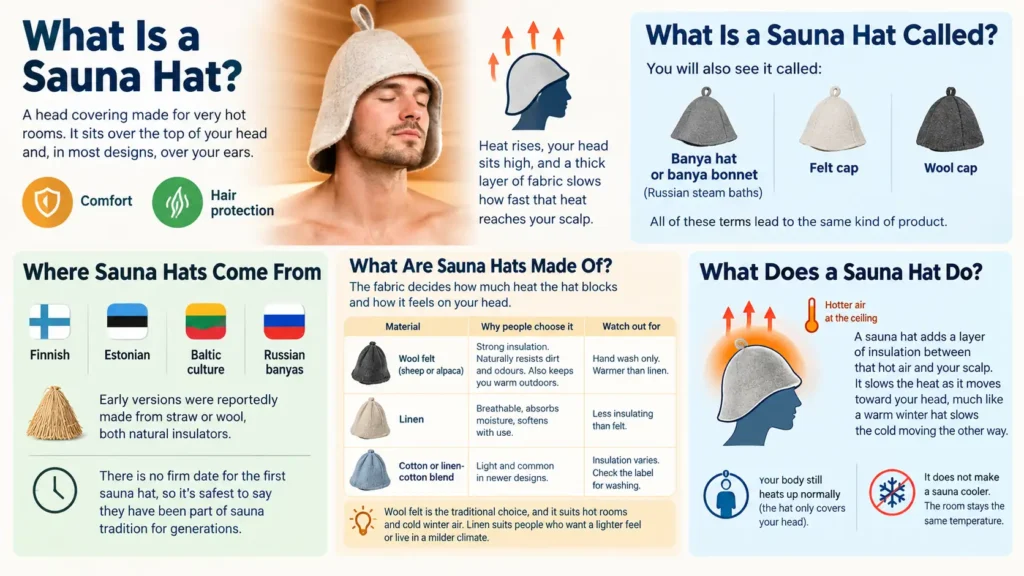
A sauna hat is a head covering made for very hot rooms. It sits over the top of your head and, in most designs, over your ears. People wear it for two main reasons: comfort and hair protection. The idea is simple. Heat rises, your head sits high, and a thick layer of fabric slows how fast that heat reaches your scalp.
What Is a Sauna Hat Called?
You will also see it called a banya hat or banya bonnet, a name that points to Russian steam baths. Shops and sauna fans also say felt cap or wool cap. If you are searching for one, all of these terms lead to the same kind of product.


Paid Links - As an Amazon Associate, I earn from qualifying purchases.


Paid Links - As an Amazon Associate, I earn from qualifying purchases.
Where Sauna Hats Come From
Sauna hats belong to Finnish, Estonian, and wider Baltic sauna culture, and to Russian banyas. Early versions were reportedly made from straw or wool, both natural insulators. There is no firm date for the first sauna hat, so it is safest to say they have been part of sauna tradition for generations.
What Are Sauna Hats Made Of?
The fabric decides how much heat the hat blocks and how it feels on your head.
| Material | Why people choose it | Watch out for |
|---|---|---|
| Wool felt (sheep or alpaca) | Strong insulation. Naturally resists dirt and odours. Also keeps you warm outdoors. | Hand wash only. Warmer than linen. |
| Linen | Breathable, absorbs moisture, softens with use. | Less insulating than felt. |
| Cotton or linen-cotton blend | Light and common in newer designs. | Insulation varies. Check the label for washing. |
Wool felt is the traditional choice, and it suits hot rooms and cold winter air. Linen suits people who want a lighter feel or live in a milder climate.
What Does a Sauna Hat Do?
Heat rises, so the air near the ceiling of a sauna can be much hotter than the air at bench level. Your body may cope well with 70 to 90°C, but your head and ears can start to feel it first.

Paid Links - As an Amazon Associate, I earn from qualifying purchases.
A sauna hat adds a layer of insulation between that hot air and your scalp. It slows the heat as it moves toward your head, much like a warm winter hat slows the cold moving the other way. Your body still heats up the way it normally would, because the hat only covers your head.
That is why the hat does not make a sauna cooler. The room stays the same temperature. What changes is how much of that heat your head has to deal with, which many people find is the hardest part of a session.
Sauna Hat Benefits
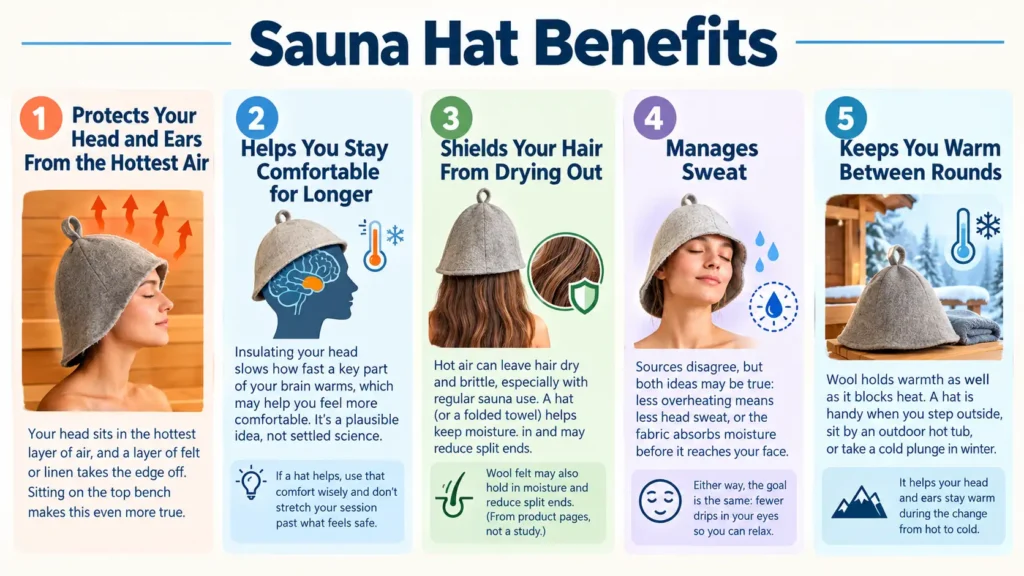
Protects Your Head and Ears From the Hottest Air
This is the main job of a sauna hat, and sellers and sauna studios alike agree on it. Your head sits in the hottest layer of air, and a layer of felt or linen takes the edge off. Sitting on the top bench makes this even more true, since the air there can be significantly hotter than lower down.
Helps You Stay Comfortable for Longer
Many sauna users say a hat lets them settle in without feeling pushed out by heat. One sauna studio offers an explanation. It says a small area of the brain, called the medial preoptic area, helps monitor body temperature, and that insulating your head slows how fast that area warms. The studio credits a well-known podcast host for the idea.
We could not find a controlled study on this, so treat it as a plausible idea, not settled science. If a hat helps you feel more comfortable, use that comfort wisely and do not stretch your session past what feels safe.
Shields Your Hair From Drying Out
Hot air can leave hair dry and brittle, especially if you sauna several times a week. The damage is not permanent, since hair grows out, but many regular sauna users notice it. A hat, or even a folded towel, is an easy fix. It may help most if you have long, dry, or colour-treated hair.
Sellers often say wool felt also holds in moisture and reduces split ends. That claim comes from product pages, and we found no study on it, so weigh it lightly.
Manages Sweat
Sources disagree on how a hat handles sweat. One says less overheating means your head sweats less. Another says the fabric absorbs moisture before it reaches your face. Both ideas can be partly true. Either way, the goal is the same: fewer drips in your eyes so you can relax.
Keeps You Warm Between Rounds
Wool holds warmth as well as it blocks heat. That makes a hat handy when you step outside, sit by an outdoor hot tub, or take a cold plunge in winter. Moving between a hot room and freezing air can feel like a shock, and a hat helps your head and ears stay warm during that change.
Do Sauna Hats Really Work? Myths vs Facts
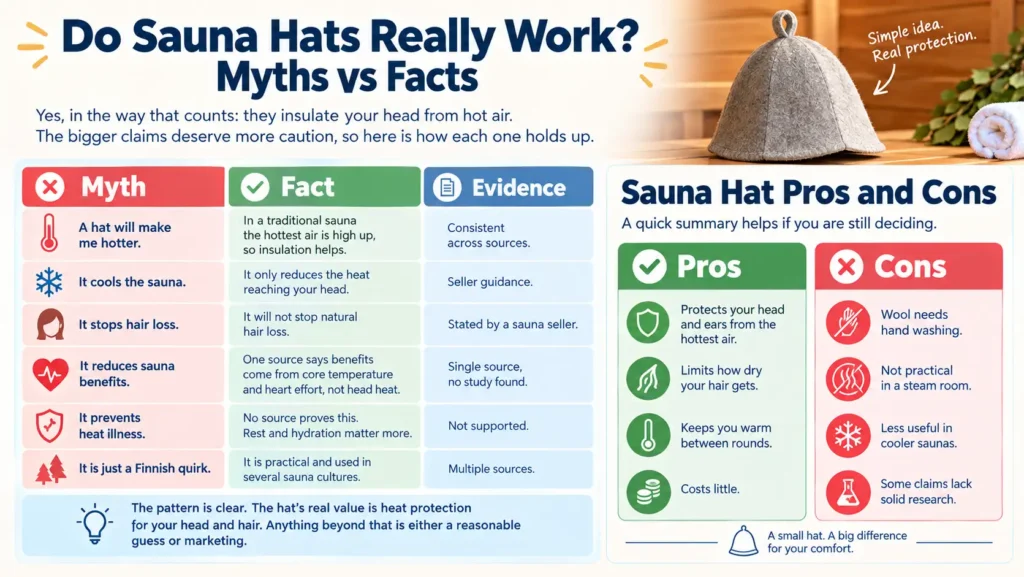
Yes, in the way that counts: they insulate your head from hot air. The bigger claims deserve more caution, so here is how each one holds up.
| Myth | Fact | Evidence |
|---|---|---|
| A hat will make me hotter. | In a traditional sauna the hottest air is high up, so insulation helps. | Consistent across sources |
| It cools the sauna. | It only reduces the heat reaching your head. | Seller guidance |
| It stops hair loss. | It will not stop natural hair loss. | Stated by a sauna seller |
| It reduces sauna benefits. | One source says benefits come from core temperature and heart effort, not head heat. | Single source, no study found |
| It prevents heat illness. | No source proves this. Rest and hydration matter more. | Not supported |
| It is just a Finnish quirk. | It is practical and used in several sauna cultures. | Multiple sources |
The pattern is clear. The hat’s real value is heat protection for your head and hair. Anything beyond that is either a reasonable guess or marketing.
Sauna Hat Pros and Cons
A quick summary helps if you are still deciding.
Pros
- Protects your head and ears from the hottest air
- Limits how dry your hair gets
- Keeps you warm between rounds
- Costs little
Cons
- Wool needs hand washing
- Not practical in a steam room
- Less useful in cooler saunas
- Some claims lack solid research
When to Wear a Sauna Hat
The right choice depends on where you sauna.
| Setting | Is a hat useful? | Note |
|---|---|---|
| Traditional dry sauna | Yes, most useful | Hot air pools near the ceiling |
| Russian banya | Yes | Where the tradition comes from |
| Infrared sauna | Optional | Sources disagree; these rooms run cooler |
| Steam room | Wool is not practical | Air is humid, not extremely hot |
| Outdoor hot tub or cold plunge | Yes | Keeps your head warm |
| Children | Can be used | Pick a well-fitted hat and ask a doctor about time limits |
A traditional dry sauna is where a hat helps most, because that is the setting sauna hats were made for. An infrared sauna is a different story. Sources disagree there: one seller says a hat works fine, while a sauna studio says you can leave your head uncovered because infrared rooms run cooler. If your head still feels too warm, a light cotton or linen hat is a simple option.
A steam room is humid rather than extremely hot, so a thick wool hat is not practical there. Some people use a light cotton or linen wrap instead.
Winter changes the picture again. After an outdoor sauna, the walk to a plunge or hot tub can be cold, and a wool hat keeps your head warm on the way.
When You Can Skip It
You can go without one if your sauna runs cooler, you sit on a low bench, your sessions are short, or your head has never felt too hot. A hat is a comfort aid, not a requirement. A towel draped over your head is a simple stand-in.
Who Gets the Most Out of a Sauna Hat?
A hat is not equally useful for everyone. You are most likely to notice a difference if any of these describe you:
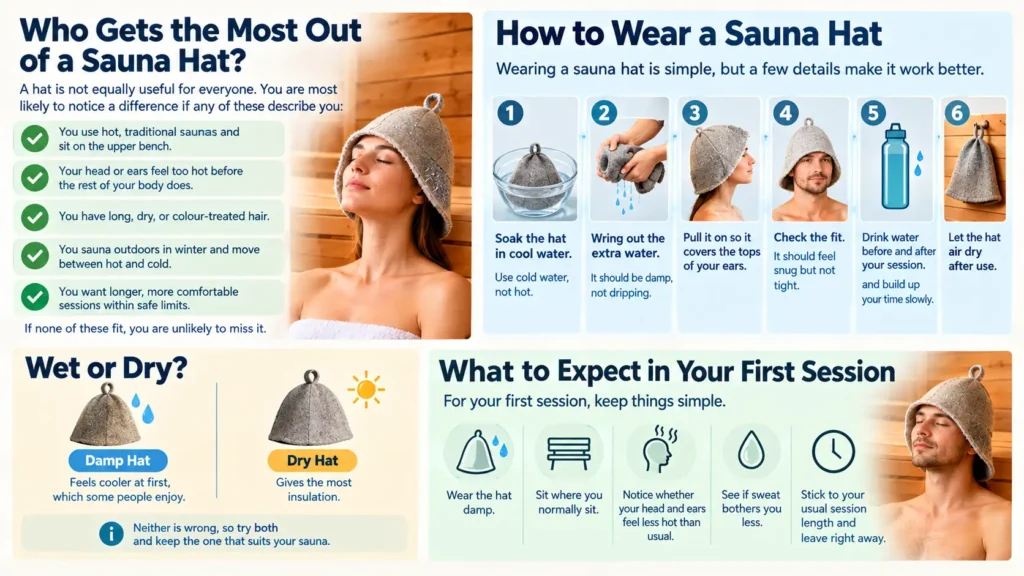
- You use hot, traditional saunas and sit on the upper bench.
- Your head or ears feel too hot before the rest of your body does.
- You have long, dry, or colour-treated hair.
- You sauna outdoors in winter and move between hot and cold.
- You want longer, more comfortable sessions within safe limits.
If none of these fit, you are unlikely to miss it.
How to Wear a Sauna Hat
Wearing a sauna hat is simple, but a few details make it work better.
- Soak the hat in cool water. Use cold water, not hot.
- Wring out the extra water so it is damp, not dripping.
- Pull it on so it covers the tops of your ears.
- Check the fit. It should feel snug but not tight.
- Drink water before and after your session, and build up your time slowly.
- Let the hat air dry after use.
Wet or Dry?
A damp hat feels cooler at first, which some people enjoy. A dry hat gives the most insulation. Neither is wrong, so try both and keep the one that suits your sauna.
What to Expect in Your First Session
For your first session, keep things simple. Wear the hat damp and sit where you normally sit. Notice whether your head and ears feel less hot than usual, and whether sweat bothers you less. Stick to your usual session length and leave right away if you feel dizzy, weak, or unwell. If the hat feels too tight, try a different size or fabric next time, since a poor fit can spoil the benefit.
How to Choose the Right Sauna Hat
Start with the sauna you use most, then work through these questions.
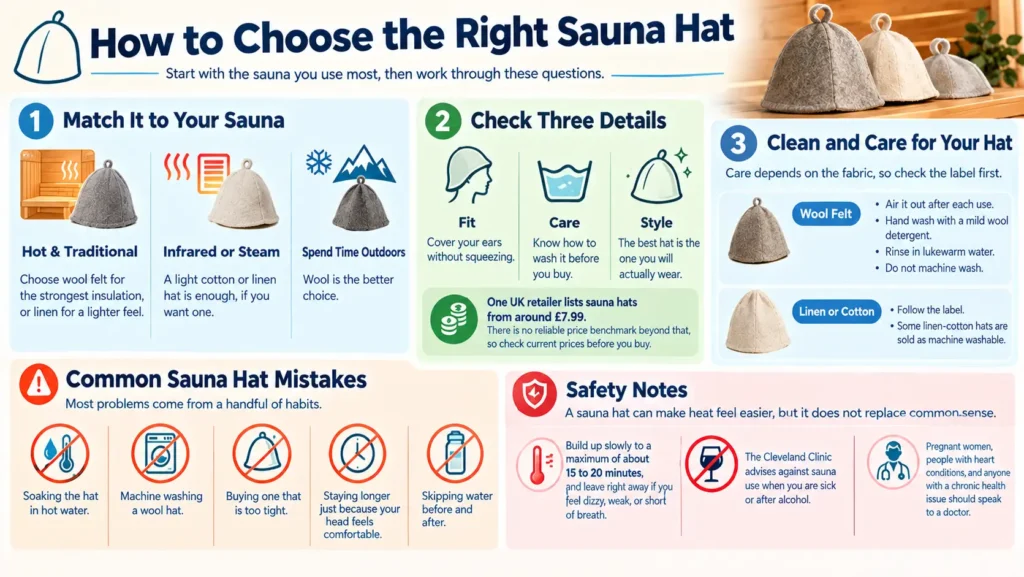
- Is your sauna hot and traditional? Choose wool felt for the strongest insulation, or linen for a lighter feel.
- Do you use infrared or steam? A light cotton or linen hat is enough, if you want one.
- Do you spend time outdoors between rounds? Wool is the better choice.
Next, check three details. Fit: it should cover your ears without squeezing. Care: you should know how to wash it before you buy. Style: the best hat is the one you will actually wear.
One UK retailer lists sauna hats from around £7.99. There is no reliable price benchmark beyond that, so check current prices before you buy.
How to Clean and Care for a Sauna Hat
Care depends on the fabric, so check the label first.
| Material | Care |
|---|---|
| Wool felt | Air it out after each use. Hand wash with a mild wool detergent. Rinse in lukewarm water. Do not machine wash. |
| Linen or cotton | Follow the label. Some linen-cotton hats are sold as machine washable. |
Common Sauna Hat Mistakes
Most problems come from a handful of habits.
- Soaking the hat in hot water.
- Machine washing a wool hat.
- Buying one that is too tight.
- Staying longer just because your head feels comfortable.
- Skipping water before and after.
Safety Notes
A sauna hat can make heat feel easier, but it does not replace common sense. Harvard Health advises building up slowly to a maximum of about 15 to 20 minutes, and leaving right away if you feel dizzy, weak, or short of breath. The Cleveland Clinic advises against sauna use when you are sick or after alcohol.
Pregnant women, people with heart conditions, and anyone with a chronic health issue should speak to a doctor before regular sauna use.
FAQs
Do you have to wear a hat in a sauna?
No. It is optional, and many people skip it in cooler rooms or short sessions.
Are sauna hats worth it?
They cost little, so they are worth trying if your head overheats or your hair dries out.
Should I wear a sauna hat in an infrared sauna?
It is your call. If your head feels too warm, try a light hat; otherwise skip it.
Is a sauna hat useful in a steam room?
Wool is not practical there because steam rooms are humid, not extremely hot.
Do sauna hats protect hair?
They limit the heat that reaches your hair, but they will not stop natural hair loss.
Can a towel replace a sauna hat?
A folded towel is a simple stand-in if you do not own a hat.
Which is better, wool or linen?
Wool insulates best and suits cold weather. Linen is lighter and more breathable.
Can children wear sauna hats?
Yes, if the fit is right. Ask a doctor about time limits for children.
How do I clean a sauna hat?
Wool needs hand washing and air drying. For linen or cotton, follow the label.
Will a sauna hat reduce sauna benefits?
One source says no, because benefits come from your core temperature. We found no study either way.
Final Thoughts
A sauna hat is a small, inexpensive piece of equipment that has only one purpose: to keep the hottest air away from your head. That helps most in hot, traditional saunas and less in cooler ones, and its extra promises, from longer sessions to healthier hair, range from reasonable to unproven.
If you are curious, treat it as a low-risk experiment. Try one session with a cool, damp hat and one without, notice how your head, ears, and hair feel, and keep whichever works better. Match the fabric to your setting, care for it properly, and keep your usual safety habits in place. The hat improves comfort, but your own limits still decide when the session ends.