
An outdoor sauna is becoming a popular backyard wellness feature that combines relaxation, health benefits, and a natural outdoor experience. From traditional Finnish-style designs to modern infrared options, outdoor saunas transform simple garden spaces into personal wellness retreats.
Before choosing one, it’s important to understand the different styles, installation needs, costs, and long-term maintenance involved.
This guide We Learn About what is an outdoor sauna, its benefits, types, installation guide, costs, and maintenance tips to help you choose the perfect backyard sauna for your home.


Paid Links - As an Amazon Associate, I earn from qualifying purchases.
What is an Outdoor Sauna?
An outdoor sauna is a standalone structure placed outside your home, usually in a backyard or garden. It is designed using weather-resistant materials and includes insulated walls, a heater, sauna stones, benches, and ventilation.
It works by heating stones with a stove or heater, which then radiate heat into the air. Water can also be poured over the stones to create steam and increase humidity.
In simple terms, when asking what is an outdoor sauna, it is a private outdoor heat therapy space designed for relaxation, sweating, and wellness benefits in a natural environment.
Benefits of an Outdoor Sauna
Outdoor saunas offer several lifestyle and wellness advantages:
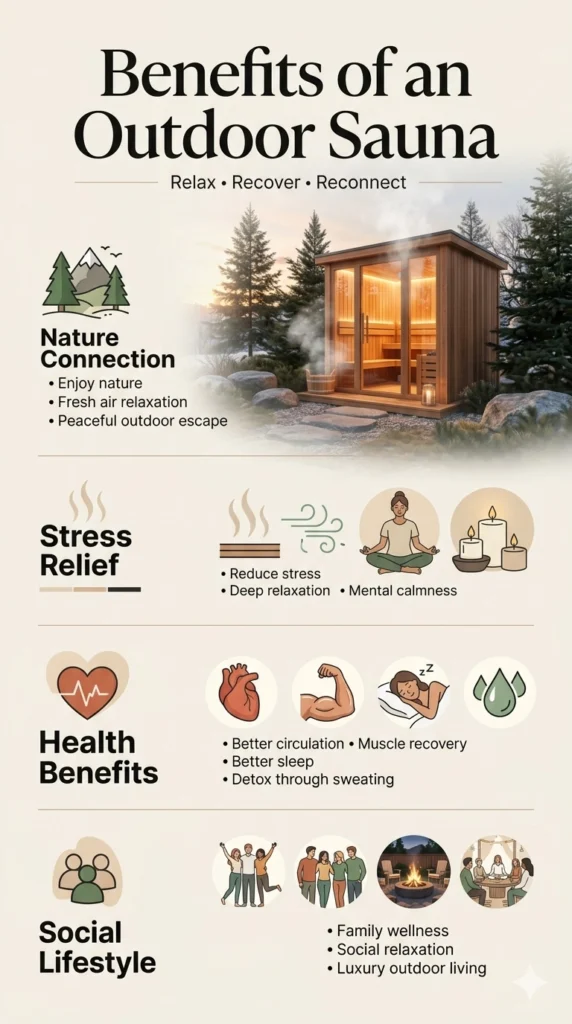
1. Natural Connection
They allow users to enjoy nature while relaxing, creating a peaceful and refreshing experience in gardens, backyards, or outdoor spaces.
2. Privacy and Relaxation
An outdoor sauna provides a quiet, private escape from indoor distractions, making it easier to relax and unwind.



Paid Links - As an Amazon Associate, I earn from qualifying purchases.
3. Health and Wellness
Regular sauna use may support:
- Improved circulation
- Muscle relaxation
- Stress relief
- Better sleep quality
- Detoxification through sweating
Studies mentioned in the data also link sauna use to improved cardiovascular health.
4. Lifestyle and Social Use
Outdoor saunas can also become social wellness spaces for family and friends, enhancing outdoor living experiences.
Types of Outdoor Saunas
There are several different designs available, each with unique features and benefits.

1. Barrel Sauna
Barrel saunas have a rounded shape that allows heat to circulate efficiently. They heat up faster and are space-efficient, making them popular for backyard setups.
2. Cabin Sauna
Cabin-style saunas resemble small wooden houses. They offer more interior space, multiple seating levels, and are ideal for families or groups.
3. Pod Sauna
Pod saunas feature a modern curved design and compact footprint. They are visually appealing and fit well in contemporary outdoor spaces.
4. Infrared Sauna
Infrared saunas use radiant heat to warm the body directly instead of heating the air. They operate at lower temperatures and are often preferred for gentle and longer sessions.
5. Wood-Burning Sauna
These saunas use firewood to heat stones and offer a traditional sauna experience. They do not require electricity but take longer to heat.
6. Electric Sauna
Electric saunas use heaters for fast and convenient heating. They are easy to control and widely used in residential setups.
How Outdoor Saunas Work
Outdoor saunas heat sauna stones using a heater. The process works as follows:

- The heater warms the stones
- Heat spreads throughout the sauna room
- Water is poured over stones to create steam
- The body begins to sweat due to rising temperature
Most users feel stronger heat after 10–15 minutes inside.
Heating Options
Choosing the right heater is important for performance and experience.
Electric Heaters
- Easy to use
- Low maintenance
- Precise temperature control
- Require electrical connection
Wood-Burning Heaters
- Traditional sauna experience
- No electricity required
- Stronger heat output
- Requires firewood and maintenance
Infrared Heating
- Heats the body directly
- Lower temperature environment
- Comfortable for beginners
- Energy efficient
Installation Requirements
Proper installation ensures safety and long-term performance.
Foundation Options
Outdoor saunas can be installed on:
- Concrete slabs
- Gravel bases
- Paver patios
- Reinforced decks
A level base is essential for stability and drainage.
Electrical Setup
Electric saunas may require:
- Dedicated electrical connection
- Proper wiring and safety systems
- Professional installation
Wood-burning saunas do not require electricity but need ventilation and safe chimney installation.
Location Planning
Key factors include:
- Distance from the home
- Privacy
- Wind exposure
- Drainage
- Power access
Cost Overview
Outdoor sauna costs vary based on type and size:
- Sauna kits: $2,500 – $7,000
- DIY builds: $1,500 – $5,000
- Custom builds: $10,000+
Additional costs may include:
- Electrical work
- Foundation setup
- Maintenance
- Installation accessories
Maintenance Tips
Proper care extends the life of an outdoor sauna:
- Clean benches after use
- Ensure proper ventilation
- Inspect heaters and stones regularly
- Protect exterior wood from weather
- Clean and treat surfaces periodically
Good maintenance helps prevent damage from moisture and weather exposure.
Safety Guidelines
To use an outdoor sauna safely:
- Stay hydrated
- Limit session duration
- Take cooling breaks
- Avoid alcohol during use
- Ensure proper ventilation
Following these steps helps ensure a safe and comfortable sauna experience.
You May Also Like To Read:
- How to Build an Outdoor Sauna: Step-by-Step DIY Guide (2026)
- Outdoor Sauna Tent Guide, Benefits, Setup & Buying Tips
Outdoor Sauna FAQs
Can you use an outdoor sauna in winter?
Yes. Outdoor saunas work very well in winter. In fact, colder weather can enhance the experience due to the strong temperature contrast between hot and cold air.
Can I use an outdoor sauna every day?
Yes, daily use is generally safe for healthy individuals as long as you stay hydrated and limit your session time.
Is it safe to use a sauna regularly?
Yes, sauna use is widely considered safe when used properly, including taking breaks, staying hydrated, and avoiding alcohol during sessions.
Do outdoor saunas need electricity?
Only electric and infrared saunas require electricity. Wood-burning saunas do not need any power source.
Can you install an outdoor sauna yourself?
Yes, many sauna kits are designed for DIY installation and can be assembled with basic tools and help in a short time.
Can you put an outdoor sauna on a deck?
Yes, but the deck must be strong enough to support the weight of the sauna and users safely.
Is infrared or traditional sauna better?
It depends on your goal:
Infrared sauna: Lower heat, gentle therapy, longer sessions
Traditional sauna: Higher heat, steam experience, stronger sweating
Are outdoor saunas expensive to run?
No, most outdoor saunas cost only a few dollars per week to operate, depending on usage and heater type.
What is the best material for outdoor saunas?
Western Red Cedar is considered the best due to its durability, resistance to moisture, and long lifespan.
Do outdoor saunas require maintenance?
Yes. Regular cleaning, ventilation, and wood treatment help extend the lifespan and keep the sauna safe and efficient.
Final Thoughts
An outdoor sauna is more than just a backyard structure — it’s a personal wellness space that brings together relaxation, health benefits, and a deeper connection with nature. Whether you choose a barrel sauna for its efficient heating, a cabin sauna for extra space, or an infrared sauna for gentle heat therapy, the right choice depends on your lifestyle, space, and comfort preferences.
As you’ve seen in this guide, understanding what is an outdoor sauna also means looking beyond the design and considering important factors like installation, heating type, cost, and long-term maintenance. These details help ensure your sauna is not only enjoyable but also safe, efficient, and long-lasting.
If planned properly, an outdoor sauna can become one of the most rewarding additions to your home — offering a place to unwind, recover, and reset away from daily stress. Over time, it becomes less of a luxury and more of a daily wellness habit that supports both physical and mental well-being.