Steam sauna for pain relief is a natural therapy that uses moist heat to relax muscles, increase blood circulation, and reduce stiffness in joints and tissues.
The warm, humid environment helps improve oxygen delivery to sore areas, which can reduce inflammation and promote recovery.
Many people use a steam room or sauna for back pain, arthritis, and post-workout soreness, making it a popular wellness practice in gyms, spas, and medical rehabilitation settings.


Paid Links - As an Amazon Associate, I earn from qualifying purchases.
While both steam rooms and saunas provide therapeutic heat, the moist heat of steam can be particularly soothing for muscle tension and joint discomfort.


Paid Links - As an Amazon Associate, I earn from qualifying purchases.
Understanding how heat therapy works can help you decide whether a steam room vs sauna is the best option for your pain relief routine.
Discover how Steam Sauna For Pain Relief works. Learn its benefits for back pain, arthritis, and muscle recovery, plus steam room vs sauna differences and safety tips.
Disclaimer: Always consult with a medical professional before starting any new wellness treatment, especially if you are pregnant, have heart conditions, or have implants.
Key Takeaways
- Deep Penetration: Steam saunas use moist heat to relax muscles and increase circulation more effectively than dry heat for certain conditions.
- Arthritis Relief: Regular sessions can significantly reduce stiffness associated with osteoarthritis and rheumatoid arthritis.
- Post-Workout Recovery: Using a steam room after exercise helps flush out metabolic waste like lactic acid, speeding up recovery.
- Safety First: While beneficial, steam rooms are not suitable for everyone, particularly those with heart conditions or pregnancy, without doctor approval.
- Hydration is Critical: You must hydrate before and after sessions to prevent dehydration, which can worsen pain.
How a Steam Sauna Can Help with Pain Relief
When you walk into a steam room, the first feeling you get is relaxation but there is a complex physiology going on beneath the hood. Understanding how it works is helpful for understanding why a steam sauna for pain relief is so potent.

Vasodilation and Blood Circulation
The major mechanism is vasodilation. The hot heat makes your blood vessels expand. This enables the blood to circulate more to the skin and underlying tissues.
With this increased blood flow comes a deluge of oxygen and essential nutrients needed for tissue repair and at the same time removes metabolic waste product, such as lactic acid and cytokines which creates inflammation.


Paid Links - As an Amazon Associate, I earn from qualifying purchases.
The “Heat Shock” Response
Science has found that exposure to heat leads to the production of Heat Shock Proteins (HSPs). These are cellular repair agents which help repair damaged proteins within our cells.
A study published in the Journal of Agricultural and Food Chemistry suggests that the HSPs could help mitigate muscle damage and improve recovery time.
Endorphin Release
Heat stress stimulates the hypothalamus to secrete beta-endorphins. These are the body’s natural opioid like substances. They bind to receptors in the brain to block pain messages resulting in a natural “high” and lessening the perception of pain.
How Steam Sauna Therapy Works for Pain Relief
The science behind steam sauna for pain relief benefits lies in how heat affects the body.
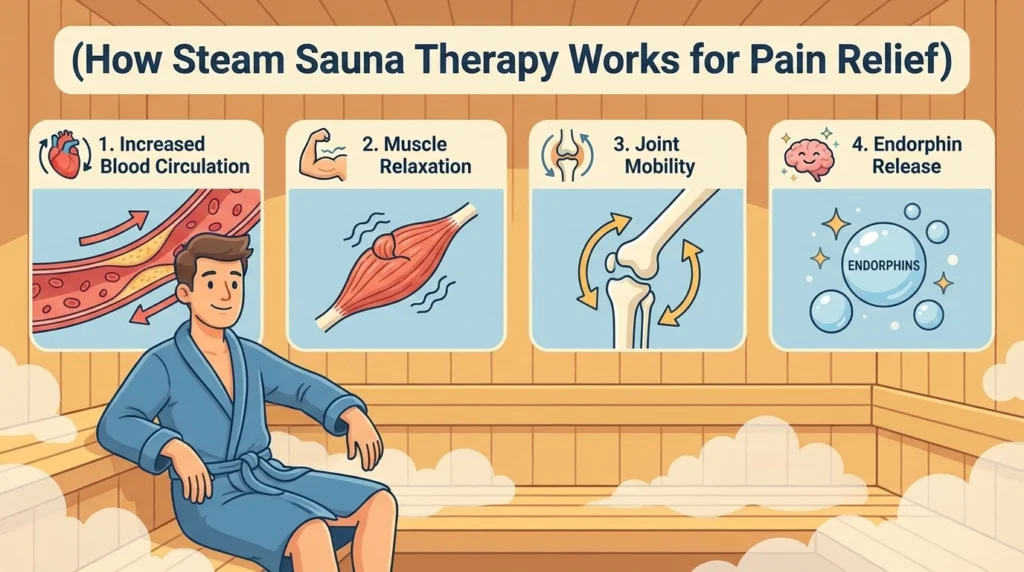
1. Increased Blood Circulation
Heat causes blood vessels to dilate (vasodilation). This improves circulation, delivering more oxygen and nutrients to sore tissues.
Better circulation can:
- Reduce muscle soreness
- Speed healing
- Decrease stiffness
2. Muscle Relaxation
Warm humid air helps muscles relax, making a steam room or sauna for back pain particularly helpful for people with tight muscles.
3. Joint Mobility
Heat therapy loosens connective tissues, improving joint flexibility. This is why many people with steam sauna for arthritis or steam sauna for rheumatoid arthritis symptoms report temporary relief.
4. Endorphin Release
Heat exposure can trigger the release of endorphins, the body’s natural pain-relieving chemicals.
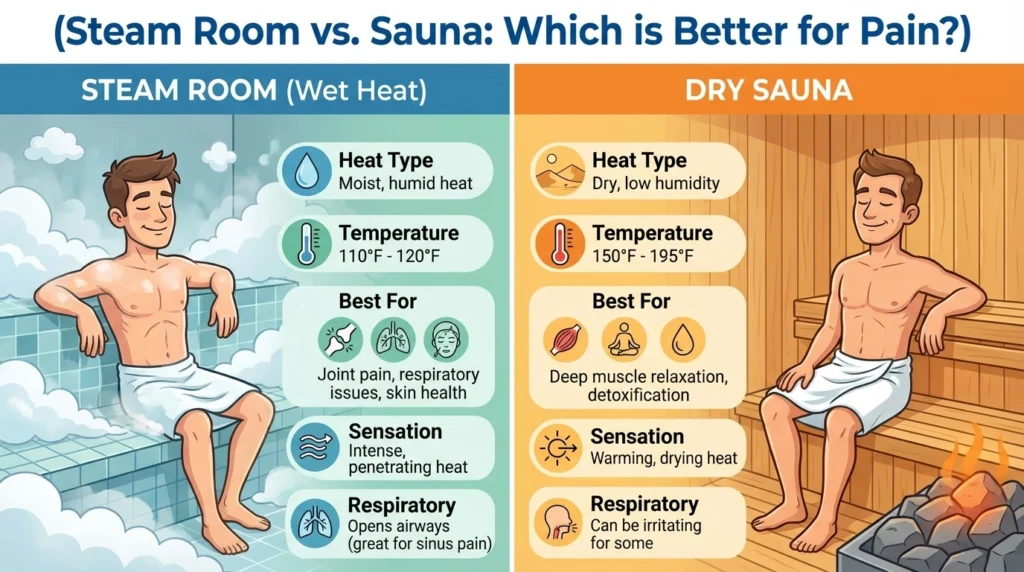
Steam Room vs. Sauna: Which is Better for Pain?
One of the more common debates in the wellness community is that of steam room vs sauna effectiveness. While both provide pain relief, they are different in their working mechanisms.
The Difference in Heat
- Dry Sauna: Uses dry heat (low humidity), typically from 150°F to 195°F. It warms the body from the outside in, but is sometimes harsh on the respiratory system.
- Steam Room: Works at lower temperatures (110°F to 120°F), but 100% humid. The water vapor transmits heat deeper into the tissue faster than dry air.
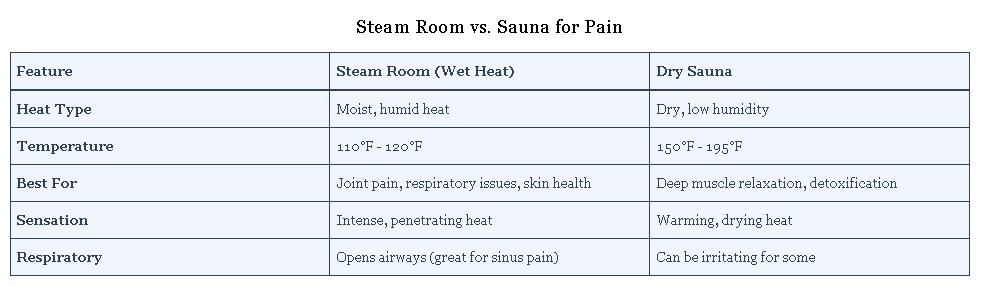
Steam Room vs. Sauna for Pain
| Feature | Steam Room (Wet Heat) | Dry Sauna |
|---|---|---|
| Heat Type | Moist, humid heat | Dry, low humidity |
| Temperature | 110°F – 120°F | 150°F – 195°F |
| Best For | Joint pain, respiratory issues, skin health | Deep muscle relaxation, detoxification |
| Sensation | Intense, penetrating heat | Warming, drying heat |
| Respiratory | Opens airways (great for sinus pain) | Can be irritating for some |
When considering steam room or sauna for back pain, many users find steam rooms superior. The moist heat is often more soothing for deep spinal stiffness and does not dehydrate the spinal discs as rapidly as dry heat might.
How to Use a Steam Sauna Safely for Pain Relief
To maximize the steam sauna for pain relief benefits, follow this safety protocol:
- Hydrate: Drink 16 oz of water before entering.
- Time Limit: Start with 10-15 minutes. Do not exceed 20 minutes per session.
- Cool Down: Exit the room if you feel dizzy. Allow your body to cool gradually.
- Shower: Rinse off afterward to remove sweat and bacteria.
- Rehydrate: Drink water or an electrolyte drink immediately after.
Steam Sauna for Arthritis and Joint Pain
For millions who suffer from deterioration of the joints, non-pharmacological relief is a priority. Using a steam sauna for arthritis has become popular as an adjunct therapy.
Osteoarthritis Relief
Osteoarthritis is associated with a breakdown of the cartilage, resulting in bone rubbing on bone. The warmth of a steam room works to relax the periarticular structures (tissues around the joint), which increases the elasticity and reduces the stiffness of the structures.
A study in Clinical Rheumatology found that patients with rheumatoid arthritis and ankylosing spondylitis experienced better scores for pain and stiffness after a course of sauna therapy for 4 weeks.
Steam Sauna for Rheumatoid Arthritis
When taking into consideration a steam sauna for rheumatoid arthritis (an autoimmune condition), the benefits are two-fold. First is the heat relieves the mechanical pain.
Second, the reduction of stress aspect is vital as stress is a known trigger for RA flare-ups. However, patients with active inflammation (hot, swollen joints) should be careful, and should see a rheumatologist, because heat could sometimes worsen acute inflammation.
Steam Sauna for Back Pain
Back pain is one of the most common reasons people seek heat therapy.
Using a steam room or sauna for back pain can help:
- Relax tight spinal muscles
- Reduce stiffness in the lower back
- Increase flexibility before stretching
- Improve recovery after physical activity
Many physical therapists recommend combining heat therapy with stretching or gentle exercise for better results.
Steam room benefits For Women
There are some benefits of steam room usage for women that need to be highlighted. Women are statistically more likely to have autoimmune disorders or chronic pain disorders such as fibromyalgia. The relaxing properties of steam can help to manage these conditions.
Furthermore, in regards to hormonal balance, the stress reducing effects of a steam room can help regulate cortisol, which subsequently promotes healthy thyroid and reproductive function.
However, women who are pregnant should not go to steam rooms because of the potential risk of hyperthermia to the development of fetus.
Benefits of Steam Room After Workout
Athletes and fitness enthusiasts have been using heat therapy for a long time. The benefits of steam room after workout sessions revolves around recovery and flexibility.
- Reduced DOMS: Delayed Onset Muscle Soreness (DOMS) is the bane of every workout routine. The heat increases blood flow, speeding up the repair of micro-tears in muscle fibers.
- Improved Flexibility: Connective tissues (fascia) are more flexible in heat. A post-workout stretch in the steam room can demonstrate an improvement in range of motion significantly.
- Lactic Acid Removal: Although the body has a natural process of removing the lactic acid, when the circulation is increased, this process is also enhanced.
Comparing benefits of sauna after workout with steam rooms, the results are similar though steam rooms offer the added benefit of hydration of the skin and respiratory opening that dry saunas do not have.
Choosing the Best Sauna for Pain
If you are looking to invest in home therapy or choose a gym membership to this, what is the best sauna for pain.
- For Deep Muscle Pain: For this, infrared saunas are said to be the best because infrared rays heat the body directly instead of the air, and it penetrates up to 1.5 inches deep into the tissue.
- For Joint Stiffness & Respiratory Pain: A traditional steam sauna for the pain is often superior. The humid heat is easier on the joints and helps with breathing.
- For General Wellness: A traditional Finnish dry sauna offers a good cardiovascular workout and pain relief combination.
Steam Room Benefits and Disadvantages
To provide a balanced view, we must look at the steam room benefits and disadvantages.
The Advantages
- Non-Invasive: No needles or pills required.
- Mental Health: Acts as a meditative practice.
- Skin Elasticity: Improves collagen production through better circulation.
The Disadvantages and Risks
- Infection Risk: Public steam rooms are breeding grounds for fungi and bacteria if not cleaned properly. Always sit on a towel.
- Dehydration: The most common risk. Losing water without replenishing can lead to headaches and muscle cramps—ironically increasing pain.
- Blood Pressure Drops: While heat raises heart rate, it also dilates vessels, causing a drop in blood pressure. This can lead to dizziness or fainting.
You May Also Like To Read:
FAQs
Is A Steam room Good for Back Pain?
Yes, a steam room is a great thing for back pain. The moist heat goes deep into the muscles of the lower back to relieve spasms and increase elasticity. It is commonly used in place of dry saunas for back pain due to the humidity that will transfer heat more effectively to the dense muscle groups of the back.
Does sauna help nerve pain?
Sauna for pains associated with nerves (neuropathy) can be tricky. While heat does increase blood flow which can help, some types of nerve damage (such as diabetic neuropathy) cause a loss of sensation. If you cannot feel the heat properly then you run the risk of burning yourself. Always seek the advice of a doctor if you have nerve damage before you use a sauna.
How often should I steam sauna with Arthritis?
Most studies suggest that 2 to 3 sessions a week can be an important source of relief from symptoms of arthritis. Consistency is the key as the benefits will accrue over time in regard to joint mobility.
Can steam saunas cure pain?
No, steam saunas do not “cure” underlying conditions. They are a management tool. They relieve symptoms, improve quality of life, and potentially slow down the progression of the stiffness but they are not fixing structural problems such as herniated discs and reverse arthritis.
Why do I feel worse after a steam room?
If you feel worse, you are likely dehydrated. Dehydration concentrates toxins in the blood and reduces blood volume, leading to headaches and muscle cramps. Ensure you are drinking electrolytes, not just water.
Final Thoughts
Living with chronic pain or recovering from intense physical activity is more than just a physical sensation; it’s an exhausting cycle that can impact your mood, sleep, and overall quality of life.
Incorporating a steam sauna for pain relief into your wellness routine isn’t about finding a “magic cure,” but rather about giving your body the optimal environment it needs to heal, rejuvenate, and reset.
Whether you are weighing the steam room vs sauna debate or specifically looking for relief through a steam sauna for arthritis, the science remains clear: heat therapy is a powerful, natural ally.
By embracing the moist heat to boost circulation, flush out toxins, and release natural endorphins, you are taking a proactive step toward managing your comfort naturally.
As you move forward, remember that consistency is key. Pain management is a marathon, not a sprint. Stay hydrated, listen to your body, and use the steam room as a dedicated sanctuary for your health. Here’s to a future with less pain and more mobility.